
Guide to Fruits and Vegetables that Grow in Shade
Looking for fruits, vegetables, and herbs that grow well in a shady garden. This article has partial-sun crop ideas for you.
By Steven Biggs
Shade-Tolerant Vegetables and Fruits for the Edible Landscape and Food Garden
Don’t have full sun? Think your garden needs full sun? Find out about shade-garden vegetables, fruit, and herbs.
Not enough sunny growing space in your yard? Lots of partial sun? Light shade? You're not alone.
When I first landscaped my place, my neighbour Bob asked, "Steve, why is your patio so far from your house?"
"It's all about the vegetables,” I replied.
I reserved as much direct sunlight for my vegetables as possible. And used the shady spot for the patio."
There are lots of things around a home garden that cast shade: There’s the house, garage, fence, shed, trees, and hedges.
Not all fruits and vegetables grow well in shade. Lots of crops need "full sun" (6-8 hours of direct sunlight every day) to grow optimally.
But there are fruits, vegetables, and herbs that do nicely in a shady garden. Keep reading if you want to learn about vegetable plants that grow in shade, growing herbs in shade, shade-tolerant fruit, and how to plan your garden for shade.
Perfectionism Meets Shade Garden
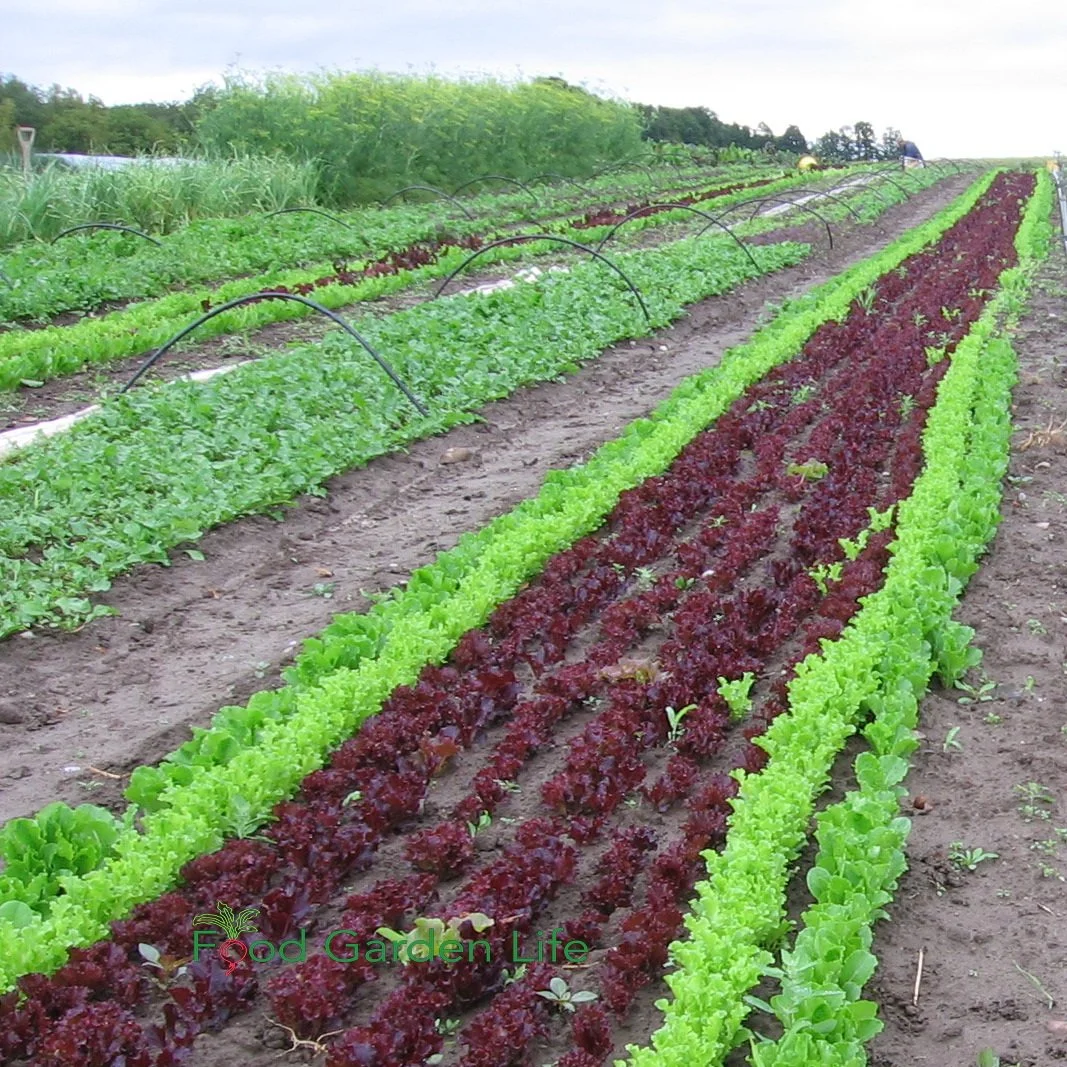
Don’t have a sunny field for growing vegetables? That’s fine, when planting a garden there are many shade-tolerant crops.
Before we get to shade-tolerant crops, let's start with the elephant in the room.
Perfectionism.
Many seed packets suggest full sun...and many yards don't have full sun. You might be contrasting your semi-shaded yard to bright, sunny fields of vegetables.
Your space doesn't compare...
So what?
So what if your plants don't look as good as what a commercial grower would grow! If you're a home gardener, you're growing edible plants for yourself, not to sell.
When I needed more growing space, I decided to reclaim the end of my driveway as a straw-bale garden. (Find out more about straw-bale gardens here.)
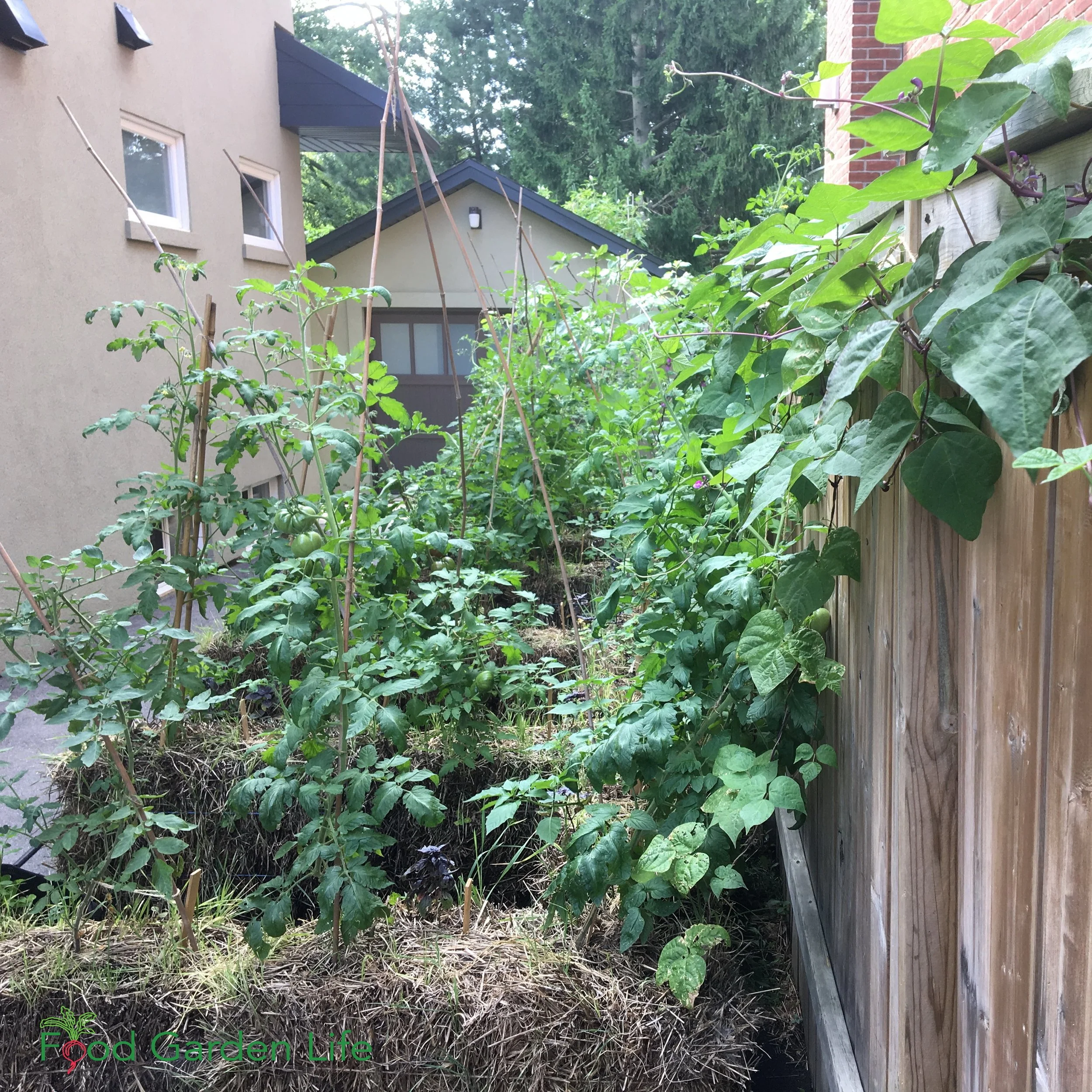
My driveway garden is in partial sun, nestled between two houses. You can still enjoy vegetable gardening if you have some shade.
The driveway is nestled between two houses. It gets less than six hours of sun exposure. But it’s better to have less-than-perfect tomato plants on that driveway and get a decent harvest than not to harvest any tomatoes from the driveway.
Five hours of sun isn't perfect. So what? The results are fine. It’s a successful garden. Even though I don’t have full sun.
A vegetable garden is a great cure for perfectionism. In home gardens we often have less-than-perfect conditions. So what!
A Word on Shade
Not all sun (and not all shade) is created equal. Here are things to consider as you look at the shady spots and sunny spots around a yard:
Dappled shade. Think of the shade under a locust tree, spotted with little flecks of light.
Heavy shade. This is where no light is gets through or is reflected, like next to buildings or under trees with dense canopies. (Norway maple...I'm talking about you!)
Afternoon shade. A.k.a. morning sun...and morning sun isn't as strong as afternoon sun.
Morning shade. Or afternoon sun.
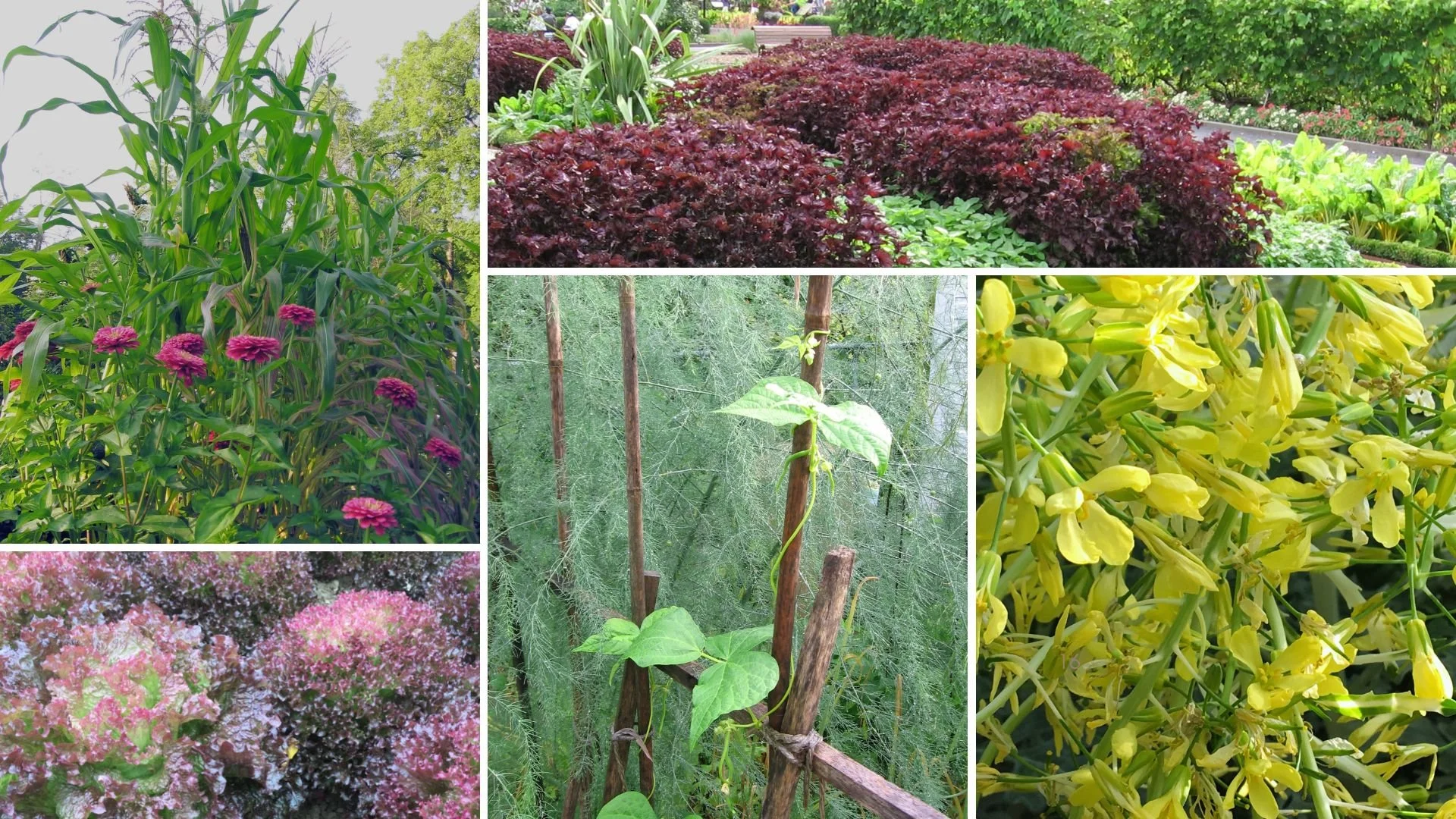
Create Your Own Unique Edible Landscape
That fits for your yard, and your style!
Crops for Partial Shade
Grow Leafy Greens in Shade
Start with greens when gardening in partial shade.
The reason partial shade is fine for leafy greens is that we're not trying to grow a perfect crop: All we want is the leaves. We're not growing for flowers or fruit or seeds. We don’t care if the plant completes it’s life cycle.
(And with a bit of shade, leaves are often bigger and more tender!)
Many of the greens crops (e.g. arugula, lettuce, and spinach) have a short life cycle that's less that the length of the growing season. And that means that at some point they give up making tender leaves, and send up a flower stalk. (This is called "bolting.")
Bolting happens more quickly in hot, sunny locations. By growing leafy green crops in partial shade during intense summer heat, they'll bolt more slowly, and make tender leaves for longer time.
Here’s more about how to prevent lettuce from bolting.
Vegetable Plants that Grow in Shade
Here are a few greens that do very nicely in partial shade:
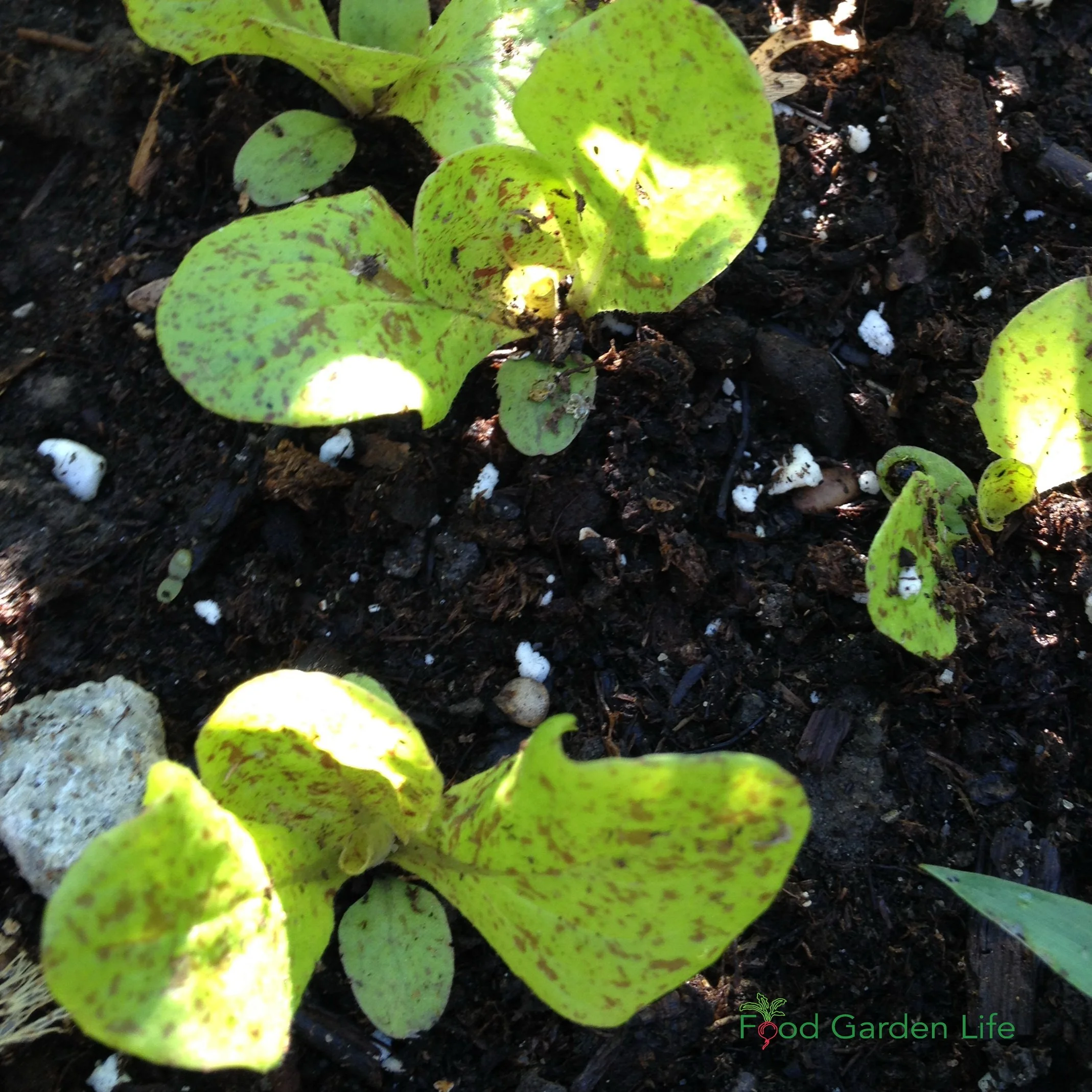
These lettuce plants will do well in this dappled light over the summer. It’s cooler than in direct sun.
Amaranth
Arugula
Beets (for the edible leaves…don’t expect as much from the roots as you would get in a sunny location)
Bok choy
Claytonia
Collards
Corn salad
Cress
Endive
Kale
Lettuce
Mizuna
Mustard greens
Spinach
Swiss chard
If you have a favourite green that's not on this list, try it. Leafy greens usually do very nicely in partial shade.
One more crop that I don't think of as a leafy vegetable (even though we eat the leaves) is green onions. With green onions, we're not trying to encourage bulb development...we're just trying to get tender leaves. So partial shade is fine.
Vine Crops as Shade-Garden Vegetables
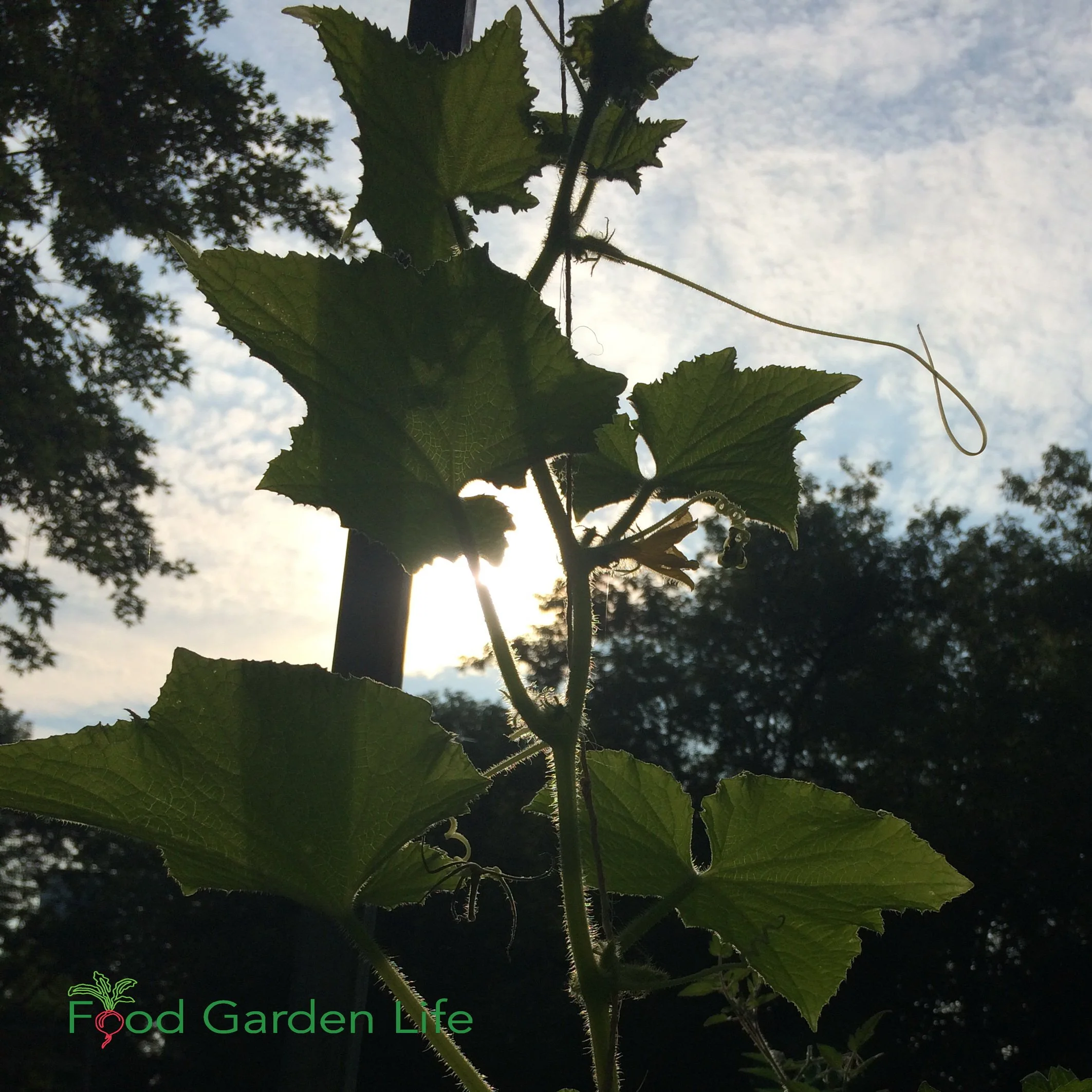
Vine crops can grow up and into the sunlight.
If you have a partially shaded area where vining crops could grow up into a sunnier location, this can be a useful strategy.
Not only do they tolerate partial shade: You can train them up a trellis, arbour, hedge, or tree into sunnier conditions.
Cucumbers. They grow respectably well in partial shade. I've grown them in afternoon sun, up a trellis on the west side of a garage with very respectable results.
Squash. Like cucumber, they do fine in partial shade. I've grown them along a semi-shaded cedar hedge, and was delighted to find the hedge studded with squash at the end of the season.
Pole and runner beans. The year I grew runner beans up a tee-pee underneath my apple tree they grew right up into the tree above...and those scarlet flowers looked great amongst the green apples!
Vining Peas. Some pea varieties are bush-like, but if you want a vining crop to grow up into a sunnier space, look for vining peas. And with peas, you can also harvest and eat young shoot tips and tendrils.
All of these vine crops work well for vertical gardening. Find out how to make a vertical vegetable garden.
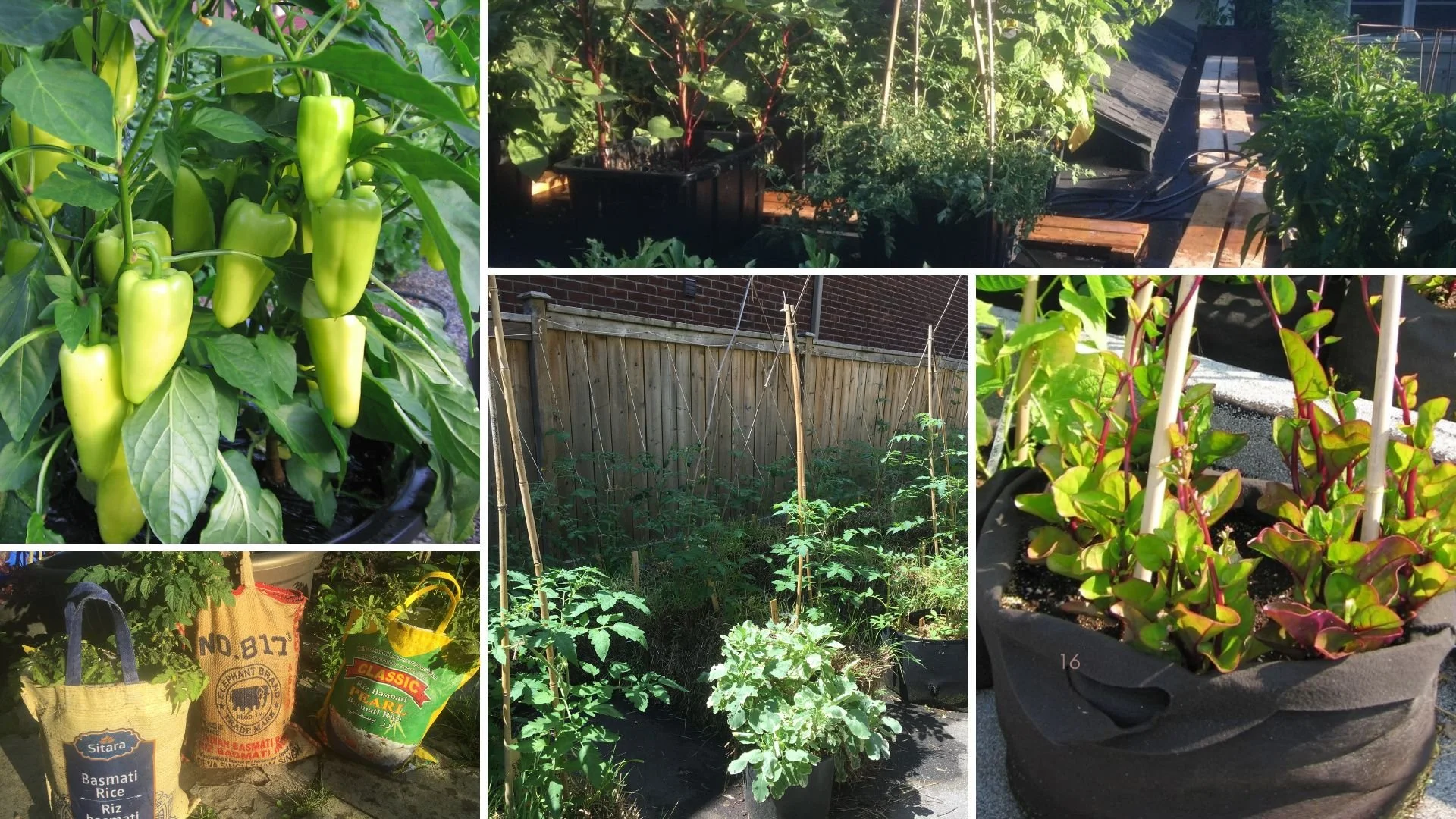
Grow a Container Vegetable Garden
And get an early harvest of crops that usually take too long!
Beyond Leafy Vegetables
I already told you about my 5-hour-a-day driveway tomatoes.
If you're experimenting with other sun-loving vegetables in partial shade, just expect them to have lanky growth and lower yield. And at a certain level of sunlight, you won't get enough to make it worth your while. Growing vegetables in shade might take some experimenting.
But if you don't try, you won't know.
Herbs that Grow in Shade
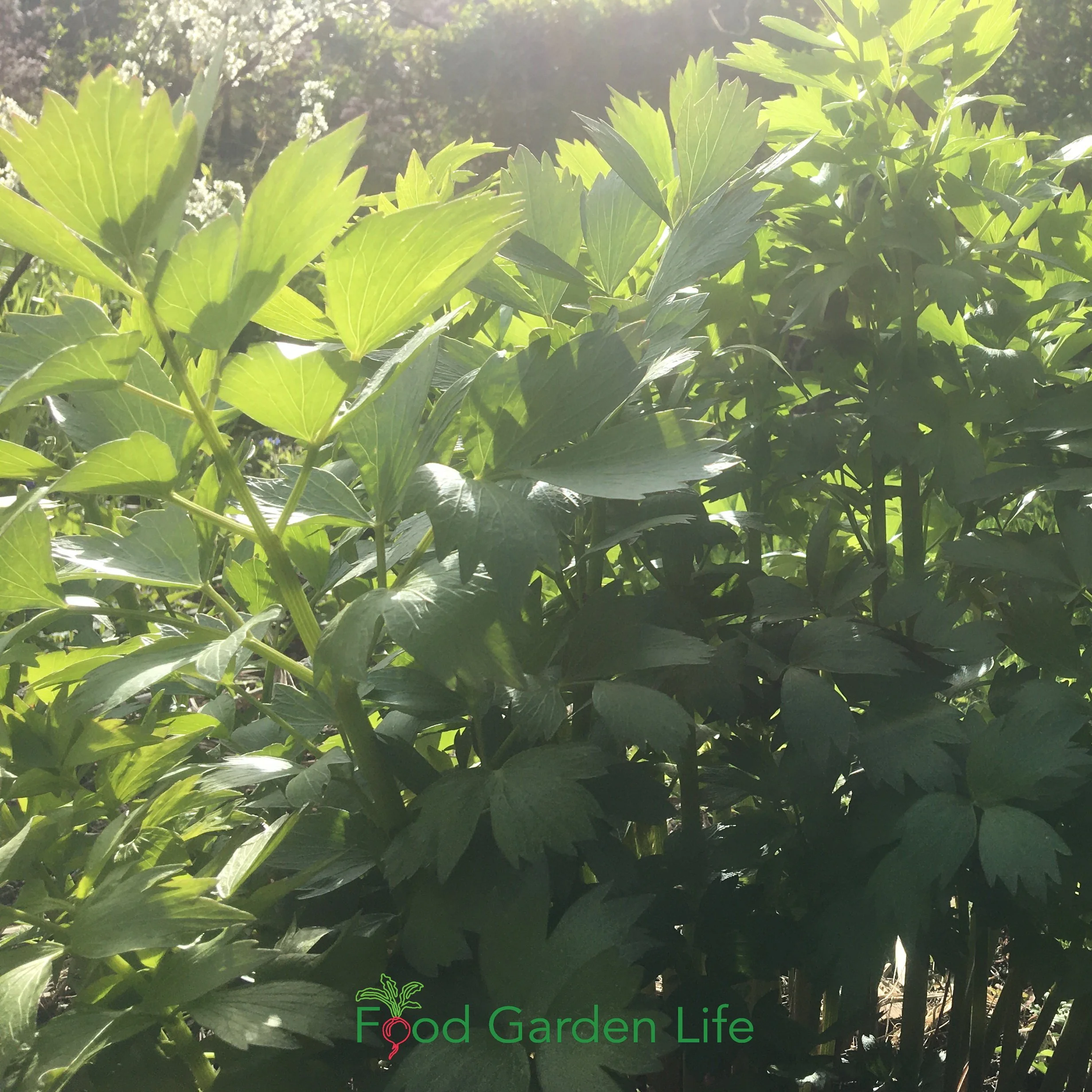
Lovage is a perennial herb that tolerates some shade.
There are many herbs that tolerate partial shade. Here are my favourites:
Chives
Cilantro
Dill
Lemon Balm
Lovage (this perennial herb lives in my semi-shaded perennial border)
Mint (see Full Shade, below)
Parsley
Fruit Crops for Partial Shade
When growing fruit in partial shade, take the same approach we do with veggies. Just adjust expectations accordingly.
Here are fruit crops that grow well in partial shade:
Choke cherry. Often found on the forest edge, where there's some shade. (Find out about 5 Types of Cherry Bushes for Edible Landscapes.)
Currants. My favourite. Here’s an article about how to grow currants.
Elderberry. Often found on the forest edge, where there's some shade.
Gooseberry. They take the same low-light conditions as currants.
Hardy Kiwi Vine.
Pawpaw. While young pawpaw trees benefit from shade, best fruit production is in full sun. But they fruit well in partial shade. No surprise as that's where you often find them in the wild.
Serviceberry. An understorey tree often found on the forest edge, where there's some shade. My favourite member of the serviceberry clan is the Saskatoon bush. Find out more about the Saskatoon bush.
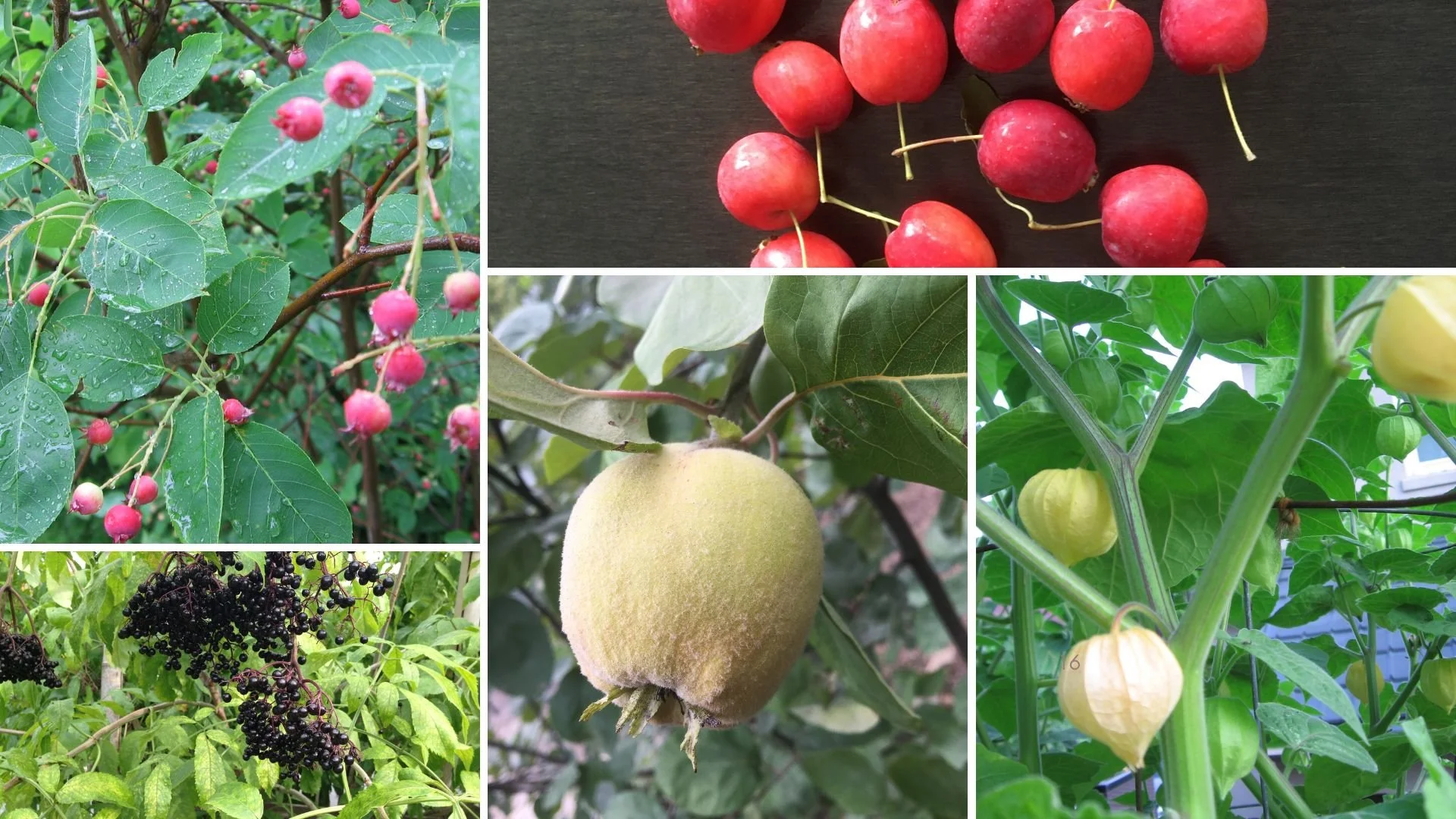
Landscape with Fruit
That’s easy to grow in a home garden!
What About Heavy Shade?
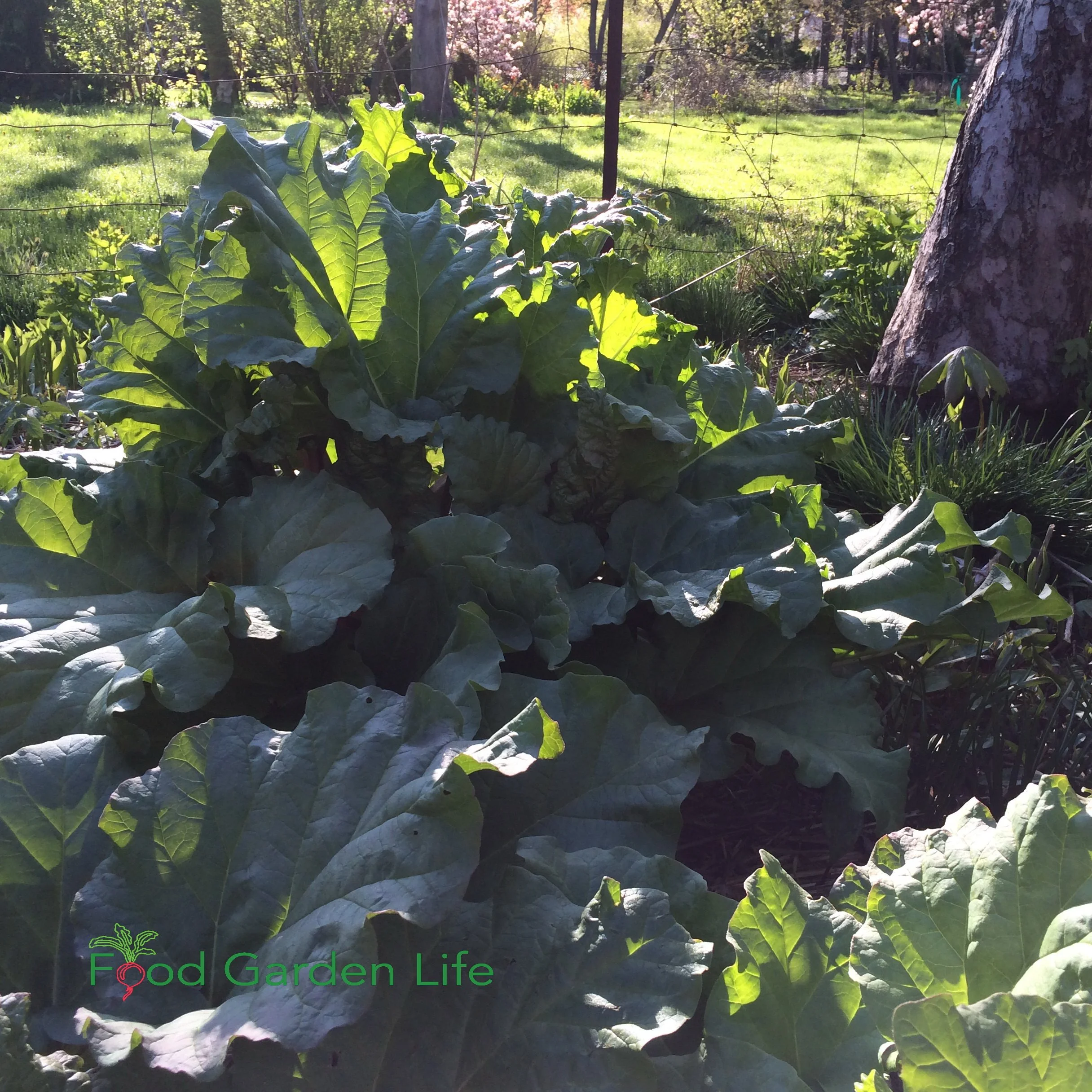
This rhubarb plant is in partial shade, but I’ve seed decent rhubarb patches even in heavy shade.
If you have a space without any direct sunlight, reflected sunlight, or dappled sunlight, your crop options are more limited. This is what people call “full” shade or “deep” shade.
Here are ideas for you:
Mint and shade: Mint is an invasive plant that I normally only grow in containers. But in full shade, mint can be your friend. This is the one situation where I plant mint in the ground.
Rhubarb can do very nicely in heavy shade. My friend Chris had a lovely rhubarb plant that graced the edge of his shady pond...it looked quite tropical with the big leaves! Find out how to force rhubarb indoors over the winter.
Currants and gooseberries are a good fit underneath bigger trees. My neighbour Mr. Browne had a currant bush growing in the full shade of an apple tree...and that bush faithfully fruited year after year, albeit not as much as it would have in a sunnier spot.
FAQ Shade Tolerant Crops
Pin this post!
What is the best shade tolerant vegetable?
Parsley. Hands down. Because it's delicious, tolerates a wide range of conditions—and it’s very ornamental. I use it as a flower-border edging plant on the north side of the house. The curly-leaf types add great texture, and last well into the fall in cooler temperatures—until there's a hard freeze.
You might be saying, "But it's a herb." I've heard people argue it's a herb, others say it's a vegetable. In the quantities I use in my salads, I'm using it as a veg.
Can vegetables get too much sun?
Yes. Too much sun and too much heat cause many of the leafy greens to bolt quickly. They do better in shady areas in the heat of summer.
What is the difference between partial sun and partial shade?
If you read different sources, you'll come up with various definition.
To me, it's semantics. It just means less than full sun. I guess it depends whether you're the type of person who sees the glass as half full or half empty!
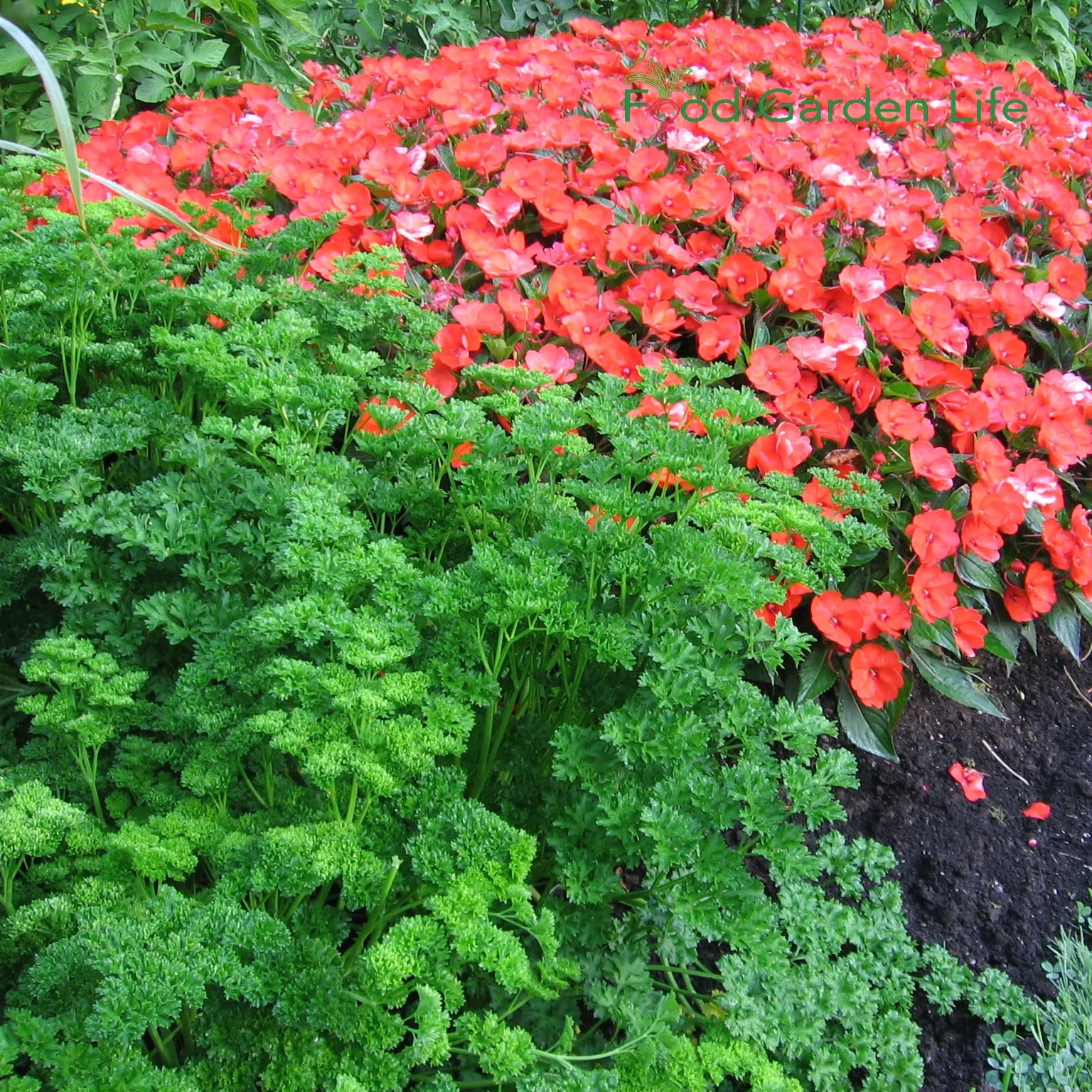
Parsley does very well in shady locations. And it’s a great plant for adding texture to a garden!
Find This Helpful?
Enjoy not being bombarded by annoying ads?
Appreciate the absence of junky affiliate links for products you don’t need?
It’s because we’re reader supported.
If we’ve helped in your food-gardening journey, we’re glad of support. You can high-five us below. Any amount welcome!
More Articles on Growing Crops
Articles about Growing Vegetables
Find out how to stake and support tomato plants.
Courses
Best Juglone-Tolerant Plants for Food Gardens Near Black Walnut Trees
By Steven Biggs
Growing Food Crops Near Black Walnut Trees
I bought my current home in the late winter when there were no leaves on the trees. So I didn't notice that the massive black walnut tree next door. Yikes! It's created a lot of gardening hurdles.
Black walnuts are known for their beautiful wood. Prized in fine woodworking. But there's a sinister side too...they have the odious reputation as trees that poison nearby plants.
A commercial grower or a gardener in a rural area might react with a chainsaw. Not an option for most home gardeners. Especially in the city where trees have the same rights as taxpayers.
But I've figured out how to grow a thriving vegetable garden, edible landscape, and fruit crops all around that black walnut tree. If you want to grow food crops alongside these beautiful but challenging trees, keep reading: This post tells you what you need to know to successfully grow food plants—even if your yard is overshadowed by a black walnut tree.
Primer: Black Waltnut Toxicity
Black walnut (Juglans nigra) trees give off something called juglone, which can affect the growth of nearby plants. Not a bad thing from the walnut's perspective...because there's less competition.
Juglone is in all parts of the black walnut tree, including the roots, leaves, and the nuts.
Not all plants are affected by juglone.
As juglone builds up in the soil under and around the tree, it affects nearby susceptible plants.
If you like the technical lingo: When a plant makes something that inhibits the growth of other plants, it's called "allelopathy."
Tips for Gardening Near Black Walnut Trees
Sources of Black Walnut Toxicity
Let's take a look at how juglone gets from the tree into your soil. If there's a walnut tree, you'll have more juglone than you want. But you can do some things to reduce black walnut toxicity in your garden.
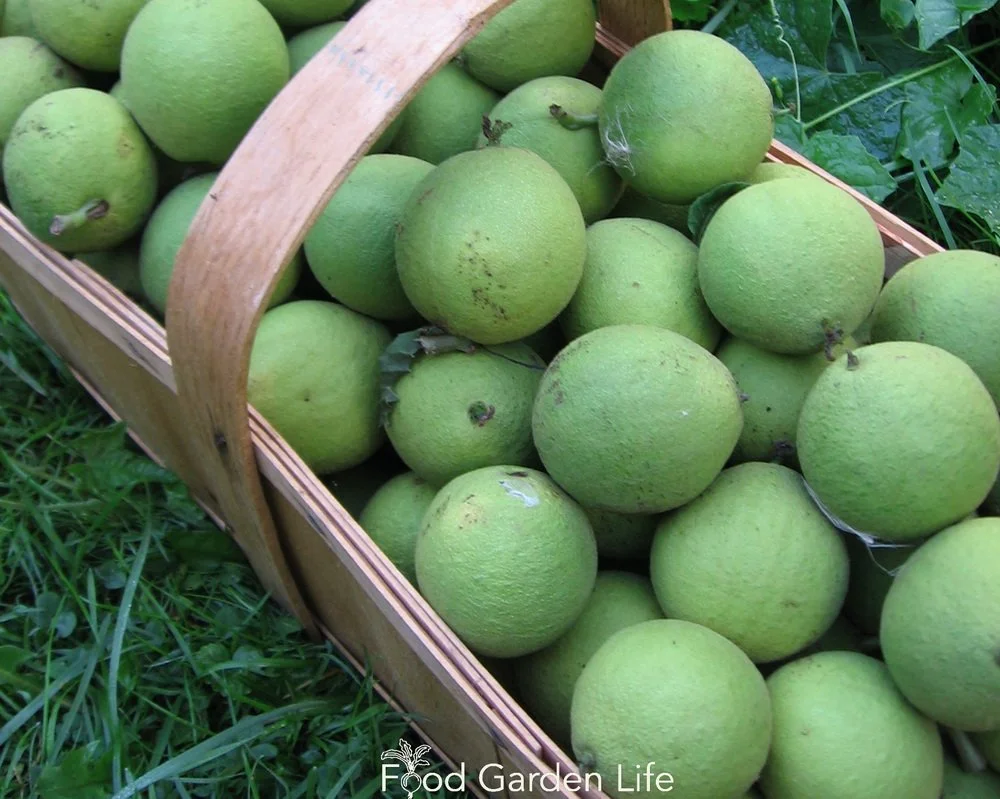
Black walnut hulls also contain juglone.
Roots. Walnut tree roots release juglone into the soil. Remember the black walnut roots if you're thinking of raised-bed gardening, because tree roots can (and do!) grow up into raised beds. You need a raised bed that the roots can't get into. (See below, Raised Beds.)
Leaves. I don't bother removing walnut leaves from my vegetable garden beds near the black walnut tree. Those beds are already loaded with juglone. But I do remove fallen walnut leaves from my raised beds, where the soil is not contaminated with juglone. I don't compost black walnut leaves with leaves from other parts of my yard. No point making killer compost. (Composting breaks down juglone, but in a home garden we don't have perfect composting conditions, so you won't know how long until your compost is juglone-free.)
Nuts. Black walnut hulls also contain juglone. Again, I removed them from the raised beds where the soil isn't full of juglone. If I'm not fast, the squirrels help with cleanup! Bothered by squirrels? Here are 50 ways to foil squirrels in your food garden.
Wood. If you're getting a load of wood chips from an arborist, make sure there isn't chipped black walnut in there!
Other trees in the same family as black walnut (the Juglandaceae family) give off juglone too. These include butternut, pecan, English walnut, heartnut, and hickory. But black walnut gives off the most, hence its reputation and the term "black walnut toxicity."
How Big is the Walnut "Kill Zone"
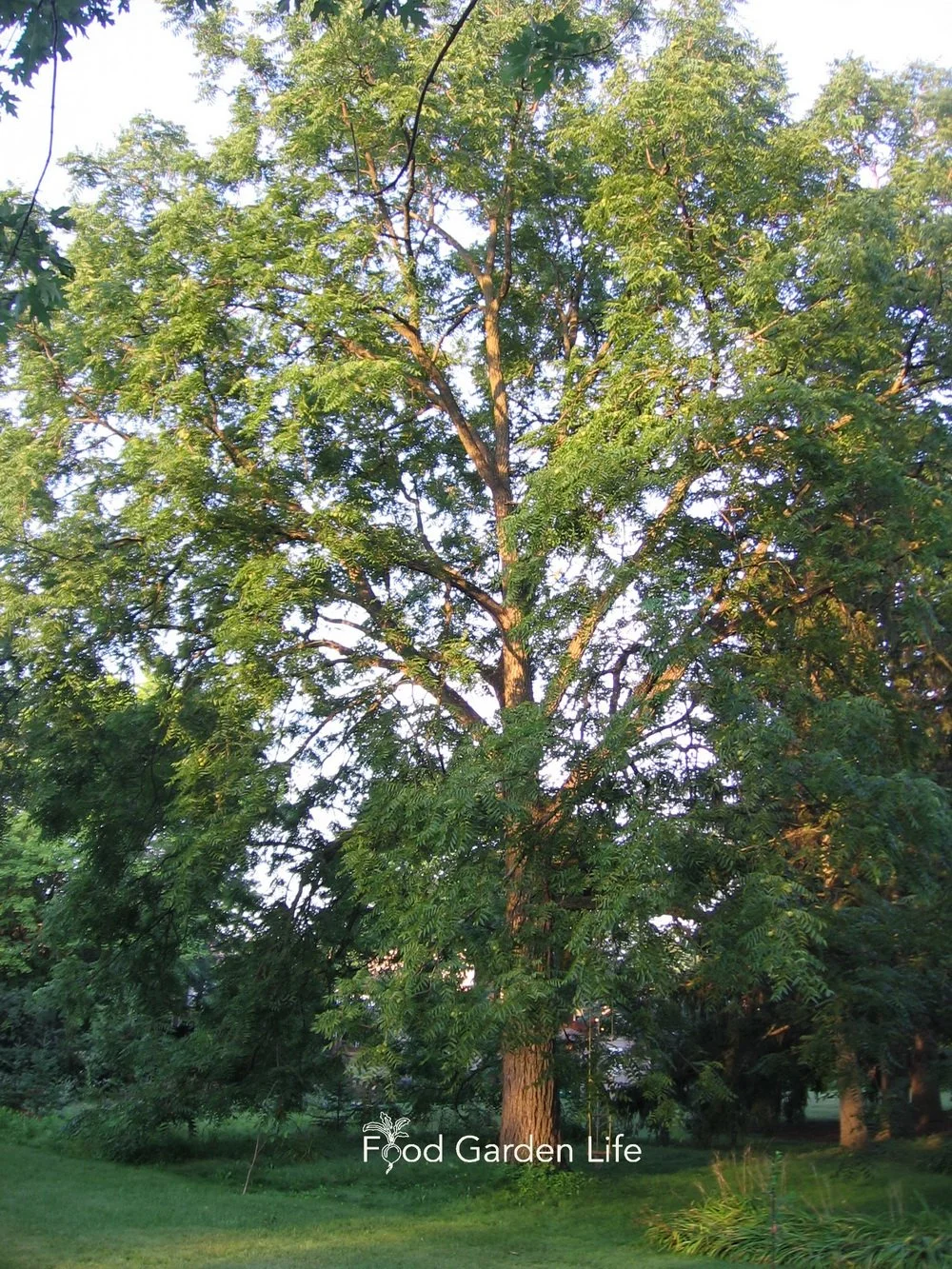
The bigger the tree, the bigger the zone where you’ll get black walnut toxicity. My neighbour’s tree is big…and so is the kill zone.
I remember hiking in a nearby ravine with a semi-wooded, scrubby area. The scrub was dotted with young black walnut trees. And underneath these young trees there was mostly grass. Like a doughnut under each tree. Far less competition. I call that the "kill zone."
The size of this kill zone in your yard depends on how big the tree is and how well drained the soil is. Soil drainage, soil type, and microbes are involved in breaking down juglone. That just means that determining the size of the kill zone is not an exact science.
When I first started gardening near my neighbour's big black walnut tree, I figured that if I planted beyond the "drip line" (which is what's under the tree canopy) it might be OK.
It wasn't.
The young espaliered apple trees I'd worked hard to shape? Toast. Even though they were 15 metres away. The effects of juglone can extend well beyond the drip line of big trees. For a big tree, I'd use 15 metres as a starting point. The farther the better.
Symptoms of Juglone Toxicity
Juglone can cause yellowing leaves, partial or total wilting, stunted growth, and, possibly, death of susceptible plants.
The symptoms might look like drought stress at first. That's what I saw the first time it affected our tomato crop: Wilting even when there was ample soil moisture. But by then, it's too late. Game over. No matter how much you water.
Walnut-Wise Food Gardening
3 Steps to Create a Thriving Vegetable Garden or Edible Landscape Near a Black Walnut Tree
Consider the kill zone. Once you've mapped out the likely kill zone, you can start planning where to put your juglone-sensitive plants, and where to put your juglone-tolerant plant species. Play it safe, and assume the kill zone is bigger rather than smaller.
Choose wisely. There are oodles of plants that are tolerant to juglone. Use the lists below to help you choose what to grow—and what not to grow.
Keep crops out of affected soil. Use containers and raised bed to grow juglone-sensitive plants close to a black walnut tree. But you have to do it right. (But see Raised Beds, below, so that you do it right.)
Underneath my neighbour's black walnut tree I have a small pawpaw patch (these are shade-tolerant native plants with a really tasty fruit, worthwhile working into your walnut-wise garden.) There's also small fruit such as bush cherries, chokeberry, and autumn olive closer to the edge of the dripline, where there's more sunlight. Then, further out, where there's a bit more sun, I have raised beds for juglone-sensitive plants. And finally, still within the kill zone, I have a really big veg patch, filled with crops that aren't affected by juglone.
Container Veg Gardening Course
As well as helping with your walnut problem, a container garden is a great way to harvest more from a small space. If you want to take container gardening to the next level, check out the course below on vegetable container gardening.
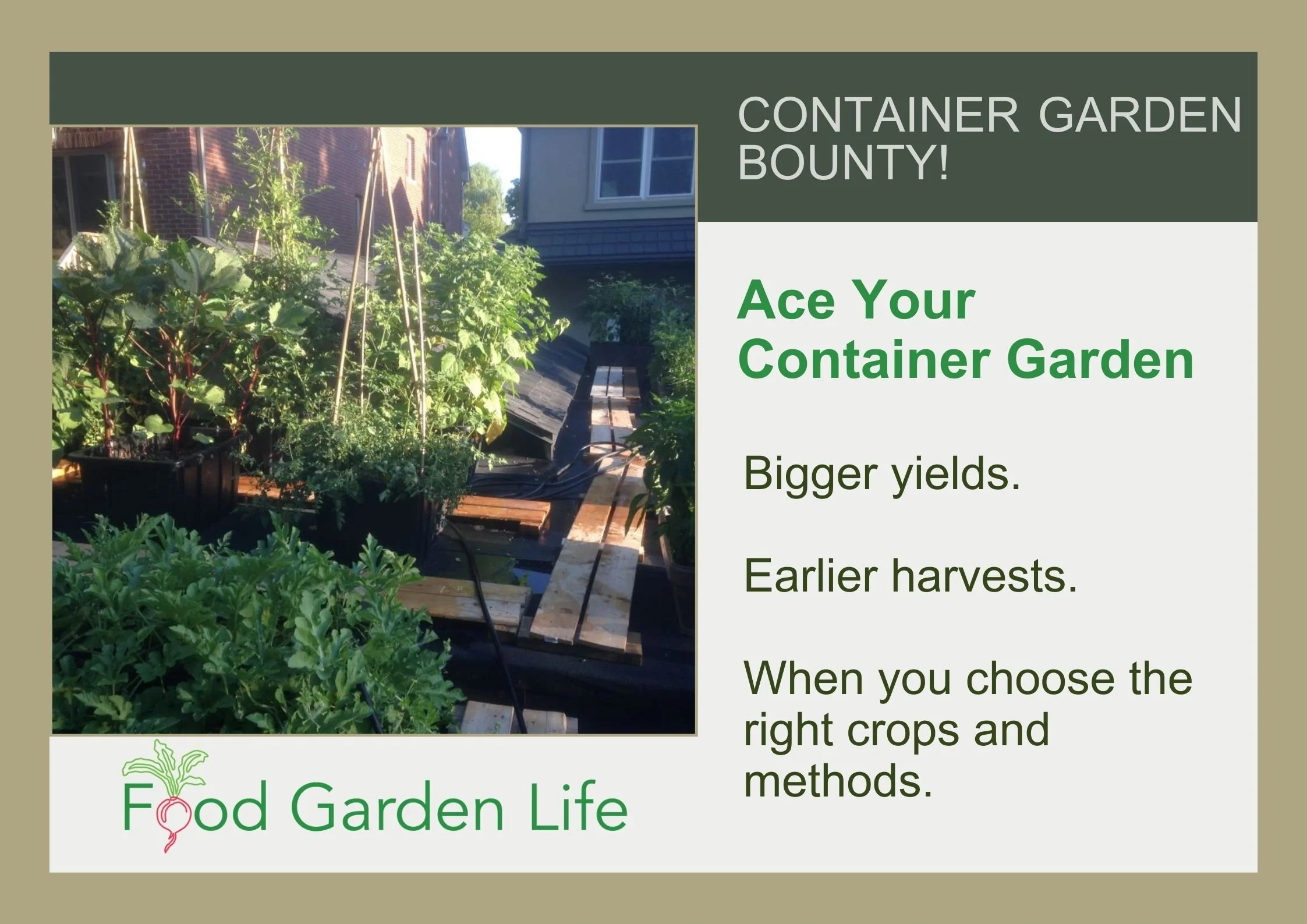
Raised Beds and Containers to Solve Black Walnut Toxicity
A raised bed allows you to grow juglone-sensitive crops in the kill zone. But you have to set it up properly...or it won't help for long. Tree roots grow up into raised beds.
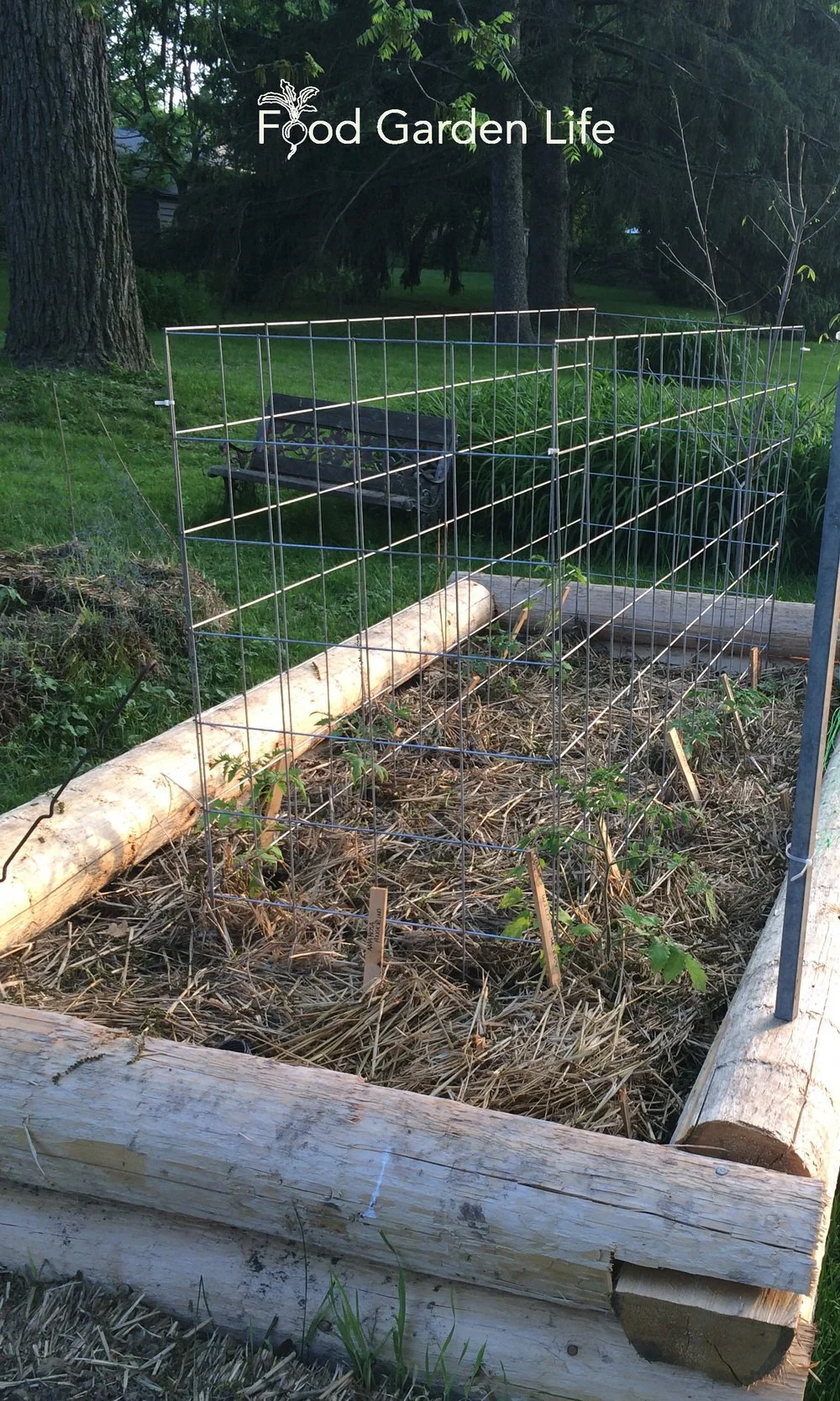
This is a wicking bed, very close to a black walnut tree (see the tree trunk in the back corner of the photo.) A wicking bed is one way to grow juglone-sensitive plants near a black walnut tree.
Failure 1. My first attempt at growing tomatoes in the ground near the tree failed. To be expected. So I reasoned that if I made a simple wooden raised bed, lined the bottom with landscape fabric, and added uncontaminated soil, it would solve the problem. At first, it seemed to work. But by mid summer, the tomatoes wilted badly. The reason? The roll of fabric wasn't as wide as the bed. And even though I overlapped the fabric so that the "new" soil above was separated from the contaminated soil below, tomato roots could find their way into the soil below...and walnut roots could grow up into the raised bed.
Failure 2. Another year I tried strawbale gardening. I reasoned that I could grow tomato plants in bales, near the walnut tree, if I put down a layer of plastic mulch under that bale to keep the tomato roots out of the soil below. This might have worked...except I used a biodegradeable plastic mulch, and part way through the season those tomato roots made the journey to juglone hell. Game over. (But strawbale gardening is an excellent technique. Find out how to use strawbales to create awesome food gardens.)
Success! I realized that tree roots quickly grow where they're not wanted...and the same goes for tomato roots. So I needed a bed that isolated the tomato roots. The answer was something called a "wicking bed." In short, it's a bed that has a thick liner at the bottom, creating a reservoir. They're usually used in dry areas, as a way to conserve water...but they fit the bill perfectly. Here's more information about using wicking beds.
On a smaller scale than a raised bed such as a wicking bed, container gardening is another way to grow sensitive plants near a black walnut tree. I'm a big fan of sub-irrigated planters (a.k.a. SIPS), which, like wicking beds, cut back on how often you need to water. Here's more about SIPS.
Plant Lists for Walnut-Wise Food Gardens
Here are edible plant lists you can use to plan your walnut-wise garden. These are from my experience and from published sources such as extension agencies and universities. Sometimes recommendations by published sources differ, so consider this a guide—not cast in stone.
Juglone-Sensitive Plants
Sensitive Plants - Fruit Trees and Shrubs
Apple
Crabapple
Blackberry
Blueberry
Sensitive Plants - Vegetables
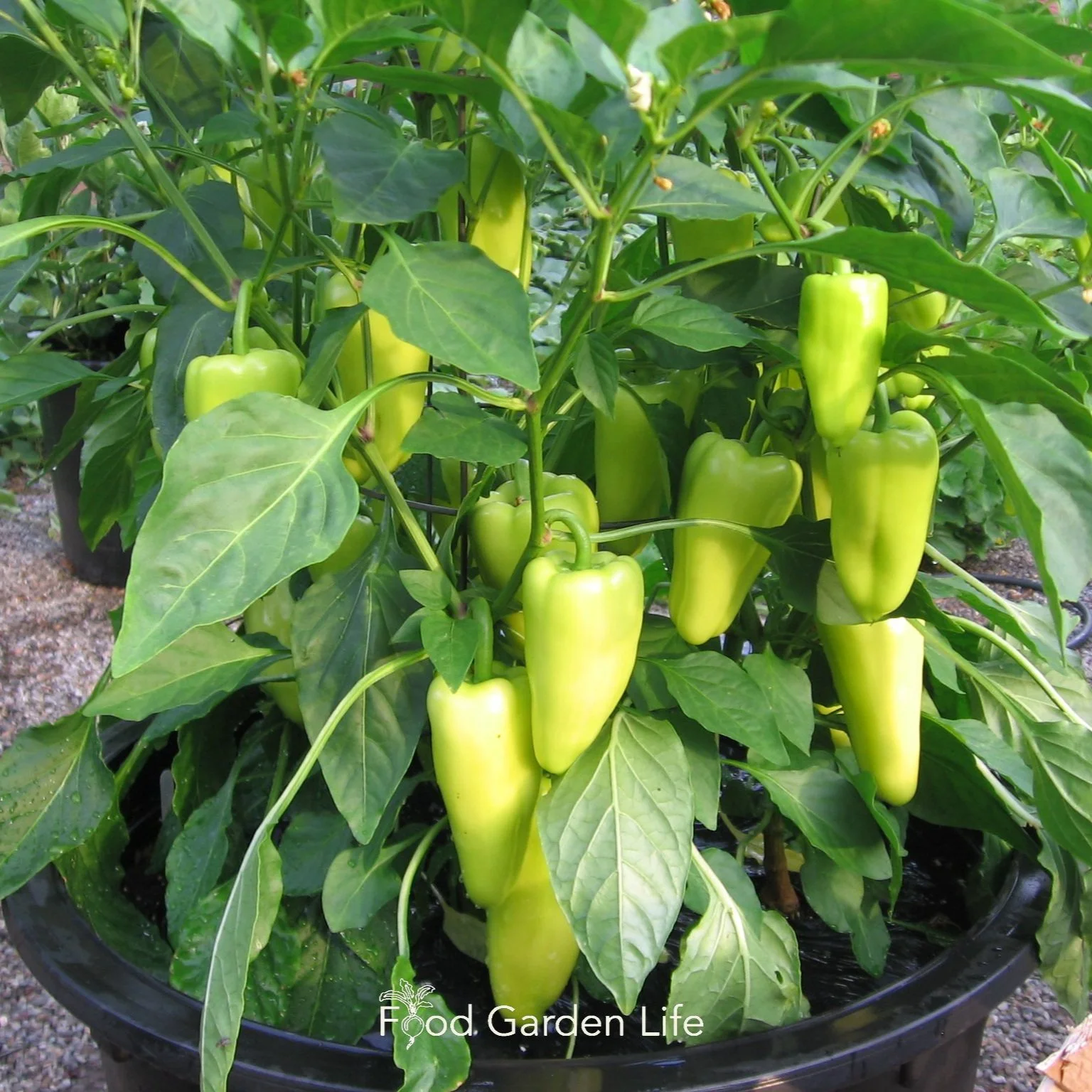
Peppers and other plants in the nightshade family are sensitive to juglone.
Wondering what vegetables are sensitive to juglone? Plants in the nightshade family (Solanaceae) practically wilt at the mention of juglone. This family includes lots of the must-grow veg crops such as tomatoes, peppers, potatoes—but also some less common ones such as cape gooseberry and ground cherry.
Asparagus
Cabbage and family
Eggplant
Pepper
Potato
Rhubarb
Tomato
Plants Tolerant to Juglone
Wondering what grows well near a black walnut tree? Many plants grow just fine under or near a walnut tree. So if you're wondering how far should a garden be from a black walnut tree, you can garden quite close to the tree if you choose juglone-tolerant plants and take into account the shade. Here are key edible plants to get you started.
Juglone-Tolerant Plants - Fruit Trees and Shrubs
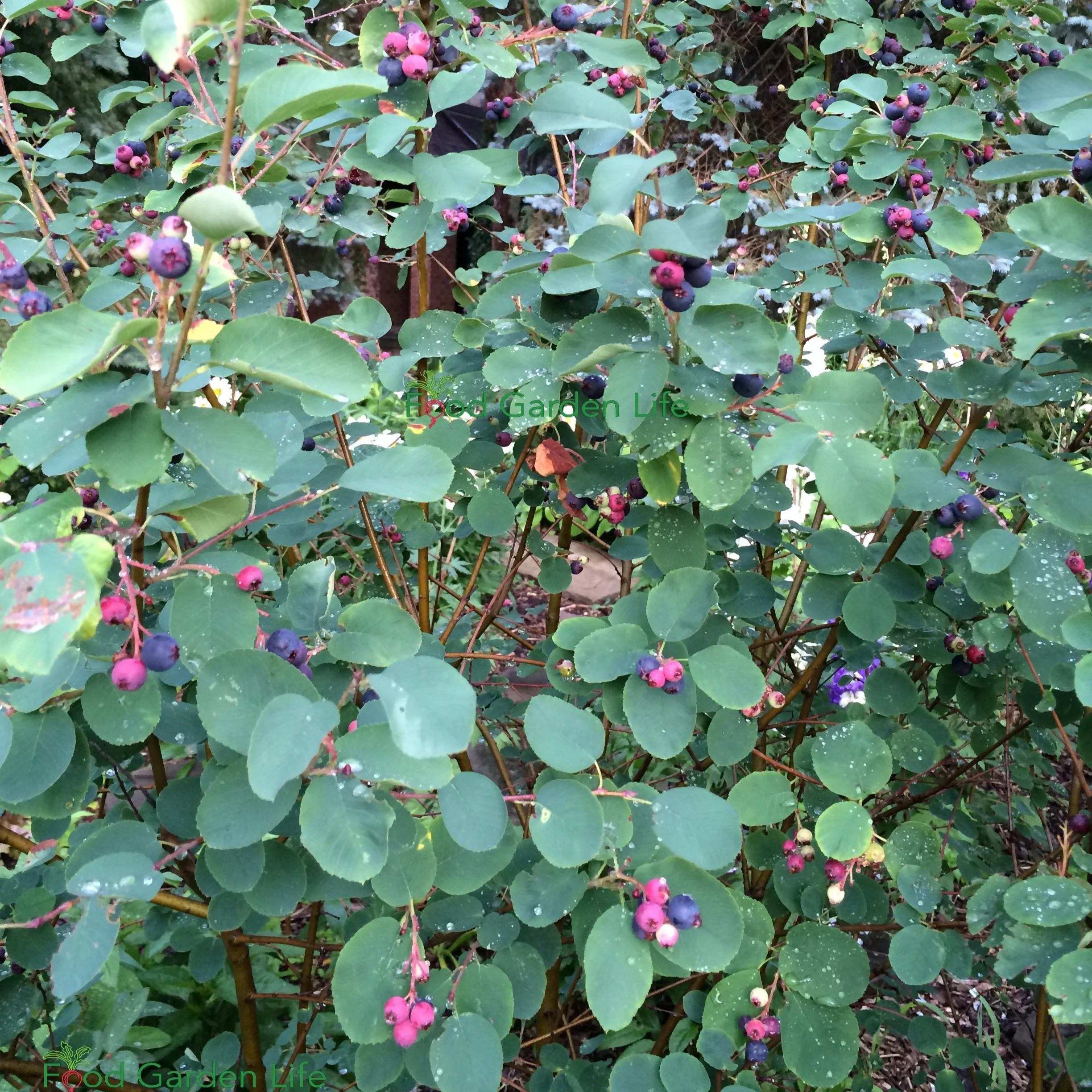
Saskatoon is an example of a fruit bush that is not juglone-sensitive.
Wondering what fruit trees are juglone tolerant? You have a lot of choice!
Autumn Olive (loved by foragers, though disliked by some because it can be an invasive here in Southern Ontario)
Cherry, Peach, Plum, Nectarine (fruit trees and bushes in the Prunus clan, what people often call stone fruit)
Chokeberry
Elderberry
Figs
Grape
Hazelnut
Pawpaw
Black raspberry
Serviceberry (including saskatoon, a.k.a. juneberry)
Here are 5 types of bush cherries you can grow.
Find out how to grow saskatoons.
Juglone-Tolerant Vegetable Crops and Herb Crops
Wondering what vegetables and herbs will tolerate juglone? There are many vegetables that tolerate juglone, so you have quite a few options.
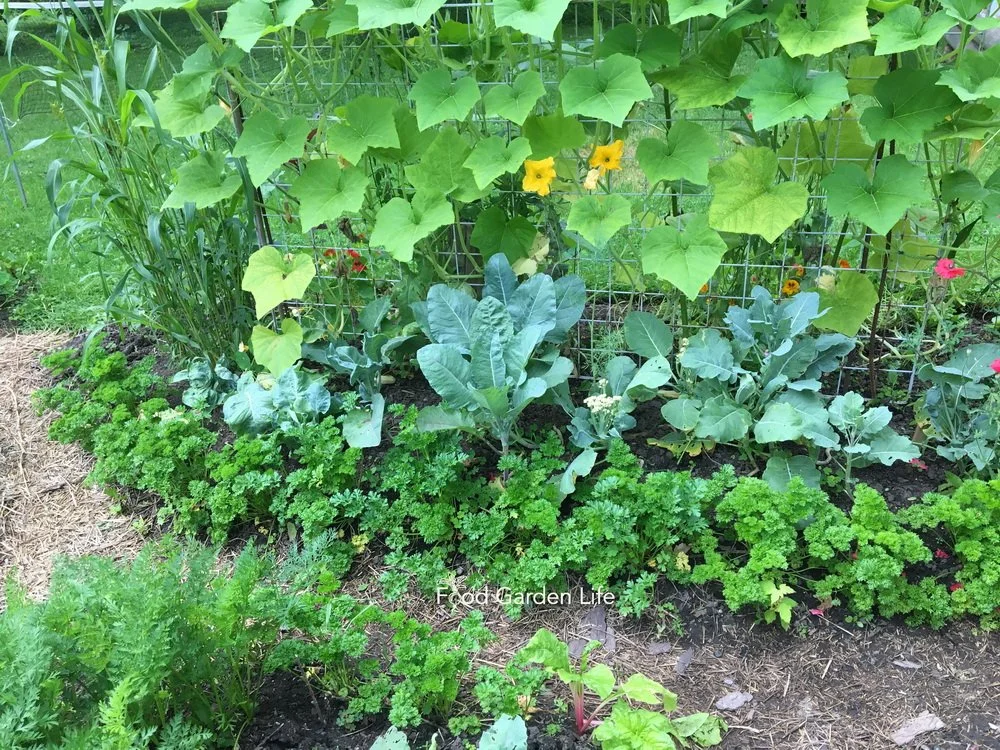
Here’s a corner of the veg patch I have near the black walnut tree, where I grow carrots, beets, parsley, basil, squash, and corn very close to a large black walnut tree.
Basil
Bean
Beet
Carrot
Chive
Corn
Cucumber
Dill
Edamame (which is soybeans while they're still green)
Garlic
Leek
Melon
Onion
Parsley
Parsnip
Pea
Squash
Swiss chard
Other Walnut-Tolerant Edible Plants
Bee Balm (edible petals)
Dandelion (sure some people think of this as a weed, but great for early greens in the spring!)
Daylily (edible flower buds, here's more on edible flowers)
Grains such as wheat, millet, and sorgum
Hawthorn
Hosta (edible leaf spears in the spring!)
Jerusalem artichoke
Mint
Nasturtium
Pin cherry and choke cherry
Redbud tree (edible flower buds)
Rose (edible petals, rosehips)
Staghorn sumac
Looking for edible flower ideas? Check out this list of edible flowers for home gardens.
Landscape with Fruit Course
It the above list of juglone-tolerant fruit has you thinking of planting fruit near your black walnut tree, here’s a course all about how to grow fruit in home gardens.
How to Use Black Walnuts - Yes, You Can Eat Them!
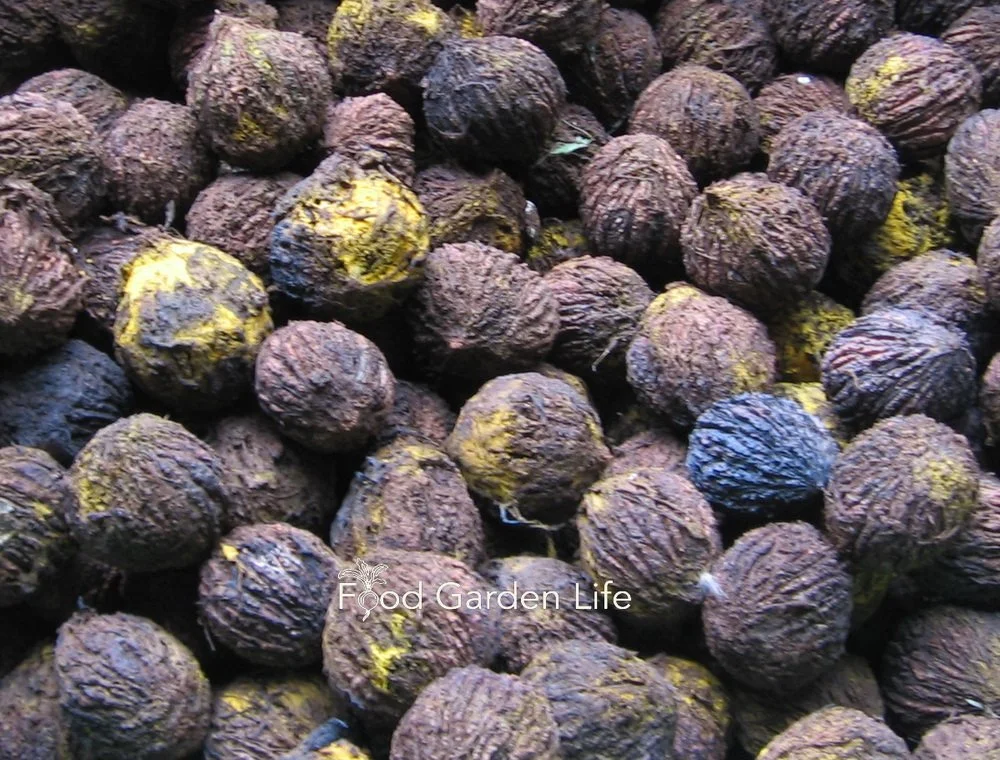
Black walnuts with husks removed.
While you're not likely to find black walnuts for sale, they are quite edible. Like other nuts, remove the hull and then air dry the nuts.
Note: The husk stain. I learned the hard way one year when my hands were a few shades darker for a week after hulling black walnuts. Someone later told me that a good way to get off the hulls is to pile the nuts until the hulls soften, and then send in kids dressed in old clothes and rubber boots to jump on the pile. I haven't tried it myself, but sounds as if it would work!
The challenge with black walnuts is cracking the shell. They're much more difficult to open than an English walnut. There is a vice-like device for cracking them open. I use a hammer. Or, I've heard of people driving over the nuts!
Key Takeaways
Pin this post!
Black walnut trees give off a chemical called juglone, which affects some plants. This is sometimes called black walnut toxicity.
This doesn't mean that you can't garden hear a black walnut tree—but that you need to choose tolerant plants and use raised beds or containers.
The size of the affected area around a tree depends on its age, the soil type, and soil moisture.
FAQ
Can I just cut down my black walnut tree to solve the problem?
Sorry...that would still leave lots of roots all through the soil, and, therefore, lots of juglone. Because it can take a few years for all the roots to decay, it's not a quick fix. In short, juglone can persist for a few years after a black walnut tree is removed.
How far should a garden be from a black walnut tree?
For a mature tree, the kill zone extends beyond the tree canopy and can be more than 15 metres from the trunk.
Find This Helpful?
Enjoy not being bombarded by annoying ads?
Appreciate the absence of junky affiliate links for products you don’t need?
It’s because we’re reader supported.
If we’ve helped in your food-gardening journey, we’re glad of support. You can high-five us below. Any amount welcome!
Food Gardening Articles
Food Gardening Courses
Find out how to grow more great food at home with our online courses. We have both live and self-paced courses.
Vegetables to Grow: 12 Tips to Choose What’s Best for Your Vegetable Garden
Choose the best vegetables to grow in your garden with these 12 crop-choosing tips.
by Steven Biggs
Choose Which Veggies to Grow in a Garden
12 tips to help you choose vegetables to grow.
“Grow radishes!”
It’s a recommendation I often hear given to new gardeners. That’s because radishes are easy to grow. And they grow quickly.
True.
But in my house, it’s the radishes that are still on the veggie platter when everything else has been devoured.
So while the easy-to-grow crops are part of a good vegetable garden plan, there are other things to think about too.
I think the best food garden starts with your life, your space, and what you actually want to eat. That's a big part of my approach to home food gardening.
Keep reading to find out how to pick vegetable crops and varieties for your needs and situation. Instead of being prescriptive and telling you what you should grow, this post gives you 12 tips to help you choose which vegetables to grow.
1. Grow What You Love
So back to the radishes, there’s no point growing what you won’t eat—even if it’s easy to grow
Even if it’s nutritious.
Grow things you’ll enjoy eating.
2. Grow for How You Cook
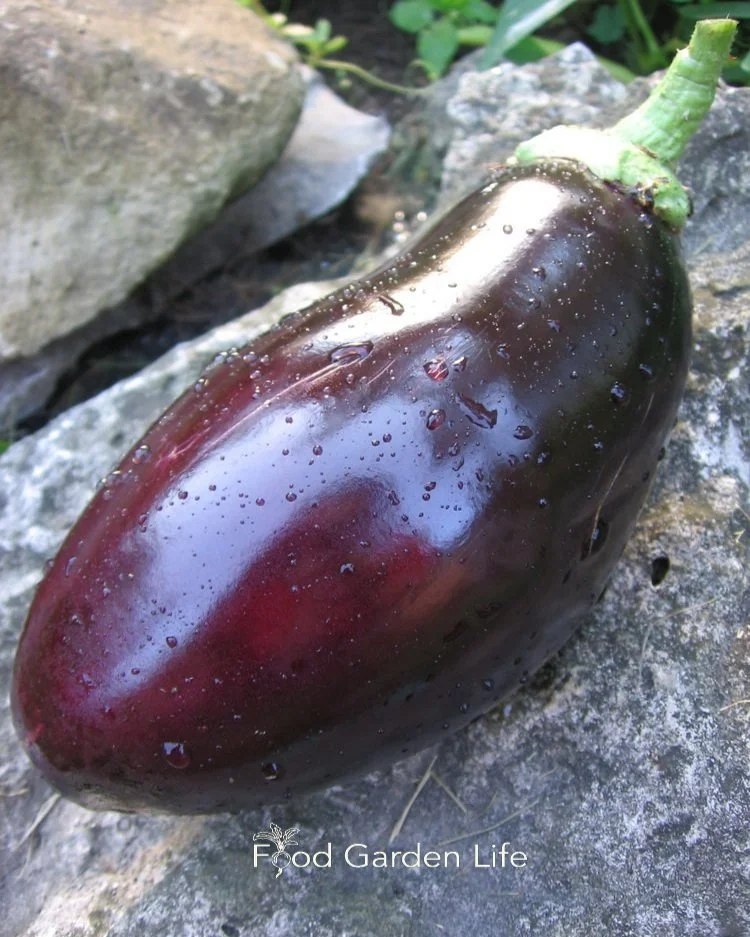
I love big slabs of eggplant that I can marinate and grill, so I grow large-fruited eggplant varieties
As you choose crops and varieties, think about how you’ll use your harvest.
Here’s an example:
I love big slabs of eggplant that I can marinate and grill—or use to make eggplant parmesan. So I always go for large-fruited eggplant varieties
For tomatoes, I like to make sauce all winter, so I grow good sauce-making varieties
3. Rule Out Some Crops
There might be crops that aren’t a fit for your garden. I’m talking about space hogs—and crops that will probably be a frustration.
Space Hogs
Some crops use up a lot of space—more than makes sense in a small garden.
For example:
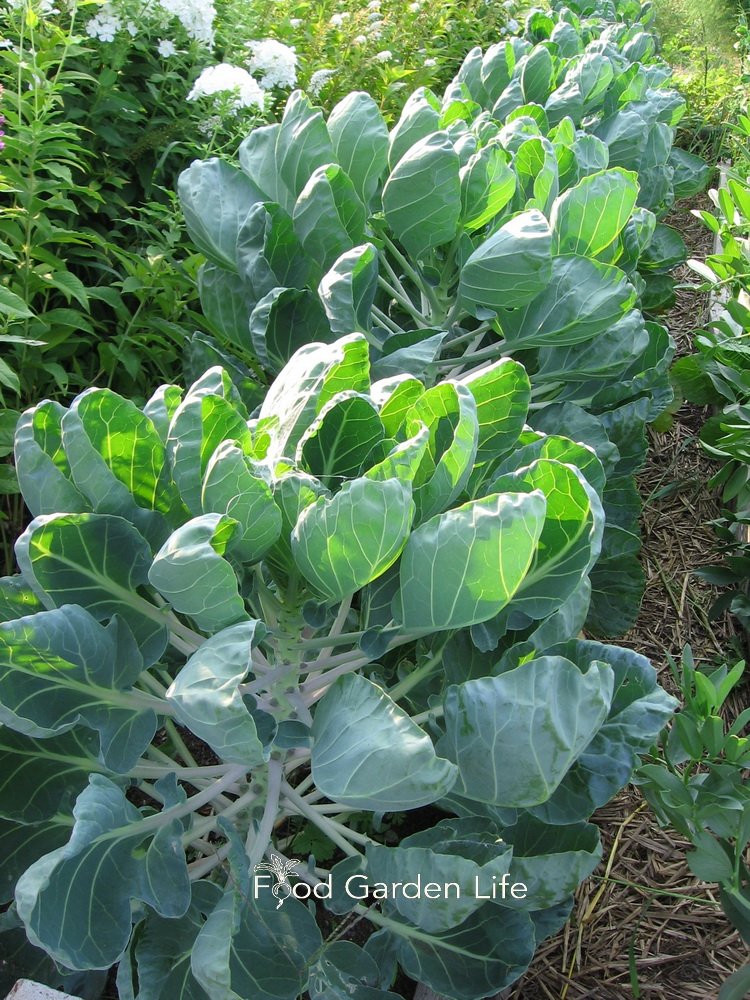
I love Brussels sprouts. But they’re big plants that tie up the same patch of garden for an entire season. So I leave them to the market gardeners.
I love edamame too. But for the amount I get considering the amount of space they take in the garden, they’re not my top choice.
Unnecessary Frustrations
Depending on what your situation, there might be crops that disappoint—or frustrate—you.
Here’s are examples:
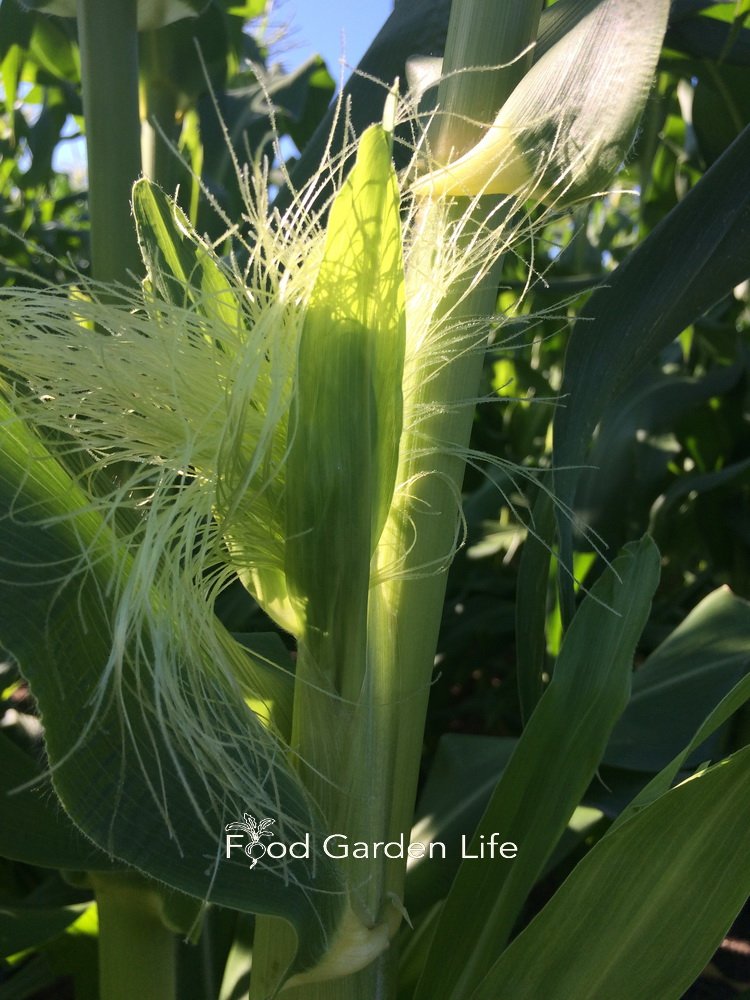
Corn. I love corn. So do all the raccoons around here. So I don’t grow it. I don’t need the chest pains!
Tomatoes. Some people prefer cherry tomatoes to big beefsteak tomatoes because that way there’s lots more tomatoes to harvest. That way, the gardener gets lots even if wildlife steals some.
4. Try Something New
Have you added something new to your garden? I like to grow something new every year.
Recently it was celtuce, a.k.a. stem lettuce. It’s easy to grow and fun to cook with. Not a new crop at all…just new to me.
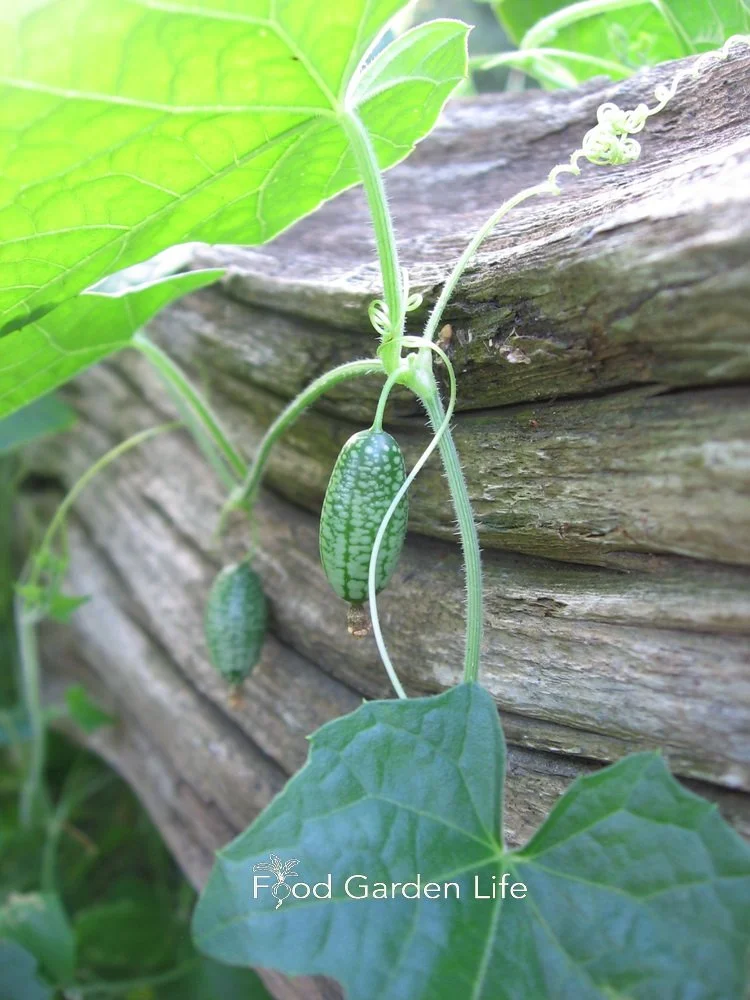
20 years ago I grew cucamelons for the first time and have grown them ever since.
20 years ago I tried cucamelons and have loved them and grown them every year since.
Look for neat varieties (e.g. a pepper variety I love is the corkscrew-shaped ‘Corbacci’
Or branch out into a crop from a cuisine you’re not familiar with (okra was new to me…but after I learnt a Cajun fiddle tune I wanted to learn how to make Cajun-style gumbo soup…and now I aways grow okra for making gumbo soup!)
5. Consider Diseases
Variety choice sometimes helps with disease problems. For example:
Downy mildew ravaged my basil for a couple of years. So now when I’m getting basil seeds, I look for mildew-resistant basil varieties
There’s no totally blight-proof tomatoes, but there are blight-resistant varieties, worth adding to the mix in a garden so that in years when blight decimates the tomato patch, there are still a few plants producing late in the season
6. Pick Crops for Small Spaces
If space is a challenge, crop choice can often help you harvest much, much more.
Crops for Vertical Gardening
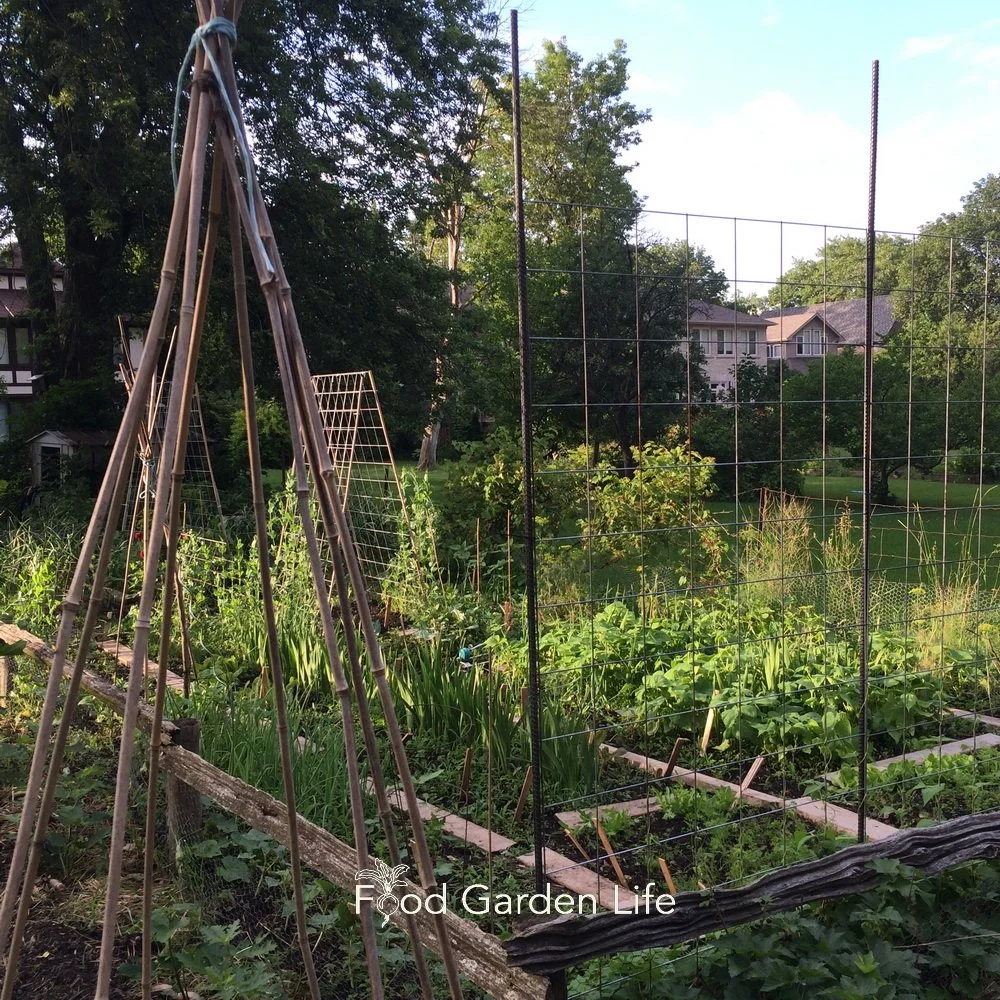
If you’re gardening in a small space, choose vegetable crops that you can grow upwards on trellises, tee-pees, or fences.
If you’re gardening in a small space, choose veg that you can grow vertically. When you grow upwards, that frees up space on the ground—so you can fit more into a small space.
Here are a couple of my favourites:
Runner beans. I love runner runner beans! The flowers are edible, great for bouquets, attract hummingbirds. Oh, did I mention there’s beans too! (If you’re in a maritime climate, you might find runner beans produce more than pole beans.)
Zucchini: Many zucchini varieties have a bush-like growth habit, and the plant can take up a fair bit of space. But if you grow a climbing zucchini variety, it won’t take up as much space…so there’s room to plant more in your garden.
Grow a Container Vegetable Garden
And get an early harvest of crops that usually take too long!
Plants with Multiple Edible Parts
You might also think about plants with more than one edible part, so in a limited space you’re getting multiple harvests from one crop
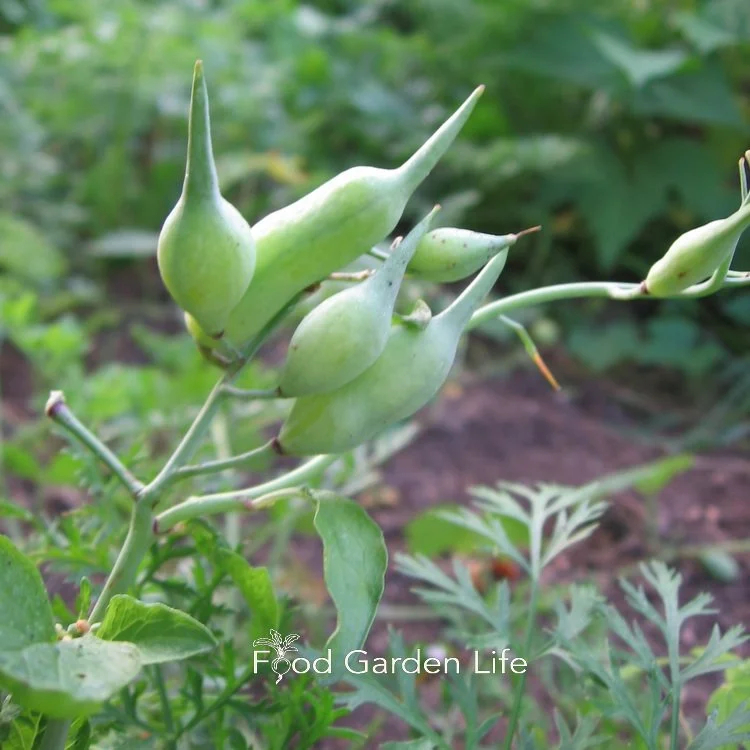
Radishes have edible seed pods.
Snap peas (you can eat the peas and the pod…and don’t forget young tendrils)
Squash (eat the flowers, the squash…and shoot tips!)
Beets (both leaves and roots are edible)
Radish (along with the roots, the seed pods are edible)
Find out more crops with more than one edible part.
Hear a chef talk about using squash shoot tips and other uncommon ingredients.
7. Choose for an Early Harvest
Look for crops and varieties that can move up your first harvest.
For example:
I like broad beans, which can be planted far ahead of all the other types of beans
Look for fast-maturing varieties (I grow fast-maturing arugula and spinach varieties in my cold frames in late winter because I want that first harvest as soon as possible)
Do the same with your beets, carrots, tomatoes and other crops
To choose faster-maturing varieties, compare the days-to-maturity information with other varieties (often called “DTM”)
8. Remember Fall Harvesting
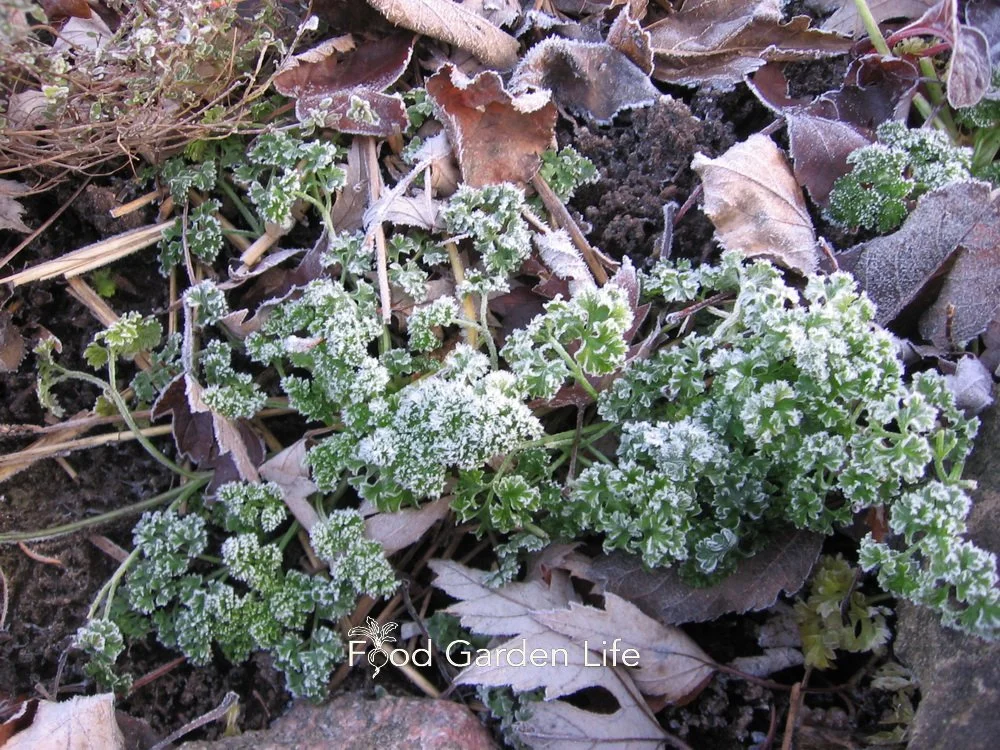
Parsley holds up well when fall frosts arrive.
Remember to add in cool-season crops that keep producing as fall frosts arrive.
Cabbage family
Kale
Celery
Parsley
9. Choose for a Short Growing Season
If you’re dealing with a short growing season, there might be some crops you don’t want to bother with. I have friends who won’t grow eggplant and pepper.
More ideas:
Bush beans give a quicker, more concentrated harvest than pole and runner beans
Look for varieties that mature more quickly (e.g. we love Cream of Saskatchewan watermelon, which ripens melons much more quickly than watermelon varieties grown in warmer zones.)
When it comes to tomatoes, there are lots of early-maturing tomato varieties
10. Grow for Year-Round Enjoyment
Many gardeners like to enjoy the harvest year-round. If that’s you, here are some ideas:
Grow dry beans that you can easily store for later use
Look for root crops that store well (these tend to be varieties that grow larger roots)
Thought of kohlrabi…there’s a storage variety too
You can harvest leeks right through the winter when there’s a thaw
Get more crop ideas for year-round enjoyment.
11. Plan an Edible Landscape
Looking for attractive veg to add an ornamental touch to a landscape?
Here are ideas:
Asparagus looks great at the back of a perennial border, with its tall, ferny foliage
Runner beans have beautiful flowers
Lovage is a perennial with a celery-like taste, great for the perennial border
Eggplant has beautiful flowers
Kale is a great way to add colour and texture into a garden
Here are more perennial edibles.
Sometimes shade is a challenge in an edible landscape. Here are fruits and vegetables that you can grow in the shade.
If you’re serious about edible landscaping and want to create an awesome out-of-the box edible landscape, check out this course.
12. Crop Substitution for Less Work
Pin this post!
Keep your workload to a minimum through crop choice!
Here are examples of the type of thinking you can use to make less work for yourself.
Leaf celery instead of stalk celery. Stalk celery takes lots of water and feeding to get tender, crispy stalks. Leaf celery doesn’t make big stalks—you just get lots of leaves on short stems, and it’s far less bother if you don’t mind consuming celery this way. (I chop it into soups, stews, and salads for that same celery taste.)
Ground cherry instead of cape gooseberry. I actually prefer the taste of cape gooseberries…but they need a longer growing season, meaning I have to start the seeds earlier, and then give them prime, hot, garden real estate to get a decent harvest. Ground cherries are far easier to grow. (Find out more about these two different husk cherries.)
Broccoli instead of cauliflower. Not only is cauliflower more finicky, to get snow-white heads it must be blanched, which is often done by tying leaves over the head with an elastic. It’s a lot of bother compared to broccoli, which requires no blanching.
Squash instead of potato and sweet potato. Squash is far less work. Instead of transplanting sweet potato plants, you just poke squash seeds into the soil. And instead of digging out sweet potato roots, you just snip squash from the vine. You still get the sweet, orange ingredient for baking.
Find This Helpful?
Enjoy not being bombarded by annoying ads?
Appreciate the absence of junky affiliate links for products you don’t need?
It’s because we’re reader supported.
If we’ve helped in your food-gardening journey, we’re glad of support. You can high-five us below. Any amount welcome!
More on Vegetable Garden Planning
More on Growing Vegetables
Vegetable Gardening Articles and Interviews
For more posts about how to grow vegetables and kitchen garden design, head over to the vegetable gardening home page.
Vegetable Gardening Courses
Planning a Kitchen Garden that Awes (in Purple!)
Make a kitchen garden with a mix of your favourite crops.
By Steven Biggs
Grazing the Kitchen Garden
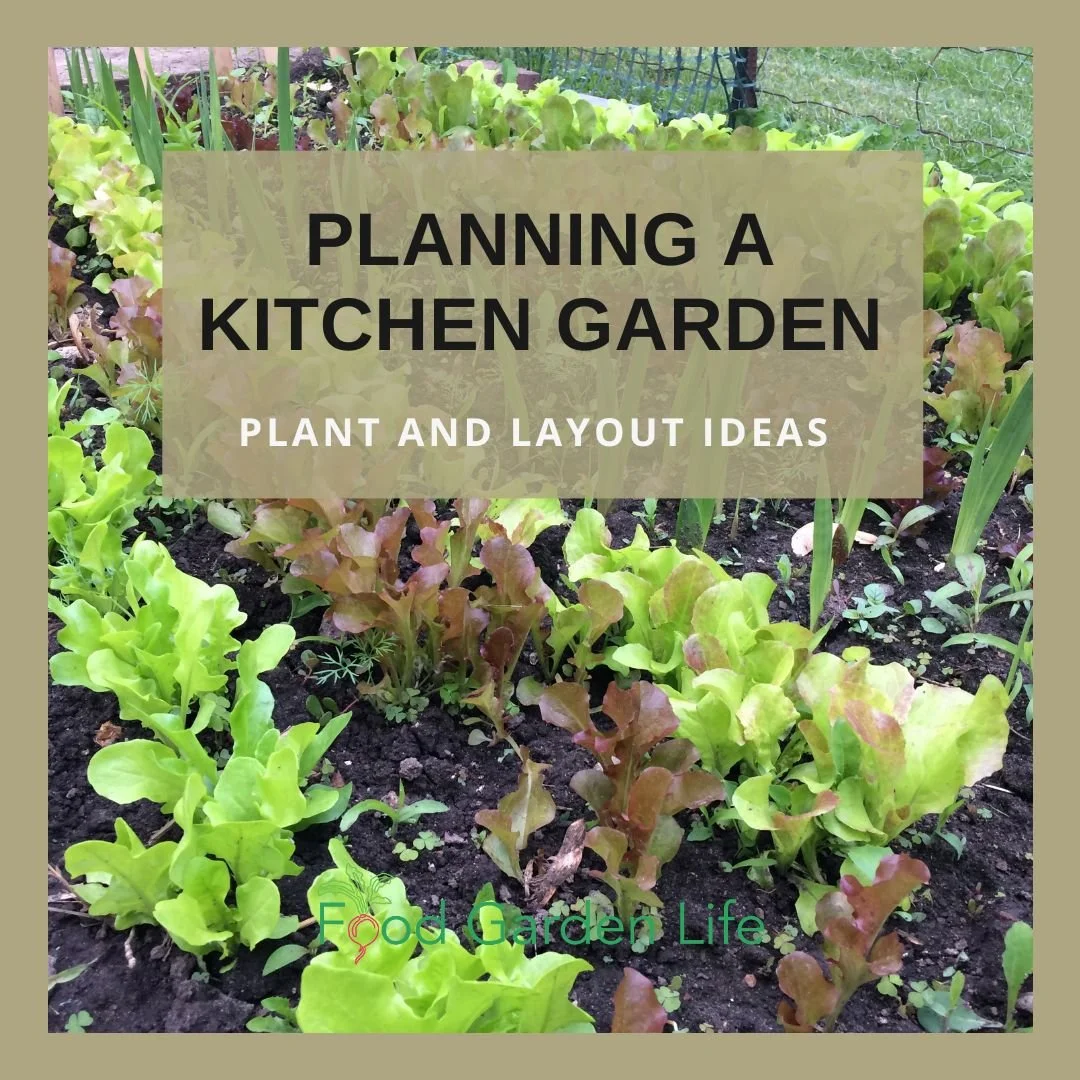
How to make a kitchen garden you love.
My family doesn’t think it’s unusual to hear the back door open and close as I cook supper.
They see me come in with a fistful of herbs. Or a colander with vegetables, fresh fruit, and edible flowers.
I think of it as grazing: Picking what’s ready from my kitchen garden: Small portions of a wide variety of ingredients for our meal.
What’s ready in the garden inspires what I make for supper.
Along with a varied, continuous harvest, there’s something else I think about when planning a kitchen garden: Creativity. A great kitchen garden touches the senses. Taste is obvious, smell too. But there’s also touch, sound, and sight.
If you’re looking for great kitchen gardening ideas, keep reading. I have ideas for you about how to make a kitchen garden you love.
Planning a Kitchen Garden – and Having Fun Doing it
The planning stage of gardening can be intimidating. There’s crop spacing, crop timing, succession crops, crop rotation, and more…
So before I throw out ideas for you, here’s my top advice: Have fun. The compost pile takes care of things that don’t go as planned.
Next suggestion: Be playful with style and design because it’s a personal thing. A kitchen garden plan is a personal creation. (And the fun part is that every year you can create something new!)
For me, that's what home food gardening is about: good food, creativity, and a garden that fits naturally into everyday life. Here's the bigger picture of how I approach it.
What is a Kitchen Garden?
How is a kitchen garden different from a vegetable garden? It depends who you ask.
When I think of a kitchen garden I think of a mix of edible plants including herbs, vegetables, fruit, edible flowers, and flowers for cutting. That sets it apart from a traditional vegetable garden geared towards large harvests for canning, freezing, and storing.
Create Your Own Unique Edible Landscape
That fits for your yard, and your style!
Creative Kitchen Gardens
More than a Vegetable Garden
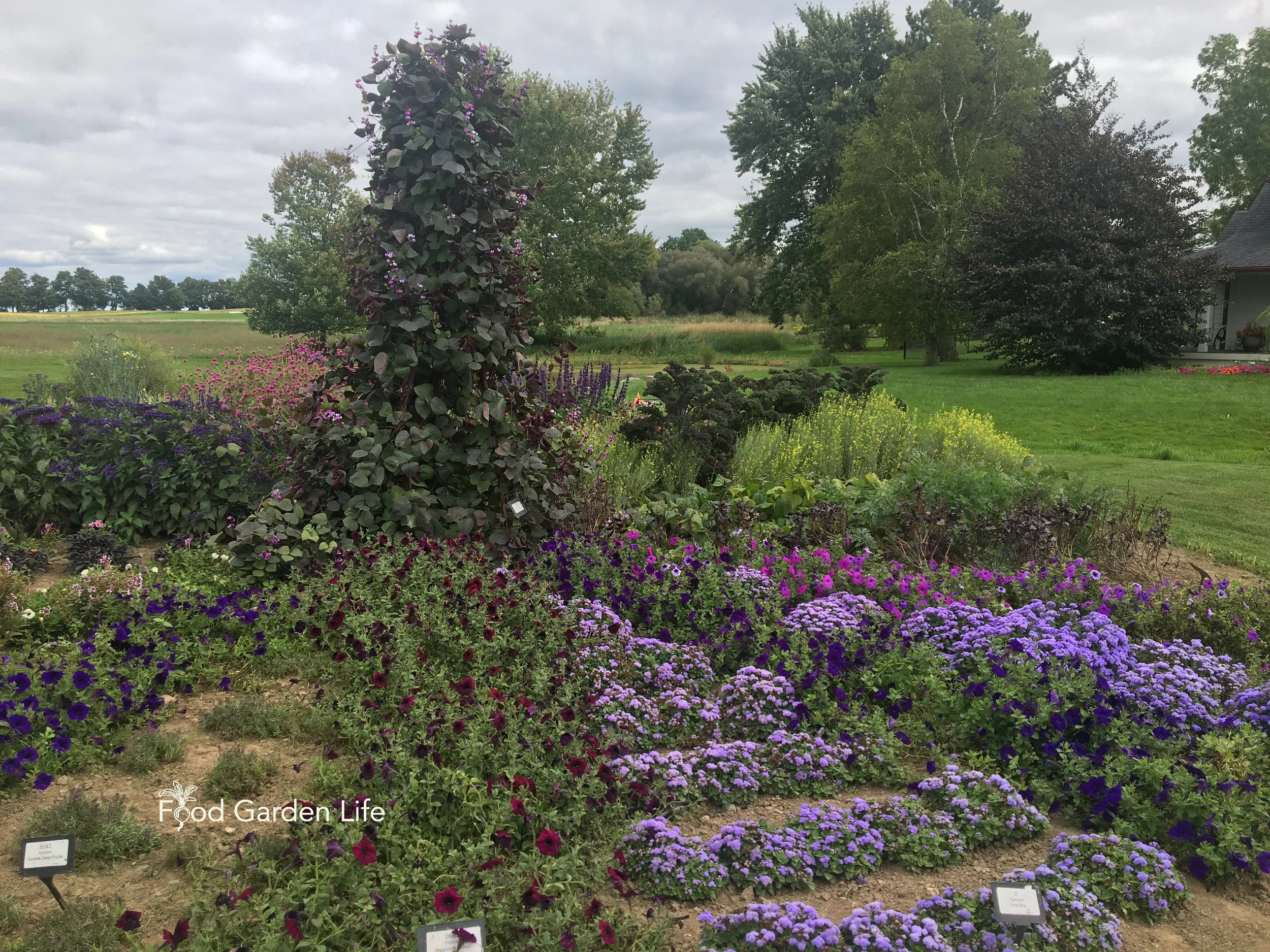
It was late fall and this kitchen garden was getting tired, but the playful design and colour theme still shone through.
However you define a kitchen garden, don’t just make it functional. Make it something that gives you a jolt of delight when you see it.
For example, this fall I took a trip to the William Dam Seeds trial garden. It was late in the season and things were past their prime. But I was still riveted by what remained of their playful purple-themed garden. It was a mix of flowers, veg, and herbs.
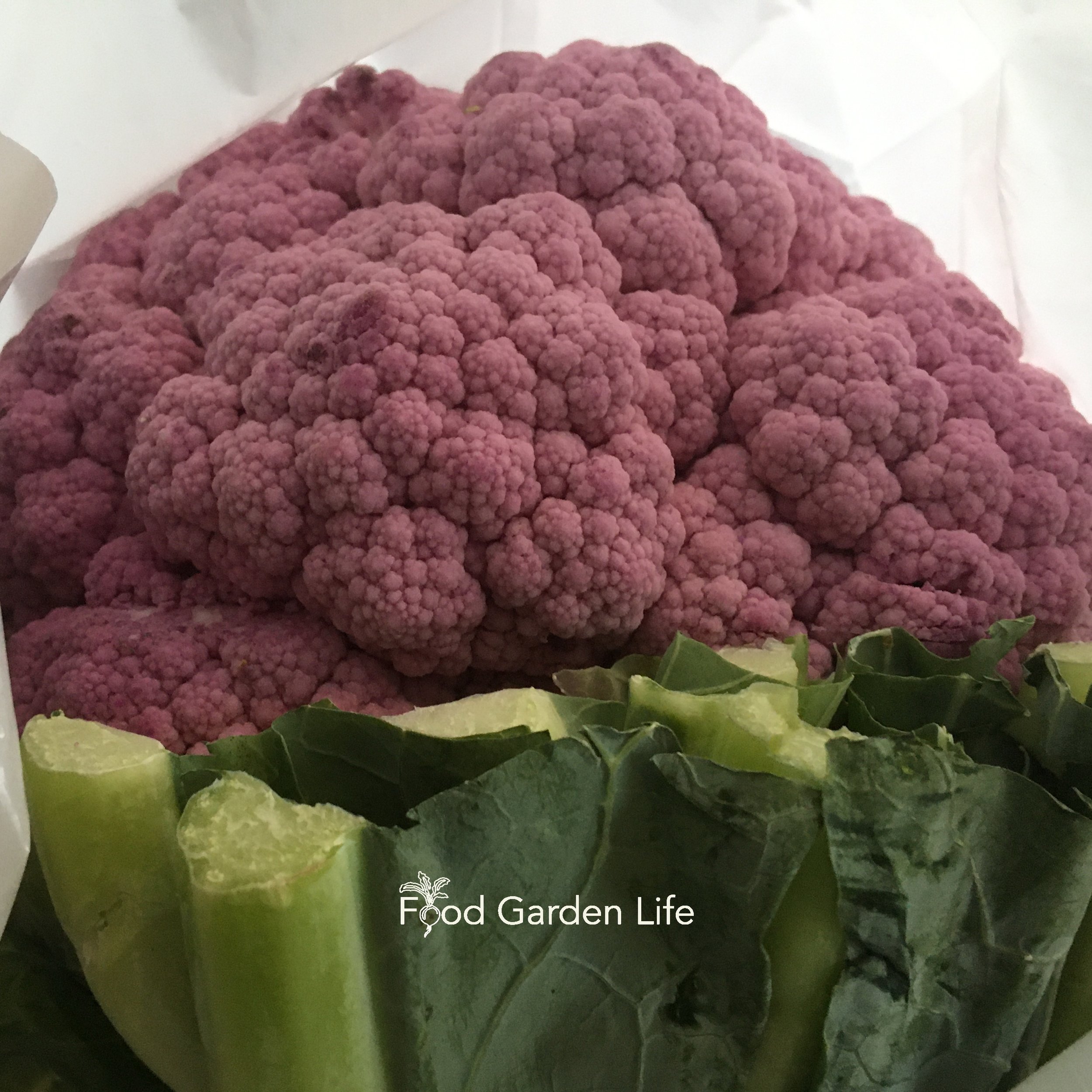
Purple kale, purple basil, purple cauliflower, purple beans…and more.
There were lots of edibles. There was also a hefty dose of flowers. And the garden gave a wallop of colour. It had height. It was fragrant. And it was a playful pinwheel design.
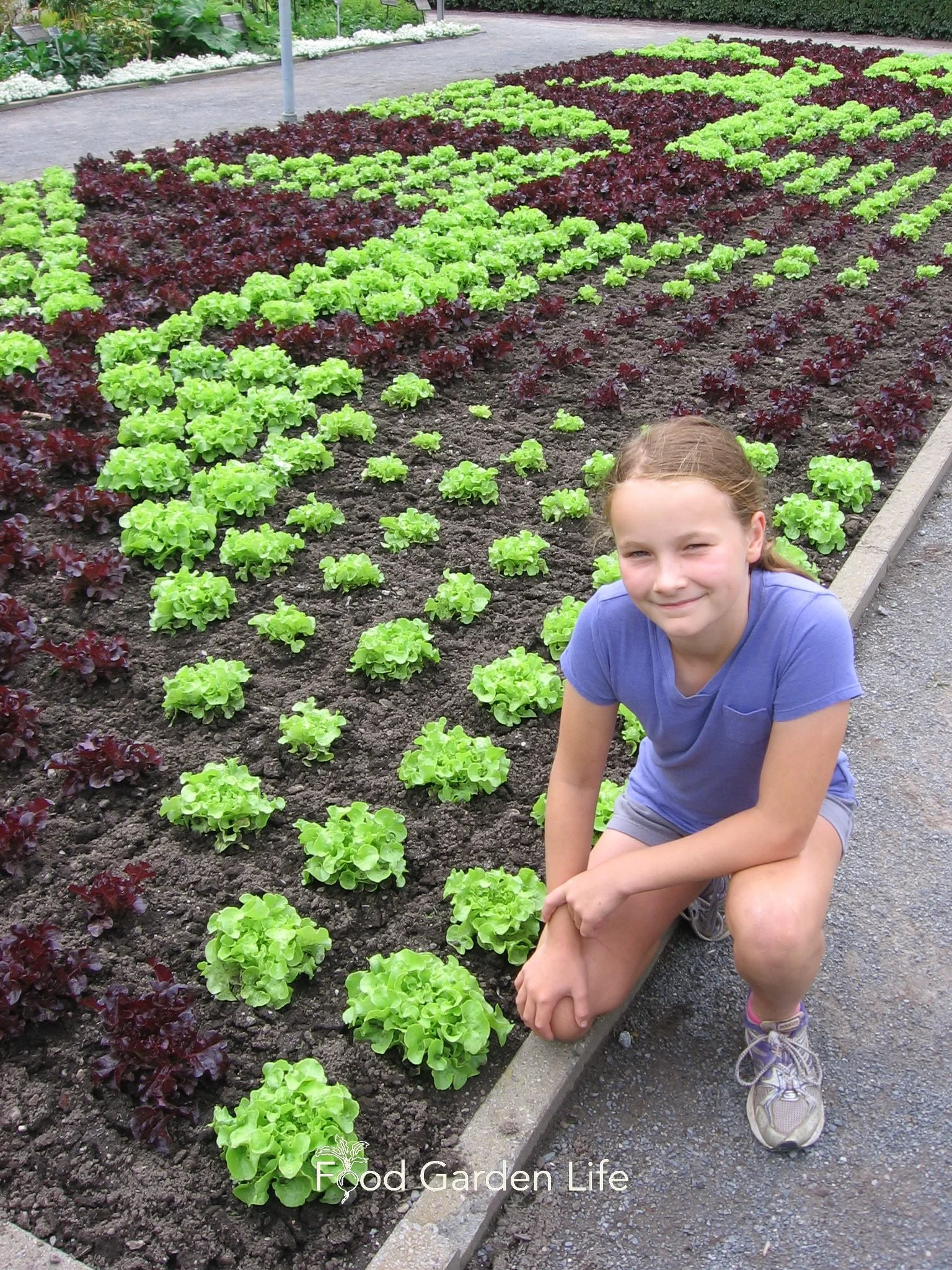
My daughter Emma and I were intrigued by the use of patterns and shapes in the Food Garden at the Montreal Botanical Gardens.
I’m not suggesting a purple-themed garden for everyone. I mention the purple-themed garden to help you think about making your kitchen garden special for you.
So think about:
Colourful crops
Texture
Shapes and patterns
Plant-themes (e.g. lots of lettuces!)
Here’s a fun idea…a dragon-themed garden for kids (seriously! See below.)
Creativity is what makes kitchen gardens shine.
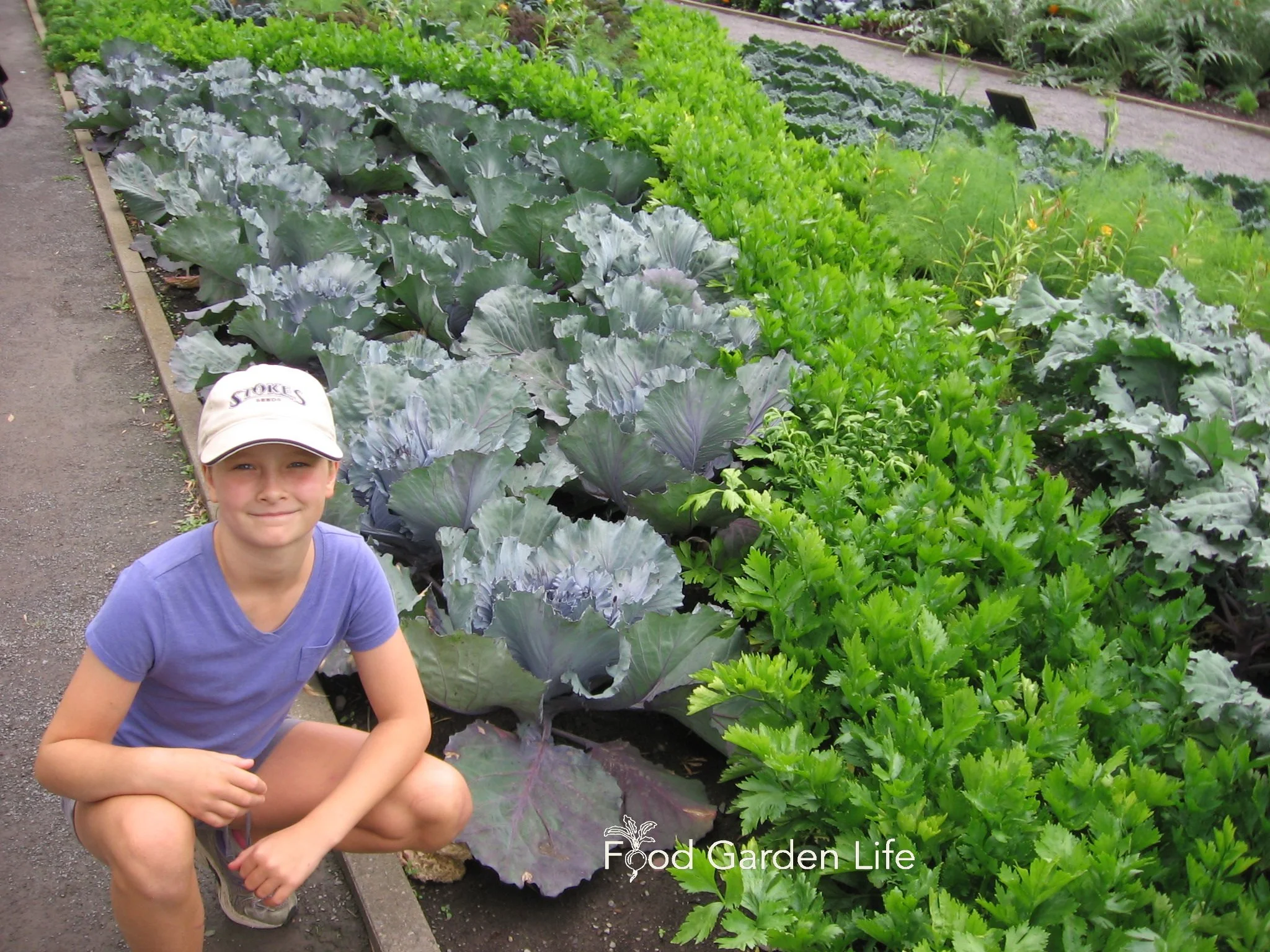
Don’t be afraid to play with texture in the kitchen garden! Here’s an X of celery between cabbage plants at the Food Garden at the Montreal Botanical Gardens.
Purple-Themed Fun
The purple trial garden reminded me of the purple-themed kids garden my daughter Emma included in her book Gardening with Emma.
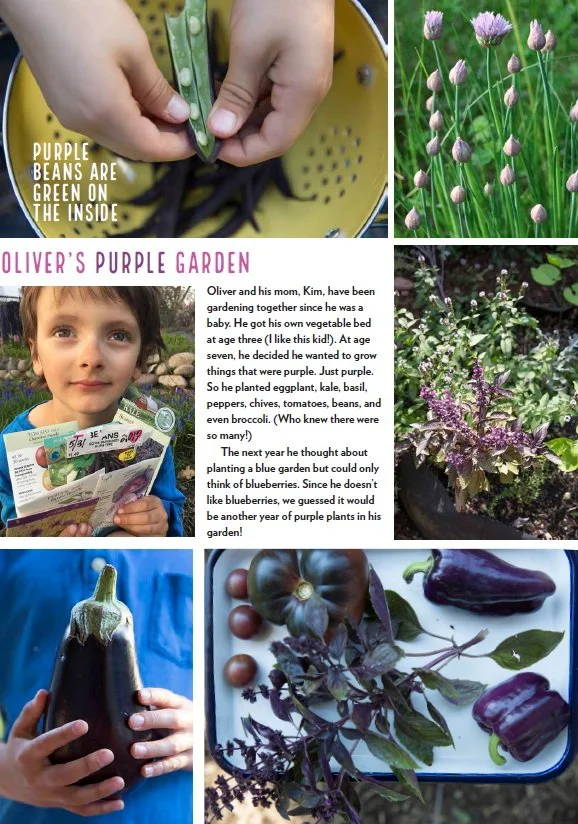
From the book Gardening with Emma.
The gardener, Oliver, was 7 years old. He told his parents he wanted a purple-themed garden.
When Emma got in touch with him for the book, Oliver was growing these purple crops:
Eggplant
Kale
Basil
Broccoli
Peppers
Chives
Tomatoes
Beans
More Colourful Edibles
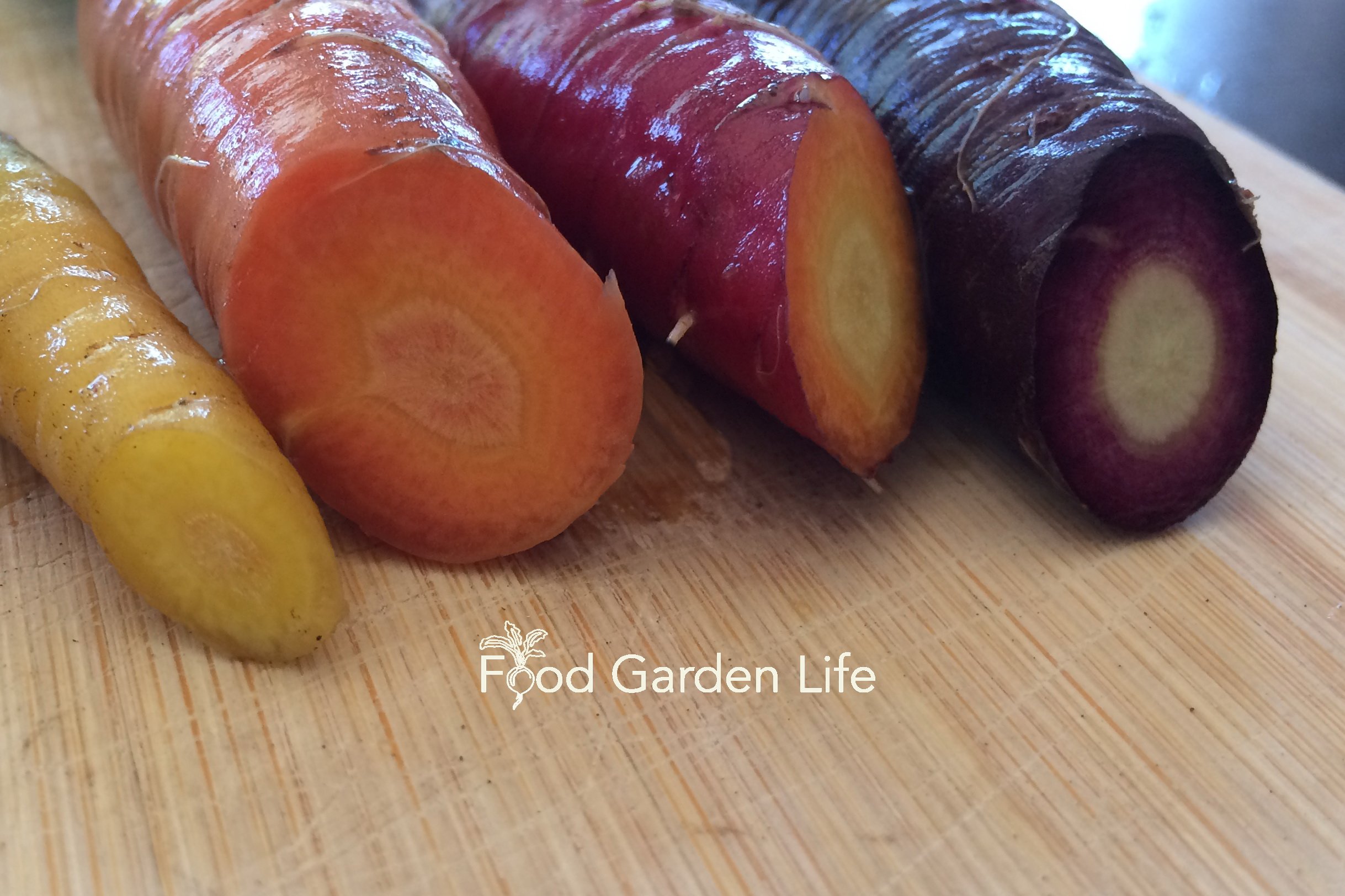
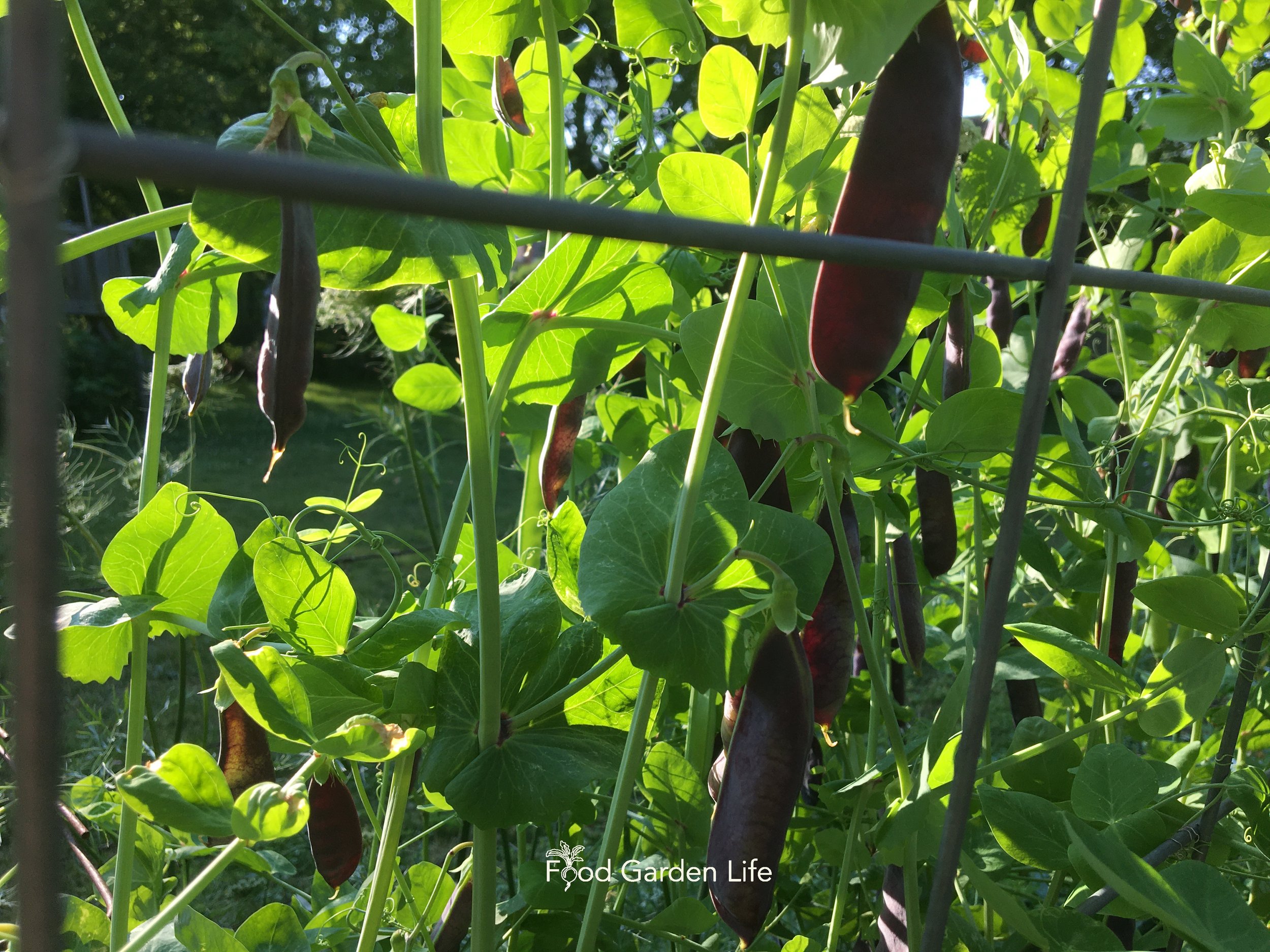
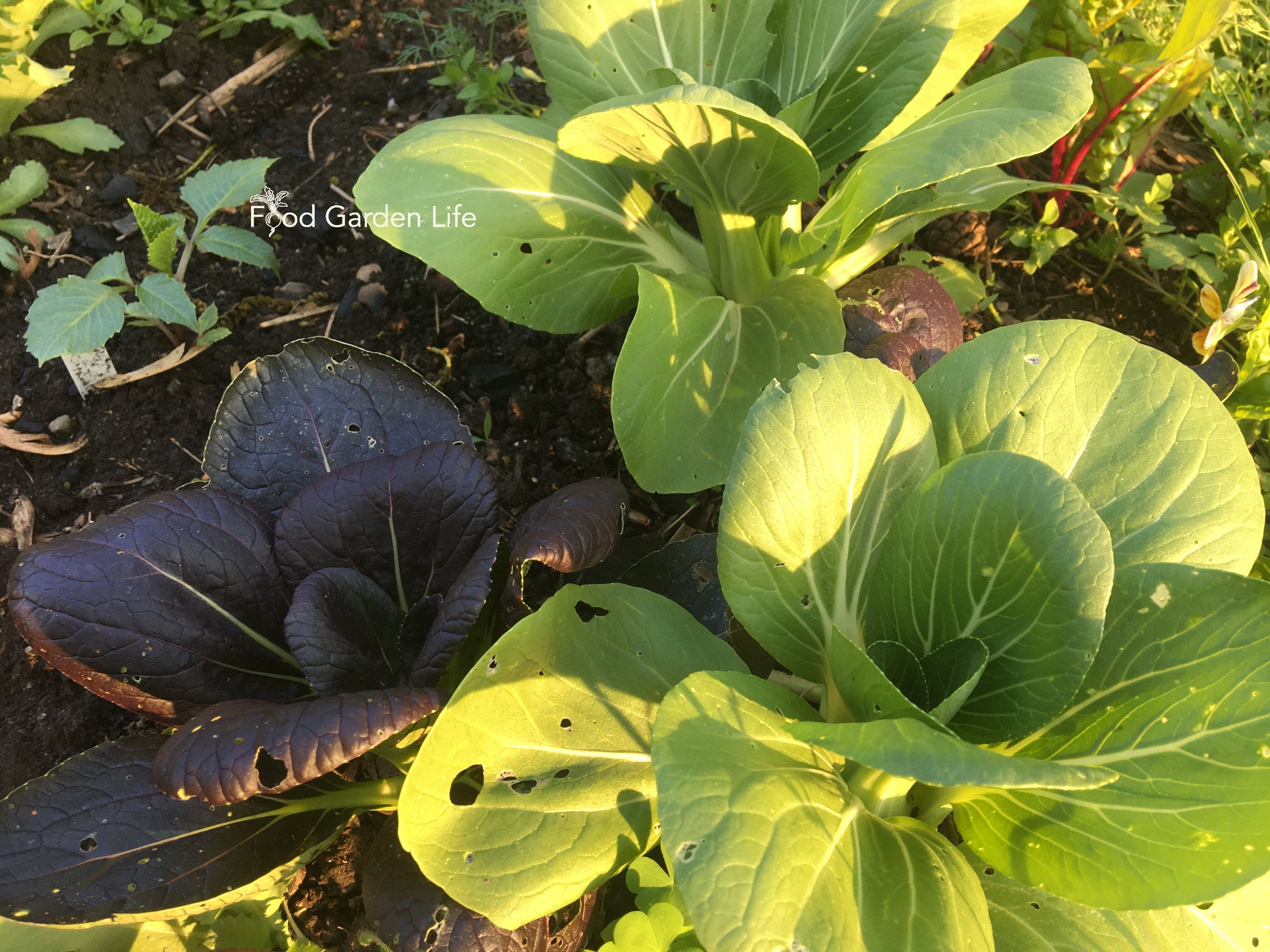
I was thinking about Oliver’s purple kitchen garden, and jotted down purple crops in my garden that we can add to his list of purple crops:
Lavender
Purple peas
Purple mustard
Purple bok choy
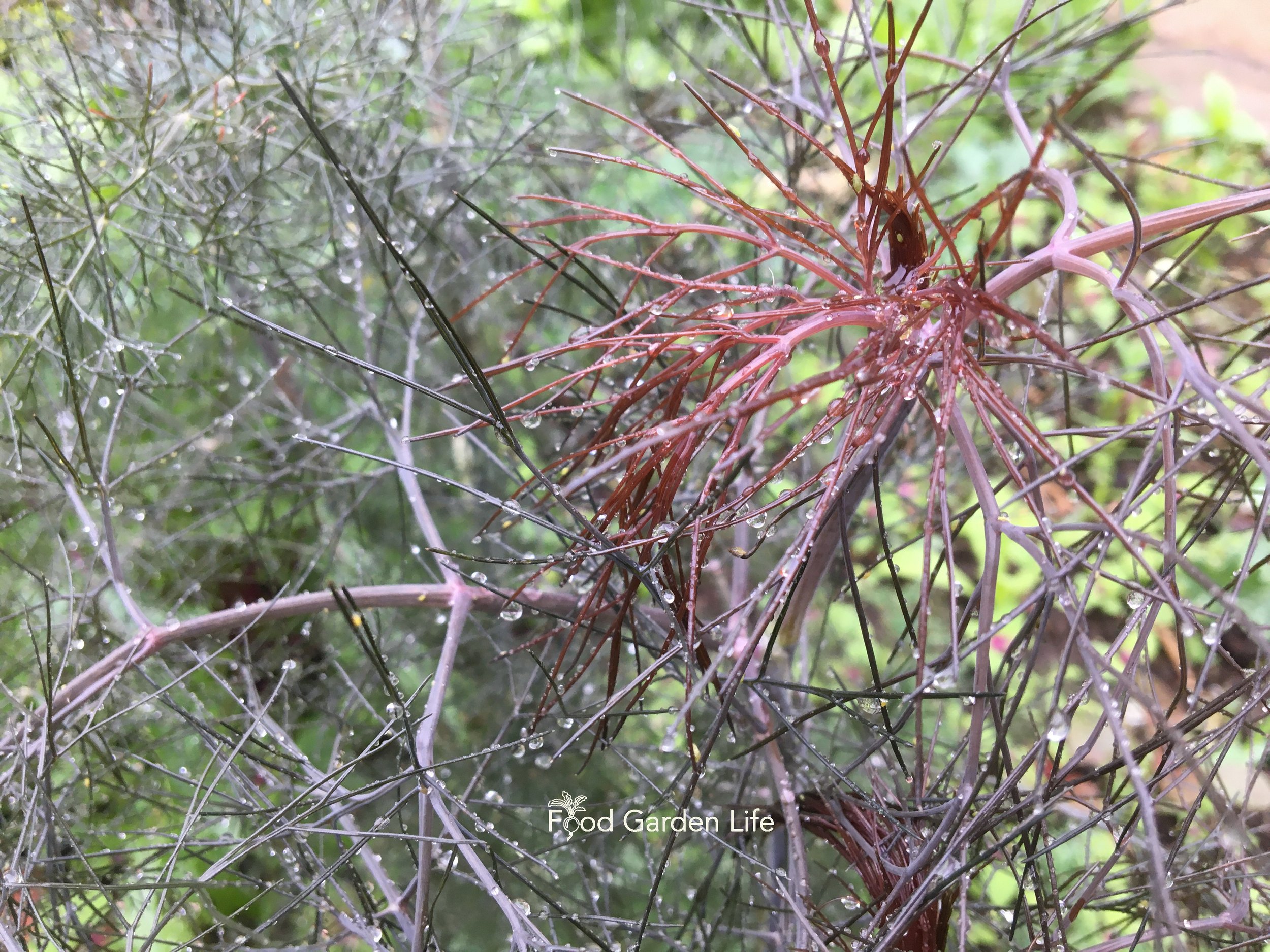
Bronze fennel (OK, looks purple to me!)
Purple-leafed elderberry
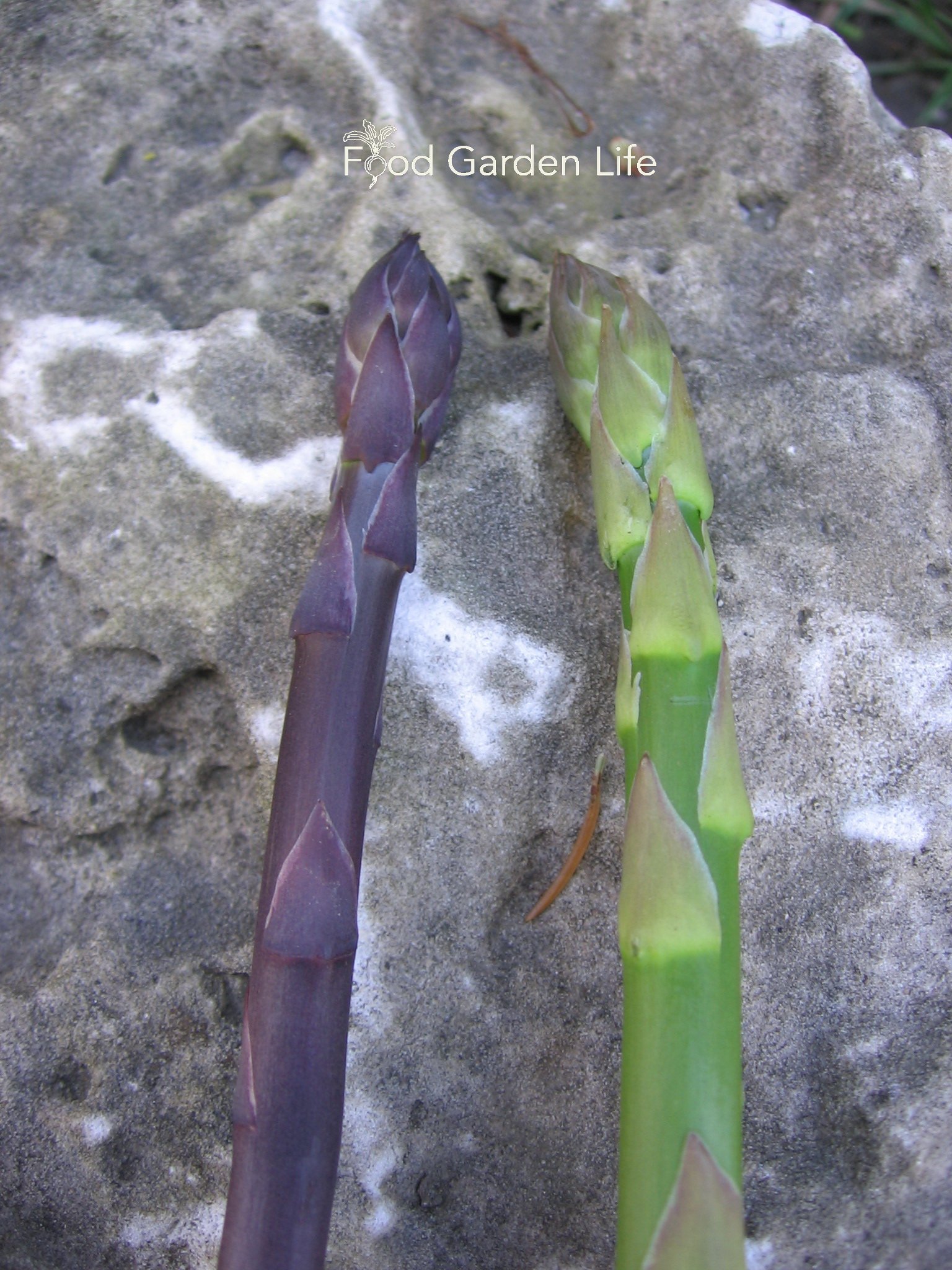
Purple asparagus
Purple might or might not be your jam. If it’s not, think about what delights you.
Where to Put a Kitchen Garden
Every yard is different. Every gardener is different. So there’s no one-size-fits-all answer when it comes to the best location for a kitchen garden.
But my top advice is to think about how you use your yard. Here are questions to think about:
Can it be somewhere close to the house if you want to dart outside for ingredients?
Do you want to see the kitchen garden from the house?
Where do you have growing space available?
Where in your yard are the growing conditions suited to a garden?
Kitchen Garden Plants
My own kitchen garden has annual vegetables, perennial vegetables, herbs, edible flowers, cut flowers, and fruit trees.
I’m a big believer in weaving flowers into a garden. They looks nice. They attracts pollinators. And they attract beneficial insects (small parasites and predators that help to keep pest populations in check.)
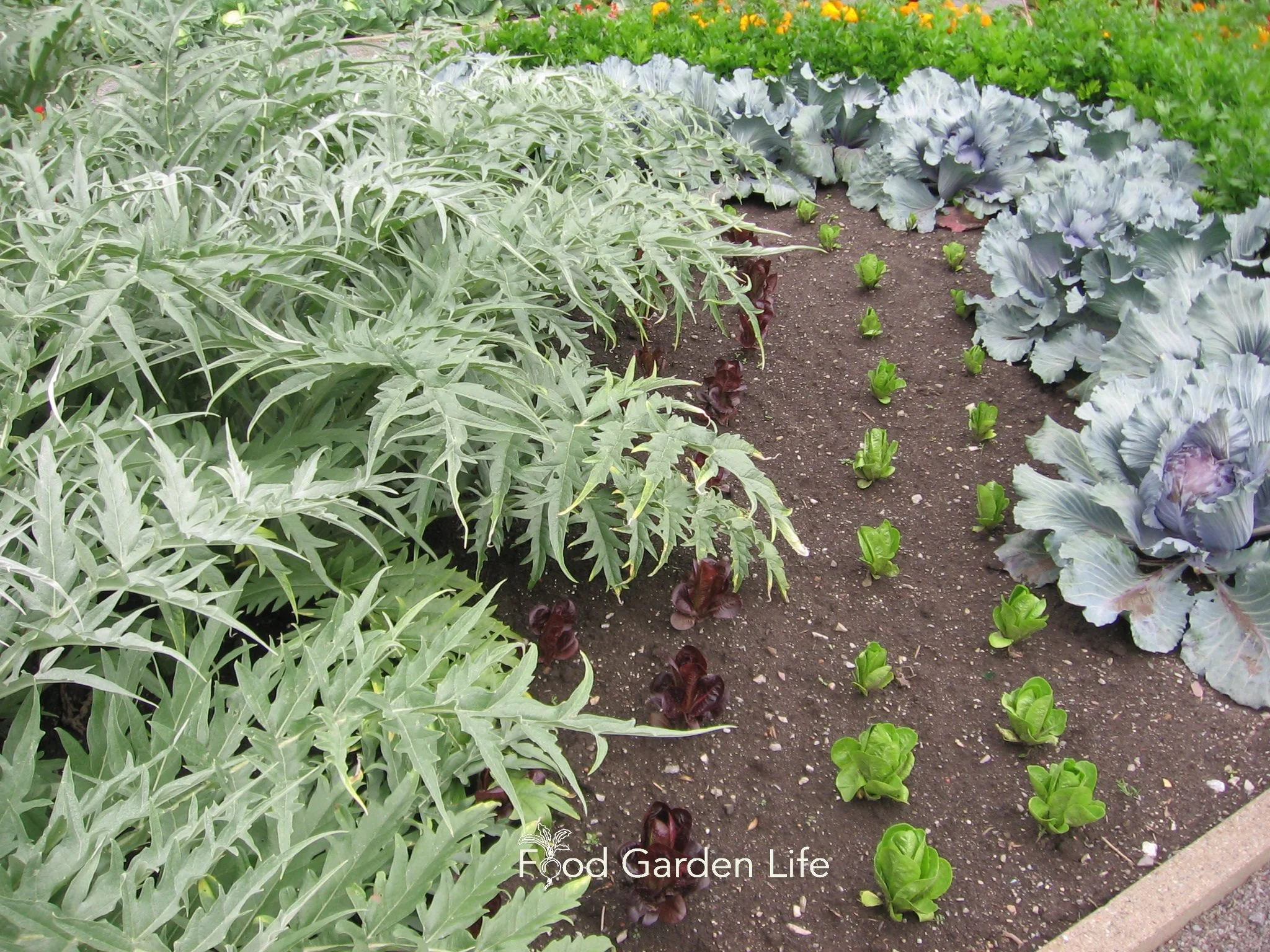
A summer succession crop of lettuce between established cabbage and artichoke crops.
Some crops (e.g. lettuce) don’t last the whole season. As you choose crops, take these short-lived crops into account and plan for succession crops to follow them. (Here’s a guide to succession crops.)
Most importantly, grow things you like to eat. Then add in a few new crops to broaden your palate.
Interested in edible perennials? Check out these edible perennials.
Growing vegetable crops in containers? Here are my favourite container vegetable crops.
Kitchen Garden Layout
How to Start a Kitchen Garden
Layout is a personal thing. I geek out at the mention of traditional French potager gardens.
My kitchen garden doesn’t look quite like a potager—but I took inspiration from that style as I added brick walkways, terracotta pots, and a mix of edibles and flowers for cutting.
Your kitchen garden layout might include raised beds, a cold frame, and large containers. It's up to you.
What is a Potager Garden?
Pin this post!
Think of it as a traditional French kitchen garden. Potager gardens blend colourful flowers, salad greens, fresh fruits, and herbs. There's often symmetry. There's often a focal point.
Oklahoma garden designer Linda Vater loves to create elegant edible gardens. Her work is inspired by the tradition of the potager garden. Get Linda’s tips for making an elegant edible garden.
I love this: Landscape architect Jennifer Bartley says, “The potager is more than a kitchen garden; it is a philosophy of living that is dependent on the seasons and the immediacy of the garden.” Get Jennifer’s tips for designing a kitchen garden.
Spacing in a Kitchen Garden
Experiment with Spacing
Recommendations on seed packets are often geared towards field-scale production, and towards fully mature crops. If you’re planning to harvest baby lettuce, it needs less space than a large, mature head of lettuce.
Another way to look at spacing is through the lens of rows versus blocks. I talk about rows and blocks in this article with 7 garden layout ideas.
Top Kitchen Garden Tip
Be wildly creative.
More Fun Theme Gardens
Fun Kitchen Garden Ideas for Kids (and Adults too!)
In Gardening with Emma, my daughter has a rainbow spread of veggies. Perhaps a rainbow planting in your kitchen garden?
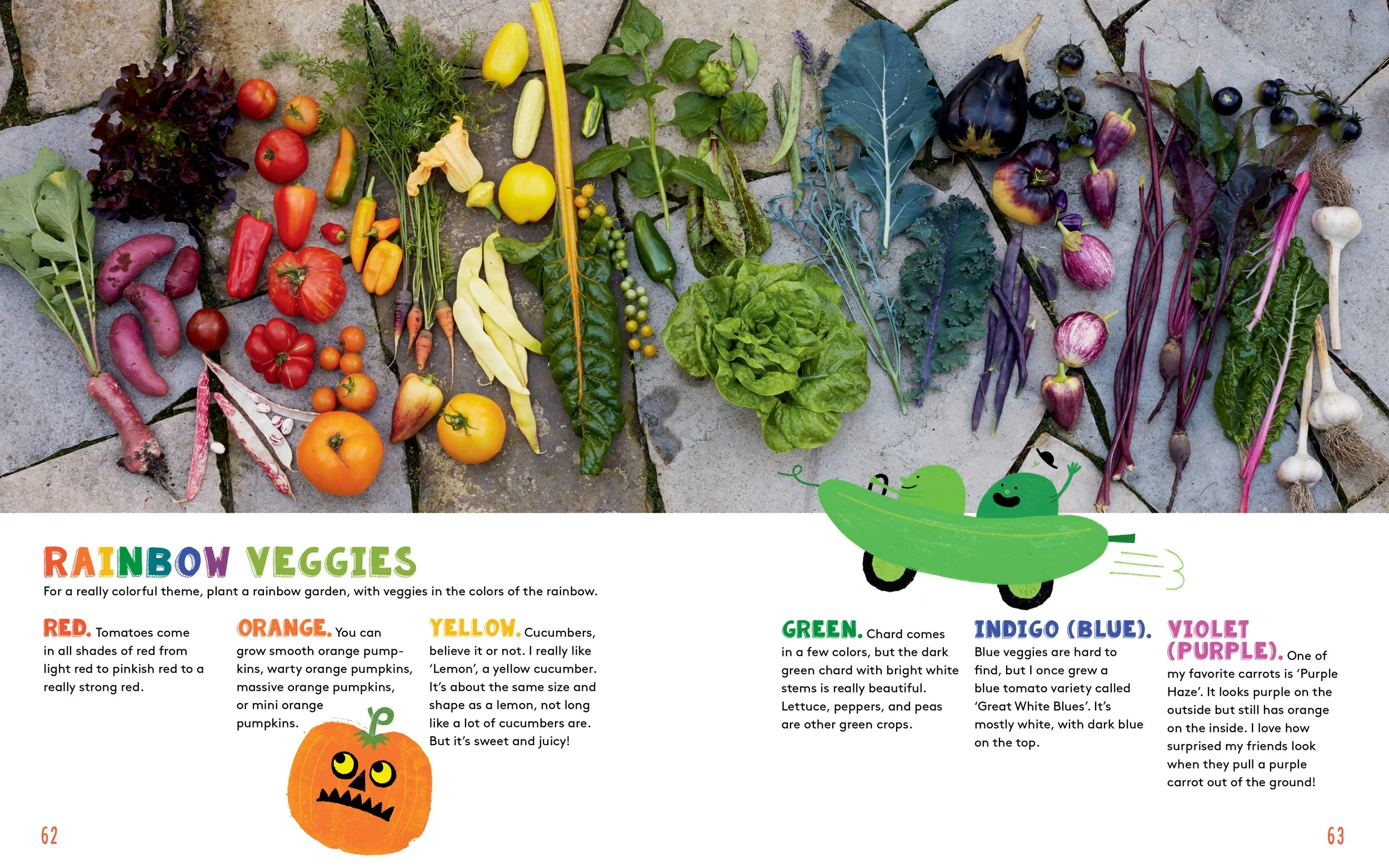
From the book Gardening with Emma.
How About a Dragon-Themed Garden?
Emma and I gave a talk about kids gardening once and the next day a parent emailed to say that her son came home inspired to grow a dragon-themed garden!
Any kids you want to inspire to garden? Get ideas for dragon-themed plants.
Find This Helpful?
Enjoy not being bombarded by annoying ads?
Appreciate the absence of junky affiliate links for products you don’t need?
It’s because we’re reader supported.
If we’ve helped in your food-gardening journey, we’re glad of support. You can high-five us below. Any amount welcome!
More Kitchen Gardening Ideas
Articles and Interviews
For more posts about how to grow vegetables and kitchen garden design, head over to the vegetable gardening home page.
Courses: Edible Gardening
Want more ideas to make a great kitchen garden? We have great online classes that you can work through at your own pace.
Kitchen Garden Consultation
Book a virtual consultation so we can talk about your situation, your challenges, and your opportunities and come up with ideas for your kitchen garden.
We can dig into techniques, suitable plants, and how to pick projects that fit your available time.
7 Vegetable Garden Layout Ideas To Grow More Food In Your Garden
By Steven Biggs
Garden Layout for Vegetables
Need help planning a vegetable garden layout? Here are ideas to get your started!
I was delighted when a neighbour removed her front lawn to grow vegetables.
One more edible garden in the neighbourhood! It's a nice departure from the driveway-and-shrub aesthetic around here.
She asked me to help her plan her vegetable garden layout.
But...
I didn’t have a simple explanation about how to make a vegetable garden layout! Keep reading, because this inspired me to map out the way I think when I'm veggie gardening.
As we studied her small, partially shaded front yard, I saw numbers in my mind—distances between plants, between rows, and between crops. I saw centimetres and inches (because we’re in Canada and can’t decide on which to use.)
There's a simpler approach, and I share it below.
Before we get to my top tips: Remember that there are lots of possible vegetable garden layouts. There are many ways to organize and space out vegetables in a garden. There's the growing. And then there's a creative aspect to it. That means that two gardeners given the same garden bed can come up with completely different layout plans. Enjoy the creative journey! There’s no perfect vegetable garden layout—there’s a layout that suits you and your situation.
Keep reading for 7 tips to help you come up with a vegetable garden layout that suits your situation:
1. Grow in Blocks
Rows are for Farms
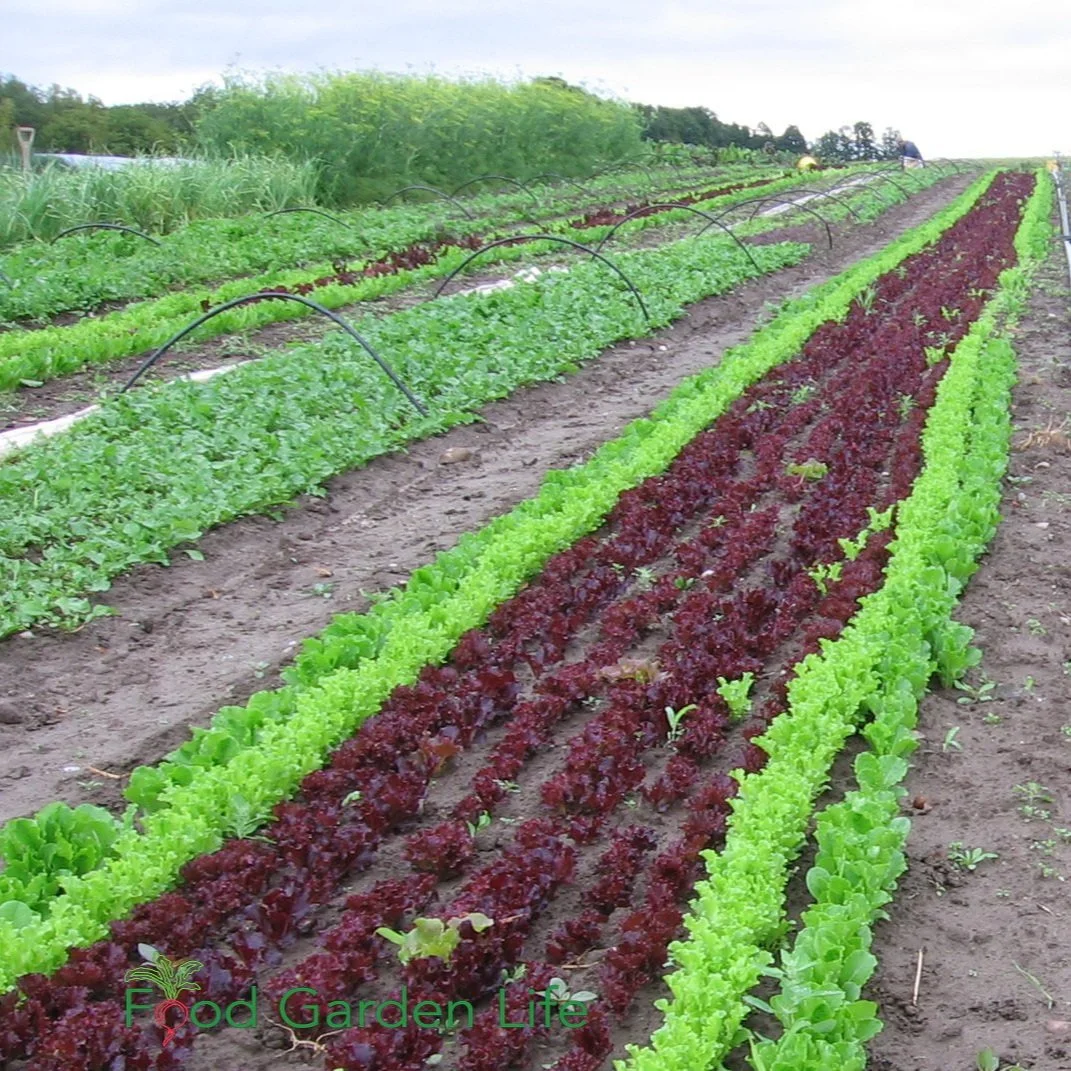
There’s lots of bare soil when growing in rows. Grow in blocks instead of rows to optimize the use of space.
In a traditional row-gardening layout, there's space between rows for cultivating. That cultivating chops down little weed seeds that are germinating. Gardening this way allows one person to weed and tend a lot of plants when labour—not space—is limited.
Planting in rows can make sense on big pieces of land.
But in a home vegetable garden, we're growing on a different scale. In a home veggie garden, we’re limited by space.
And that means growing some vegetables in blocks, instead of spread-out rows of plants. By growing in solid blocks of plants, we fit lots of plants into a plot and have less bare ground showing.
(There are still some vegetables that will do best as single rows of plants, and we'll cover them below.)
Perennial Plants
If your garden design includes perennial vegetable plants, give them a separate block.
2. Grow Vegetables Vertically
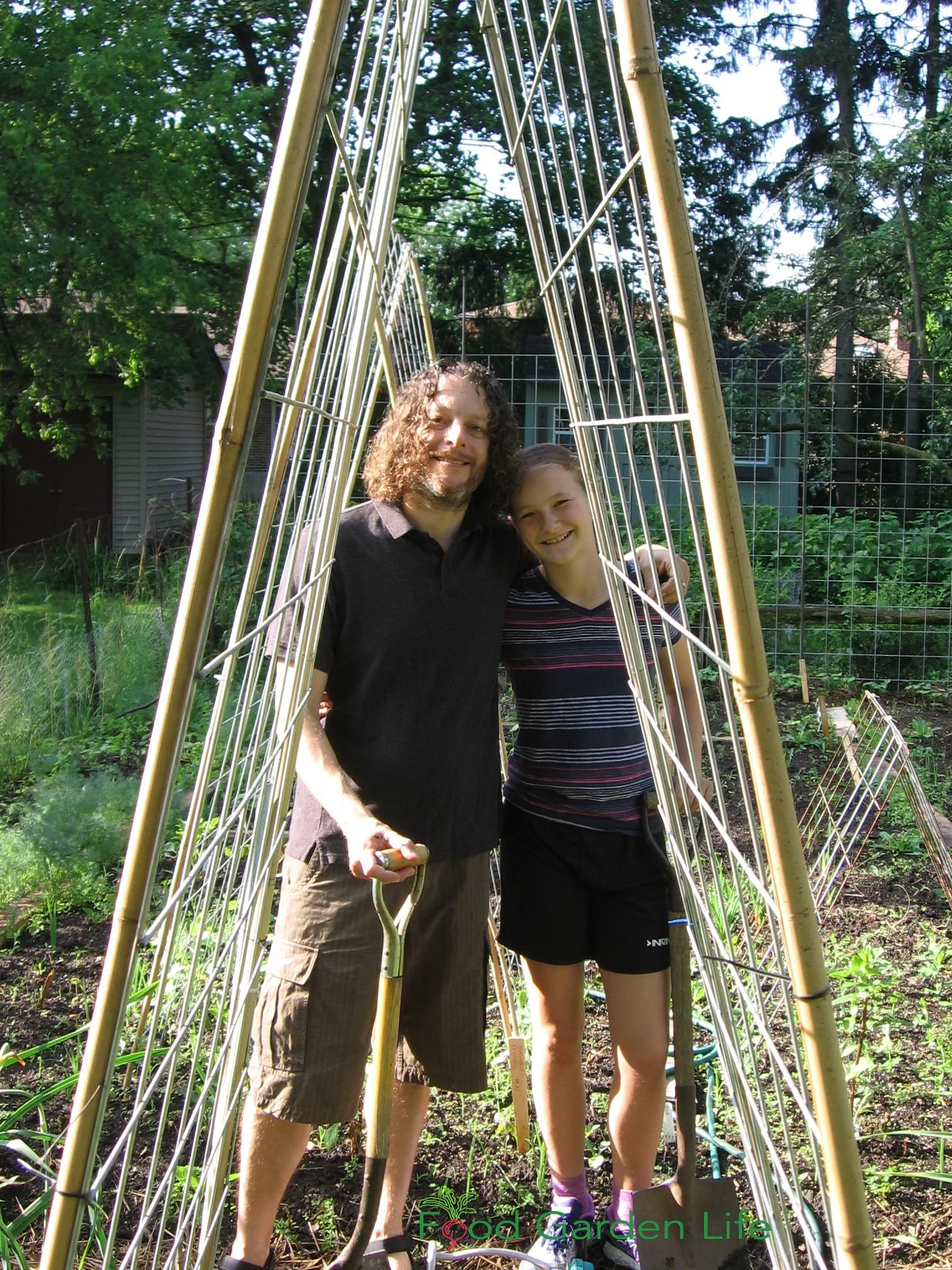
Add height to your garden plan! A bamboo-and-wire-mesh A-frame is one way to make good use of the vertical space in a garden.
Plan for the dimension of height in your garden. Use the vertical space! This just means growing some plants upwards instead of letting them sprawl around the ground.
For example:
Growing a climbing plant up a stake or trellis frees up space on the ground for different plants.
Grow crops in layers. By growing vertically, you can also grow more than one crop in a small space. For example, make an A-frame for cucumbers, and underneath the A-frame, plant leafy greens that benefit from some shade during the summer.
And one more idea if you're making layers in your garden: Hanging baskets. They're great for herbs and many of the leafy greens.
Climbing Plants for Vertical Gardens
Here are a few of my favourite climbers to grow in a small space.
Malabar spinach (a vining spinach substitute, not really a spinach…but excellent during the heat of summer)
Achocha (a.k.a. Bolivian cucumber, it’s absolutely prolific, and a fun novelty)
Vining peas
Pole beans
Runner beans
Cucumber
Squash
Need more ideas for climbing plants? Get more crop ideas in this article about vertical gardening.
3. Plant Densely, and then Thin
Seed Spacing…How Many plants?

Plant densely to grow more food in a small space. Here are densely planted carrots, and as the larger ones develop roots big enough to eat, they’re pulled out so there’s space for the remaining ones to develop.
Seed-spacing recommendations on seed packets and in articles are often geared towards commercial production. And these recommendations work fine in a home garden.
But…
Most plants do well with less than the spacing recommended on a seed packet.
So if you want to grow more food, plant more densely.
Forget Finicky
Commercial growers (or hard-core gardeners with big gardens) often use seeding machines to place seeds at a specific spacing. There are also hand-operated seed dispensers to help get perfect spacing.
Your plants won’t know the difference—and you can make your seeding less complicated by not being finicky.
Scatter-Seeding a Block is Not Finicky
When seeding a block, I hand-scatter seed. With practice, you can scatter seeds so that they are spread at approximately the distance you want. Don't sweat the exact spacing.
It’s not an exact process. You will get some seeds too close together; and some too far apart. (Remember, gardening is detox for perfectionists.)
Where seeds are too close, thin as plants start to grow.
Beets too close? Thin out a few and enjoy baby beet greens.
Carrots too close? Thin your block of carrots and have some baby carrots for supper.
When scatter-seeding blocks, you will use more seed than if you seed in rows.
That’s fine: It saves time and you get more veg from the same area.
4. Choose Crops to Maximize Your Harvest
To grow more food in less space, be strategic with your crop choices as you’re laying out a vegetable garden.
My first rule of vegetable gardening is to grow things you like. Sure, radishes are easy to grow. But do you like eating them three times a day?!
Here are three other things to think about as you fit more food plants into your space.

You might choose spreading crops that take a lot of space. That’s fine, just grow them upwards. You don’t see it in this picture, but there’s a whole crop of Swiss card below.
Next, avoid the space hogs. These are crops that take up a piece of garden for the entire growing season...and only give you something at the end of the year. That's right: if you have a small garden, think twice about those parsnips and Brussels sprouts!
Keep the vining space hogs, but grow them vertically (see above.) So instead of squash sprawling around the garden, grow it up a fence or trellis. (I’ve even grown squash along a cedar hedge!)
If you have a small plot, skip the stingy crops. I'm talking about something like edamame, which is easy to grow and delicious...but takes a fair bit of space considering what you get from it. You'll get way more bang for your buck with something like bush beans.
And let’s get back to the idea of rows versus blocks as we think about choosing which vegetables to grow.
What to Grow in Blocks
Here are examples of crops that I like to grow in solid blocks, instead of rows.
Beet
Carrot
Leafy greens
Garlic
Check out Edible Garden Makeover and have fun doing some vegetable garden landscaping!
What to Grow in Rows
It makes sense to grow certain crops in rows. Here are the ones I prefer to grow i rows:
Potatoes (so I can easily "hill" them)
Tomatoes (because I stake them, and it's easiest when I can access them from both sides)
Peas (for ease of picking)
Pole beans (for ease of picking)
5. Keep Pathways to a Minimum
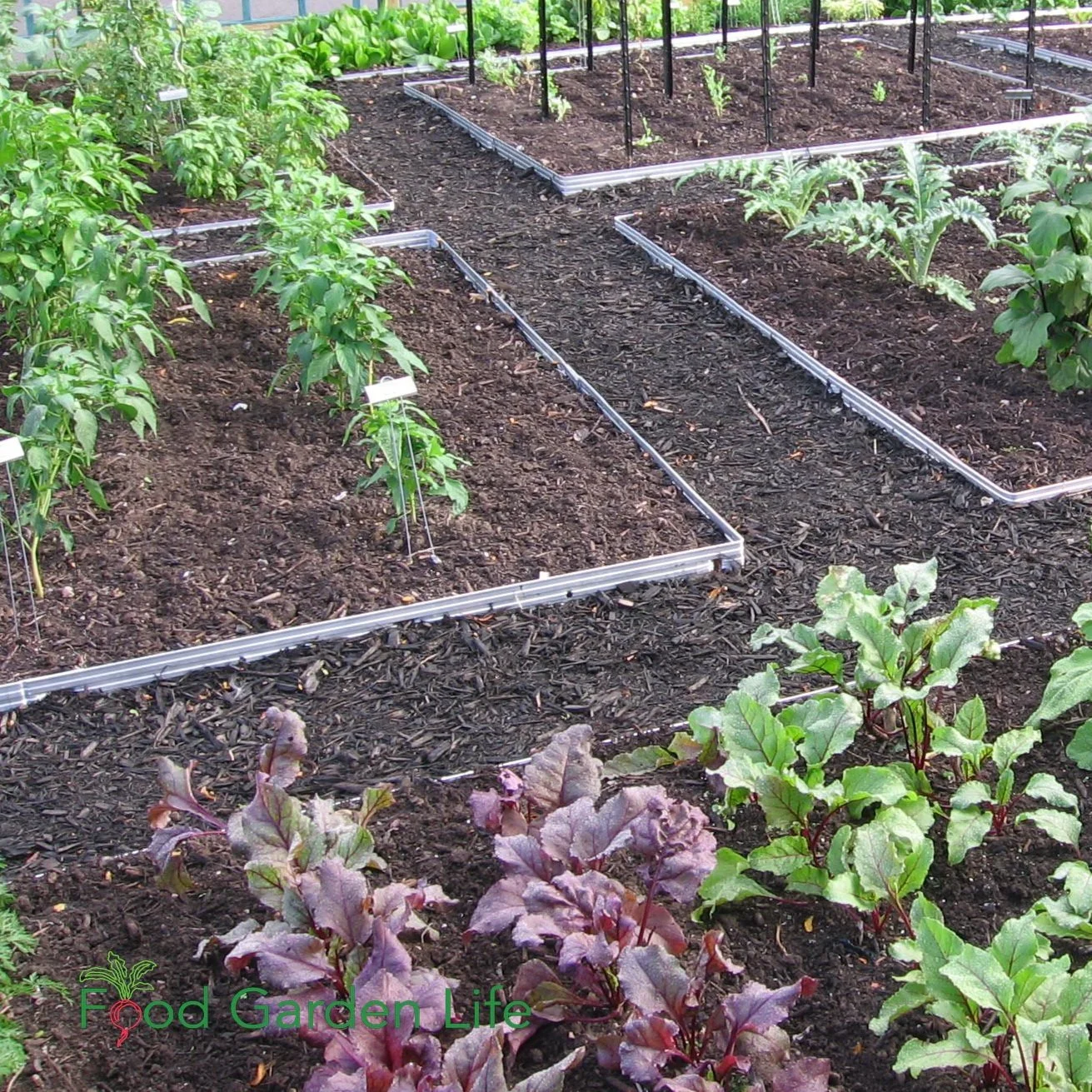
How much growing space could you add in this layout if the pathway down the middle didn’t go all the way through the bed? Lots!
An easy way to grow more food in less space has nothing to do with the distance between your plants!
Use less of the available ground for pathways.
As you map out your beds and pathways, play around with different layout options. Easy access is important, but sometimes there are ways to plan a garden that has access, but fewer pathways. A simple way to do this is with dead-end pathways that go part of the way into big beds…but not all of the way through. That way less of the growing space is sacrificed for pathway. (Having trouble picturing this? Imagine a keyhole garden, where there’s a pathway into the middle—but it doesn’t go all the way through.)
6. Plant Two Crops Together
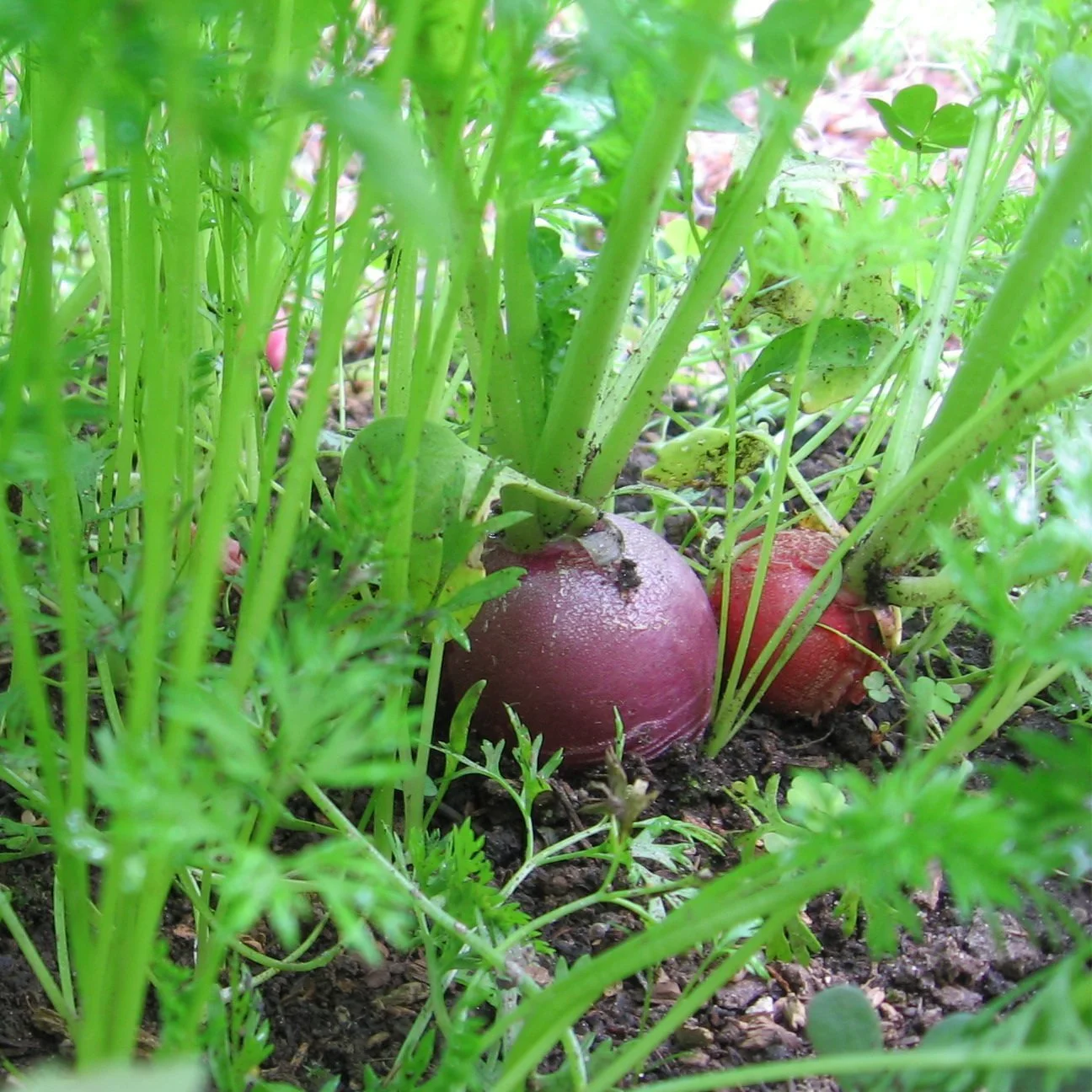
Radishes and carrots seeded at the same time,. The radishes are ready to harvest, while the carrots roots are nowhere near ready for harvest, even as baby carrots.
Companion planting is another way to fit more plants into your vegetable garden.
Plant two vegetables in the same space—ones that are good companions because they mature at different speeds.
My favourite combination is fast-growing radish, with slower-growing carrots or beets.
When I scatter carrot seed on a block of garden, I also scatter radish seed. The radish grows much more quickly than the carrot, and is ready to harvest while the carrot seedlings are still quite small.
Harvesting the radishes frees up space for the carrot seedlings, and as the tap root of the radish comes out, it also loosens the soil around the carrot seedlings. It's a perfect combination.
(There is a lot of rubbish information out there on companion planting. I suggest this science-based book: Plant Partners: Science-Based Companion Planting Strategies for the Vegetable Garden.)
7. Grow Succession Crops
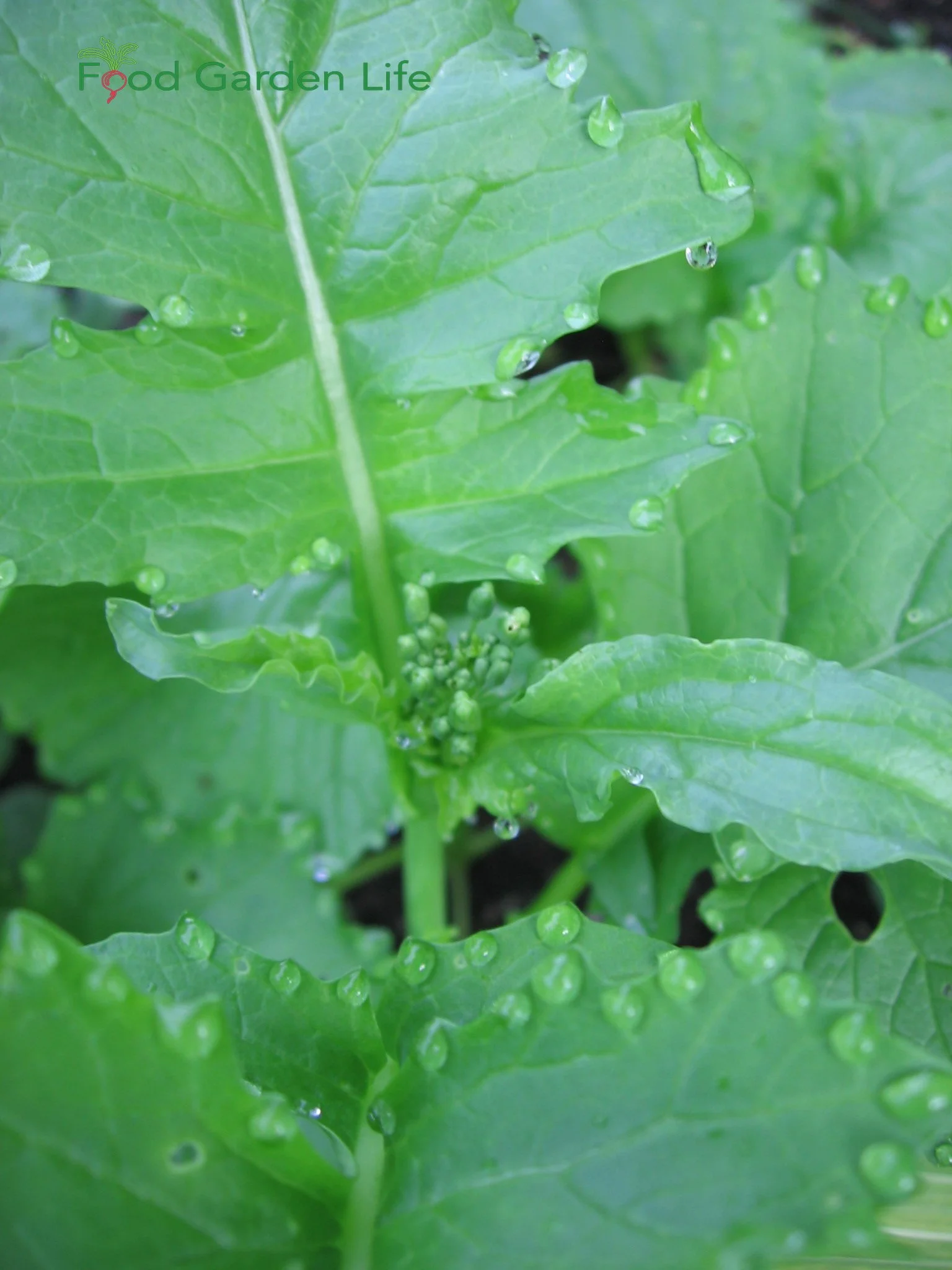
Rapini is one of my favourite summertime succession crops.
Growing vegetables in succession as each parcel of your garden makes sure none of it goes unused during the growing season.
As your spring-planted cool-season crops finish, plant a heat-loving crop for summer.
Bush beans done? Sow some beets.
Garlic done? I like to grow rapini (and for those of you who are avowed rapini haters because of the bitterness, get yourself a bowl of orecchiette pasta with rapini and some chunks of spicy sausage fried to crispy, and you’ll see rapini in a different light.)
Need more Vegetable Garden Layout Ideas?
In Edible Garden Makeover I walk you through lots of vegetable garden layout ideas, raised beds, making garden beds, raised beds, and lots of other ideas that help you grow your own food in a way that suits your setup. I help you imagine an amazing kitchen garden, and also an entire edible garden layout. Find out how you can make your yard into an edible landscape.
Still Not Enough Space?
Pin this post!
If you're using these seven approaches to make the best vegetable garden layout for your garden area, and you still want to grow more, think about adding containers to your vegetable garden.
Plant vegetables in containers on:
Paved spaces such as driveways
Decks or balconies
See how I converted my driveway into a tomato plantation.
You can also incorporate containers as part of a vertical garden, to add the element of height. (I've squeezed in pepper crops between an asparagus and horseradish patch...where normally they wouldn't have stood a chance because of the competition. But because they were elevated above the ground in a container, they got sun exposure and had lots of growing space in the container.)
One more space-making idea for you, something that I've used to transform a long, little-used driveway into a tomato oasis.
This idea is quick to set up, easy to care for, and inexpensive compared with permanent container or raised-bed systems.
Add a straw-bale garden to your garden layout. Find out more about straw-bale gardens.
Wondering about Shade?
Shade is something we often deal with in home gardens. Don’t worry, there’s still lots you can grow. Find out vegetable crops that you can grow in the shade.
Find This Helpful?
Enjoy not being bombarded by annoying ads?
Appreciate the absence of junky affiliate links for products you don’t need?
It’s because we’re reader supported.
If we’ve helped in your food-gardening journey, we’re glad of support. You can high-five us below. Any amount welcome!
More Gardening Ideas
Courses
Here are self-paced online courses to help you grow an awesome vegetable garden.
25 Storage Crops to Help You Plan a Vegetable Garden that Feeds You Year-Round
25 storage crop ideas so you can plan a vegetable garden that supplies you with food year-round, even in cold climates, even if you don’t have a greenhouse.
By Steven Biggs
Plan a Vegetable Garden that Includes Storage Crops

I have a plan to turn a room in my basement into a proper root cellar. Braids of onions hanging from the ceiling, homegrown squash on shelves, lots of root vegetables…
But I don’t have a root cellar at the moment.
Maybe it’s the same for you.
The good news is that you can store a lot of homegrown food even if you don’t have a root cellar.
And having lots of vegetables to store starts with your vegetable garden planning. Choose crops that you can store in the garden. And choose crops that store well in protected areas other than a root cellar.
This articles helps you plan a vegetable garden with storage crops in mind.
Storing Crops
Pin this post!
I like to think of crop storage two ways. I recommend a bit of each in your vegetable garden plan.
In-Garden Storage: Leave cold-tolerant crops in the garden to continue harvesting as the growing season wraps up.
Harvest and Store: Harvest crops and store in a protected space.
In-Garden Storage
When cool weather arrives, some plants pack it in and die. Think of basil…a little sniff of cold and it drops its leaves in protest.
But some crops do very well in cool temperatures. They soldier on even as fall frosts arrives.
Even with these cold-tolerant crops, growth slows down and stops as days get shorter and shorter. But you can continue harvesting what’s there.
Leafy Greens for In-Garden Storage
Here are my favourite leafy crops for in-garden storage. And to be clear, I’m not suggesting that I harvest any of these winter-long here in Toronto. I don’t. But they have good cold tolerance, and I’ve often picked them from under a dusting of snow.
(If you want to take you year-round harvesting to another level, think of using a combination of cold frames and cold-tolerant crops.)
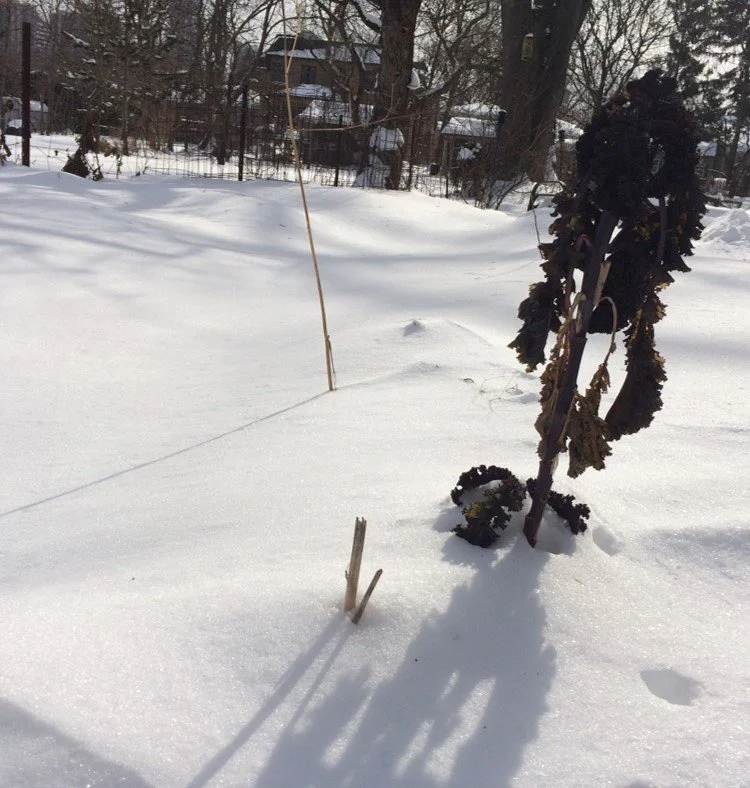
Kale is very cold-tolerant. If you can only grow one cold-tolerant green, start with kale.
Kale. For cold-climate gardeners, kale is a great season extender. It’s very freeze tolerant. It keeps going as light frosts arrive in the fall. Then as things freeze hard, it still hangs on. I’ve sometimes picked kale in January from under the snow. (The winter-harvested leaves are a far cry from tender, baby kale, by the way. But if you cook it accordingly, it’s a great homegrown addition to the menu.)
Celery. Reliable until hard freezes arrive. (And if you’re thinking celery isn’t a leafy green, you’re right. Except my favourite type of celery is “leaf” celery. Leaf celery, as the name suggests, is more leaf, less stalk—and it’s far less demanding and easier to grow than regular celery.)
Chard. Reliable through those first fall frosts, until hard freezes arrive. Chard also looks great, so if you’re interested in edible ornamental gardens, consider this as you plan your vegetable garden. (Maybe you have ornamental beds that would benefit from a pop of fall colour from one of the many colourful chard varieties.)
Parsley. Reliable until hard freezes arrive. Like chard, also a great ornamental plant. Use it as edging alongside annuals somewhere near your house, so that during muddy fall weather, it’s easy to quickly grab a few sprigs for supper.
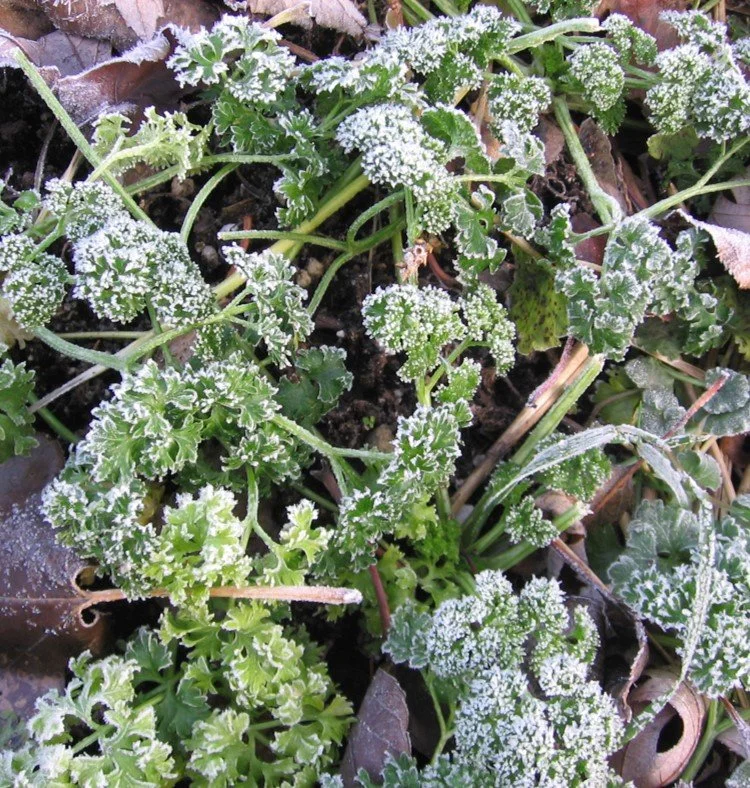
Parsley stands up nicely to fall frosts.
A Couple More In-Garden Storage Crops
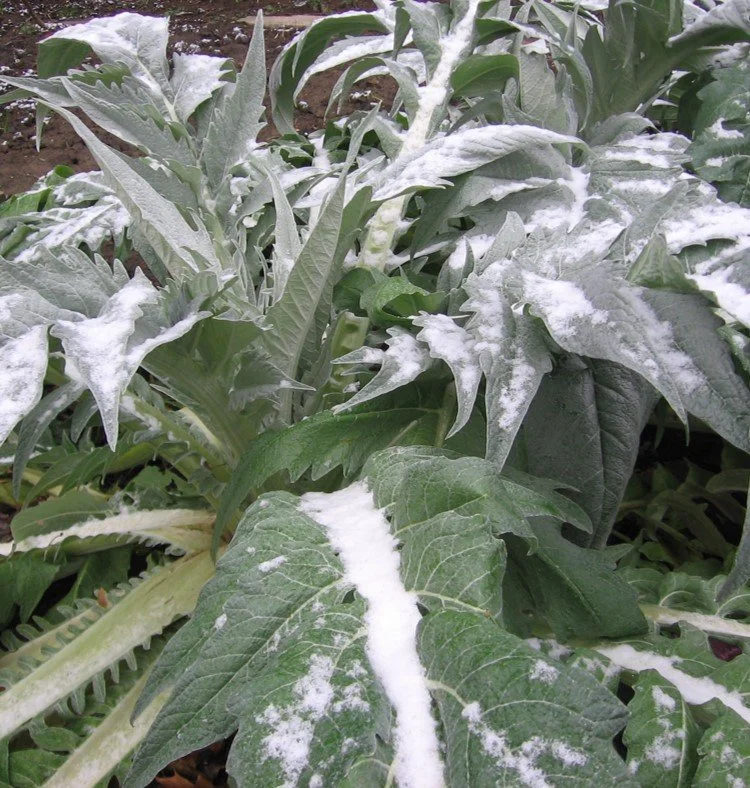
Keep harvesting cardoon until there’s a hard freeze.
Leek. Like kale, a plant you can keep harvesting into winter. And when there’s a mid-winter thaw, you can go get some more. The leaf tips begin to brown mid-winter…but that’s fine because it’s the lower portion we eat.
Cardoon. Cardoon keeps going through light frosts. It’s leaves wilt, and then spring back up as the day warms. (If you haven’t grown cardoon before, remember to blanch it or it’s horrid…my first forays into cooking cardoon didn’t win me any favours with my family!)
In-Garden Storage Using Straw Bales
As fall frosts arrive, there’s no rush to harvest many of the in-ground root crops. Carrots and parsnips are improved by frost.
A simple way to extend the time you can leave them in the ground is to place a straw bale over top of them. It insulates them and the ground below.
With a heavy mulch, you can leave carrots and parsnips in the ground until the soil freezes solid. Where I am, that’s midwinter. And the longer they’re in the ground, the better they last.
One more thought on leaving roots crops in the garden late: Remember that while carrots and parsnips usually grow under the soil and protected from the first freezes, beet roots often shoulder their way above the soil surface. Those exposed shoulders are quicker to freeze…and that affects the quality.
Create Your Own Unique Edible Landscape
That fits for your yard, and your style!
Harvest-and-Store
First things first: A root cellar is nice…but if you don’t have one, there are other ways to successfully store your harvest. Think about your storage options now, as you plan a vegetable garden. That way you can plant accordingly.
Here are different places you might be able to store your harvest:
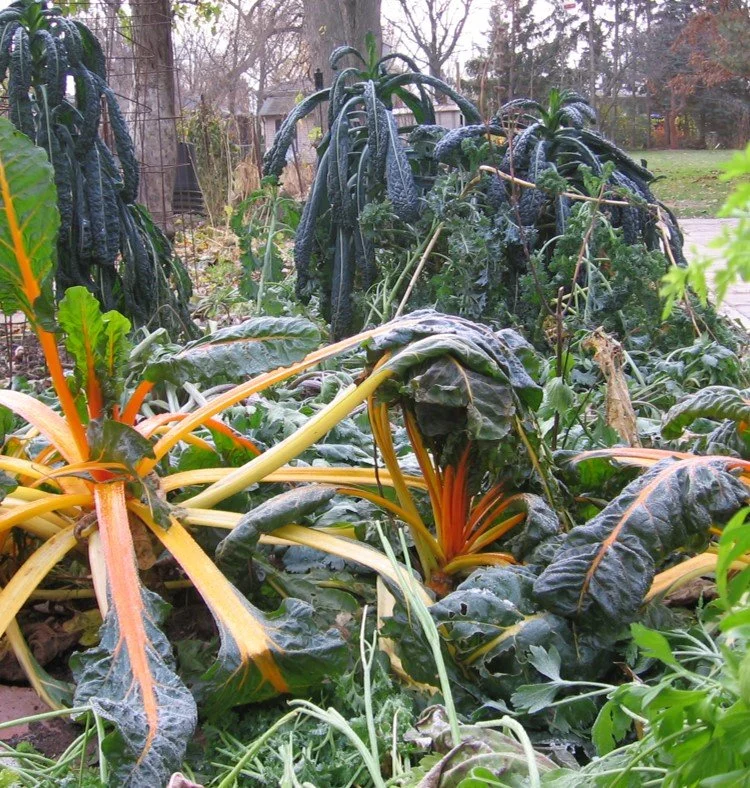
Swiss chard with some frost on it. It will spring back up once the sun comes out.
Garage. My garage doesn’t freeze, so I use it to store root crops (and apples that I buy by the bushel…great way to save money). My garage stays just above freezing, and is fairly humid, making is well suited to storing produce.
Clamp. This is a traditional way or insulating harvested root vegetables outdoors, using soil and straw.
Cooler area in a heated basement. I have a room in my basement where I shut off the heat vents. It’s cooler (and darker) than the rest of the house. It’s not as humid or cool as a proper root cellar, but is excellent to store winter squash, garlic, and onions.
Unheated basement. A friend had an unheated basement with an earthen floor…perfect for stored crops!
Sunroom. If you have a sunroom that stays just above freezing through the winter, I’d be thinking about food storage…
Breezeway. Some houses have a minimally heated breezeway between the house and garage. It’s just calling out for food storage!
Attic. If you have an accessible attic, another option for cool storage! The logistics of carrying food up to an attic aren’t ideal, but if it’s all you have, worth a try.
Successfully Storing Crops
Storing crops in the right conditions can really extend the storage life.
Root crops can go into perforated plastic bags, or into moist sand or sawdust in crates. This prevents them from drying out.
Newspaper comes in handy too: cover trays of green tomatoes with a sheet of newspaper; and wrap cabbages in a sheet of newspaper.
Only store unblemished produce. If you have crops that aren’t good enough to store, cook them up or freeze them.
Harvest-and-Store Crops
Dry Bean
When the pods turn light brown, just pull up the entire plant to hang upside-down under cover to dry further. Great storage crop for long-term storage.
Beet
Leave a half inch of stem on the roots as you prepare to store beets. Then they won’t “bleed” as much. Look for varieties recommended for storage. A favourite of mine over the years has been ‘Cylindrda.’
My favourite storage crop! (I make beet borsch with some of mine every year.)
Cabbage
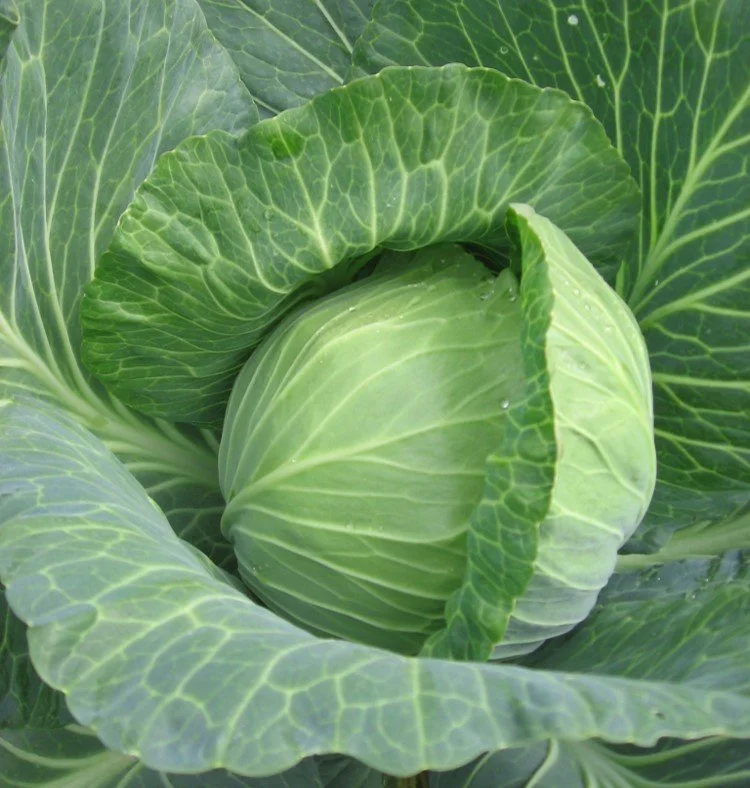
Not a crop that lasts all winter in a root cellar, but you can keep it for a couple of months. The outer leaves dry, and you’ll peel those off as you prep the cabbage for use in the kitchen.
Use midsummer transplants to grow cabbages for winter storage. Harvest as late as possible for storage.
(Don’t forget that you can also use some cabbage to make sauerkraut. Find out how to make your own sauerkraut.)
Cabbage, along with other cole crops such as broccoli, cauliflower, and Brussels sprouts are also excellent for in-garden storage as they keep going through early fall frosts.
Carrot
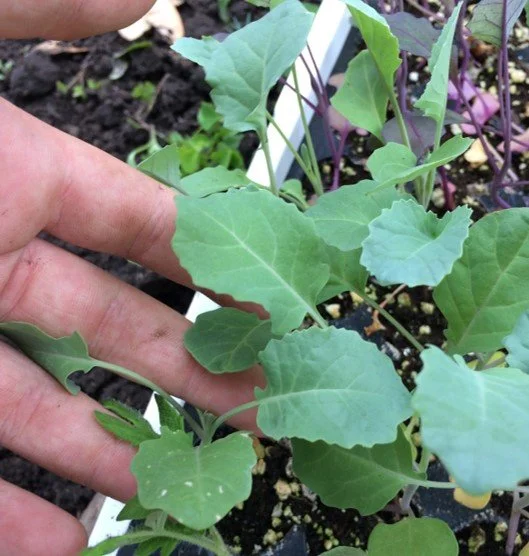
Use midsummer transplants to grow cabbages for winter storage. Harvest as late as possible for storage.
Sweeter after some frost. Look for varieties recommended for storage. ‘Bolero’ is a variety that I like for storage.
Cerleriac (a.k.a. celery root)
Often overlooked, and a great addition for gardeners growing for storage.
Garlic
Easy to grow lots in a small space, and easy to store for gardeners without many storage options, because it and onions like things dryer than the root crops.
Horseradish
As you’re planning your vegetable garden, remember that this is a deep-rooted perennial. So pick a permanent spot for it.
Jerusalem artichoke
A somewhat invasive perennial, so pick a permanent spot for it.
Onion
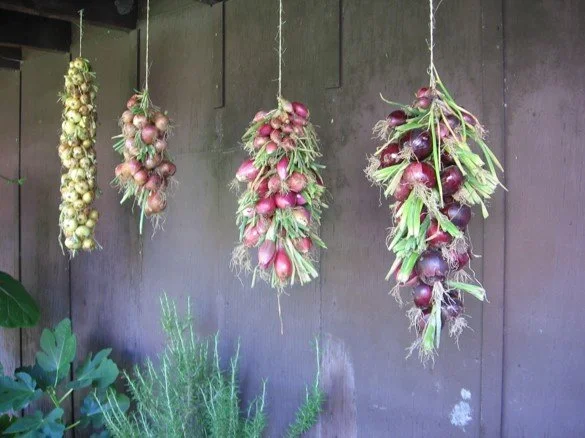
Braided onions drying before going into storage.
Store onions after curing. Like garlic, important to dry and cure for a couple of weeks before storage. If not properly cured, doesn’t last as long.
You don’t have to braid onions. Another way to store them is to hang them in a mesh bag—so there is good air circulation around the onions.
Parsnip
Sweeter after they go through some frost.
(One year I grew far too many parsnips, and had the brilliant idea of making parsnip wine. Alas, it was horrid…couldn’t even use it as cooking wine.)
Peppers
Often overlooked, but smaller, thin-skinned pepper varieties are easy to dry. Once dry, you can hang them in your storage area, where there’s good air circulation.
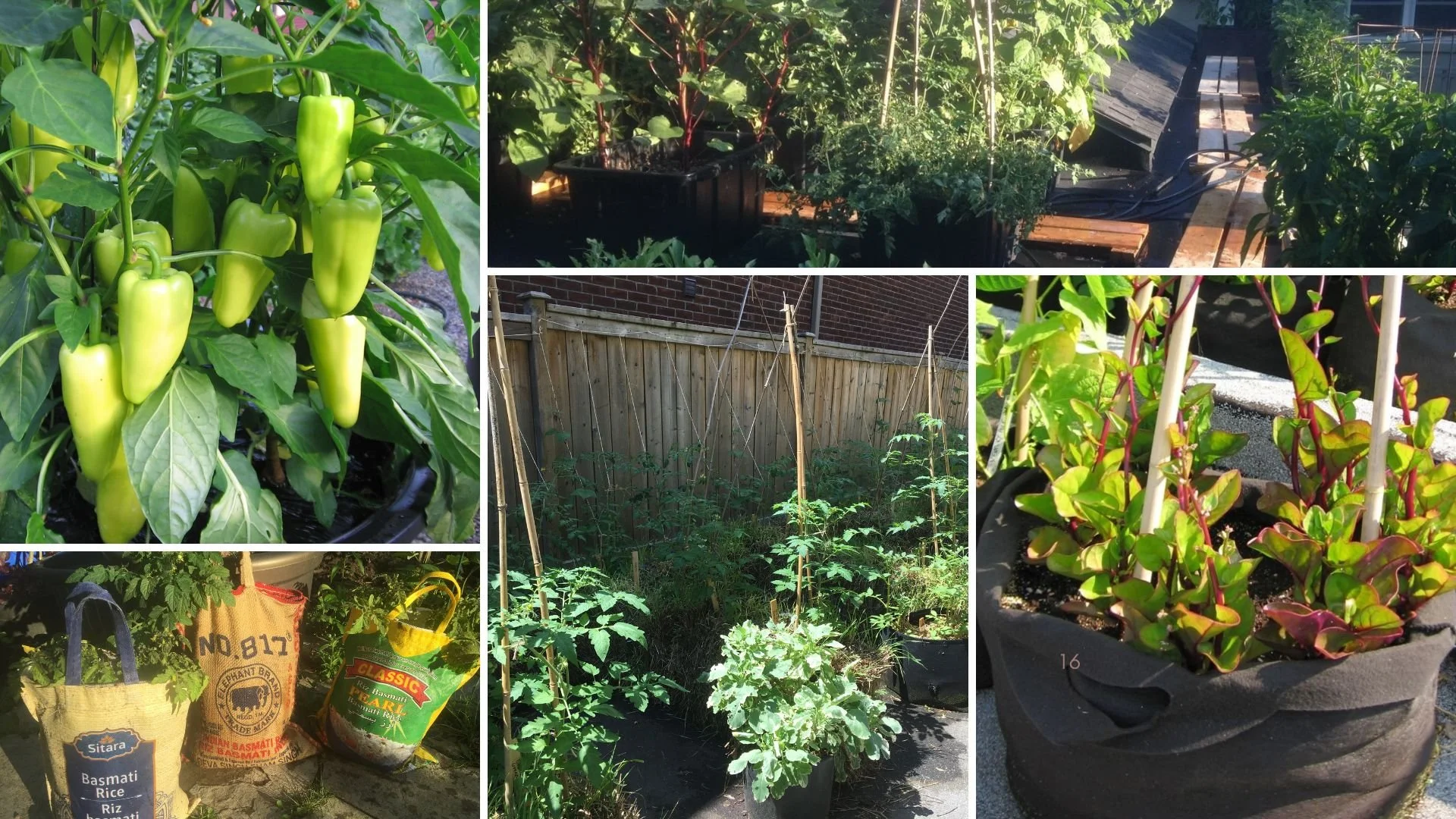
Grow a Container Vegetable Garden
And get an early harvest of crops that usually take too long!
Potato
Plan for your storage potatoes to be ready late in the season. During the summer, storage spaces aren’t usually as cool as they are in the fall—so your potatoes can sprout quickly when stored too early.
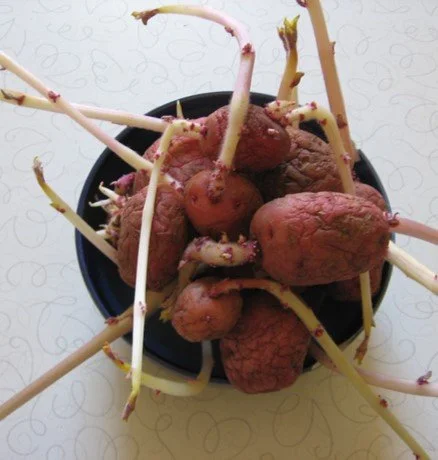
Don’t put early potato harvests into storage. Plan for a later harvest for storage.
Radish (winter)
So often overlooked, and a great addition in a storage-focused garden.
Root Parsley
Ditto above.
Rutabaga
My mother-in-law’s must-have cooked veg at the Thanksgiving table!
Squash
Pick before light frosts for best storability.
Tomato (keeper)
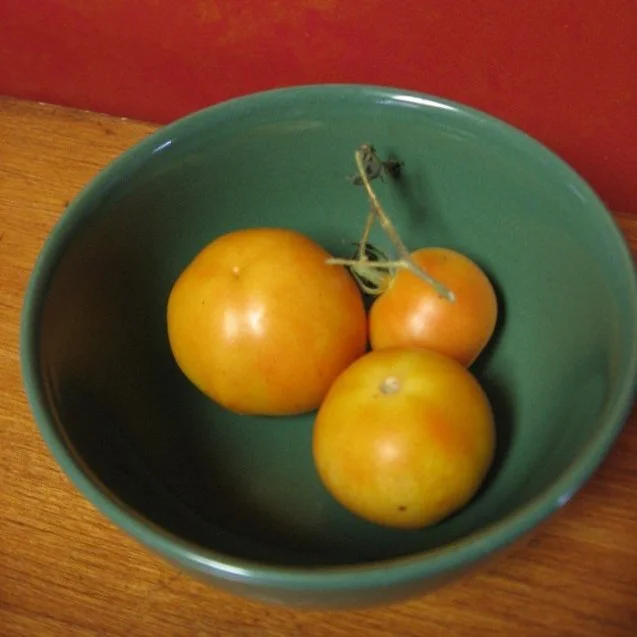
Keeper tomatoes in the spring.
It’s easy to overlook tomatoes as a storage crop, but there are thick-skinned tomato varieties that can last until spring! They’re called “keeper” or winter tomatoes or storage tomatoes.
These aren’t great for tomato sauce, but are nice chopped into a salad or bruschetta.
Find out about keeper tomatoes.
Find out my top tips for starting tomato seeds indoors.
Get ideas for different ways to stake tomatoes.
Learn about ripening green tomatoes indoors.
Turnip
A quick-to-mature crop. Remember, the greens are edible too!
Watermelon
Watermelons last a month or so, a nice treat to stow away for a snowy day!
Find This Helpful?
Enjoy not being bombarded by annoying ads?
Appreciate the absence of junky affiliate links for products you don’t need?
It’s because we’re reader supported.
If we’ve helped in your food-gardening journey, we’re glad of support. You can high-five us below. Any amount welcome!
Want Green Veg Over the Winter?
Find out how to grow microgreens indoors.
Need More Ideas to Plan a Vegetable Garden?
Articles and Interviews
Hear an agronomist share top tips for winter vegetable gardening.
7 Vegetable Garden Layout Ideas To Grow More Food In Less Space
Courses on Edible Gardening

Hi, We’re Steve and Emma!
We help people grow food on balconies, in backyards, and beyond—whether it’s edible landscaping, a vegetable garden, container gardens, or a home orchard.
Courses

Free Food- Garden Guide
Books
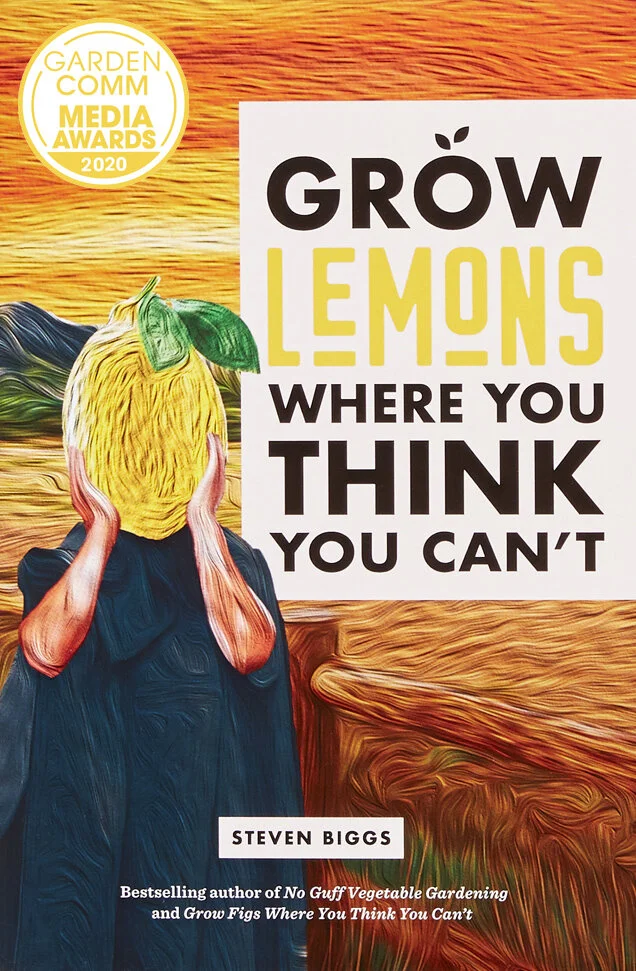
Covering everything from lemon varieties, to location and watering, to pruning and shaping, to overwintering, dealing with pests, and more—and including insights from fellow citrus enthusiasts—this book will give you the confidence you need to grow and harvest fresh lemons in cold climates.
Orders may be shipped from Toronto or printed and shipped directly by our printing partner. Available destinations and shipping charges appear at checkout. All prices are in Canadian dollars.
Prefer an ebook? Find the Kindle edition on Amazon.