
A TOUR OF MY TORONTO FOOD GARDEN
The Garden I Keep Building
I’ve had fun using my Toronto yard in all sorts of ways. I switched over the front lawn into an edible garden one year. Another year I put a patio next to my potager. I made my driveway into a temporary vegetable patch. Then, one year, I put a container garden on the garage roof. The garden changes from year to year because I keep wondering what else it can do. My needs change, my interests change, and so does the garden.
My heading for this post says “garden,” but “gardens” might be more suitable. I have a 300-foot-deep bowling alley of a yard. I count myself lucky to have a yard like that in the city. A long, skinny space can be fun to sculpt into a series of smaller spaces. So I have lots of gardens and areas within my garden.
The garden has evolved over almost twenty years. When I first came here, it was mainly grass and trees. Typical suburban aesthetic. If I’d tried to create what I have now all at once, I’m sure it wouldn’t have happened.
I’ve tackled the space in bite-size chunks. Although sometimes, where there’s larger projects involved, I’ve stepped back to think of things on a larger scale. But many aspects came about one ordinary decision at a time.
I love harvesting from the garden. But I also get a real kick out of the creative side of things. Finding fun ways to use a space. Or using a space differently.
That’s the sweet spot that I like to see in food gardening. Creativity meets food. Creativity meets practicality.
This garden is where many of my ideas about ordinary spaces, edible landscapes, experimentation, and gardening in a cold climate have taken shape. Read the thinking behind the garden.
“The garden changes from year to year because I keep wondering what else it can do.”
Potager Patch
I think of a potager as a kitchen garden where beauty and harvest get equal treatment. That’s what I’ve tried to create here. Alongside vegetables and herbs are flowers, fruit, repetition, vertical features, and decorative pots, all working together to make the garden productive and beautiful.
“A food garden should be somewhere you actually want to spend time.”
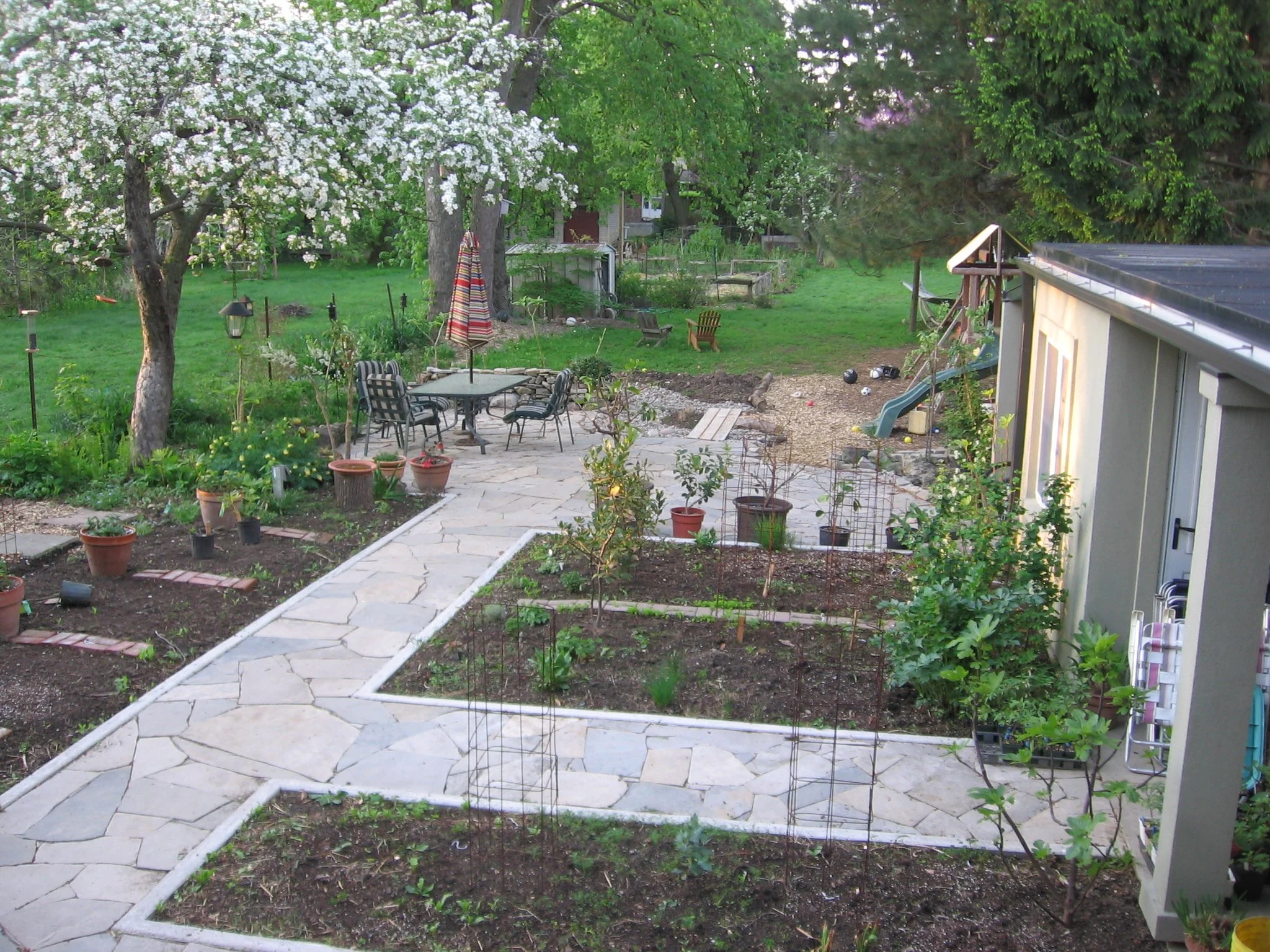
Springtime shows the bones of the potager garden. A long central grand allée goes down the middle, from the back door to the patio. The inside of our house is minimalist with straight lines, so I wanted the garden beds to continue the feel. Hence the straight concrete curbs. I love irregular flagstone, so I made it part of the design.
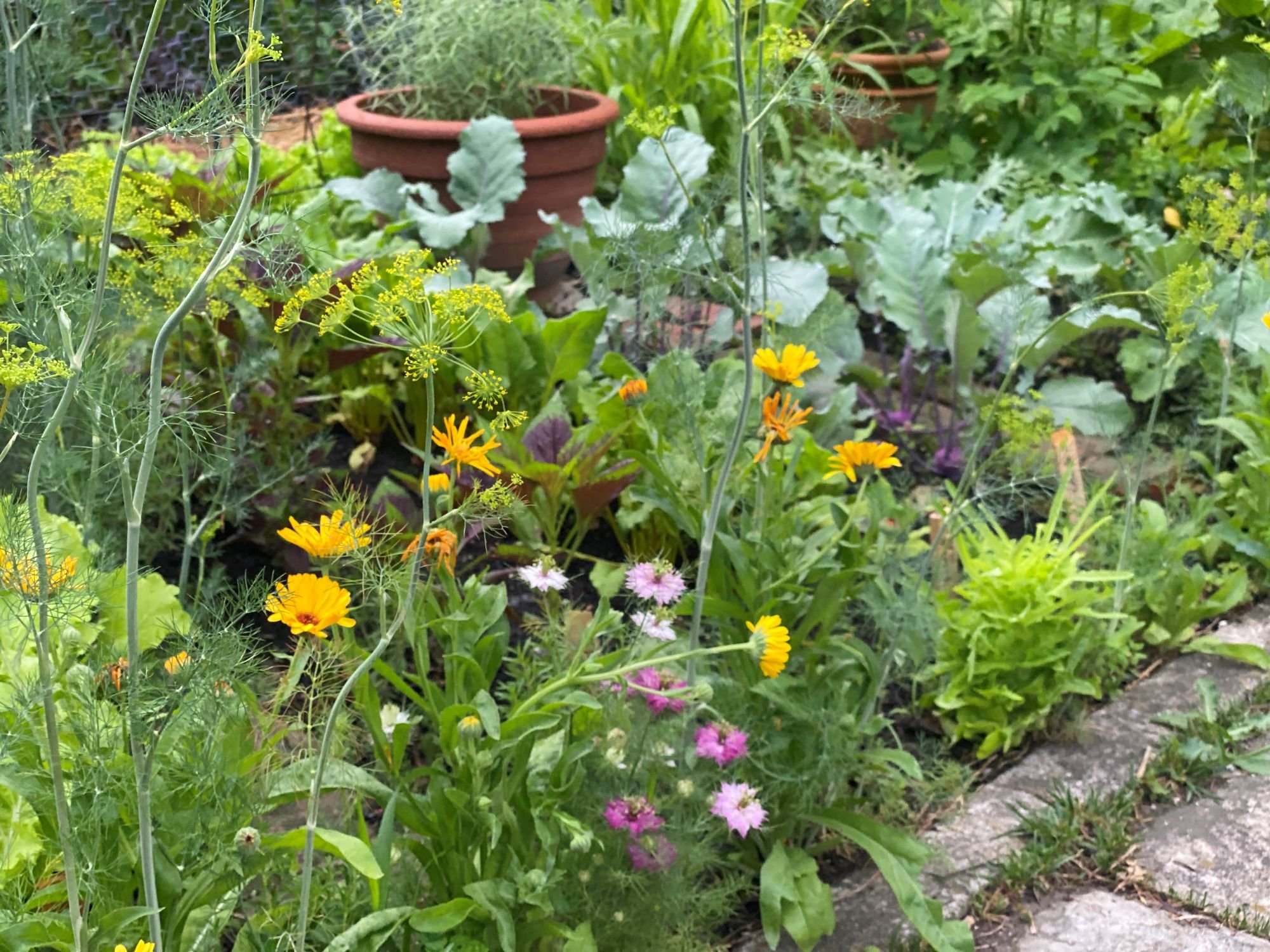
I don’t cultivate the strip along the edge of the main curbs. It’s a self-seeding strip that fills with flowers. The contrived meets the uncontrived.
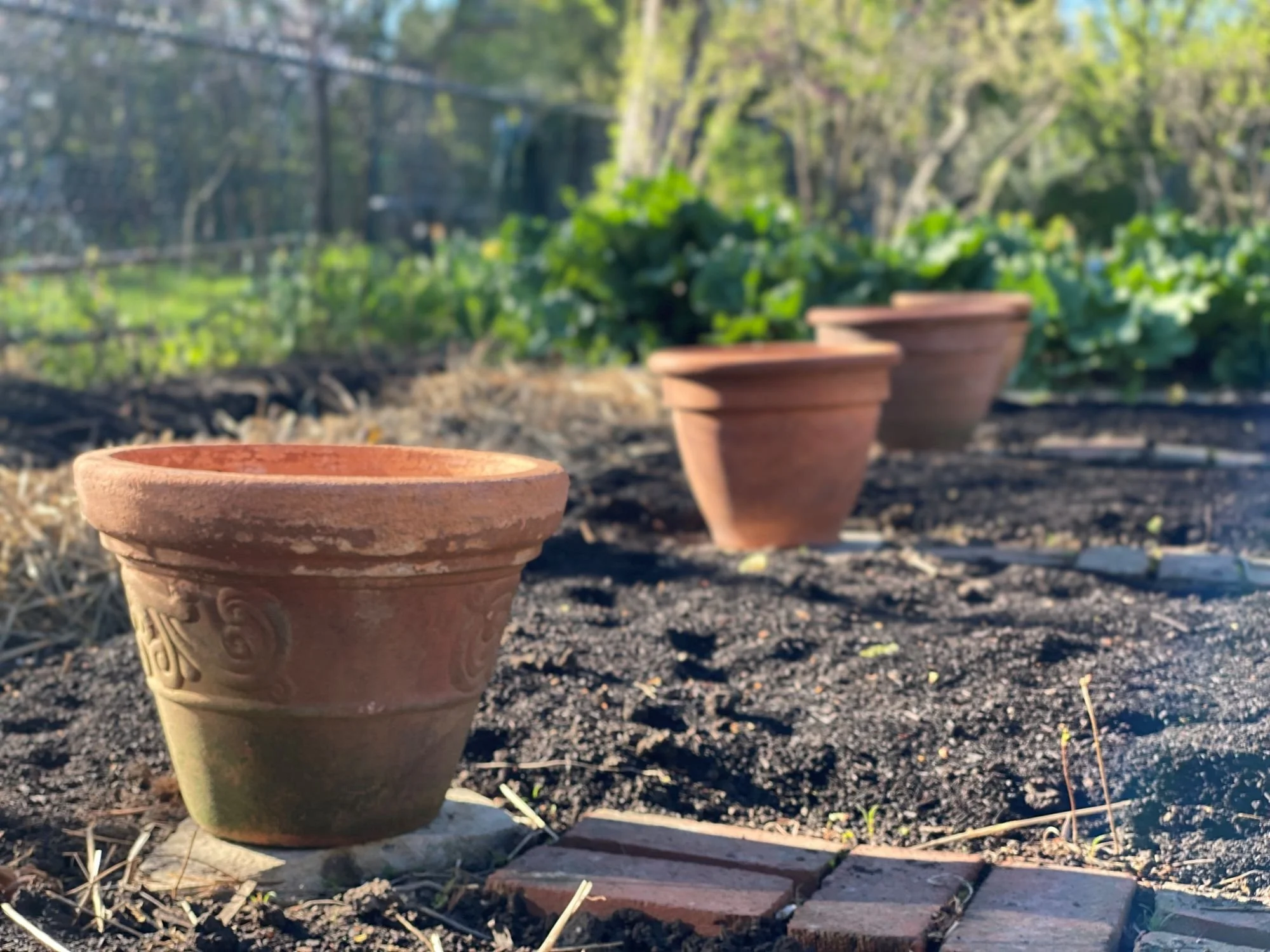
I use terracotta pots like punctuation in the garden. They add height—and I fill them with flowers. Brick pathways connect them to the grand allée.
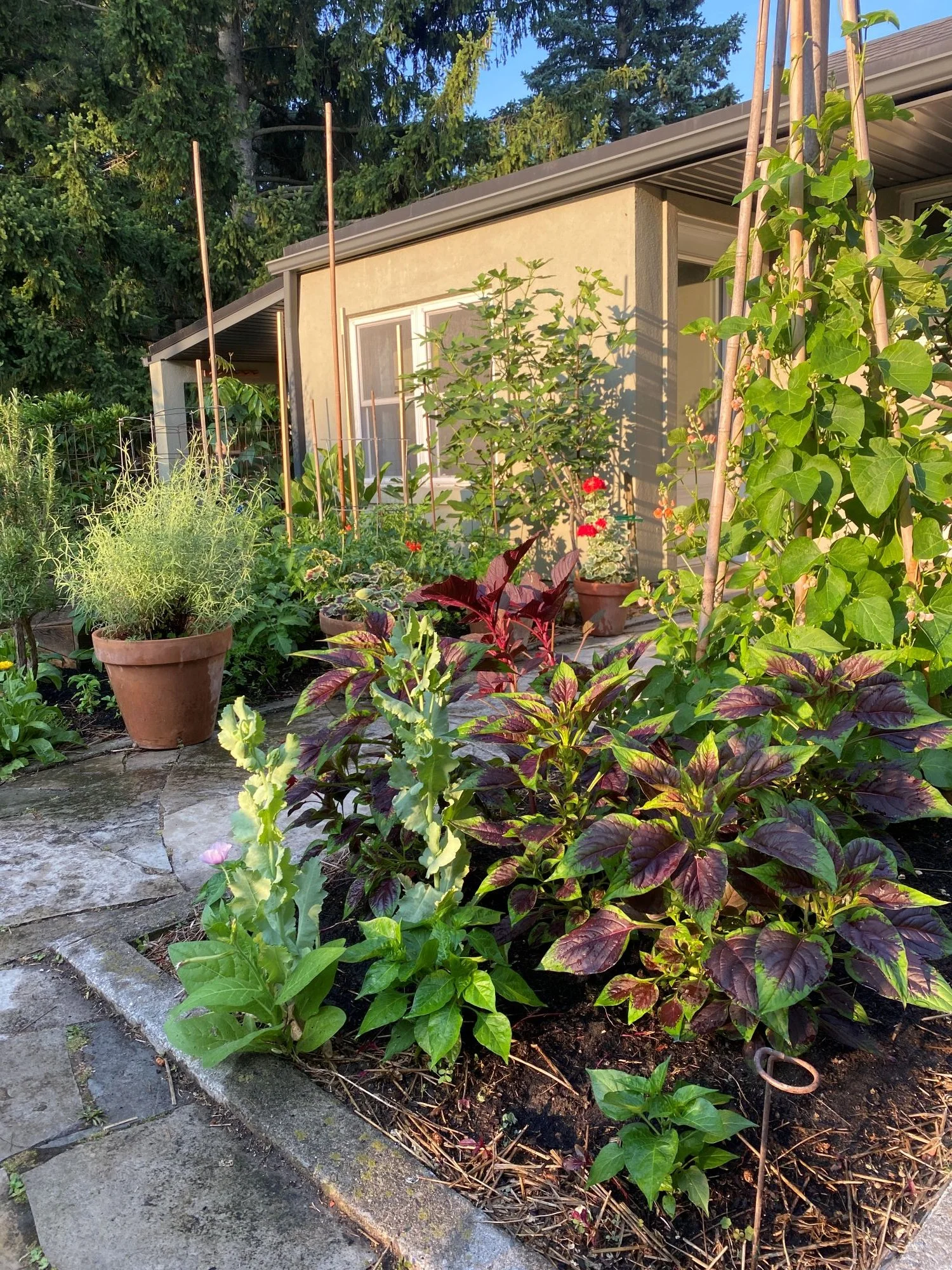
Bamboo teepees are an easy way to bring height into the potager, while giving climbing crops somewhere to go.
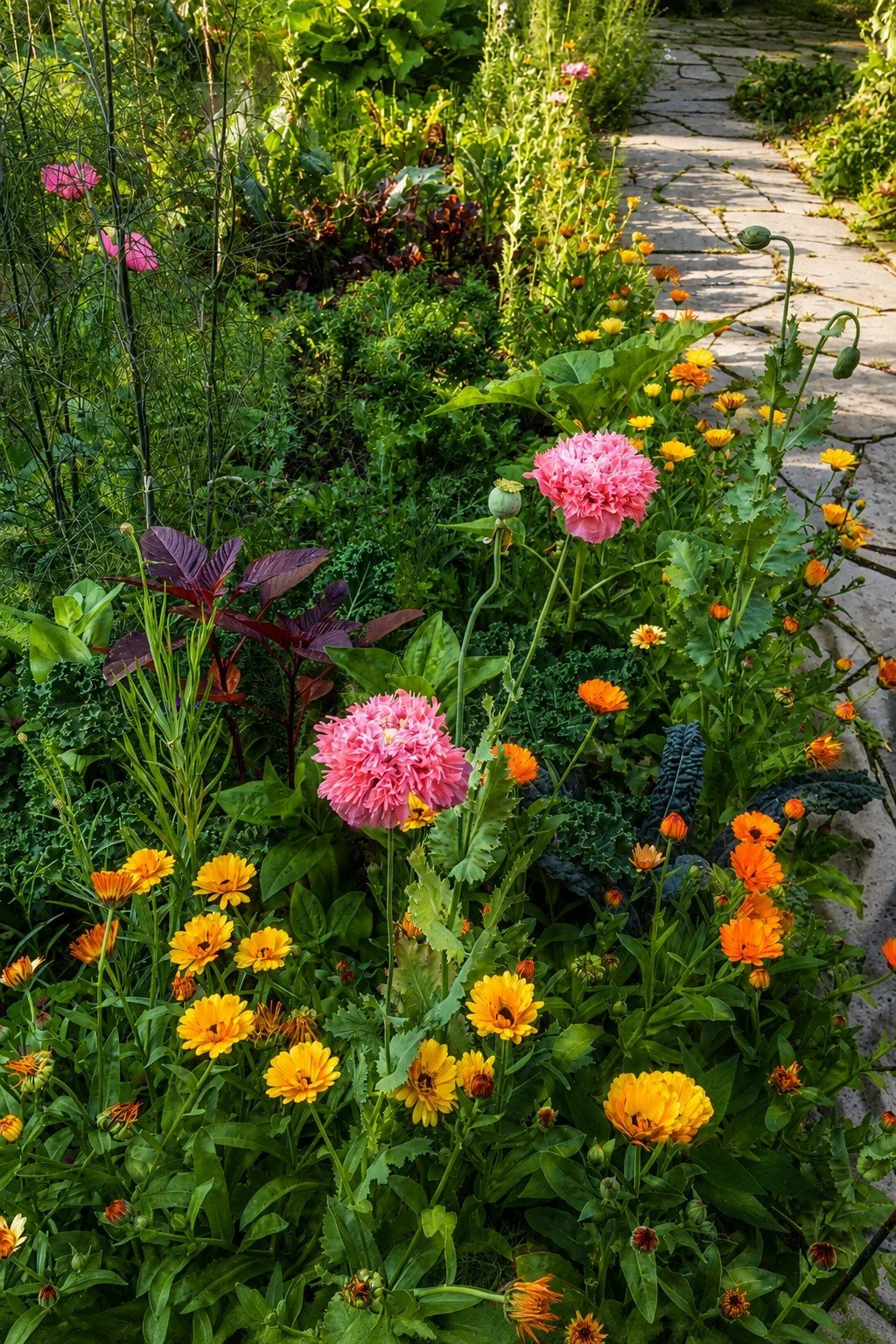
Something is always coming into flower.
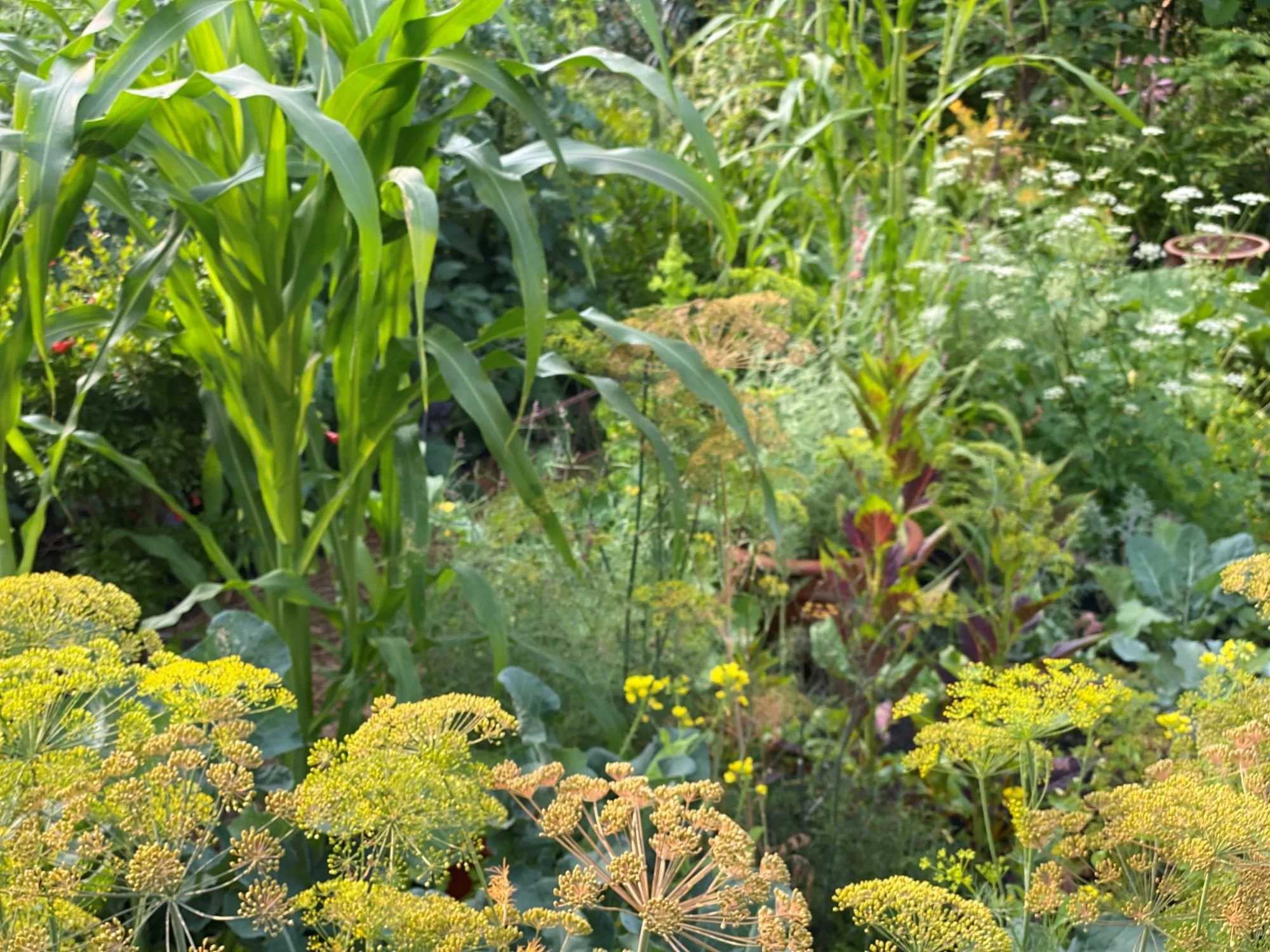
When choosing plants, I look for a mix of height, colour, and texture.
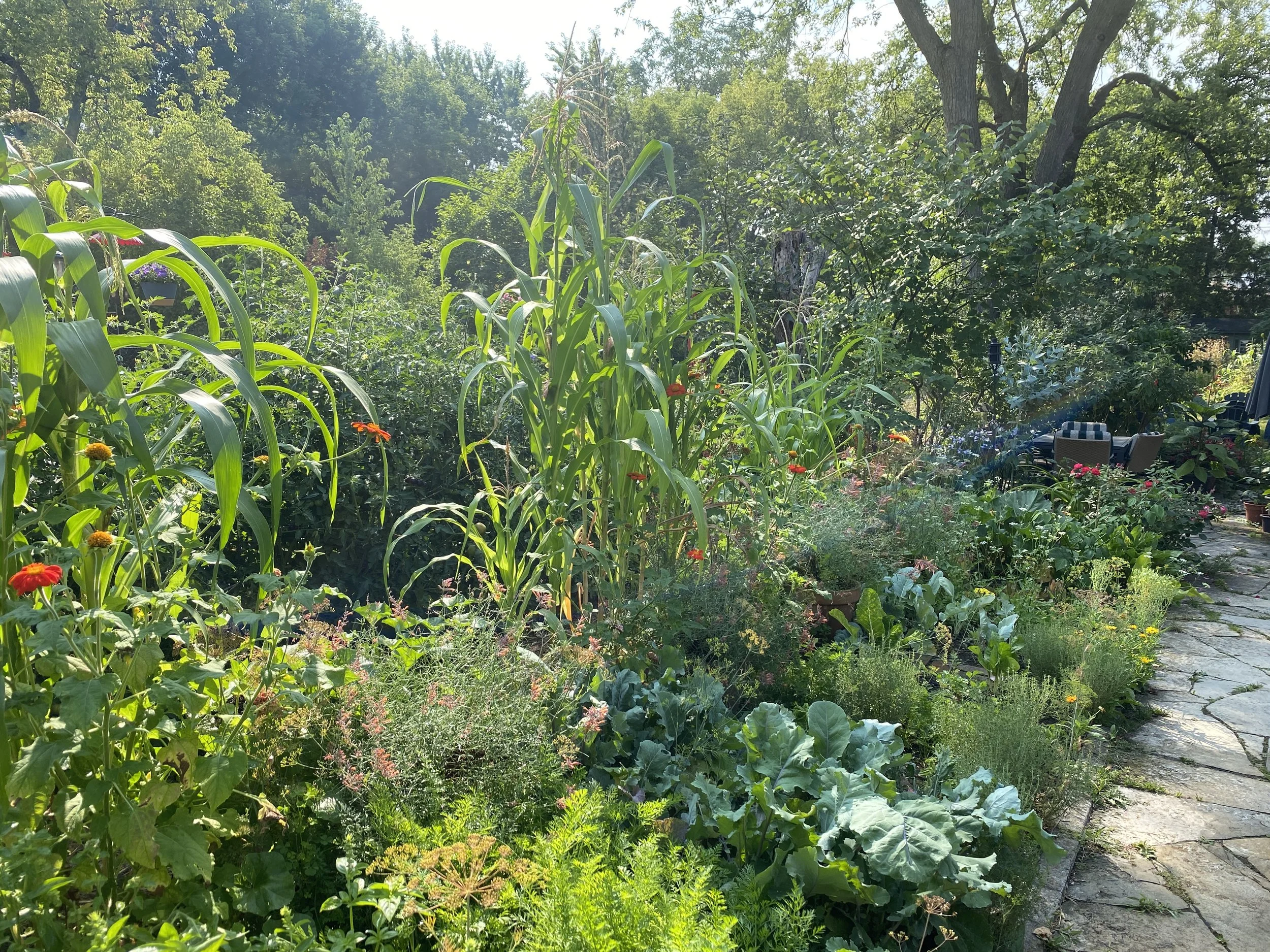
It’s easy to forget movement when planning a garden. The tall corn brings the potager to life whenever the wind picks up.
The Driveway Veg Garden
Our driveway is long enough to park a couple of school buses. We don’t drive school buses, so I wondered if there was a way to use that paved space for vegetables during the years that my daughter was squeezing 100-plus tomato varieties into our yard.
I already had a farmer on speed-dial because I bought straw bales every fall to insulate my fig trees. Growing vegetables in straw seemed like the obvious next experiment.
I’m such a fan of this technique. It has so much potential on hard-packed or paved spaces. Sometimes, we don’t need more land—we just need to see ordinary spaces differently.
The driveway doesn't get full sun, so this certainly isn't gardening by the book. Even so, the few hours of sunshine it receives produce far more food than if we'd left the space empty.
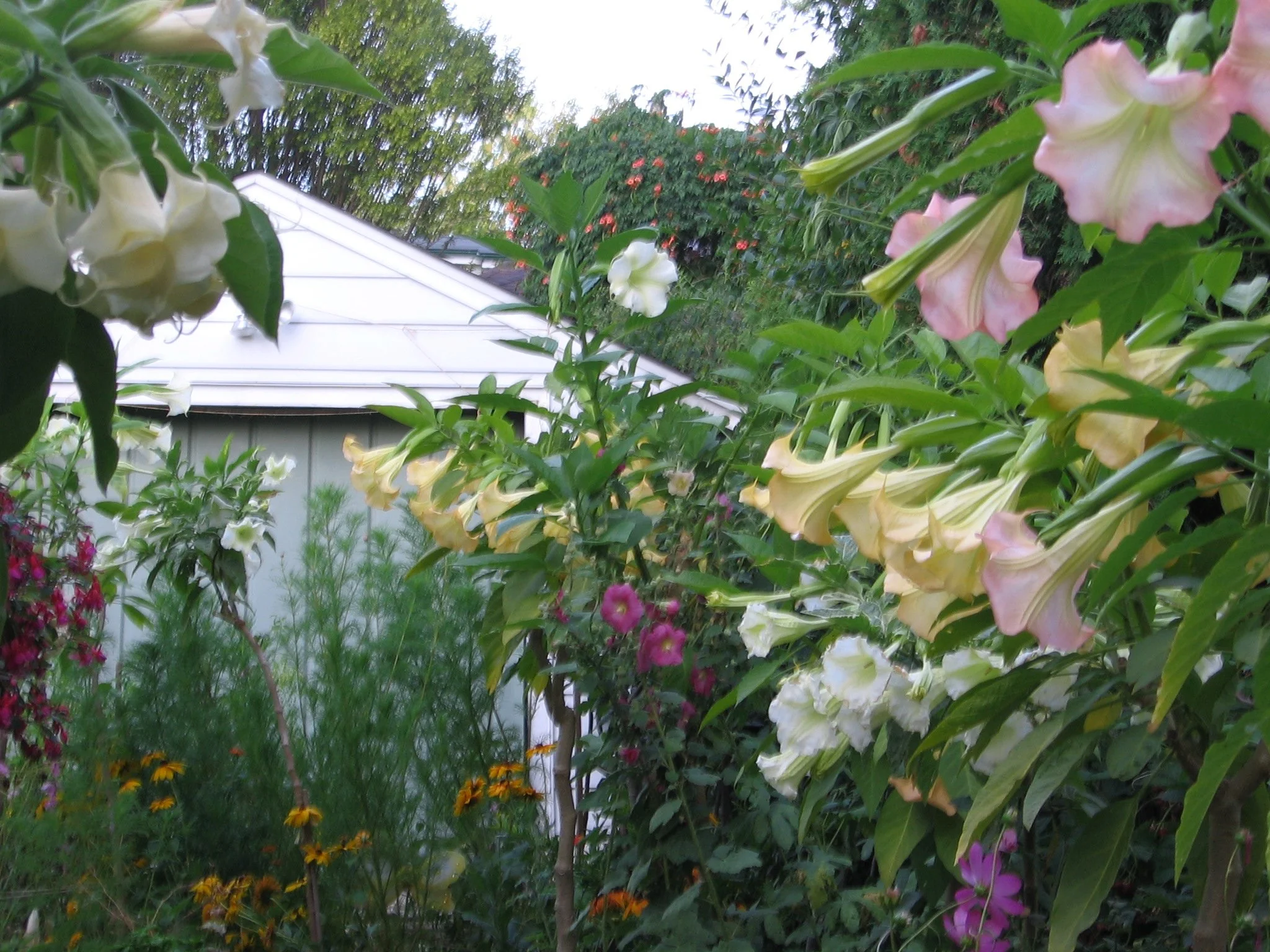
Confession: This isn’t the first driveway I’ve reimagined. Here’s the driveway at my former house. My brugmansia plantation.
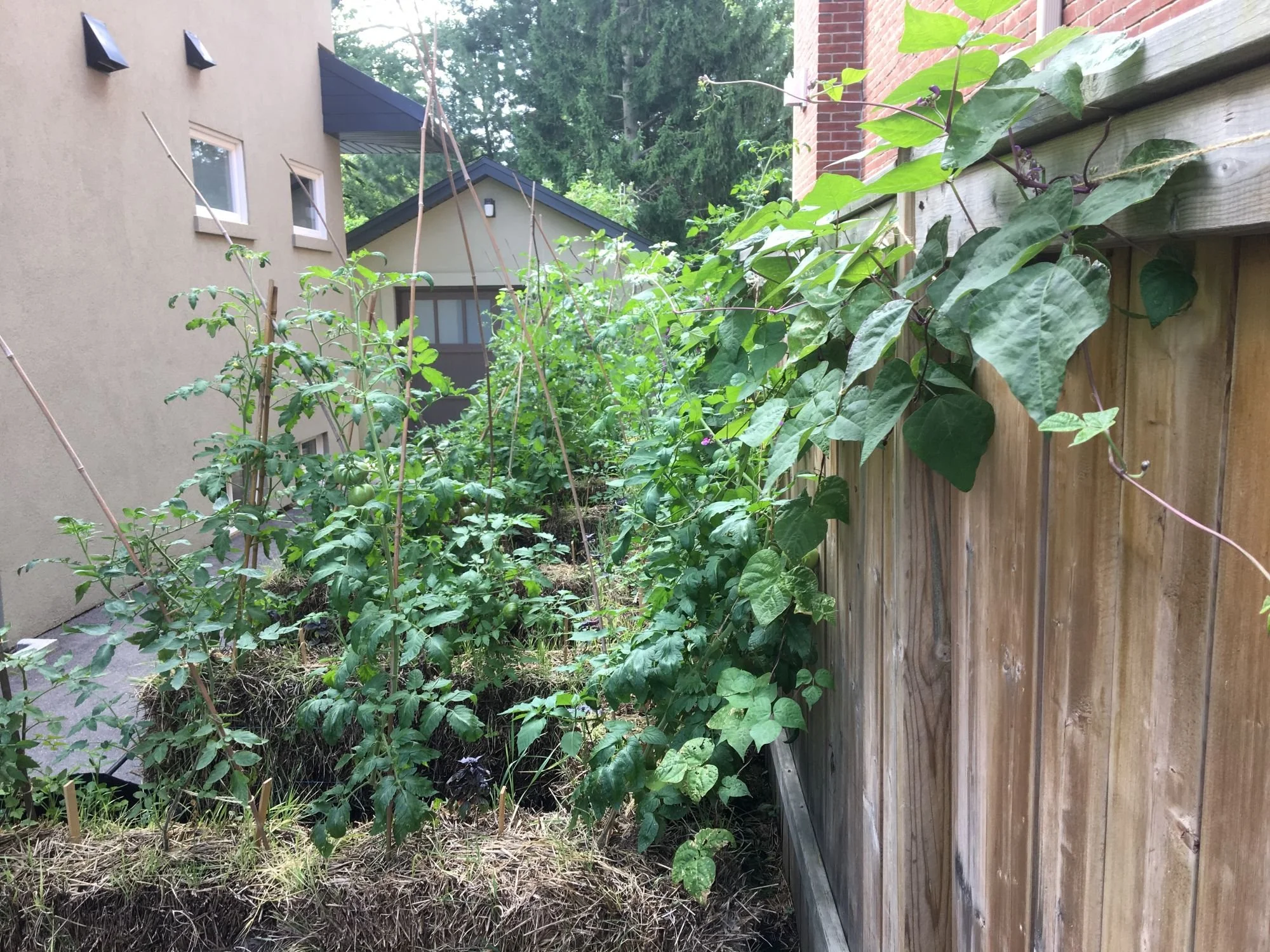
A garden transforms a stark space that feels like a blast furnace into an oasis. We make sure to use the fence to get the most out of the space.
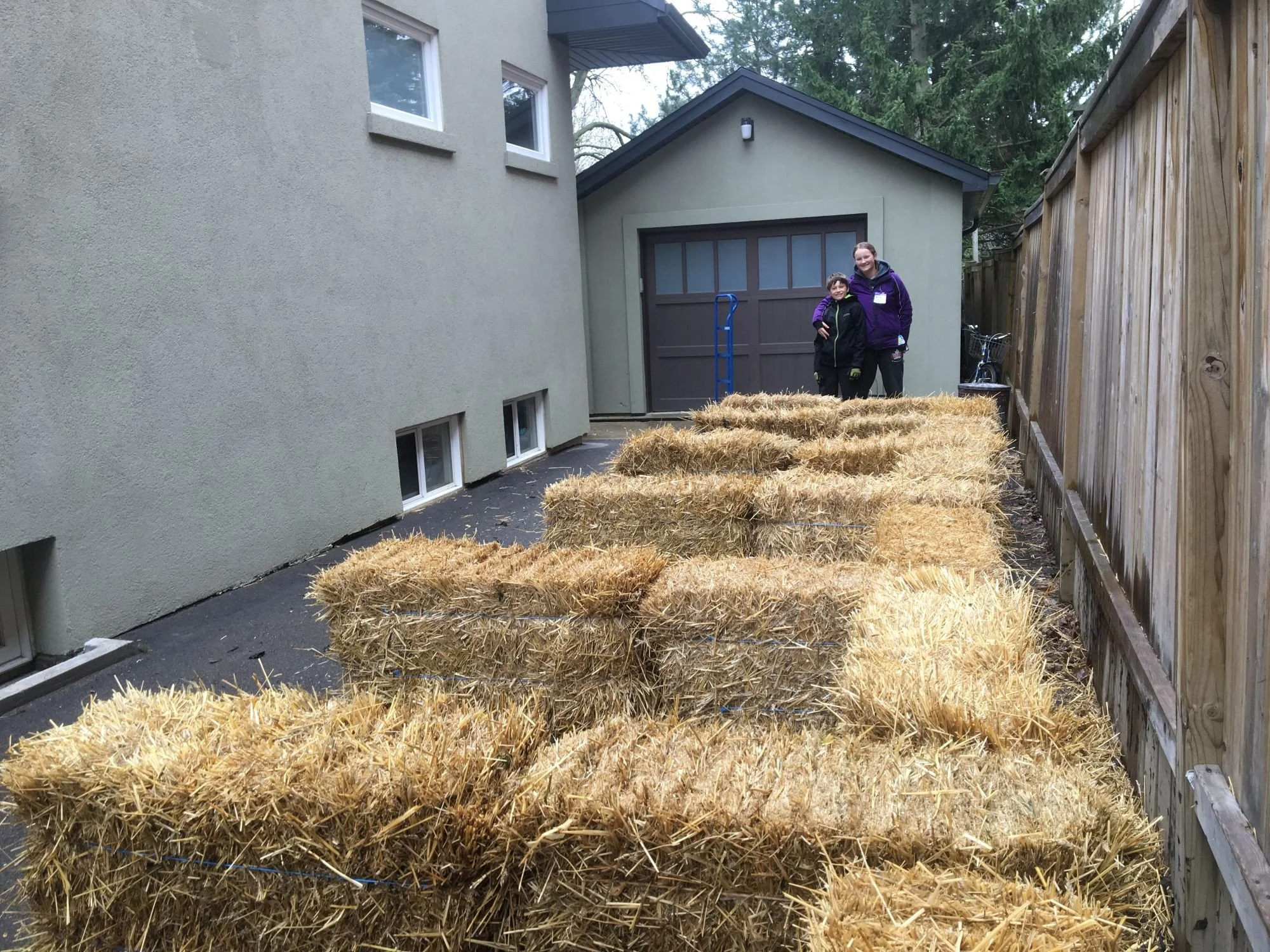
Here’s my daughter Emma and my son Keaton one spring, shortly after we had bales delivered and we’d arranged them on the driveway.
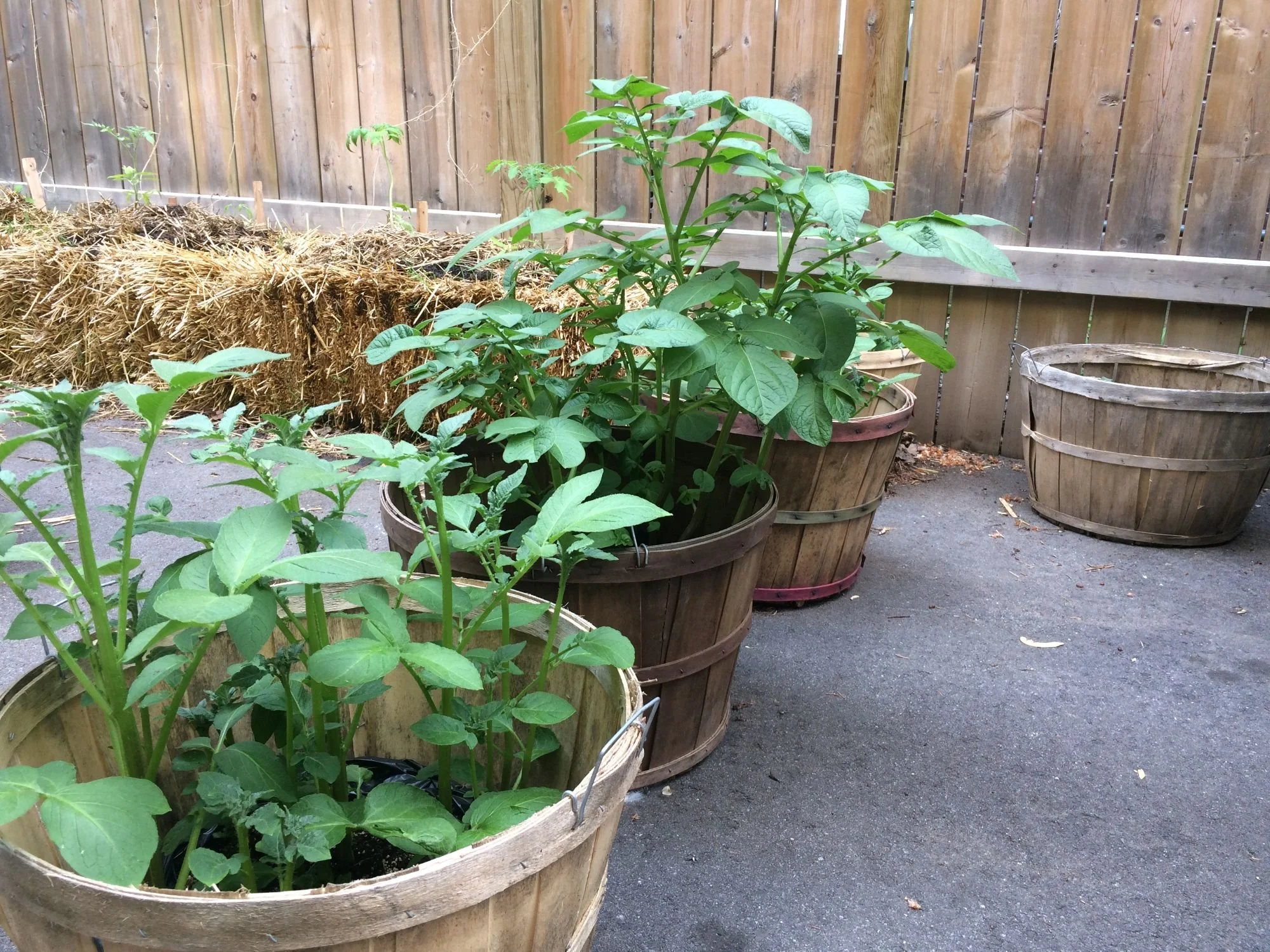
We dot pots around the space. Here, potatoes grow in old bushel baskets.
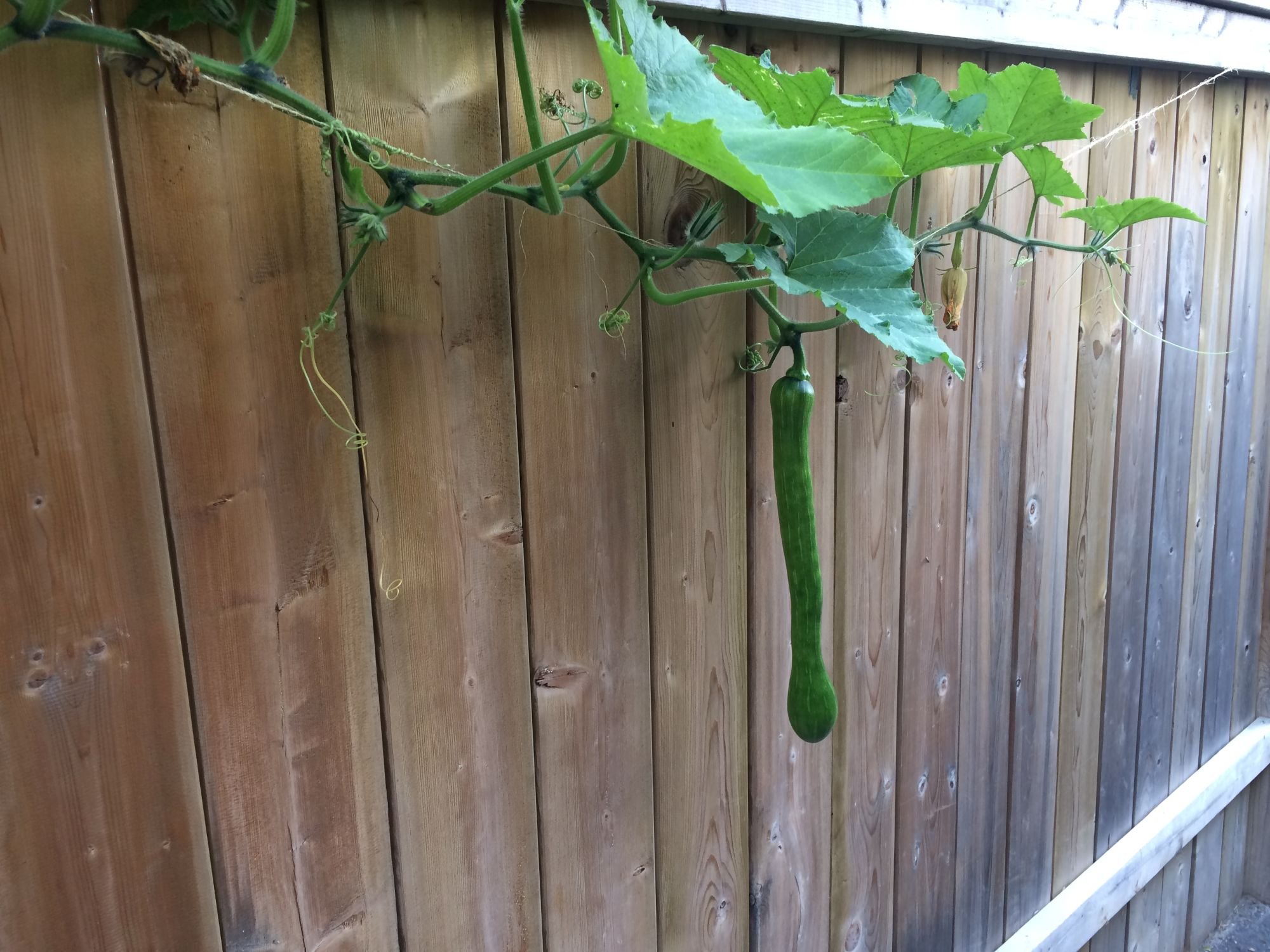
The fence lets the driveway garden escape its boundaries. And vines are a marvellous way to hide a wonky fence.
Rooftop Garden
Like many gardeners, we eventually ran out of room. My daughter Emma wanted to grow more vegetables than the yard could hold. Then one day I looked at the garage roof and wondered…
Every surface is a possibility.
A food garden isn’t always something you fit into your property; it’s something that changes how you see your property.
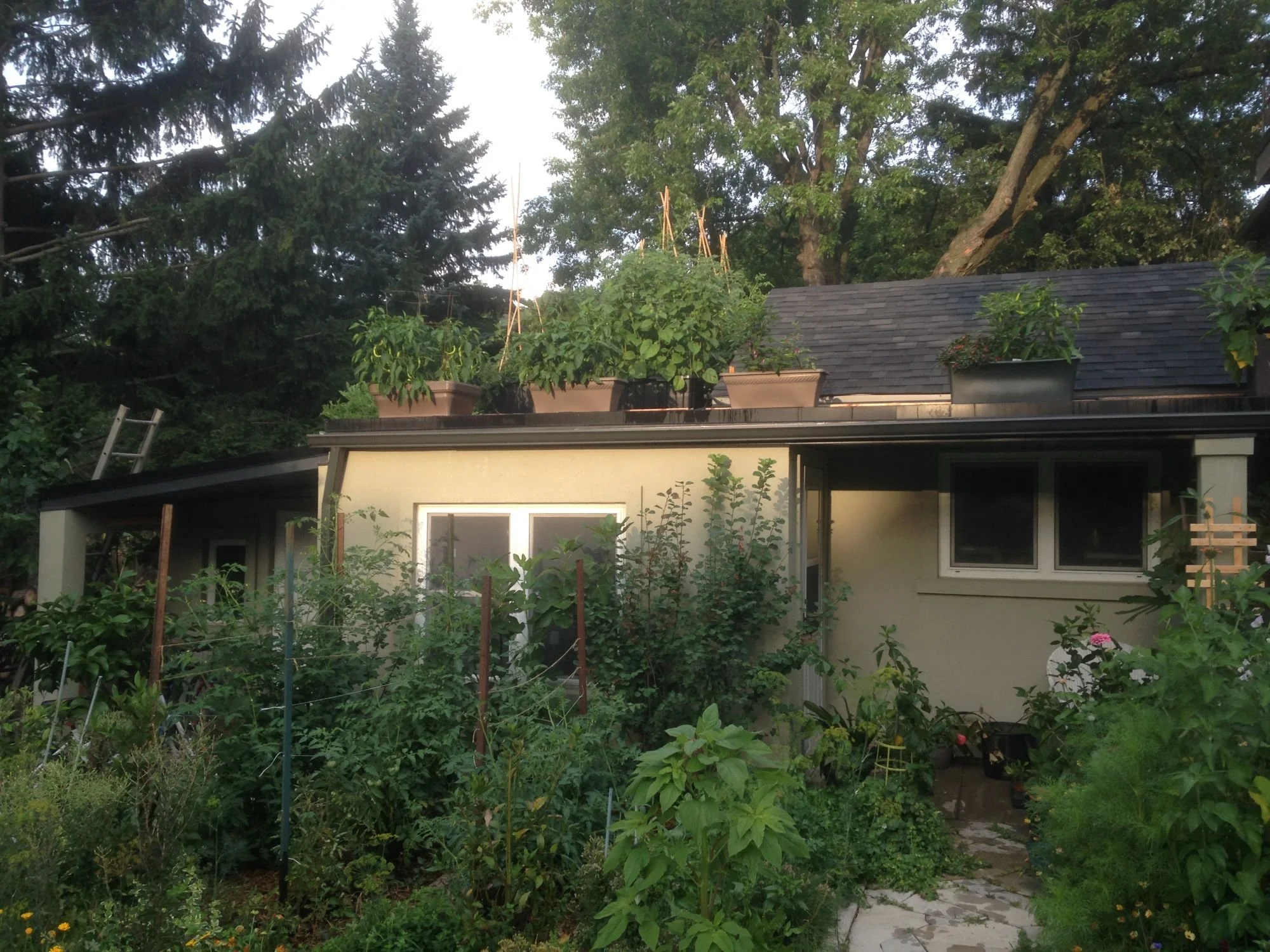
I never built stairs to the rooftop garden, as the kids were young and I didn’t want them up there unsupervised. See the ladder at the left.
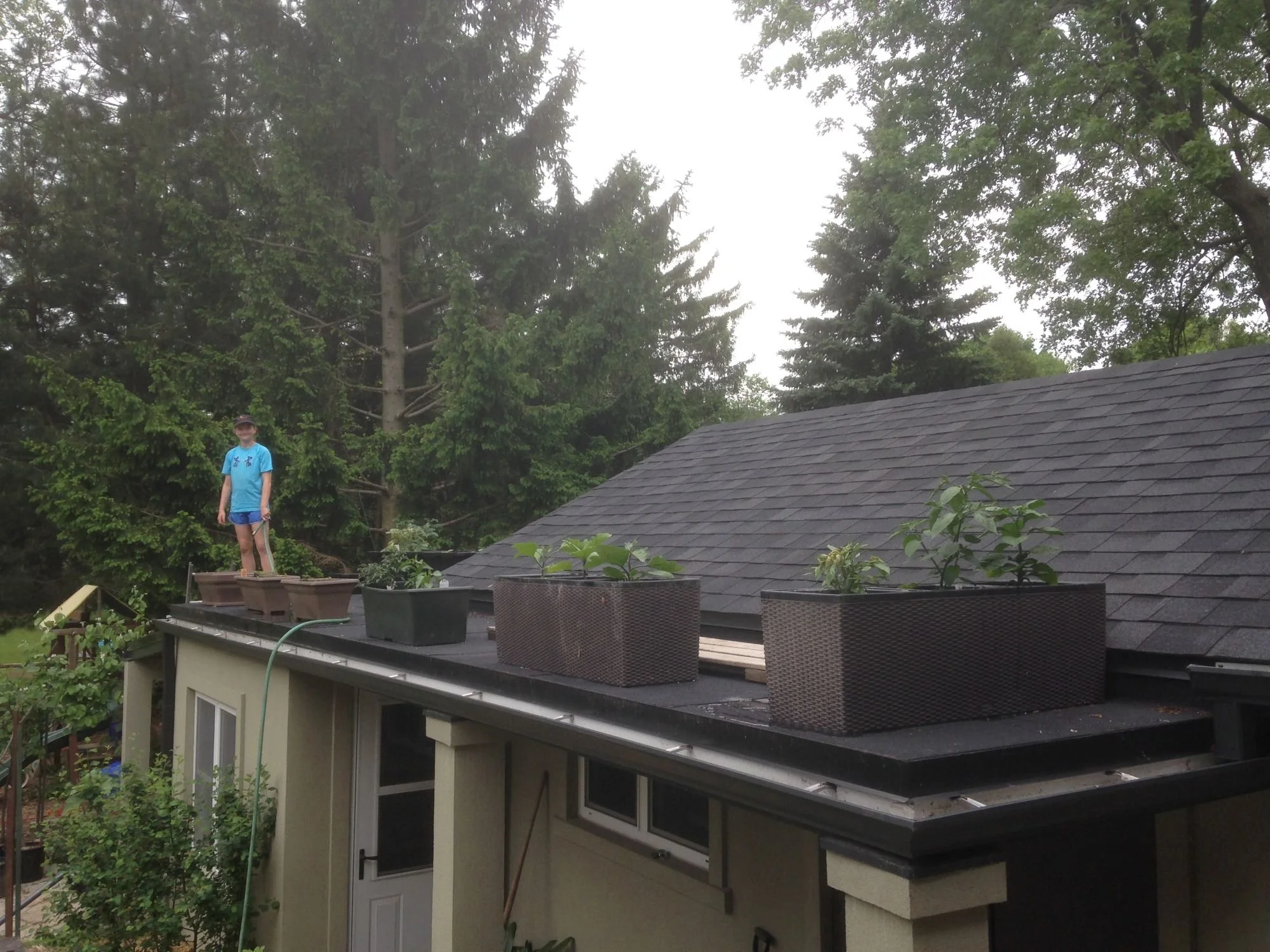
Here’s Emma surveying the garden.
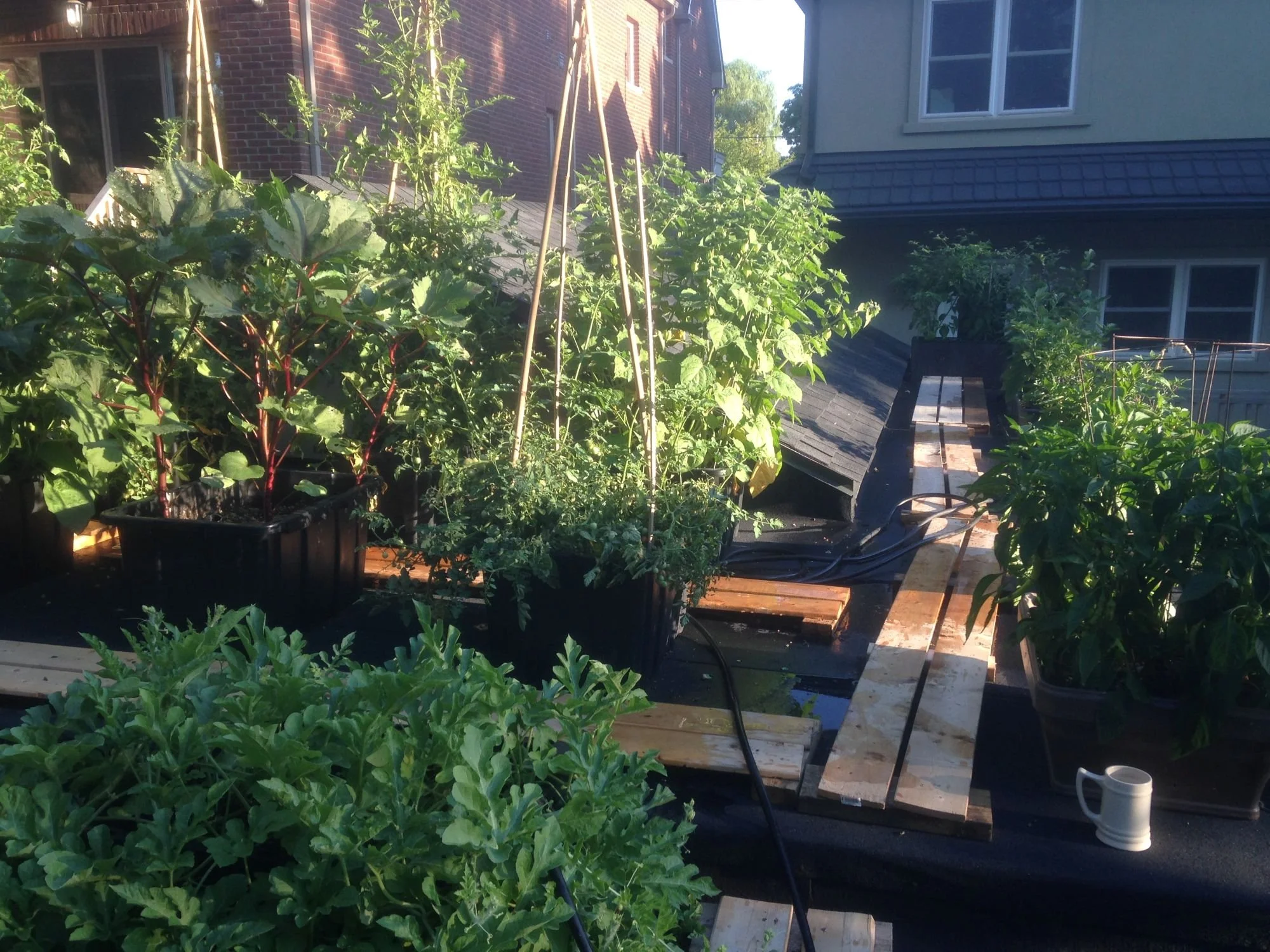
Like the driveway, on a hot summer day, this space feels like a blast furnace. And that makes it perfect for heat-loving crops.
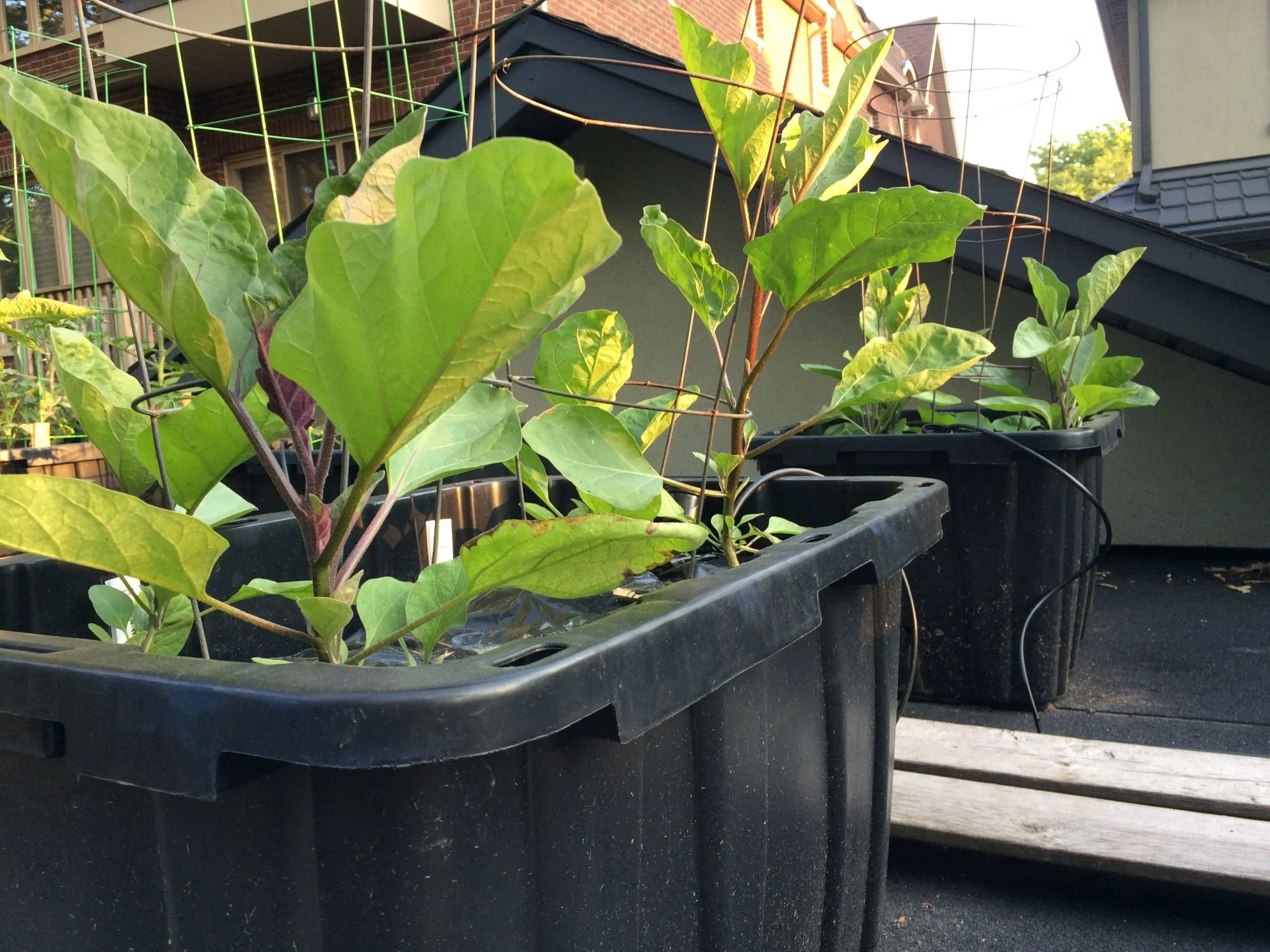
We mostly made our own containers with reservoirs, to cut back on the frequency of watering.
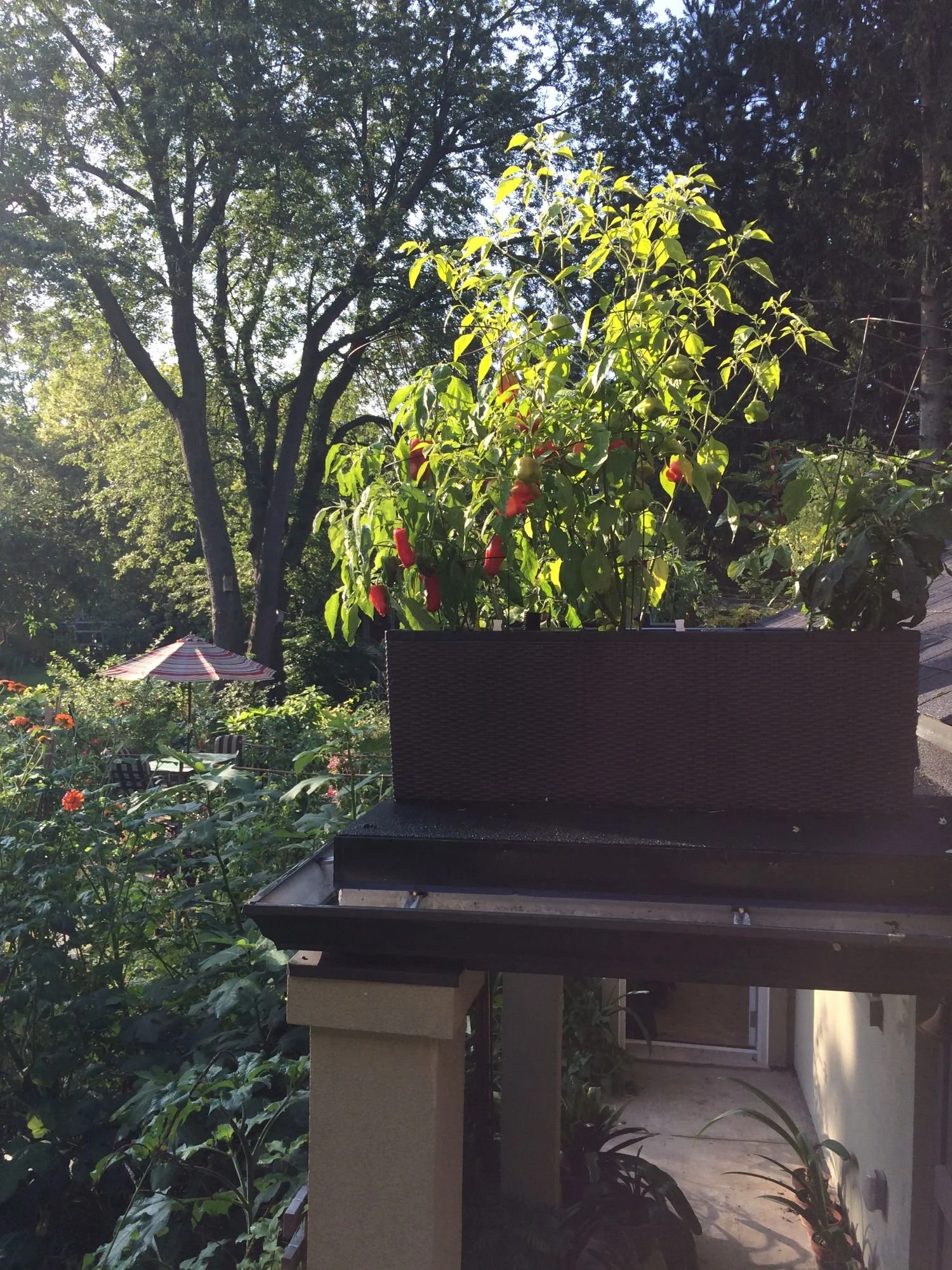
But where appearance mattered, we used containers and plants with more aesthetic appeal, like this planter full of peppers just outside my kitchen window.
“Every surface is a possibility.”
Former Front Lawn
When we moved here, this space was lawn. At a community meeting, I heard neighbours object to a proposed community veg garden because they worried about the appearance. I walked home wondering if a food garden could be just as attractive as a conventional front yard. Maybe my own front lawn was the place to try.
Because my hood has a very suburban grass-shrub-driveway aesthetic, I was a bit worried about the front-yard-food idea. One day, my wife said, “I think the neighbours already know you’re eccentric,” which was all the permission I needed to go ahead and put vegetables out front.
I’m glad I made this garden. I met a whack of neighbours while working and picking. A couple even thanked me. My neighbour Lou pointed out that our block has a few eccentrics on it. I figure I'm one of them. Food gardens can be part of the neighbourhood, in plain sight.
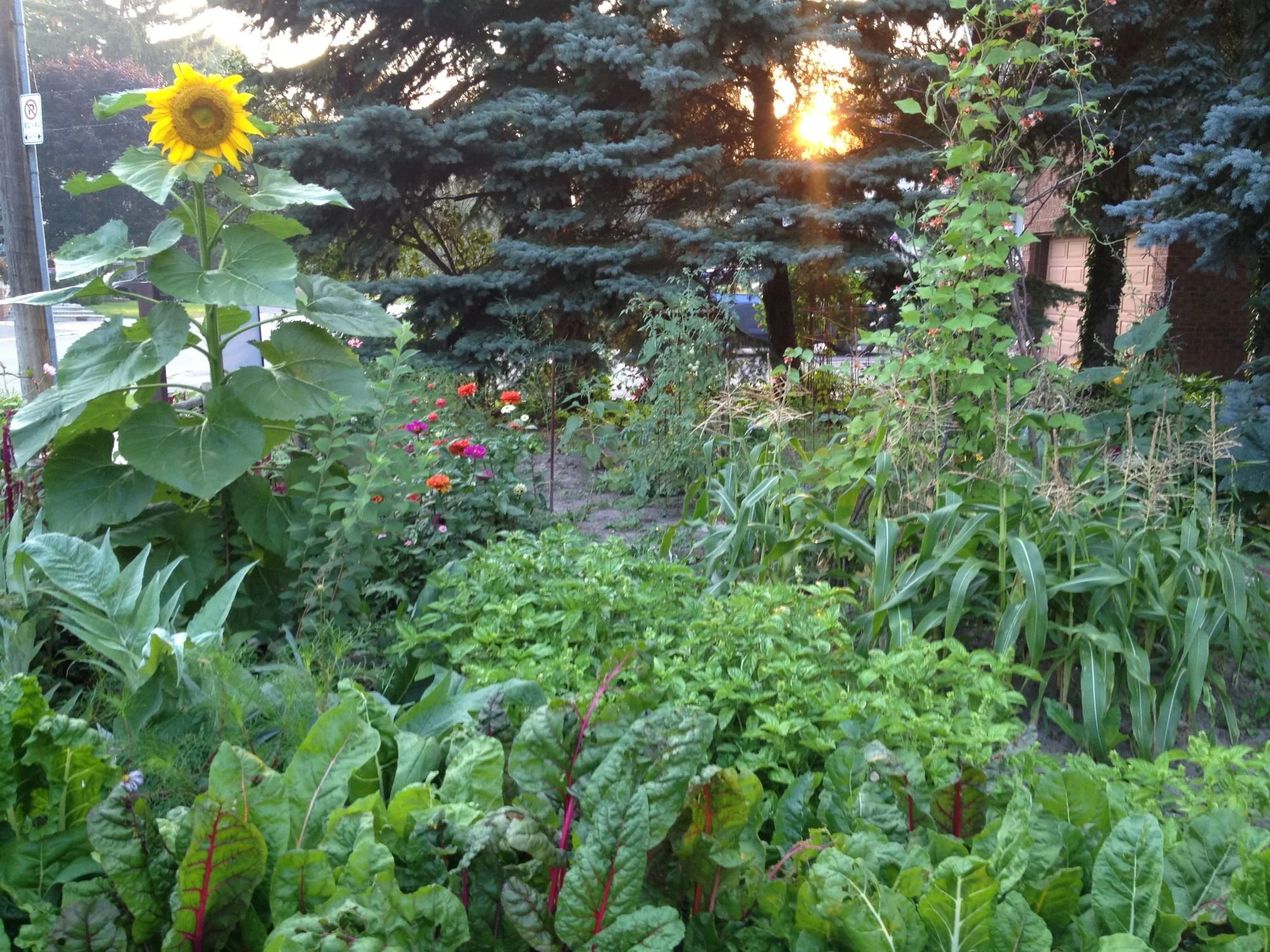
In the first year, I was pretty happy with the mix of height, colour texture—and harvest. Neighbours whom I’d worried might not like the garden called to ask when I thought the sunflowers would bloom.
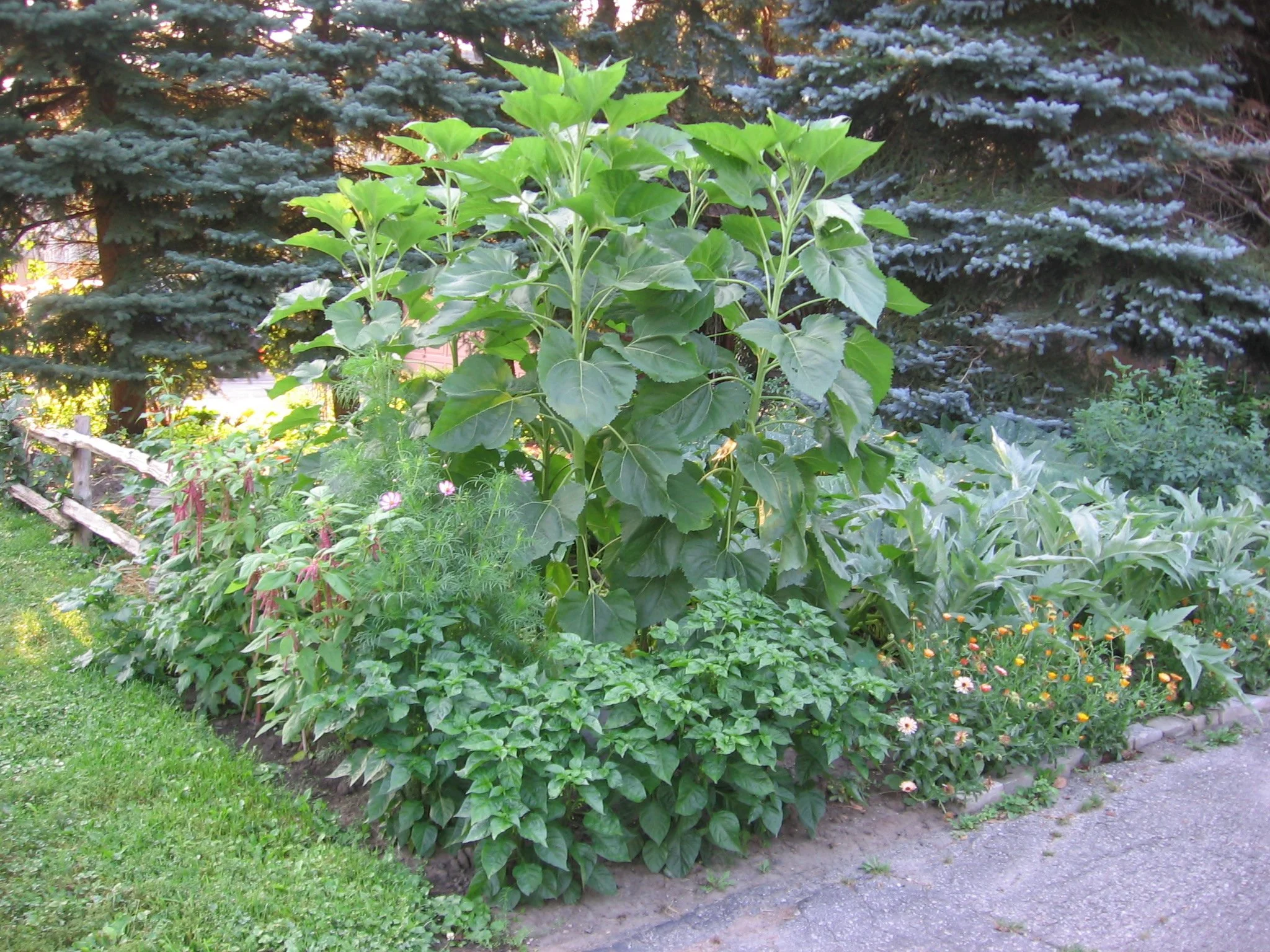
In a nod to the character of the neighbourhood—and because there are lots of kids and dog walkers on my street—I left a band of grass beside the sidewalk. And I put in some split-rail fencing to define the space.
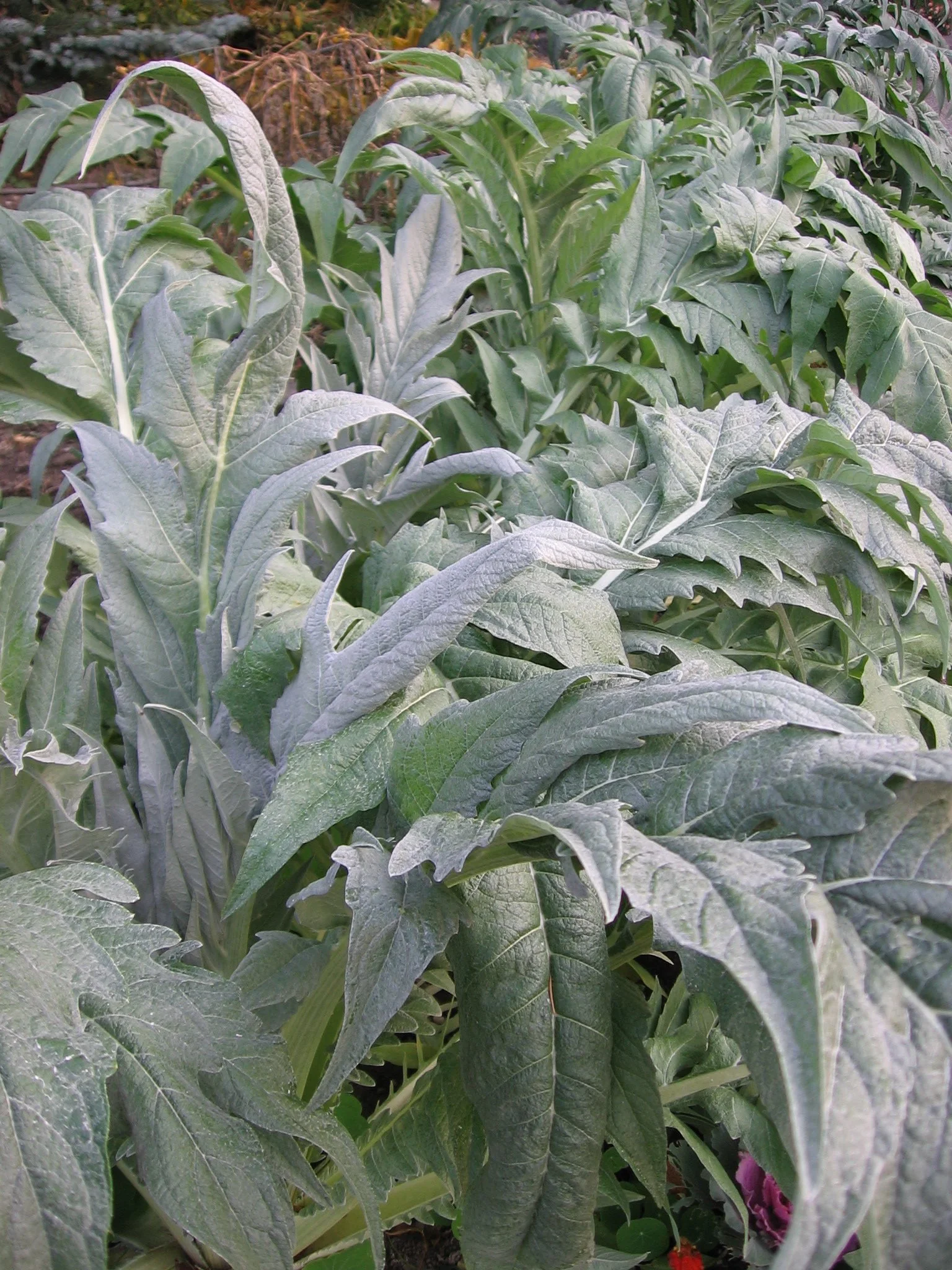
One neighbour asked about the “Promethean” plants in lining the driveway. She meant the cardoons.
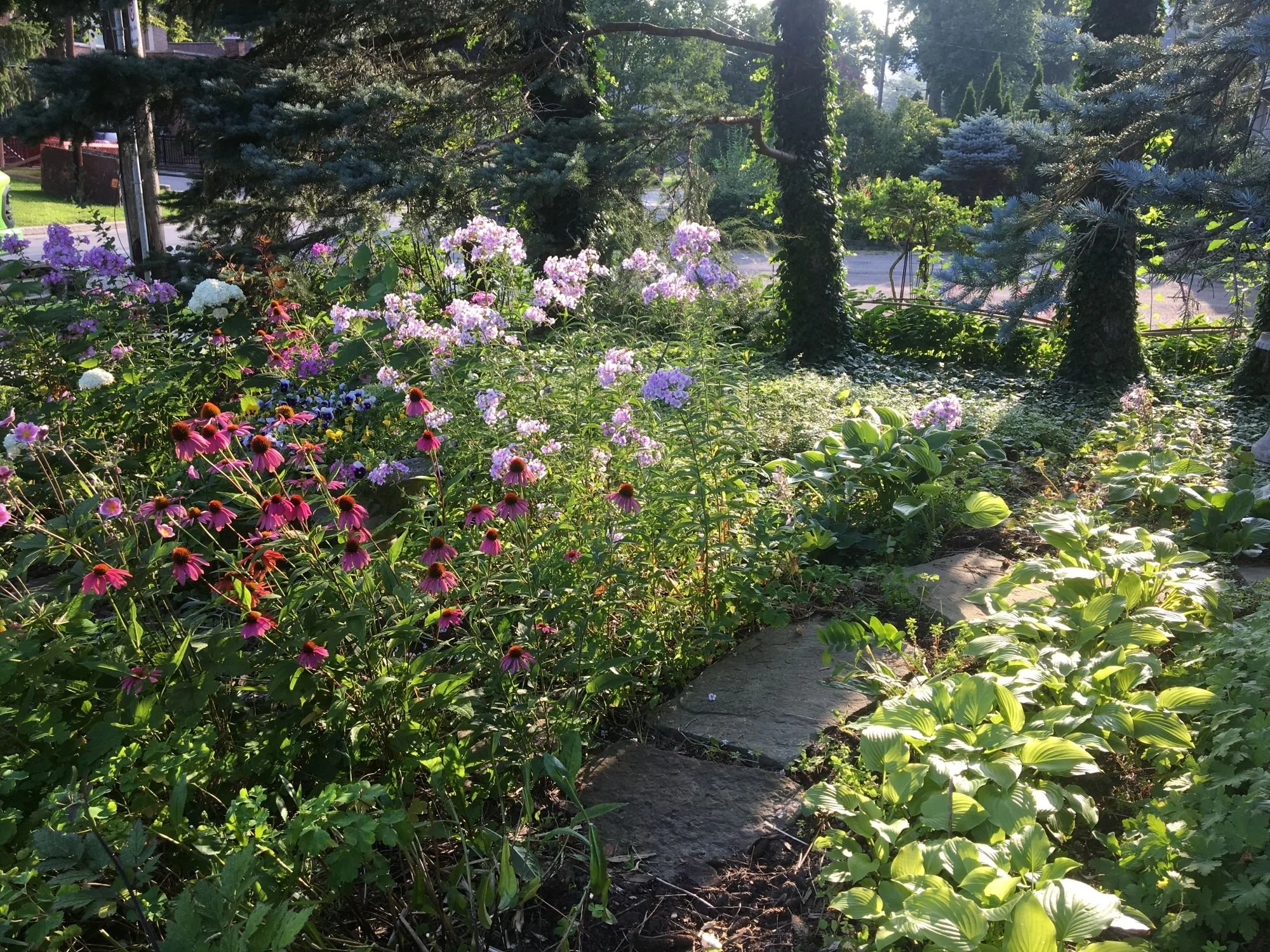
As I built other food gardens such as my rooftop and driveway gardens, I added more ornamental plants to my front garden. Mom always loved flowers—so it’s a space where I think of her.
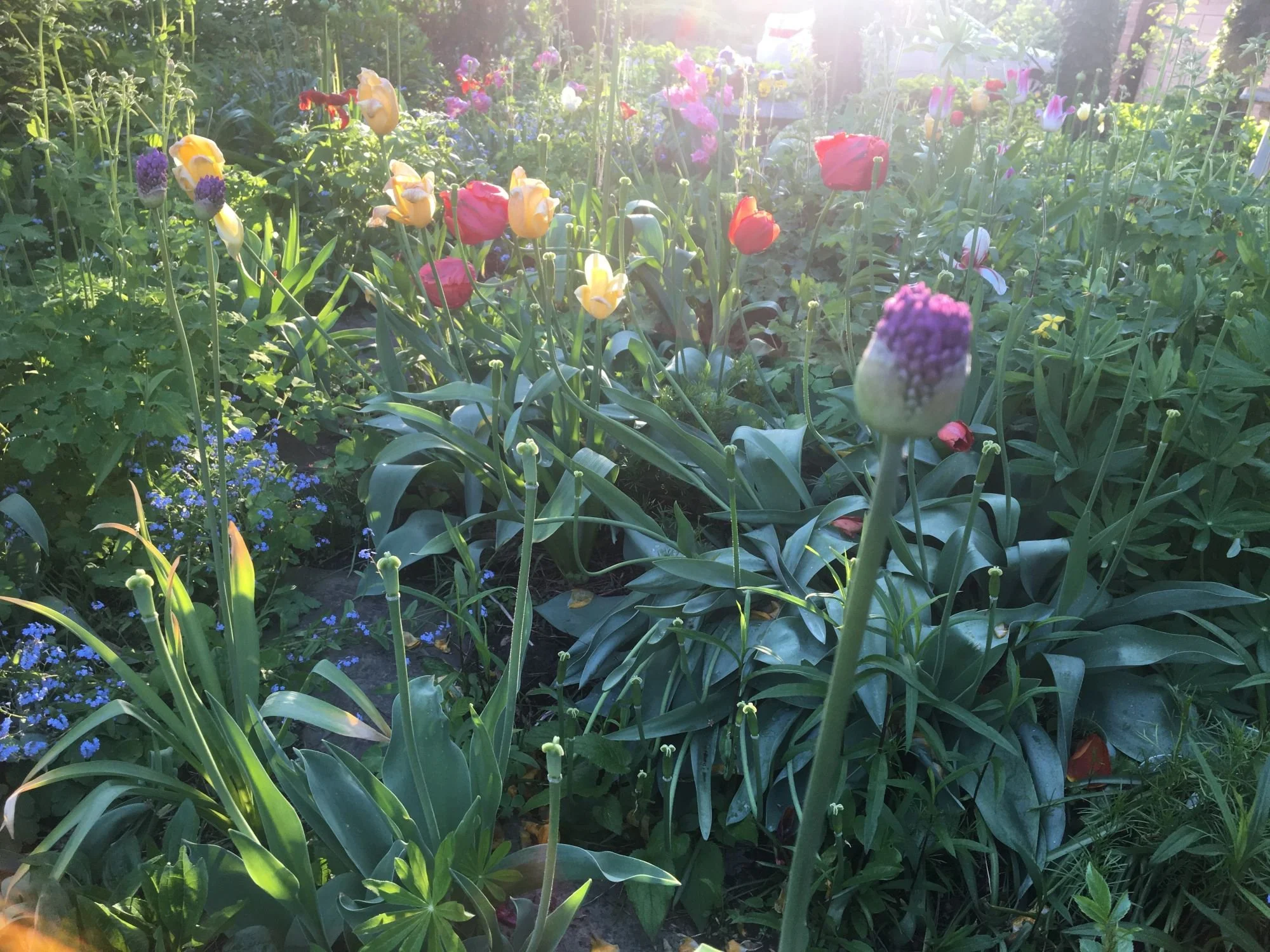
Springtime in the front garden is a symphony of bulbs in succession.
“Food gardens can be part of the neighbourhood, in plain sight.”
Back Patch
My back veg garden started out looking more like a conventional farm garden. Row after row after row. With time, I’ve had fun playing with form. Today, it’s probably less efficient than it once was, but far more enjoyable to spend time in.
I used to garden for efficiency. Now I garden for enjoyment. Sometimes beauty wins over efficiency. I'm perfectly happy with that.
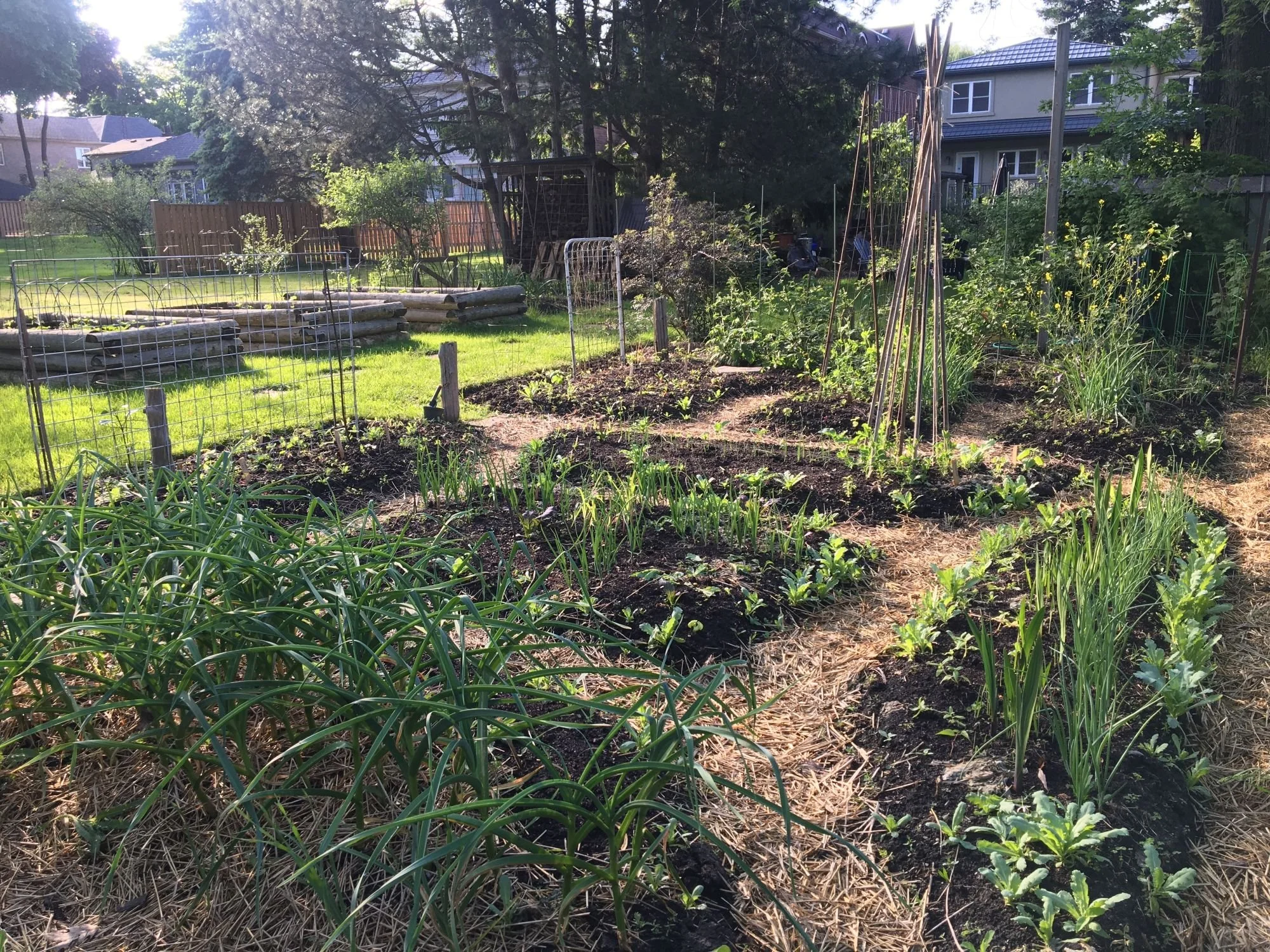
Rows give way central areas and some fun geometry. Straw pathways bring texture, colour—and relief from muddy shoes.
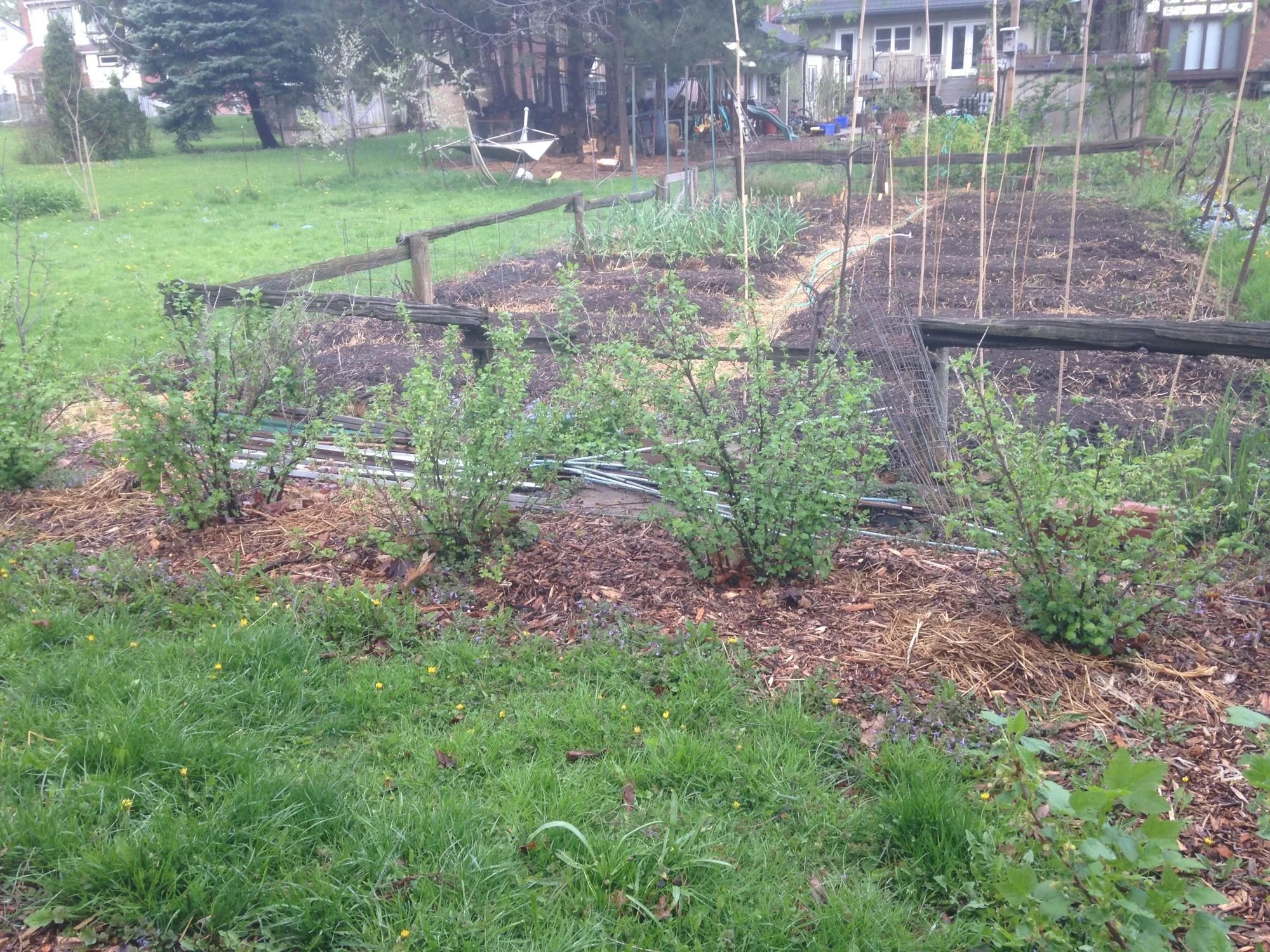
Here’s the back veg garden in the early years, hemmed by a row of gooseberries.
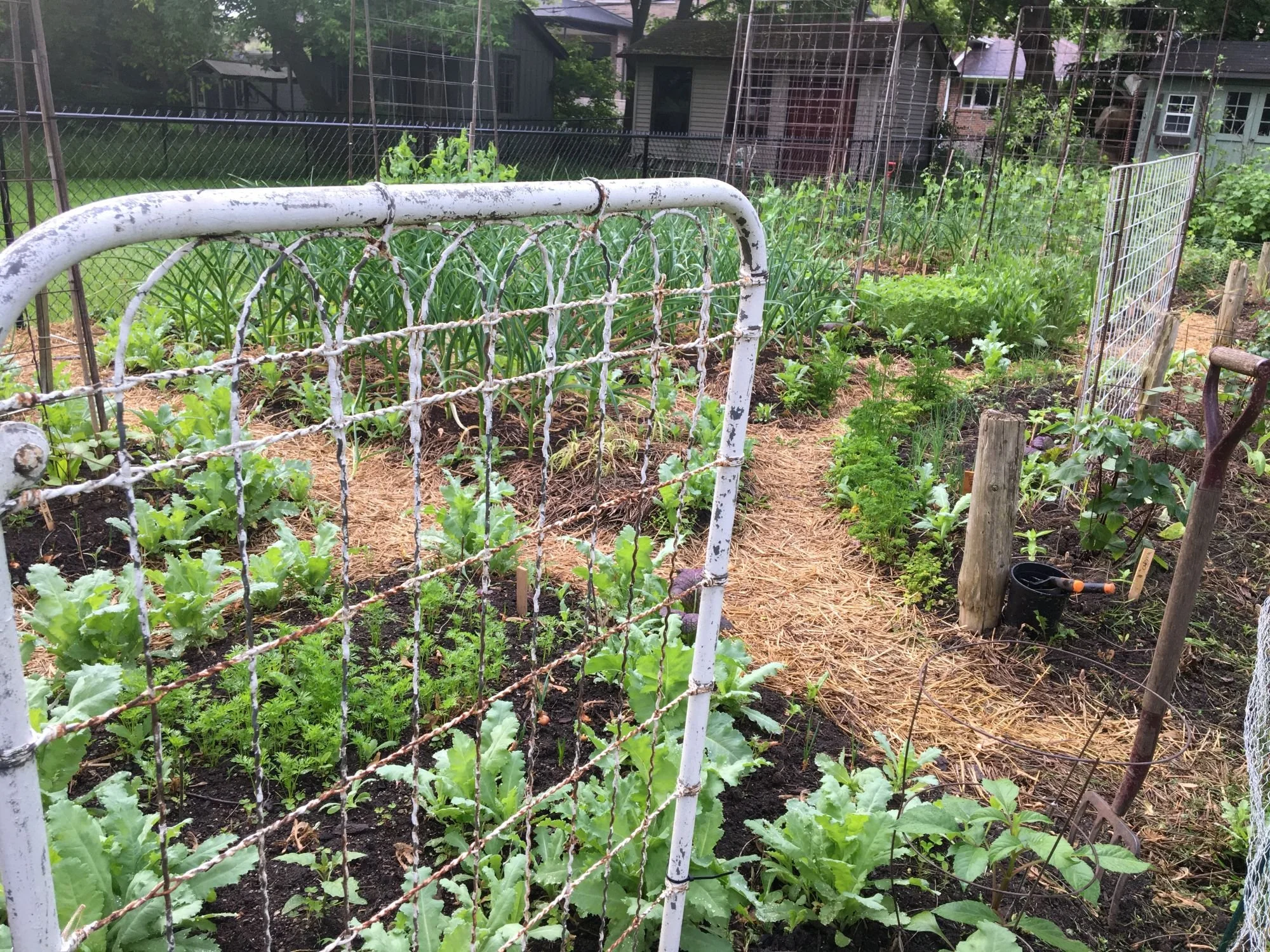
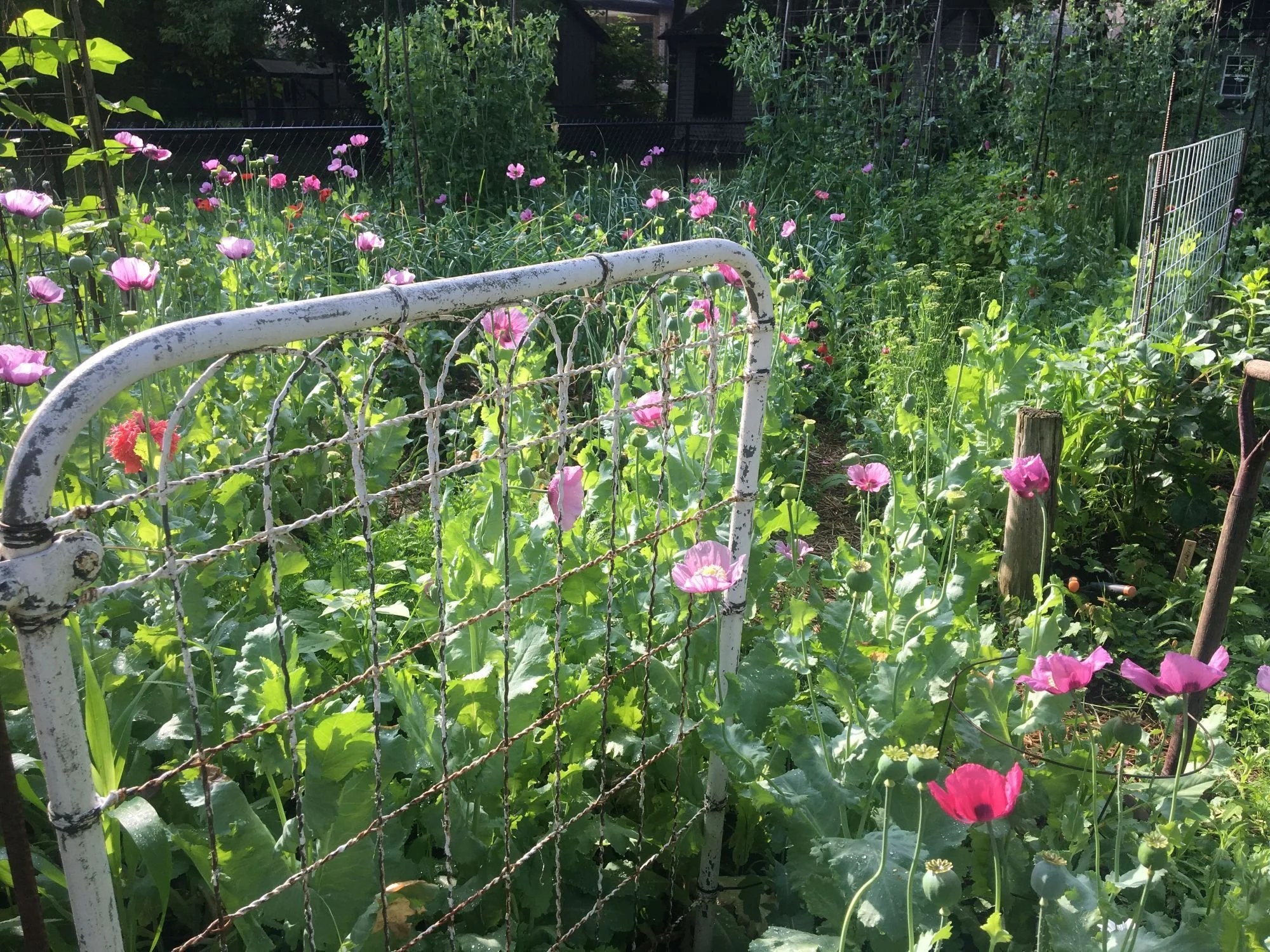
Peering into the veg bed from another angle, through an old gate I rescued and repurposed for climbing crops.
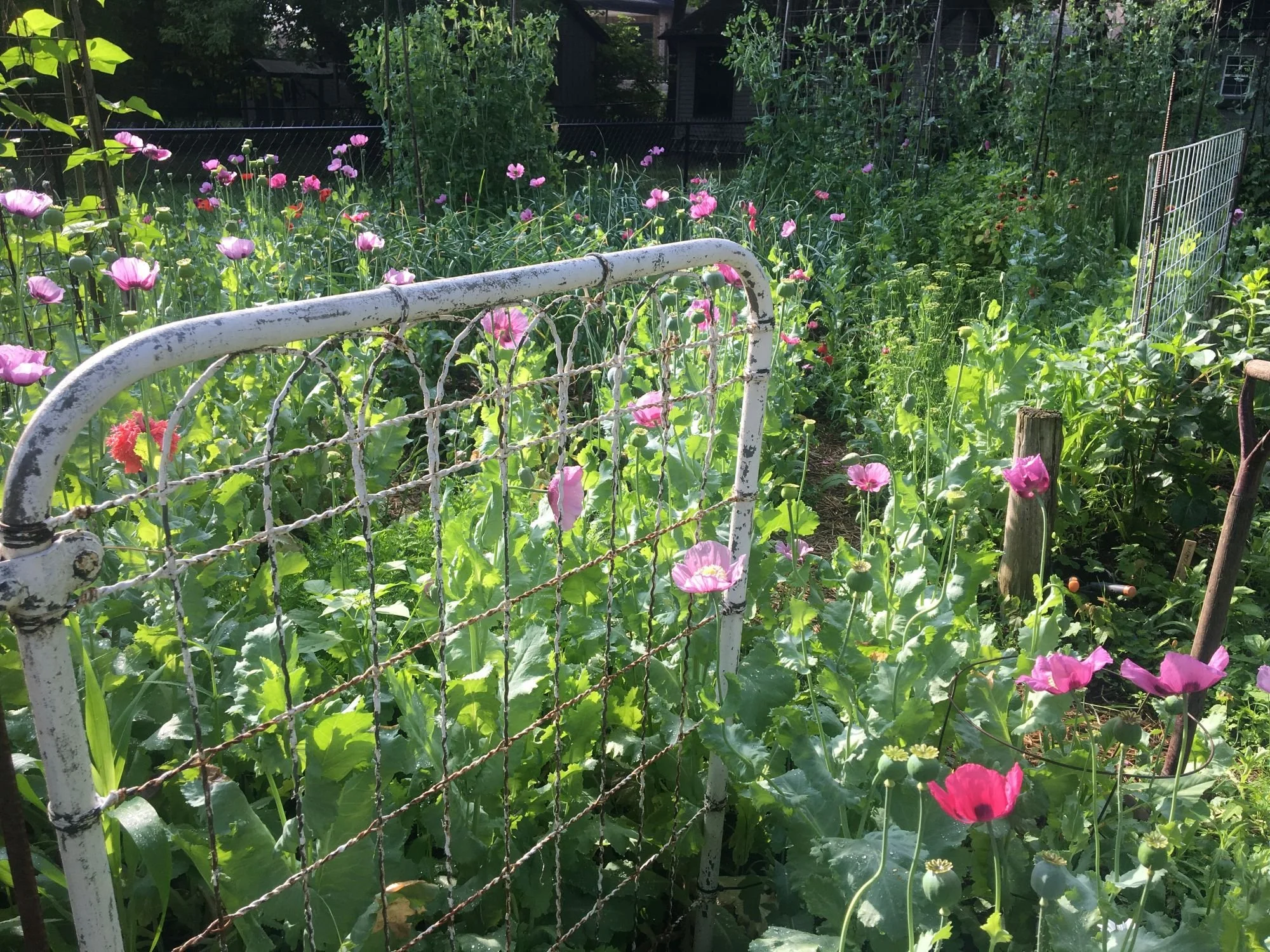
Self-seeding poppies paint the bed bright colours mid-summer.
Patio
Most patios are near the back door. Mine isn’t. It’s further down the yard. I did this for a couple of reasons. First, I wanted it in the shade of a lovely old apple tree. Second, the best space for growing veg in our entire yard was beside the house. So that’s where I put my potager garden.
It wasn't the reason I built the patio there, but it has become the heart of the garden.
I always imagined living in a stone house. Life took us elsewhere, so I built a drystone wall beside the patio instead. It let me use stones I’d collected around the garden while making the space feel sheltered and intimate.
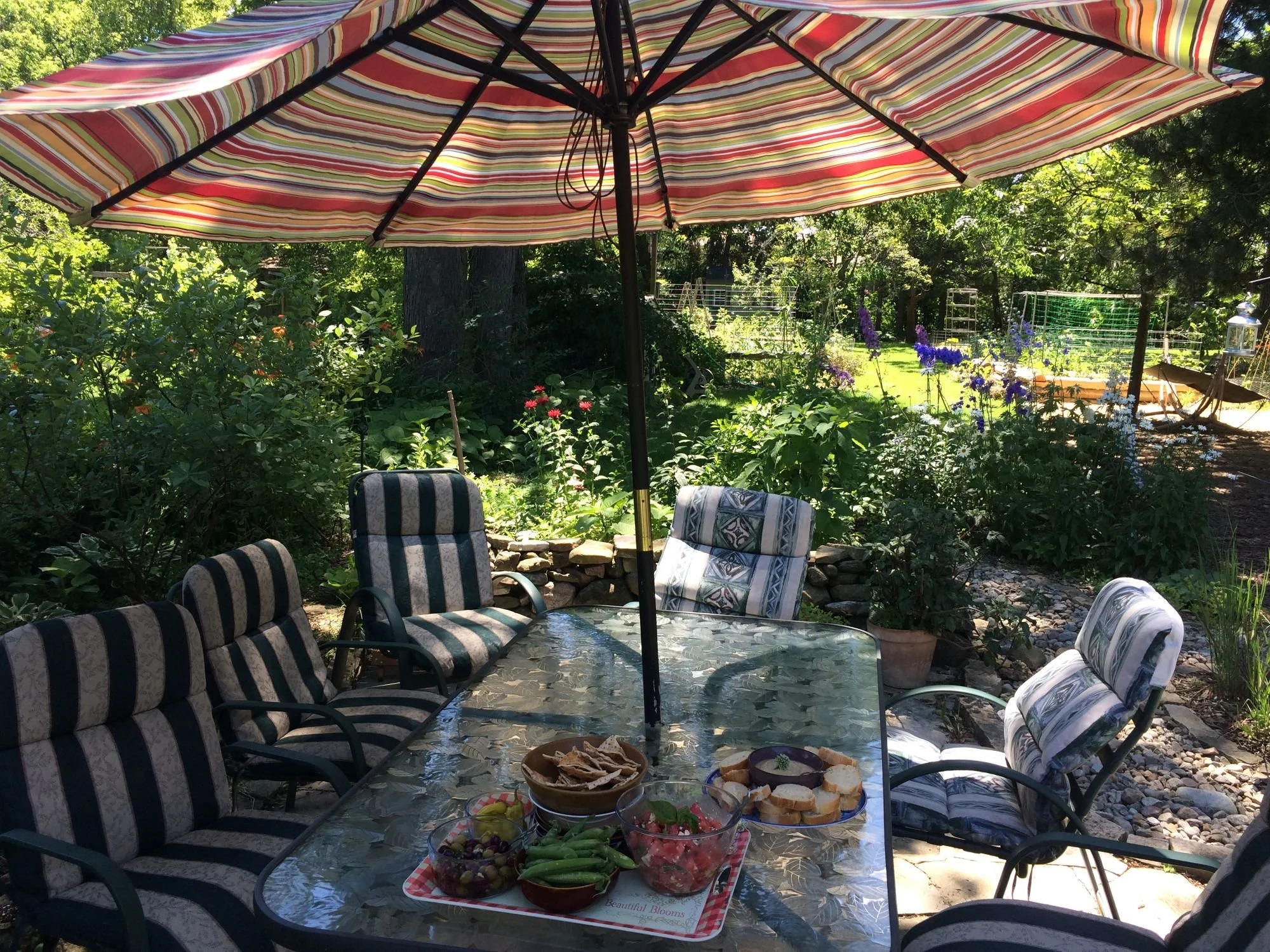
We eat on the patio often.
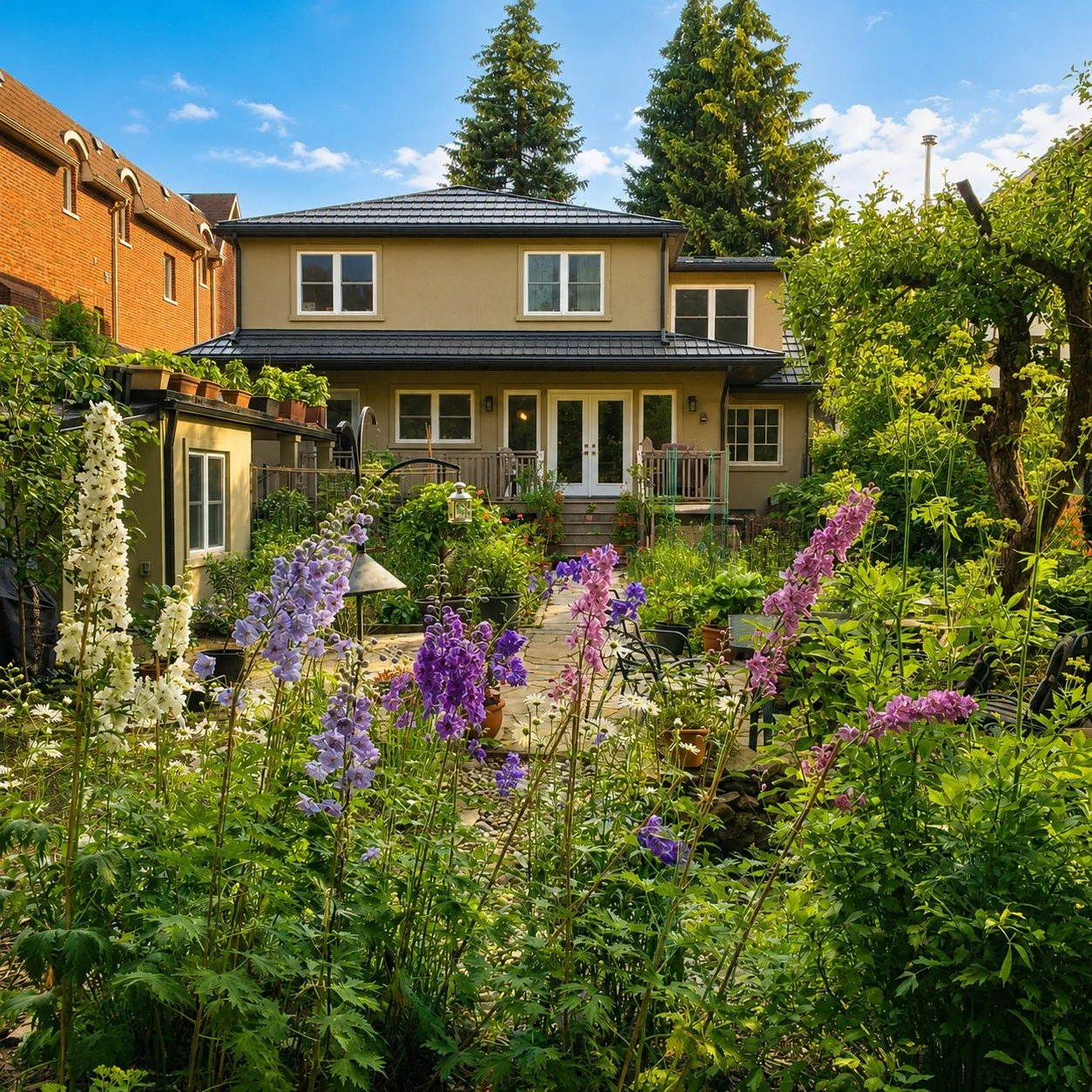
Here’s a view looking from beyond the patio, back up to the house.
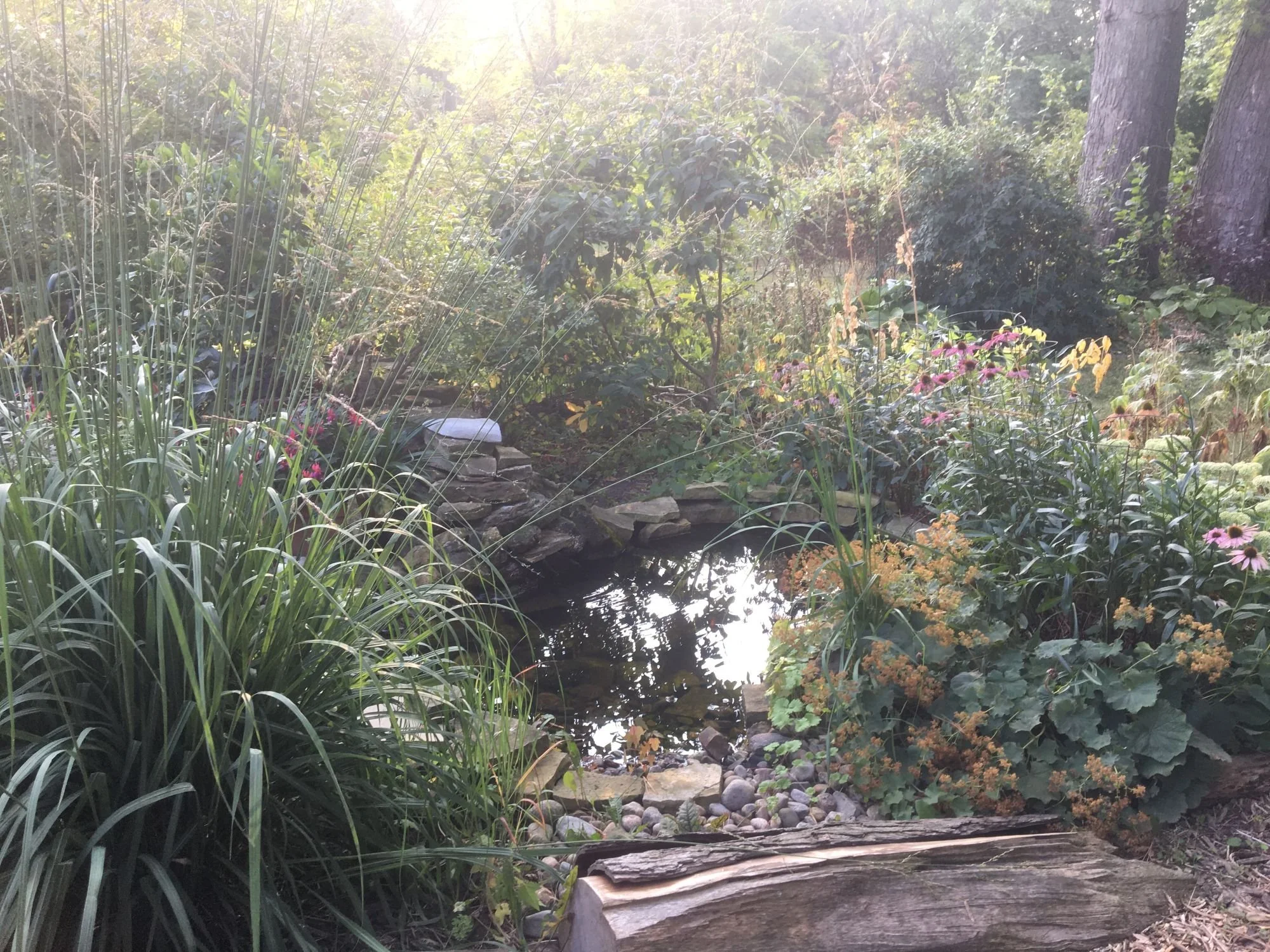
The sound of water comes from the pond next to the patio.
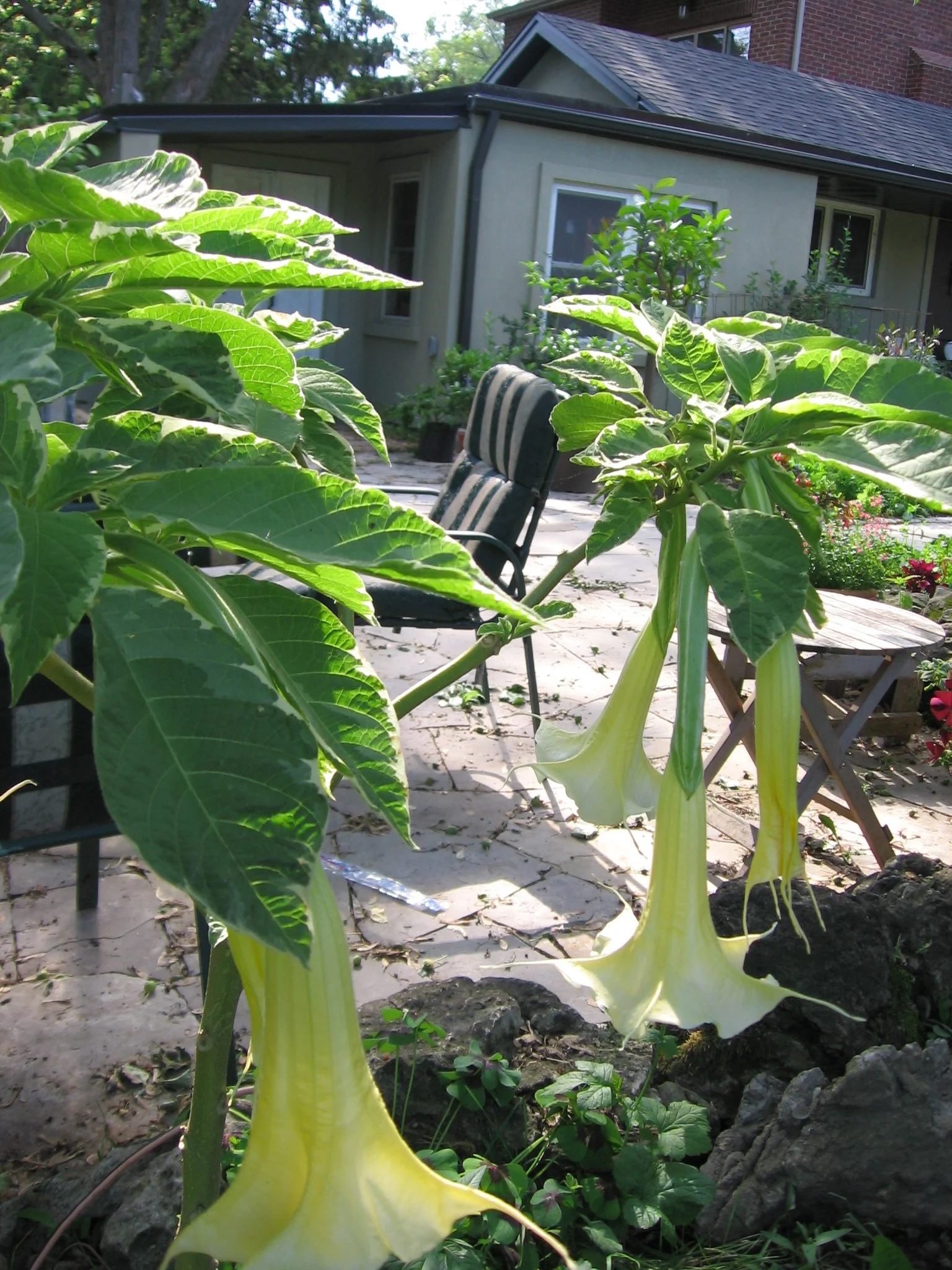
I have potted exotics and flowers all around the patio for colour and fragrance.
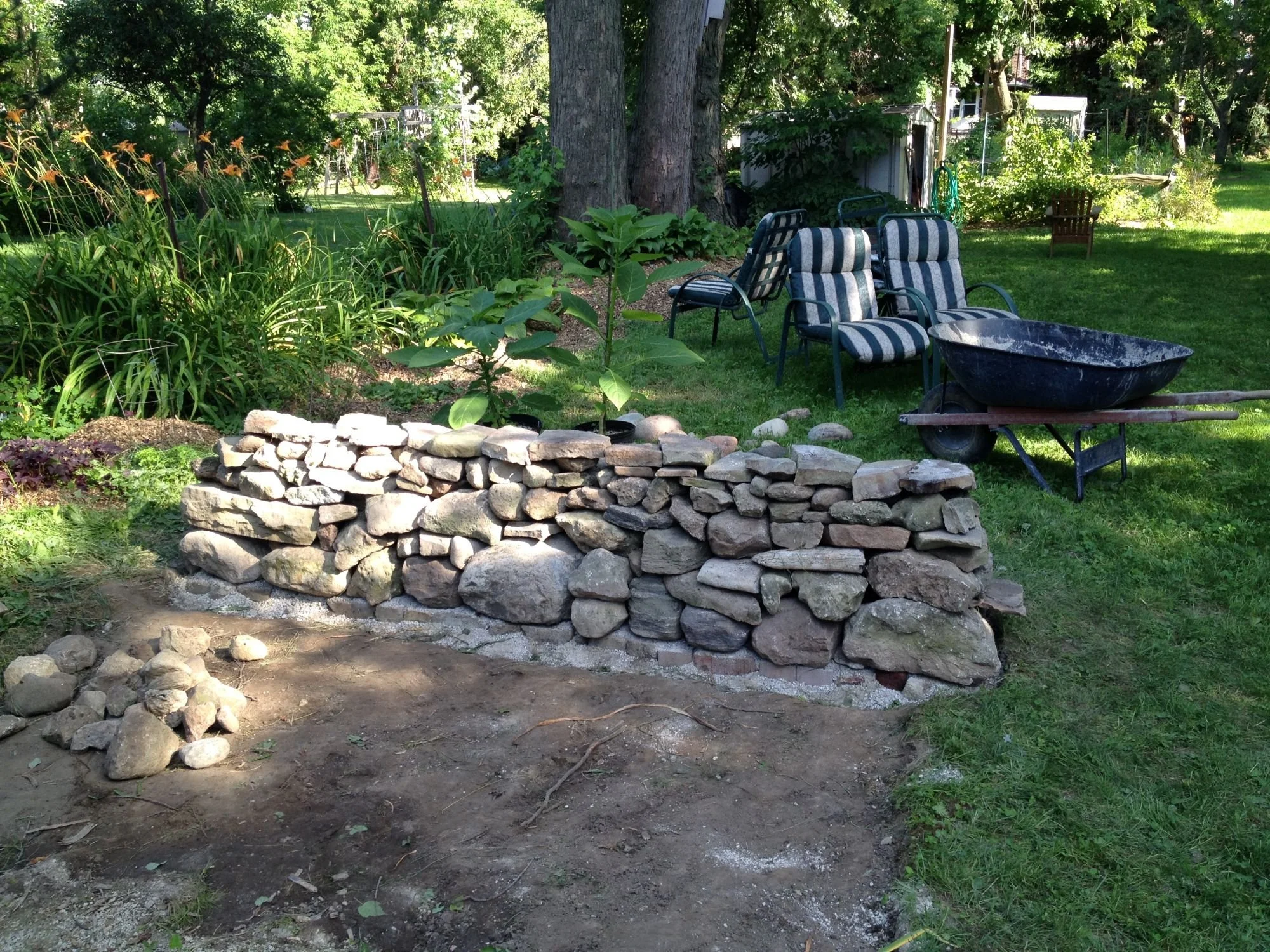
When first laying out the patio, I defined the space with a stone wall.
Small Things
Every garden has little corners that tell a story. Here are a few of mine. Some of my favourite parts of the garden came from experimentation and from trying something to see what happened. I’ve stopped chasing perfection.
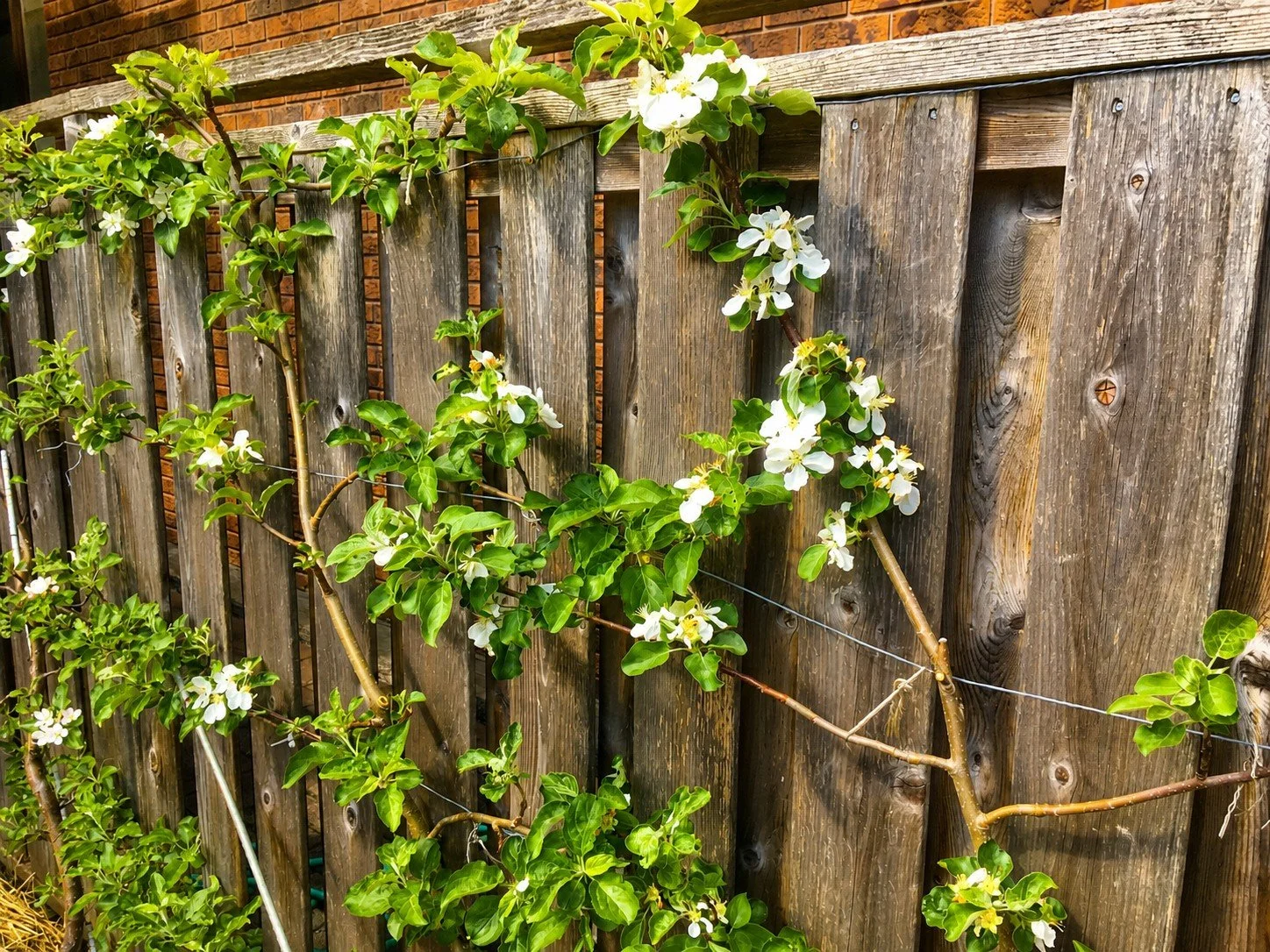
Apple trees espaliered along a fence where there’s no space for a tree. I wanted them in the back…they died because of a nearby walnut. This sunny fence became my second chance at growing apples.
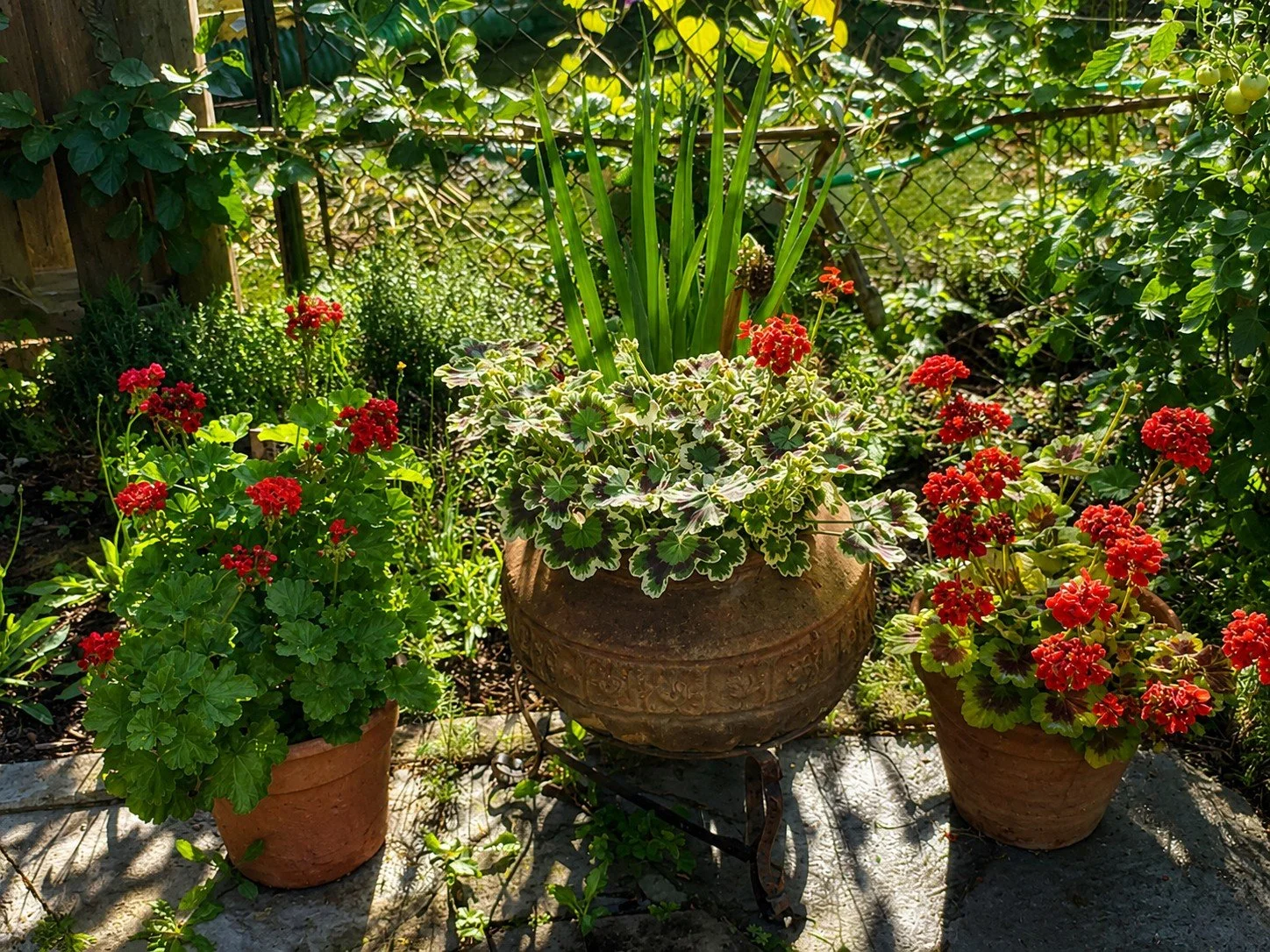
I love geraniums. Here’s a trio of potted geraniums along the edge of a pathway. Purely for pleasure.
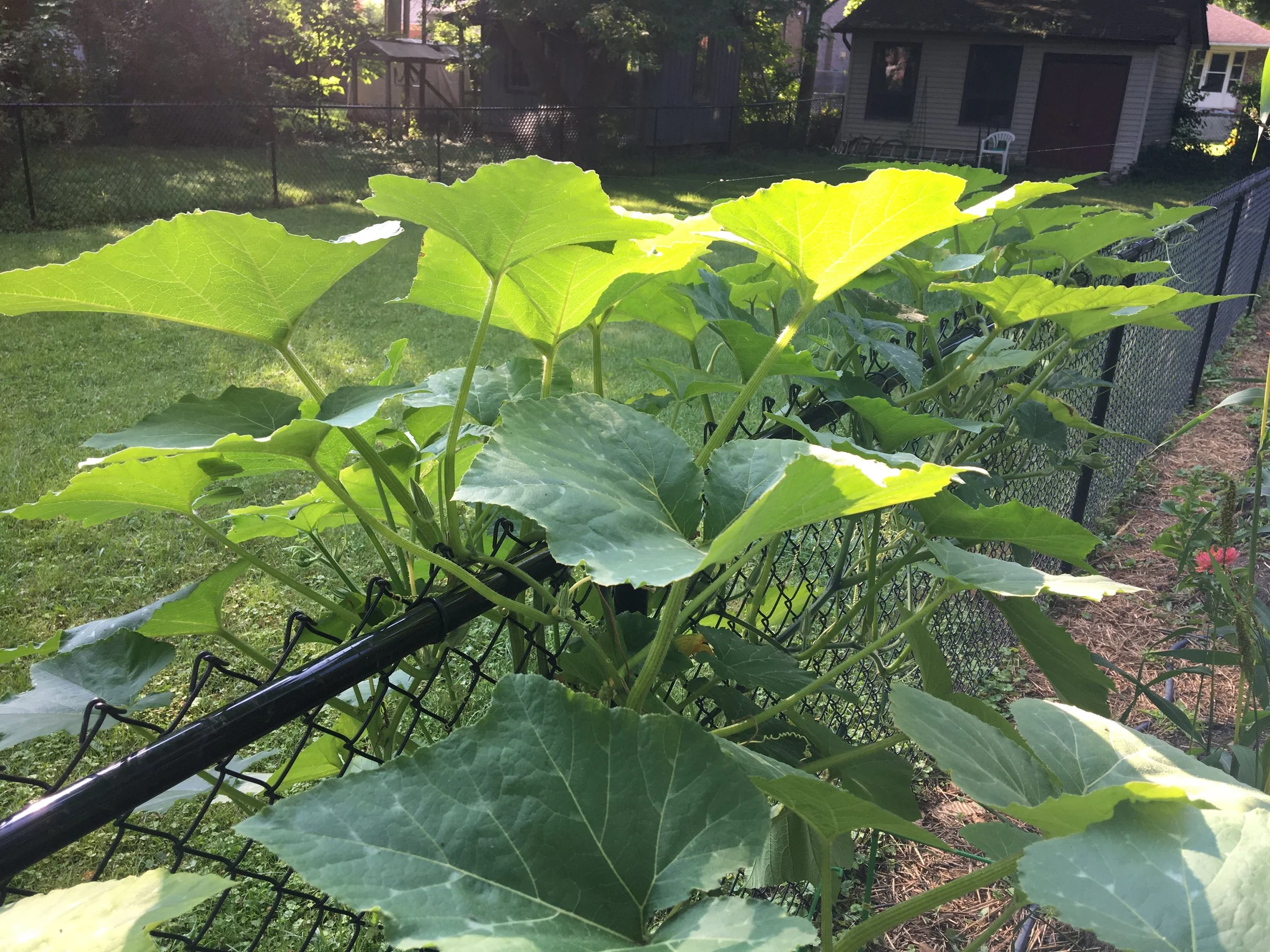
I plant squash into my compost pile and then grow it along the fence. It works well because my neighbour enjoys the squash too! One of my favourite lazy gardening tricks.
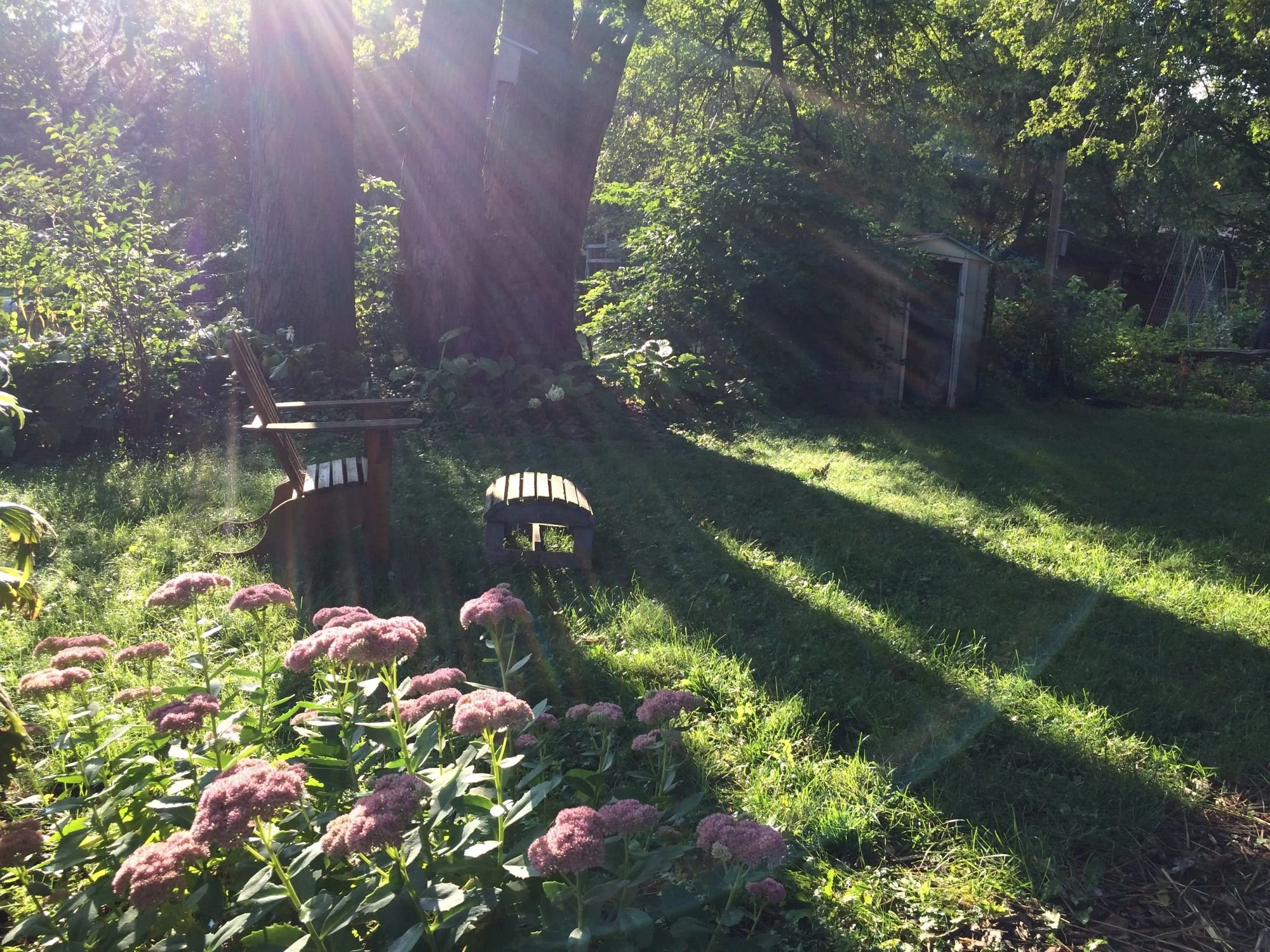
Seating to draw visitors into the garden.
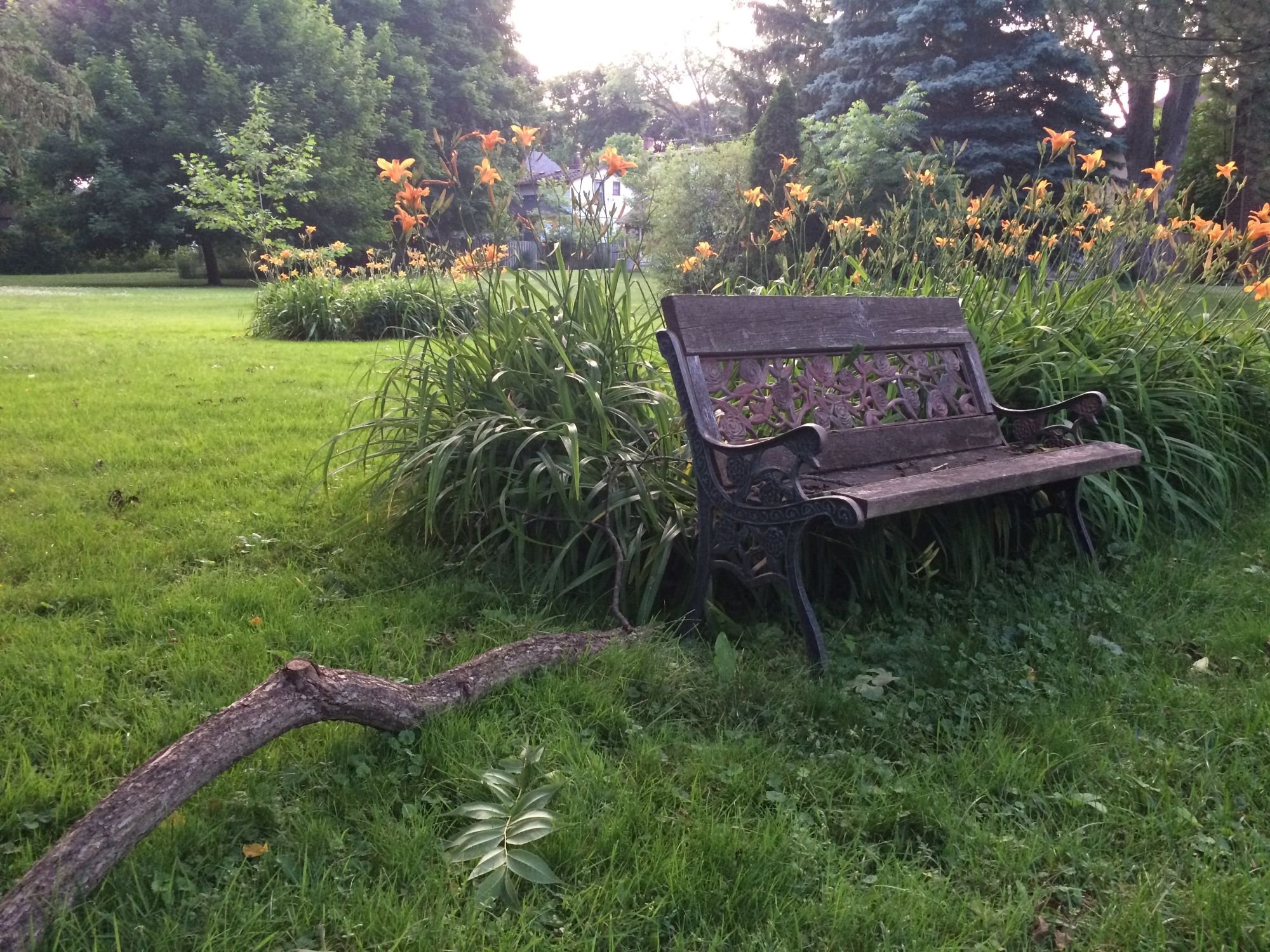
Seating to stop, pause, and enjoy the garden.
Fig Patch
If there’s one plant that has shaped my gardening life, it’s the fig. Growing figs in Toronto isn’t the easiest way to get fruit, but I can’t imagine a garden without them.
They’re dotted around the yard. The driveway garden has a fig patch—an assemblage of potted figs. I move them into my garage for the winter.
Then I have figs in the garden beds that get some sort of winter-protection treatment.
None of this is efficient. I do it because nothing compares with eating a perfectly ripe fig straight from the tree. I do the same with citrus and olives.

Here’s a fig tree in the summer. I let it grow to about 8 feet high. Any higher, and I can’t reach the fruit without a ladder. I tip over this tree for the winter, see below.
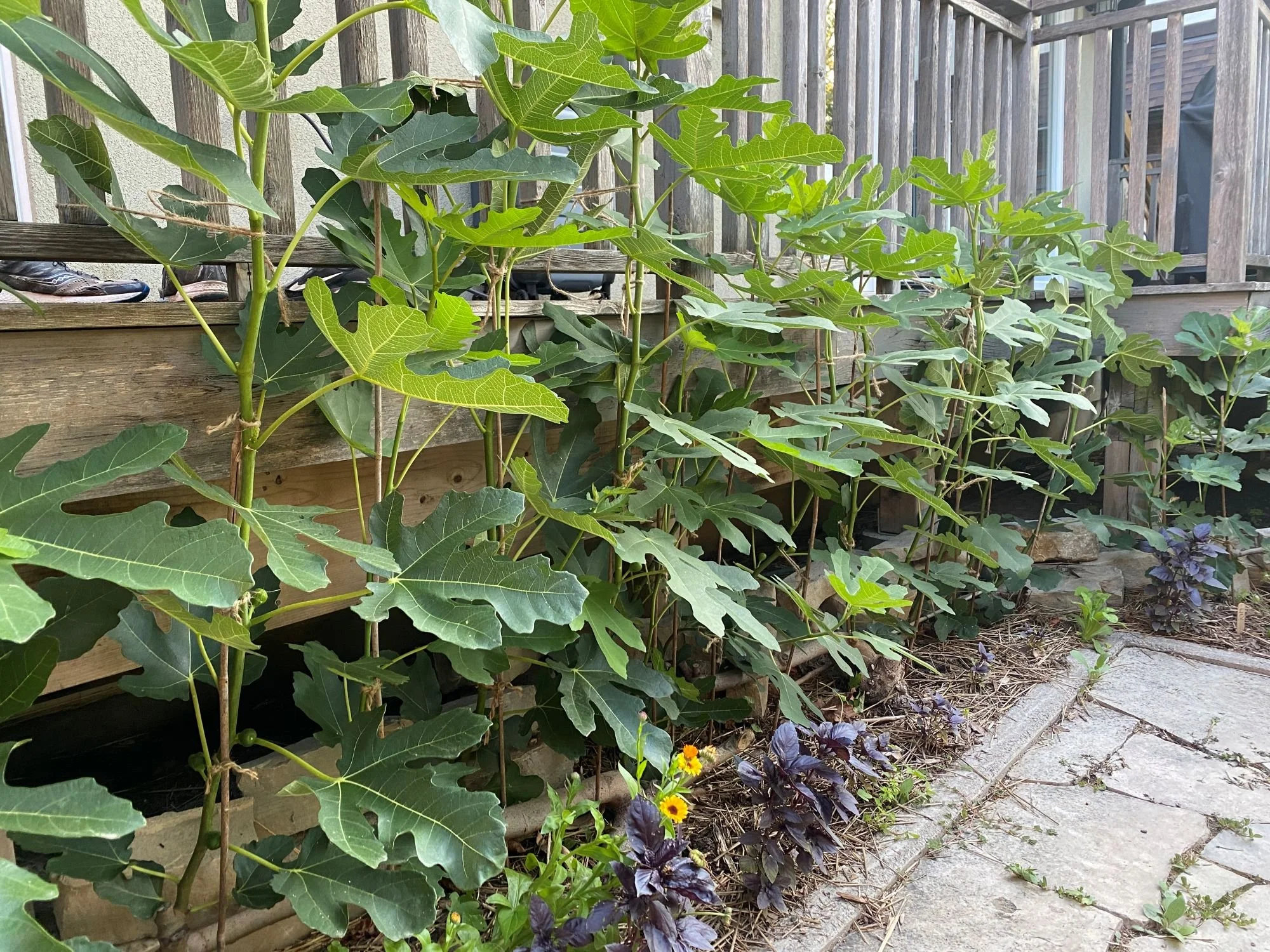
The main trunks of these fig trees are horizontal, near the ground. This is a fun way to add figs to a skinny, linear space.
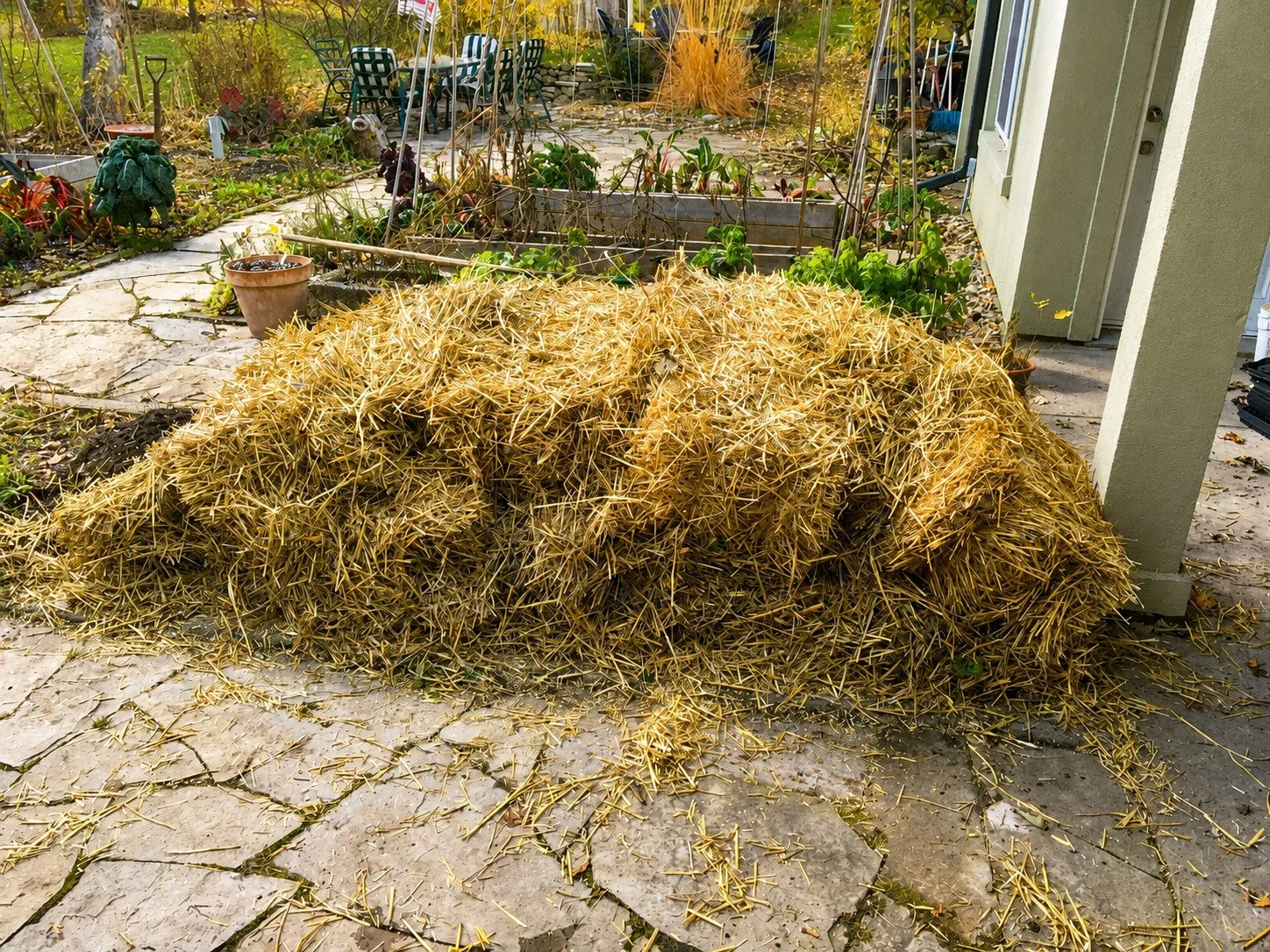
Here’s one of my in-ground fig trees tipped and covered with straw for winter protection.
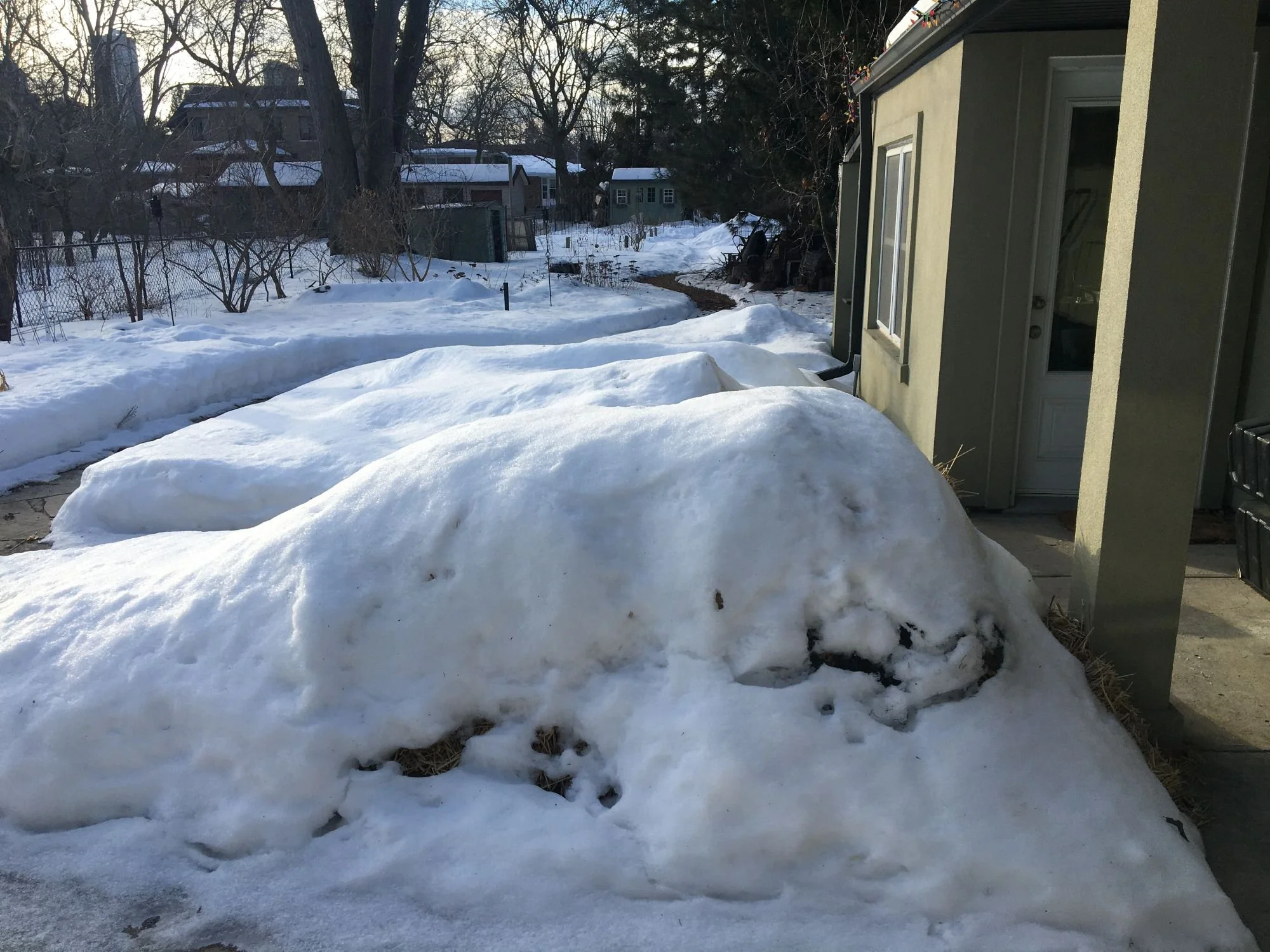
The tipped figs dressed up with a blanket of snow!
Beyond Summer
I garden where winter is part of the deal. It brings a pause to the frantic pace of summer, but it doesn’t shut down the garden. Some vegetables keep producing, the structure of the garden comes into focus, and even seedheads and fruit left behind have their own quiet beauty.
I’ve come to enjoy the winter garden almost as much as the summer one.
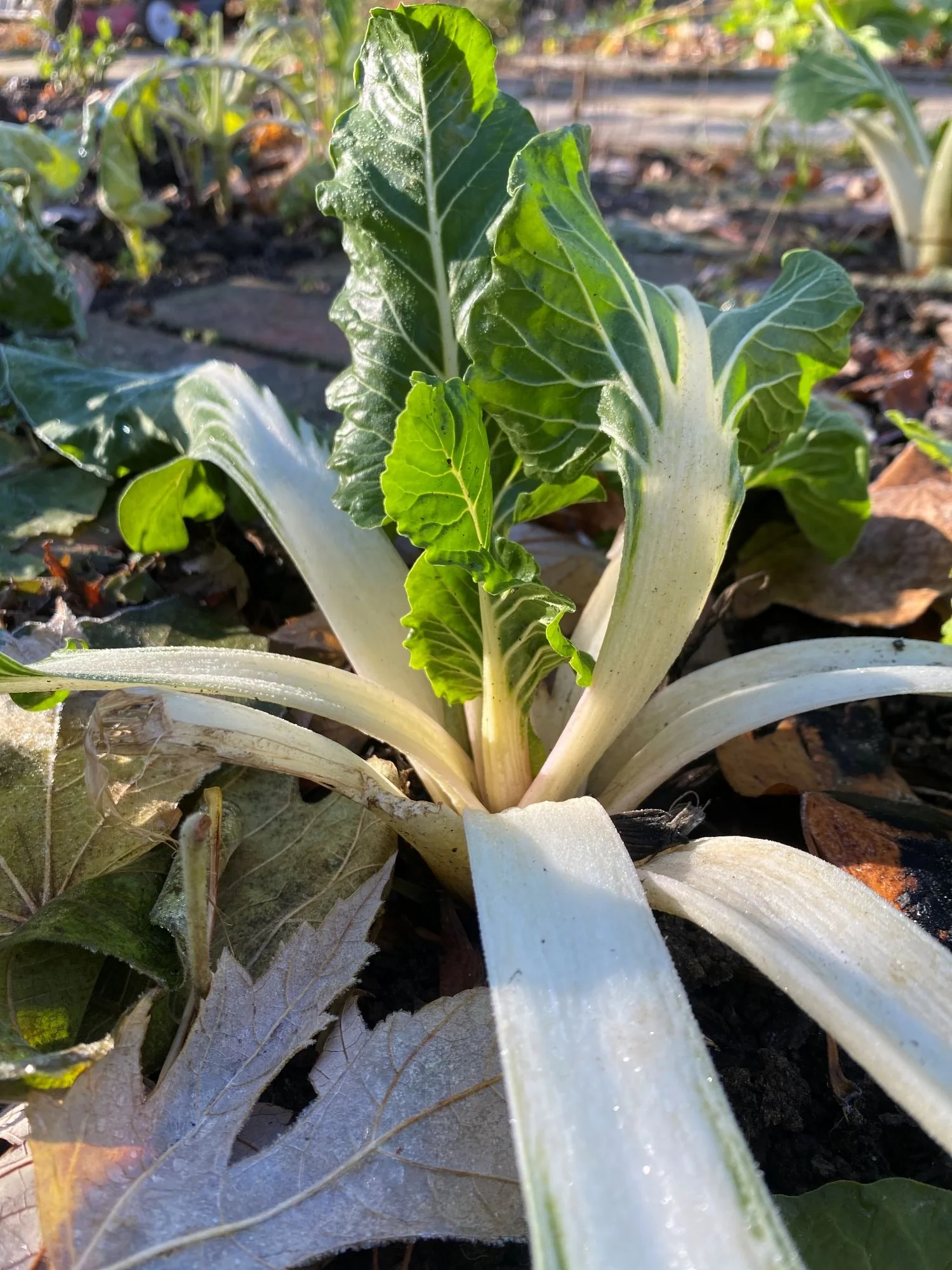
We harvest chard in the fall. It keeps going through frosts until a hard freeze.
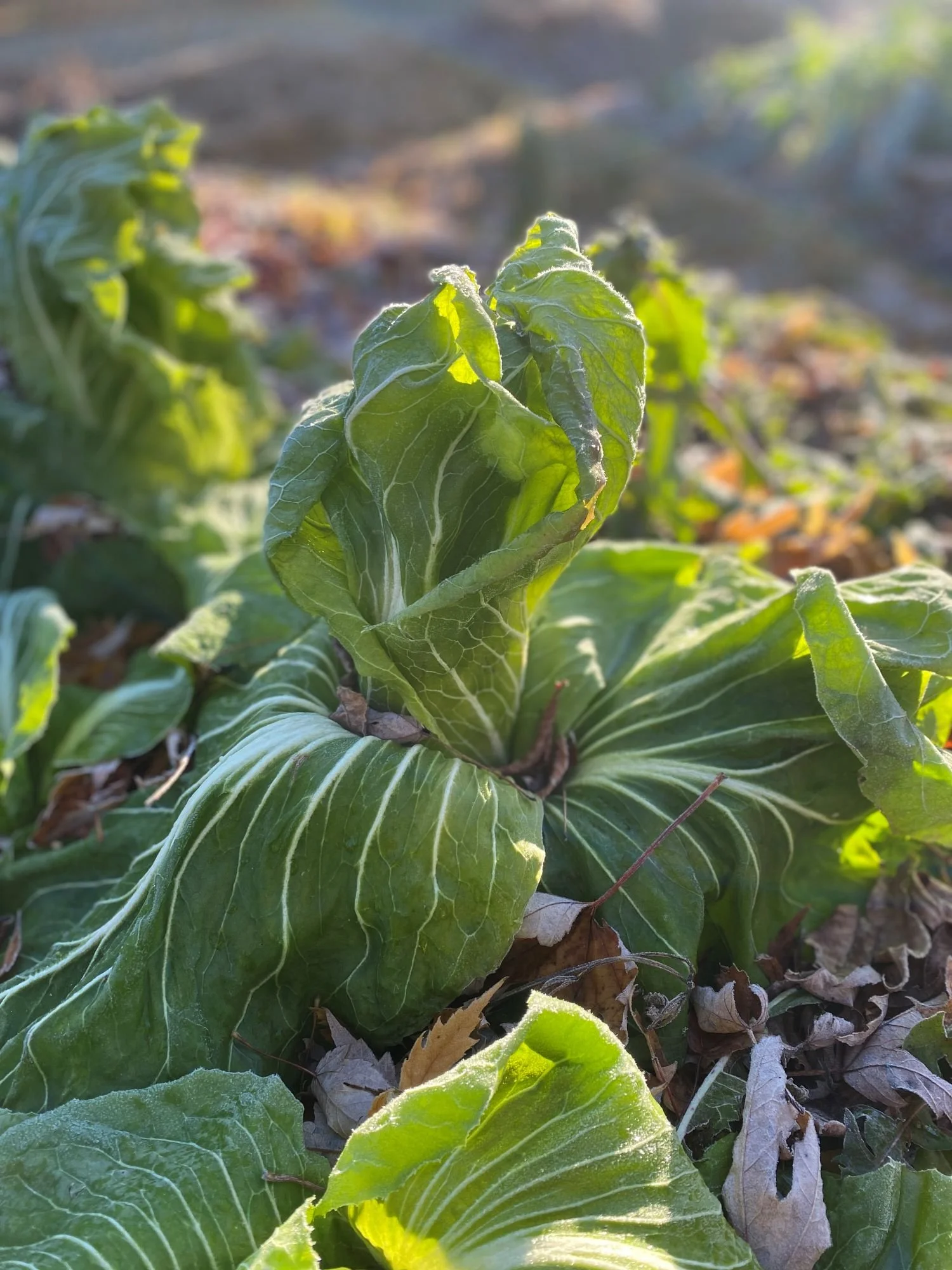
Chicory in the fall.
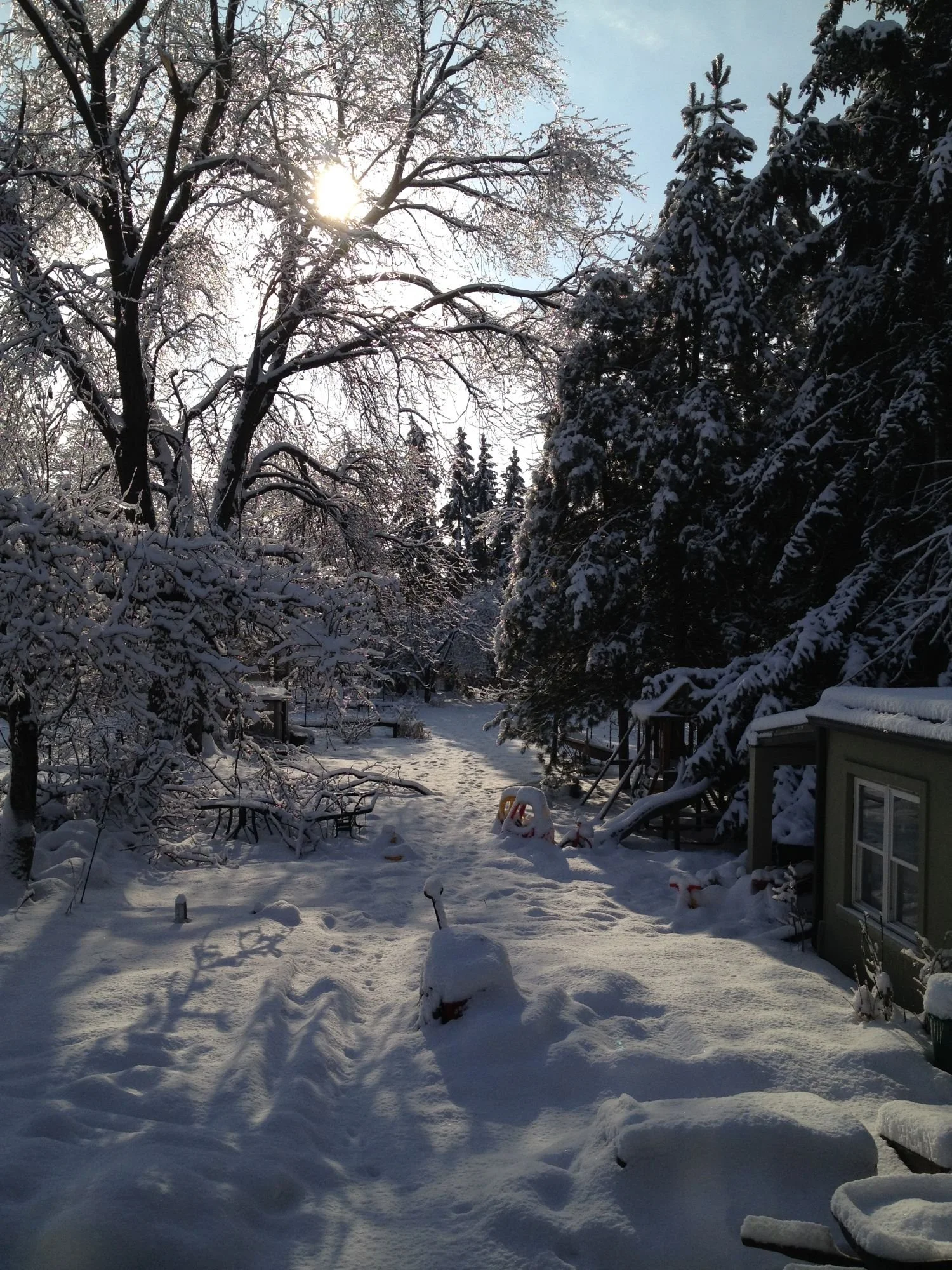
Here’s the yard in the winter.
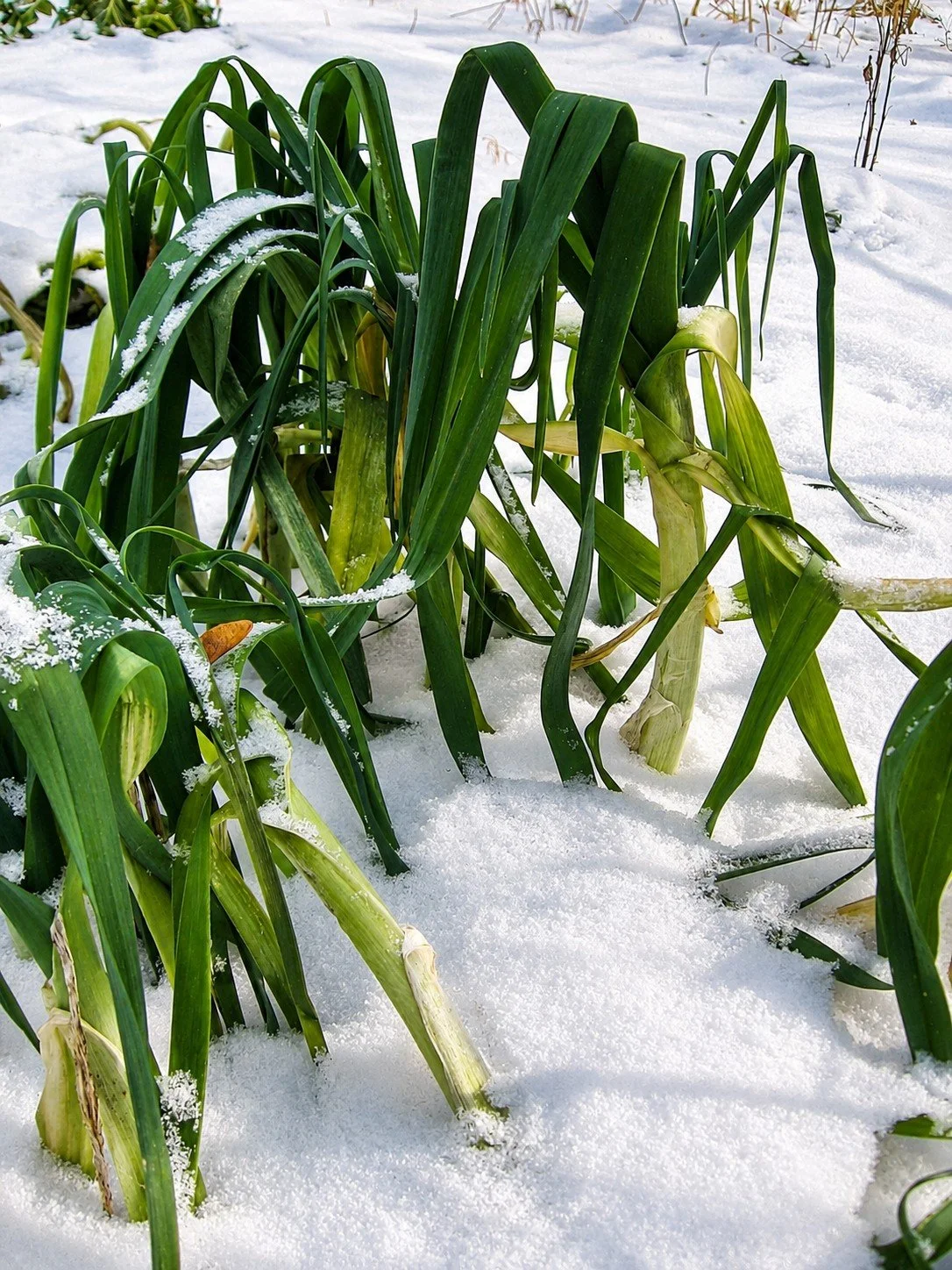
Leeks, which I harvest all through the winter.

Raspberry canes in the snow.

If I miss any fruit on my medlar bush, they add superb winter interest.

The stone wall along my patio adds winter interest.
The garden will look different next year. That’s one of the things I enjoy most. My garden is never finished. Every year brings another idea to explore, another crop to experiment with, and another corner to rethink.
If you'd like to follow along, I write each week about what's growing, what's working, and what I'm experimenting with in the Food Garden Life newsletter. You can sign up below.