Guide to Direct Sowing Seeds (Why and When to Skip the Transplants!)
Find out how and what to direct seed in your vegetable garden.
by Steven Biggs
Why Direct Sow Seeds?
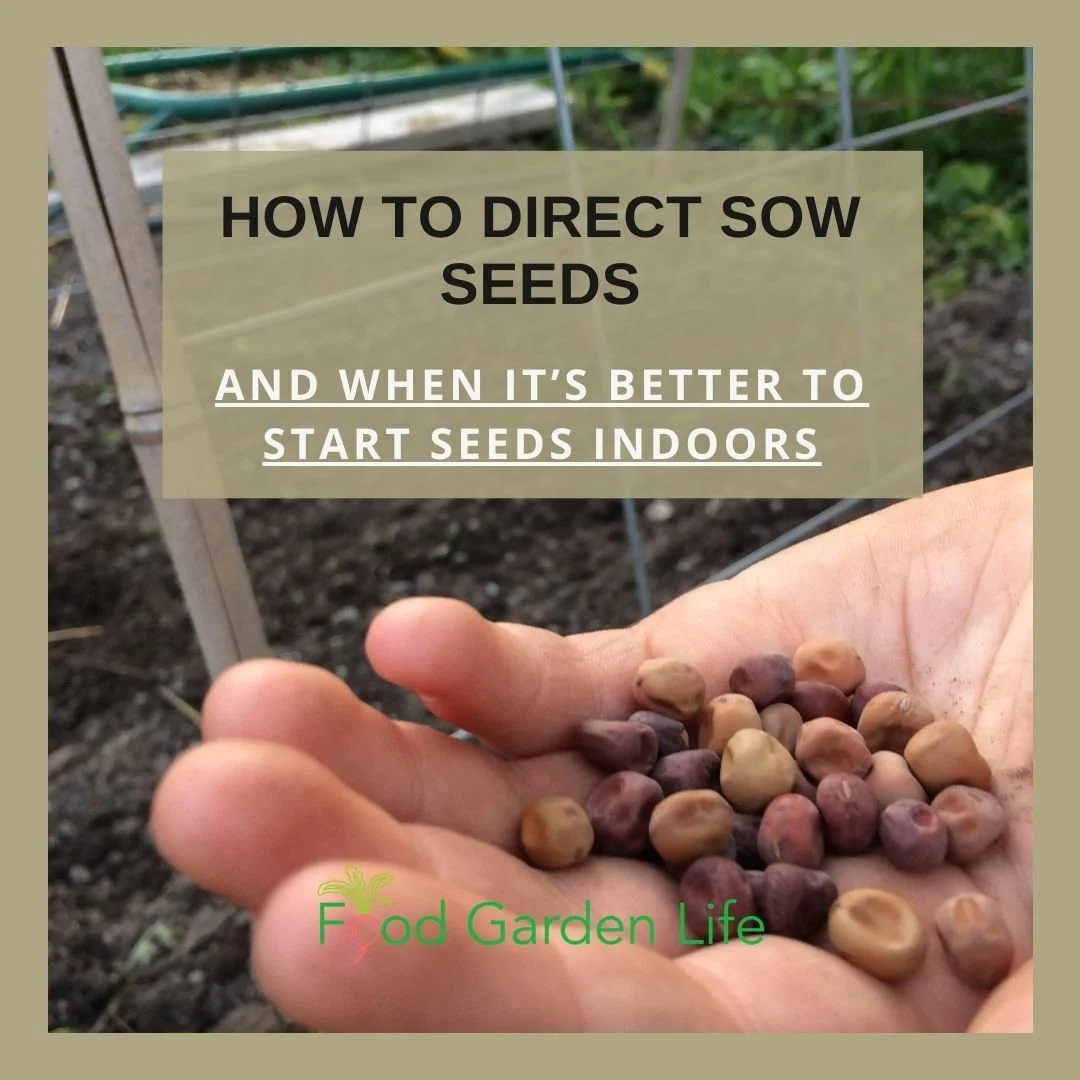
Ever had transplants that put on the brakes after you move them to the garden?
It’s disappointing.
But a big transplant isn’t always better than a wee seed.
Sometimes, it’s better to plant seeds straight into the garden.
This is called direct sowing, also called direct seeding or direct planting.
This post tells you how to direct sow, best crops for direct sowing—and simple ways to sow seeds in a home garden.
What is Does Direct Sow Mean?
Direct sowing is when we sow seeds—plant seeds—directly in the garden.
This is instead of starting seeds indoors and then move them to the garden later—known as growing “transplants.”
Why Direct Sow Vegetable Seeds?
There are many reasons to direct-sow vegetables.
Here are a few reasons:
Pin this post!
Easier (there's no need to care for seedlings indoors)
Less expensive (no need for potting soil or containers)
Less environmental footprint (yeah, your coir-based and peat-based potting soils have an environmental footprint)
Saves indoor seed-starting space for crops that really need to be started indoors
No need to “harden off” young seedlings before planting them in the garden
Some crops don’t transplant well…and don’t bounce back well from transplanting
When to Direct Sow Seeds
It’s tempting to start direct sowing as soon as the soil thaws in the spring. But it’s often best to wait a bit. Moisture and temperature are two things to consider as you decide when to direct sow your seeds.
Moisture
If the soil is really wet, it can be difficult to get it ready for direct seeding.
The soil might stick to your tools, or might be clumpy and hard to spread around.
Another reason not to work in your garden when the soil is still very wet is that it’s easy to compact the soil—which messes up drainage and makes conditions less suited to your crops.
Temperature
The ideal temperature varies by crop. But in general, when things are still really cold and wet, there’s more chance your seeds will rot before they start to grow. Soil in raised beds warms up more quickly.
In this guide to when to start seeds indoors I also give talk about when to direct seed some crops.
Direct Sowing isn’t Always the Best Choice
Direct seeding isn’t the best choice for all crops, or in all situations. Here are a few things to consider:
In areas with a short growing season, crops that take a long time to mature are usually grown from transplants.
Slugs and other bugs can devastate small, direct-sown seedlings as they emerge…whereas a larger transplant might get through some insect damage.
During hot summer weather, seed germination can be spotty (see below for a summer seed-sowing hack). So crops that we direct sow in the spring are sometimes started indoors and then transplanted during hot summer weather.
In low-lying area, the garden soil might be too wet to direct sow seeds in the spring.
Here’s one more: You’re new to gardening and won’t know the difference between emerging direct-seeded crops and the weed seedlings!
How to Direct Sow Seeds
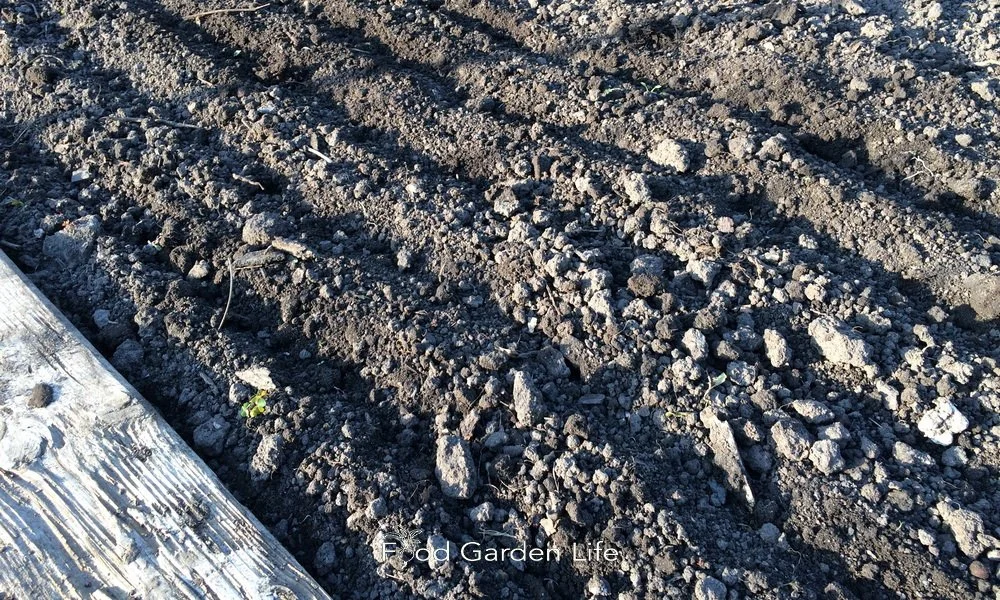
Before sowing seeds, prepare the soil.
Start by preparing the soil ahead of time. When sowing seeds, we want to break up any crust on top of the soil surface, and break up bigger chunks of soil. That way, germinating seeds don’t hit roadblocks.
(Yes, there’s a whole body of work out there on no-dig techniques—and there is a time and place for this…but if you want the best results when direct sowing, prepare the soil.)
Planting Depth
Use the size of the seed as a guide to planting depth. Seed packets usually recommend a depth too.
Plant the seed about twice as deep as it is wide. Too shallow is better than too deep.
But don't feel as if you need to measure and be precise.
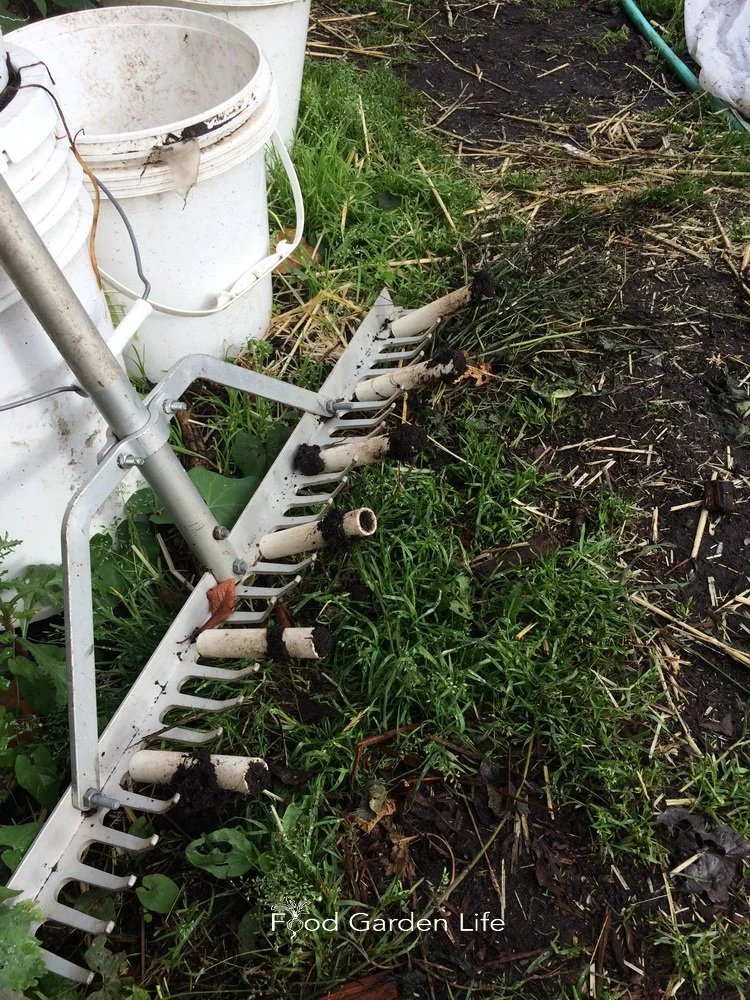
If you’re planting seeds into trenches, you can make well-spaced trenches using a garden rake that has pieces of pipe on it.
Like most things in gardening (and life), direct sowing isn't an exact science.
Trench for Sowing Seeds
If you direct-sow seeds in rows, make a trench with your trowel or the corner of a hoe.
Then, place your vegetable seeds into the trench, and cover with soil.
OR, make your trenches by fitting pieces of pipe onto a garden rake! (See the photo.)
Poke Seeds in the Soil (Planting Seeds Simplified!)
This is low-tech and might be laughable to a commercial grower—but in a home-garden setting, can be a simple approach to direct sow seeds!
I drop large seeds into place, and then just poke them into the soil. Then I scuff the soil to fill the holes.
Poking works well for larger seeds that you can easily see:
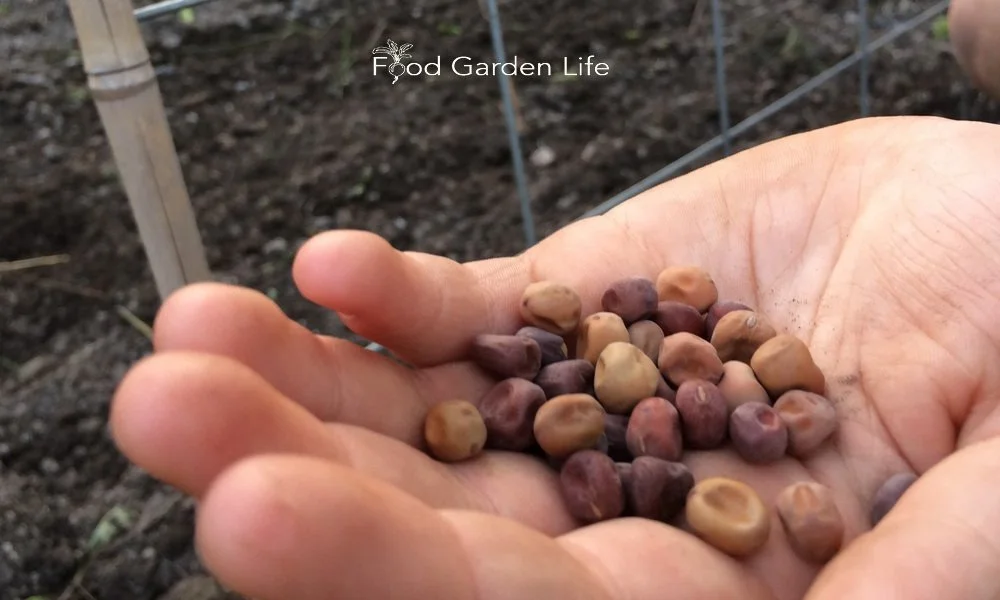
Poking large seeds into the soil is a simple way of planting seeds.
Peas
Beans
Beets
Swiss chard
Squash
Zucchini
If you’re planting a whole block with seeds, as I like to do with beets and Swiss chard, you can do what I call the “scatter-and-poke” method. Scatter seeds to approximately the spacing you want—and then poke them into the soil. Scuff soil to fill in holes.
(Gardening is a great cure for perfectionism, and the scatter-and-poke approach dispenses with all notions of perfection in a garden!)
Broadcast and Cover
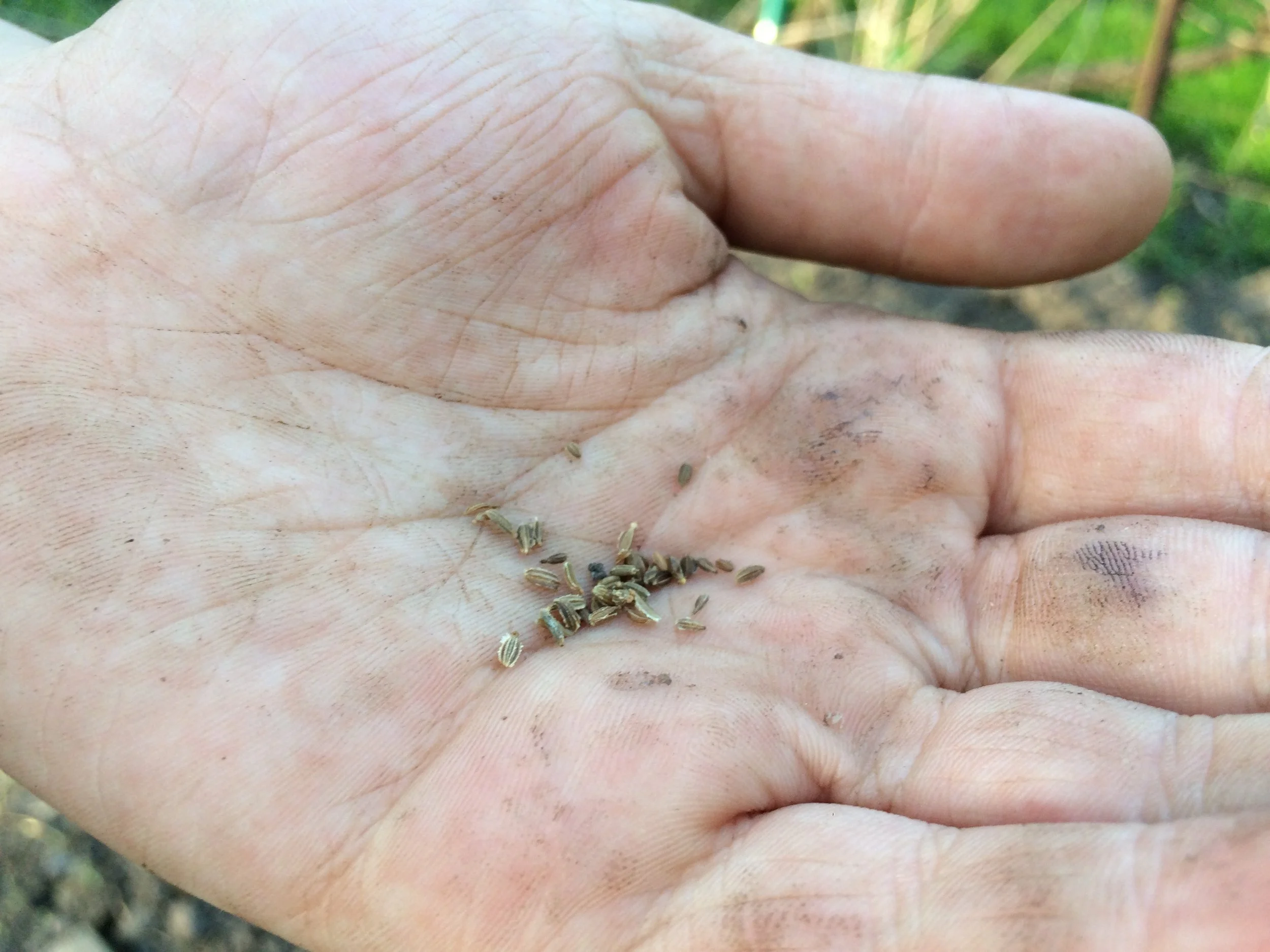
You can sprinkle small seeds such as these carrot seeds by hand, and then cover with soil.
If you’re filling a block or wide row with small seeds (e.g. carrot or lettuce), sprinkle by hand, and then cover with soil.
You might wonder, “Where do I get the soil I’m covering the seed with?” Rake aside some garden soil before you sprinkle your seed in place—and replace it over top of the seed afterwards.
Broadcast and Rake!
I’m always interested in methods that make my life simpler. And raking aside soil before I broadcast seed is a bother.
So I simply broadcast the seed, and then use an up-and-down motion with a hand rake to work some of those seeds into the soil.
Note: There will be some seeds that aren’t at an ideal depth. That’s OK. I’m a home gardener—not a commercial grower. I just seed more heavily to compensate.
Direct Sowing Hacks
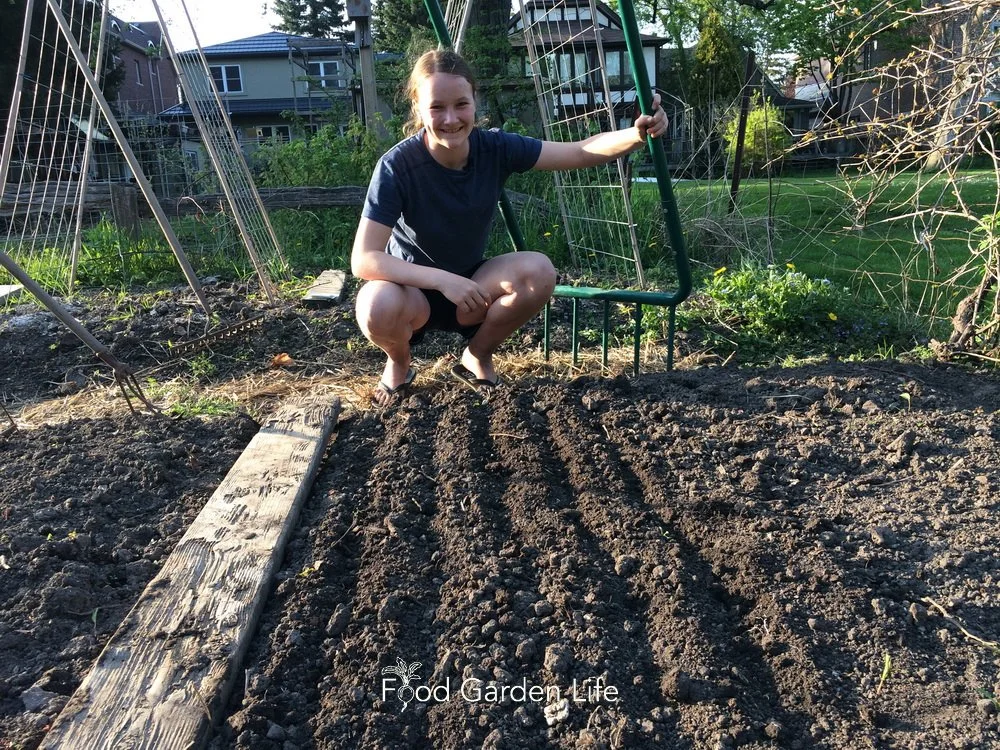
Using a broadfork to make straight rows.
Folded paper. Forget the seed-dispensing gizmos for small seed. Fold a sheet of paper in half. Pour seed onto the folded sheet. Now, use a pencil or a nail to dispense individual seeds off the end of this folded sheet. Low tech, yes—but works well.
Broadfork. When my daughter, Emma, wanted side-by-side trial rows of a number of crops, she used the broadfork to make a tidy set of trenches. (The broadfork is normally used to loosen soil…but this works nicely!)
Seed tape. Seeds embedded in a strip of biodegradable paper. Yeah, a bit gimmicky. I don’t use this. But if you’re gardening with kids, or you have shaky hands and can’t easily dispense seed, it can be useful.
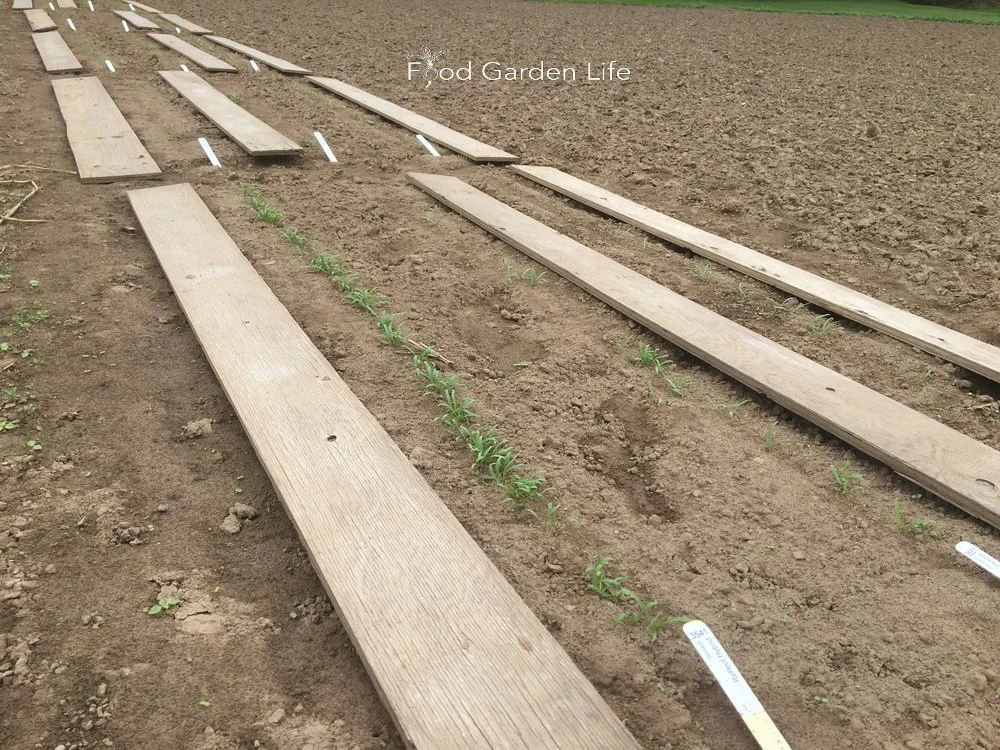
Using boards to keep the soil moist for direct seeding in the summer.
Pelleted seed. Small seeds bulked out with a clay coating. Like seed tape, you pay more per seed. But again, could be useful if you’re direct seeding with kids, or you’re having trouble coping with smaller seeds.
Boards. Yup, low-tech boards over summer-sown small seeds can be a life saver. In summer heat, soil can quickly form a crust that seedling have difficulty breaching. But a board over the soil during the germination window keeps the soil underneath moist. No crust.
Web trays. As soon as squirrels see freshly turned soil in my garden, they’re eager to disinter seeds. It’s infuriating. Who would have thought there’s a higher purpose for those horrid plastic webbed trays that the horticulture industry so loves! Inverted web trays over top of your directly sown seeds keep digging varmints at bay.
Direct Seeding by Crop
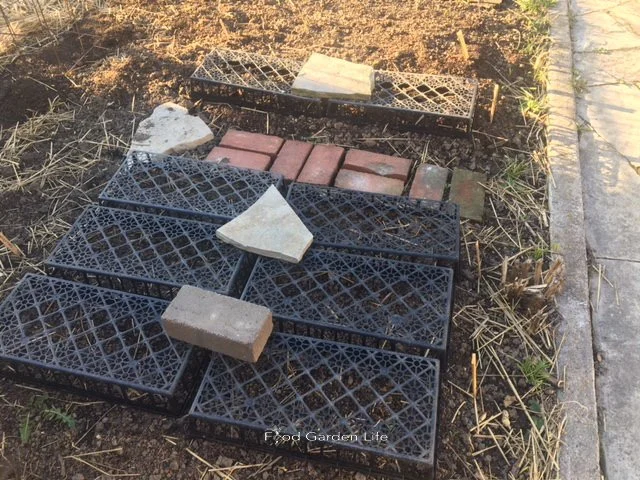
Take that, squirrels!
Leafy Greens. I grow transplants of leafy green crops such as lettuce, spinach, and Swiss chard. I also direct-sow seeds into the garden.
Why both ways?
So I have a succession of harvests.
(It is also insurance. If weather or pests cause less successful results one way, I have a backup!)
Root Crops. I direct sow all my carrots, parsnips, and beets. These crops can all be direct-sown in the garden early. And they don’t respond well to root disturbance.
“Fruit” Veg. For those fruits that we insist on calling veg—tomatoes, peppers, and eggplant—I grow everything by transplants because I’m in a cold climate and I extend the harvest window with transplants.
Vine Crops. The vine crops in the squash and cucumber clans don’t respond well to root disturbance. So direct sowing is always a good strategy.
(But, like the leafy greens, I hedge my bets and both direct sow and start a few transplants.)
Top Direct Seeding Tip
If conditions get really dry just as your seeds are starting to grow, tender young leaves and roots can dry out quickly…and it’s game over.
Keep the soil well watered!
FAQ Direct Sowing
What vegetables can be direct sown?
Direct sow root crops such as beet, carrot, parsnip, radish, and turnip.
Direct sow leafy greens including chard, kale, lettuce, mizuna, and spinach.
Direct seed legumes such as beans and peas.
Do I need to thin direct-seeded crops?
That depends on how much seed you use. In commercial production, growers often use precision-seeding devices so that the seeds are perfectly spaced. So no need to thin. But that’s approach isn’t always practical in a home-garden setting where we’re dealing with smaller, irregularly shaped spaces.
My approach is to direct sow with lots of seed, and then thin out extra plants while the plants are still small. So, as I thin out young spinach plants, I have baby salad greens for supper!
Find This Helpful?
Enjoy not being bombarded by annoying ads?
Appreciate the absence of junky affiliate links for products you don’t need?
It’s because we’re reader supported.
If we’ve helped in your food-gardening journey, we’re glad of support. You can high-five us below. Any amount welcome!
Courses
Here’s a course that guides you through creating an edible garden you love. It’s my ode to edible gardening. You’ll find out how to think outside the box and create a special space. Get the information you need about a wide range of edible plants.
Potting Soils: Choose the Right Potting Soil
A good potting soil helps your container vegetable garden thrive!
By Steven Biggs
Choose the Best Potting Mix
Ever had potted plants that just seem to stall?
It could be the soil.
Good potting soil can be the difference between potted crops that grow like gangbusters...and those that don't seem to do anything.
This guide covers key soil ingredients, types of soil mixes, and tips to help you choose good soil. If you're a home gardener who wants to keep things simple but use the best soil mix, keep reading.
Key Takeaways
Potting soil is a soil blend made for the growing conditions in containers.
Despite the name, it often contains no garden soil.
Common potting soil ingredients include peat moss, compost, coir, perlite, and vermiculite.
There are specialty potting soils for specific plants and purposes.
You can buy ready-made potting soil or blend your own.
Understanding Potting Soil
Potting Mix vs. Potting Soil
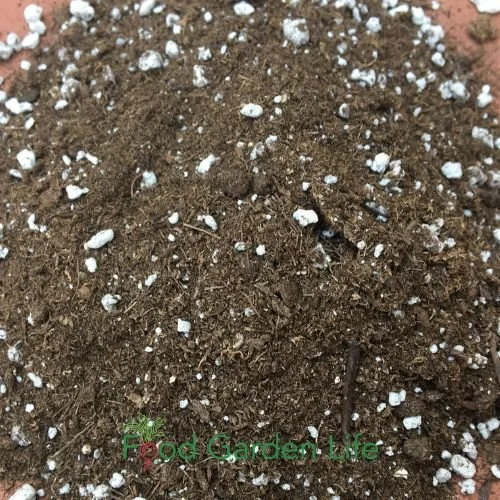
Potting mix is made for the growing conditions in containers. Many have no soil. This mix has peat moss and perlite.
You might come across a few different names used for potting soil, including potting mix, growing medium (if you're reading technical sources), potting medium, soilless medium, and soilless mix. In British English, you'll also find term "compost" used for potting soil.
In a Nutshell
Potting soil is a soil mix made for plants in containers. Because the roots of plants in containers can't spread out to find water, moisture retention is important.
But even though we need the soil to hold moisture, we also need lots of little air pockets. That's called "aeration." Those little air pockets helps excess water move through the soil, while also leaving space for the soil to hold on to some of the water, until the plant roots can absorb it.
Some potting soil mixes—though not all—contain food for the plants. It could be in the form of a separate fertilizing product. But it might also come from one of the soil ingredients.
In short, a good potting mix retains moisture...yet drains well. It doesn't pack down with repeated watering.
Potting Soil vs. Garden Soil
Soil from the garden is rarely ideal for potted plants. That's because it often packs down with the frequent watering.
Garden soil can also contain weed seeds and diseases.
Key Ingredients in Potting Soil
Ask 10 gardeners for soil-mix recipes and you might come away with 10 different recipes. Like most things in life, there's more than one way to go about it.
But there are some ingredients that are frequently used to make commercial potting mixes. We'll look at some of them below.
Organic Ingredients
By "organic" we just mean something that was once living. Organic ingredients include peat moss, coir, compost, and composted bark chips.
Maybe before we even jump into these organic ingredients, let's not ignore the elephant in the room. There's an environmental footprint to potting soils. Peat moss is extracted from peat bogs, where carbon has been sequestered long-term. When we use peat moss for gardening, that carbon is quickly released back into the environment. Coir is touted an environmentally preferable substitute, though it's from a crop planted where there were once rain forests...and then it's shipped a long ways for a northern gardener like me.
If this environmental footprint is on your mind, here are some thoughts:
Don't waste potting soil—and certainly don't use it like a garden-soil amendment
Use your potting soil for more than a year where appropriate
Consider potting-soil ingredients such as home-made compost and composted forestry waste
Peat Moss
Peat moss is widely used because it holds water really well—like a sponge. Yet it still drains well. Lots of air pockets, yet still moisture that plant roots can take up.
When peat moss gets very dry, it repels water. (It becomes "hydrophobic" if you like the technical jargon.) So if you're mixing your own soil, moisten the peat moss beforehand. (Commercially prepared soil mixes often have an ingredient called a "wetting agent" that makes the peat less hydrophobic.)
Because peat moss is acidic, ground limestone is often added to peat-based potting soils. This helps to balance the pH. (And that's important because if the soil is too acidic, plants might not be able to take up the nutrients they need.)
Coir
Coconut coir is commonly used as an alternative to peat moss. We're talking about the fibre from coconut husks. As well as being used in place of peat moss, some gardeners blend coir with peat moss.
Coir-based soil mixes are sold in bags, as are peat-based soil mixes. But you can also find compressed bricks of coir. They're completely dry and very lightweight. These bricks are soaked in water before making a potting mix.
Compost
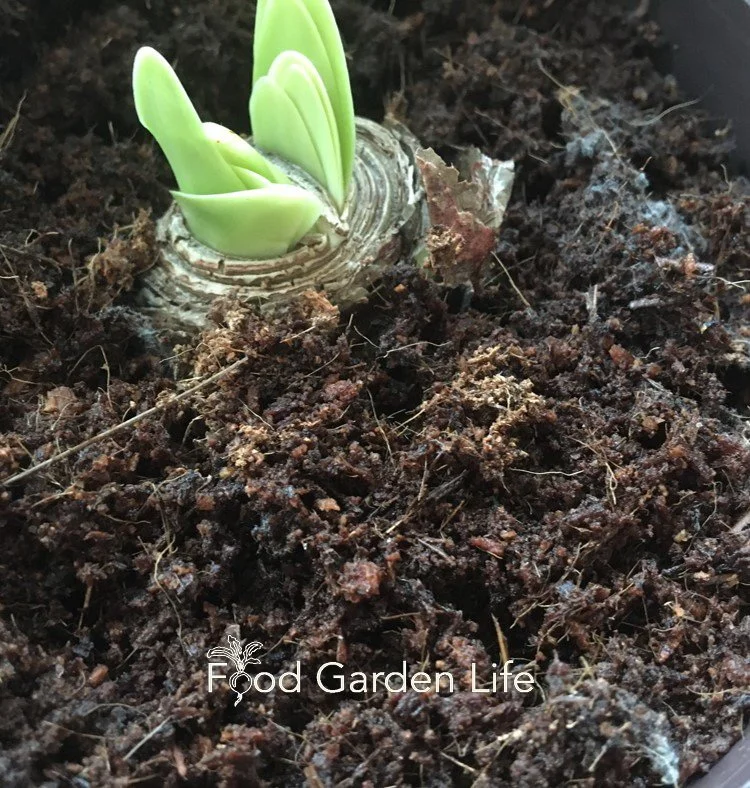
Here’s a close up of a potted bulb growing in a soilless coir mix. You can see the long fibres.
The nutrient content of a compost depends on what it's made from. For example, composted animal manures or composted seafood waste contain higher nutrient levels that something such as composted leaves (a.k.a. leaf mould.)
If you’re aiming to make your own peat-free soil mixes, leaf mould (composted leaves) is a traditional ingredient. Leaf mould breaks down more quickly than coir and peat.
Composted Bark Chips
Composted bark chips are sometimes added to soil mixes for larger plants. The bark bulks out the soil mix, while holding moisture.
Worm Castings
Worm castings—worm poo—add nutrients and microbial activity to a soil mix.
Inorganic Ingredients
With inorganic ingredient, we're mainly talking about "aggregates," things that add structure to the potting soil. These include perlite, vermiculite, sand, and grit. Light-weight materials such as perlite and vermiculite are common in commercially prepared soilless potting mixes.
Perlite
This popcorn-like, light, fluffy material is heat-expanded volcanic glass. It adds air pockets to the potting soil.
Vermiculite
Vermiculite is heat-expanded mica. It's like a sponge, able to hold water and nutrients. Because it’s so good at holding moisture, the soil is less likely to shrink when dry.
Sand
Common in home-made soil mixes to improve drainage and to add weight. Not so common in commercial mixes because it adds weight...and that makes shipping more expensive.
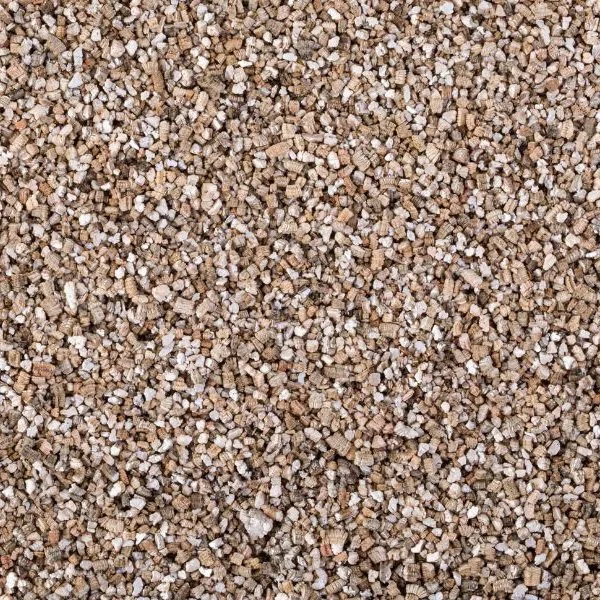
Vermiculite helps to retain moisture.
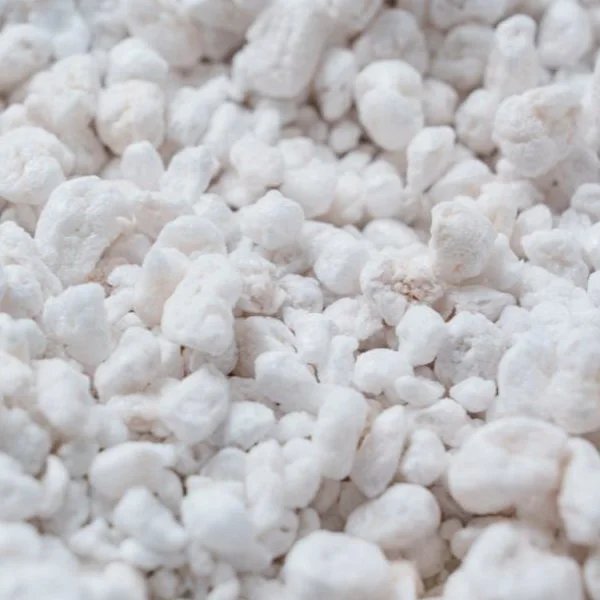
Perlite adds lots of air pockets to a mix.
Types of Potting Soils
Potting soil can be blended for specific types of plants (e.g. cactus), for certain plant needs (e.g. acid-loving plants, or "high porosity" for plants that don't like wet roots), and for specific uses, such as seed-starting.
Here are common types of ready-to-go potting soils:
All-Purpose Potting Mix
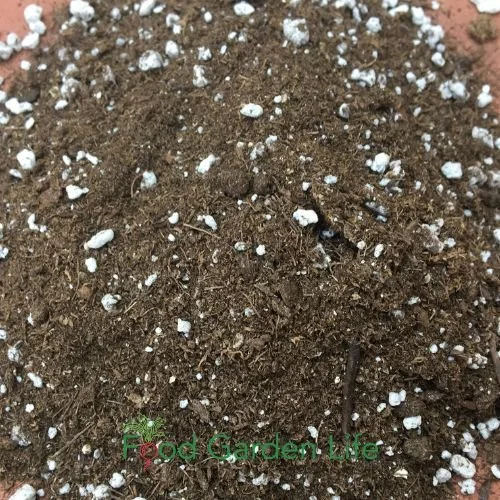
This high-porosity potting mix is made from peat and perlite.
As the name suggests, this sort of mix is intended for a wide range of uses and plants. Many commercial all-purpose blends (I've seen the name "general-purpose" used too) contain peat moss or coir, compost, vermiculite, and perlite.
High-Porosity Mixes
High porosity is just another way of saying it drains well.
This sort of mix is for plants that don't do well when the roots remain wet for too long. For example, if you're growing a potted lemon tree, good drainage is very important because the roots can quickly rot if the soil stays wet for too long.
(An interesting aside: I asked at my local garden centre why they're now stocking this sort of mix, which I only used to see in commercial horticulture. I was amused to learn that home cannabis growers favour it!)
"Organic" Potting Mix
It's worth mentioning that some companies market "organic" soils. These will contain the organic portion we talk about above (peat, coir, compost, etc.) meaning something that was once living.
But in this case, the word "organic" has an additional meaning: It means that the mix meets the standards of an organic certification organization. And that usually means that there's no wetting agents (something that makes the peat moss easier to wet) and that if there are fertilizers in the potting mix, they're approved by the certifying agency.
Seed-Starting Mix
The main difference with seed-starting mixes is that the texture is finer. Smaller vermiculite. No coarse bits in the peat moss. Perhaps no perlite. The idea is that a small, germinating seed isn't blocked by a hunk of something in your soil mix.
For what it's worth, I don't buy seedling mixes. They make sense for a commercial grower striving for a very high rate of success and uniformity. In my case, I always have ample seed for my smallish garden, so if the odd seed conks out because I'm using a general purpose mix and it's blocked by a big piece of perlite, it doesn't matter a bit.
Some people use an all-purpose mix, and simply screen out large bits, or break up the large bits while planting.
Homemade Potting Soil
What's the best potting soil? As I mention above, you're likely to find many different recipes for homemade potting mixes. The best mix depends on what you're growing, the growing conditions—and how you water! (I've met gardeners who know they're heavy handed with watering, so they blend especially well draining soilless potting mixes for their plants that don't tolerate wet roots.
If you don't need a lot of soil, you might find it easier just to use an off-the-shelf soil. But if you use quite a bit of soil, or if you have certain requirements, then making your own potting soil allows you to customize the ingredients and match them to the needs of your plants.
General-Purpose Soilless Mix Recipe
When it comes to general-purpose mixes, I keep my life simple, and just use an off-the-shelf product.
If you prefer to mix your own, here's a simple recipe you can start with:
2 parts peat moss (or peat moss substitute such as coir)
1 part vermiculite
1 part perlite
If you're using peat moss, add ground limestone so that the mix is less acidic. Add 30 ml of limestone for a 10 litre pail of soil.
One other tip: If the peat or coir is very dry, wet it first, before mixing with the other ingredients.
And one more tip: Using peat? Get "horticultural" or "blond" peat. Peat at the bottom of a peat bog has decomposed more, so it has shorter fibres. Because of the shorter fibres, it packs down more quickly. The peat that’s higher up in the bog has a lighter colour and longer fibres. It’s called “blond” peat. The blond peat is what you want because it gives a soil with more air pores, but at the same time, it holds water well.
It’s usually the dark peat that I see for sale at garden centres around here—because it’s less expensive and many people don't know the difference.
Container Veg Gardening Course
Soil-based Potting Mix
I use a soil-based potting mix for larger outdoor potted plants. Here's my mix for growing potted fig trees. It's good for all sorts of other potted plants too. With the garden-soil component, this mix holds more moisture. And the garden soil and sand both make it heavier, so that large plants are less likely to topple in the wind.
1 part garden loam
2 parts soilless potting mix (I prefer a commercial-grade of soilless potting mix, see my tips on soil-shopping, below)
1 part sand
Add 30 ml of limestone for a 10 litre pail of the mix
If you want to read more about potting soil for fig trees, here are my recommendations for potting soil for fig trees in pots.
Shopping for Potting Soil
It’s buyer beware when it comes to small, domestic-sized bags of potting mix. Some is great…some is terrible.
A simple approach that I recommend to all my students is to buy potting soil mixed for commercial producers. The quality is consistently good. Which makes sense, because commercial growers know good soil and won't settle for less.
Commercial potting mix is sold in "bales" that are 107 litres (3.8 cubic feet). And the soil within is dry and compressed. So it's a fair bit of soil, but I think it's worth it.
Summary
Good potting mix is a key to success with container gardening. There are many special-purpose mixes available. In many cases, a general purpose mix works quite well. If it's an option, buy a large, commercial-sized bag; the quality is more consistent. When mixing your own potting soil, remember that there are many recipes--and that what's the best for you depends on how you water and what you're growing.
If you’re interested in potting soil because you’re growing vegetables in containers, grab this container veggie guide.
Frequently Asked Questions
Pin this post!
What are the key ingredients in a good potting soil?
A potting soil has an organic component such as peat moss, coir, or compost. This is bulked out with an aggregate such as perlite, vermiculite, or sand.
Can I reuse old potting soil?
Absolutely. The structure of the soil breaks down over time as the organic part (sphagnum peat moss, coir, compost) breaks down. And when it does, the soil will pack down. But you can usually use soil for more than one year. Some gardeners reuse potting soil by refreshing old soil with new soil. (Don't reuse soil that had diseased plants in it, though.)
Does old soil go bad?
Old soil does not go bad. But when peat moss gets very dry, it can be difficult to rewet—it repels moisture. So when using old, very dry soil, allow time for moisture to spread around...and be prepared to get your hands dirty by mixing it.
What is the difference between potting soil and garden soil?
Potting soil is made for plants growing in containers. It drains well. Garden soil is more likely to pack down.
What is a good potting mix for lemon trees?
Root rot is a common problem with potted lemon trees because they don't tolerate wet soil. Look for a “high porosity” type mix. If you're mixing your own potting soil, make it well draining.
Here's a post that helps you know when to water your lemon tree.
What is the best potting soil for fig trees?
It depends on how you water, the size of your fig tree, and the type of container you're using.
Here's a whole article that explains potting soil for fig trees.
Do I need a special soil for wicking beds and sub-irrigated planters (SIPS)?
Use a soil that wicks moisture well. That's because with this type of container there's a reservoir at the base, and water wicks upwards.
If you're buying soil, you won't find "wicking" on the label. If in doubt, remember that the large, commercial bales of potting soil are usually a good bet.
Here's an article that explains sub-irrigated planters and talks about suitable soil.
What about sterile soil?
A heat treatment kills most organisms in the soil: Insects, weed seeds, and diseases.
In most cases, this is not necessary. Healthy soil is living, with microbial processes going on. But when it comes to starting seeds indoors, sterile soil can be beneficial because seedlings are more susceptible to damping off diseases than large plants.
I've heard of people wrapping moist potting soil in foil, and putting it in the oven at 200°F for 20 minutes. Never tried it myself...I know my family wouldn't approve of the smell. However, I have had students tell me they sterilize soil in the BBQ!
Peat-based soilless potting mix is acidic. While not sterile, it's less likely to have disease organisms than something like your home-made compost.
Find This Helpful?
Enjoy not being bombarded by annoying ads?
Appreciate the absence of junky affiliate links for products you don’t need?
It’s because we’re reader supported.
If we’ve helped in your food-gardening journey, we’re glad of support. You can high-five us below. Any amount welcome!
Interested in Adding Worm Castings to Your Soil?
Tune in to this interview to learn about how to use worm castings.
Articles
Growing veg in containers? Find out about vegetable container gardening.
Course on Container Gardening
Here is a self-paced masterclass to help you grow a great container vegetable garden.
Seed Shopping Smarts: Know The Lingo So You Can Get The Best Seeds
What’s your seed-shopping vocabulary like? Brush up on your seed lingo in this glossary of seed terminology so you can choose the best seeds for your needs.
By Steven Biggs
Best Seeds for Your Needs When You Know The Lingo
Get the best seeds for you needs when you know seed terminology.
When I worked at a marketing and communications company, there was a linguistic divide in our office.
The in-house application developers had a vocabulary that was incomprehensible to those of us working the phones.
As an outsider who wasn’t too tech savvy, it took me a while to absorb the new vocabulary.
Specialized Seed Vocabulary
It’s easy to feel like an outsider when you encounter specialized lingo. And it’s not just in the tech sector. (My father-in-law doesn’t realize I miss most of what he’s telling me when he shows me under the hood of his car…and now I have a son who has a whole vocabulary around mountain biking!)
Gardening has specialized vocabulary too. And I’ll be glad if you find this this glossary of seed terminology helpful in choosing the best seeds for your garden.
Glossary of Seed Terminology
Here are common terms that you’ll find when you seed shop. Knowing what they mean will help you get the best seeds for your situation.
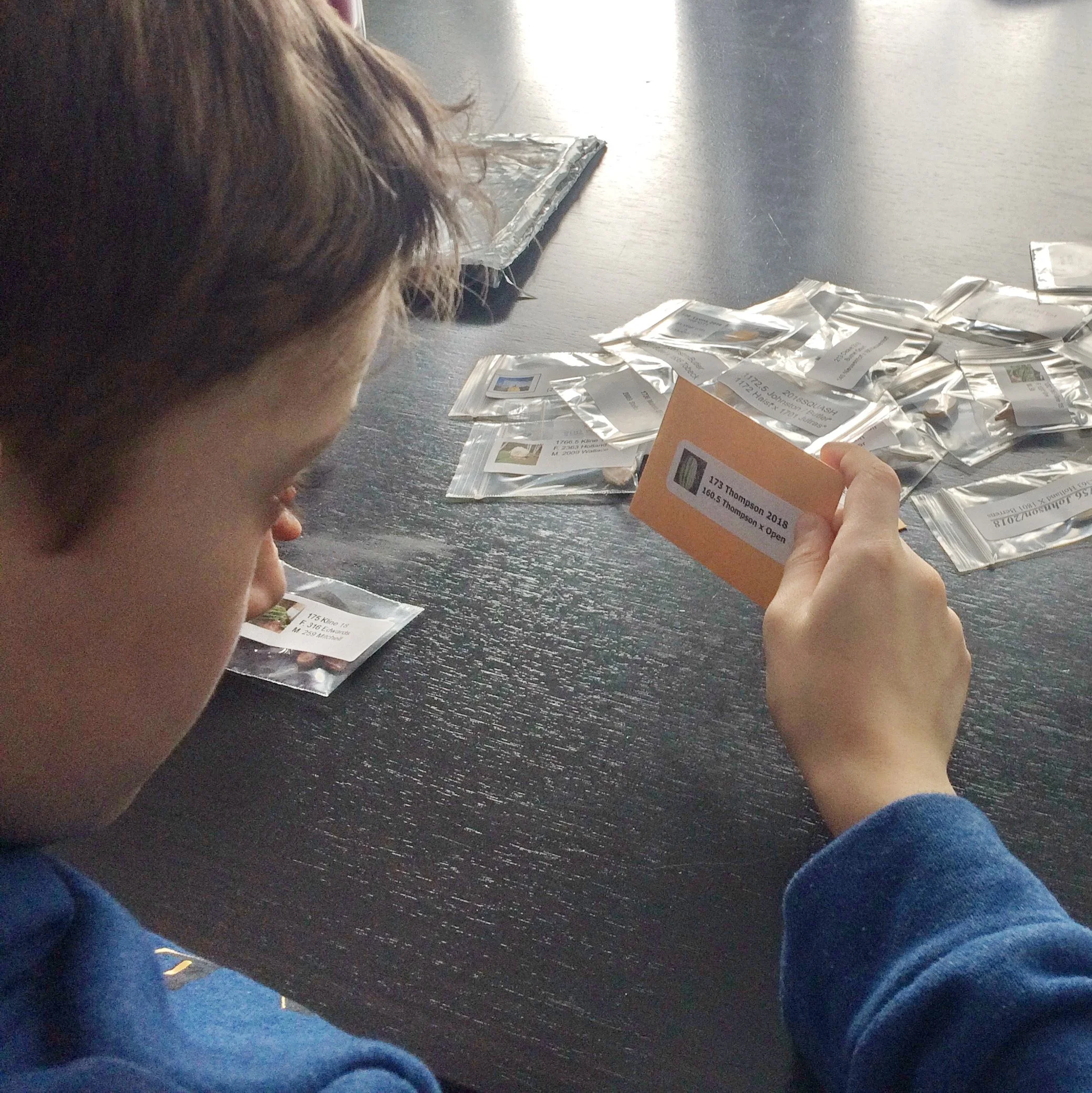
This glossary of seed terminology will explain important seed vocabulary.
Annual
An annual plant has a one-year life cycle. It flowers, makes seed, and dies in one year. Common annuals include veggies such as beans, lettuce, and spinach.
(To confuse things, some of the so-called annuals that we grow in northern gardens live more than one year in warmer climates—but die in our cold winters, so we treat them as annuals. But actually, they’re not. A good example is fuchsia.)
Biennial
A biennial has a two-year life cycle. The first year, it makes leaves; and in the second year, flowers and forms seeds. In the veggie garden, a number of common crops are biennials, but we usually harvest from them during the first year and then remove them. Unless we’re saving seeds. Parsley, Swiss chard, and carrots are biennials.
Botanical Name (Scientific Name, Latin Name)
This is the official two-part name, often italicized. Useful when we want to make sure there’s no confusion around what plant we’re dealing with.
Common Name
This is the everyday, plain English name. The only problem is that sometimes the same name gets used on more than one plant. Bluebell is a good example. That’s why, when in doubt, you can check the Botanical Name to make sure you’re ordering what you want.
Cotyledon
This is the name of the first leaves that emerge when a seed germinates. You might see this word when seed shopping because transplanting guides often talk about “seed leaves” or “cotyledon leaves” when explaining when to transplant your seedlings. They look different from the “true” leaves that come afterwards.
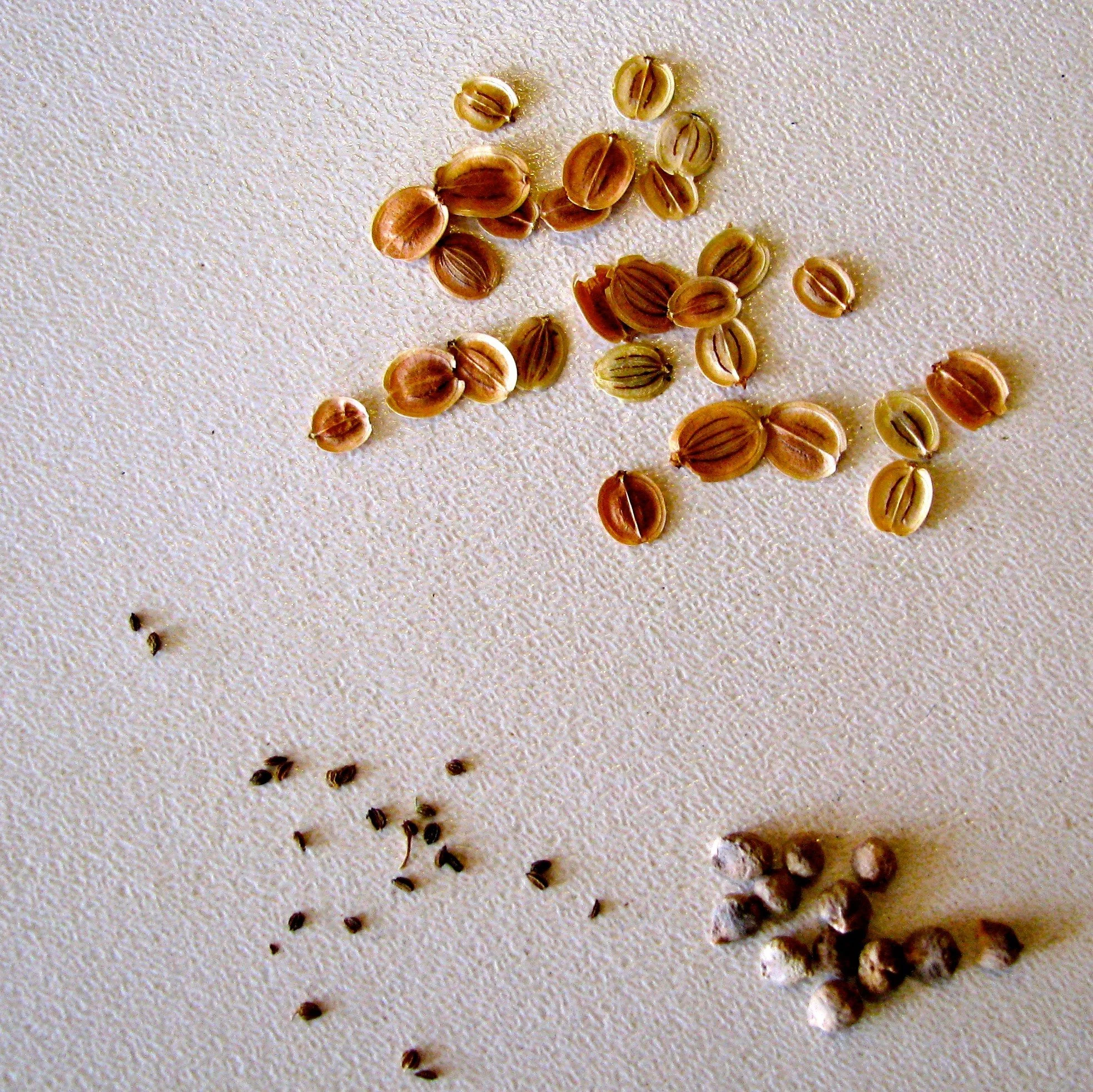
Many common garden crops are biennials. Parsnip (seeds at the top) is a good example of a biennial in the vegetable garden.
Cultivar
This word comes from “cultivated variety.” It just means a variety intentionally grown by humans. People often use this term interchangeably with “variety” although there are also naturally occurring plant varieties—which is why the distinction. If you see a name between single quotes (‘ ‘) it’s likely a cultivar name. A cultivar can be an open-pollinated or a hybrid (see below).
Days to Maturity (Days to Harvest)
An approximate number of days until harvest. This number is always approximate because many things (weather, growing conditions, the stage of harvest) have an effect on it.
For crops we plant directly in the garden, it’s the number of days from seeding until harvest; while for crops we start indoors as transplants (e.g. tomatoes) it the number of days from transplanting in the garden until harvest.
Dioecious
Dioecious plants have male and female flowers on separate plants. In the veggie garden, asparagus is an example of a dioecious plant.
Direct Sow (Direct Seed)
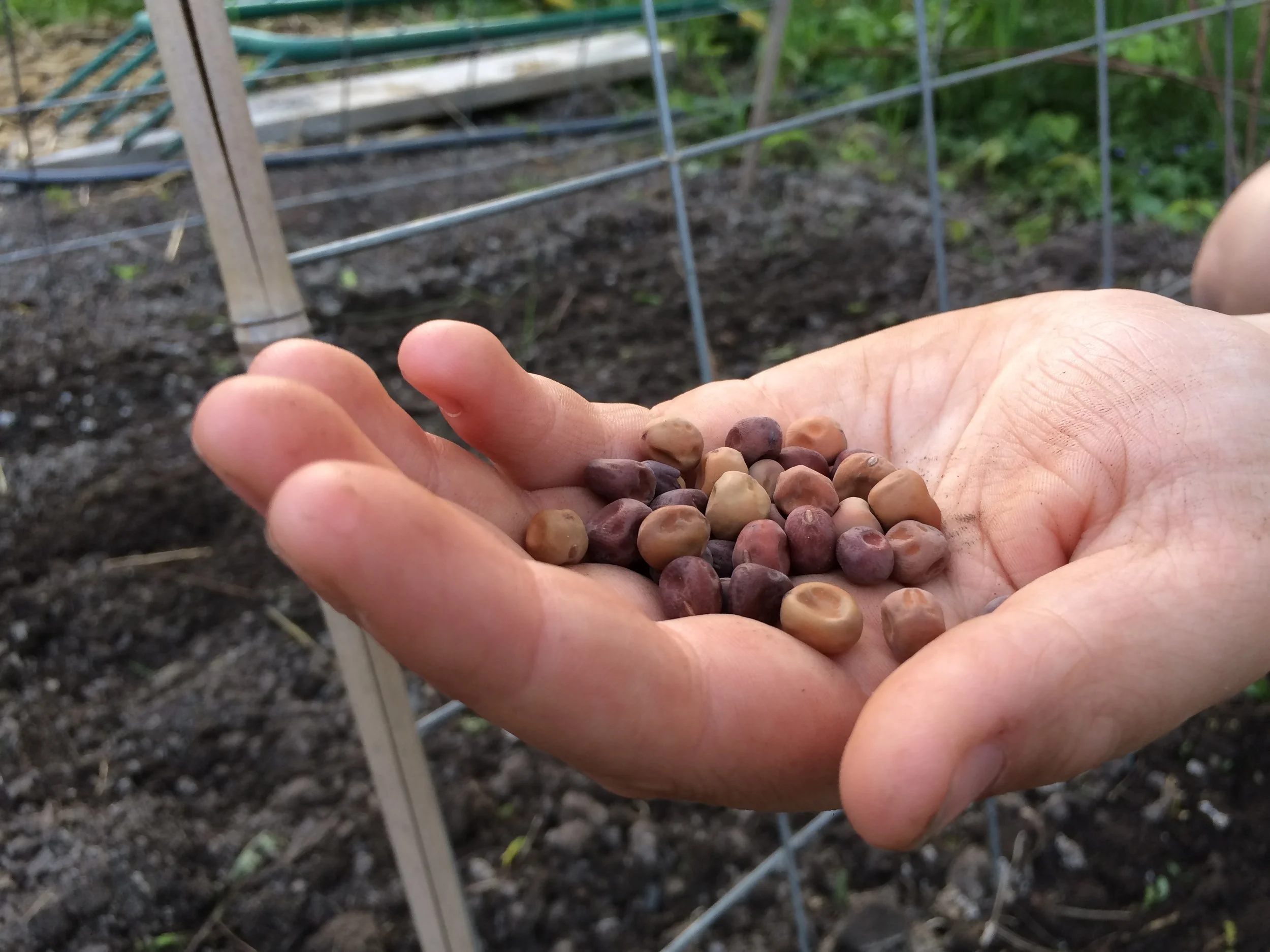
Pea seeds, an example of a crop that we usually direct sow.
This is when we plant seeds in their final, outdoor destination. Crops that are commonly direct seeded include carrots, beets, beans, and peas.
Germination Rate
Seed companies test germination. (At least I hope they do!) If you see a percentage on a seed packet, it indicates the germination rate from a germination test—and this should give you an idea of what sort of germination you can expect at home under good conditions.
GMO (Genetically Modified Organism)
Many people understand this to mean a plant into which genetic material from another plant or life form is inserted. What’s confusing is that the way this term is often understood and the official definitions differ.
The exact definition depends on who you ask and where you are. Here’s the official definition used by the Government of Canada.
“A genetically modified (GM) food is a food that comes from an organism (plant, animal or microorganism) that has had 1 or more of its characteristics changed on purpose. Organisms can be modified by different processes, including: conventional breeding techniques, like cross-breeding or mutagenesis (a change in the genetic make-up of an organism caused by chemicals or radiation); modern biotechnology techniques, such as genetic engineering; gene editing.”
Here’s what can be confusing: The wordy definition above includes traditional breeding…the sort of breeding that might have given us some of our heirloom varieties. What many people want to avoid is “genetically engineered” seeds. Genetically engineered seeds are mostly found in commodity crops (think canola and corn) – and are not sold to home gardeners.
Harden Off
When seedlings are moved from protected conditions such as indoor grow lights or a greenhouse, they are “hardened off,” which means they are gradually acclimated to the brighter light, different temperatures, and wind outdoors.
Hardy Annual
An annual that tolerates some frost and cool conditions. For example, a common hardy annual vegetable is arugula—which, if you let it make seed, you’re likely to find growing up on its own in your garden while there are still cool conditions.
Heirloom
Like the word “natural” in the health food sector, “heirloom” is one of those fuzzy, poorly defined words that marketers adore. There’s no precise meaning. But, in general, it means an older open-pollinated variety.
Grow a Container Vegetable Garden
And get an early harvest of crops that usually take too long!
Hybrid Seeds
Hybrid seeds result from cross-pollinating two varieties with desirable traits. In the seed industry, it’s done in controlled conditions, so there’s no chance of an errant pollen grain giving something different.
Hybrid seeds tend to be more expensive because of the labour needed to make the cross. Hybrids are often made to have desirable traits such as disease resistance and vigour…and they’re also made because it’s an industry.
If you see the term “F1,” that refers to the first generation of seed after the cross. That’s usually what’s for sale at seed vendors. When you save seeds from a hybrid plant, it will probably be different from the parent plant.
Hybrids occur in nature too, but the hybrid seeds you find at vendors will have been deliberate. When people are new to seed shopping they sometimes wonder if hybrid has something to do with genetic engineering—and it doesn’t. It’s entirely different.
Last Frost Date (Average Last Frost Date)
The date in the spring when—on average—there isn’t any more frost in your area. It’s figured out using historical weather data.
This date is like a marker post for seed sowing. When a seed catalogue recommends starting tomato seeds 8 weeks before your average last frost date, this is what it’s referring to.
This date is also used when deciding when to move seedlings into the garden. (But remember…an average last frost date means that some years there is frost after that date.)
Monoecious
Monoecious plants have both male and female flowers on the same plant. Melons are monoecious; and if you look closely, you’ll see some of the flowers have little melons-in-waiting next to the female flowers, while the male flowers have none.
Open Pollinated (OP)
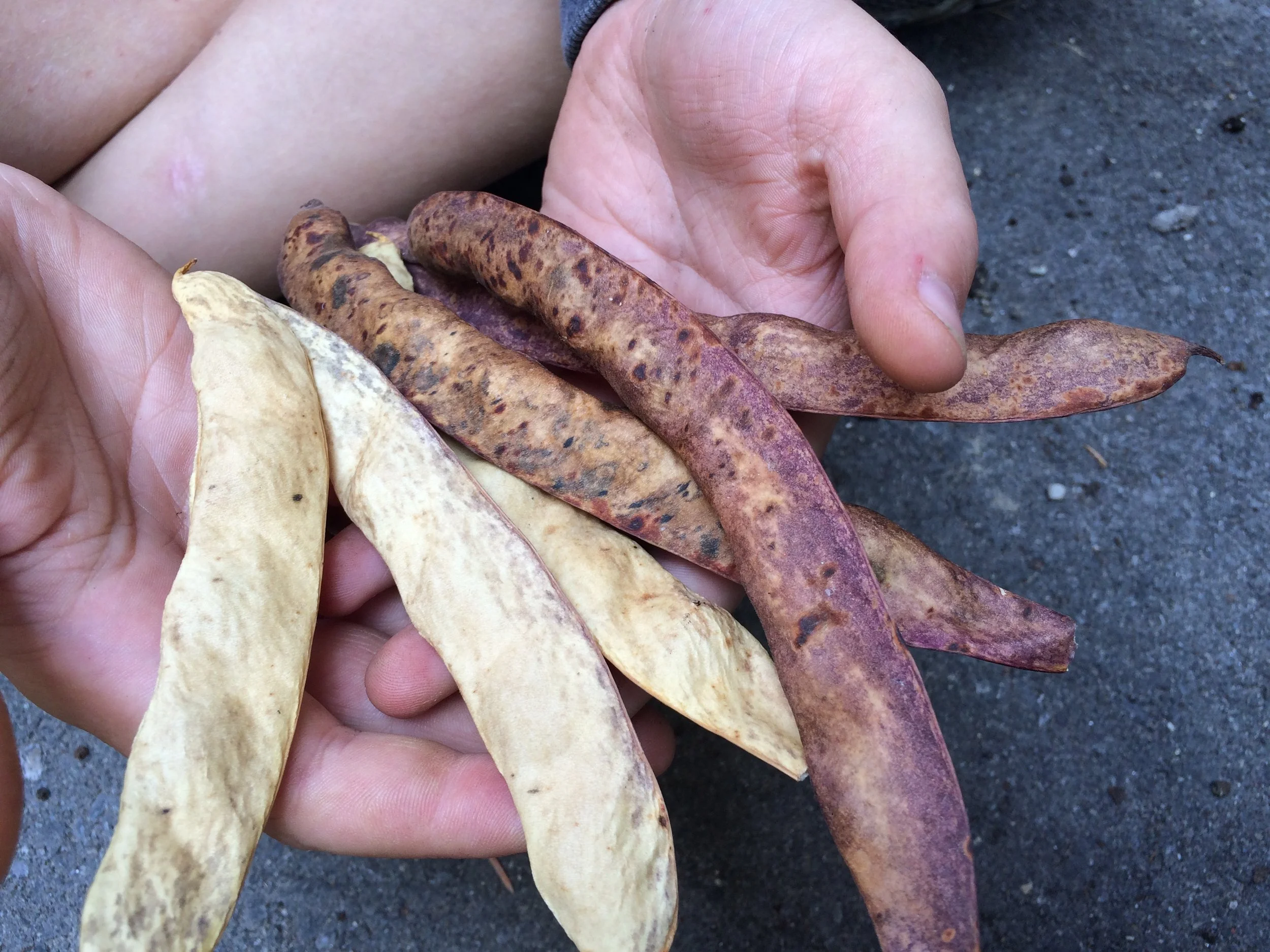
Open-pollinated bean varieties are easy to save seeds from because there is not usually much cross-pollination with other varieties.
Open-pollinated varieties are stable varieties that you can save seed from and get plants that are like the parent plants. Some open-pollinated varieties are heirlooms; some are recent.
Note: To get seeds like the parent plant, there can’t be “cross-pollination” with other varieties. Some types of plants mostly self-pollinate (they have perfect flowers, see below), so you’re likely to get seeds like the parent plant without doing anything special. But some plants have separate male and female flowers—meaning insects might pollinate them with pollen from another variety. Squash is a good example. In that case, open-pollinated varieties are grown in isolation when saving seed.
Organic
Generally understood to mean that the plants the seeds come from are not treated with synthetic fertilizers and pesticides. The thing to keep in mind when seed shopping (food shopping, too, actually) is that there are organic certification bodies—agencies that make sure a producer adheres to a set of standards. So you might come across seed that a seller says is organic—but is not “certified” organic.
Parthenocarpic
This refers to varieties that can make fruit without pollination. The resulting fruit has no seeds. You’re most likely to see this term as you browse cucumber varieties.
Create Your Own Unique Edible Landscape
That fits for your yard, and your style!
Pelleted
Sometimes small or irregularly shaped seeds are coated with clay to make them easier to handle or dispense with seeding equipment. These “pelleted” seeds are usually more expensive.
Perennial
A plant with a life cycle spanning a number of years.
Perfect Flower
A flower that has both male and female parts.
Set
Onion “sets” are small, pre-grown onion bulbs that you can plant directly in the garden instead of growing onion seedlings. It’s a great option if you don’t have a lot of indoor space for growing onion transplants.
Tender Annual
An annual plant that does not tolerate frost. We usually start tender annuals indoors, in warm conditions, and then transplant them outdoors when there is no further risk of frost. A good example of a tender annual is basil…which quickly wilts in protest in cool weather.
Transplant
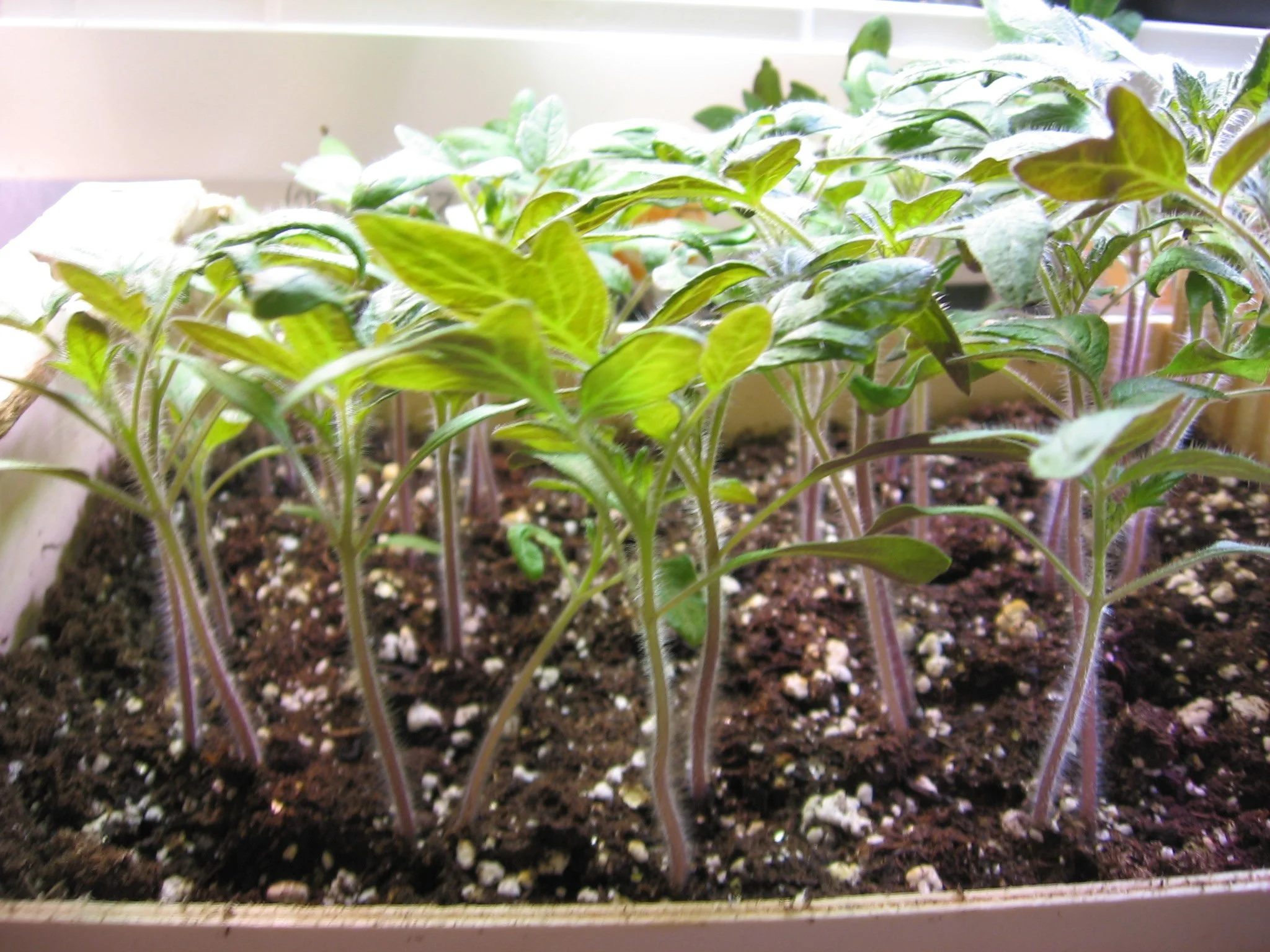
Tomato seedlings, or “transplants.” We use the word transplant as both a noun and a verb.
The word we sometimes use to refer to the little seedlings that we start indoors. Of course, it’s also the act of replanting—transplanting—the little seedings. So both a noun and a verb!
Treated Seed
If you’ve ever seen a pink pea or bean seed, it’s been treated with a fungicide. That treatment is done to prevent rot in cold, wet soil. If you don’t want seed that’s treated, look for “untreated” seed.
Untreated Seed
Seed that has not been treated.
Crop-Specific Lingo
Beans

Pin this post!
Bush bean plants are shorter, and tend to have an earlier and briefer period of harvest. Depending on the variety, they might or might not need support.
Pole and runner beans get quite tall, and will need support. The harvest is later, and the harvest period is longer.
Peas
Vining pea varieties, like runner and pole beans, get quite tall and have a longer harvest window.
Squash
Bush squash are compact (at least for a squash plant!).
Vining (running) squash have long stems that spread far and wide.
Tomato
Determinate (bush, patio) tomato plants get to a certain size and then stop growing. They are relatively compact, and flower and fruit in a shorter time. Even thought they are compact, they are not self supporting—so if you like your tomato plants off the ground, use a stake or a cage.
Indeterminate (vining) tomato plants keep growing and making fruit as long as conditions permit. They get very tall if the growing season permits. (This is the sort of tomato used in greenhouse tomato production here in Ontario: Plants are grown up twine, and as they get taller and taller, the twine is lowered and the base of the stem is coiled on the ground.)
There are also semi-determinate tomato varieties.
Dwarf tomatoes are very compact, making them a good choice for growing in planters. They often grow 60 - 120 cm tall (2-4’)
Micro-dwarf tomato plants are tiny, only 15-30 cm (6-12”) tall. Perfect for a window box. Just adjust your yield expectations accordingly with such a small plant.
Find Out about Seed Shopping in this Podcast
Find This Helpful?
Enjoy not being bombarded by annoying ads?
Appreciate the absence of junky affiliate links for products you don’t need?
It’s because we’re reader supported.
If we’ve helped in your food-gardening journey, we’re glad of support. You can high-five us below. Any amount welcome!
More on Vegetable Seeds
More on Growing Vegetables
Vegetable Gardening Articles
Vegetable Gardening Courses
Prevent Leggy Seedlings and Grow Vegetable Transplants Like an Expert
The best way to solve the problem of spindly seedlings is to prevent them from getting that way in the first place. Find out how.
By Steven Biggs
Your Seedlings are Leggy? Keep Reading!
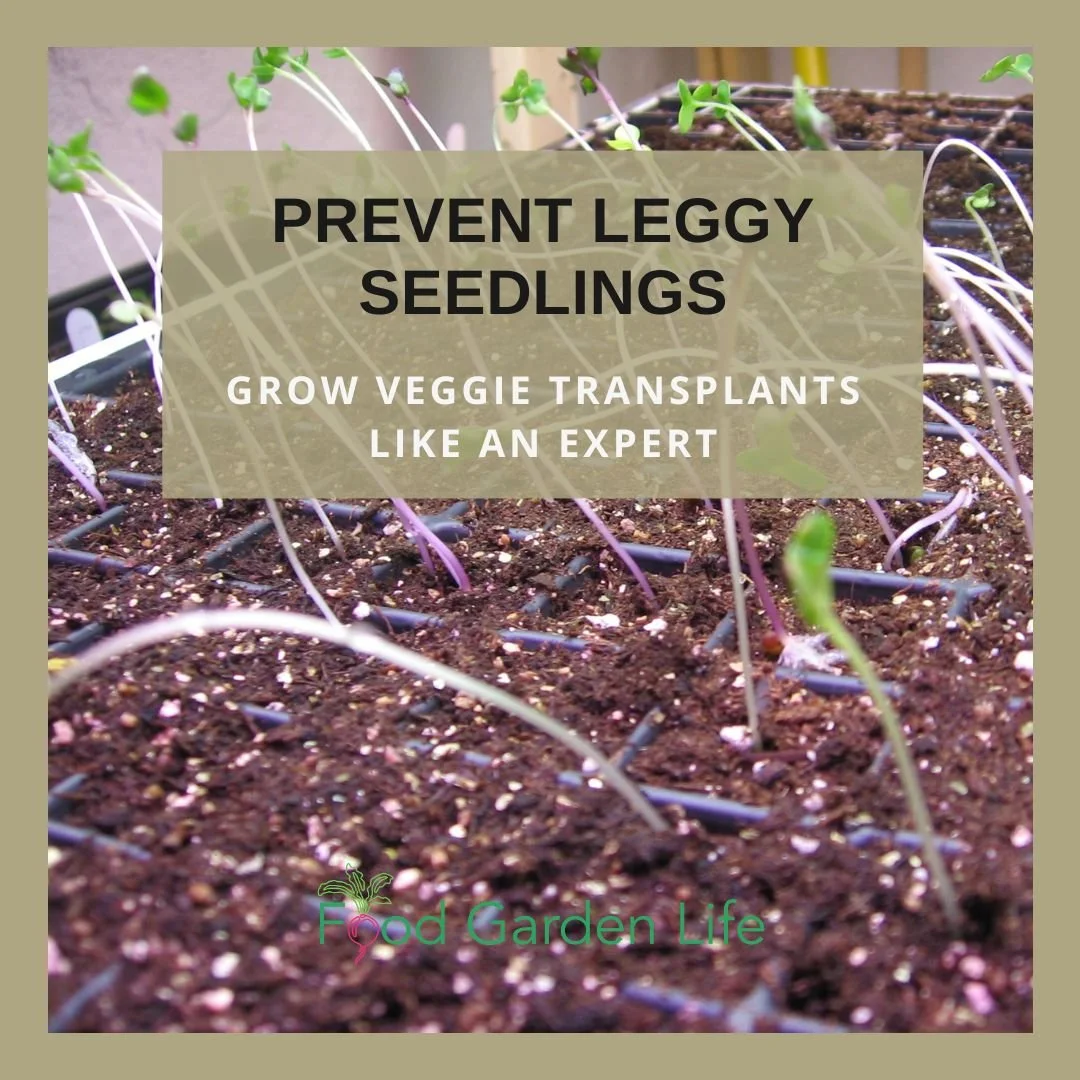
If your seedlings are doing the downward dog, this post is for you.
When young seedlings are so fragile that they fold into two, they don’t stand a good chance of success once you transplant them into the garden.
Yet leggy seedlings is a common problem for home gardeners starting seeds indoors. That’s because in a home setting, conditions are often less than ideal.
But there’s good news.
Even if you don’t have perfect conditions—even if you don’t have a greenhouse—you can grow healthy seedlings that will thrive. It’s just a matter of setting up your seed-starting area so you can give small seedlings:
An appropriate temperature
Enough light
A suitable potting soil
Combine these with a suitable container, and you’re away to the races. You can grow strong and healthy plants.
This article tells you how much light you need, what you need to know about temperature, what to look for (and avoid!) in a potting soil, and how to choose a suitable container. Get these four things right, and you’ll prevent leggy seedlings.
Heat to Sow Seeds Indoors
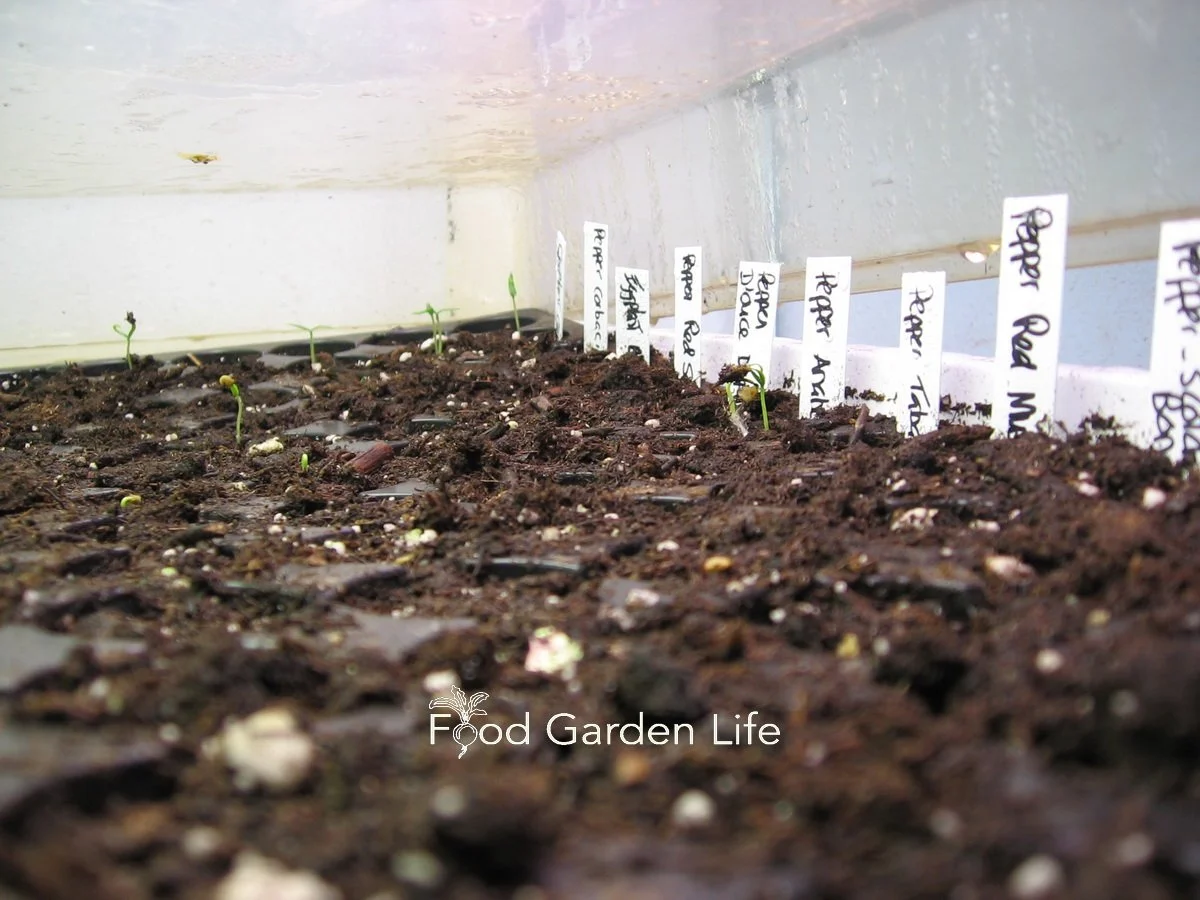
Warmer than room temperature to germinate, cooler than room temperature after germination.
If you see different seed-starting temperature recommendations for different crops, don’t sweat it. You’re probably starting all of your different crops in the same indoor space anyway.
Here’s the big picture, a simple way to think about temperature:
When you start seeds indoors, a temperature a bit above room temperature is helpful for faster, uniform germination
Once your seeds germinate, a temperature slightly cooler than room temperature helps to keep your seedlings more compact
Higher Temperature for Germination
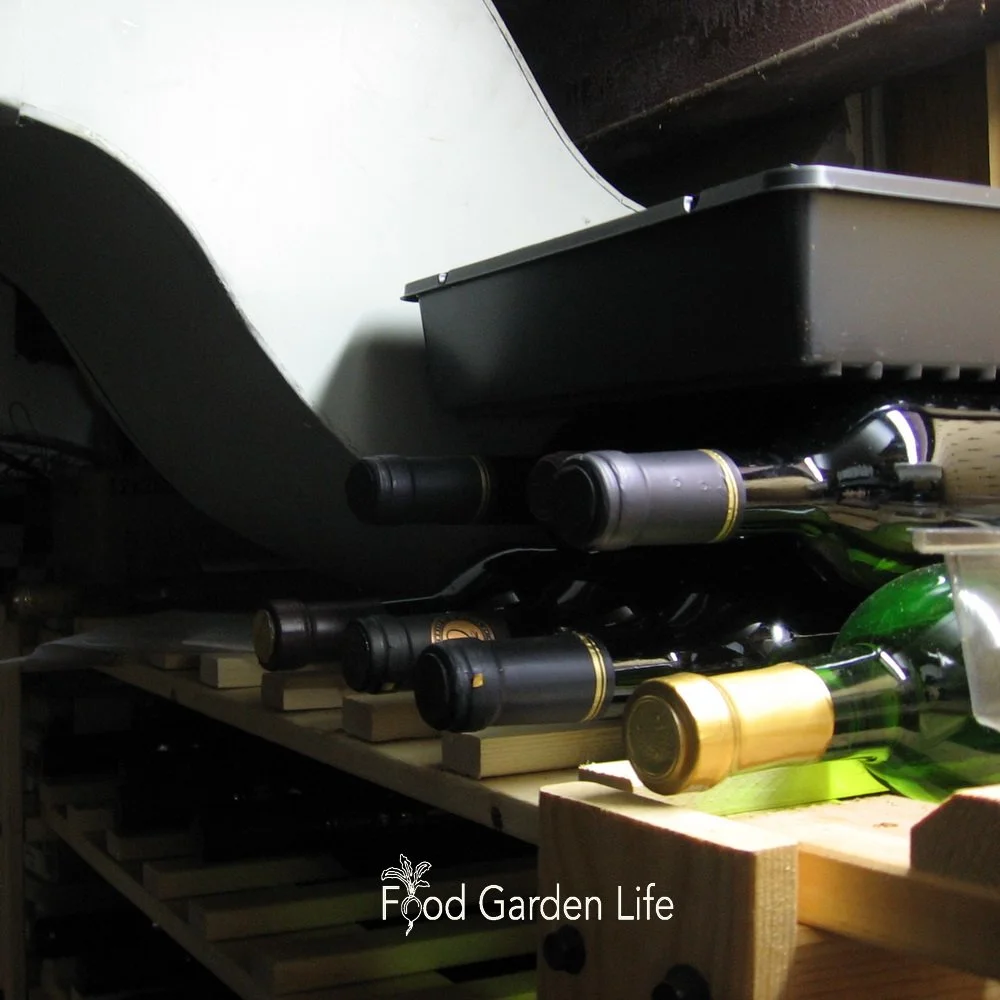
Speed up germination with more heat. Seed tray beside a heat duct to speed up germination.
You can raise the soil temperature without turning your house into a tropical conservatory. Just use what’s called “bottom heat.”
Bottom heat refers to heating the soil from below. There are purpose-made heat mats, like heating pads for plants, that go underneath pots and trays. With a heat mat, you’re only heating a small area.
Here are other ways you might be able to give your seeds bottom heat:
Heated floor
Hot-water radiator
An appliance that gives off heat (my former beer fridge was always warm on top)
In a previous house, I put seed trays beside basement heat ducts (over top of my wine rack!) to get seeds to germinate quickly. They sprouted seedlings faster than the trays in a cooler location.
Hold in Heat
Along with heat from the bottom, hold in heat and keep the humidity higher during the germination period. There are commercially available humidity domes for trays, or you can use clear plastic bags or cling wrap.
Cooler Temperature for Growing
Once seeds have germinated, a cooler temperature helps to develop sturdy stems. So remove the heat mat if you’re using one, and if you’re using a cover, set it ajar to let out some heat and humidity.
I grow seeds in a basement room with the heat ducts closed. It’s slightly cooler than the rest of the house and the temperature works well for raising seedlings.
Sufficient Light
Insufficient light is one of the things that will cause lanky seedlings.
There's a wide variety of grow lights available for home gardeners. But if you’re growing vegetable transplants indoors, you don’t need fancy grow lights. That’s because you’re not trying to grow the crop indoors for its entire life cycle.
All you’re trying to do is to get a healthy seedling to transplant into the garden. And once it’s in the garden, it gets full sunlight.
Grow Lights
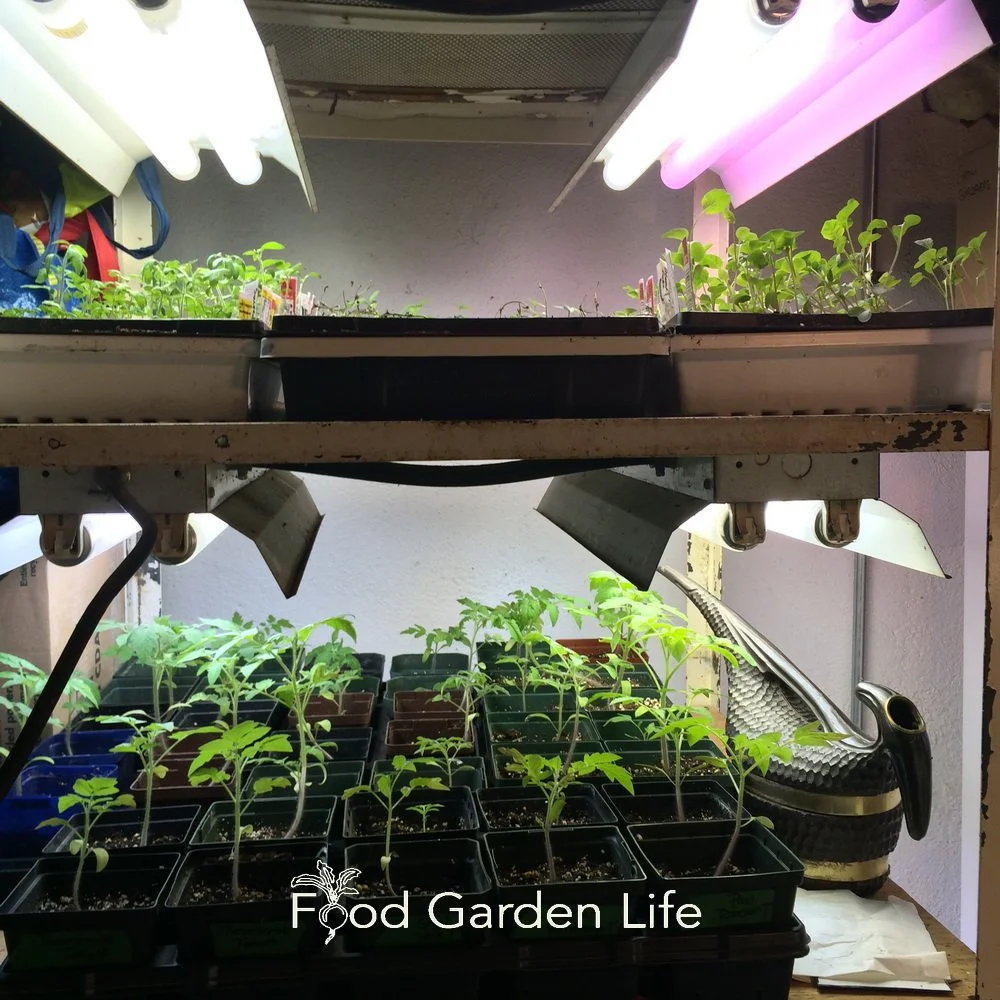
Adequate light is important; but there’s no need for perfect light because seedlings get full sunlight when moved to the garden.
I still use fluorescent lights because that's what I have and I'm on a limited budget. You can buy fancy schmancy lights; there’s no need.
If you’re using artificial light, consider the distance of the seedling from the grow light. Some grow lights have adjustable lights that can be moved close to seedlings, and then moved up as seedlings get taller.
If, like me, you don't have that option, place something under the seedlings to raise them up, closer to the light source. (Mandarin orange crates work well in my setup!) As the plants get bigger, lower them so they’re not touching the lights.
Natural Light
If you’re using natural light, the brightest windows are usually south-facing. One challenge is that south-facing windows can be hot. Warmer temperatures can cause leggy seedlings. A simple solution to this is to place a fan in the area to disperse the heat.
Soil
Even with good light and a suitable temperature, if you have poor-quality soil, your seedlings might flop!
When it comes to soil, the top two things to think about are:
Use a light soil with lots of air space to allow excess water to drain and small roots to grow
Choose soil that’s free from pests and diseases
Create Your Own Unique Edible Landscape
That fits for your yard, and your style!
Disease in Potting Soil
Little seedlings are delicate and they're vulnerable to attack by disease. In a seed-starting environment, the most common disease is what’s called “damping off” disease. This fungal disease can come with the soil—so one of the easiest ways to prevent the disease is to use soil free from damping off.
Here’s how to lessen the chance of damping off:
Don’t reuse potting soil for starting seeds (unless you’re planning to heat sterilize it)
Don’t use garden compost for seed starting; it has more microbial activity—which is great in the garden—just not ideal for indoor seed-starting
Potting Soil Shopping Tips
Big bales. It’s buyer beware with potting soil. Some potting soils are great…some suck. The large compressed bags (a.k.a. bales) that are sold to commercial growers tend to have consistently better quality because commercial growers are more discerning. Big bales are also much better value. They’re compressed, and often quite dry—so also less likely to have eggs of pesky fungus gnats.
Finely-ground potting soils. There are seed-starting potting soils that are more finely ground, the idea being that big particles can get in the way of small seeds. This makes sense in a commercial setting where uniform, perfect germination is a must. It’s absolutely unnecessary in a home-garden setting. Don’t waste your money.
Skip the meal deal. Seeds germinate and start to grow using energy stored in the seed. Don’t buys soil with added fertilizer; it can actually burn tender seedling roots.
And…If you see soil on special at a big box store for a couple of bucks, remember that a bargain isn’t always a bargain.
Grow a Container Vegetable Garden
And get an early harvest of crops that usually take too long!
Containers
When I worked in the horticultural supply industry we sold various seedling trays, pots, the “cell packs” used in commercial seedling production.
Many of these are available to home gardeners, though not necessary.
The key things to think about with containers:
Drainage holes to allow excess water to drain
Not contaminated with damping off disease (see Reusing Pots and Trays, below)
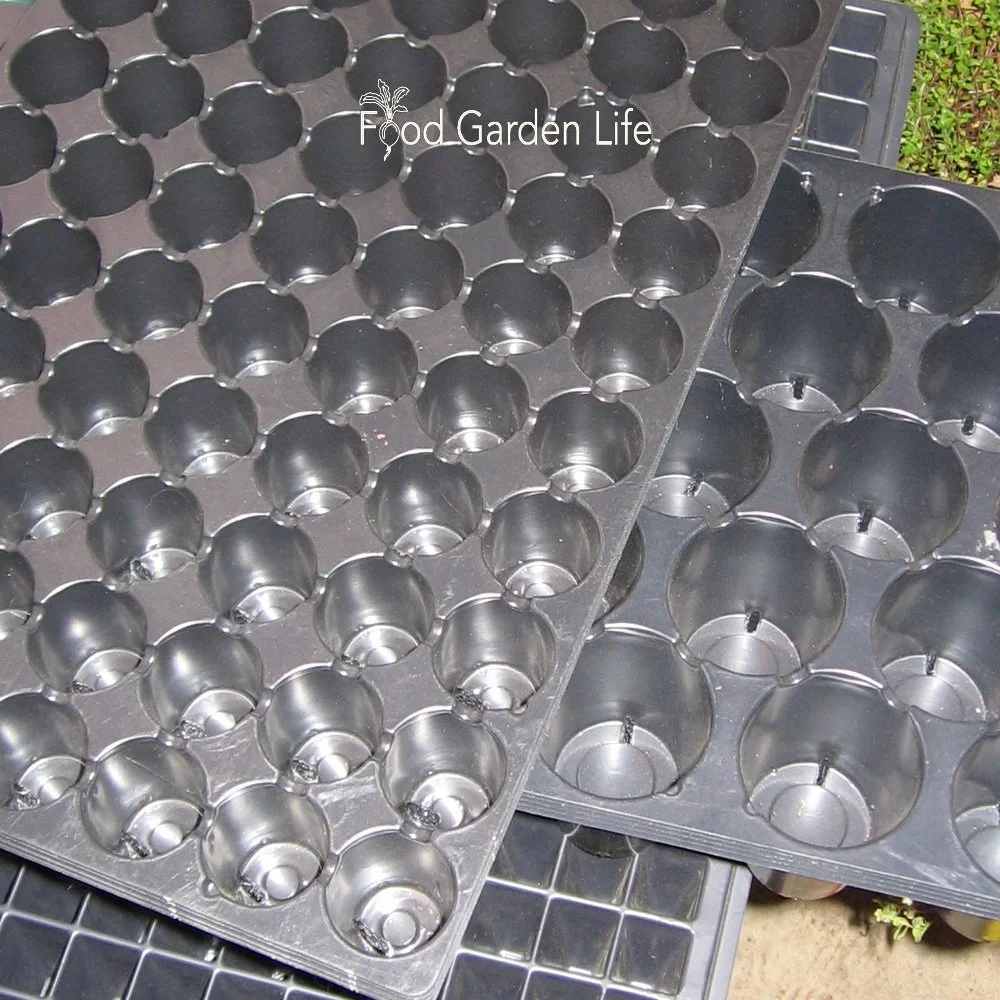
Plug trays for starting seeds indoors. Not necessary, but useful when you grow lots of the same thing.
Container Type and Size
If you’re growing a lot of one type of seed, you might like to have containers that are the same size because it simplifies watering. When my daughter raised hundreds of tomato seedlings, I got her what’s called “plug trays” so she could grow lots of small plants in our small space. They all had the same amount of soil, and dried out at the same speed.
I don’t use the expanding peat pellets. I think they’re gimmicky.
Use What’s in Your Recycling Bin
I am a big fan of scouring the recycling bin for seedling pots. For example:
Yogurt containers
Mandarin orange crates (my favourite for lettuce seedlings)
Tubs for mushrooms
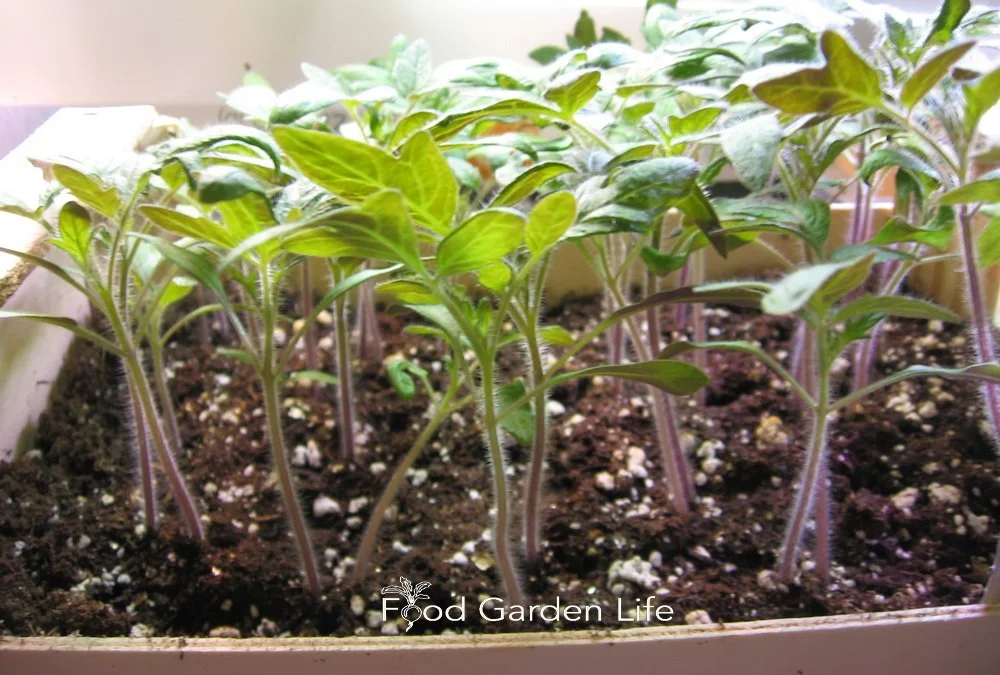
Using a mandarin orange crate to grow tomato seedlings.
Tips when using recycled containers:
The volume of soil in different containers will vary—so water accordingly
Put holes in the container for drainage
Reusing Pots and Trays
If you're reusing pots and trays, it’s a good idea to first sterilize them to prevent damping off disease. That’s because any soil crusted on the container from the previous year can harbour the disease. If you haven’t had damping off disease in the past you might be OK…but personally, I don’t risk it. So I sterilize them.
When damping off disease attacks seedlings, it can wipe out a whole tray in just a day or two. It can be quite devastating.
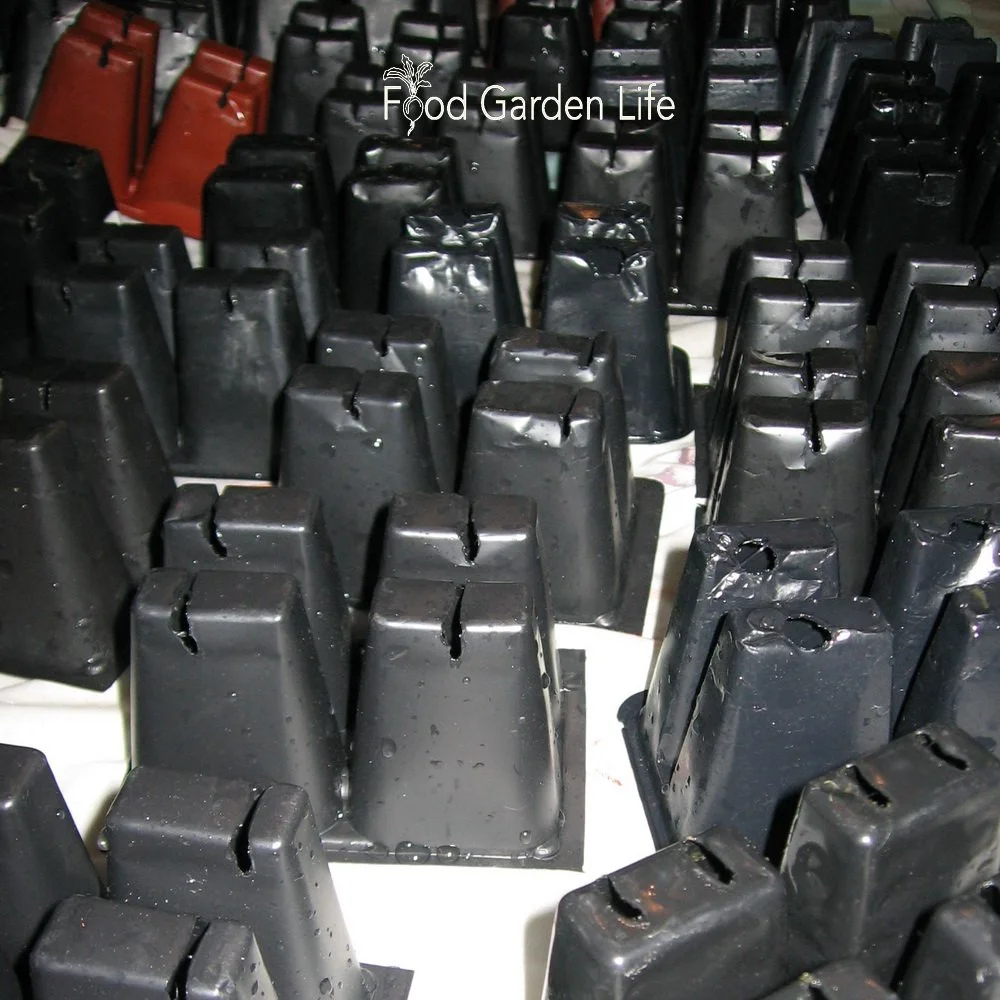
Cell packs drying after washing and sterilizing to prevent damping off disease on seedlings.
Here’s what I do to sterilize containers:
Soak containers in water
Scrub off any crusted soil
Place them in a solution of 10 parts water with one part bleach
Let them air dry
What About Fibre Pots?
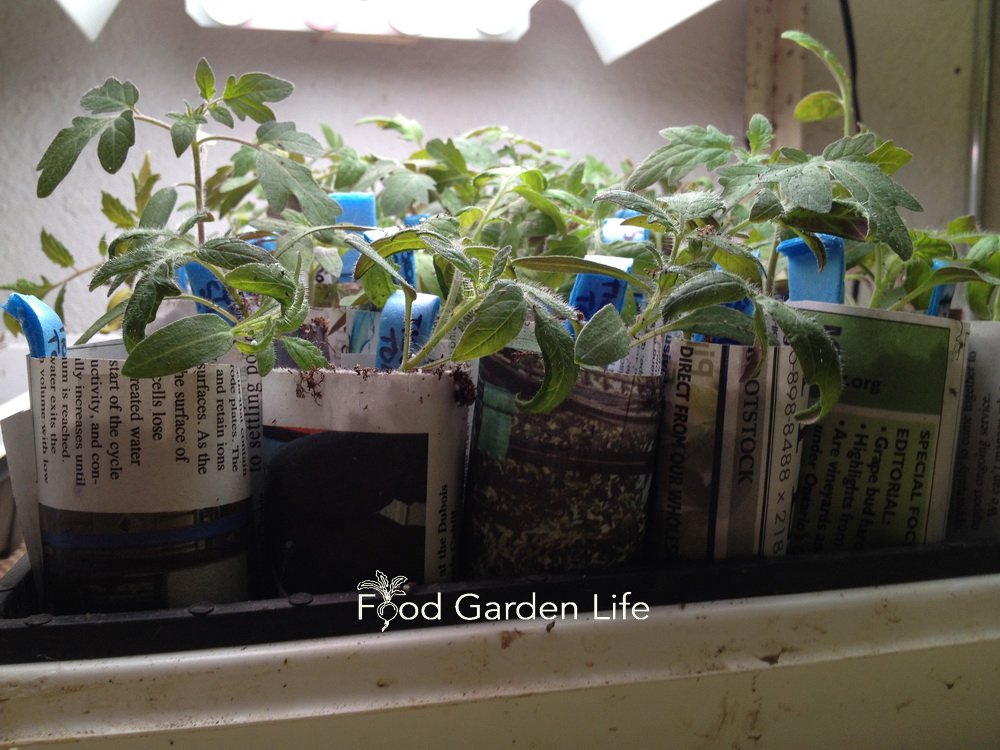
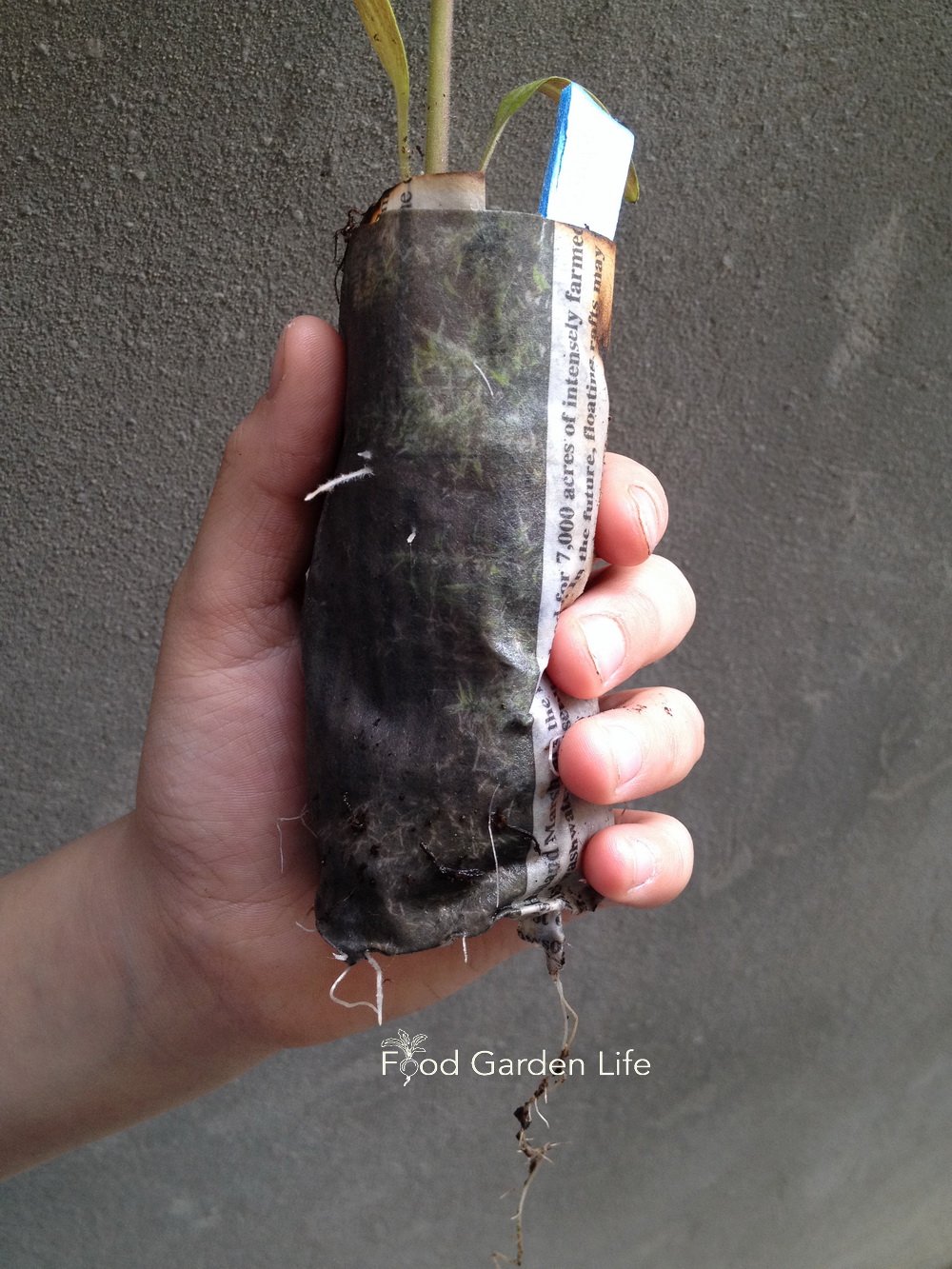
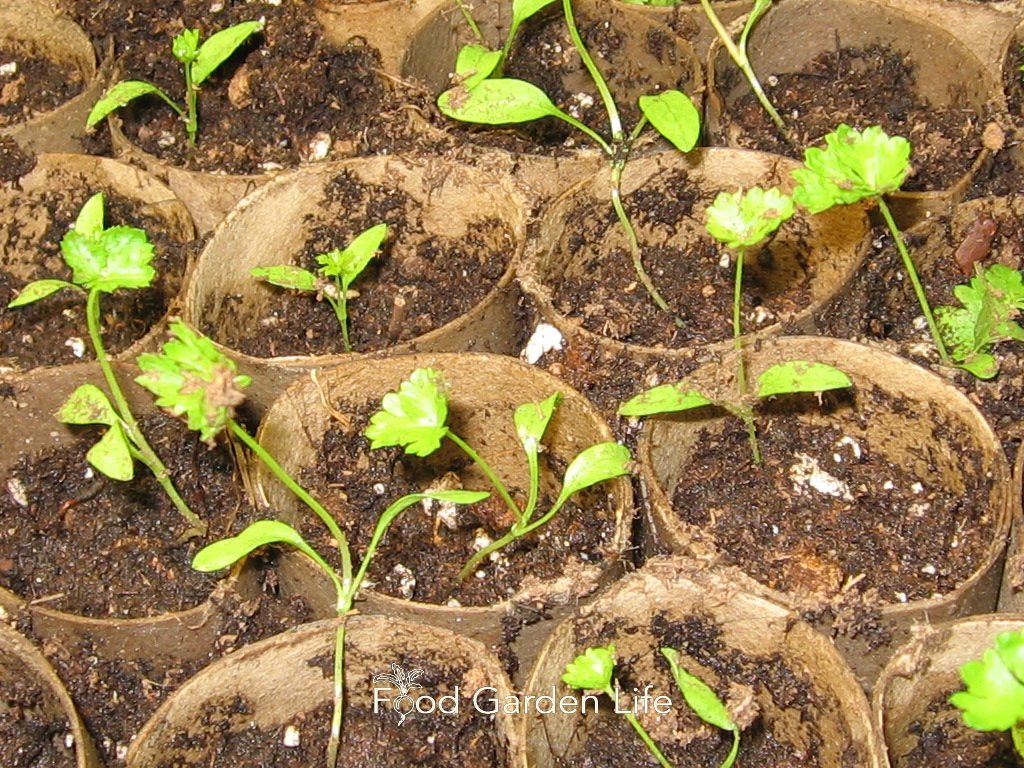
There are a few types of fibre-based biodegradable pots. Recently I saw some made from cow dung! Some people make newspaper pots, or reuse toilet paper rolls for seed starting. In principle, you can plant these pots straight into the ground, but there are a couple of caveats.
The pots wick out moisture, away from plant roots…and they can dry out quickly. So watch the soil moisture to make sure that it doesn't get too dry for your seedlings.
Later, when you transplant seedlings in the garden, if the lip of the pot is above the soil level, it'll wick the water away from around the roots, so the soil around the roots can be drier than the garden soil. So tear off the top of the pot—or bury it. That solves the wicking problem.
FAQ – Leggy Seedlings

Pin this post!
Can you fix leggy seedlings? Can leggy seedlings recover? Can you fix stretched seedlings?
You can’t correct leggy seedlings...but if the seedlings aren’t too far gone, you can change the growing conditions so that the seedlings grow thicker stems.
Why are my seedlings flopping over? Why is my plant growing tall and skinny?
It can be too little light, too much heat, excess moisture—or a combination of these.
Can I bury leggy seedlings deeper? Can I fix leggy tomato seedlings?
In many cases, no. First of all, very thin stems can easily be crushed. And most seedlings don’t do well when planted deeper than the level they’re been growing at. Leggy tomato seedlings can be an exception—they do well when planted deeper—but it will depend how long, skinny, and delicate the spindly seedling is. Better to avoid the leggy seedlings in the first place!
Find Out About About Seed Starting in this Podcast
Find This Helpful?
Enjoy not being bombarded by annoying ads?
Appreciate the absence of junky affiliate links for products you don’t need?
It’s because we’re reader supported.
If we’ve helped in your food-gardening journey, we’re glad of support. You can high-five us below. Any amount welcome!
More on Vegetable Seeds
More on Growing Vegetables
Vegetable Gardening Articles and Interviews
For more posts about how to grow vegetables and kitchen garden design, head over to the vegetable gardening home page.
Vegetable Gardening Courses
Want more ideas to make a great kitchen garden? We have great online classes that you can work through at your own pace.
Vegetable Seed Guide: When to Start Seeds Indoors
Find out when to start vegetable seeds indoors.
By Steven Biggs
When to Plant Vegetables
Not sure when to start planting seeds indoors?
If you time planting well, your seedlings will be big enough to survive transplanting into the garden.
But don’t start seeds indoors too early: Earlier planting and bigger seedlings is not always better.
That’s because a seedling that’s stuck in a pot for too long, waiting to go into the garden, gets stressed. And sometimes stressed transplants don’t bounce back, even once you plant them into the garden.
(Late in the planting season big box stores often have discounted transplants: wilted, root-bound cauliflower, cucumber, and chard that have simply run out of steam…don’t be tempted!)
If you’re wondering when to start seedlings indoors, keep reading. This guide tells you when to sow seeds—and how to know when to sow seeds.
Why Start Seedlings Indoors
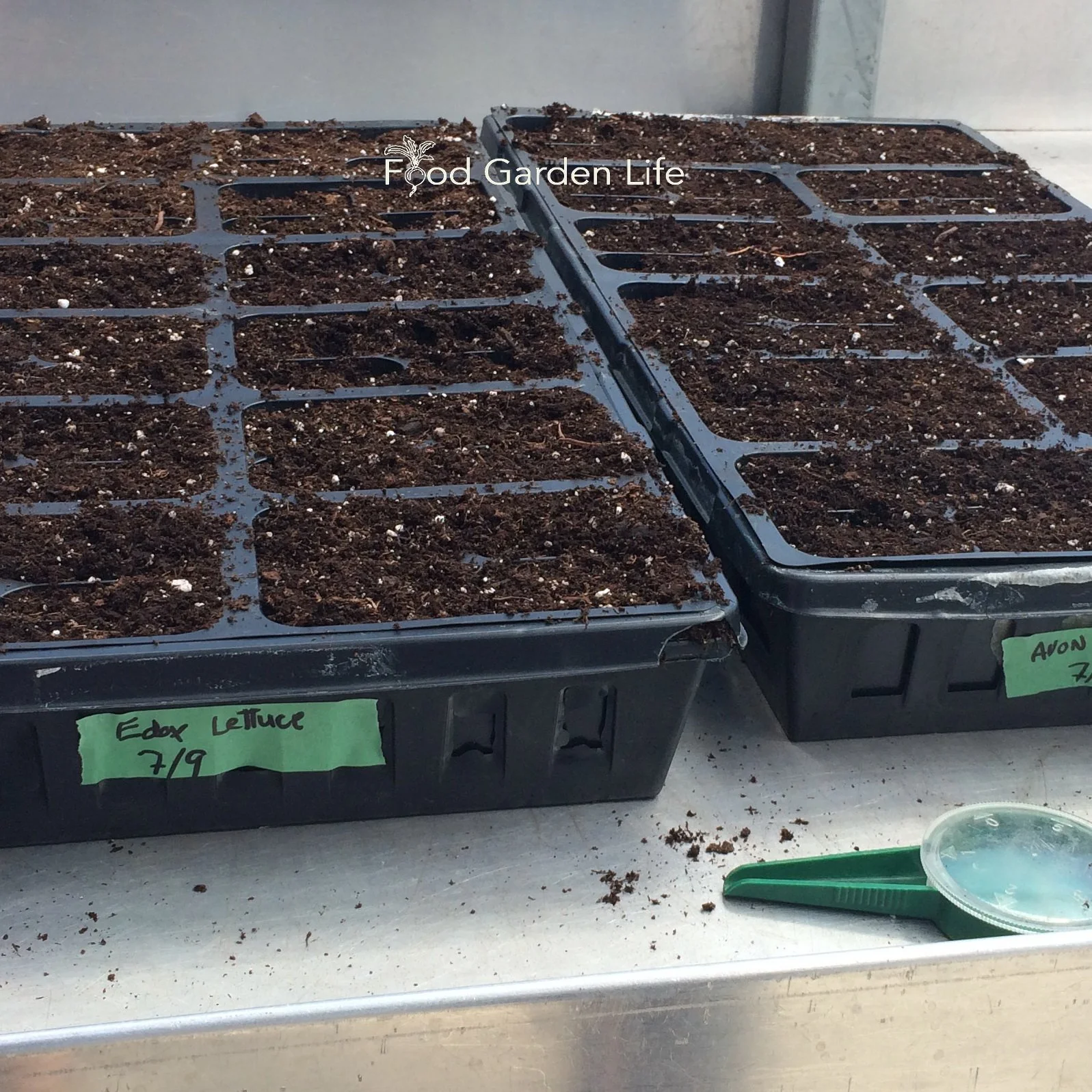
Start seedlings indoors to get a jump start on the season and to protect them from weather and pests.
There are two main reasons to start seeds indoors.
In cold climates, season length limits harvests—and starting seeds indoors give a longer window of growth for the crop.
Indoors, we can control conditions and prevent pest damage, giving small seedlings a chance to get started at a suitable temperature, without getting mown down by bugs.
When to Start Seeds Indoors
Luckily, vegetable seeds don’t all have to be planted at the same time. You can spread out seed sowing from mid winter through spring—when you start sowing some seeds directly in the garden.
The guidepost for choosing when to start planting seeds indoors is something called the average last frost date—or simply “last frost date.” This is the average date of the last spring frost in your area. (It’s an average, so some years there is a frost following this date.)
If you don’t know your average last frost date, a good place to start is by asking local gardeners, or checking with local seed vendors.
Work Backwards from the Average Last Frost Date
Pin this post!
Once you have your last frost date, you just work backwards to get the sowing date for all of your different vegetable seeds.
It’s your guidepost.
Workback: When to Plant Vegetables
Below is how many weeks before the last frost date I sow my vegetable seeds.
Keep in mind that none of this is cast in stone. You have a window of time for seed sowing. It doesn’t have to happen in one specific week.
That means that if you miss the mark with your celery seeds, and forget to sow them at 10 weeks, don’t sweat it. Sow them at 9 weeks, and your celery transplants might just be a bit smaller when you put them into the garden.
This list is a work in progress. If you have a favourite vegetable crop that’s not on here, e-mail me.
10 Weeks Before Last Spring Frost
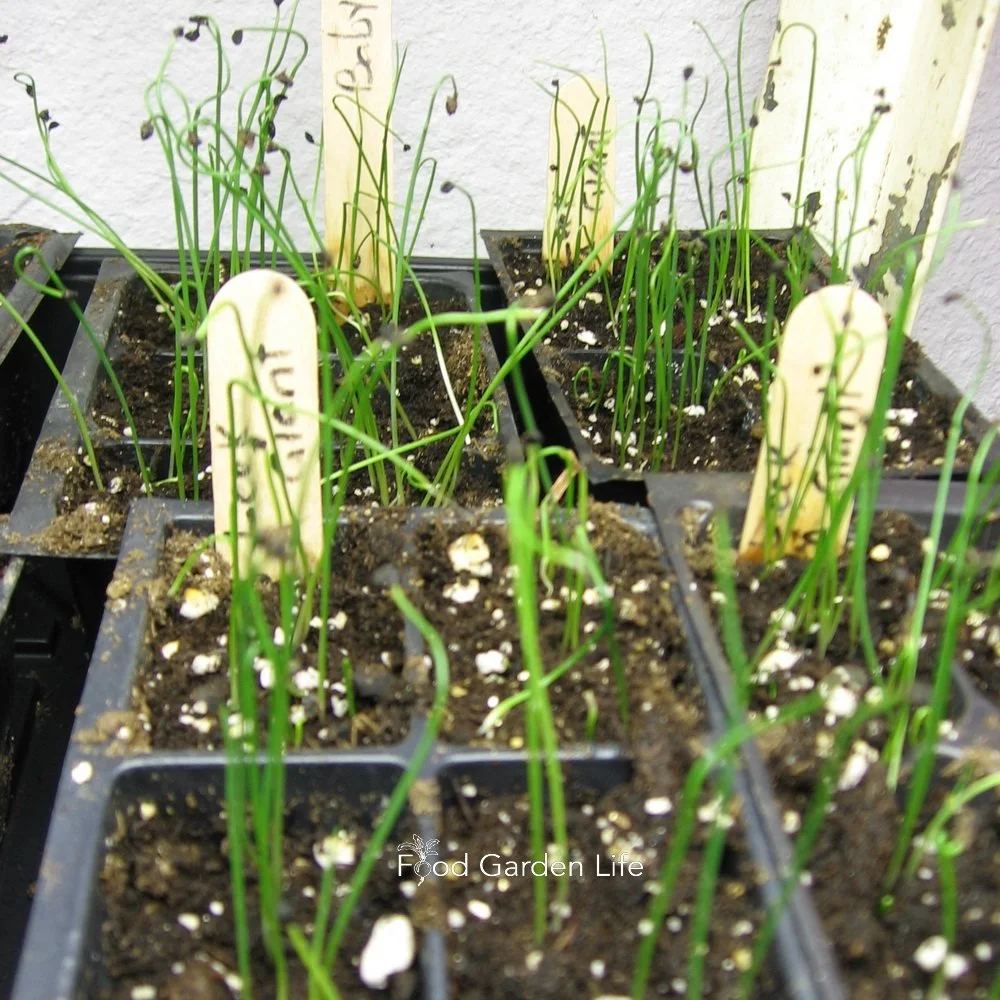
Leek seed are some of the first seeds that I plant indoors, 10 weeks before the last frost date in the spring.
Indoors
These are the first vegetable seeds that I start indoors, under lights.
celery, eggplant, leek, onion, pepper, parsley
8 Weeks Before Last Spring Frost
Indoors
tomato
Find out how to grow tomato plants from seed.
7 Weeks Before Last Spring Frost
Indoors
more tomatoes (we like our tomatoes here in the Biggs household!)
6 Weeks Before Last Spring Frost
Indoors
lettuce, cabbage family (broccoli, cauliflower, Brussels sprouts, kohlrabi, kale)
Direct-Seed in the Garden
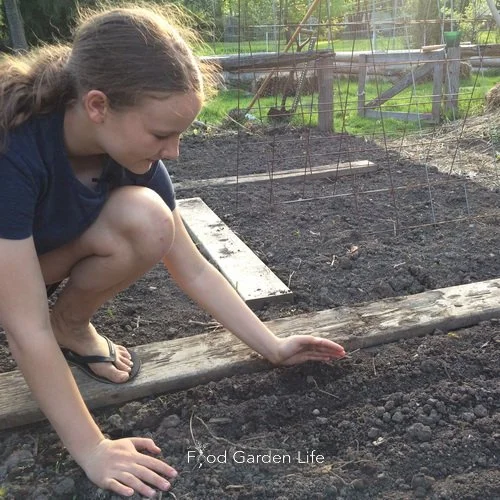
Direct-seeding carrot seeds in the garden 6 weeks before the last frost date.
This is also when I start to direct-seed some cold-tolerant vegetable crops in the garden. These include:
broad bean, carrot, pea, spinach, lettuce, turnip, dill, parsley
Plant or Transplant in the Garden
plant onion sets (small, pre-grown onion bulbs), and transplant onion seedlings
4 Weeks Before Last Spring Frost
Indoors
melon, basil, cucumber, squash, pumpkin
Direct-Seed in the Garden
radish, beet, chard, more lettuce
Plant or Transplant in the Garden
cabbage family seedlings
seed potatoes
2 Weeks Before Last Spring Frost
Direct-Seed in the Garden
corn, cheater beans*
*With beans, we usually wait until the soil is warm and there’s no further risk of frost. That’s because bean seeds can rot in cold, wet soil—and if young bean plants get hit by frost, they’ll die. But some years are warmer than others, and if it seems warm, I like to cheat and get in an early row of “cheater beans.” If they do well, I get beans sooner. (If they get nipped by frost, no big loss; I’ll just replant.)
Plant or Transplant in the Garden
lettuce
gladiolus bulbs (I know…they’re not a veggie, but I like to grow this cut flower in my veggie garden, reminds me of Grandma Q)
The Week of the Last Spring Frost
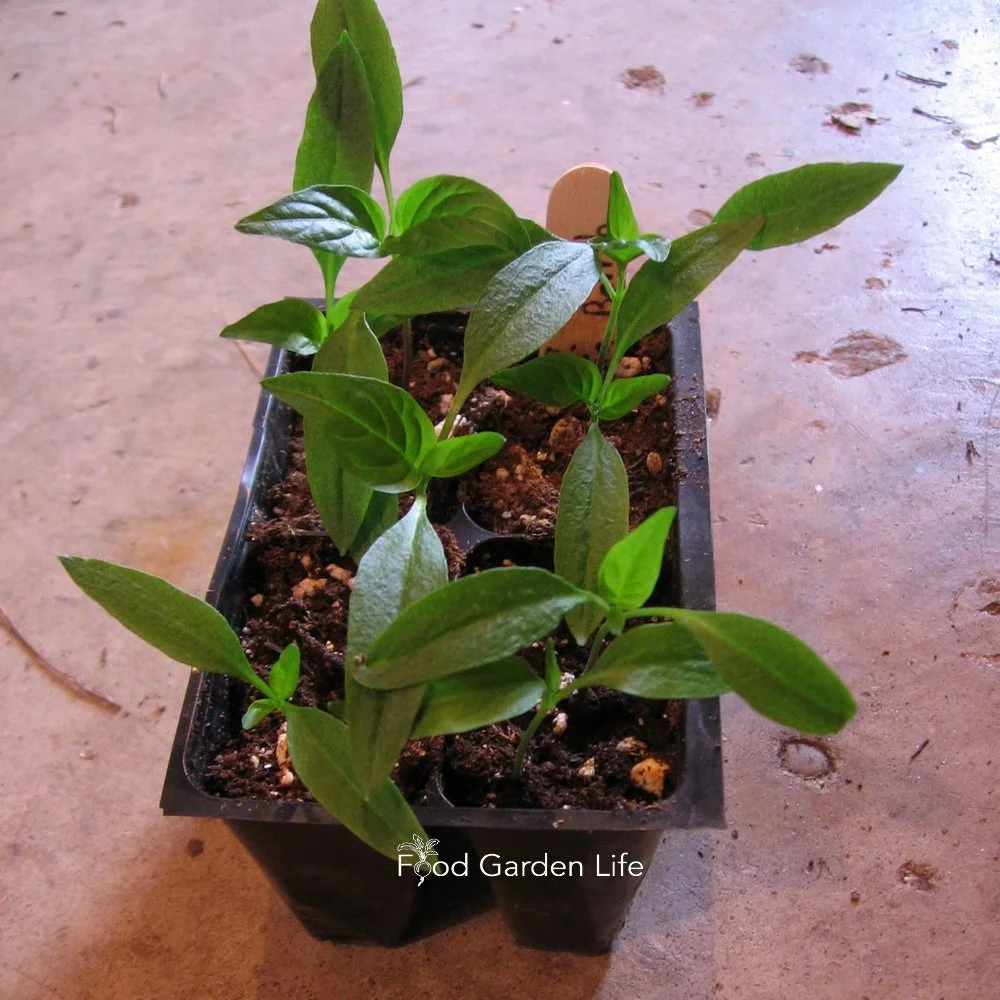
Wait until 1-2 weeks after the last frost date before transplanting pepper seedlings into the garden. They HATE the cold!
Direct-Seed in the Garden
beans, cauliflower, cucumber, squash
Transplant in the Garden
tomato (some people plant tomatoes a week or two after the last frost date…I’m impatient, so I plant them, but protect them as needed)
1-2 Weeks Following the Last Spring Frost
Direct-Seed in the Garden
Now it’s time to direct seed the cold-hating crops!
lima bean, edamame, melon, basil
Plant or Transplant in the Garden
Make sure the temperature will be over 10°C at night
celery, melon, pepper, eggplant
sweet potato slips
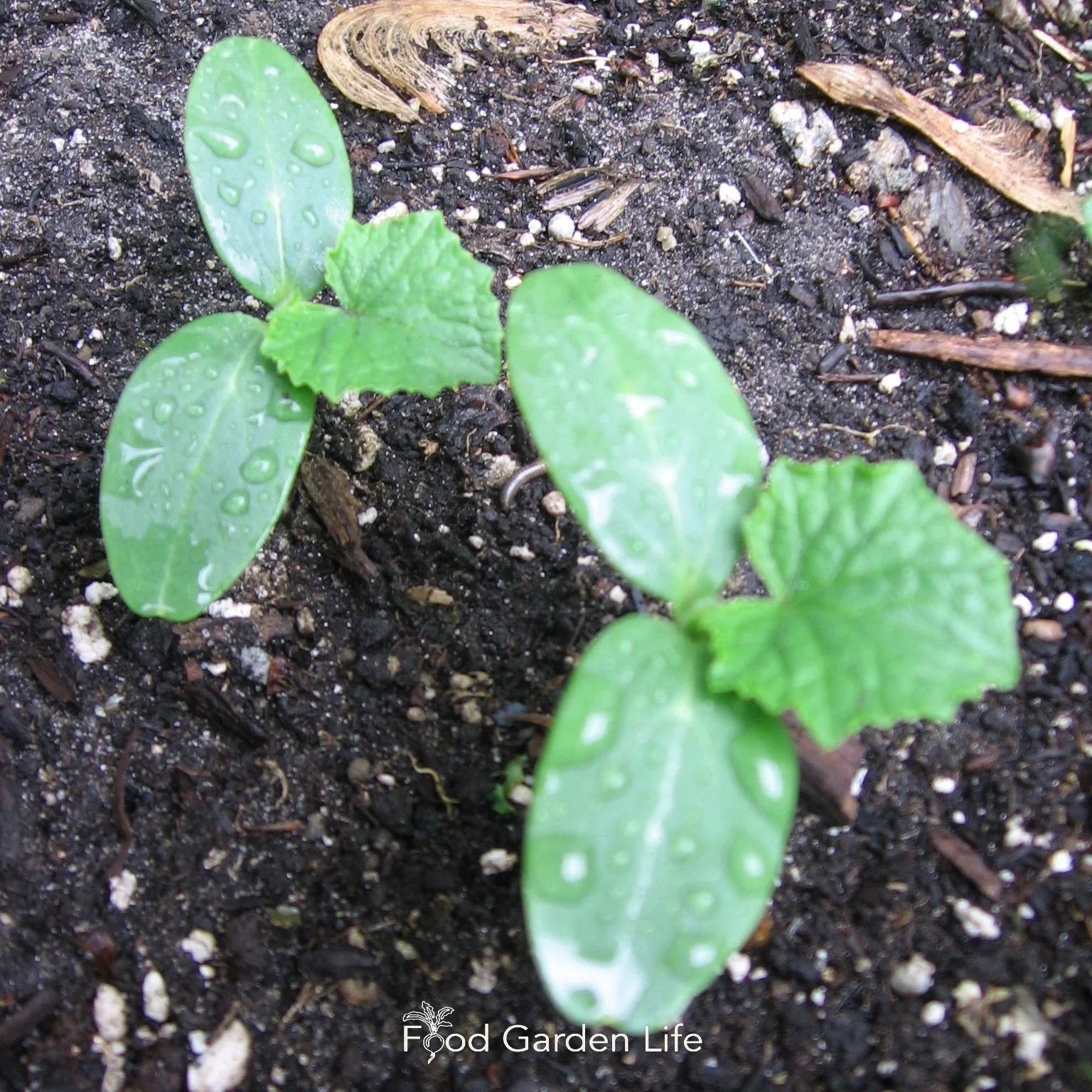
There are some crops that I start indoors, and also sow directly in the garden later. These cucumbers are sown directly in the garden.
You might notice that some crops, such as melon and basil, are in my list above twice: seeded indoors, and then directly sown outdoors. That’s because you can do it both ways, and having the same crop in two stages of development can give you a longer harvest window.
Make Successive Plantings
Don’t forget that after the initial planting of many of these crops, you can make successive plantings so that you have an ongoing harvest. That means after your first sowing of beet seeds, make more, at two-week intervals. Same with carrots, and leafy greens.
How to Stay Organized
If you’ve looked at my planting dates above, you might be wondering if there’s a simple way to stay organized.
There is!
I sort my seed packets by starting date. I’m a visual person—so no spreadsheets for me!
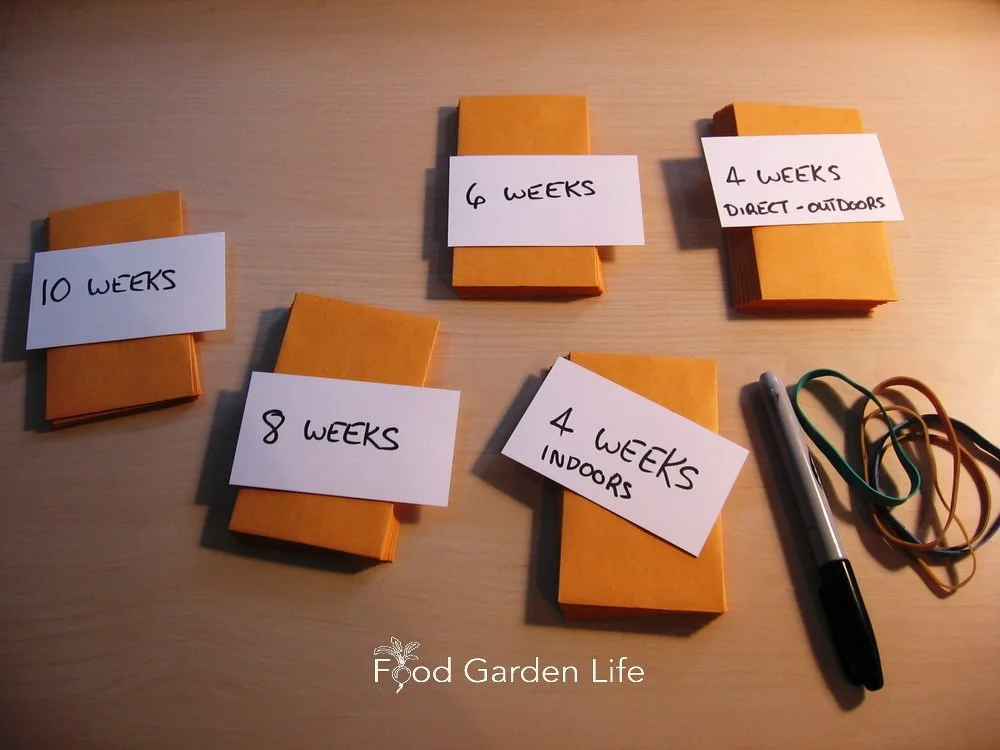
Seed packets organized by planting date, so that I don’t forget to plant anything!
I simply make stacks of seed packets, organized by when they should be planted. Then, I mark my calendar for the various seed-starting dates—flagging 10 weeks, 8 weeks, 6 weeks, etc.
When the given week rolls around, I grab the seed packets for that week.
More on Vegetable Seeds
Find This Helpful?
Enjoy not being bombarded by annoying ads?
Appreciate the absence of junky affiliate links for products you don’t need?
It’s because we’re reader supported.
If we’ve helped in your food-gardening journey, we’re glad of support. You can high-five us below. Any amount welcome!
More on Growing Vegetables
Vegetable Gardening Articles
Vegetable Gardening Courses

Hi, We’re Steve and Emma!
We help people grow food on balconies, in backyards, and beyond—whether it’s edible landscaping, a vegetable garden, container gardens, or a home orchard.
Courses
Free Food- Garden Guide
Books
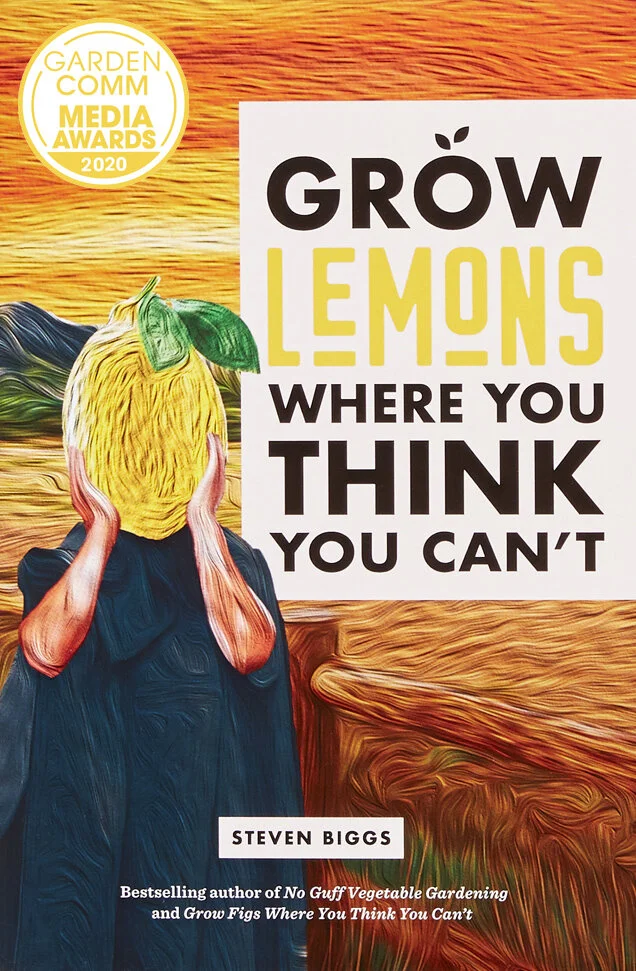
Covering everything from lemon varieties, to location and watering, to pruning and shaping, to overwintering, dealing with pests, and more—and including insights from fellow citrus enthusiasts—this book will give you the confidence you need to grow and harvest fresh lemons in cold climates.
Orders may be shipped from Toronto or printed and shipped directly by our printing partner. Available destinations and shipping charges appear at checkout. All prices are in Canadian dollars.
Prefer an ebook? Find the Kindle edition on Amazon.