Intro to Growing Figs in Cold Climates
Get started growing figs in cold climates by understanding some of the basics about how the plants grow.
By Steven Biggs
Can You Grow Figs in a Cold Climate?
Yes. You can grow figs in places with cold winters, even where fig trees are not reliably winter-hardy.
The trick is choosing a growing method, variety, location, and winter-protection strategy that suit your climate, your garden, and how much effort you want to invest.
You can grow figs in pots and store the dormant plants somewhere protected over winter. You can grow figs in the ground and protect them. And in milder areas, you might be able to grow an in-ground fig with little or no winter protection.
You don’t need a greenhouse.
If you have a sunny growing space for summer and a way to protect a dormant fig through winter, there's a good chance you have what you need to grow figs.
Cold-Climate Fig Primer
I often hear from fig lovers who travel to places where figs are so prolific that they grow from cracks in walls and pavement.
Big fig trees. Loaded with figs.
Then they come home and wonder:
Can I grow a fig tree here?
Can I keep it small?
What do I do with it in winter?
Will I actually get ripe figs?
The answer to the first question is usually yes. The rest depends on how you decide to grow it.
Here are some basics.
Fig Tree Size
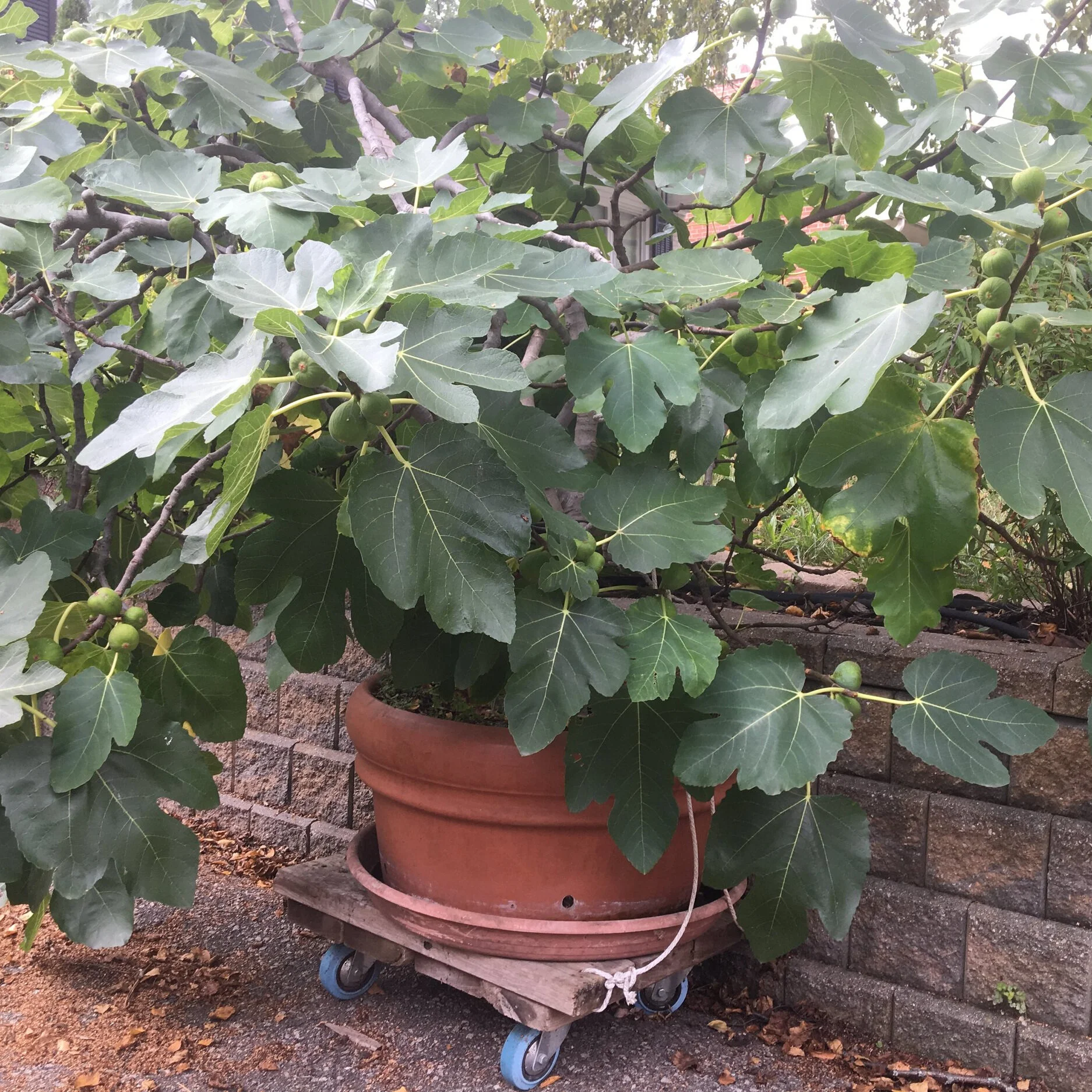
The gardener chooses how big the fig plant gets. This is my neighbour Natalie’s potted fig plant.
Where climate permits, fig plants can grow to about 9 metres (30 feet) high.
But don't worry.
You control the size of your fig tree with pruning.
I keep my potted fig trees small enough that I can move them into protected storage for winter. I also keep my in-ground figs short enough that I can harvest without a ladder.
If a potted fig has to go through a doorway on its way to winter storage, your life will be easier if you keep the tree small enough to carry through it.
Fig plants naturally grow as bushes with multiple stems, but you can also train them into tree forms, fans, cordons, and other shapes.
Find out how to prune in this Cold-Climate Guide to How to Prune a Fig Tree.
Do Fig Trees Survive Cold Winters?
Sometimes. But don't get hung up on a single temperature or hardiness zone.
For established, dormant fig trees growing in the ground, -10°C (14°F) is a good ballpark for cold tolerance. Sometimes they survive colder temperatures. Sometimes damage occurs at warmer temperatures.
That's because fig hardiness is not an exact number.
Cold tolerance depends on things such as:
The age of the tree
The variety
Whether the tree is fully dormant
How long the cold lasts
Whether temperatures dropped gradually or suddenly
How sheltered or exposed the site is
Young trees are more tender than mature ones. New growth and fruit are damaged before older woody stems. And a dormant fig tolerates cold better than one that is actively growing.
Even when winter kills the top growth of an in-ground fig, the roots can survive and send up new shoots.
Potted figs need more protection than in-ground figs because their roots are above ground and experience greater temperature swings.
So instead of asking, "What temperature can a fig survive?" I find it more useful to ask, "How can I moderate winter conditions around this fig?"
Fig Trees Go Dormant
Dormancy is one of the reasons figs are so useful to gardeners in colder climates.
As temperatures fall and days shorten, fig trees drop their leaves and go dormant.
Once dormant, they don't need light. And they don't need much heat.
That means you don’t need a sunny window or heated greenhouse to overwinter a potted fig.
A cold cellar, shed, garage, cool attic, minimally heated greenhouse, or other protected space can work. Ideally, keep dormant potted figs somewhere around 0–7°C (32–45°F).
The goal is not to keep the tree warm. The goal is to keep it dormant.
If the storage space is too warm, the fig can wake up early and begin making weak growth in poor winter light.
Figs Can Produce Two Crops
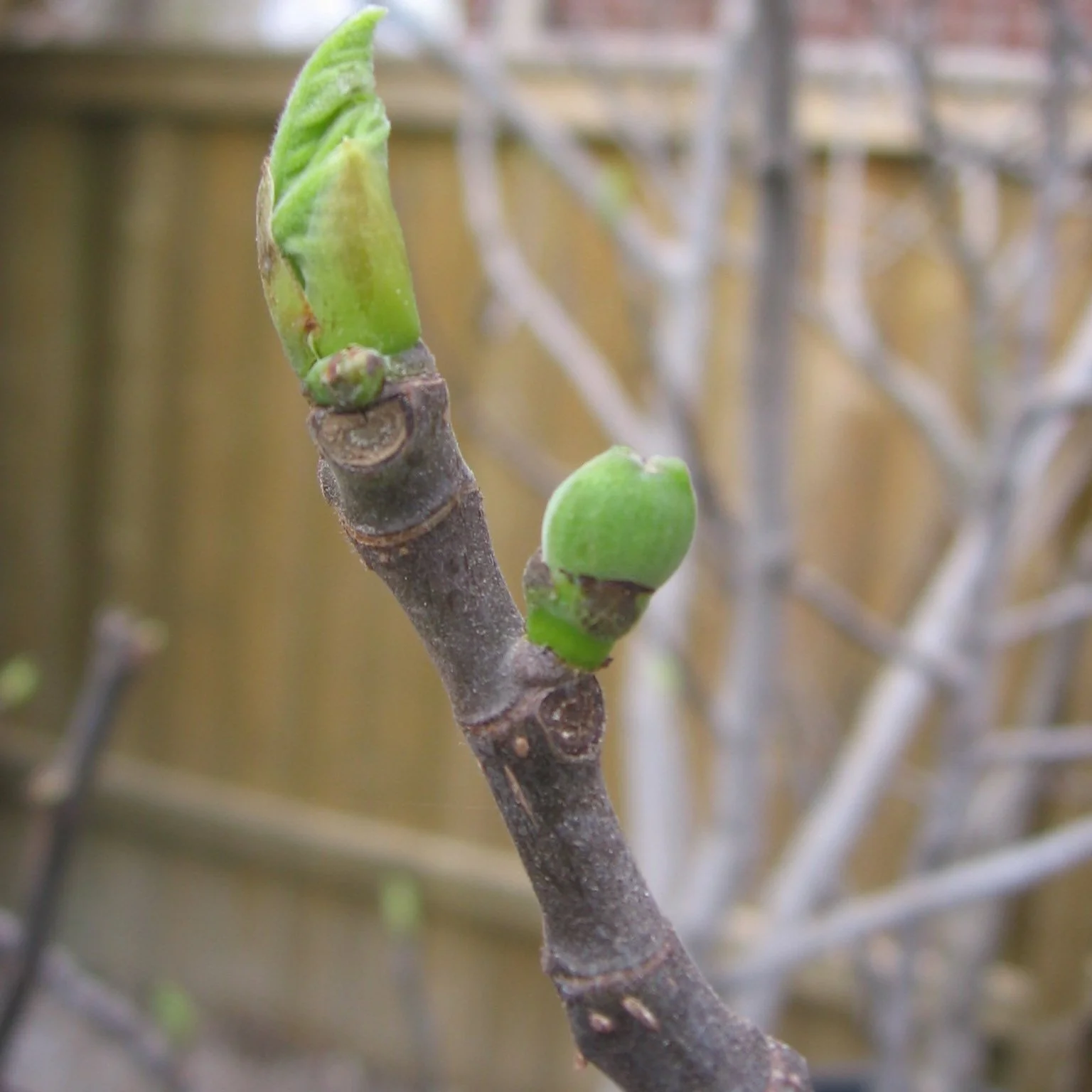
The “breba” crop grows on wood from the previous year.
Depending on the variety, a fig tree can produce two crops.
Breba crop: Figs that form on wood that grew the previous year. These ripen earlier.
Main crop: Figs that form on the current year's new growth. These ripen later.
You might also see two useful terms when shopping for fig varieties:
Biferous: Produces both breba and main-crop figs.
Uniferous: Produces only a main crop.
Not all biferous varieties produce a worthwhile breba crop. Some produce only a handful.
In a climate with a short or cool growing season, I like to think of brebas as fig insurance. Because they form the previous year and ripen earlier, a variety with a good breba crop gives you another route to a harvest if the main crop runs out of summer.
If you're relying on main-crop figs, choose a variety known to ripen early. One of my perennial favourites for an early main crop is 'Ronde de Bordeaux'.
Where Should You Plant a Fig Tree?
Give your fig as much sun and heat as your garden can provide.
In a short growing season, warmth isn't simply about keeping the plant happy. It helps figs ripen sooner.
Look for warm microclimates such as:
The south side of a house
Beside a brick or stone wall that absorbs and radiates heat
A sunny driveway
A hot rooftop
A south-facing slope
Avoid low-lying areas if you have another choice. They can be slower to warm in spring, and cold air can collect there.
Full sun is best, but don't let an imperfect garden stop you. Figs can grow in partial sun, although fruit may ripen more slowly.
My rule is simple: Don't put a fig in full shade. But if partial sun is all you've got, give it a try.
Get Your Fig Trees Through Winter—and Harvest Figs
Growing figs where winters are cold takes a bit of creative thinking.
In Fig Camp and the self-paced Fig Masterclass, I explain how to grow figs in pots or in the ground, extend the growing season, ripen more fruit, and protect your trees through winter.
What Are the Best Fig Varieties for Cold Climates?
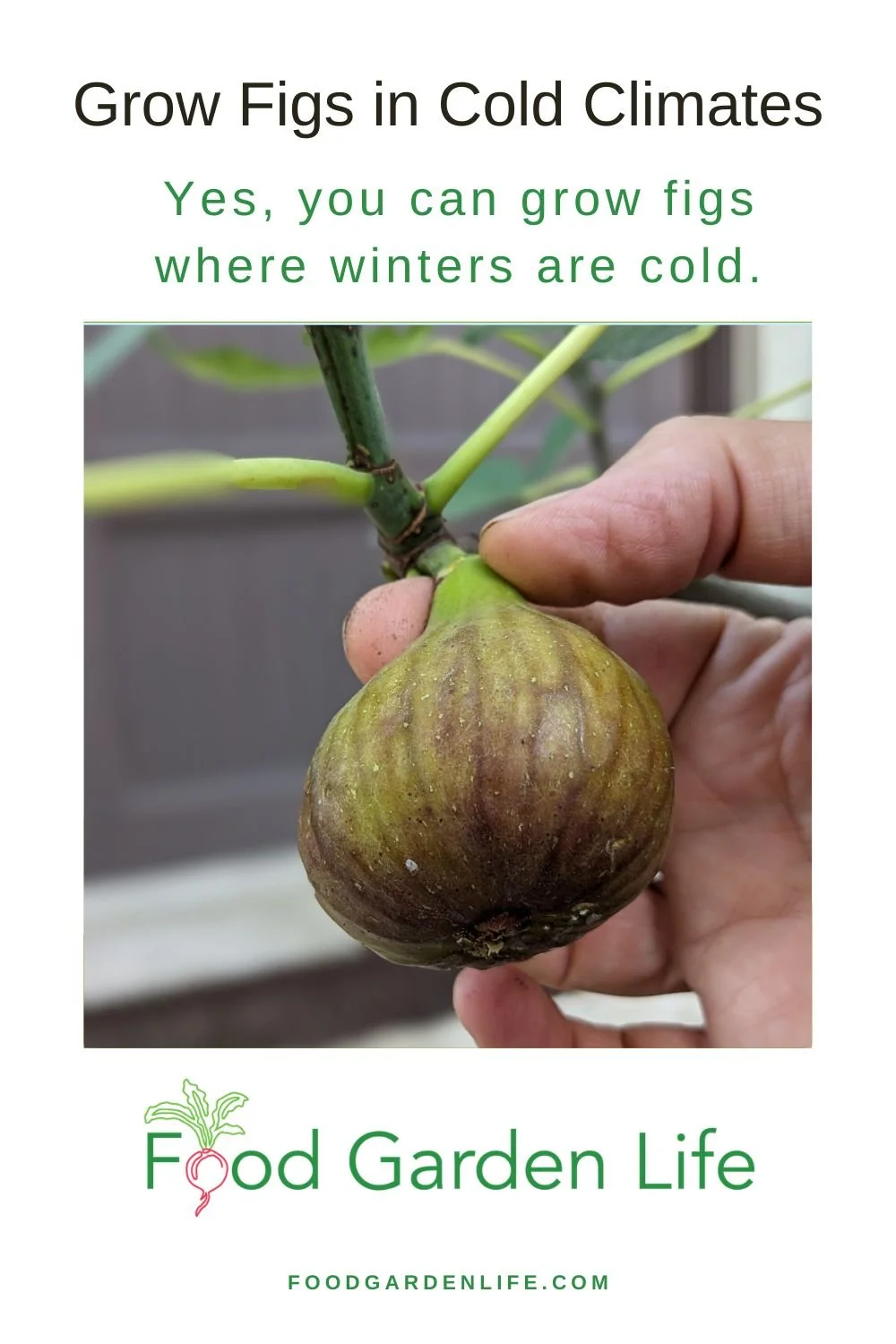
Pin this post!
There isn't one "best" cold-climate fig.
Choose a variety according to how you're going to grow it and what limits fig production in your climate.
Ask:
Will the tree remain outdoors in the ground all winter? If so, cold tolerance matters.
Does the variety produce a good breba crop?
Does the main crop ripen early?
Is the fruit prone to splitting?
And, not incidentally, do you like eating it?
Cold hardiness matters much less if you're growing a fig in a pot and moving it to protected winter storage.
For in-ground figs, 'Chicago Hardy' and 'Longue d'Août' are two well-known cold-tolerant varieties.
For an early main crop, 'Ronde de Bordeaux' is one of my favourites.
And if summers are cool or short, consider including a variety known for a substantial breba crop.
Do Fig Trees Need a Greenhouse?
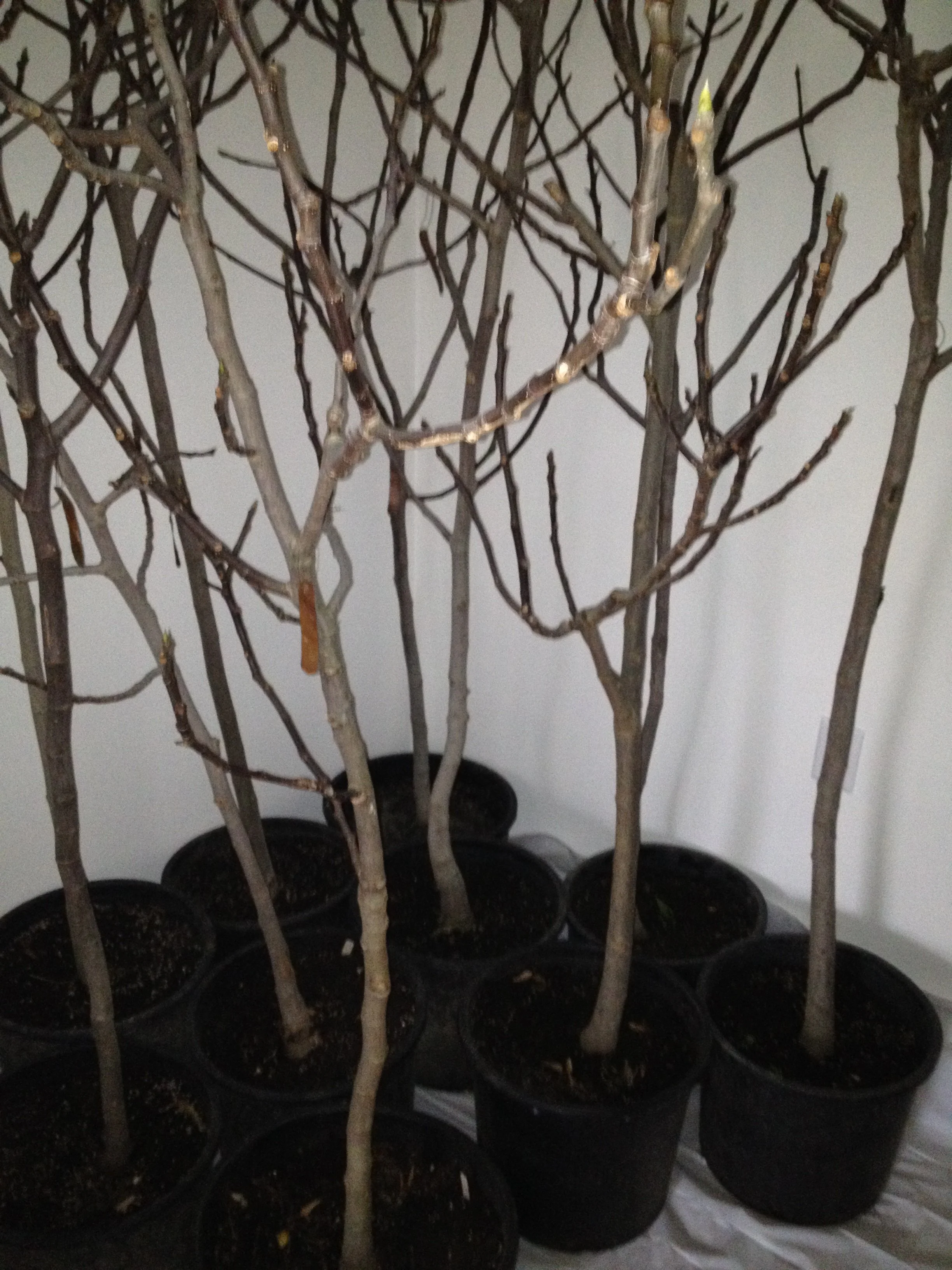
Because fig trees go dormant, there are many winter storage options. These are potted dormant fig trees that I store in my garage over the winter.
No.
This is one of the most useful things to understand about growing figs in colder climates.
Because figs go dormant, potted plants can spend winter somewhere cool and dark. A garage, shed, root cellar, cold basement, or minimally heated greenhouse might all work.
For in-ground figs, gardeners use many different winter-protection techniques. They bend trees to the ground and insulate them, wrap them, build temporary enclosures around them, or take advantage of protected microclimates.
There is no single best method.
The best overwintering method is the one that suits your winter, your property, your fig tree—and the amount of lifting, wrapping, bending, dragging, and schlepping you're willing to do every autumn.
How Many Figs Can You Harvest?
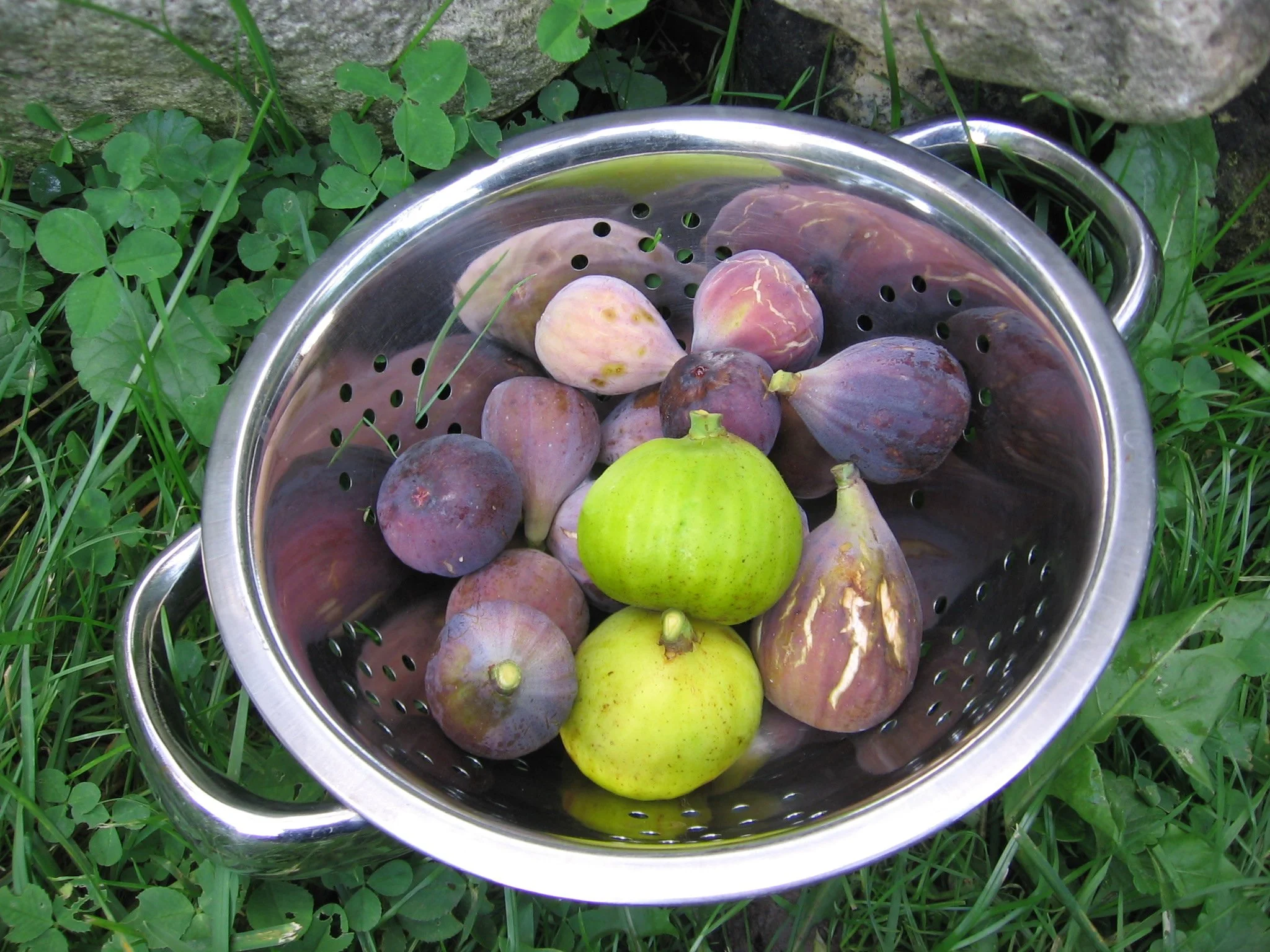
The size of the fig harvest you can expect in a cold climate depends on the variety, plant size, growing conditions, and season length.
There isn't a useful one-size-fits-all answer.
Your harvest depends on:
Variety
Plant size
Growing conditions
Season length
Whether you're harvesting breba figs, main-crop figs, or both
How early the plant gets growing in spring
How quickly temperatures cool in fall
This last point is especially important in short-season areas.
A fig tree can be covered with fruit and still give a disappointing harvest if cold autumn weather arrives before those figs ripen.
That's why I focus less on the number of figs a tree can produce and more on helping it produce figs that actually ripen.
Cold-Climate Fig Growing: The Short Version
If you're new to figs, start with these principles:
Give your fig sun and heat. A warm microclimate helps fruit ripen sooner.
Choose your variety for your conditions. Cold tolerance, breba production, and early main-crop ripening matter.
Decide how you'll handle winter. Pots make winter storage straightforward; in-ground trees may need protection.
Use dormancy to your advantage. A dormant potted fig doesn't need a greenhouse or winter sunshine.
Think about season length, not just winter cold. Getting a fig tree through winter is only half the puzzle. You still need enough warmth and time to ripen the crop.
Figs are surprisingly forgiving plants. You don't need perfect conditions.
You need a plan.
Frequently Asked Questions About Growing Figs in Cold Climates
Can fig trees grow in Canada and other cold climates?
Yes. You can grow fig trees even where they are not reliably winter-hardy. Grow them in pots and store them dormant in a protected place, or grow them in the ground and provide winter protection where necessary.
How cold can a fig tree survive?
There is no exact temperature. For many established, dormant in-ground figs, about -10°C (14°F) is in the ballpark. Variety, plant age, dormancy, exposure, duration of cold, and sudden temperature changes all affect cold tolerance.
Can I grow a fig tree in a pot?
Yes. Container growing is one of the easiest ways to grow figs where winters are cold because the dormant plant can be moved to protected winter storage.
Do fig trees need a greenhouse in winter?
No. Dormant fig trees don't need light and require very little heat. You can overwinter potted figs in a cool garage, shed, root cellar, cold basement, or similar protected location.
What temperature should dormant potted figs be stored at?
Aim for approximately 0–7°C (32–45°F). The important thing is to keep the tree dormant without allowing the root ball to freeze hard.
What is a breba fig?
A breba is an early fig crop that develops on wood produced the previous year. The later main crop develops on the current season's new growth.
What is the best fig variety for a cold climate?
There is no single best variety. If an in-ground tree remains outside all winter, cold tolerance can be important. Where summers are short or cool, look for varieties with an early-ripening main crop or a substantial breba crop.
How much sun does a fig tree need?
Full sun is best, especially where the growing season is short. A warm location can speed fruit ripening. Figs can tolerate partial sun, but ripening may be slower.
Will a fig tree come back if winter kills the branches?
Often, yes. The roots of an established in-ground fig can survive even when cold kills the above-ground growth, and new shoots can emerge from the roots in spring.
Keep Growing Figs
Looking for more cold-climate fig-growing ideas? Visit the fig home page to browse articles about varieties, pruning, propagation, ripening, winter protection, and more.
Grow Figs Where You Think You Can’t
My revised and expanded fig book is a practical guide to growing figs in pots and cold climates—from choosing varieties and pruning to ripening fruit and conquering winter.
Find This Helpful?
Enjoy not being bombarded by annoying ads? Appreciate the absence of junky affiliate links for products you don’t need?
This site is reader supported. If it has helped you in your food-gardening journey, you can give us a high-five below. Any amount is welcome.
Early Figs? Harvest a Breba Crop of Figs Mid-Summer
The difference between breba and main-crop figs.
By Steven Biggs
Some Fig Varieties Produce a Breba Crop—an Early Crop
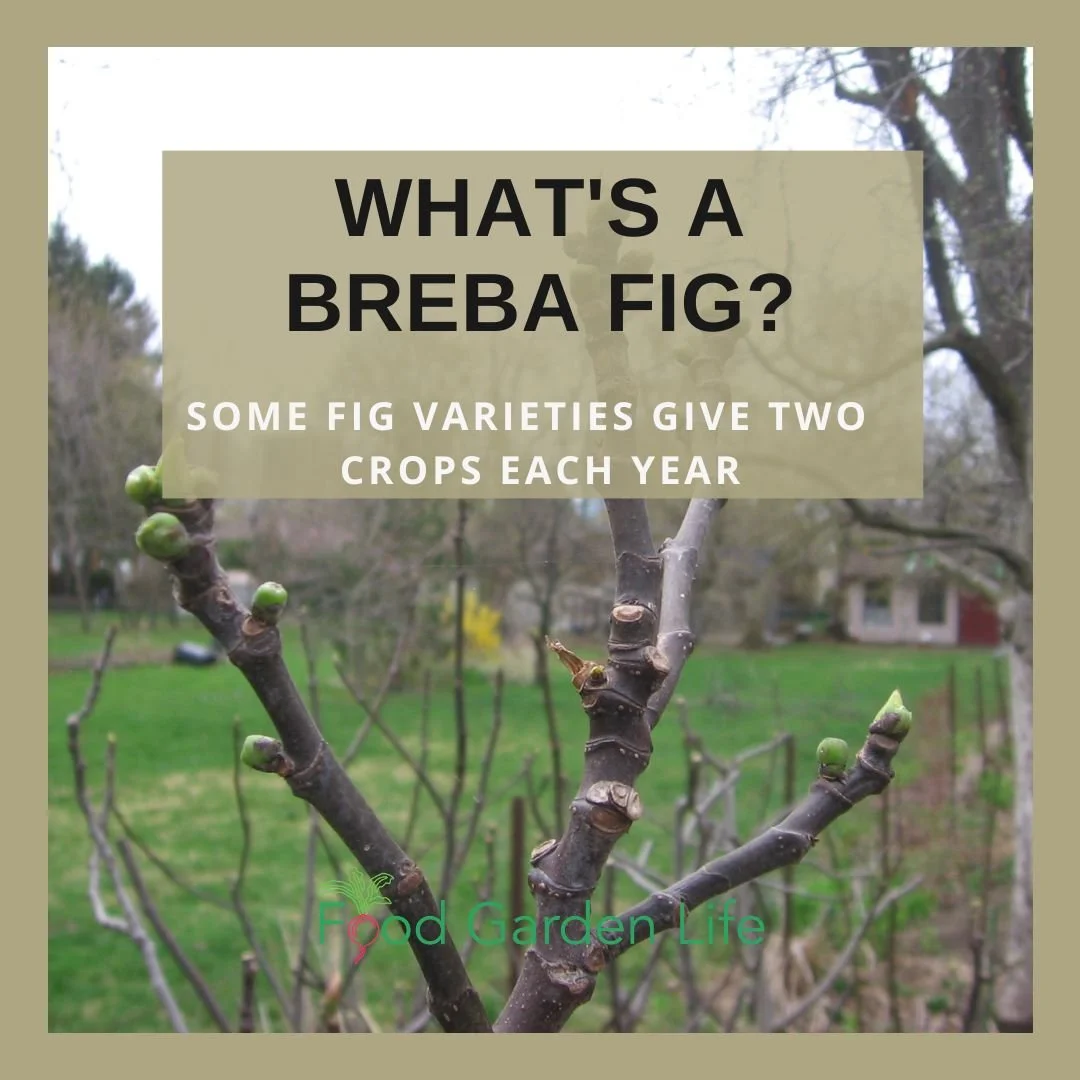
Wondering why some fig trees have ripe fruit mid summer, while other only have ripe figs in the fall?
That’s because some fig tree varieties produce two crops each year:
The “breba” crop grows on wood from the previous year, and it’s the first to ripen
The “main crop” grows on wood from the current year, and it ripens later
Here in Toronto, my breba figs starts to ripen some time in July.
And the main crop figs are usually ready starting in late September.
If you want to know more about breba figs, and how to benefit from this early crop, keep reading.
Breba, Main Crop, or Both…it Depends on the Variety
Some fig varieties produce both breba and main-crop figs (called “biferous” fig varieties)
Some varieties have no breba figs—only main-crop figs (called uniferous” varieties)
Some varieties only give a breba crop in cold climates (there’s a story here…see below about San Pedro figs)
San Pedro Figs
The fig varieties that ripen only a breba crop in cold climates do grow a second, main crop.
But that main crop doesn’t mature.
That’s because the second crop of San Pedro fig varieties requires a pollinator (a little wasp that’s found in warmer, commercial fig-producing regions.)
An example of a San Pedro fig is the variety Desert King (see below.)
Grow a Breba Crop to get Early Figs in Cold Climates
If you're growing figs in a cold climate, you don’t have to wait for main-crop varieties to ripen in late summer.
To get an earlier, mid-summer fig harvest, grow a fig variety that gives a reliable breba crop.
The photo below shows a fig breba crop forming in the spring, before any leaves are out!
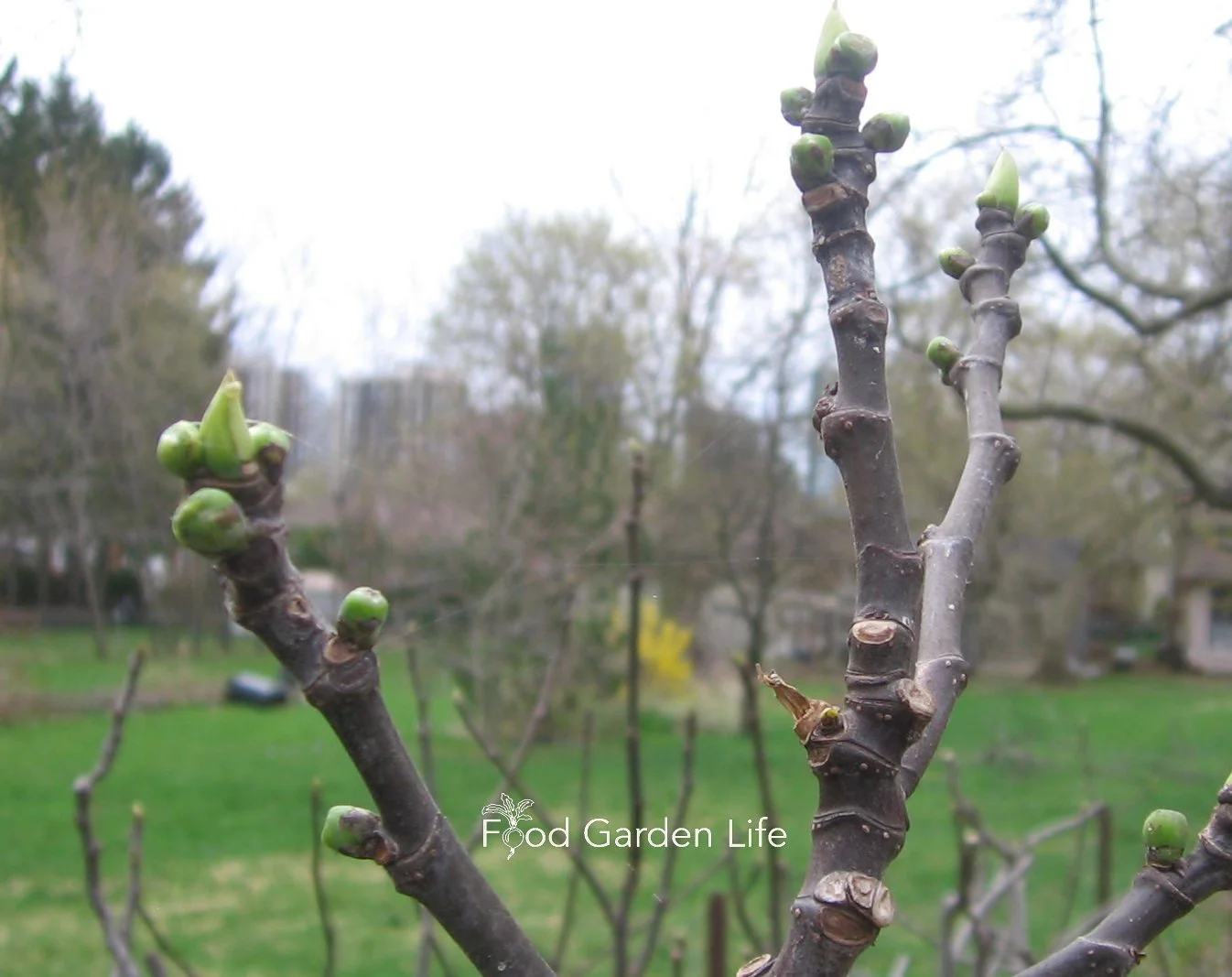
Fig breba crop starting to grow even before any leaves have emerged.
Do You Get Cool Summers?
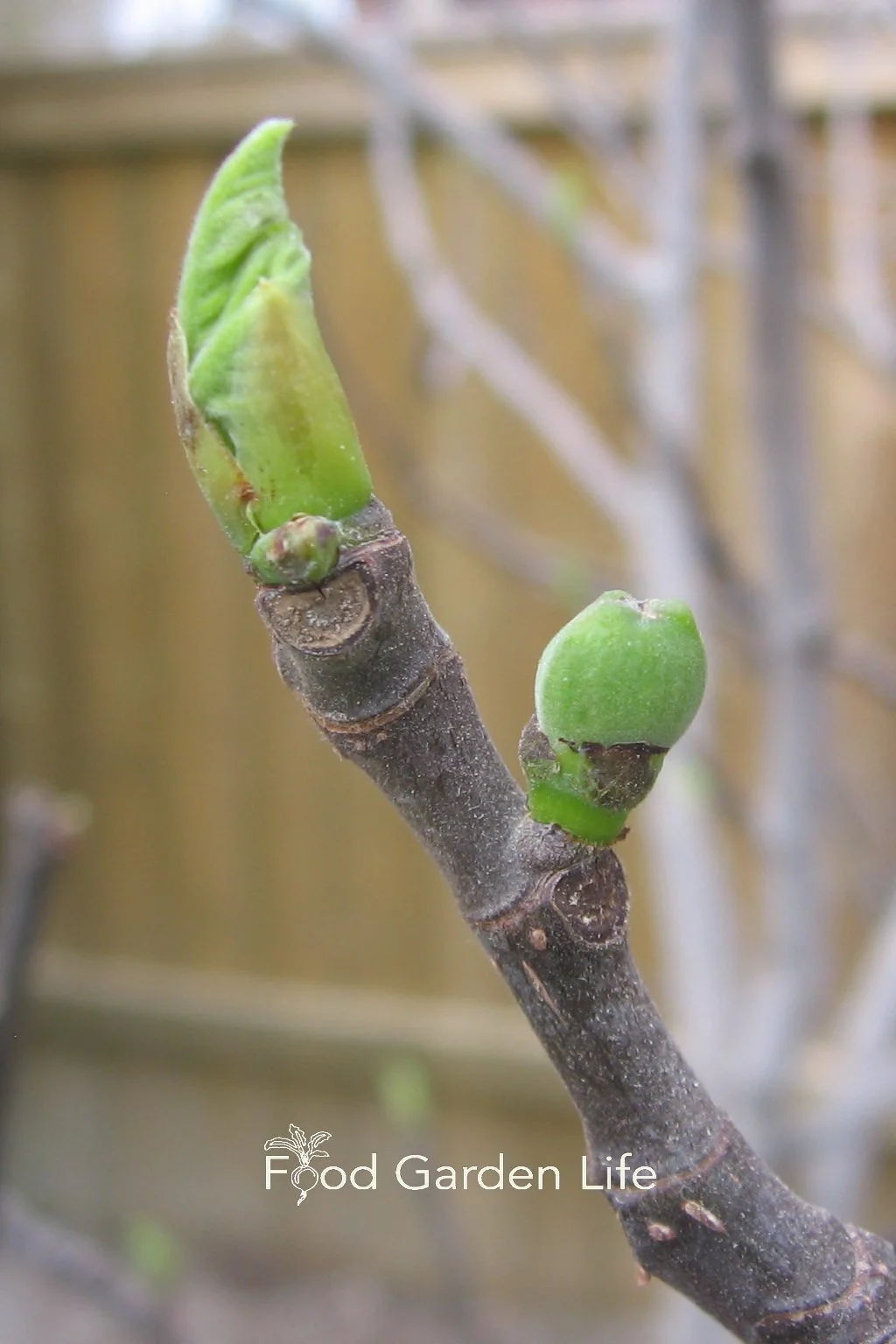
Protect branches from winter dieback to get a good production of breba figs.
Here in Toronto the winters can get cold—but summers are usually hot. So my main-crop figs ripen.
But I still like to have fig varieties that produce a heavy breba crop. Here’s why:
I grow fig varieties with a good breba crop for an early harvest
I grow other varieties for main-crop figs later in the season.
But in areas with cool summers, there might not be enough heat to ripen main-crop figs.
For example, gardeners in the Pacific Northwest rely on varieties with a heavy breba crop because there is not always have enough summer heat to ripen main-crop figs.
Find out how gardeners in areas with cool summers can ripen figs.
Get Your Fig Trees Through Winter—and Harvest Figs
Growing figs where winters are cold takes a bit of creative thinking.
In Fig Camp and the self-paced Fig Masterclass, I explain how to grow figs in pots or in the ground, extend the growing season, ripen more fruit, and protect your trees through winter.
Maximize Breba Fig Yield
Remember Breba Figs as You Prune
Things to think about as you prune for a good breba crop:
Prune back some of the 2-year-old branches when the fig tree is dormant
These 2-year-old branches made breba figs the previous season…and if you leave them they’ll still make breba figs, but now those breba figs will be on the new growth, up high and out of your reach (where the birds can get them!)
Cut these 2-year-old branches back, leaving about an inch of the branch remaining where they meet a larger branch (then there’s a nub of wood from which a replacement will grow for the following year.)
Leave lots of one-year-old branches as these are the ones that will give you breba fruit
Find out more about how to prune a fig tree.
Minimize Dieback of Branches
Pin this post!
In cold areas unprotected branches can die back when exposed to cold temperatures. Plants regrow from the base…but it’s the branches from the previous year that grow the breba figs.
If you want breba figs, minimize winter dieback by moving potted plants indoors, or protecting in-ground plants.
Here are ideas to protect fig trees in winter.
FAQ Fig Breba Crop
What’s a good fig variety for a breba crop?
I’m a big fan of ‘Desert King.’ I grow a large Desert King in the ground here in Toronto. I tip it over and lay it flat to the ground every winter. It’s absolutely prolific.
There are other excellent fig varieties for the breba crop. Find out about more breba figs.
Do breba figs look the same as main-crop figs?
Not always. The breba figs might look very different from the main-crop figs of the same variety. They can differ in:
Colour
Shape
Size
Taste
Keep Growing Figs
Looking for more cold-climate fig-growing ideas? Visit the fig home page to browse articles about varieties, pruning, propagation, ripening, winter protection, and more.
Grow Figs Where You Think You Can’t
My revised and expanded fig book is a practical guide to growing figs in pots and cold climates—from choosing varieties and pruning to ripening fruit and conquering winter.
Find This Helpful?
Enjoy not being bombarded by annoying ads? Appreciate the absence of junky affiliate links for products you don’t need?
This site is reader supported. If it has helped you in your food-gardening journey, you can give us a high-five below. Any amount is welcome.
Fig Trees in Canada: Ontario Fig Collector Shares Top Tips
Ontario fig collector Adriano Ferreira’s top fig-growing tips.
By Steven Biggs

Tips for growing figs in Southern Ontario and beyond, from Adriano Ferreira.
Adriano’s Fig-Growing Tips
In 2009, I wrote an article for Edible Toronto magazine featuring two “fig fetishists” here in Southern Ontario, Adriano Ferreira and Peter Vicano.
In a follow-up chat with Adriano—my fig mentor—I asked him to give me his top fig-growing tips so I could share them here.
He said he’d only share if I spoke to him in Portuguese. I managed to say, “bom dia,” and that was about it! He graciously shared these tips.
If you’re wondering how to take care of a fig tree in Southern Ontario—in any cold climate—keep reading for Adriano’s tips.
Adriano Ferreira’s Top Tips
Soil for Fig Trees
Ferreira’s preferred soil for fig trees contains of one-third peat-based potting mix, one-third composted manure, and one-third compost, with some added perlite, dolomitic limestone, and vermiculite.
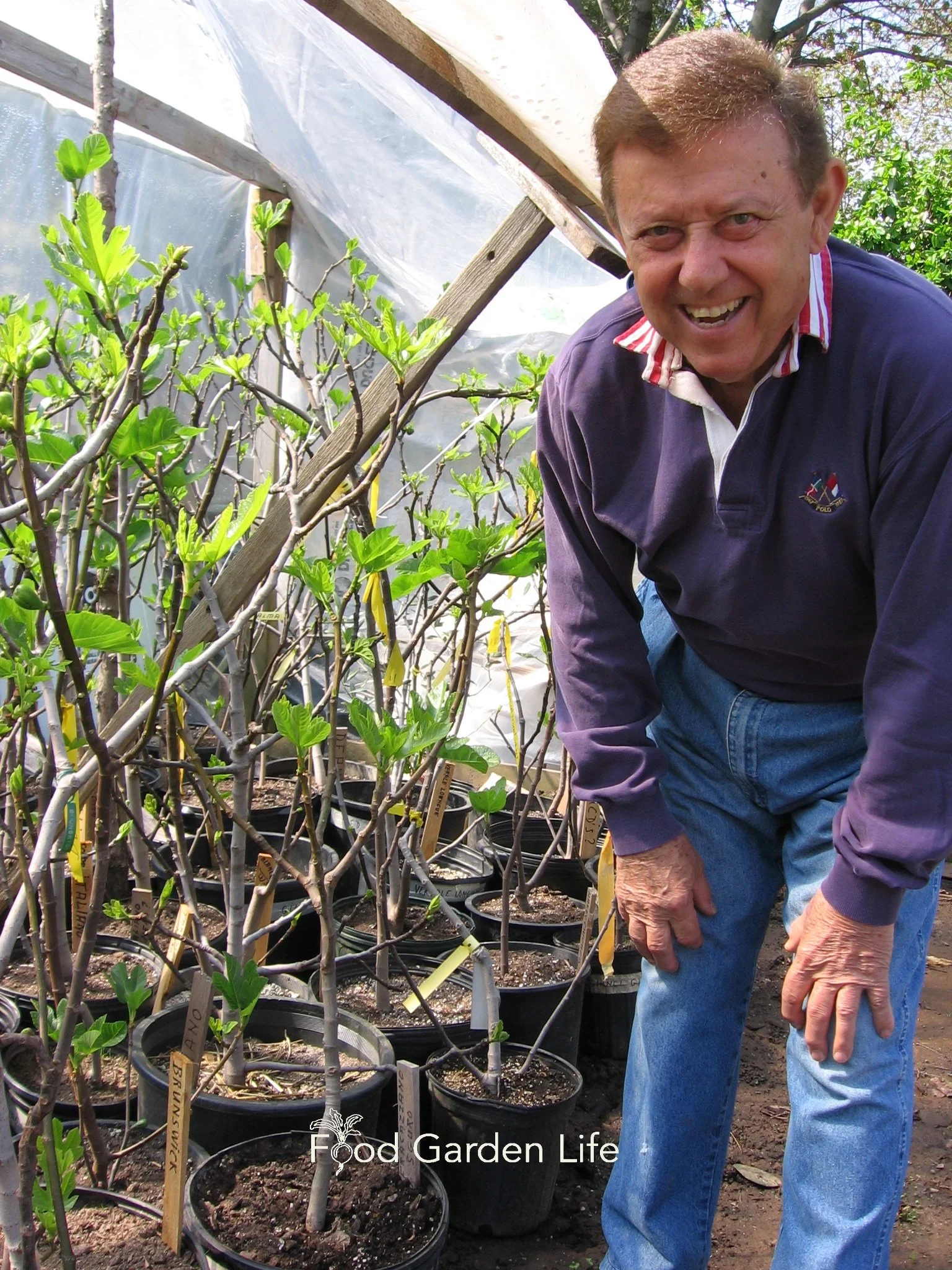
Adriano Ferreira shared his top fig-growing tips with me
Repotting Fig Trees
Repot fig trees every three to five years, drilling extra drainage holes along the bottom couple of inches of the pot.
Watering and Feeding Figs
During the summer, potted figs need lots of water, but when dormant or growing slowly, over-watering is the most common cause for fig trees dying.
If water doesn’t soak into a rootbound potted fig tree, insert a large nail into the soil, then fill the resulting hole with sand. This makes a channel for water to enter the root ball.
For feeding fig trees, Ferreira uses manure tea and fruit or tomato fertilizer.
Find out more about watering dormant potted fig trees.
Pruning Fig Trees
Train side shoots to grow horizontally, which encourages fruit formation.
Grow in the form of multi-stemmed fig bushes instead of trees for ease of maintenance and increased fruiting.
Get Your Fig Trees Through Winter—and Harvest Figs
Growing figs where winters are cold takes a bit of creative thinking.
In Fig Camp and the self-paced Fig Masterclass, I explain how to grow figs in pots or in the ground, extend the growing season, ripen more fruit, and protect your trees through winter.
Fig Ripening and Harvest
Embryonic figs are formed in late summer and carried through winter on dormant branches as bumps. These swell in spring with warm temperatures. Be careful of frost, which can damage the little figs once they begin to grow.
In September, remove fig fruit that are too small to ripen, redirecting energy to those that will.
Harvest when soft and the skin shows the impression of your fingerprint. Figs wilt at the neck and droop under their own weight. Splits and cracks often appear when ripe. If you pick figs too early you’ll see white sap.
Find out how to ripen figs faster in this this fig-ripening guide.
Overwintering Fig Trees
Pick off any fruit remaining after leaves drop off in the fall. These unripe figs will not ripen.
Bend down boughs of in-ground, multi-stemmed trees, then build an A-frame of wood and Styrofoam over the top. See a picture of Adriano’s A-frame in this article about fig tree winter protection.
For potted trees, lay pots on their side in wooden boxes (2-inch wide boards, forming a wall 12 to 18 inches high.) Cover the top with plywood, Styrofoam, and a tarp.
In partially heated area such as sunrooms, water only occasionally. Dormant figs don’t require light.
Keep Growing Figs
Looking for more cold-climate fig-growing ideas? Visit the fig home page to browse articles about varieties, pruning, propagation, ripening, winter protection, and more.
Grow Figs Where You Think You Can’t
My revised and expanded fig book is a practical guide to growing figs in pots and cold climates—from choosing varieties and pruning to ripening fruit and conquering winter.
Find This Helpful?
Enjoy not being bombarded by annoying ads? Appreciate the absence of junky affiliate links for products you don’t need?
This site is reader supported. If it has helped you in your food-gardening journey, you can give us a high-five below. Any amount is welcome.
Figs and Winter Temperatures
Find out what you need to know about fig hardiness and winter temperatures so you can figure out what sort of winter protection (if any) your fig trees need.
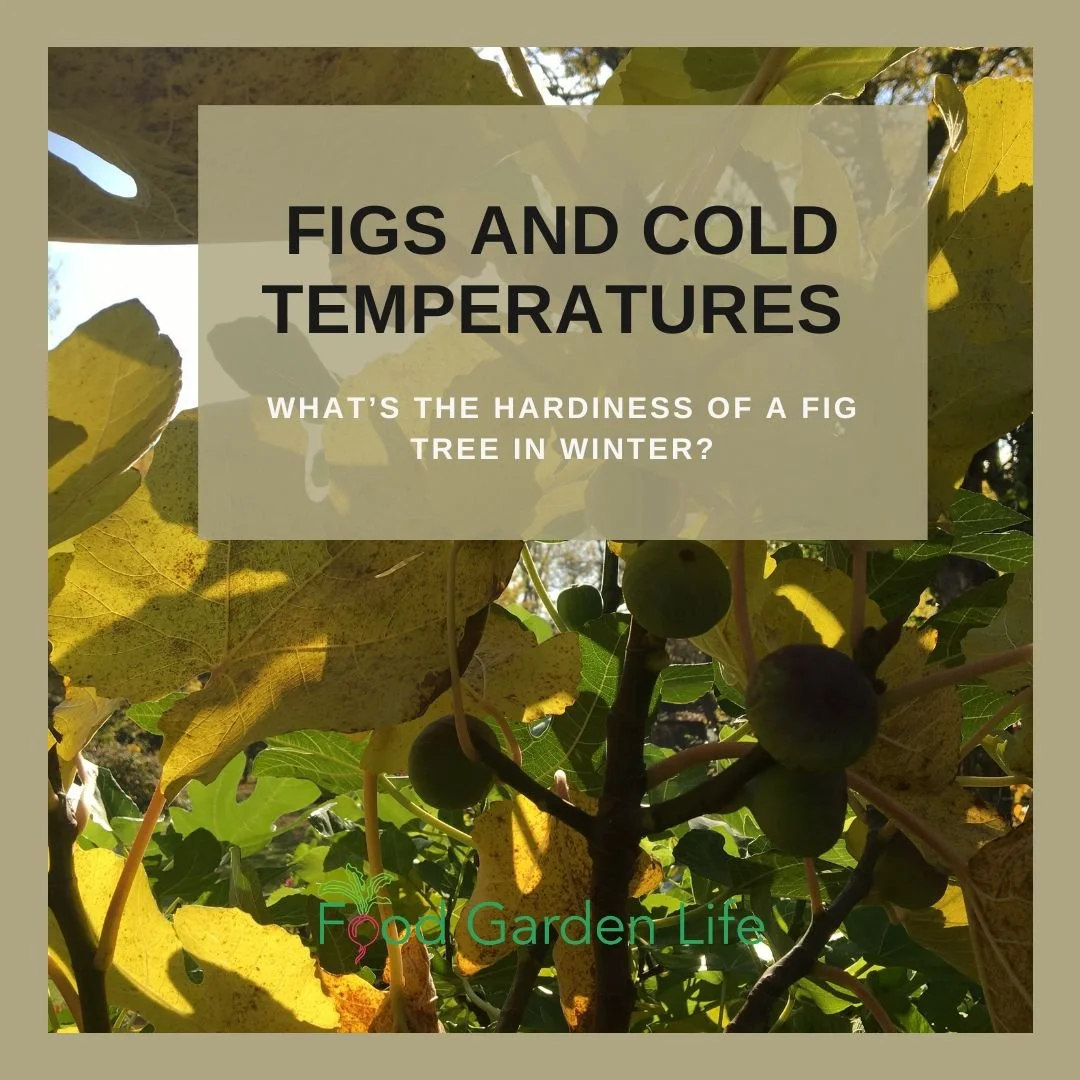
What’s the Hardiness of a Fig Tree in Winter?
Fig plants tolerate more cold than many people realize.
But just how cold can they get without damage?
It depends on a few different things.
This article tells you what you need to know about fig hardiness and winter temperatures so you can figure out what sort of winter protection (if any) your fig trees need.
(If you already have an idea of how hardy fig trees are in your area and just want ideas to get them through the winter, find out more here.)
Hardiness Isn’t Exact
Hardiness is never an exact thing.
That's because fig tree hardiness is affected by what's going on with the tree—and it's also affected by the conditions around the fig tree.
The cold hardiness of fig trees is affected by what's going on with the tree:
Young trees are more tender than mature trees
Fruit and new growth are affected by cold before older, woodier stems
If the fig tree is dormant, it can better withstand cold
Some fig varieties are more cold-tolerant than others
The conditions the fig tree is exposed to also affect cold hardiness:
The duration of cold temperatures
How sheltered or exposed the fig tree is
How many degrees the temperature drops
The timing of extreme cold (e.g., at the end of the night the plant might be soon warmed by sun)
So How Much Cold Can Fig Trees Take?
There is no magical number. Some fig plants can take temperatures as cold as -7 to -9°C (15-20°F).
Some colder.
Some not so cold…
If you want to think in terms of zones, you’ll often see the recommendation that figs are hardy into USDA Zone 8. But you can push the growing zone recommendations if you figure out a way to moderate temperature extremes around your fig plant over the winter.
Even if a cold winter causes the top of a fig tree to die back, the roots usually survive and send up new shoots.
Potted Figs: Remember the Root Ball
If you're growing fig trees in containers, it's good to remember that a potted fig tree can't tolerate as much cold as an in-ground fig tree.
That's because the root ball will freeze and thaw more often and more quickly than the soil in the ground.
The main trunk and branches probably have the same cold tolerance.
Things to Think About as you Plan Fig Tree Winter Protection
Here are things to think about as you consider what to do with your fig tree for the winter.
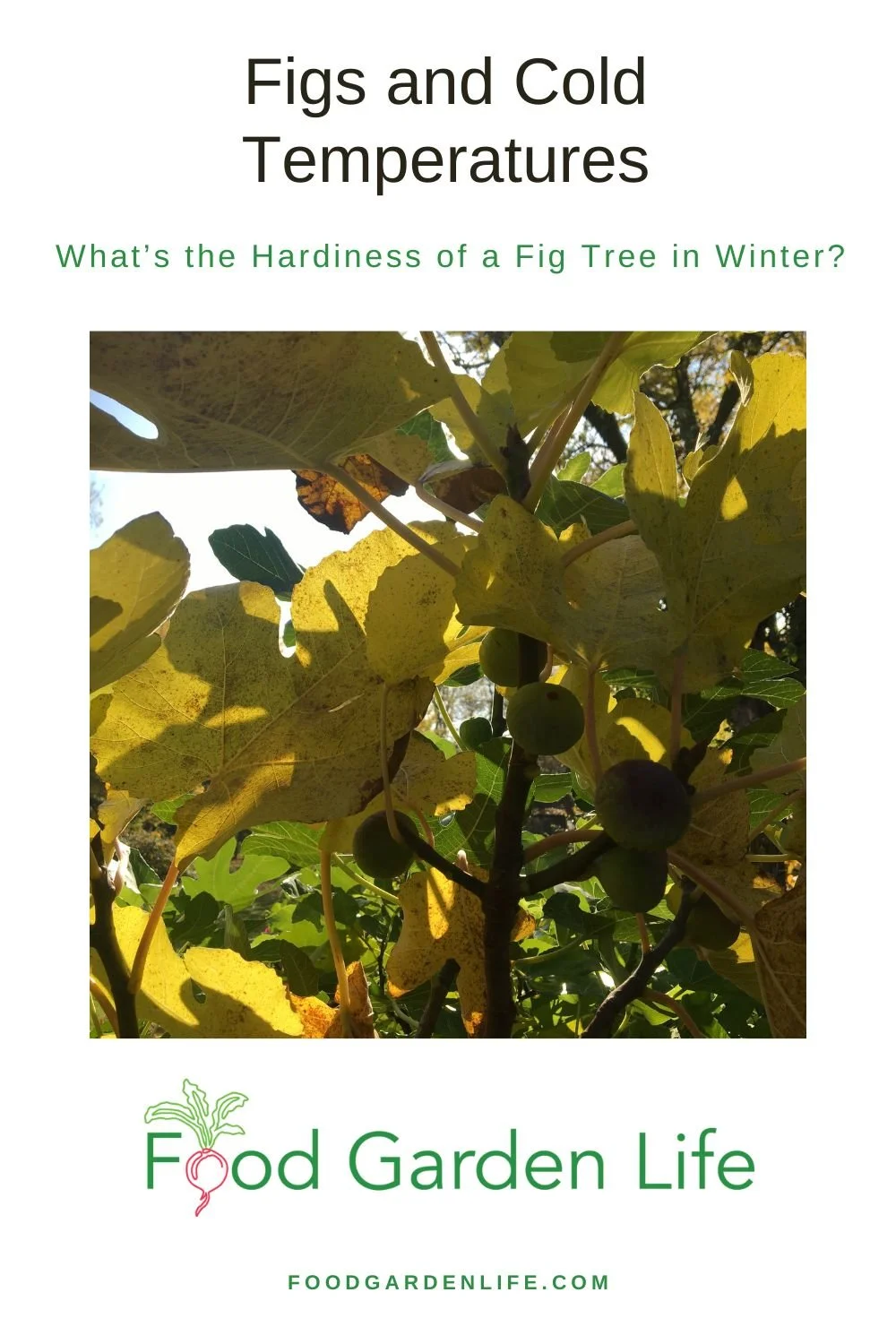
Your Zone: How much protection your fig tree needs over winter is affected by your plant hardiness zone.
Microclimate: Most gardens have some sort of protected area (called a “microclimate.”)
Your Storage Options: Each house and yard is different. I met a Toronto gardener with what he called a “fig cave”. This cave—and underground stairwell between his garage and his house—was a sheltered space he used to store dormant potted fig trees. In some areas, you might not need to store potted figs—and might only need to wrap in-ground fig trees during winter months.
Your Budget: There are lots of gadgets… I’ve met gardeners with thermostatically controlled space heaters. Other gardeners keep things simple, using insulating materials.
You: The way that you decide to protect your fig over the winter will depend on how much lifting and hauling you want to deal with.
Get Your Fig Trees Through Winter—and Harvest Figs
Growing figs where winters are cold takes a bit of creative thinking.
In Fig Camp and the self-paced Fig Masterclass, I explain how to grow figs in pots or in the ground, extend the growing season, ripen more fruit, and protect your trees through winter.
FAQ: Winter Fig Tree Hardiness
Do figs lose their leaves in winter?
Yes.
How do you take care of a fig tree indoors in the winter?
In a cold climate, it's easiest to let a potted fig tree go dormant, and then store it somewhere cool and dark for the winter. Find out more ways to overwinter figs in cold climates.
Do figs do well in pots?
The do very well in pots. Here's an article that gives more information about how fig trees grow.
Where is the best place to keep a fig tree in the winter?
There is no best place. It depends on how cold your zone is and what sort of spaces you have for winter protection.
Should I prune my fig before I store it for the winter?
It depends on a few things. Find out more in this Cold-Climate Guide to How to Prune a Fig Tree.
Video: Figs Waking Up Early
Keep Growing Figs
Looking for more cold-climate fig-growing ideas? Visit the fig home page to browse articles about varieties, pruning, propagation, ripening, winter protection, and more.
Grow Figs Where You Think You Can’t
My revised and expanded fig book is a practical guide to growing figs in pots and cold climates—from choosing varieties and pruning to ripening fruit and conquering winter.
Find This Helpful?
Enjoy not being bombarded by annoying ads? Appreciate the absence of junky affiliate links for products you don’t need?
This site is reader supported. If it has helped you in your food-gardening journey, you can give us a high-five below. Any amount is welcome.
Intro to How Figs Grow
Two things that make figs easy to grow: They are forgiving plants, and they go dormant.
By Steven Biggs
Figs Tolerate New Gardeners

Leaves are deciduous, which means they fall off when cold weather arrives.
In the book Grow Figs Where You Think You Can't, I repeat a simple message for readers: In places where figs don't usually grow, they are easy to grow.
One of the reasons for this is that that they're such resilient plants.
Here's what I say in the book:
Forgiving Plants
The first thing to remember about figs is that they are very, very forgiving plants. Remember that fig cutting I told you I took as a teenager? It languished under barely survivable conditions for 15 years until I gave it a proper spot.
They Want to go Dormant
The next most important thing about the way figs grow is that they lose their leaves after first frost. They WANT to go dormant. That means you can keep them over the winter even if you don’t have a bright, hot greenhouse. While they’re dormant, they don’t need light or much heat. Contrast this to lemons…
The large, lobed leaves grow on branches with grey bark. When cut, branches exude a milky white sap that can be irritating to the skin. Leaves are deciduous, which means they fall off when cold weather arrives. Unpruned, plants usually grow into a bush, but can be trained into small trees if that’s what you prefer.
Grow Figs, Even in Cold Climates
Read more about growing figs in cold climates in my article in Issue 201 of Fine Gardening magazine.
How to Grow Figs…Even in Cold Climates
Fine Gardening – Issue 201
By Steven Biggs
Read more about growing figs in cold climates in my article in Issue 201 of Fine Gardening magazine.

Video: How to Grow Figs

If you think it's too cold to grow figs where you live, watch this video.
Maybe you can grow figs, even if they are not winter hardy in your area.
Fig trees are very forgiving plants that will take a lot of abuse.
In this video, I explain how to grow figs in places where they wouldn't normally survive the winter. It's not difficult! And you don't need a greenhouse to do it.
This is a talk I gave at Richter’s Herbs in 2013 about how to grow figs in cold climates.


Hi, We’re Steve and Emma!
We help people grow food on balconies, in backyards, and beyond—whether it’s edible landscaping, a vegetable garden, container gardens, or a home orchard.
Fig Masterclass
This self-paced, virtual Fig Masterclass is hosted by Horticulturist and Cold-Climate Fig Expert Steven Biggs.