Intro to Growing Figs in Cold Climates
By Steven Biggs
Can You Grow Figs in a Cold Climate?
Yes. You can grow figs in places with cold winters, even where fig trees are not reliably winter-hardy.
The trick is choosing a growing method, variety, location, and winter-protection strategy that suit your climate, your garden, and how much effort you want to invest.
You can grow figs in pots and store the dormant plants somewhere protected over winter. You can grow figs in the ground and protect them. And in milder areas, you might be able to grow an in-ground fig with little or no winter protection.
You don’t need a greenhouse.
If you have a sunny growing space for summer and a way to protect a dormant fig through winter, there's a good chance you have what you need to grow figs.
Cold-Climate Fig Primer
I often hear from fig lovers who travel to places where figs are so prolific that they grow from cracks in walls and pavement.
Big fig trees. Loaded with figs.
Then they come home and wonder:
Can I grow a fig tree here?
Can I keep it small?
What do I do with it in winter?
Will I actually get ripe figs?
The answer to the first question is usually yes. The rest depends on how you decide to grow it.
Here are some basics.
Fig Tree Size
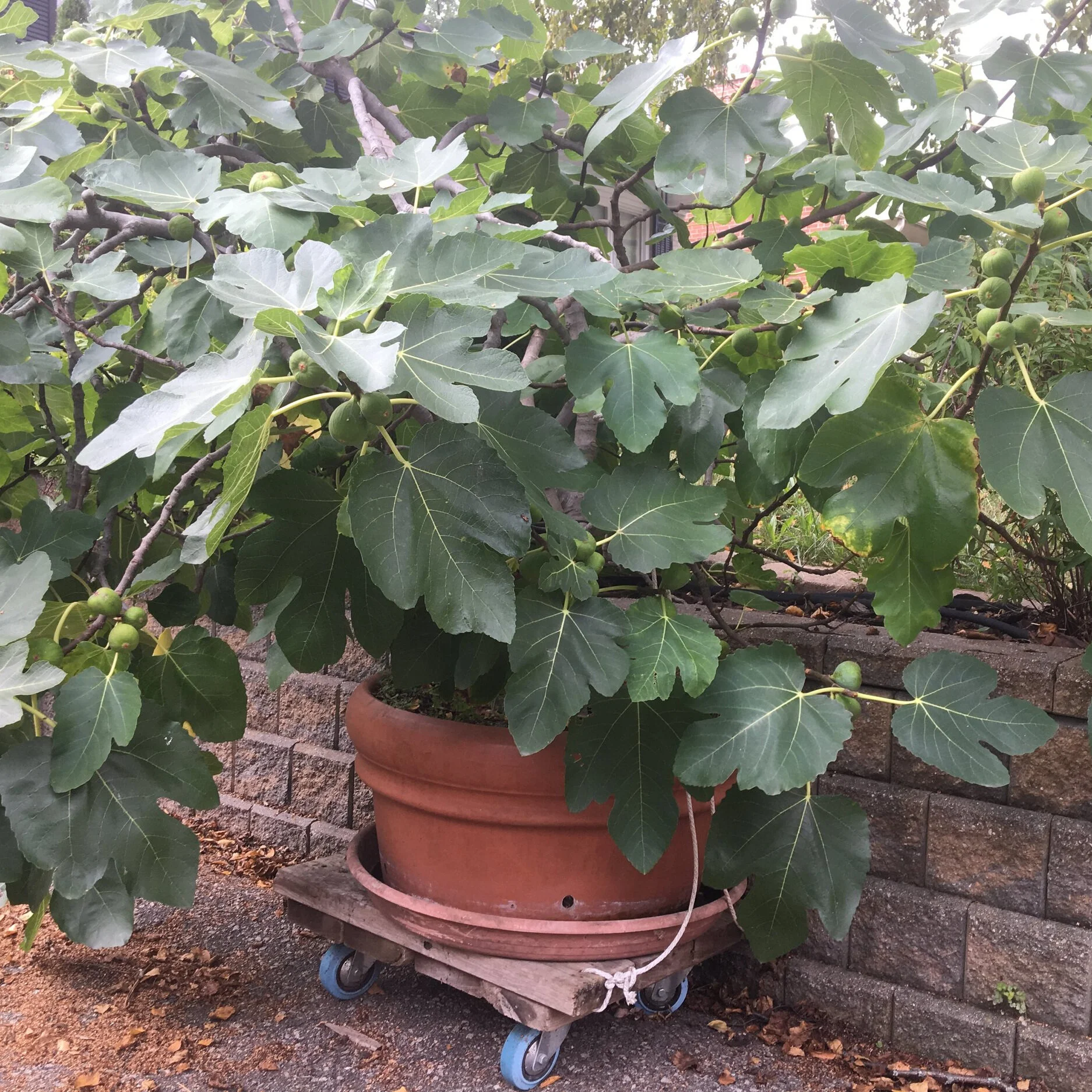
The gardener chooses how big the fig plant gets. This is my neighbour Natalie’s potted fig plant.
Where climate permits, fig plants can grow to about 9 metres (30 feet) high.
But don't worry.
You control the size of your fig tree with pruning.
I keep my potted fig trees small enough that I can move them into protected storage for winter. I also keep my in-ground figs short enough that I can harvest without a ladder.
If a potted fig has to go through a doorway on its way to winter storage, your life will be easier if you keep the tree small enough to carry through it.
Fig plants naturally grow as bushes with multiple stems, but you can also train them into tree forms, fans, cordons, and other shapes.
Find out how to prune in this Cold-Climate Guide to How to Prune a Fig Tree.
Do Fig Trees Survive Cold Winters?
Sometimes. But don't get hung up on a single temperature or hardiness zone.
For established, dormant fig trees growing in the ground, -10°C (14°F) is a good ballpark for cold tolerance. Sometimes they survive colder temperatures. Sometimes damage occurs at warmer temperatures.
That's because fig hardiness is not an exact number.
Cold tolerance depends on things such as:
The age of the tree
The variety
Whether the tree is fully dormant
How long the cold lasts
Whether temperatures dropped gradually or suddenly
How sheltered or exposed the site is
Young trees are more tender than mature ones. New growth and fruit are damaged before older woody stems. And a dormant fig tolerates cold better than one that is actively growing.
Even when winter kills the top growth of an in-ground fig, the roots can survive and send up new shoots.
Potted figs need more protection than in-ground figs because their roots are above ground and experience greater temperature swings.
So instead of asking, "What temperature can a fig survive?" I find it more useful to ask, "How can I moderate winter conditions around this fig?"
Fig Trees Go Dormant
Dormancy is one of the reasons figs are so useful to gardeners in colder climates.
As temperatures fall and days shorten, fig trees drop their leaves and go dormant.
Once dormant, they don't need light. And they don't need much heat.
That means you don’t need a sunny window or heated greenhouse to overwinter a potted fig.
A cold cellar, shed, garage, cool attic, minimally heated greenhouse, or other protected space can work. Ideally, keep dormant potted figs somewhere around 0–7°C (32–45°F).
The goal is not to keep the tree warm. The goal is to keep it dormant.
If the storage space is too warm, the fig can wake up early and begin making weak growth in poor winter light.
Figs Can Produce Two Crops
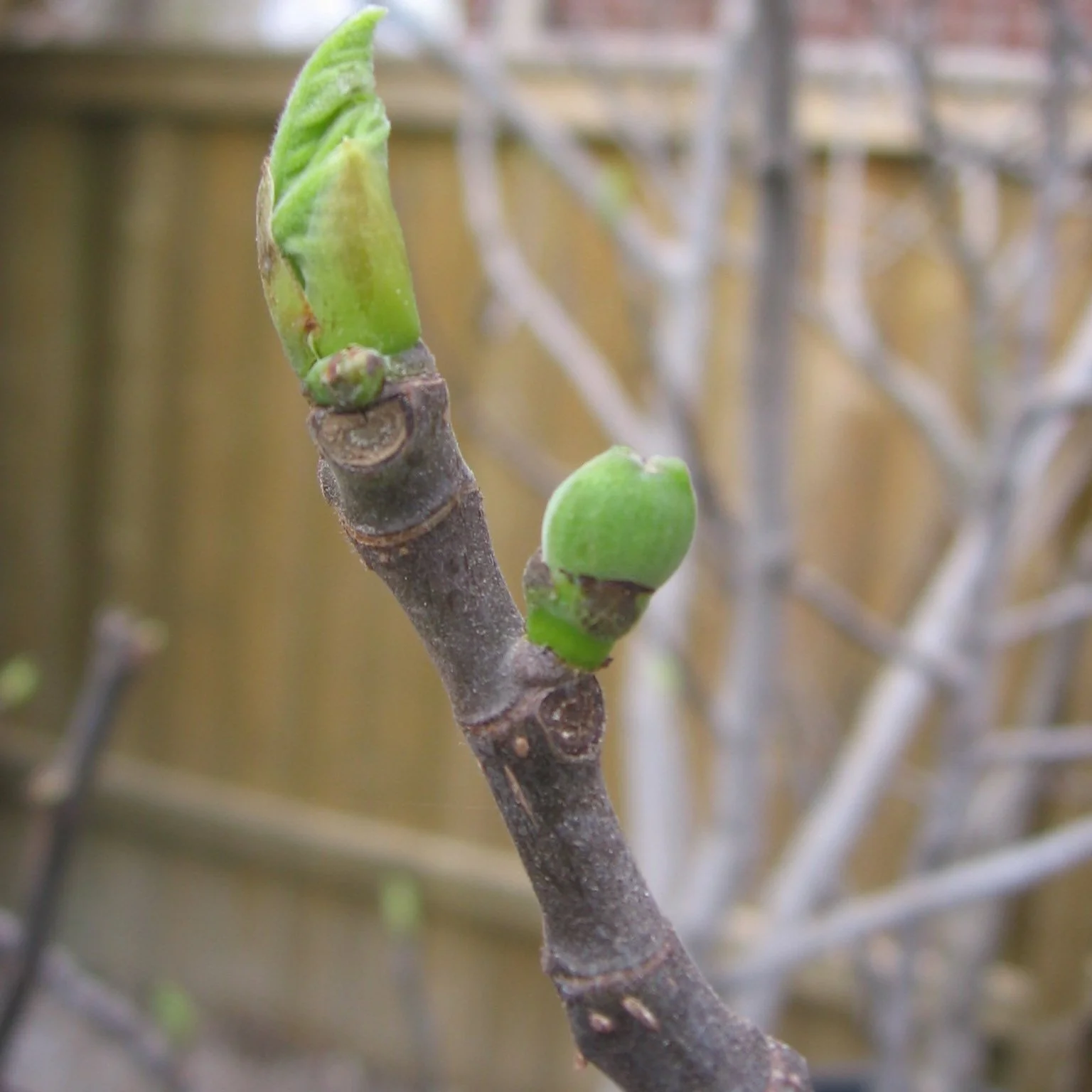
The “breba” crop grows on wood from the previous year.
Depending on the variety, a fig tree can produce two crops.
Breba crop: Figs that form on wood that grew the previous year. These ripen earlier.
Main crop: Figs that form on the current year's new growth. These ripen later.
You might also see two useful terms when shopping for fig varieties:
Biferous: Produces both breba and main-crop figs.
Uniferous: Produces only a main crop.
Not all biferous varieties produce a worthwhile breba crop. Some produce only a handful.
In a climate with a short or cool growing season, I like to think of brebas as fig insurance. Because they form the previous year and ripen earlier, a variety with a good breba crop gives you another route to a harvest if the main crop runs out of summer.
If you're relying on main-crop figs, choose a variety known to ripen early. One of my perennial favourites for an early main crop is 'Ronde de Bordeaux'.
Where Should You Plant a Fig Tree?
Give your fig as much sun and heat as your garden can provide.
In a short growing season, warmth isn't simply about keeping the plant happy. It helps figs ripen sooner.
Look for warm microclimates such as:
The south side of a house
Beside a brick or stone wall that absorbs and radiates heat
A sunny driveway
A hot rooftop
A south-facing slope
Avoid low-lying areas if you have another choice. They can be slower to warm in spring, and cold air can collect there.
Full sun is best, but don't let an imperfect garden stop you. Figs can grow in partial sun, although fruit may ripen more slowly.
My rule is simple: Don't put a fig in full shade. But if partial sun is all you've got, give it a try.
Get Your Fig Trees Through Winter—and Harvest Figs
Growing figs where winters are cold takes a bit of creative thinking.
In Fig Camp and the self-paced Fig Masterclass, I explain how to grow figs in pots or in the ground, extend the growing season, ripen more fruit, and protect your trees through winter.
What Are the Best Fig Varieties for Cold Climates?
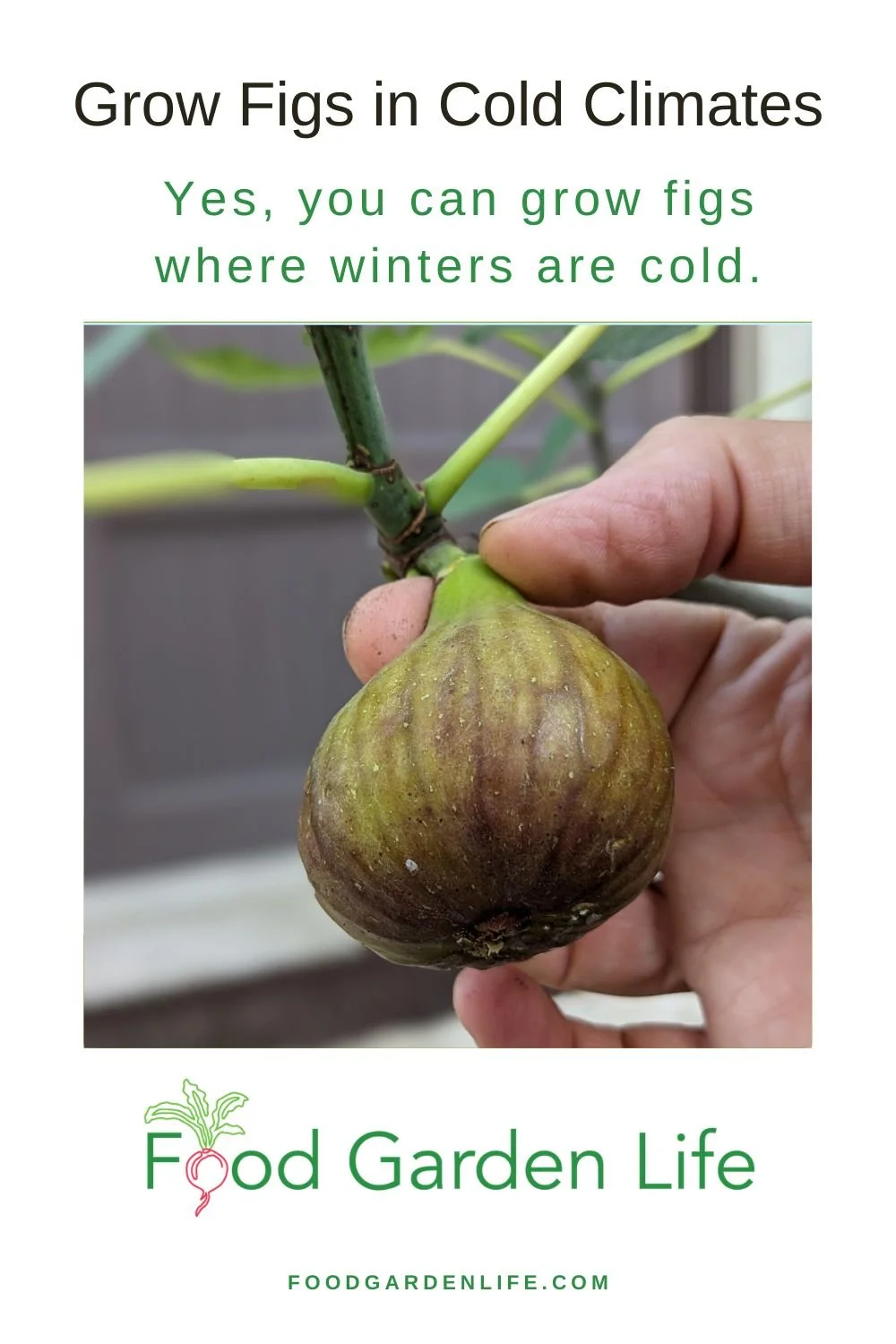
Pin this post!
There isn't one "best" cold-climate fig.
Choose a variety according to how you're going to grow it and what limits fig production in your climate.
Ask:
Will the tree remain outdoors in the ground all winter? If so, cold tolerance matters.
Does the variety produce a good breba crop?
Does the main crop ripen early?
Is the fruit prone to splitting?
And, not incidentally, do you like eating it?
Cold hardiness matters much less if you're growing a fig in a pot and moving it to protected winter storage.
For in-ground figs, 'Chicago Hardy' and 'Longue d'Août' are two well-known cold-tolerant varieties.
For an early main crop, 'Ronde de Bordeaux' is one of my favourites.
And if summers are cool or short, consider including a variety known for a substantial breba crop.
Do Fig Trees Need a Greenhouse?
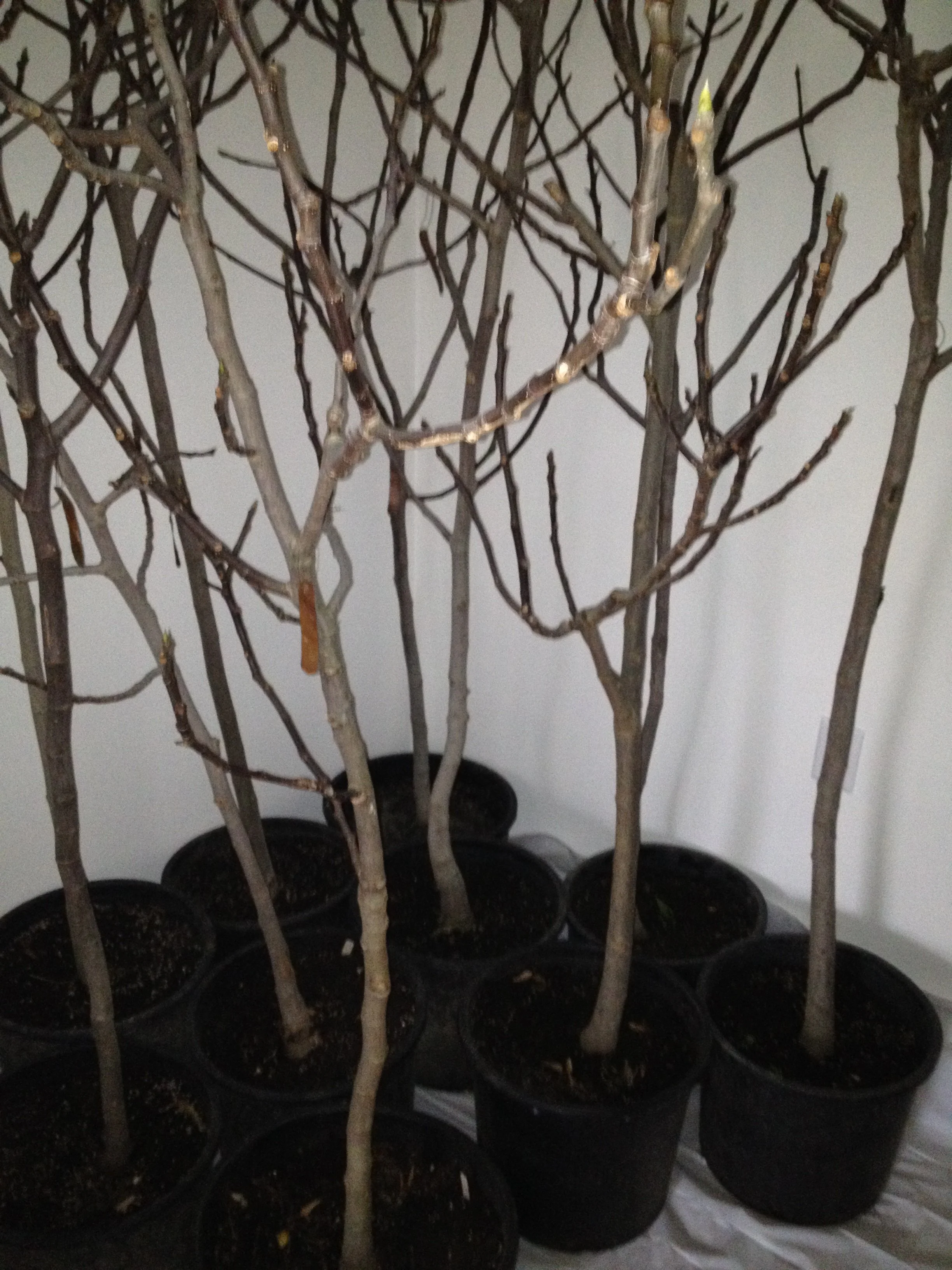
Because fig trees go dormant, there are many winter storage options. These are potted dormant fig trees that I store in my garage over the winter.
No.
This is one of the most useful things to understand about growing figs in colder climates.
Because figs go dormant, potted plants can spend winter somewhere cool and dark. A garage, shed, root cellar, cold basement, or minimally heated greenhouse might all work.
For in-ground figs, gardeners use many different winter-protection techniques. They bend trees to the ground and insulate them, wrap them, build temporary enclosures around them, or take advantage of protected microclimates.
There is no single best method.
The best overwintering method is the one that suits your winter, your property, your fig tree—and the amount of lifting, wrapping, bending, dragging, and schlepping you're willing to do every autumn.
How Many Figs Can You Harvest?
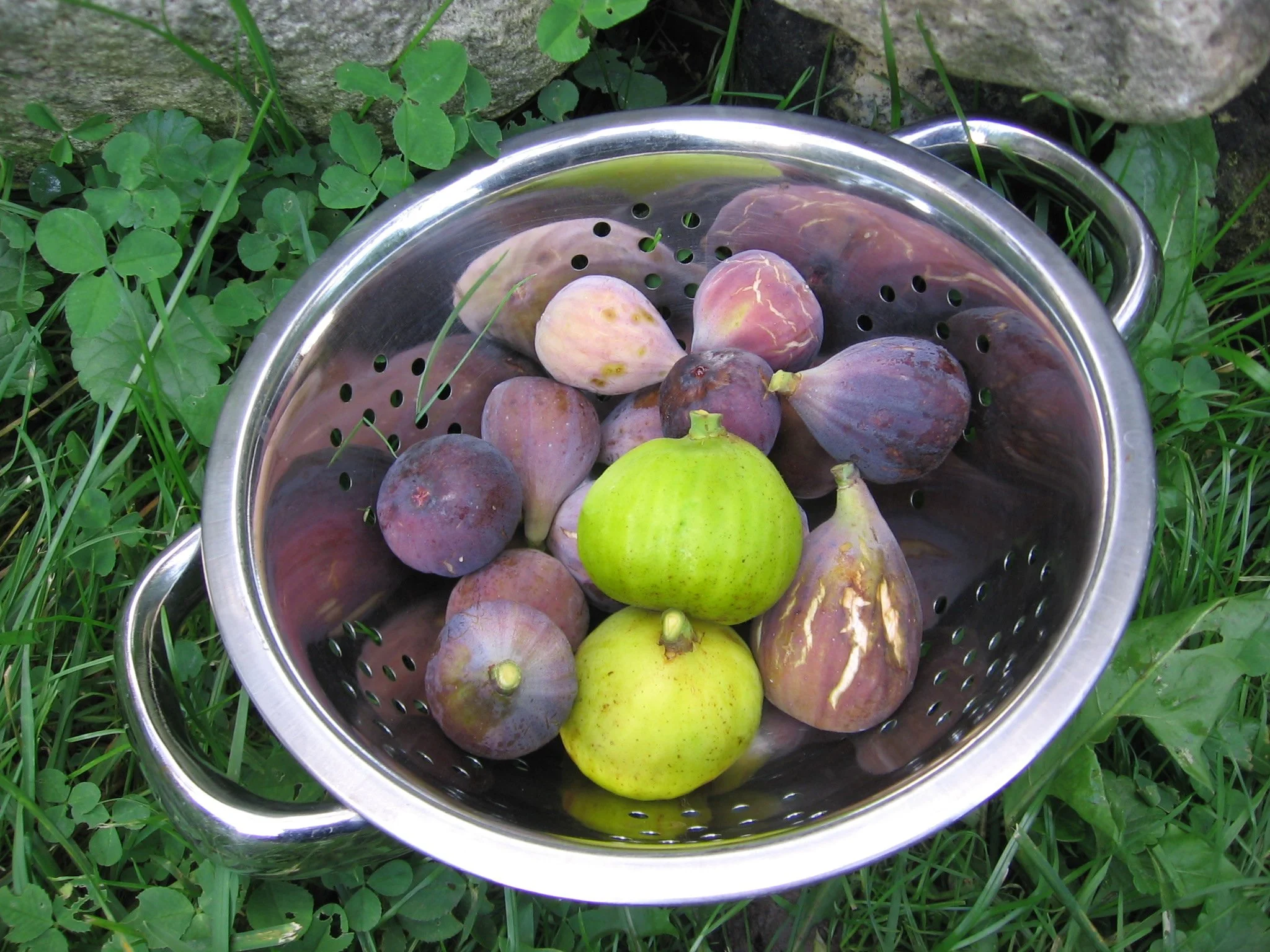
The size of the fig harvest you can expect in a cold climate depends on the variety, plant size, growing conditions, and season length.
There isn't a useful one-size-fits-all answer.
Your harvest depends on:
Variety
Plant size
Growing conditions
Season length
Whether you're harvesting breba figs, main-crop figs, or both
How early the plant gets growing in spring
How quickly temperatures cool in fall
This last point is especially important in short-season areas.
A fig tree can be covered with fruit and still give a disappointing harvest if cold autumn weather arrives before those figs ripen.
That's why I focus less on the number of figs a tree can produce and more on helping it produce figs that actually ripen.
Cold-Climate Fig Growing: The Short Version
If you're new to figs, start with these principles:
Give your fig sun and heat. A warm microclimate helps fruit ripen sooner.
Choose your variety for your conditions. Cold tolerance, breba production, and early main-crop ripening matter.
Decide how you'll handle winter. Pots make winter storage straightforward; in-ground trees may need protection.
Use dormancy to your advantage. A dormant potted fig doesn't need a greenhouse or winter sunshine.
Think about season length, not just winter cold. Getting a fig tree through winter is only half the puzzle. You still need enough warmth and time to ripen the crop.
Figs are surprisingly forgiving plants. You don't need perfect conditions.
You need a plan.
Frequently Asked Questions About Growing Figs in Cold Climates
Can fig trees grow in Canada and other cold climates?
Yes. You can grow fig trees even where they aren’t reliably winter-hardy. Grow them in pots and store them dormant in a protected place, or grow them in the ground and provide winter protection where necessary.
How cold can a fig tree survive?
There is no exact temperature. For many established, dormant in-ground figs, about -10°C (14°F) is in the ballpark. Variety, plant age, dormancy, exposure, duration of cold, and sudden temperature changes all affect cold tolerance.
Can I grow a fig tree in a pot?
Yes. Container growing is one of the easiest ways to grow figs where winters are cold because you can move the dormant plant to protected winter storage.
Do fig trees need a greenhouse in winter?
No. Dormant fig trees don't need light and require very little heat. You can overwinter potted figs in a cool garage, shed, root cellar, cold basement, or similar protected location.
What temperature should dormant potted figs be stored at?
Aim for approximately 0–7°C (32–45°F). The important thing is to keep the tree dormant without allowing the root ball to freeze hard.
What is a breba fig?
A breba is an early fig crop that develops on wood produced the previous year. The later main crop develops on the current season's new growth.
What is the best fig variety for a cold climate?
There is no single best variety. If an in-ground tree remains outside all winter, cold tolerance can be important. Where summers are short or cool, look for varieties with an early-ripening main crop or a substantial breba crop.
How much sun does a fig tree need?
Full sun is best, especially where the growing season is short. A warm location can speed fruit ripening. Figs can tolerate partial sun, but ripening may be slower.
Will a fig tree come back if winter kills the branches?
Often, yes. The roots of an established in-ground fig can survive even when cold kills the above-ground growth, and new shoots can emerge from the roots in spring.
Keep Growing Figs
Looking for more cold-climate fig-growing ideas? Visit the fig home page to browse articles about varieties, pruning, propagation, ripening, winter protection, and more.
Grow Figs Where You Think You Can’t
My revised and expanded fig book is a practical guide to growing figs in pots and cold climates—from choosing varieties and pruning to ripening fruit and conquering winter.
Find This Helpful?
Enjoy not being bombarded by annoying ads? Appreciate the absence of junky affiliate links for products you don’t need?
This site is reader supported. If it has helped you in your food-gardening journey, you can give us a high-five below. Any amount is welcome.