By Steven Biggs
How to Choose a Fig Variety for a Cold Climate
For cold climates, look for figs that ripen early and suit your winter conditions.
There’s a fig for almost every taste. But in a cold climate, flavour doesn’t matter much if the fruit never ripens.
Start with these three considerations:
Pollination requirements: Choose a variety that ripens fruit without the fig wasp, which isn’t present in most cold-climate growing areas. Most cold-climate growers choose common figs, which produce a main crop without pollination. Some San Pedro figs, such as Desert King, produce a breba crop without pollination, though the main crop requires pollination to ripen.
Ripening time: Look for varieties that ripen within your growing season. Early-ripening main-crop varieties are especially useful where summers are short. Breba figs can also give an early crop—but only if the previous year’s growth survives the winter.
Cold tolerance: Some varieties tolerate cold better than others. But “hardy” can mean different things: surviving with little damage, dying back and regrowing, or still producing a crop after winter damage. Your growing method and winter protection matter as much as the variety.
Once you’ve narrowed down varieties that suit your climate and growing method, think about the qualities you enjoy:
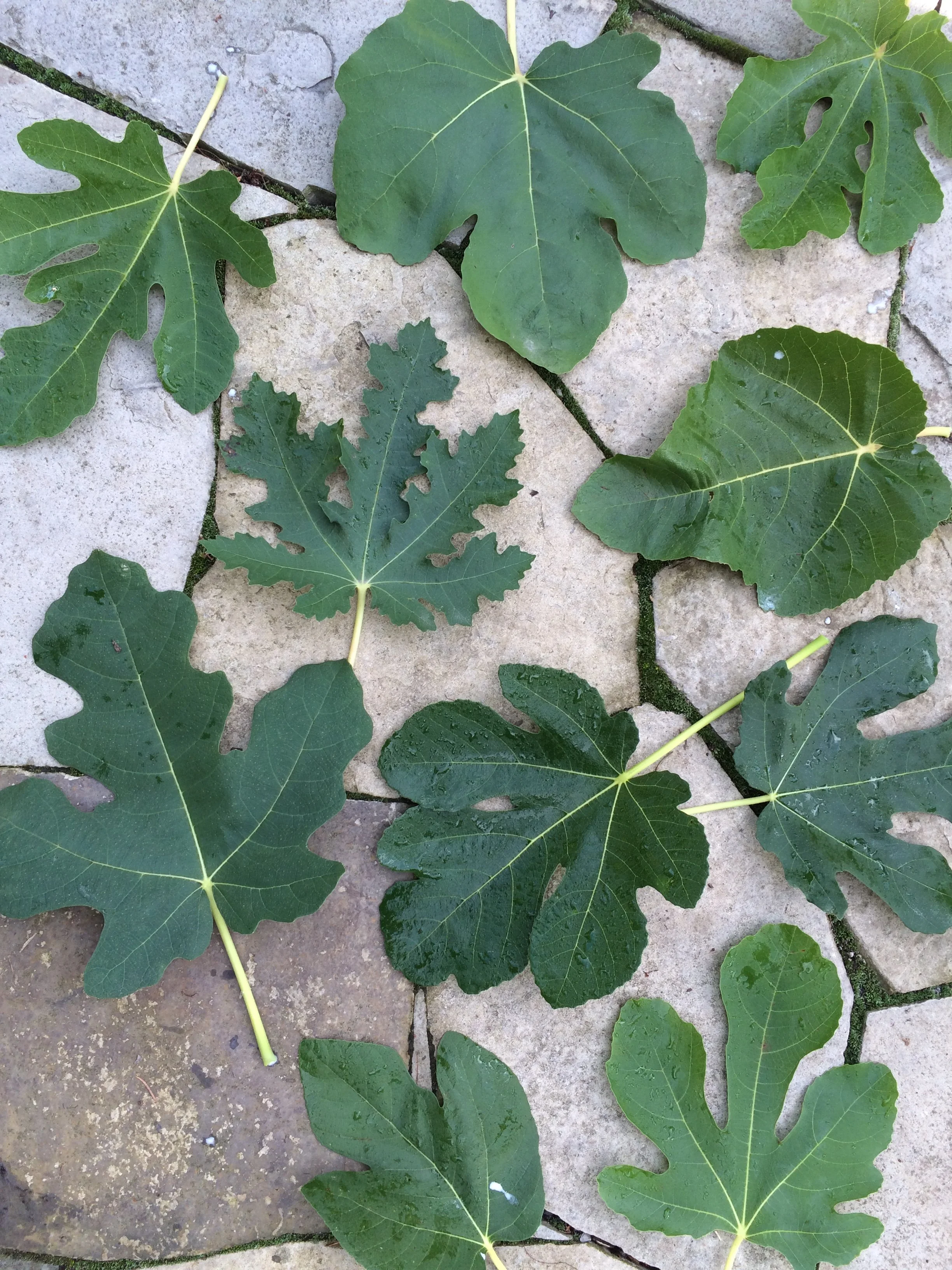
Fig leaf shape depends on the variety.
Flavour: Some figs taste berry-like; others have honey, caramel, or date-like flavours.
Colour: Skin ranges from very dark purple to green or yellow, while the flesh can be amber, pink, or deep red.
Size and shape: Figs range from teaspoon-sized to almost hand-sized, and can be round, oval, pear-shaped, or elongated.
Plant growth: Some varieties grow vigorously, while others remain more compact.
This article brings together variety recommendations from experienced cold-climate fig growers, followed by the varieties that perform well for me in Toronto.
A Note About Fig Variety Names
Fig variety names can get confusing. The same variety sometimes circulates under more than one name, while informal names such as “Black Greek” or “Italian Red” can refer to entirely different figs.
If you’re building a collection, names and provenance matter. If you simply want a productive fig tree, focus on a variety that performs well in conditions like yours. A locally proven unnamed fig can be more useful than a famous variety that ripens too late.
What is a Breba Fig?
Some fig varieties can produce two crops.
The breba crop develops in spring on growth from the previous year and usually ripens in summer. The main crop develops on new growth and ripens later in summer or fall.
Breba-producing varieties can be useful in cool climates because the fruit ripens earlier. There’s a catch: the previous year’s branches must survive the winter. If the tree dies back to the ground, you lose the breba crop even if the plant regrows.
Some varieties, including Desert King, are grown mainly for the breba crop.
Find out more about breba figs.
Well-Known Fig Varieties for Cold Climates
These varieties often appear in cold-climate collections and may be available from specialist nurseries or other fig growers:

Ronde de Bordeaux, top left and centre.
Improved Celeste: Small, early-ripening figs with pink flesh. The light-brown skin becomes violet-brown as the fruit ripens.
Desert King: A San Pedro-type fig known for its large crop of green-skinned breba figs with strawberry-coloured flesh. The breba crop doesn’t require pollination, but the main crop does. In areas without the fig wasp, grow Desert King for its breba crop.
Excel: Medium-sized, sweet yellow figs with amber flesh. A reliable light-coloured fig in my garden.
Hardy Chicago: Small, dark figs with red flesh. This variety is valued for its cold tolerance and its ability to produce a main crop on new growth after winter dieback.
Lattarula: Medium-sized, very sweet yellow-green figs with light-coloured flesh. It can produce a useful breba crop where the previous year’s growth survives winter.
Ronde de Bordeaux: An early-ripening main-crop fig with purple skin, red flesh, and a rich berry flavour. It’s one of the most consistently useful varieties in short-season climates.
Cold-Climate Fig Recommendations from Experienced Growers
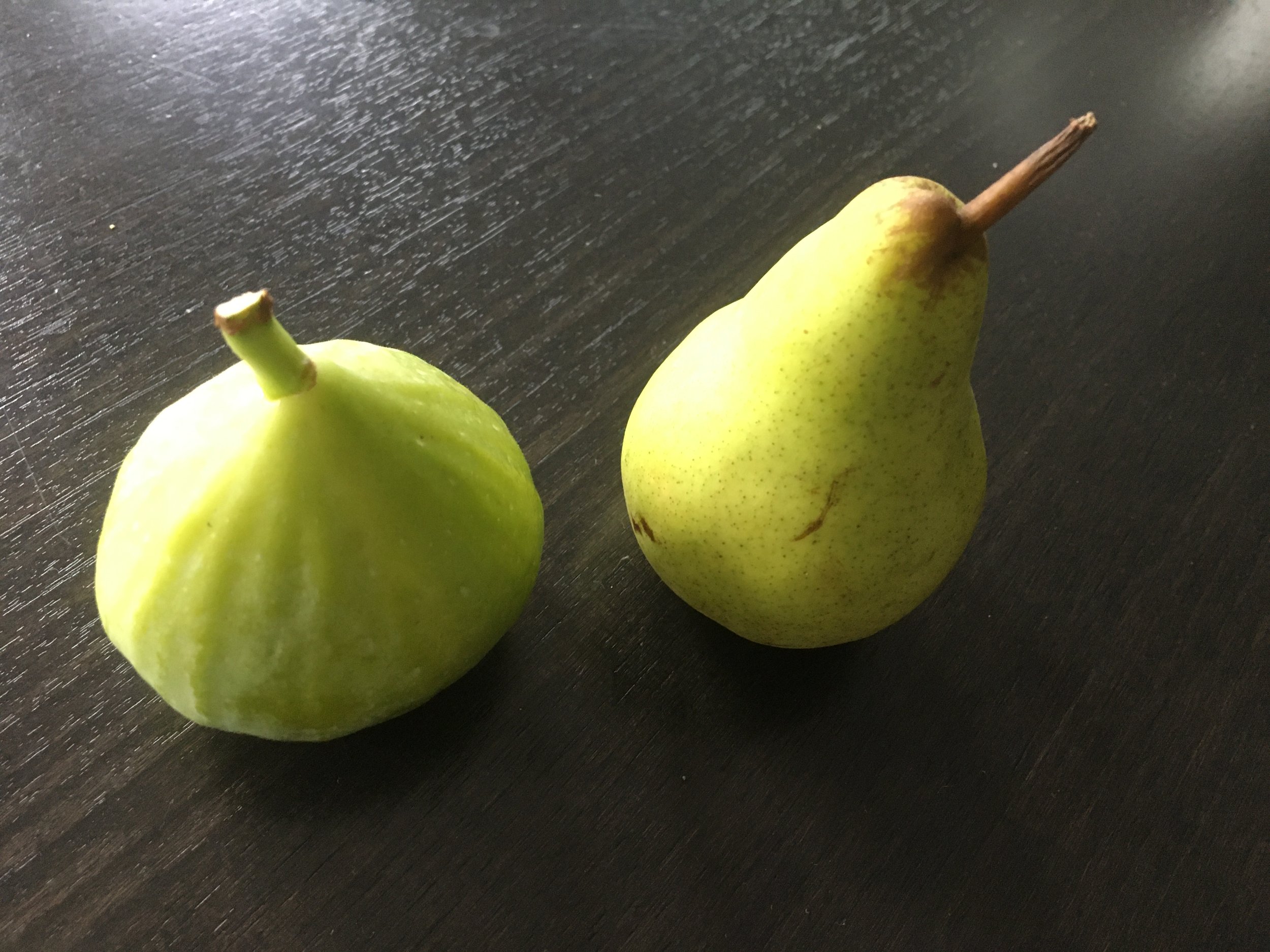
We cut this one into five, so that everybody in the house could enjoy a sliver!
I’ve asked experienced fig growers in Canada and the United States which varieties perform best for them. Their answers vary because “cold climate” can mean a short summer, a very cold winter, a cool coastal climate—or some combination of the three.
Use these recommendations as starting points, not universal rankings. Pay particular attention to growers whose climate and growing method resemble yours.
Adriano Ferreira - Oakville, Ontario
My fig mentor, Adriano, grew a very large collection in Oakville, Ontario. When I asked him about top varieties, he suggested:
Celeste
Desert King. “The best to grow in a northern climate.”
Lattarula. “A super fig.”
Nelson Esteves - Mississauga, Ontario

I connected with Nelson when I wrote about figs for Garden Making magazine. He told me about his Mississauga, Ontario, collection, with more than 100 varieties. “There are lots of good ones that are ‘unknowns,’” he told me. In general, he finds that small to medium-sized dark figs perform best for him and don’t need as much heat to ripen as light-coloured figs. He suggested:
A dark fig he got from Colasanti Farms in Ruthven—an unnamed variety, he says, that was simply labelled “Italian Fig.”
Hardy Chicago
Paul Khong - Chilliwack, British Columbia
I also chatted with Paul when I wrote about figs for Garden Making magazine. He’s a collector in Chilliwack, B.C., with more than 100 varieties. He can leave his plants (except for young, tender ones) outside over the winter. He recommended:
Desert King
Osborn’s Prolific
Lattarula
Bob Duncan - North Saanich, British Columbia
The late Bob Duncan and his wife, Verna, created Fruit Trees and More near Victoria, B.C. When I visited their nursery, I came home with a suitcase full of plants.
Bob recommended San Pedro-type figs for the Pacific Northwest, where cool summers can make main-crop figs difficult to ripen. Read more about San Pedro figs and breba crops.
Desert King
Grantham’s Royal
Talking about Grantham’s Royal, Bob says, “It’s one of the largest figs out there.”
Following Bob’s death, Verna is closing the nursery. Their videos remain a valuable record of their remarkable work.
Learn how Bob ripened main-crop figs in the cool Pacific Northwest.
Ross Raddi - Philadelphia, Pennsylvania
Ross Raddi grows figs in Philadelphia, Pennsylvania. He’s joined me several times to talk about growing figs in cold climates. His favourites include:
Improved Celeste
Hardy Chicago
Florea
Longue d’Août
Violette de Bordeaux
Pastilière
Jonathan Bates - Finger Lakes, New York
Jonathan Bates grows figs at Food Forest Farm in the Finger Lakes region of New York State. Instead of testing dozens of varieties yourself, he recommends finding experienced fig growers in your area and learning what performs well for them.
St. Rita: Bigger and earlier than Hardy Chicago.
Florea: His earliest fig.
Improved Celeste
Ronde de Bordeaux: Early, hardy, and quick growing.
Bill Lauris - Lancaster, Pennsylvania
Bill grows in Lancaster, Pennsylvania, where he runs Off the Beaten Path Nursery. His recommendations include:
Teramo. His earliest main-crop fig.
Florea
Longue d’Août. Big and early.
Maurice - Quebec City, Quebec
I’ve corresponded with Maurice in Quebec City over the years. His conditions are challenging: a short growing season, a balcony, and only partial sun. Yet he harvests figs.
After testing several varieties, he narrowed his collection to two favourites:
Ronde de Bordeaux. His best-performing variety.
Pastilière. Another good performer.
Bob - Michigan
Bob, a fig collector in Michigan, points out that northern growers need more than winter hardiness. The fruit must also ripen before the first fall frost.
For in-ground trees in USDA Zone 5b, he recommends Danny’s Delight and Sal’s EL:
“If you’re planning on planting figs in ground, in USDA zone 5b, I suggest Danny’s Delight and Sal’s EL for main crop figs. Those two will easily give as many as 200 or more figs per year, even in the north. They can not only take cool summers and still remain sweet, they can also take the rain while they are ripening.”
Ben Nguyen - Seattle, Washington
Ben Nguyen grows figs in Seattle, Washington, and shares his experiences at Seattle Garden & Fruit Adventures. Cool Pacific Northwest summers can make main-crop figs difficult to ripen, so his recommendations are especially useful for growers interested in breba-producing varieties.
Vincenzo. Both its breba and main crops ripen for him.
Pelegrino. Produces very large, flavourful figs.
Tony - West Virginia
Tony, the grower behind Mountain Figs, grows in West Virginia. His recommendations include:
Hardy Chicago: Not his earliest variety, but it can produce ripe figs on new growth after winter topkill.
Ronde de Bordeaux: His prettiest and earliest.
Florea: Reliable and early.
Improved Celeste: His earliest to begin ripening.
Brooklyn White: A good light-coloured fig.
Michael Bostock - Vancouver, British Columbia
Michael Bostock grows figs in Vancouver, British Columbia. After more than two decades of trials, he settled on five varieties that consistently ripen fruit in his cool, temperate climate.
During the winters of 2022 and 2023, temperatures fell to approximately -14°C (7°F). The resulting dieback gave Michael an opportunity to compare the cold tolerance of these varieties.
Here’s what he observed:
Desert King. The Pacific Northwest favourite, great taste, and a large crop of brebas. Jammy flavour. Basically unaffected by the winters of 2022 and 2023.
Dauphine (Grantham’s Royal). Another breba fig, honey flavour, slightly fewer but larger breba figs than Desert King. Took the winter of 2022 OK but must have been weakened, since the winter of 2023 killed off all top growth. There are some minor suckers growing from low down on the main trunk but very slowly. This was trained to a standard. If it comes back, I will probably try more of a bush form; I suspect this may be hardier based on my Desert King experience.
Ronde de Bordeaux. Early ripening main-crop fig, great jammy taste. Every once in a while (once in 5-10 years), it produces a large breba crop. My tree was trained to a vase shape. First cold winter (2022) was fine. In 2023, half the tree was fine; the other half had top growth killed but vigorous suckers near the base of the corresponding limbs.
Florea. Earliest ripening main crop, big, honeyish, good fig to have in the few days before Improved Celeste and Ronde de Bordeaux start to ripen, as they are better tasting and ripen more rapidly once they start. Always has fungal dieback on the youngest branches even in mild winters but always comes back in good form. It has reportedly survived temperatures down to -20°C in drier climates.
Improved Celeste. Early ripening main-crop fig, very nice honey fig, ripens at around the same time as Ronde de Bordeaux. Like Dauphine, mine was trained as a standard. It suffered visibly in the first cold winter; half the upper growth was killed. In 2023, it died back almost to the base of the trunk, where some weak attempts at budding have started. This looks to be the weakest of the bunch despite the fact that one of its parents (Celeste) is supposed to be among the hardier figs.
Get Your Fig Trees Through Winter—and Harvest Figs
Growing figs where winters are cold takes a bit of creative thinking.
In Fig Camp and the self-paced Fig Masterclass, I explain how to grow figs in pots or in the ground, extend the growing season, ripen more fruit, and protect your trees through winter.
My Favourite Fig Varieties for Toronto

It’s a race to see who gets to the ripe Sultane figs first in our household.
To wrap things up, here are the varieties that perform well for me in my Toronto garden. I grow in Canadian Zone 6—roughly USDA Zone 5—with a growing season moderated by Lake Ontario. I protect or store my fig trees over winter, depending on how I grow them.
Sultane: Great flavour. The challenge is getting to the ripe figs before the rest of my family does.
Ronde de Bordeaux: Consistently early, with an excellent berry-like flavour. It’s one of my best all-round varieties for a short growing season.
Capelas: A two-crop fig that I received from my mentor, Adriano Ferreira. Its main-crop figs ripen reliably in my garden—and I think of Adriano whenever I harvest them.
Niagara Black: Produces very large, delicious breba figs. My neighbour John gave me this variety, and I love it.
Excel: A reliable light-coloured fig that consistently produces fruit for me.
Desert King: If you can preserve last year’s growth, every cold-climate fig collection needs a Desert King. Enough said.
If you’re choosing your first fig for a short growing season, Ronde de Bordeaux is an excellent place to start. But local experience matters. A variety already producing well in a nearby garden is often a better bet than one with an impressive reputation elsewhere.
Keep Growing Figs
Looking for more cold-climate fig-growing ideas? Visit the fig home page to browse articles about varieties, pruning, propagation, ripening, winter protection, and more.
Grow Figs Where You Think You Can’t
My revised and expanded fig book is a practical guide to growing figs in pots and cold climates—from choosing varieties and pruning to ripening fruit and conquering winter.
Find This Helpful?
Enjoy not being bombarded by annoying ads? Appreciate the absence of junky affiliate links for products you don’t need?
This site is reader supported. If it has helped you in your food-gardening journey, you can give us a high-five below. Any amount is welcome.