From Ornamental Landscapes to Pretty Tasty Gardens
Lindsay Stuijfzand from Pretty Tasty Gardens talks about how she weaves her passion for growing food into her work as a landscaper.
Lindsay Stuijfzand from Pretty Tasty Gardens talks about how she weaves her passion for growing food into her work as a landscaper.
Edible Landscapes
Lindsay Stuijfzand talks about how she weaves her passion for growing food into her work as a landscaper.
Pretty Tasty Gardens
Stuijfzand is a horticulturist who runs Pretty Tasty Gardens, an edible-landscape garden company in Toronto.
Roots in Landscaping
When she first got into the industry, she worked in conventional landscaping — with a focus on ornamental plants and hardscaping.
As her interest in edible plants grew, she branched off into edible landscaping. It’s a path that makes her a bit of an outlier—or trailblazer—in the landscape industry.
Grow Food Indoors + Regenerative Gardening
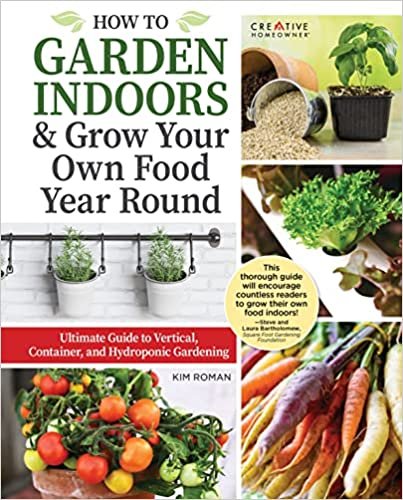
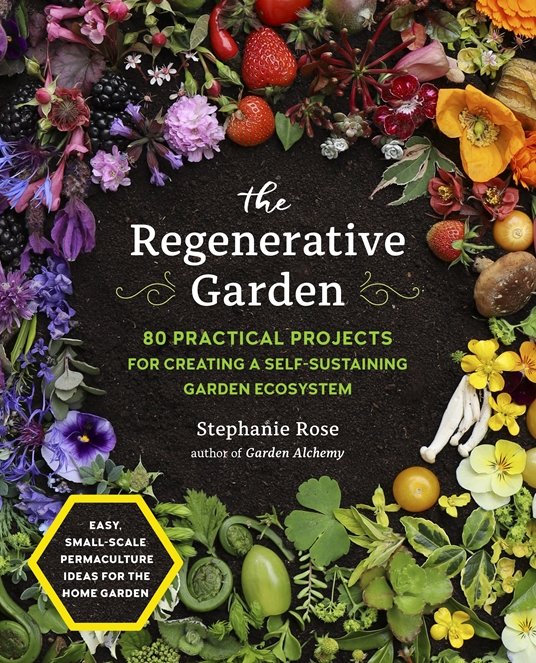
In this episode: Growing food indoors with Kim Roman, author of How to Garden Indoors & Grow Your Own Food Year Round; and regenerative gardening with Stephanie Rose, author of The Regenerative Garden.

Stephanie Rose talks about regenerative gardening and Kim Roman talks about growing food indoors.
Grow Food Indoors
In the first part of this episode we chat about growing food indoors with Kim Roman, a garden educator and square-foot-gardening instructor.
Her new book is How to Garden Indoors & Grow Your Own Food Year Round.
Regenerative Gardening
In the second part of this episode we find out about regenerative gardening from Stephanie Rose. She is a permaculture designer and herbalist.
Her new book is The Regenerative Garden.
Grow Epic Tomatoes, with Joe Lamp'l and Craig LeHoullier
Joe Lamp’l and Craig LeHoullier talk about different ways to grow tomatoes, and share tips for a better harvest,

Joe Lamp’l and Craig LeHoullier talk about how to grow tomatoes, and their new course, Growing Epic Tomatoes.
The Best Way to Grow Tomatoes
There’s more than one way to slice a tomato; there’s more than one way to grow a tomato.
Growing tomatoes is like many things in life…there are lots of ways you can tackle it.
Do you have a favourite way? Or a tomato-growing tip handed down in your family?
Different Strokes, Different Folks
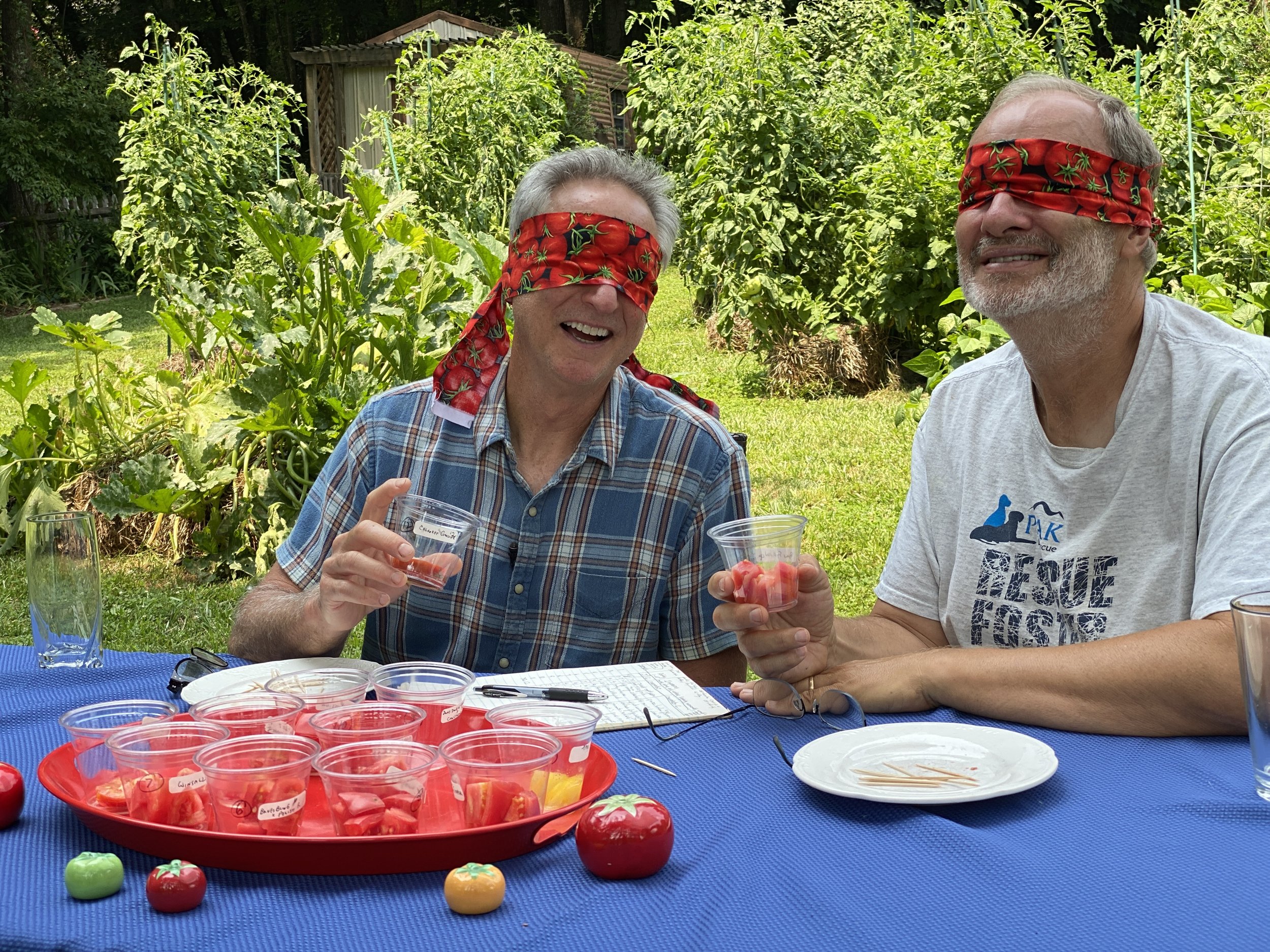
In this episode, we take a deep-dive into growing tomatoes with two experts who have very different approaches to growing tomatoes.
Garden expert, author, and broadcaster Joe Lamp’l loves growing tomatoes. He’s met lots of gardeners using a wide range of tomato-growing techniques through his work as the host and producer of the Growing a Greener World television series, and through his podcast, The joe gardener Show.
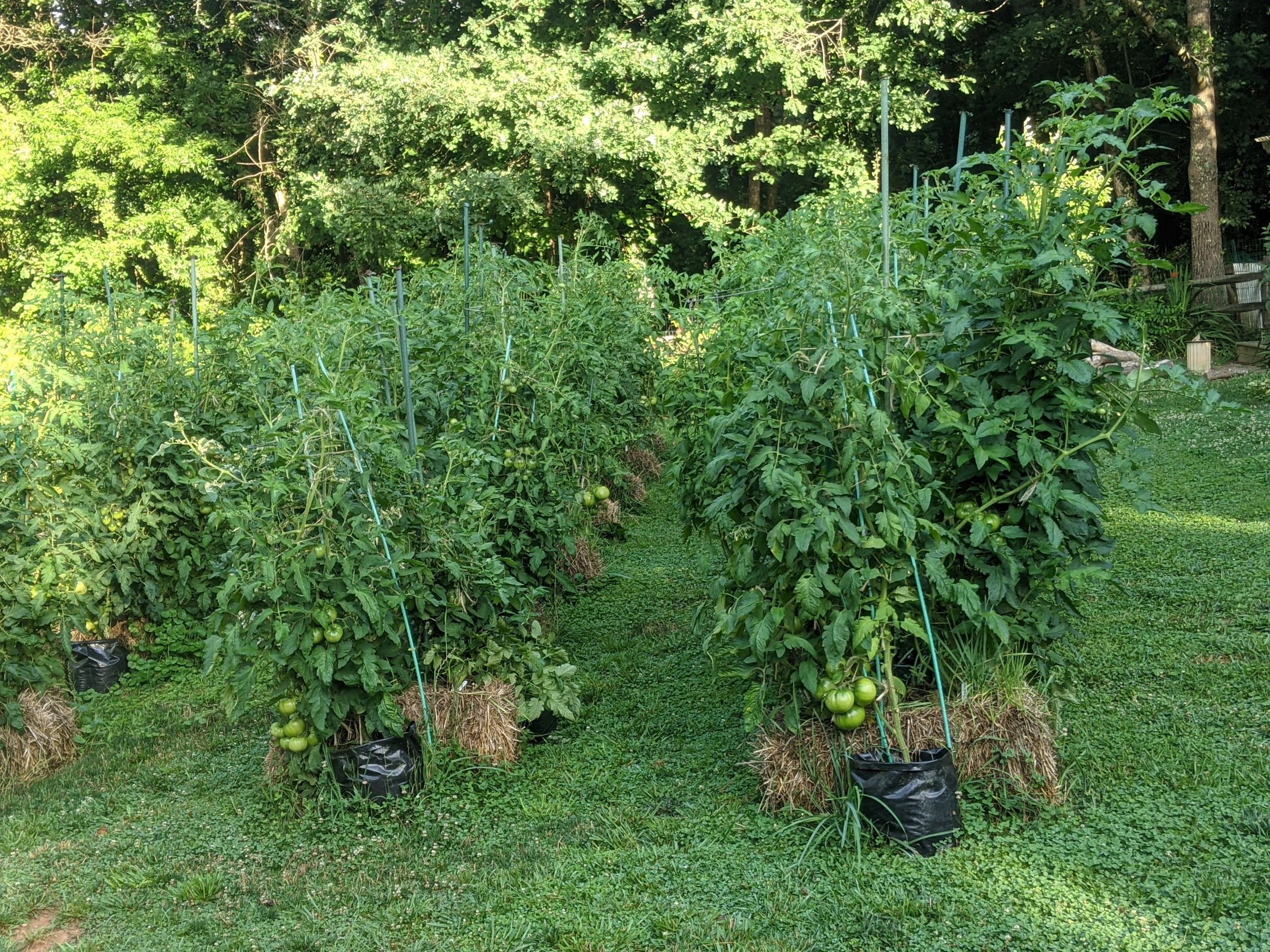
World-renowned tomato grower Craig LeHoullier co-leads the Dwarf Tomato Breeding project, has named and popularized many well-known tomato varieties such as ‘Cherokee Purple,’ and is an expert on straw-bale gardening. He’s the author of the book Epic Tomatoes.
Tomato Talk
Lamp’l and LeHoullier talk about:
The tomato-growing methods they use in their own gardens
How their gardens differ
Tomato-growing ideas they’ve learned from each other
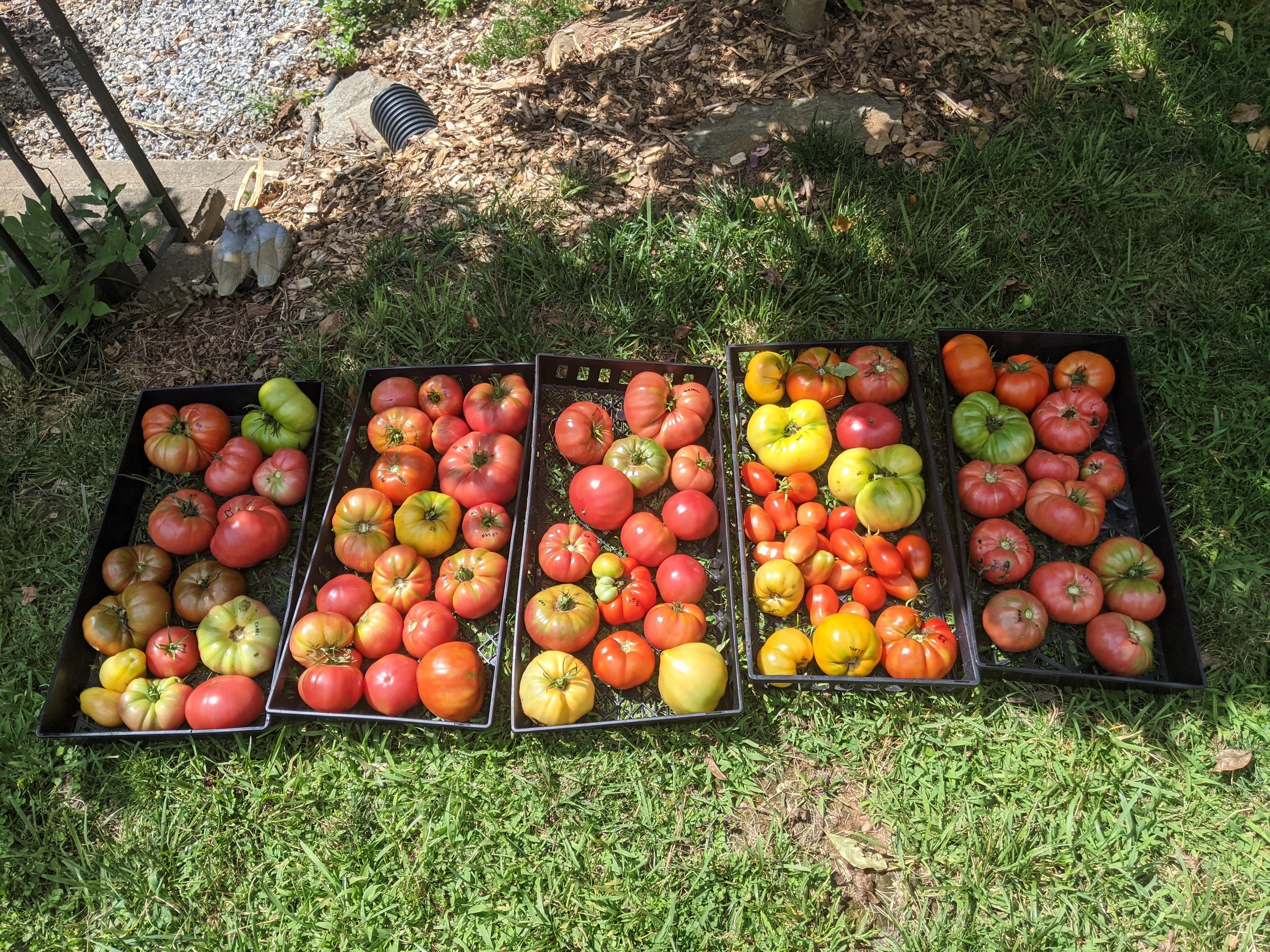
Favourite tomato varieties
Tomato-growing techniques they’ve seen in other gardens
They also share tips for new gardeners. “Don’t get hung up on the destination, but learn to love the journey,” says LeHoullier.
“Don’t get hung up on the destination, but learn to love the journey.”
More on Tomatoes
If this episode piqued your interest in tomatoes, tune in to the December 2020 episode entitled Tasty Tomatoes for Small Spaces: The Dwarf Tomato Breeding Project. In the episode, LeHoullier tells us about this citizen-science initiative to breed dwarf tomato varieties.
Co-operative Growing
Daniel Brisebois from La Ferme Cooperative Tourne-Sol talks about co-operative farming.

Daniel Brisebois joins us from La Ferme Cooperative Tourne-Sol near Montreal.
One Farm, Many Farmers
Daniel Brisebois joins us from La Ferme Cooperative Tourne-Sol near Montreal.
The farm operates as a workers co-operative, where farm owners are the workers.
When the farm started in 2005, sales were through both farmers markets and CSA baskets. Today, sales are entirely through CSA baskets.
Work-Life Balance
There is a focus on work-life balance. Vacation and parental leave — challenges for many farmers — are possible under the co-operative model.
“It’s always been important to us that we don’t burn people out.”
Seeds and Breeding
Seed sales have always been part of the farm business, but were a small portion in the beginning — $700 in the first year.
Today, the farm sells more seeds than vegetables, with an online seed store and seed racks in over 150 retail locations.
Spreadsheet Maniac
Brisebois believes in the importance of making business decisions based on data.
He uses spreadsheets to collect and understand farm data. He shares his passion for spreadsheets through his Farmer Spreadsheet Academy.

Daniel Brisebois’ book, the book he would have liked to have had when he was a new farmer.
Attract Beneficial Bugs to Your Garden
Attracting beneficial insects to your garden with Jessica Walliser.

Jessica Walliser, author of Attracting Beneficial Bugs to Your Garden, talks about creating a healthy, balanced, and diverse garden that supports beneficial insects.
Beneficial Insects
If you’ve heard the terms beneficial insects, beneficial bugs, or biological control, these all relate to this ideas of letting some bugs help us deal with the challenges that other bugs cause for us.
In commercial horticultural production, beneficial bugs are big business. They’re used for some field crops, in greenhouses, in nurseries.
In Gardens
Beneficial bugs can help to control infestations of insect pests in gardens too. The gardener just needs to know where to look…and how to garden in a way that’s friendly to these beneficial bugs.
Pittsburgh-based horticulturist and award-winning author Jessica Walliser joins us to talk about attracting beneficial insects to gardens.
“Stop thinking of your garden as only a place to please you.”

The new second edition of Jessica Walliser’s book Attracting Beneficial Bugs to Your Garden.
Ornamental Edibles, Hort Therapy, Kids Gardening
Talking about gardening in wind, horticultural therapy, ornamental edibles, and gardening with children with Charlie Dobbin and Perla Sofia Curbelo.

Charlie Dobbin and Perla Sofia Curbelo join us to talk about ornamental edibles, gardening in wind, horticultural therapy, and gardening with kids.
Today we talk about wind tunnels, horticultural therapy, landscaping with edibles, and gardening with kids.
Our guests today are professional garden educators who have an infectious love of gardening.
We start in Prince Edward County in Ontario, chatting with consultant and horticulturist Charlie Dobbin about using edible plants in ornamental gardens, gardening in windy areas, and birds in the garden.
Then we head to Puerto Rico to chat with Perla Sofia Curbelo about horticultural therapy, gardening and wellness – and about gardening with kids!
Build Soil Health with Wood Chips
Ben Raskin, author of The Wood Chip Handbook, talks about using wood chips in the garden and in agriculture.

Ben Raskin, author of The Woodchip Handbook, talks about using wood chips in gardens and agriculture.
Wood chips: They’re abundant, inexpensive, and renewable. There are many possible applications in horticulture.
Uses of Wood Chips
Wood chips have many uses in gardens, farms, and landscapes:
Mulch to suppress weeds and conserve moisture
Heat for propagation
Growing media
High-carbon ingredient for composting systems
Soil amendments
Ben Raskin’s new book is The Wood Chip Handbook.
He sees a lot of untapped opportunity for wood chips in horticulture. He uses wood chips at the agroforestry farm he manages. And through his work as the head of horticulture and agroforestry at the Soil Association, talks to growers and researchers working with wood chips.

If this episode piqued your interest in wood chips, tune in to the October 2021 episode entitled, Compost Heater Heats a Hot Tub.
Gardening as Medicine for Mental Health
The Sunshine Garden at The Centre for Addiction and Mental Health in Toronto is a therapeutic garden for in-patients and out-patients.

Atullya Singh, CAMH Garden Co-ordinator with Foodshare, talks about the Sunshine Garden at The Centre for Addiction and Mental Health in Toronto.
The garden is the bridge.
For clients of The Centre for Addiction and Mental Health (CAMH) in Toronto, one way to connect with the surrounding community is through gardening.
Atullya Singh, CAMH Garden Co-ordinator, talks about the Sunshine Garden, located at the main hospital site in downtown Toronto.
When neighbours drop by for the weekly market where CAMH clients sell produce grown on site, Singh considers it as an opportunity to make stronger bonds with the community. “My mission is only accomplished if I have these customers connected to the actual garden,” he explains as he describes taking them over to see the garden.
Horticultural Therapy
Along with community connections, the garden is a way of providing horticultural therapy for CAMH clients. Singh explains that for some people, the social aspects are therapeutic. For others, it’s having something to focus on. For others, its being outdoors.
The garden is a joint venture between CAMH and a Toronto organization called Foodshare, which supports community-based food initiatives. .
Natural Beekeeping
Common Sense Natural Beekeeping with Kim Flottum and Stephanie Bruneau.

Stephanie Bruneau and Kim Flottum talk about natural beekeeping,
Beekeeping with a bees-eye view.
Our guests today help us explore bee-friendly beekeeping techniques.
Lessons from the way bees live in the wild
Management strategies that respect the functioning of bee hives
Hive design elements that promote colony health and resilience
Common Sense Natural Beekeeping
Kim Flottum is editor emeritus of Bee Culture magazine. He teaches beekeeping courses, lectures on beekeeping, and writes about beekeeping and the business of bees. He also hosts the Beekeeping Today and Honeybee Obscura podcasts.
Stephanie Bruneau is a beekeeper, herbalist, and artist. She runs The Benevolent Bee, where she sells honey and bee-related products. She lectures on bees and bee-derived products.
In their new book, Common Sense Natural Beekeeping, they explore ways to keep bees while minimizing human intervention.

Landmarks help Blind Gardeners + Gardening for Birds
Gardening for the deaf-blind community, and gardening to attract birds.
The gardens at the Canadian Hellen Keller Centre; and tips to attract birds to the garden.
Gardening for the Blind
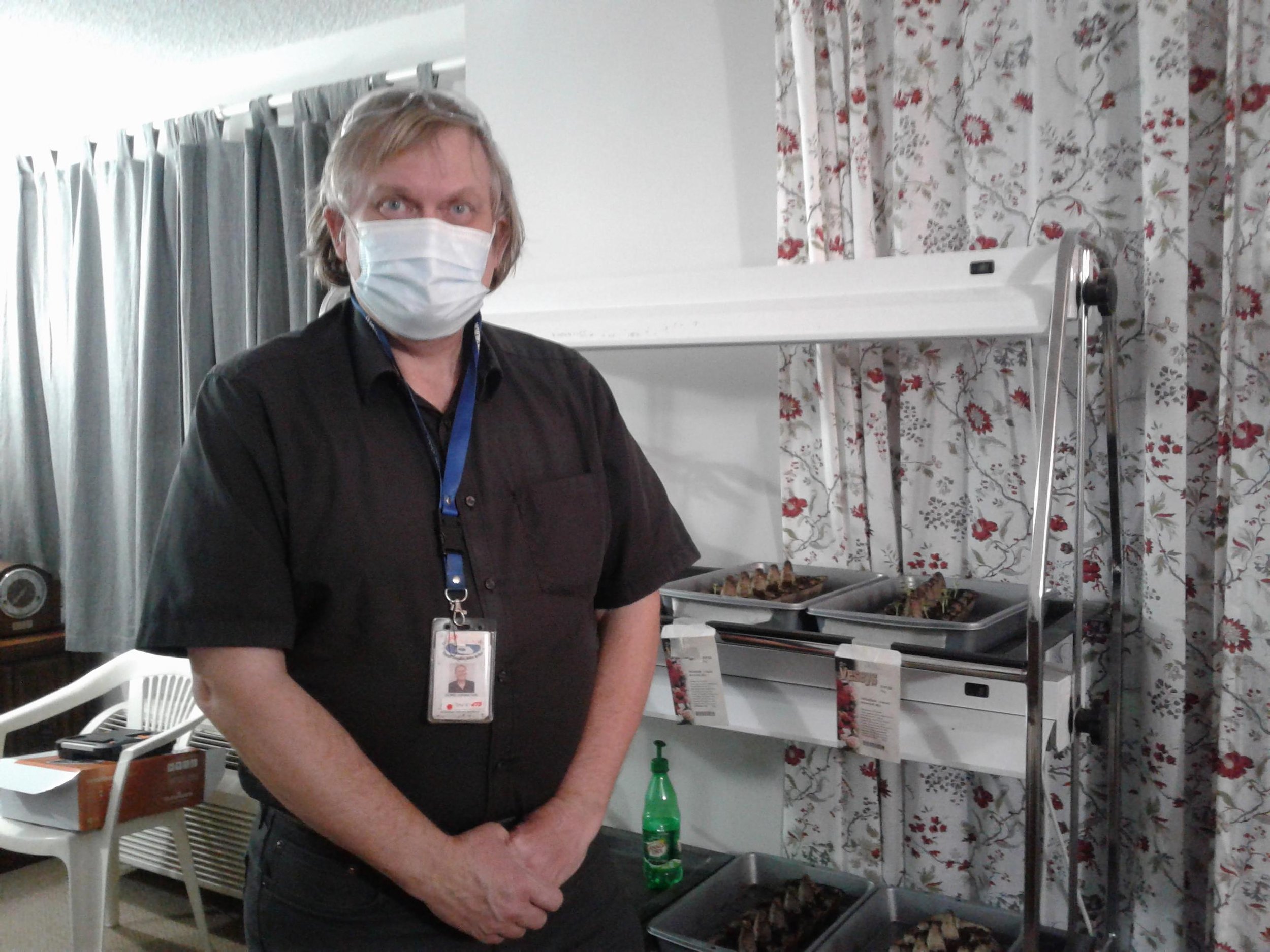
Christine Nichols and Gord Johnston share ideas to help blind and low-vision people garden, and talk about the gardens at the Canadian Hellen Keller Centre, which serves the deaf-blind community.
They talk about:
Using landmarks in the garden
Colours for low-vision gardeners
Spatial awareness in the garden
Visual memory

Bird Gardening

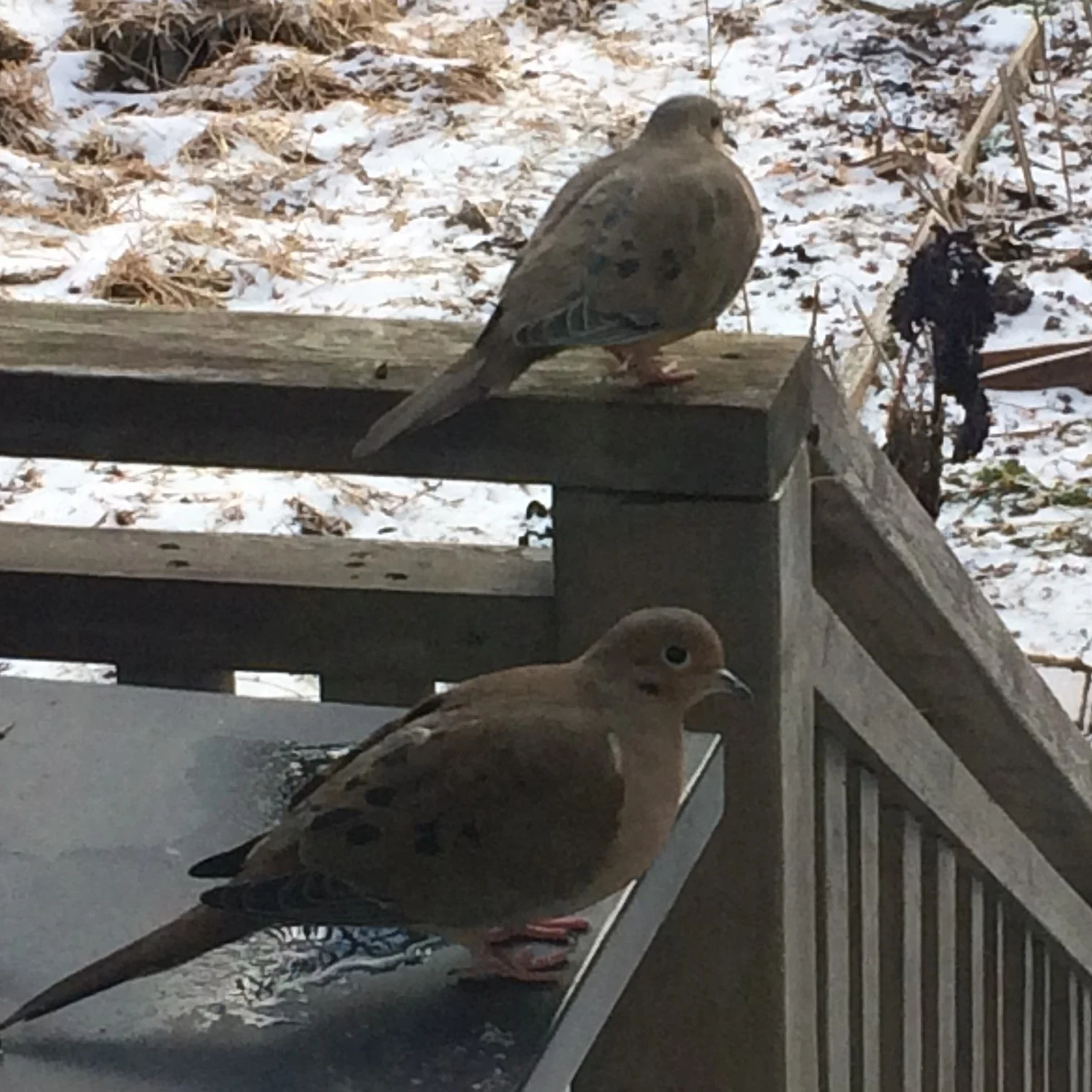
Steven Price, past president of Birds Canada, talks about gardening for birds.
Steven Price, past president of Birds Canada, talks about how to attract birds to gardens and how to make gardens bird-friendly.
He talks about:
Plants
Features (e.g. water features)
Feed
For more ideas about gardening for birds, visit birdgardens.ca.
Connect


12 Gifts from the Heart for Gardeners
Steve and Emma wrap up the 2021 podcasting season with ways to give to the gardeners in your life.

We wrap up the 2021 season of podcasts with 12 ideas for ways that you can give something — something other than material “stuff” — to the gardeners in your life.
Passive Solar Greenhouses with Rob Avis
Rob Avis from Verge Permaculture talks about passive solar greenhouses.

Rob Avis from Verge Permaculture talks about passive solar greenhouses.
Rob Avis from Verge Permaculture shares tips on passive solar greenhouses.
Balance
Avis says a key consideration when designing a passive solar greenhouse is whether to optimize the design for light or for thermal efficiency. He says it’s a trade off between light and heat.
Knowing the balance between light and heat will help inform design choices such as glazing material and the amount of glazing surface.
Incredible Edible: Pamela Warhurst on Making Grey Spaces Green
Pamela Warhurst talks about planting propaganda veg gardens and building community. Warhurst helped found the Incredible Edible Network

Pamela Warhurst from Incredible Edible Network talks about turning grey spaces green by helping people believe in themselves.
From the Ground Up
Pamela Warhurst from the Incredible Edible Network talks about turning grey spaces green by helping people believe in themselves.
The original Incredible Edible project in her hometown started with “propaganda” gardens on public land. It evolved to include edible plants around the community health centre and collaborations with businesses in the community.
Today the Incredible Edible Network includes communities around the world.
“It wasn’t the veg that mattered: It was the fact that a bunch of people had said, ‘We’re going to change things.’”
Top Tips
Warhust says to start by helping peole to help themselves.
Here are her top two tips to get started:
Just get up and do it. Don’t make a long list.
Believe in yourself.
“It’s a movement of people who care about tomorrow as well as today.”

Warhurst’s new book is called Seed to Solutions.
Making Change One Garden at a Time
Emily Murphy talks about gardening for community, health, and the environment; and Sunday Harrison talks about making change through urban school gardens.

Sunday Harrison from Green Thumbs Growing Kids talks about urban school gardens. Author Emily Murphy talks about her new book Grow Now.
Grow Now
Emily Murphy believes individual gardeners doing small things can add up to big change.
Murphy is a garden designer, educator, and author with a background that includes botany, ethnobotany, environmental science, and ecology. It gives her a unique vantage point to teach people about gardening and the environment.
Murphy is the creator of the website passthepistil.com, and author of Grow What You Love, 12 Food Plant Families to Change Your Life.
She shares ideas from her new book is Grow Now: How we can save our health, communities, and plant – one garden at a time. In it, Murphy looks at how individual gardeners can make change positive change in the world.
Green Thumbs Growing Kids
Sunday Harrison gets city kids gardening. She’s with Green Thumbs Growing Kids, which gives hands-on garden and food education to urban school kids.
Along with school gardens, she talks about microgreens, a fast maturing crop for kids. And a new project is kids growing trees from seed — trees that will line Toronto streets.
Since Harrison joined us on the show a year ago to talk about school gardens, demand for school gardens has been huge.
Food-Focused Homestead Life
Gary Dickenson talks about his move from the UK to a remove homestead in northern Latvia.

Gary Dickenson talks about his move from the UK to a remote homestead in northern Latvia.
Have you ever thought of changing your relationship with food?
Gary Dickenson put food front and centre in his new life as a homesteader. He tells us about his move from a seaside town in the UK, where he worked in marketing, to a remote corner of northern Latvia.
Dickenson says that the thing he best likes about homesteading life is the freedom it offers him.
Busy Homestead
It’s a busy homestead. Projects include:
Greenhouses
Smoking food
Canning
Wood heating
Maple syrup
Hugelkultur
No-Till veg plots
Thinking of Homesteading?
Here are Dickenson’s tips:
Before you make the leap, spend time on a homestead
Look ahead 10 years to think about where you want to be
Don’t buy into the romanticism of a homestead because it’s hard work
Plan, but let plans change
Act like a child and ask “why?”
Experiment and celebrate both success and failures
Build a network of friends for support
Check out the Baltic Homesteaders YouTube Channel
School Food Gardens Open Career Horizons
Allison Eady from Waterloo Region School Food Gardens talks about garden-based learning and introducing students to the food system

Allison Eady from Waterloo Region School Food Gardens talks about garden-based learning and introducing students to the food chain.
Garden-based learning: Growing seeds, growing communication skills, opening career horizons.
The Wateroo Region School Food Gardens project has built 35 school gardens, touching 20,000 students in this region of Ontario.
Allison Eady, program co-ordinator, explains that it provides information and curriculum ideas to educators, grants for school gardens, and direct programming for youth.
Garden-Based Learning
Eady sees school gardens as an opportunity for teaching more than gardening. She says garden-based lessons can be used for many subjects, including art, math, and science.
Launch a School Garden
“The best chance for success is when there’s a network of people who support it,” says Eady as she talks about successful school gardens.
She says it’s important to find allies in the community, whether it’s organizations or community members. That’s because school populations change fairly quickly: kids (and parents) move on, and staff are shuffled between schools. That makes the stability of community support important for the long-term success of a school garden.
Eady says not to worry about being a garden expert when starting a school garden. “It’s about figuring it all out together,” she says.
Youth Programming
During the COVID pandemic Waterloo Region School Gardens has pivoted to provide more direct programming for youth, including career mentorship and student-run markets.
Another initiative helps youth explore food-related topics of interest to them. Youth research a topic, and then create blog posts or videos to teach other youth, with the support of program staff. The video below is an example.
Virtual Apple Tasting
Susan Poizner talks about the virtual apple tasting she recently held to raise money for her community orchard.

Fruit-tree educator Susan Poizner from Orchard People talks about holding a virtual apple-tasting event.
Stop and smell the roses? Community event helps people to stop and smell…apples.
Susan Poizner recently helped 50 Torontonians to stop and smell…apples. Poizner, a fruit-tree-care educator and college instructor with a passion for growing fruit trees, organized a virtual apple-tasting event as a fundraiser for her local community orchard.
Virtual Apple-Tasting Event
Poizner visited an orchard specializing in heirloom apple varieties to get enough apples for 50 participants.
Participants received a paper bag containing the six apple varieties for the tasting. Each was marked with coloured stickers for identification.
To help participants think about what they were tasting, the event was facilitated by an apple sommelier, a researcher specializing in taste perception.
Poizner explains that researchers testing new apple varieties for consumer acceptance might consider upwards of 50 things.
For this event, participants were asked to share feedback on four things:
Overall apple intensity
Honey
Floral
Green-Herbaceous
Want to know more about apple tasting? Check out this Apple Tasting Wheel.
Apple Varieties
The tasting event took attendees to different parts of the world with six heirloom apple varieties.
Kindel Sinap (Turkey)
Cranberry Pippin (New England)
Baxter (Ontario)
Empire (New York)
Melrose (Ohio)
Horneburger Pancake (Germany)
Thinking of holding a tasting event? READ MORE about an apple-tasting event in this article.
Grow Quince and Garden Journal
Nan Stefanik talks about growing quince. Helen Battersby talks about the Toronto & Golden Horseshoe Gardener’s Journal

Today: Nan Stefanik of Vermont Quince talks about how to grow quince. Helen Battersby talks about the 30th anniversary of a garden journal with a special story.
Grow Quince in Cold Climates
Imagine a job that revolved around a plant you’re passionate about. What plant would it be for you?
For Nan Stefanik that plant is quince.
She first tasted quince as an adult, on an overseas trip. After returning home, she was surprised to learn it grew locally in New England.
With a long history of its cultivation in New England, knowledge of quince had receded over time.
#GrowQuince
Stefanik’s business, Vermont Quince, makes quince paste, quince preserves, and other specialty quince products using New-England-grown quince.
Along with food products, she has made it her mission to collect and share quince information.
Using a specialty-crop grant, she started a #GrowQuince campaign to share quince-growing information.
Find more information about how to grow and how to cook quince on the Vermont Quince website.
What’s next? Stefanik and her son have acquired land for a quince education centre where they can combine a shop, demonstrations, and hold scion exchanges.


A fabric showing the different types of quince used in a recent quince taste test.
Toronto & Golden Horseshoe Gardener’s Journal

Our second guest today is also passionate about what she does. Helen Battersby produces the Toronto and Golden Horseshoe Gardener’s Journal.
This year marks the 30th anniversary of the journal, which includes information about frost dates, seed-starting dates, plant and seed sources — and also has space to record garden successes and failures.
There’s a deeply human story behind the journal, the story of a mother helping a son. Battersby shares that story, and talks about what’s new in the 2022 edition.
Compost Heater Heats a Hot Tub
Tom Bartels heats a hot tub and feeds his garden with wood-chip compost.

Tom Bartels heats a hot tub and powers his garden with wood-chip compost.
A wood-chip compost pile steams up this hot tub.
Today we visit a Colorado garden at an elevation of 6,500 feet. This episode co-hosted by Ryan Cullen, farmer at City of Greens.
Tom Bartels harvests 1,000 pound of fresh produce a year from his 1,300-square-foot garden, even though he has only 130 growing days.
Bartels uses a large amount of compost in his garden to maintain healthy soil. Much of that compost comes from wood chips.
But wood chips do more than feed his soil: They generate heat as they decompose. He can heat an outdoor hot tub through two Colorado winters with a pile of wood chips. No combustion is needed.
Heat from Wood Chips
Bartels says that many arborists pay to discard wood chips. By composting them, he removes them from the waste stream and gets both heat and compost for free.
The wood-chip pile used to heat the hot tub is approximately 6 feet tall and 12 feet in diameter. As he builds the pile, Bartels wets the wood chips and coils plastic piping within the pile.
The added moisture makes conditions suitable to microbial growth, while the water-filled plastic piping collects heat generated within the pile as microbes break down the wood chips.
Over two winters, the decomposing pile of wood chips generates the heat equivalent of burning 7 cords of wood. The temperature inside the pile gets as high as 150°F, and it stays warm enough to heat the hot tub for about 18 months.
From Heater to Compost
As microbial action slows down and the temperature within the pile drops, Bartels adds worms to speed up the composting process.
After another two or three months, the wood chips have been transformed into finished compost—worm castings—ready for the garden.
The wood chips that heated the hot tub for two winters are turned into 50 wheelbarrow loads of worm castings.
Tips for Wood-Chip Heating
Bartels explains that the right mix of wood chips makes the process work better. A blend of chipped coniferous wood as well as chipped small-diameter deciduous branches is ideal. This is because the small-diameter deciduous branches container more nitrogen—giving a ratio of carbon to nitrogen conducive to heat generation.
Here are Bartels’ wood-chip heating tips:
Have enough nitrogen in the pile. To be safe and make sure there’s enough nitrogen within the pile to give him good heat generation, Bartels says he adds about 5 per cent sheep manure. He also adds sawdust, which, he eplains, acts as a “bridge fuel” while the breakdown of the chips gets underway.
Have enough moisture in the pile. Bartels estimates that there are 4,000 gallons of water suspended within the pile. That’s a good thing because moisture is needed for optimal microbial activity. To keep moisture levels high, Bartels leaves the wood chips uncovered for the entire 18 months, allowing rain and snow to replenish moisture levels.
Greenhouse Wood-Chip Heating
Bartels sees opportunity for this sort of system beyond his demonstration hot tub.
He says that such systems are currently used to heat greenhouses and radiant floor heating systems.
Interviews
Grow Bamboo in Cold Climates
Bamboo expert Fred Hornaday on bamboo for cold climates.

Fred Hornaday talks about how to grow bamboo in cold climates, the many uses of bamboo — and its potential as an agricultural crop.
Fred Hornaday is bullish about bamboo and it’s many uses. From fuel to food to fibre, he sees it as a versatile crop with environmental benefits.
He shares his passion for bamboo through his bambubatu website, which has information about bamboo, how to grow it, how to use it, and its lore.
Many Uses of Bamboo
Bamboo is an extremely versatile crop that be be made into:
fabric
flooring
fuel
paper
food
mats
cutting boards
Bamboo in Cold Climates
There are many types of bamboo that survive in cold climates. Many of these cold-hardy bamboos are in the gemus Phyllostachys or Fargesia.
Bamboos in the former are “running” bamboos. Hornaday says most cold-hardy bamboos are running bamboos…those fast-spreading types that gardeners either love or hate.
But the Fargesia bamboos are clumping, making them desirable for gardeners not interested in containing their bamboo patch.
Bamboo as an Agricultural Crop
Hornaday is hearing from a lot of people interested in farming bamboo commercially in North America. At the moment, he says, there’s a need for processing infrastructure. Farmers growing bamboo for commercial processing could also harvest shoots as a specialty food crop.
As a perennial crop that can grow on marginal land, it can be used to stabilize soil.

Hi, We’re Steve and Emma!
We help people grow food on balconies, in backyards, and beyond—whether it’s edible landscaping, a vegetable garden, container gardens, or a home orchard.