Urban Growers + Gardening Under Cover
Jamie Day Fleck talks about the urban growers she met while filming her documentary In My Backyard; and Niki Jabbour talks about garden covers and her book Growing Under Cover.

Filmmaker Jamie Day Fleck and author and broadcaster Niki Jabbour.
Today on the podcast we hear how one person’s journey into food gardening evolved into a documentary film — and then we find out how to use garden covers to take vegetable gardening to another level.
In My Backyard: A Documentary about Urban Growers
Torontonian Jamie Day Fleck converted her entire suburban backyard into a kitchen garden. That was the starting point of her documentary, In My Backyard, where she looks at ideas that urban growers have dreamed up in her hometown of Toronto.
Fleck talks about the urban growers she met while filming, how their gardens were different — and what they had in common. She also reflects on the future of urban growing.
Growing Under Cover with Niki Jabbour

We head to Halifax for food-garden inspiration from author, broadcaster, and vegetable gardening expert Niki Jabbour.
Jabbour talks about gardening in a polytunnel, reflects on her 2021 garden, and shares tips about how to use covers in the garden to grow more, protect crops from weather, and minimize pest problems.
Her newest book is called Growing Under Cover. It’s a must-have for serious vegetable gardeners.
A Windy Newfoundland Homestead with a Sustainable Focus
David Goodyear talks about his homestead at Flatrock, Newfoundland.

David Goodyear
Old becomes new.
When David Goodyear began to think about food costs, sustainability, and how he and his family ate, he sat down with older relatives to hear how people used to eat. “Everybody ate root crops because they grew it themselves,” he was told.
Goodyear says there are many root crops that grow well in Newfoundland. It didn’t seem right when his grocery store had carrots from abroad. Nor did it didn’t seem sustainable.
Change in Diet Turns to Growing
Goodyear and his family started by changing their diet and eating more root crops. The food bill went down. They found more locally raised choices.
Then they decided to grow their own root crops.
Today they grow root crops, greens, tomatoes, strawberries…even figs. The next project? A food forest.
As Goodyear explains, his is a challenging climate. His town, Flatrock, is close to St. John’s, the third windiest city in the world. He has 110 frost-free days a year. “Winter starts in November; it doesn’t end till the end of May,” he says.
The focus on growing their own food led to an interest in storing the harvest. “If you’re going to grow a massive amount of root crops you need somewhere to put them,” says Goodyear as he talks about his root cellar.
Goodyear and his family switched up their diet; and have now switched up their life. Their homestead includes the gardens, a root cellar, a greenhouse, and a passive home.
Are You Frightened of Landrace Gardening?
Joseph Lofthouse talks about landrace gardening and promiscuous tomatoes.

Joseph Lofthouse talks about landrace gardening and promiscuous tomatoes.
Joseph Lofthouse had hundreds of jars of seed around his house when he began market gardening.
He saved seeds from each variety…a time-consuming task.
Today he has far fewer jars of seed. Today he practices landrace gardening.
Lofthouse no longer focuses on keeping pure varieties, but instead uses genetically diverse lots of seed.
His is the author of the book, Landrace Gardening: Food Security through Biodiversity and Promiscuous Pollination.
What is Landrace Gardening
Landrace gardening is not new. It’s a traditional method of growing using locally adapted, genetically variable seeds. The genetic variability makes it more likely that some plants will perform well even if there are adverse conditions.
“What I’m doing was standard practice through all of human history up until about 60 years ago, until people started farming with machines instead of human effort,” explains Lofthouse.
How to Start Landrace Gardening
Not having pure varieties feels strange to some gardeners. But Lofthouse points out that uniformity isn’t important in small-scale operations or home gardens.
Here are his tips for gardeners who want to try landrace gardening:
Grow and save seeds of a favourite variety
Then grow another variety of the same crop with desirable traits next to it
Aim for 2 - 5 varieties of the same crop from which to start your landrace
Lofthouse notes that there are some crops for which he avoids certain mixes. For example, he does not mix his popcorn with his sweetcorn; or his hot peppers with his sweet peppers.

Container Gardening with Hot Peppers - REWIND
Claus Nader from East York Chile Peppers on growing hot peppers in containers.

Claus Nader from East York Chile Peppers
Hot Peppers
What is the ideal plant for a small yard?
The ideal plant for someone wanting something ornamental – yet edible too?
And, just to complicate things, it has to be good for a garden where there are lots of squirrels.
Claus Nader found that hot peppers were that ideal plant.
Nader was gardening in a small yard that was frequented by marauding squirrels. While the squirrels sampled many of the things he grew, they didn’t eat his hot peppers.
So Nader made hot peppers the focus of his garden, growing them in pots on his balcony, deck, and dotted around his small yard.
Along with a passion for growing peppers in containers, Nader is also interested in unusual varieties and culinary uses and traditions. (His “Tummy Torch” sauce is magic on a piece of barbecued chicken.)
What's to Hate? A Look at the Whole Okra
Chris Smith, author of The Whole Okra, on growing okra, recipes, varieties.

Chris Smith, author of The Whole Okra, A Seed to Stem Celebration
Chris Smith remembers his first okra encounter well. It was at a diner in Georgia.
A native of the UK, where growing conditions are not conducive to heat-loving okra, the vegetable was foreign to him. So was the cuisine of the American south.
His recollection of that first taste of okra? Slime and grease.
While not enamoured by his first okra experience, a later gift of a dry okra seed pod—a pod with a story—ignited his interest in okra.
He began to grow it and to experiment with it in his own kitchen, using pods, leaves, flowers, stalks—even the seeds.
As that interest and his knowledge of okra grew, Smith started to teach others about it. In his quest for even more okra information, he’s spoken with food historians, researchers, farmers, and chefs.
He brings it all together in his book, The Whole Okra, A Seed to Stem Celebration.

Coppices, Alcoholic Hedges, and Thoughts on Ecological Gardening
Matt Rees-Warren on ecological gardening, coppices, hedgerows, and schythes
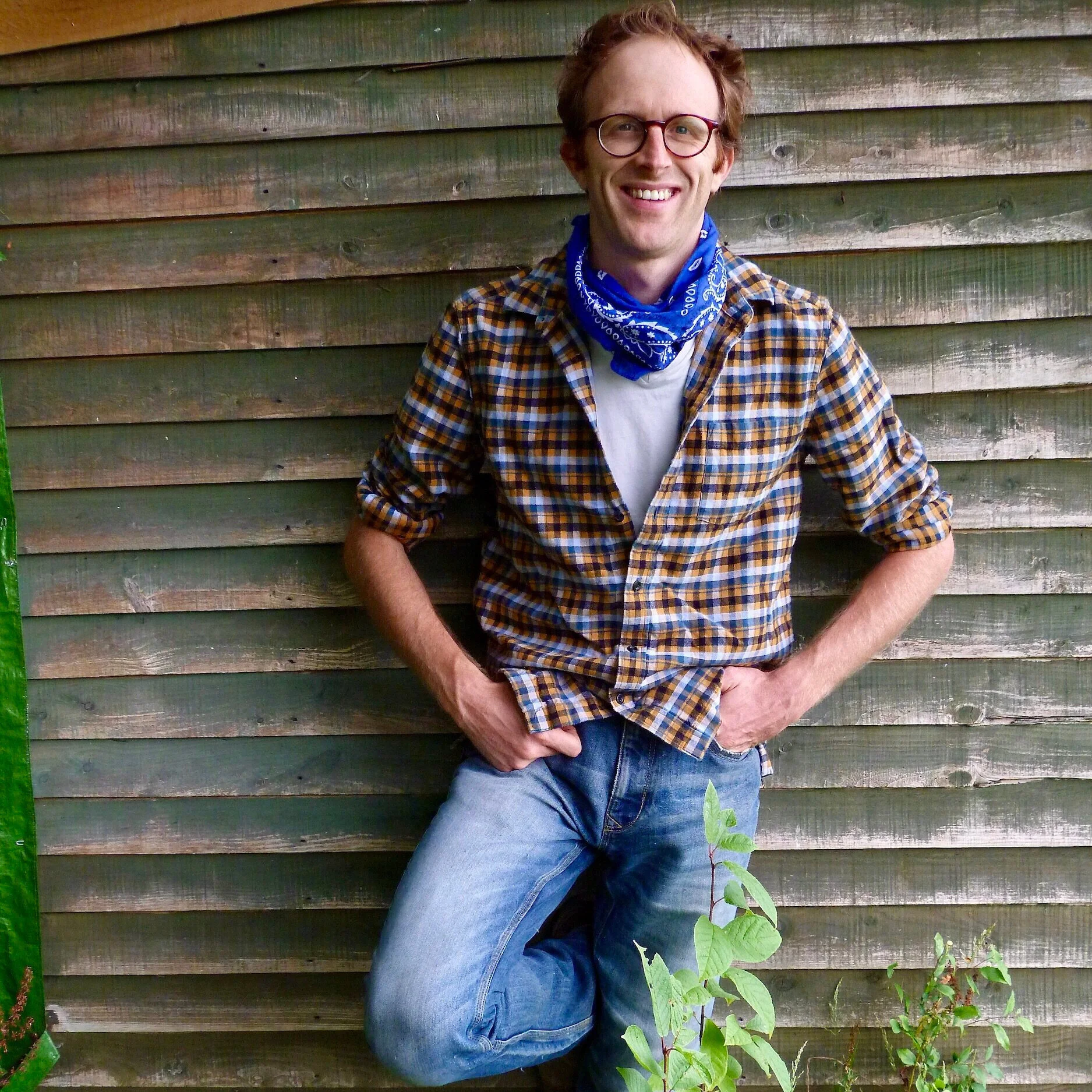
Matt Rees-Warren talks about ecological gardening, scythes, coppicing, hedgerows — and pleachers.
Where is the sweet spot that gardening meets the natural world…so that gardening is ecological? Our guest today explains that ecological gardening is all about balance.
Matt Rees-Warren says, “Your garden is a pocket of wild; it will never be purely wild, because it’s an interaction between ourselves and nature. But it can be much more regenerative.”
Rees-Warren is a professional gardener and garden designer who’s passionate about the difference that individual gardeners can make to strengthen biodiversity and lessen environmental degradation.
He says gardening is one way individuals can make a tangible difference to the environment. Don’t wait for governments to act, he says. Start making changes now, in your own garden.
Rees-Warren is the author of The Ecological Gardener: How to Create Beauty and Biodiversity From the Soil Up.
Ecological Gardening

“If we design our gardens to be regenerative, the result will be functional, beautiful spaces full of life and vigour, robust enough to face the challenges of the future and elegant enough to beguile all those who walk among them,” says Rees-Warren.
But ecological gardening is more than a philosophy. There are many practical things we can do in the garden.
Here are some of the ideas discussed:
Coppicing. Talking about renewable materials for the garden, Rees-Warren explains the process of coppicing, where trees are repeatedly cut back to the ground to give a harvest of sticks that can be used in the garden.
Scythe. He describes this as “the most immersive” of tools. “It’s the only tool for wildflower meadows,” he says.
Hedgrows. Rees-Warren says hedgerows can also be food reservoirs, using plants such as blackberry, sloe berry, hops, raspberry, and hazelnuts. On the mention of sloe gin, he adds that sometimes these are called, “alcoholic hedges.”
Pleachers. “Laying a hedgerow” and the technique of using “pleachers” is one way to create attractive hedgerows that are like a living fence. Young trees are cut leaving just a thread of bark connecting them to the stem, and then folded down horizontally. “It looks fabulous,” says Rees-Warren.
Foodscaping
Jeremy Cooper talks about foodscaping

Jeremy Cooper from Cooper’s Foodscaping talks about his path into foodscaping and shares his top tips.
Today on the podcast we talk about “foodscaping,” gardening that combines the ornamental with the edible, also known as edible landscaping.
Foodscaper Jeremy Cooper says he likes to work with plants that have multiple functions, including ornamental, herbal, medicinal, ecological, and edible.
Cooper worked in a number of jobs before focusing on foodscaping. In hindsight, he sees that he was circling this intersection of food, gardening, and the environmental before he even realized it.
Part of what he does as a foodscaper is to educate clients about smarter ways to garden. For example, many times he’ll find people battling plants that are edible. “That’s food!” he tells them, as he helps them see the plants in another light.
Foodscaping Tips
Cooper’s tips for gardeners interested in foodscaping:
Don’t be afraid to dream about other ways to use a space and think about what you might like in the long term. “Don’t be afraid to dream…it doesn’t have to be a lawn,” he says.
Grow foods you like to eat.
Make sure the soil is healthy, and, if in doubt, dig into the topsoil and then down below the topsoil to see what is there. He points out that in many new subdivisions, gardeners are left with hard-packed soil and gravel beneath a shallow layer of topsoil.
Cooper’s Favourite Food Plants
Serviceberry. Cooper says that while many people grow this as an ornamental plant, a lot of people don’t realize the fruit are edible. He points out that it’s an excellent understory tree that does well in partial sun.
Amaranth. Beautiful, colourful. Edible leaves and grain.
Currants.
Bergamot. Flowers and herbal uses.
Yarrow. Flowers and herbal uses.
Squashes.
It Takes One Person
Julia Dimakos went from never having gardened to a 7,000 square foot garden.

Julia Dimakos is an avid gardener and garden communicator…but she didn’t grow up gardening. One person sparked that interest.
Today on the podcast we meet an avid gardener who grew up in downtown Toronto, in a family that didn’t garden. And for a long time she didn’t garden either.
But then one person sparked her interest in gardening, and dropped by with a bucket of llama poo to help her make and plant her very first garden.
Julia Dimakos hasn’t looked back. Her kitchen garden has grown to 7,000 square feet.
Now, she is on a mission to spark the interest in gardening in other people. She gives presentations about gardening, and shares her passion for gardening online.
Garden Wisdom
“I want people to see gardening as something fun,” says Dimakos as she shares her tips for new gardeners.
Her top tip is that new gardeners start small, and not take on too much the first year. Make it manageable, and grow the garden over time.
And if something doesn’t work? “Every failure is an opportunity to learn to do better next time,” she says.
Teachings to Guide Gardeners
Isaac Crosby talks about how he uses the 7 grandfather teachings to guide his gardening.

Isaac Crosby, Urban Agriculture Lead at Evergreen Brickworks
Today on the podcast we hang out here in Toronto to speak with Isaac Crosby. Isaac is the Urban Agriculture Lead at Toronto’s Evergreen Brickworks.
During our chat, Isaac told us that, “Part of wisdom is not keeping it to yourself.”
He shares with us wisdom that has come to him through Ojibwa teachings. Isaac is from the Ojibwa of Anderdon, a small farming community In south-western Ontario. He takes the seven grandfather teachings and explains how we can interpret them when gardening.
His advice for new gardeners? “Don’t be afraid to make mistakes, because that’s where you learn.”
The 7 Grandfather Teachings
The 7 Grandfather teachings are about:
Humility
Honesty
Respect
Bravery/Courage
Love
Truth
Wisdom
Make a Potager Garden
Landscape architect Jennifer Bartley talks about how to make a potager

Landscape architect and author Jennifer Bartley talks about how to make a potager garden.
Today on the podcast we head to Ohio to find out more about potager gardens. Jennifer Bartley tells us about this traditional kitchen garden style from France, and how to create the same sort of food-producing garden with seasonality and a sense of intimacy at home.
Bartley writes, “The potager is more than a kitchen garden; it is a philosophy of living that is dependent on the seasons and the immediacy of the garden.”
Bartley is a landscape architect, whose firm, American Potager, designs gardens inspired by the grand French kitchens.
She is also the author of The Kitchen Gardener’s Handbook and Designing the New Kitchen Garden: An American Potager Handbook.
About Potagers
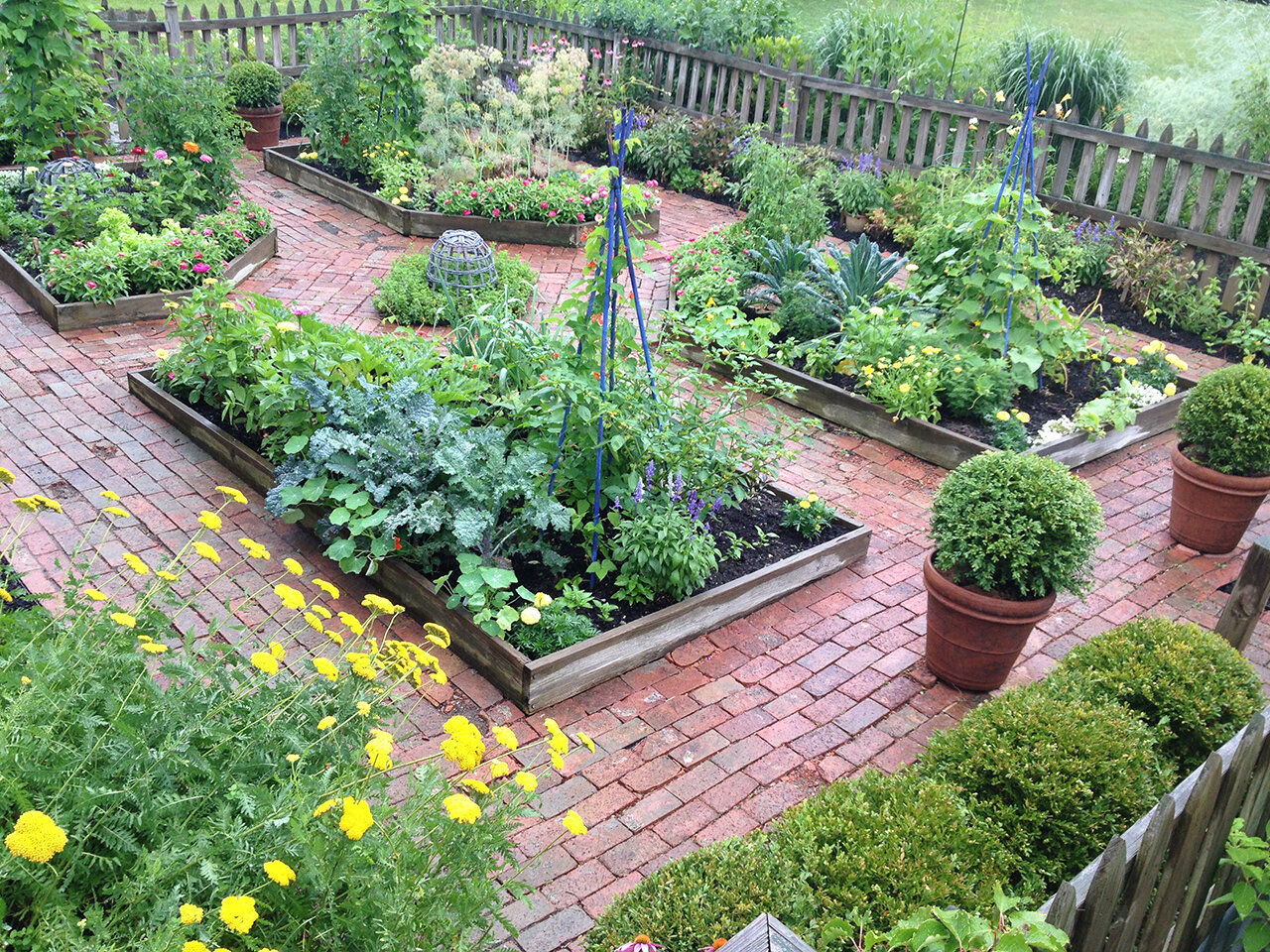
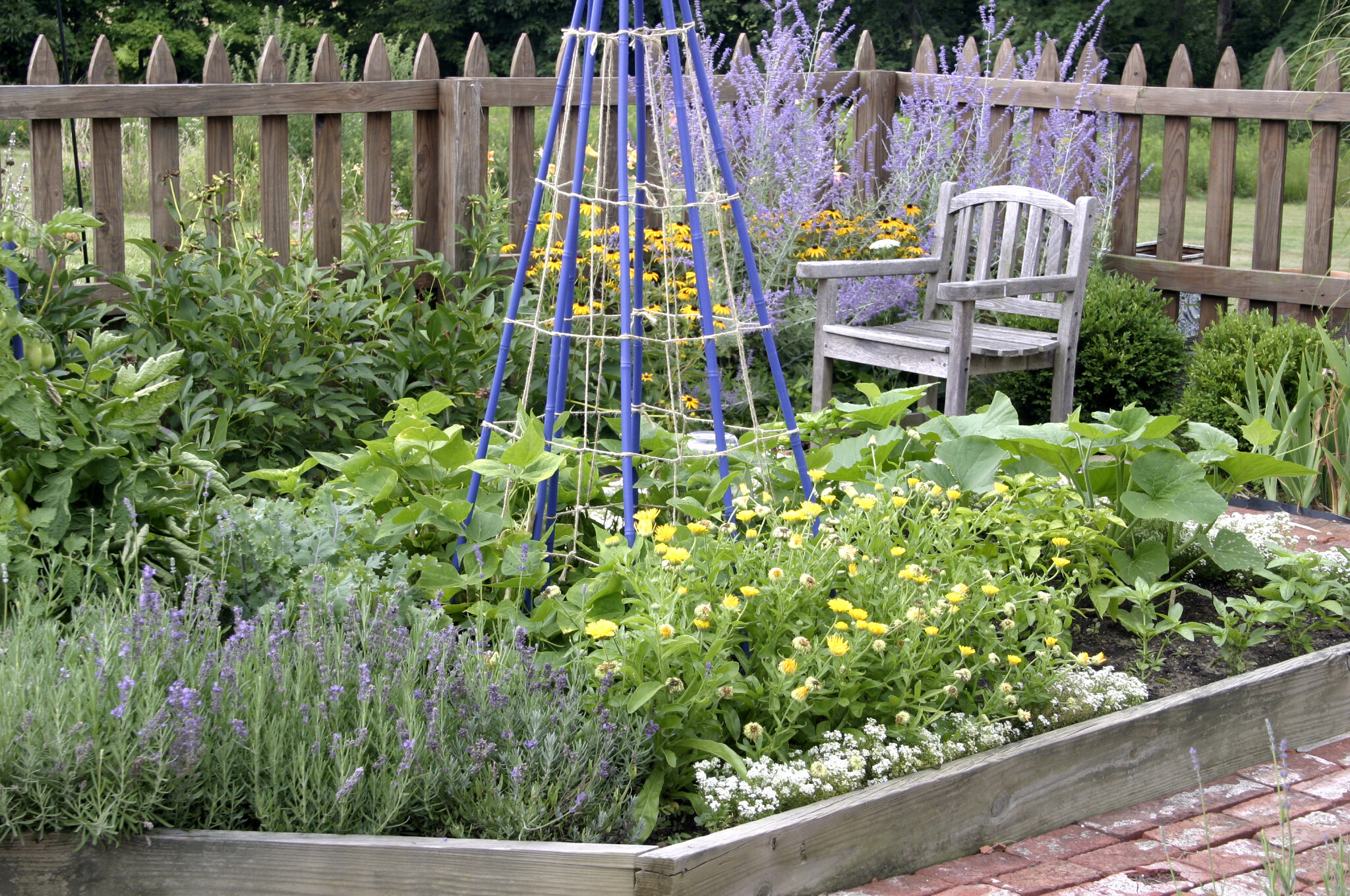
“Jardin potager” is French for kitchen garden. The traditional potager garden is a seasonal kitchen garden with vegetables, fruit, herbs, and flowers for cutting. Meals change as crops in the garden change with the seasons.
Bartley explains that there is a long tradition of this style of gardening in France. Potager gardens combine beauty and accessibility, and are often enclosed within walls in view of the residence.
The garden can be a place of restoration and refuge, says Bartley. It can be a destination—somewhere close to the kitchen that feels like it’s own spacial place.
She says that where she grew up, in Ohio, the tradition is to make gardens with rows, not unlike the surrounding agricultural fields. These gardens are often situated in a rarely seen part of a yard. “If you put it in a remote part of your landscape, you don’t go there, you don’t see it, and you don’t maintain it,” says Bartley.
Tips to Make a Potager
Borrow part of an existing wall to help create the sense of enclosure, e.g. part of a building, the back of a garage, or even a hedge
Think of sunlight for sun-loving crops
The potager can be a “tasting garden” with a progression of different crops being ready as the season moves along
Make it in a place you pass by daily
Choose bed dimensions for ease or reaching, e.g. 4 feet wide
Make pathways wide enough for a wheelbarrow, e.g. 3 feet wide
Bartley says that Chateau Villandry in France has gardens that inspire her.
Civil Disobedience with Vegetables
Les Urbainculteurs in Quebec City grow change and food through gardens.

Marie-Hélène Jacques from Les Urbainculteurs joins us to talk about moving the needle on growing food in Quebec City
Today on the podcast we head to Quebec City to talk about civil disobedience: Civil disobedience with vegetables.
Marie-Hélène Jacques from the not-for-profit organization Les Urbainculteurs – which translates into urban growers – joins us to talk about moving the needle on growing food in Quebec City.
The urban agriculture scene in Quebec City is hot right now. Jacques says, “It’s not like a wave of interest that’s happening now in gardening — it’s a tsunami of interest.”
Civil Disobedience with Vegetables
Jacques says that it was only in 2019 that growing vegetables in front yards became legal in Quebec City.
Back in 2013, when I was on a garden writer’s tour of Quebec City, we visited an installation of vegetables growing right in front of the National Assembly building in the centre of the city.
Jacques explains that Les Urbainculteurs was able to get around the rules and grow vegetables in front of the building because of a technicality … the official address of the building is on another street.
She says this project got a lot of notice, adding, “It was a game-changing moment for urban agriculture in Quebec City.”
A Rooftop Garden
Jacques talks about the former Lauberivière garden, which was on the roof of a soup kitchen in the city core.
This diverse garden of vegetables and small fruit consisted entirely of fabric pots. The harvest went to the soup kitchen below…about 1 metric tonne of it a year.
Jacques says that one of the magical aspects of the Lauberivière garden was the way it brought together people who might otherwise have never met or spoken: She recalls seeing teenagers learning French speaking to stroke victims and to people doing community work.
The closing of the rooftop garden in 2016 left a big hole in the organization. “It was one of our most meaningful projects,” says Jacques.
An Urban Farm in the Port
The challenge was to find a new location that was centrally located, accessible by bike, transit, and walking. Jacques says they waited for a suitable site—even turning down some possible sites.
When a space in the port area of the city became available, they felt they had the right location. There had formerly been a farmer’s market on the site, and the community sorely missed having a focal point.
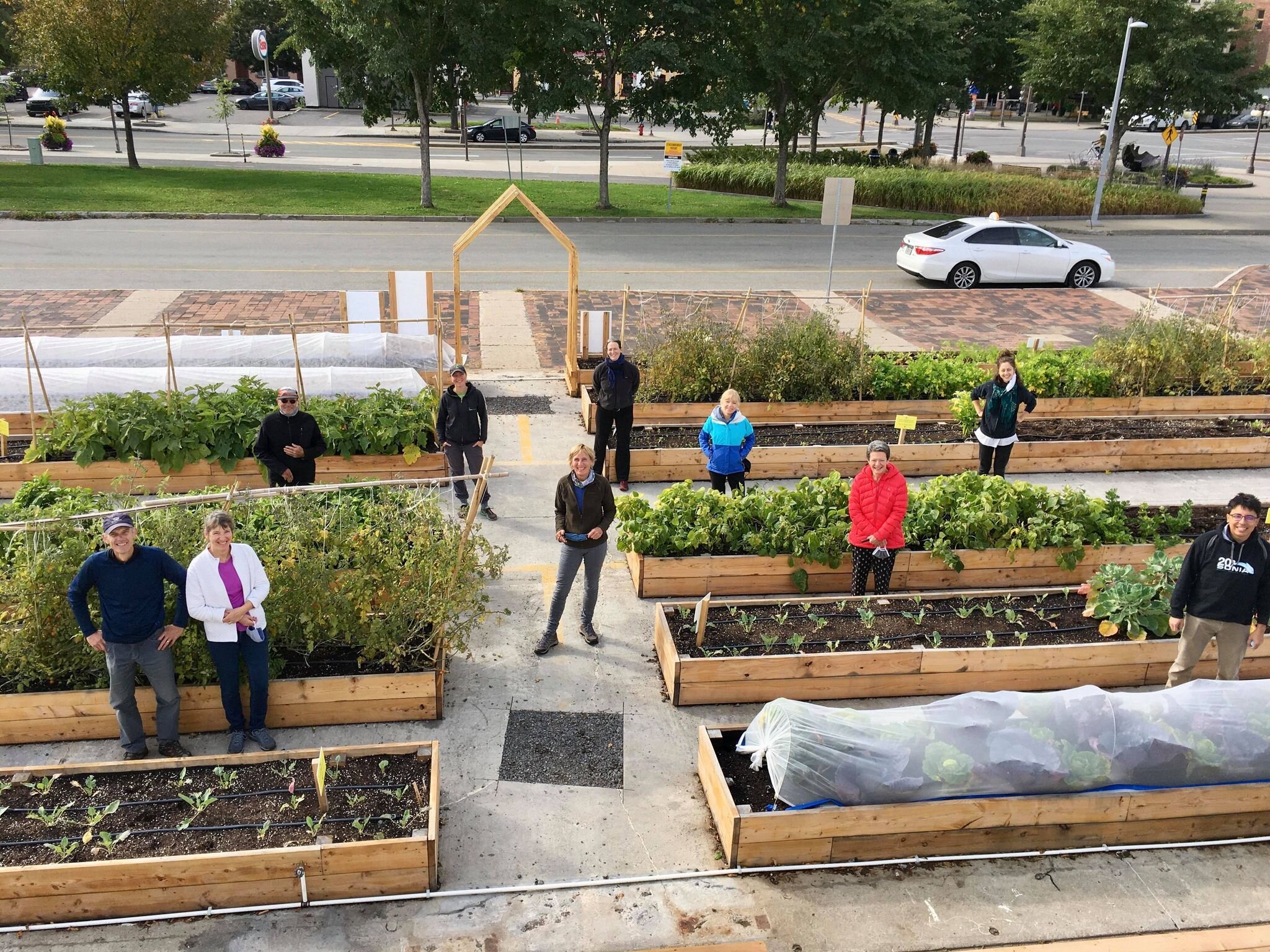
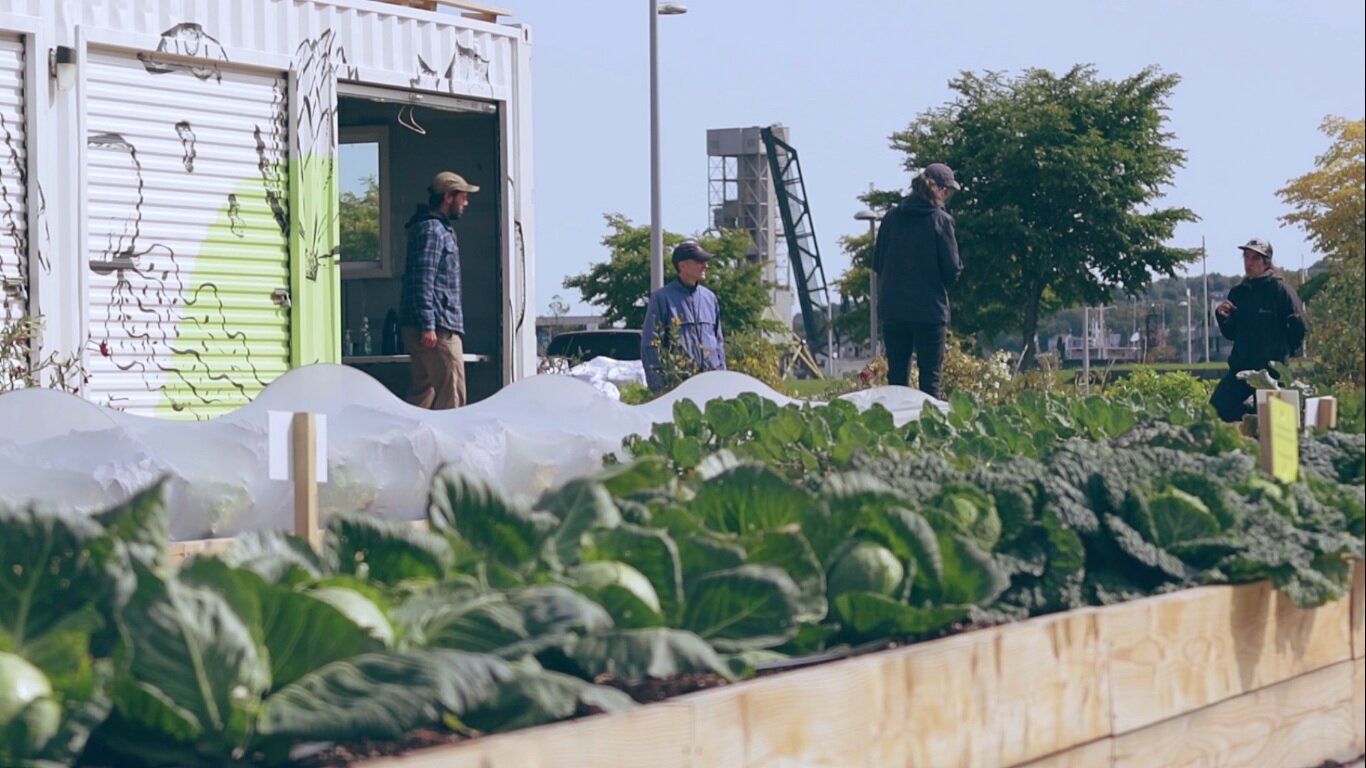
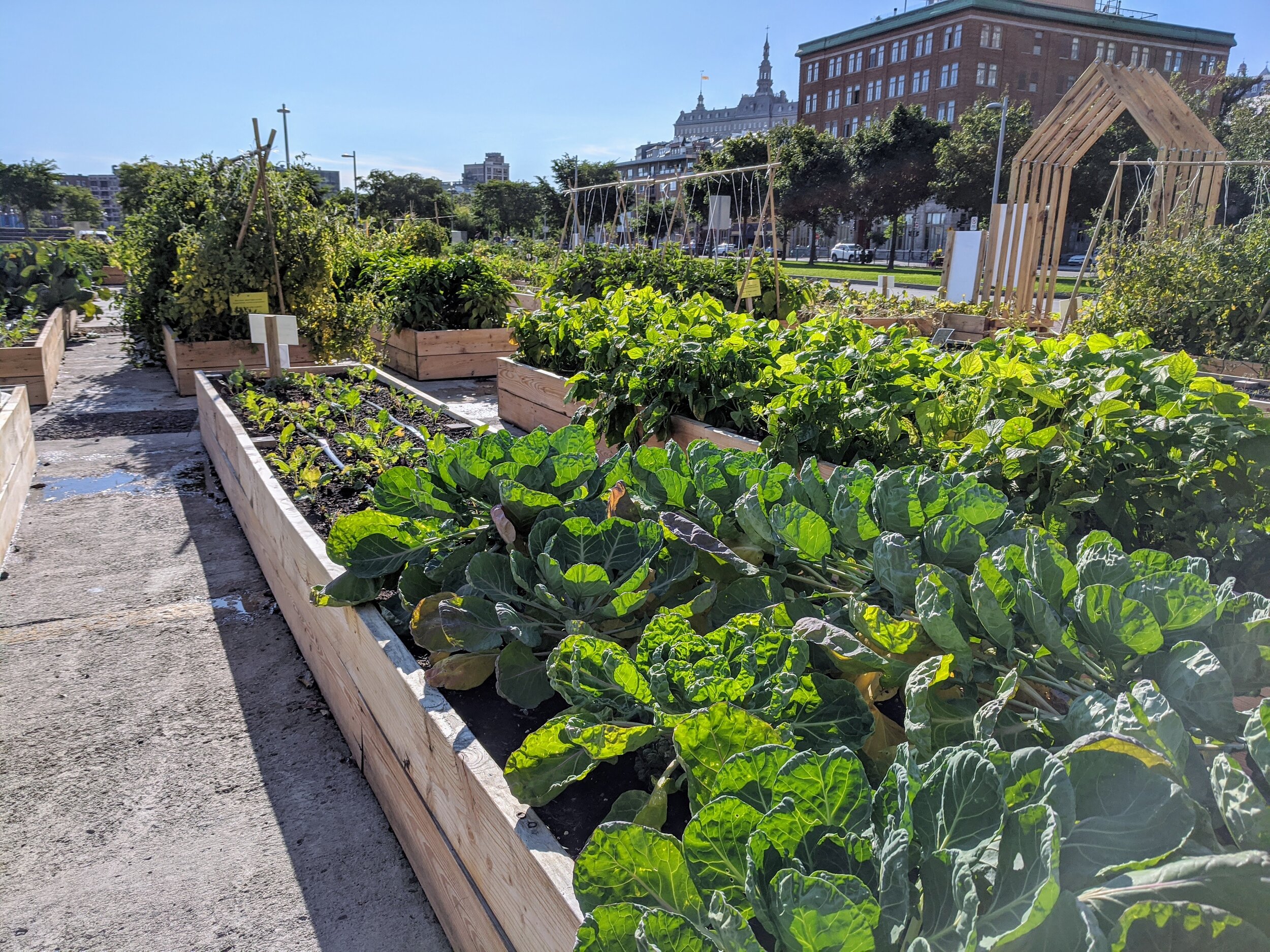
The new bio-intensive urban garden, started in 2020, consists of a series of long beds on concrete. “It’s really like a small farm,” she says.
Jacques says this new garden, Louise Basin Gardens, is an intersecting point of food security, community, education, and growing.
Making Home and Corporate Vegetable Gardens
Urban Seedling in Montreal installs home and corporate vegetable gardens.

Shawn Manning from Urban Seedling talks about helping people grow vegetable gardens and using corporate gardens to foster food security.
Today on the podcast we head to Montreal to hang out with Shawn Manning from Urban Seedling. He tells us how, 10 years ago, he channelled his love of growing vegetables into a business specialized in creating vegetable gardens.
Along with helping people create and grow vegetable gardens, another goal was to improve food security in the city. He realized that installing gardens for people who can afford a gardener probably doesn’t move the needle much on food security…but he’s tweaked the business to include corporate gardens—and use that as a way to improve food security in Montreal.
The Business of Vegetable Gardens
The business has evolved to include home vegetable-garden installation, planting, a garden centre, seedling sales, and corporate gardens.
Manning says that when he started, he created, planted, and cared for home vegetable gardens. But he found that some people are not interested in gardening—they only want fresh produce. “They didn’t really care about the vegetable garden, they just wanted the vegetables,” he explains.
He decided this wasn’t what he wanted. He tells people who are not interested in gardening that it’s best to order a produce basket from a farm of a CSA. “What I want is people that will actually appreciate their garden,” he says.
As well as focusing on clients who want to garden, he now teaches clients how to care for the garden. Initially, he cared for gardens through the season. But he grew to believe that clients would have the best results if they checked their gardens daily. As a result, he stopped offering maintenance service.
Customers also receive videos and a newsletter with guidance about how to care for the garden.
Corporate Gardens
Last year he was involved in 45 corporate gardens. Manning says that food security has always been a central tenet of the business, but corporate gardens have proven the best way to contribute to food security in the Montreal.
There are a couple of different corporate-garden models. In one model, Urban Seedling installs the garden and helps to get it going—and then employees or volunteers tend the garden and donate the harvest to food banks. “It’s definitely a really, really well received concept,” he says.
In another model, the garden is for employees. “It gives them another reason to want to go to work,” he says.
Step-by-Step Vegetable Gardening
Joseph Tychonievich shares his top tips for new vegetable gardeners.

Garden expert Joseph Tychonievich talks about vegetable gardening, and about his new book,
In a broadcast that originally aired live on The Food Garden Life Radio Show, we chat with author, horticulturist, and plant breeder Joseph Tychonievich.
Tychonievich shares his top tips for new vegetable gardeners.
As an avid food gardener, he grows many different food crops. But every so often he focuses on a particular crop and grows as many varieties as he can. He recently emerged from a cucumber phase…and as a teenager, he went through a pineapple phase.
He gardens in his own yard, a neighbour’s yard, and even inside in a closet.
Tychonievich’s new book is The Comic Book Guide to Growing Food: Step by Step Vegetable Gardening for Everyone.

The Comic Book Guide to Growing Food, by Joseph Tychonievich.
Vegetable Gardening Tips
What to Grow
Tychonievich points out that a common recommendation for new gardeners is to grow radishes, because they are easy to grow. He hasn’t met a lot of people who love radishes, so he takes a different approach: Start with what you like to eat.
Garden Size
Start small. If you can handle it, do more next year; and if you don’t, do less.
Making Garden Beds
He suggests new gardeners start with raised beds because by starting with new, weed-free soil, there are fewer weeds.
Buying Plants
Tychonievich is a fan of independent garden centres with knowledgeable staff who can help new gardeners.
Crater Garden, Regenerative Farm and Family
This permaculture operation has neat features including a crater garden, food hedge, and chinampas.

Tim Southwell of ABC Acres in Montanna talks about a regenerative approach to farming, family, community—and about his crater garden.
“Our chickens know no boundaries.”
We head to Montana to chat with Tim Southwell of ABC Acres, the permaculture homestead he and his his wife Sarah created.
Southwell, who grew up in suburban Houston, explains that it was while living in Kansas City and growing a front-yard vegetable garden that he was introduced to permaculture and many of the concepts that he uses today on the farm.
In addition to livestock, they have a crater garden, a food hedge, chinampas, and a sunken greenhouse with citrus, bananas, figs, and papaya.
The unique microclimate created by the crater garden permits them to grow apples, peaches, plums, nectarines, and apricots in their harsh climate. He explains, “Every fruit tree we have, we build with it a microclimate.”
Crater Garden
Southwell says that the microclimate in the crater garden—a below-grade garden—is created by a number of things that work together:
The winter sun warms the south-facing slope of the garden.
Runoff from rain collects at the bottom of the garden, creating a pond—and the water in the pond collects heat that is then radiated at night.
The water reflects light onto plants in the surrounding crater garden.
Because the garden is below grade, cold winds pass over top of it.
While frost normally settles into low areas, it does not settle into the crater garden because the thermal mass of the water creates convection, so the air keeps moving.
Large rocks are partially submerged in the pond to act as “battery chargers” in the pond, adding to the thermal mass.
Food Hedge
The food hedge, which Southwell calls the “fedge,” provides privacy, blocks wind, attracts birds, and keeps livestock where they are supposed to be. Food plants in the fedge include:
brambles
sand cherry
serviceberry
goji
aronia
josta
honeyberry
“My children will be outside grazing the food hedge.”
Chinampas
Southwell explains that he was inspired by systems used by Aztec famers to create “chinampas” on a boggy section of flood plain.
He placed cottonwood logs on the low-lying ground, and then capped them with old hay and leaves, which decompose to create a rich soil. Over time, the decaying, spongy cottonwood logs help to wick moisture upwards.
He says that in this sort of situation it’s important to grow plants that don’t mind moisture. Raspberries grow well for them.
Agritourism
Agritourism become an income generator on the farm in 2017. Southwell noticed a big appetite for opportunities to connect with farms, food production, and nature.
But he felt that farms, and the stories behind them, were poorly represented online. He and Sarah created the online platform yonder.com as a way for to connect people with nature.
No-Dig Gardening
No-dig gardening is good for the soil and for the environment. It’s also good for gardeners—who have less digging to do!
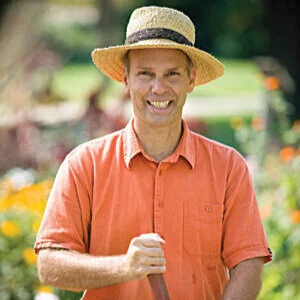
Garden expert Charlie Nardozzi talks about no-dig gardening
In a broadcast that originally aired live on The Food Garden Life Radio Show, we chat with Vermont garden educator and radio host Charlie Nardozzi.
Nardozzi discusses his journey into no-dig gardening—and why it’s good for gardeners, the soil, and the environment.
He also tells us about his new book, The Complete Guide to No-Dig Gardening.
Nardozzi hasn’t always been a no-dig gardener. He used to garden with a gas-guzzling tiller. He shares ideas for gardeners who want to create a new no-till garden, as well as ideas about how gardeners with existing beds can transition them into a no-till system.
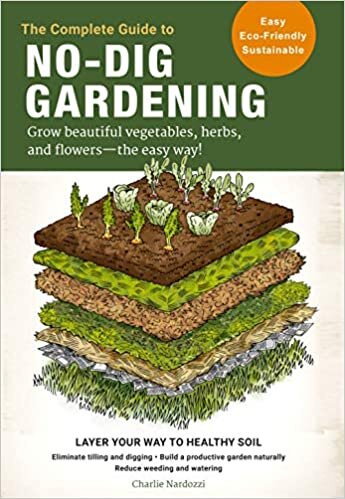
No-Dig Gardening by Charlie Nardozzi
Benefits of No-Dig Gardening
Nardozzi says that a key benefit of no-dig gardening is getting more from the same amount of space. Then there’s the work: Once a no-dig bed is established, it requires less heavy digging by the gardener.
There are also other reasons to consider a no-dig approach:
Weed seeds remain buried where they cannot germinate
Carbon remains locked up in the soil
Healthy soil microbe communities feed plants by breaking down organic matter and releasing nutrients
Emma’s Tomato-Talk Segment
In Emma’s Tomato segment, we explore the topic of “keeper” tomatoes. We got quite a reaction on social media a short while back when we posted pictures of bruschetta made from tomatoes we harvested in October. We still have some of those tomatoes in our storage room—and it’s February. They’re not canned, not frozen…they’re keeper tomatoes that store very well.
Biggs-on-Figs Segment
In the Biggs-on-Figs segment, we head to New York State to chat with permaculture teacher and grower Jonathan Bates at Food Forest Farm. He grows figs in a in an old sheep barn that he calls his “figgery”—and uses a “figloo” within it.
Fig plants are trained as “stepover” figs, horizontal cordons low to the ground. After harvest, Bates prunes vertical branches back to the main horizontal trunk, then he makes a figloo over top for winter.
Bates also discusses varieties suited to his climate and growing method. Florea and St. Rita do very well for him.
Breeding Tomatoes for the "Holy Grail"
With a reputation for unusual and wildly popular tomato varieties, tomato breeder Brad Gates focuses above all else on flavour.

Brad Gates of Wild Boar Farms on breeding tomatoes.
“I was looking for the holy grail that would have my customers come crawling back on their hands and knees.”
With a reputation for unusual and wildly popular tomato varieties, tomato breeder Brad Gates focuses above all else on flavour.
He didn’t start out working in tomato breeding. While working in the landscape industry, he was asked by a friend to help sell heirloom tomatoes at a farmers market. Gates loved the energy at the market—and he was fascinated with the unusual heirloom tomatoes.
So he started growing, and, eventually, breeding tomatoes.
Tomato Breeding
Gates says that flavour is always his top goal. Other important traits include:
pest and disease resistance
yield
shelf life
Tomato Flavour
Gates says, “Tomatoes have the potential of so many flavour aspects.” These include:
umami
richness
tartness
sweetness
He says that in general, he finds store-bought tomatoes are “one-dimensional.”
Looking Ahead
Heat and cool tolerance are traits that he has found in some of his varieties. For example,
Pink Berkeley Tie-Dye does well in cooler climates such as San Francisco, which is cool and foggy.
Lucid Gem has proven to be very tolerant of hot weather. In heat waves, when other varieties do poorly, Lucid Gem stands up well.
Gates says that he is currently working on small, two-foot-high tomato varieties that produce gourmet tomatoes.
Why small? Gates says, “Why grow one or two varieties when you can grow 10 or 15?”
More on Tomatoes

Harvest More With Garden Bed Covers
Find out how to use garden bed covers to harvest more and deter pests: row covers, cloches, cold frames, greenhouses.

Niki Jabbour, author of Growing Under Cover: Techniques for a More Productive, Weather-Resistant, Pest-Free Vegetable Garden, talks about using garden bed covers.
In a broadcast that originally aired live on The Food Garden Life Radio Show, we chat with vegetable gardening expert Niki Jabbour about using garden bed covers. She is the author of the new book, Growing Under Cover: Techniques for a More Productive, Weather-Resistant, Pest-Free Vegetable Garden.
Jabbour is a Halifax-based, award-winning author, host of The Weekend Gardener radio show, and one of the experts behind the gardening website Savvygardening.com.
She discusses the benefits of using garden bed covers, choosing covers suited to your situation, how to boost insulation of cold frames, tips for people thinking of a greenhouse, and greenhouse covering materials.
Why use Garden Bed Covers
Jabbour says that there are many reasons to use garden bed covers. “It’s about gardening smarter, not harder,” she says.
Reasons to use garden bed covers include:
Larger harvests
Better ability to control the growing environment
Year-round harvests
Including more “hyper-local” food on the menu
Reduced pest pressure
Creating conditions suited to exotic crops
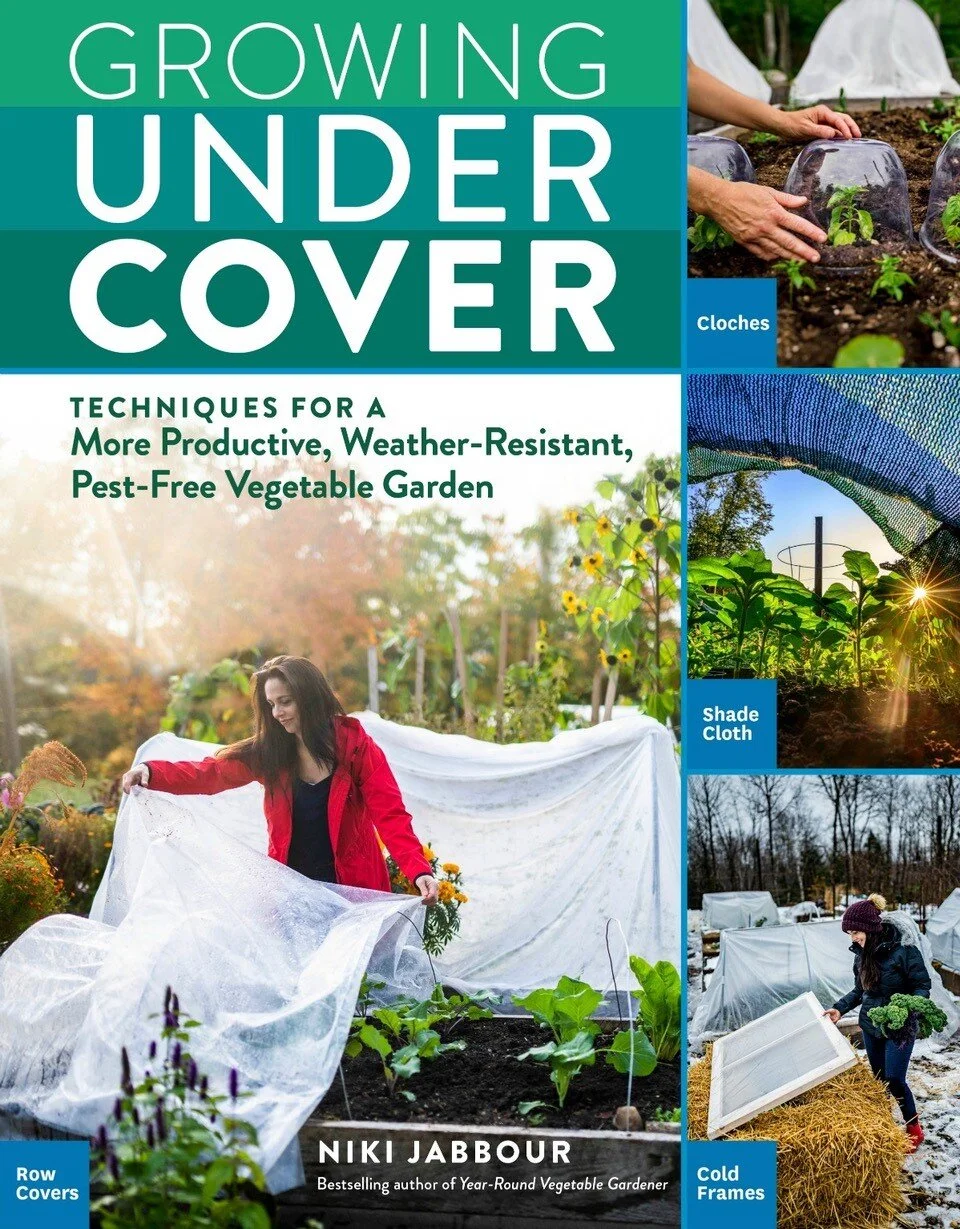
Growing Under Cover, by Niki Jabbour
6 Ways to Boost Insulation of Cold Frames
In Growing Under Cover, she talks about six ways to boost the insulation of cold frames.
Line with foam
Add thermal collectors such as water-filled bottles
Surround with straw or boughs
Bury the cold frame in soil or mulch
Seal the cold frame with weatherstripping
Cover it on cold nights with carpet, old blankets, or some sort of insulating material
Types of Garden Bed Covers
Jabbour points out that not everyone has the space or money for a glass greenhouse. But there are many other options to provide cover for crops. These include:
Row covers
Cloches
Cold frames
Plastic-covered greenhouses
Mini hoop tunnels
Emma’s Tomato-Talk Segment
DO YOU EVER FEEL overwhelmed when trying to choose tomato varieties for your garden? In Emma’s tomato segment, she talks about choosing tomato varieties suited to your garden. She talks about:
Thinking about your own preferences
Days to maturity
Plant size
Disease resistance
Shipping costs
Biggs-on-Figs Segment

Melinda Myers talks about growing figs and artichokes in Wisconsin.
In the Biggs-on-Figs segment, we head to Wisconsin to chat with gardening expert Melinda Myers, who grows figs and artichokes in her USDA zone 4b garden.
A fig grower for over a decade, Myers says she also likes to include figs in her presentations because it gets people’s attention. “It always gets a second glace from anybody in the North or Midwest,” she says.
Find Myers online at melindamyers.com, where she is currently offering a number of free webinars.
Cultivate a Taste for Bitter Foods...and Cardoon Plants

Toronto chef and author Jennifer McLagan talks about how to cook bitter foods such as cardoon plants. Photo by Shane Reid.
Chef and author Jennifer McLagan joins us to talk about bitter foods, explaining what bitterness is, and how to effectively use bitter in the kitchen.
McLagan is the author of the book, Bitter: A Taste of the World’s most Dangerous Flavor, with Recipes.
The Loss of Bitter
McLagan recalls the grapefruit that her mother served her as a child. They had a slight bitterness—an “edge.” Her mother balanced that bitterness with a sprinkle of sugar on top.
McLagan says bitterness has been bred out of modern grapefruit. Now they’re sweet and pink…with no bitterness.
That loss inspired her book. “They don’t taste like grapefruit any more,” she says.
What is Bitter?
McLagan says that many people confuse bitter with sour. It is different from sour—one of the four basic tastes, along with sour, sweet, and salty.
“It adds a complexity and depth to the food,” says McLagan, explaining that using bitterness—like salt—makes food more interesting and less flat.

Cardoon plants are one of the bitter foods in Jennifer McLagan’s book, Bitter
She gives the example of crème brulée: The caramel topping has a bitter edge, which plays well with the sweet, rich pudding below.
Cooking with Bitter Foods
McLagan says that bitter is not as popular in North American cuisine as it is in other parts of the world. “The American palate is very geared towards sweet,” she explains.
Bitter pairs well with fat and with sweetness. “Bitter and fat are the two perfect things; one rounds out the other,” she says.
Here are ideas for using bitter in the kitchen:
McLagan talks about making turnip ice cream. She also suggests caramelizing turnips, which go well with baked apple or apple pie.
McLagan suggests cooking Belgian endive in butter (because fat and bitterness work well together) and then using that juice to make béchamel sauce, with added emmenthal cheese, to serve over top of the Belgian endives.
She has surprises in her book! There is a pannacotta with tobacco. McLagan says that small pieces of cigar give it a complex taste. A pannacotta is rich and creamy, and the bitterness from the tobacco comes through very gently at the back of the throat, making it a much more complex dish.
How to Cook Cardoon
For those who have never seen cardoon, McLagan describes it as “celery on steroids.” It has big, wide ribs. And it’s in the cover photo of her book.
The part of the plant that is eaten is the leaf rib. The rest of the leaf is discarded.
She describes it as having an artichoke-and-mushroom flavour—one that will seduce you once you appreciate the bitterness.
Here are McLagan’s tips for preparing and cooking cardoon:
Cut the cardoon stalks from the base.
Remove the spikes along the edge of the rib using a knife.
Next, remove the strings from the stalk (it’s like pulling the strings from a celery stalk).
McLagan finds a sharp knife works better than a vegetable peeler because there are a lot of strings and a peeler plugs up.
Once the stalks are prepared and you begin to chop them, you might find additional strings. If so, remove them.
Once chopped, place them immediately into water with lemon juice to prevent them from browning.
Cook in salted water until tender (the salt is important because salt helps pull out bitterness).
Drain.
Remove any remaining strings.
She says a great way to serve cardoon is with a cheese sauce. “When you put cheese on something, people love it,” she says.
MgLagan notes that the inner stalks are milder, with a better texture. They are less stringy, with a delicate silver-green colour and feathery leaves. She advises using stringy outside stalks for soup; and the more tender inside ones for a gratin or salad.
Here are the cardoon recipes she includes in the book:
Cardoon gratin
Cardoon soup
Warm cardoon and potato salad
Cardoon beef tagine
Cardoon cheese
Cardoon and bitter-leaf salad
Cardoon with braised bitter greens,

My daughter Emma with a cardoon flower. The plants have great ornamental value too.
Bitter in the Garden
One of the challenges—and delights—of growing new food crops in the garden is figuring out how to use them in the kitchen. Looking to add bitter to your garden? Here are ideas:
Arugula
Belgian endive
Cardoon
Citrus rind
Olives
Radicchio
Turnip

Tasty Tomatoes for Small Spaces: The Dwarf Tomato Breeding Project
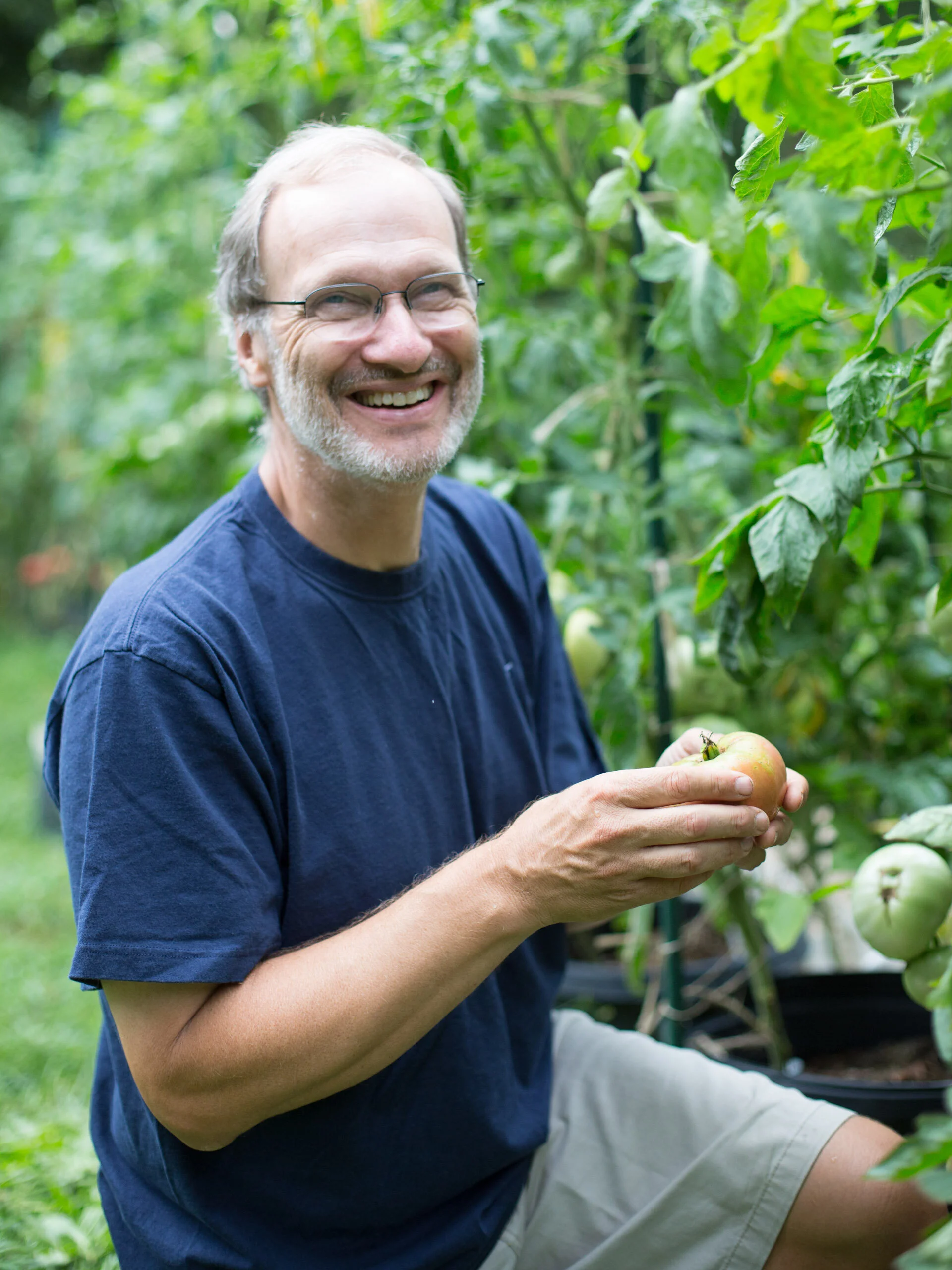
Craig LeHoullier, author of the book Epic Tomatoes and one of the founders of the Dwarf Tomato Breeding Project
We’re joined by tomato expert Craig LeHoullier to talk about the Dwarf Tomato Breeding Project, preserving seed varieties, and to find out what’s new in his garden.
LeHoullier, an avid seed saver with a passion for saving and sharing heirloom tomato varieties, says that his seed collection contains somewhere between 50,000 and 70,000 seed packets.
Dwarf Tomato Breeding Project
The project began in 2004. LeHoullier was getting a lot of questions about compact varieties at his annual tomato-plant sale.
He explains that dwarf tomato varieties, which grow vertically at approximately half the rate of other indeterminate tomato varieties, already existed at the time. But these dwarf varieties were obscure and hard to find.
He teamed up with a friend in Australia to start breeding new dwarf tomato varieties. That initiative soon grew into an open source, volunteer-run, worldwide breeding project. The goal was to breed stable, open-pollinated, dwarf tomato varieties from which gardeners could save their own seed.
The project began releasing dwarf tomato varieties to seed companies in 2010.
By 2020, 135 varieties had been released. And the project continues!
More on Tomatoes
Plant Partners: Science-Based Companion Planting

Jessica Walliser, author of Plant Partners: Science-Based Companion Planting Strategies for the Vegetable Garden
We’re joined by Pittsburgh-based horticulturist and author Jessica Walliser to talk about her new book Plant Partners: Science-Based Companion Planting Strategies for the Vegetable Garden.
There is a lot of folklore that finds its way into discussions about companion planting. Walliser explains that her hope is to reboot the term “companion planting” by looking at it through a scientific lens.
What is Companion Planting?
Walliser says that companion planting is purposely planting two or more plants close together to get some sort of benefit.
Companion planting does not have to mean putting two plants together at the same time, however; it can also mean growing plants in succession.

Common terms used in science that overlap with the idea of companion planting are:
Intercropping
Plant partners
Interplanting
Polyculture
Benefits of Plant Partners
In her book, Walliser has chapters on seven different benefits of using plant partners in the vegetable garden.
Soil preparation and conditioning
Weed management
Support and structure
Pest management
Disease management
Biological Control
Pollination
An example of pest management is using “trap crops” to lure pests away from other crops. Squash bugs prefer blue hubbard squash to other squash varieties—meaning it can be used as a “trap crop.”
A plant partnership that helps to control aphid problems on lettuce is to grow sweet alyssum as a partner. The alyssum flowers are a favourite of both predatory and parasitic insects that help to control aphids.
For weed management, there are cover crops that suppress growth of weed seeds the following season. Those same cover crops also build soil structure as they decompose.
Living trellises are functional and can be aesthetically pleasing. A good example is using corn with beans.
Ever Heard of “Biodrilling”
An example of a plant partnership to help prepare the soil is the use of deep-rooted forage radishes as “biodrills” on heavy clay soil.
These plants have long tap roots that penetrate heavy soil. The roots are left in the soil to decompose instead of harvesting them. Walliser explains that it’s like using a living drill instead of tilling the soil!

Hi, We’re Steve and Emma!
We help people grow food on balconies, in backyards, and beyond—whether it’s edible landscaping, a vegetable garden, container gardens, or a home orchard.