Civil Disobedience with Vegetables

Marie-Hélène Jacques from Les Urbainculteurs joins us to talk about moving the needle on growing food in Quebec City
Today on the podcast we head to Quebec City to talk about civil disobedience: Civil disobedience with vegetables.
Marie-Hélène Jacques from the not-for-profit organization Les Urbainculteurs – which translates into urban growers – joins us to talk about moving the needle on growing food in Quebec City.
The urban agriculture scene in Quebec City is hot right now. Jacques says, “It’s not like a wave of interest that’s happening now in gardening — it’s a tsunami of interest.”
Civil Disobedience with Vegetables
Jacques says that it was only in 2019 that growing vegetables in front yards became legal in Quebec City.
Back in 2013, when I was on a garden writer’s tour of Quebec City, we visited an installation of vegetables growing right in front of the National Assembly building in the centre of the city.
Jacques explains that Les Urbainculteurs was able to get around the rules and grow vegetables in front of the building because of a technicality … the official address of the building is on another street.
She says this project got a lot of notice, adding, “It was a game-changing moment for urban agriculture in Quebec City.”
A Rooftop Garden
Jacques talks about the former Lauberivière garden, which was on the roof of a soup kitchen in the city core.
This diverse garden of vegetables and small fruit consisted entirely of fabric pots. The harvest went to the soup kitchen below…about 1 metric tonne of it a year.
Jacques says that one of the magical aspects of the Lauberivière garden was the way it brought together people who might otherwise have never met or spoken: She recalls seeing teenagers learning French speaking to stroke victims and to people doing community work.
The closing of the rooftop garden in 2016 left a big hole in the organization. “It was one of our most meaningful projects,” says Jacques.
An Urban Farm in the Port
The challenge was to find a new location that was centrally located, accessible by bike, transit, and walking. Jacques says they waited for a suitable site—even turning down some possible sites.
When a space in the port area of the city became available, they felt they had the right location. There had formerly been a farmer’s market on the site, and the community sorely missed having a focal point.
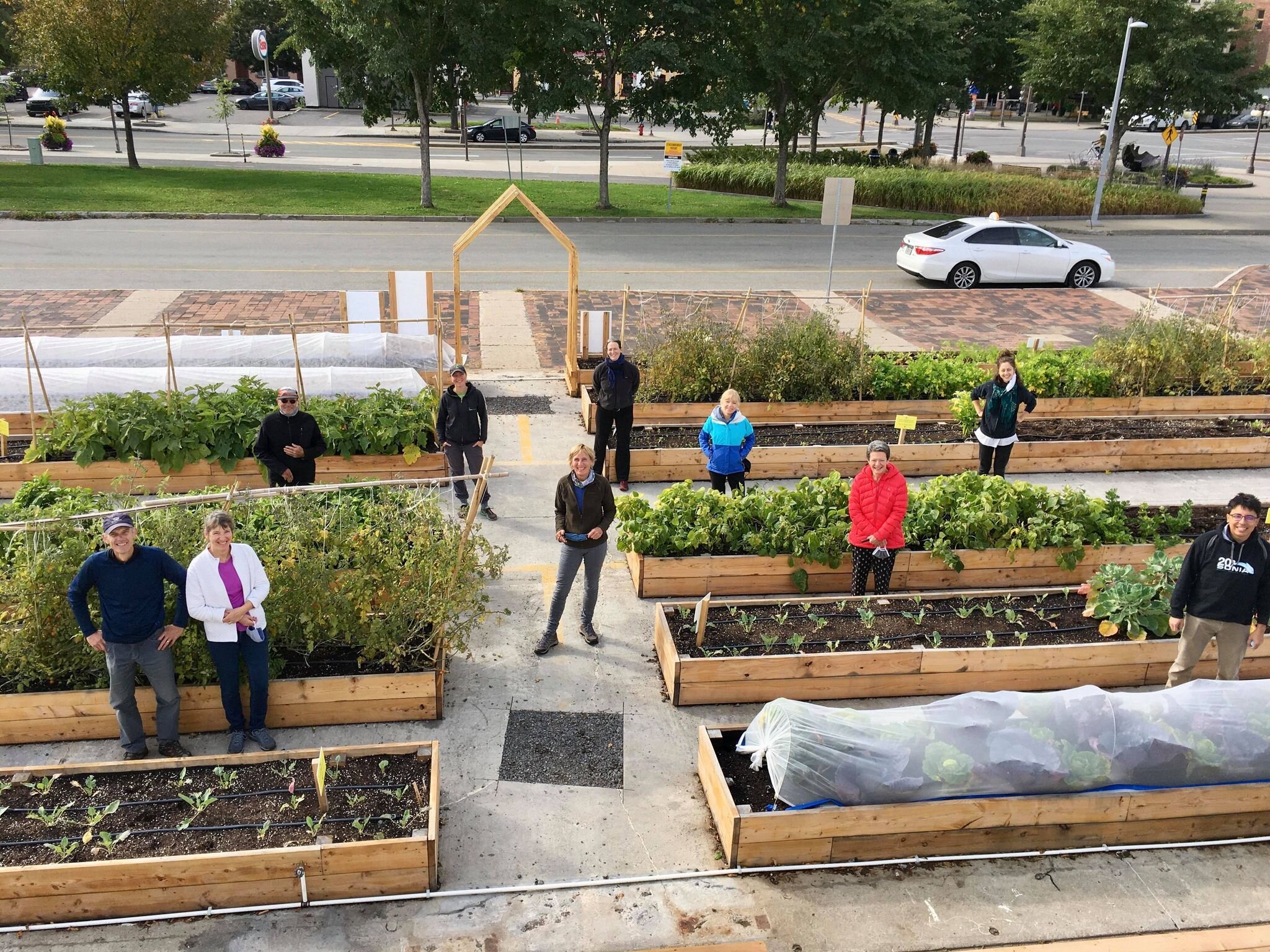
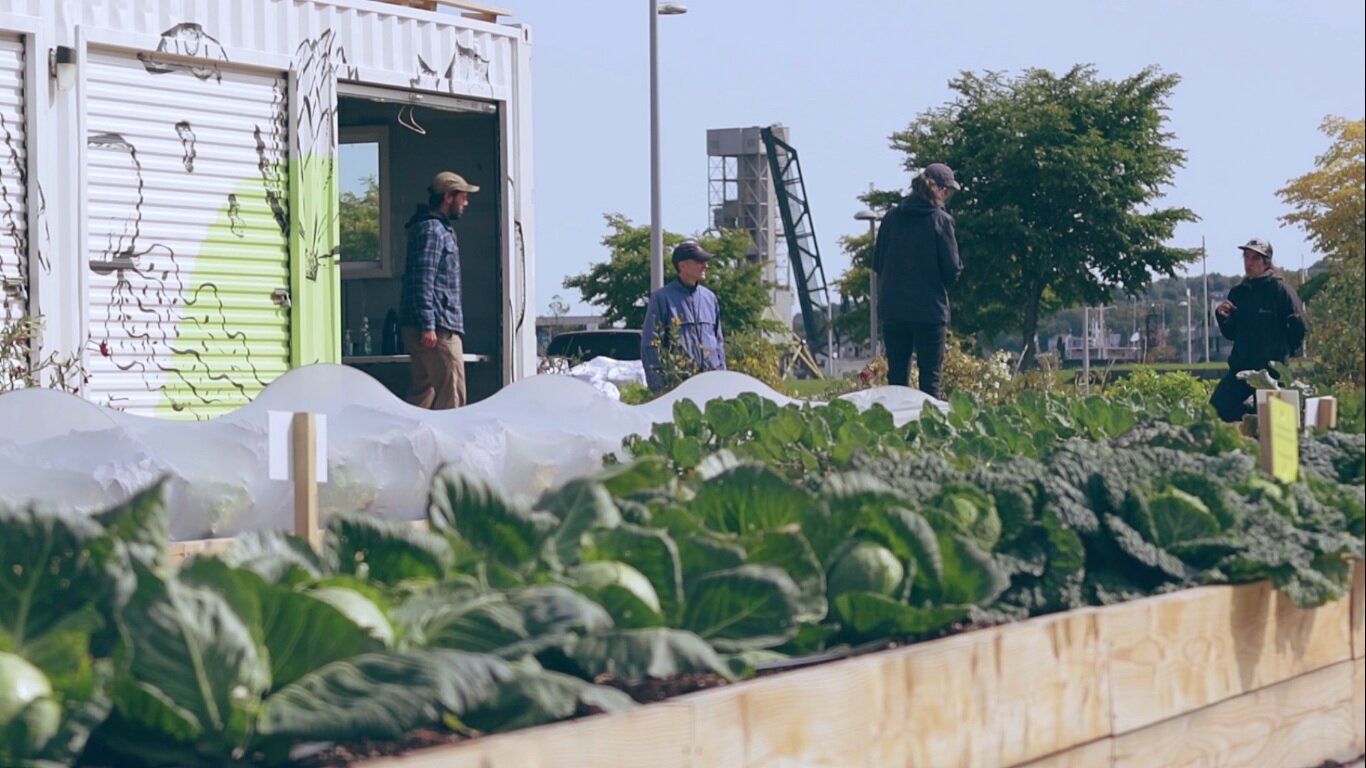
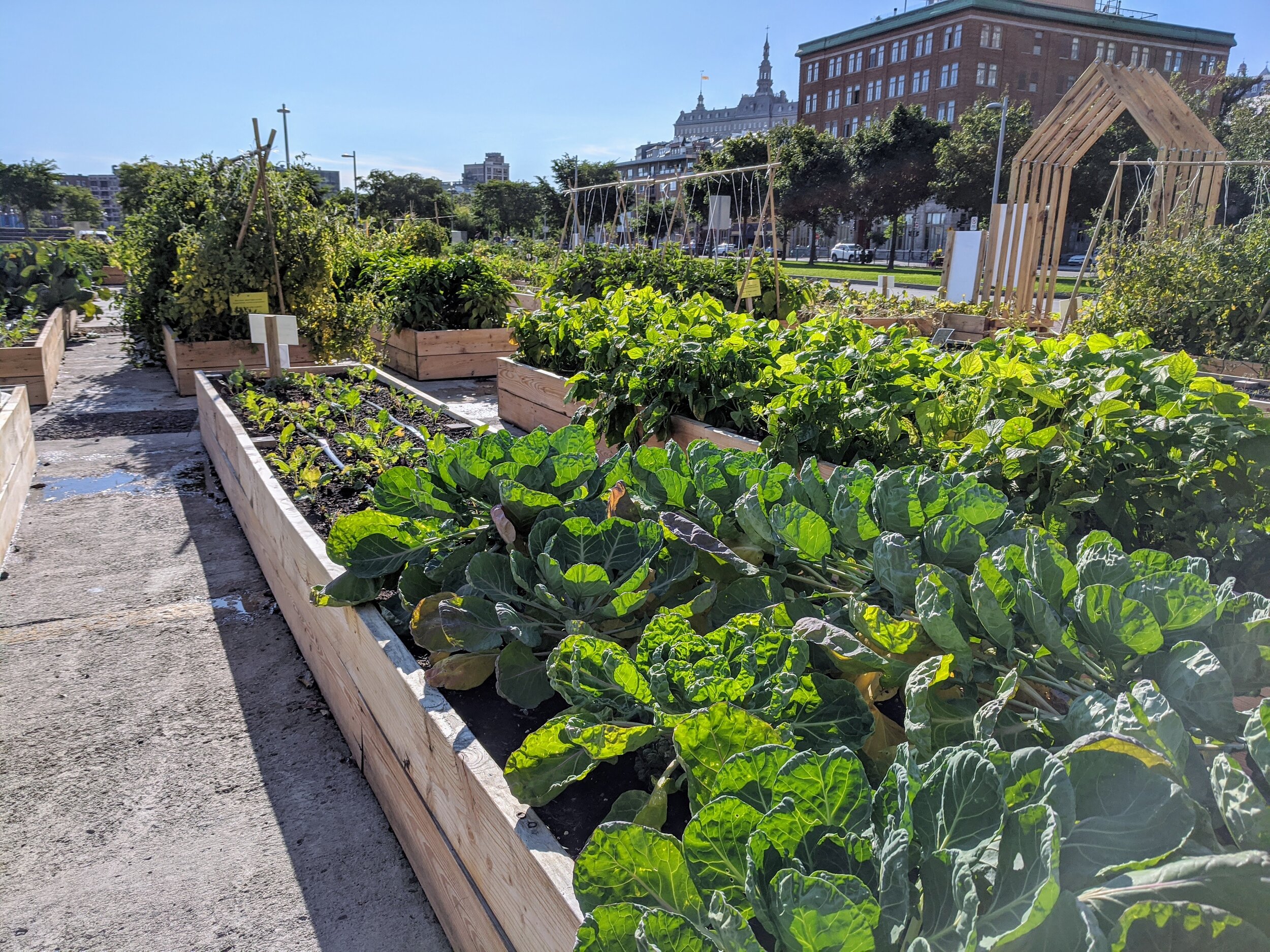
The new bio-intensive urban garden, started in 2020, consists of a series of long beds on concrete. “It’s really like a small farm,” she says.
Jacques says this new garden, Louise Basin Gardens, is an intersecting point of food security, community, education, and growing.