
The Food Garden Life
The garden is the point
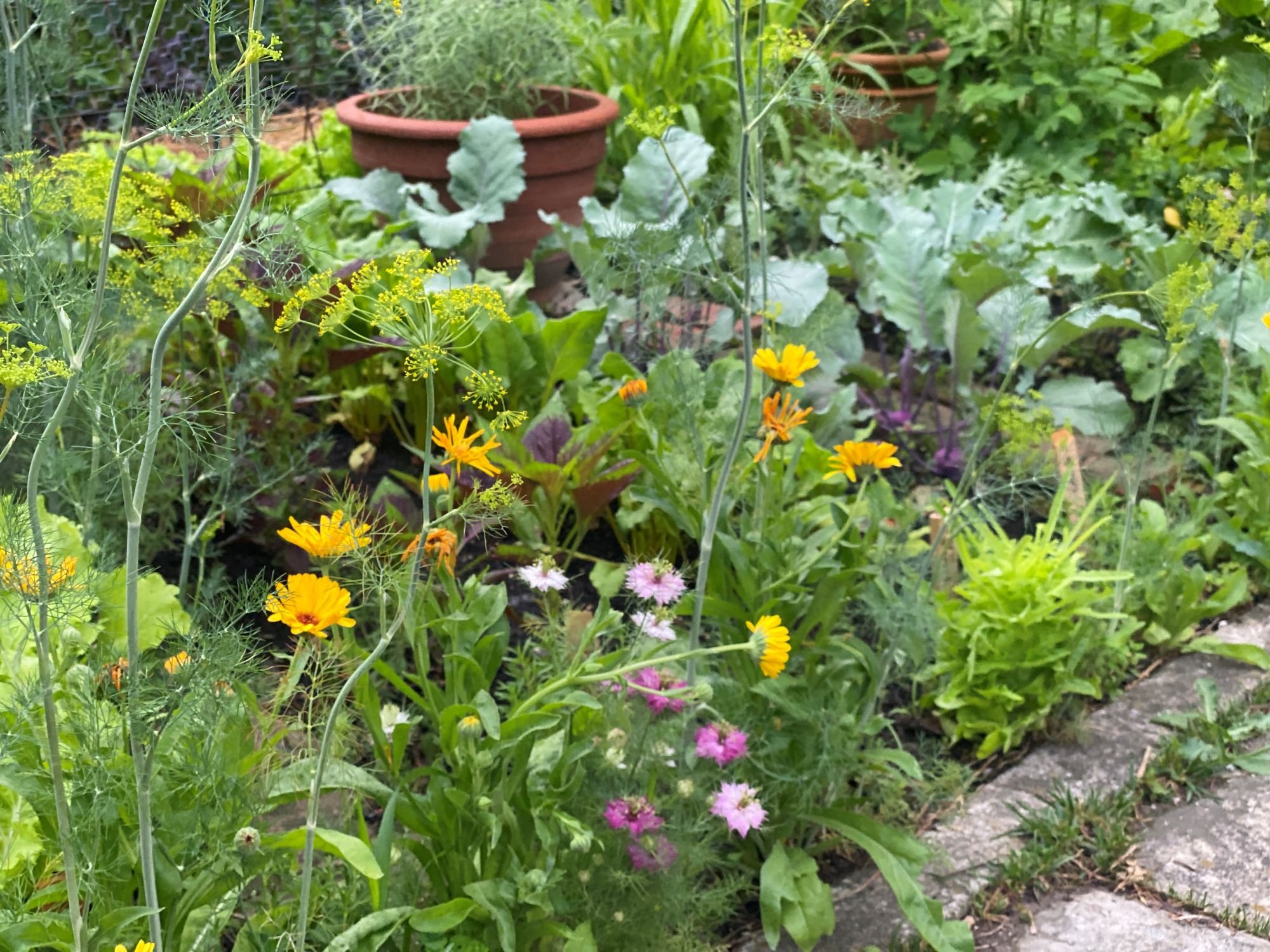
Food gardening woven into everyday life in my Toronto garden.
I grow food because I like good food. I enjoy a sun-warmed tomato right off the vine, a perfectly ripe fig, and something for supper that was in the garden only half an hour earlier.
But the harvest is only part of it.
I get a kick out of watching, trying, noticing, and sometimes being surprised. There’s the rhythm of the seasons. There’s the satisfaction of turning an ordinary space into something productive and beautiful.
The garden isn’t simply a place to grow food. The garden itself is the point.
That is what I mean by the food-garden life.
Grow food where you already live
There’s no need for a country property, large vegetable patch, or elaborate garden plan to grow food.
Lots of home gardeners have less-than-perfect conditions. We have shade, small lots, busy lives, poor soil, neighbours, driveways, balconies, children, work, raccoons—or some combination of these.
I’ve learned to start with the space I have.
When I removed our front lawn and planted vegetables, it wasn't the usual thing to do in our neighbourhood. I was hesitant—worried what the neighbours would think. “They already know you're eccentric,” Shelley told me. It was reassuring. Probably true.
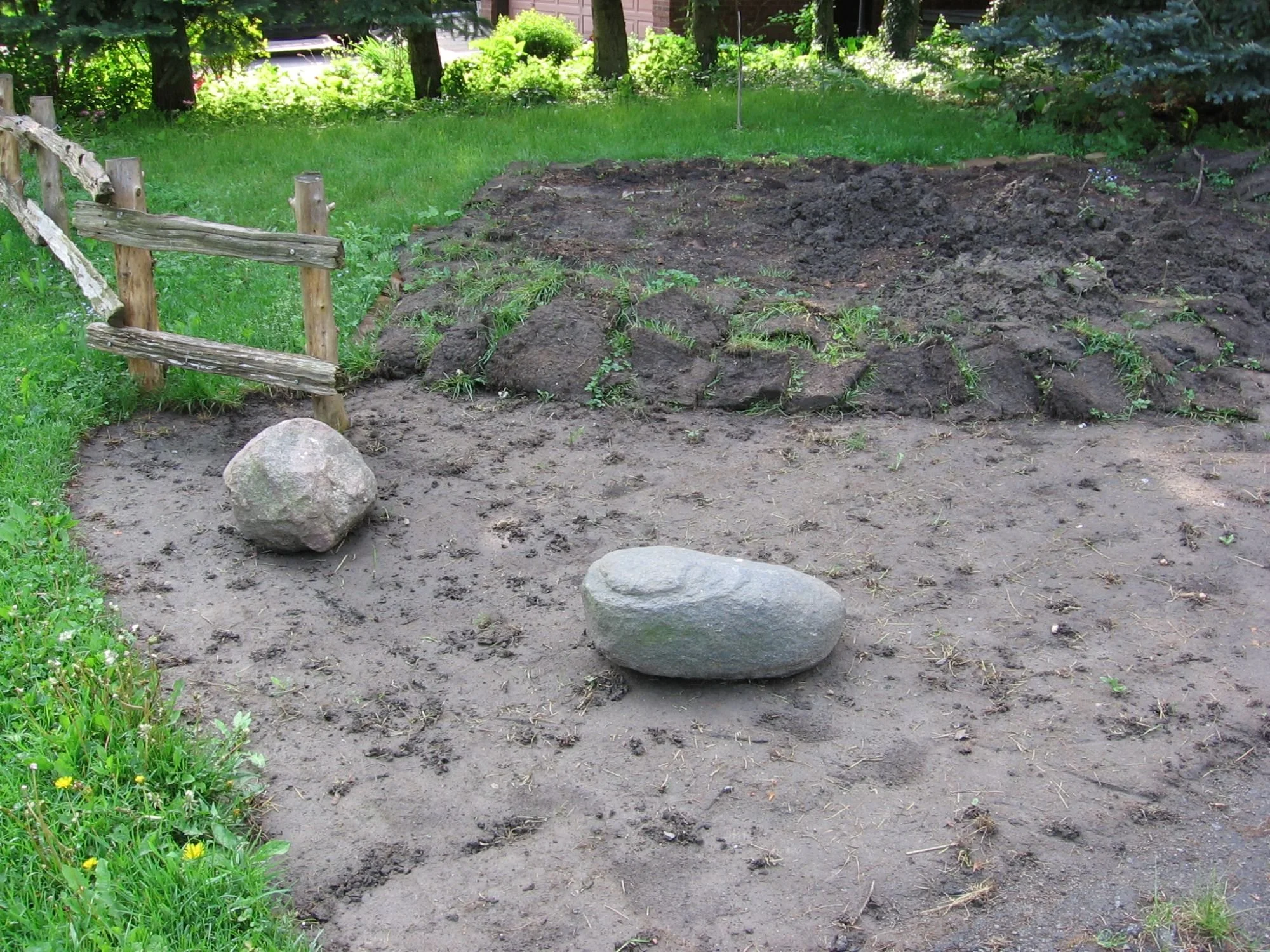
In the process of removing the front lawn, adding rocks and split rail for visual appeal.
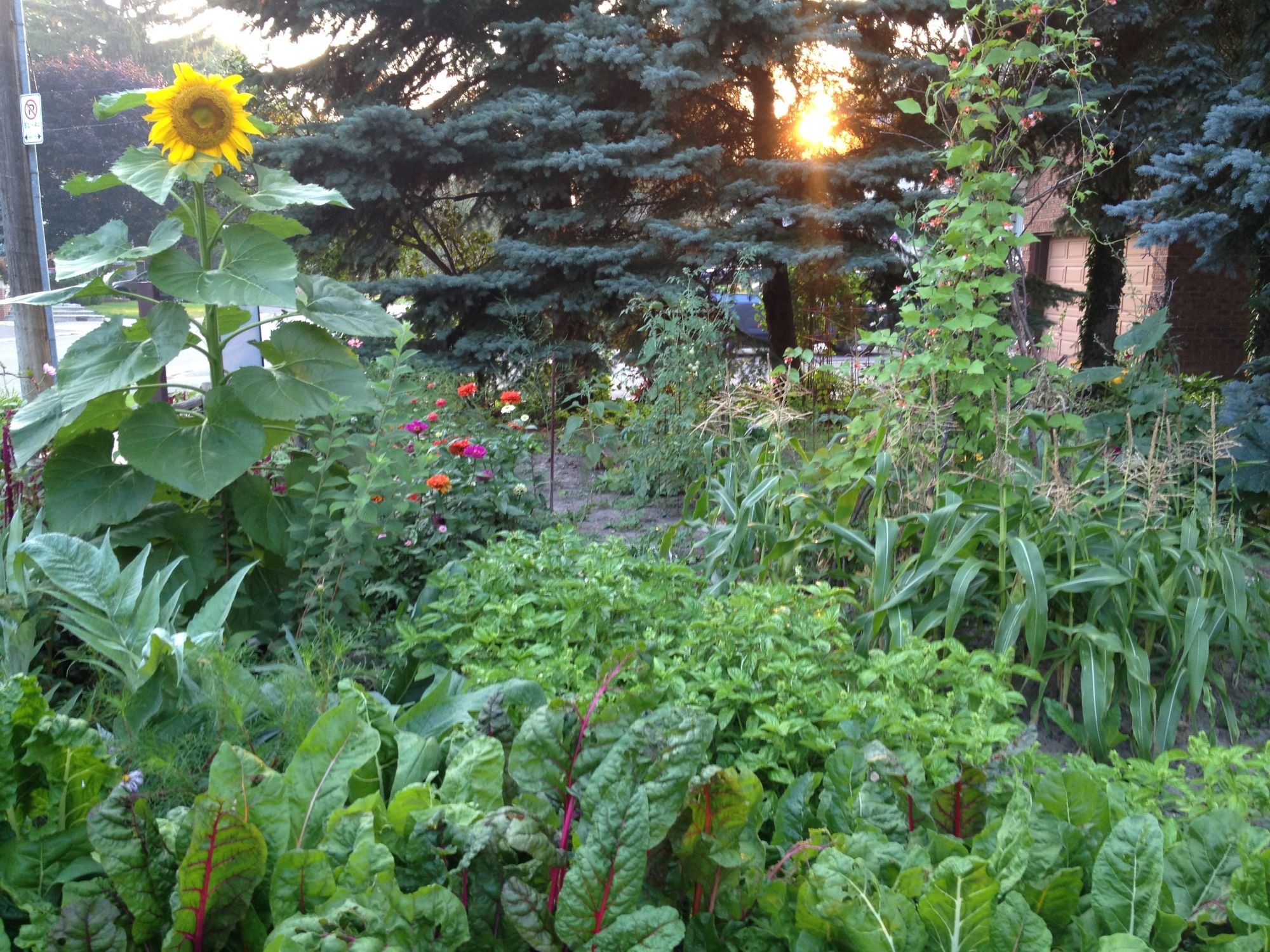
The food garden that took the place of the lawn.
A front yard can become an edible landscape. A driveway can become a vegetable garden. A garage roof can become a kitchen garden. A patio can become a herb garden. Food plants can fit along fences, beside flowers, and in spaces never intended to be a traditional vegetable patch.
My own Toronto garden includes many of these. It changes as family life, available time, and my interests change. My garden is never “finished.” I'm not sure a finished garden would be much fun.
A garden that fits real life
Gardening advice often comes as a list of things we should be doing.
We should start earlier. Weed more often. Prune at a certain time. Keep better records. Grow a cover crop. Make perfect compost. Preserve what we harvest.
All useful ideas. But a garden is part of life, and life rarely fits perfectly with the garden calendar. I want my garden to fit my life.
A garden can be ambitious or modest. Tidy or bursting at the seams. It can feed a family, provide a handful of herbs, or produce one favourite crop.
I know it’s not realistic to grow every vegetable I eat. And I’m OK with a few weeds.
The aim isn't garden perfection. It is to make room in ordinary life for the pleasure, food, and connection a garden gives.
Gardening where winter matters
Canadian gardeners sometimes read gardening advice with a raised eyebrow.
Advice written for another climate isn’t necessarily wrong. But winter changes our timing, plant choices, and methods. A recommendation that makes perfect sense in California, southern England, or the southeastern United States might need a few tweaks here.
That’s where being a home gardener gives me some freedom. I’m not growing acres of a crop or trying to make it commercially viable. I can spend extra time on a few plants simply because they interest me.
I can tip a fig tree and cover it for winter. Move citrus indoors. Reserve the hottest part of the driveway for melons. Choose a variety that ripens a little sooner. Or decide that one particular crop is worth a bit of fussing.
Winter shapes the way I garden. But working on a home-garden scale leaves lots of room to observe, adapt, and experiment.
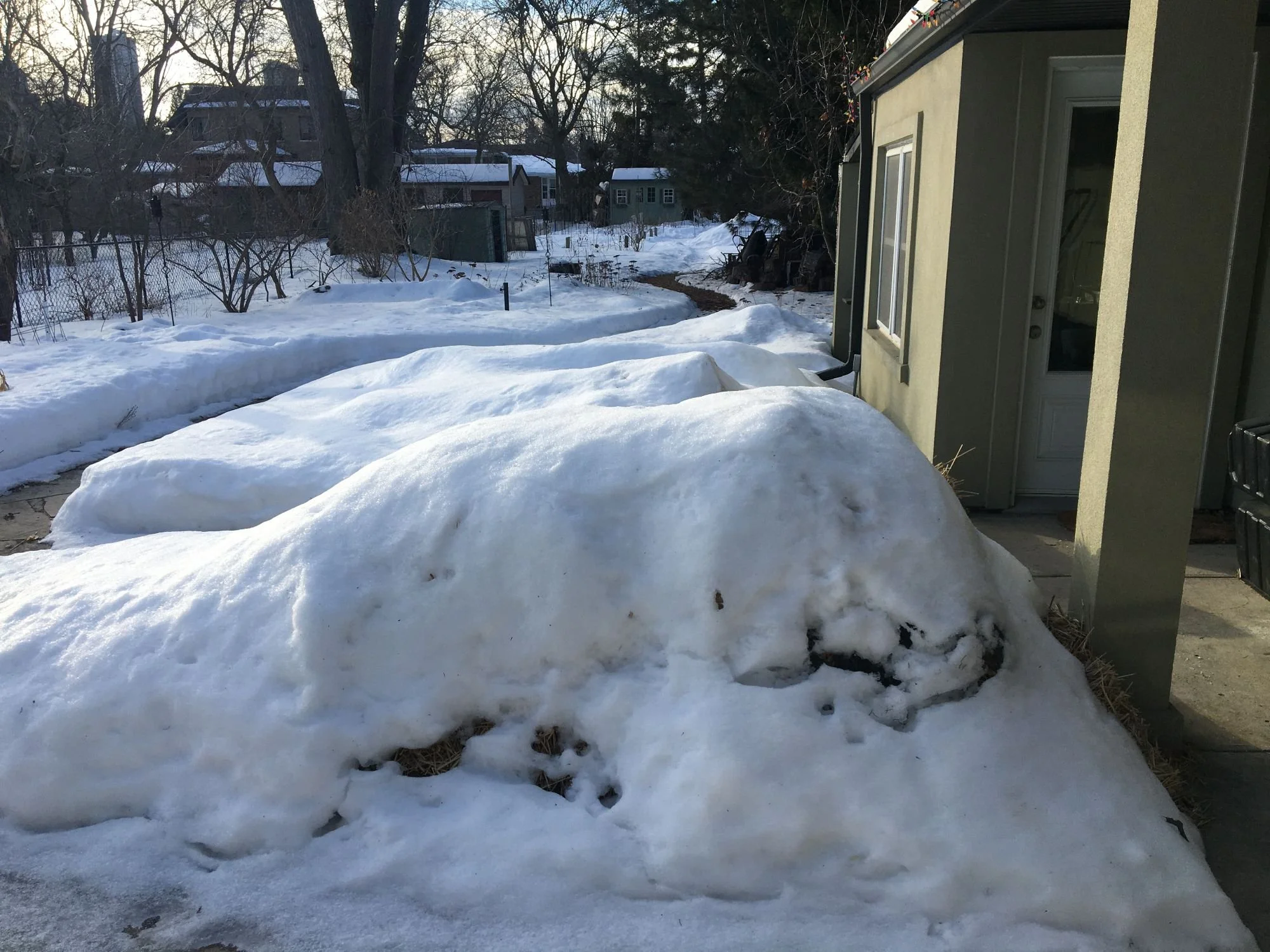
Winter sets the conditions. It doesn’t always get the final word. Here’s a fig tree tipped flat and covered with straw—and snow—for the winter.
Food and beauty belong together
When I worked on a farm, the veg grew in rows at the edge of a nearby field. The ornamental plants grew near the house.
It made sense in that setting. But in many home gardens, there’s no need for that kind of division.
Many edible plants are beautiful. Fruit trees give structure, blossom, shade, and food. Herbs spill over paths. Pole beans cover a fence. A well-placed currant bush, tomato plant, or clump of sorrel can earn its place in a garden in more than one way.
An edible garden doesn't have to look like a farm. Nor does every plant have to justify itself by being edible. Beauty has a place in a food garden, just as food has a place in the landscape.
The gardens I most enjoy do several things at once.
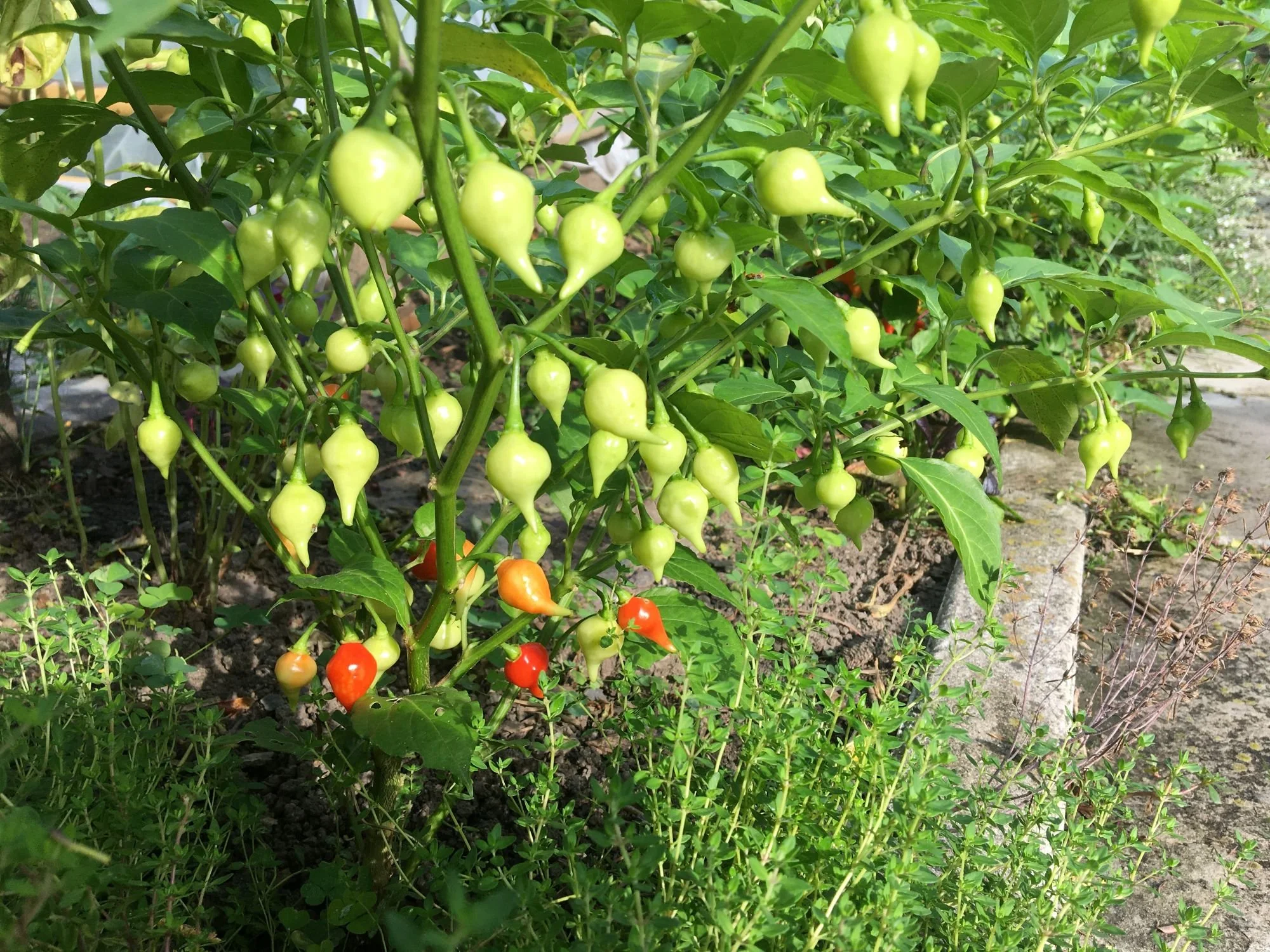
Biquinho pepper plants used as bedding plants along the edge of a border. Useful and beautiful don’t need separate gardens.
Question the rules
Gardening is full of rules. Some are useful. Some are rules of thumb that have hardened into fact. And some are simply repeated because they have always been repeated.
Rules are more useful to me when I understand what sits behind them. Once I understand the principle and pay attention to the plant and the place, I’m quite happy to try something different.
For me, experimenting doesn’t mean ignoring what’s known. It means applying knowledge with curiosity. I might grow the melon in the hot driveway, try the fig against the wall, or put an edible plant somewhere unexpected. Sometimes I compare two approaches and see what happens.
I have failures every year. That doesn’t mean the year is a failure. Sometimes the weather causes a hiccup. Sometimes the squirrels test me. Sometimes an idea that seemed reasonable in February looks less clever in August.
Failure is part of gardening. So is changing my mind.
A garden nourishes more than the gardener
A food garden gives me something to eat, but its reach is wider than that.
It gives me food to share. It gives me a way to show kids where food comes from. It connects my cooking to the seasons. And it gives me stories, memories, and a reason to chat with neighbours.
My neighbour Myra and I have both replaced the lawn-and-shrub look in our front yards with gardens. We compare notes and swap plants.
One day, a passerby stopped to ask about Myra’s six-foot hollyhock. The passerby spoke Ukrainian. Myra speaks Mandarin. I didn’t add much to the proceedings. We all pointed, nodded, and smiled. Then, using their phones, they found the Ukrainian name for the plant. I took a picture of them both with the hollyhock—and Myra gave the passerby some seed.
One hollyhock plant. Three languages. And shared smiles.
Gardens have a way of creating these small openings between people.
The garden also helps me slow down. It draws me into the physical world at a time when much of life pulls me away from it. I notice the first shoots, the lengthening days, the insects on a flower, and the moment a fruit begins to ripen.
A small home garden won't solve climate change or transform the food system. But that doesn't make it meaningless. A patch of salad greens is food I don't have to buy in a plastic clamshell shipped from afar. Gardeners often think differently about food, too. We see what goes into producing it, and we're less inclined to waste it. That less-waste mindset carries over into the rest of life.
Change doesn’t have to start somewhere grand. It can start at home.
This is the food-garden life
The food-garden life isn’t a garden style. It isn't measured in kilograms harvested, the number of raised beds, or whether I remember to label every seedling.
It is a way of making food gardening part of everyday life.
For me, it means growing what interests me, using the space I have, and mixing food with beauty. It means learning the principles, questioning the rules, and leaving room to be surprised.
The harvest matters.
But the garden is the point.