
How to Grow a Dragon-Themed Garden with Kids
Turn a child’s fascination with dragons into a garden filled with scales, spines, eggs, claws—and plants with wonderfully dragony names.
A dragon garden is a theme garden filled with plants that have dragon names—or look as though they belong to a dragon. Think Dragon Tongue beans, Dragon’s Egg cucumbers, snapdragons, spiny litchi tomatoes, ridged Cocozelle zucchini, and serpent-like gourds.
The idea came from Finn, a young gardener who loved dragons. And that’s the best starting point for a children’s garden: not what adults think children ought to grow, but something that children love.
The best children’s gardens don’t begin with a lesson plan. They begin with a spark, something the child already loves.
Finn and his mom came to my daughter Emma's talk about gardening activities for children.
Emma told the kids they didn't have to garden like grown-ups, because grown-ups want things to look nice. Kids just want it to be fun.
She asked the kids in the audience to think of ways to make their gardens fun. Really fun. One way to do that, she explained, is to pick something you like and then use it to make a theme garden.
Grow a tickling garden with plants that are good for tickling—great for the whole family.
Grow a garden in your favourite colour. Emma once met a child who grew a purple garden.
Grow a giant’s garden with giant sunflowers and mammoth pumpkins.
Dragon Garden Sparks Finn's Imagination
After Emma talked about theme gardens, she told the kids about some of her own favourite plants that summer.
And one of her favourite plants was a bean with unusual markings called 'Dragon Tongue'.
The next morning, Finn's mom sent us a note. He loved the 'Dragon Tongue' bean. He loved dragons.
So he decided he'd grow a dragon-themed garden.
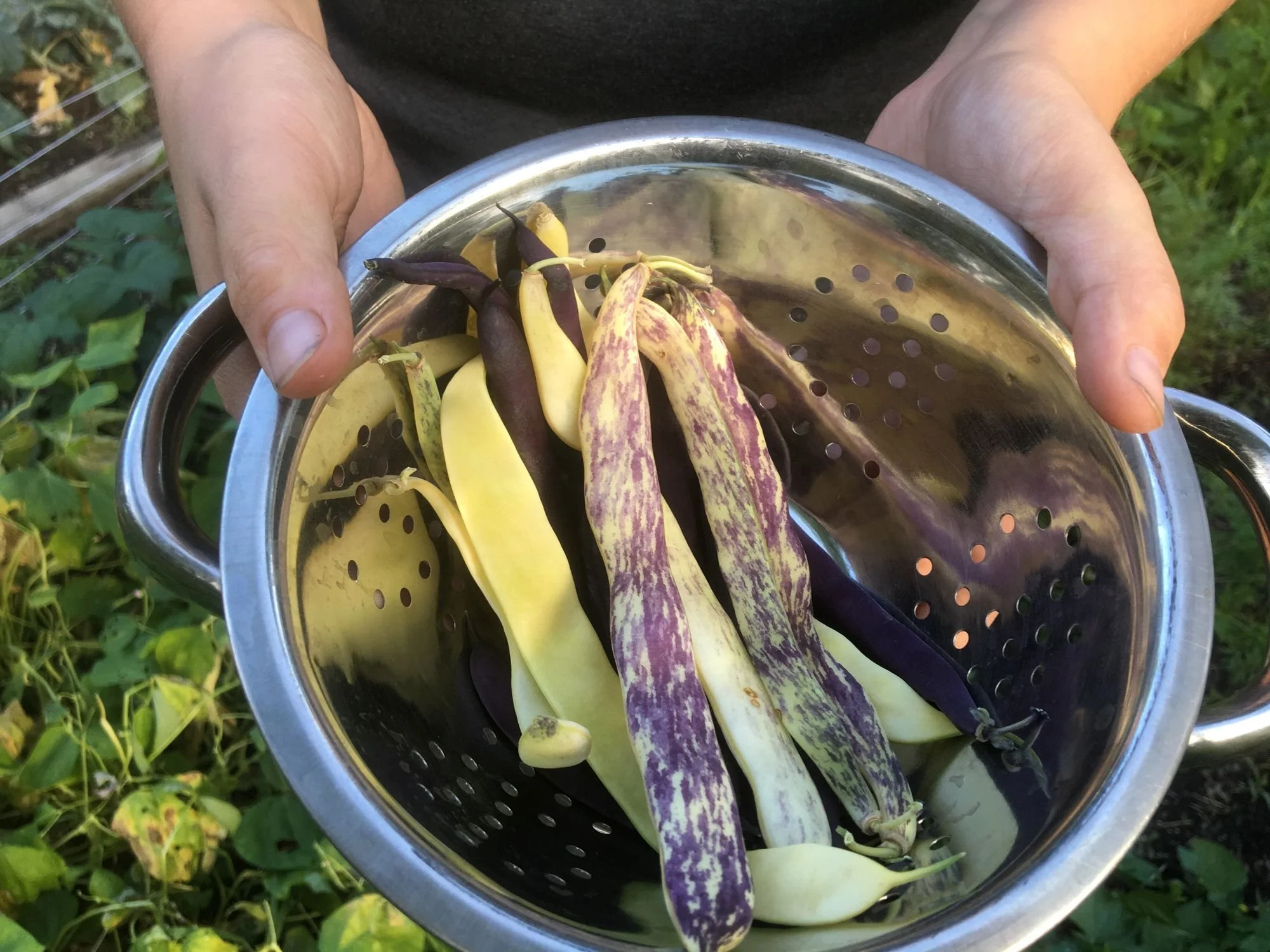
Purple-streaked Dragon Tongue bean pods—the plant that inspired Finn’s dragon garden.
Plants with Dragon Names
Emma and I loved Finn's idea for his own garden.
His dragon-themed garden.
So we scoured seed websites and seed catalogues for dragon-themed plants.
Here's what we came up with:
| Plant | What it brings to the dragon garden |
|---|---|
| Dragon Tongue bean | A compact bush bean with yellow pods streaked in purple. It’s the plant that inspired Finn’s dragon garden—and the young pods are edible. |
| Dragon’s Egg cucumber | This cucumber produces cream-coloured fruit about the size and shape of a large egg. Perhaps there’s a dragon inside. |
| Purple Dragon carrot | Its reddish-purple skin hides a bright orange interior. Pulling one from the ground reveals the surprise. |
| Red Dragon arugula | A peppery salad green with deeply lobed leaves and striking reddish-purple veins. Grow it during the cooler parts of the season. |
| Dragon’s Fire arugula | Dark green, serrated leaves have fiery maroon veins—and a peppery bite worthy of the name. |
| Tongue of Fire bean | An Italian bush bean with cream-coloured pods and seeds marked by flame-like red streaks. Eat the young pods or let the beans mature for shelling. |
| Snapdragon | Gently squeeze the sides of a flower and its dragon-like mouth opens. Snapdragons come in many sizes and colours. |
| Dragon’s Toe pepper | A wrinkled, pointed hot pepper that ripens to yellow or orange. The fruit looks a bit like a claw—or a dragon’s gnarled toe. |
| Green Dragon cucumber | Long, slender, dark green cucumbers grow especially straight when the vines climb a trellis. The fruit is crisp, sweet, and good for slicing. |
| Thai Dragon hot pepper | Slender peppers point upwards on the plant, turning from green to fiery red. This is a genuinely hot dragon, so little gardeners shouldn’t taste it. |
| Blue Dragon dracocephalum | Also called Moldavian dragonhead, this aromatic plant has blue flowers, lemon-scented leaves, and plenty of appeal for bees. |
| Flower Dragon watermelon | A relatively early watermelon with light green skin, dark tiger-like stripes, and sweet red flesh. |
| Black Dragon coleus | Its deeply ruffled, almost black-purple leaves have fiery burgundy centres. A good dragon-garden choice for a container or partly shaded spot. |
| Dragon’s Claw millet | The seed heads divide into upward-pointing “fingers” that really do resemble claws. They also dry well for autumn arrangements. |
Plants That Look Like They Belong in a Dragon Garden
Then we thought about how we'd describe a dragon. We came up with ideas like spiny, toothy, winged, and pointy.
That helped us find even more plant ideas for a dragon-themed children's garden:
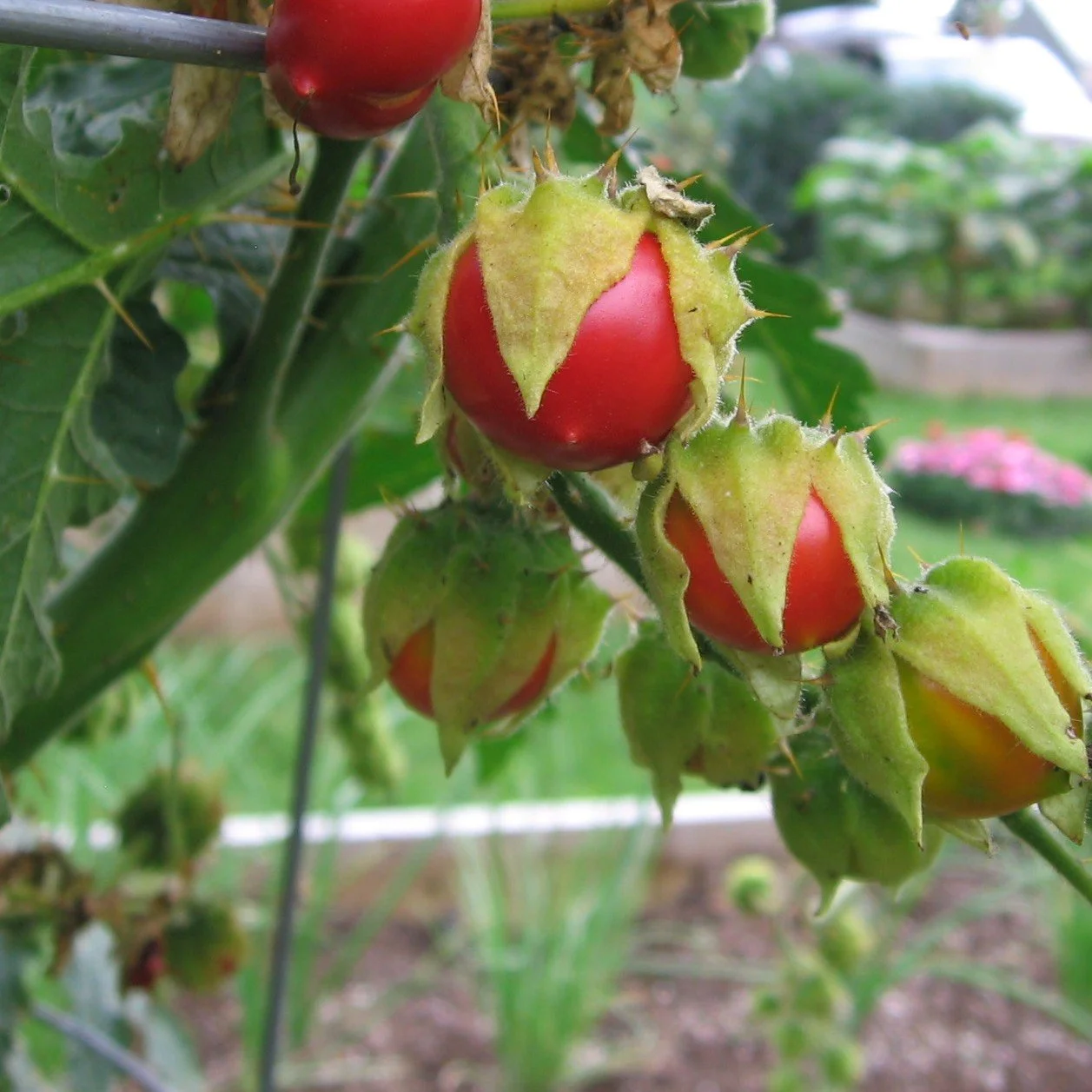
Ripe litchi tomatoes emerge from spiny green husks—fruit with built-in dragon armour.
Ridged and striped: Cocozelle zucchini. Its raised ribs and striped green skin look very dragony. (Suggested by reader Donna.)
Spiny: Litchi tomato has stems, leaves, and fruit husks armed with prickles.
Scaly: Lacinato kale has dark, heavily textured leaves and is also called dinosaur kale.
Egg-like: Small white eggplants look ready to hatch.
Serpent-like: Snake gourds grow into long, twisting fruit.
Toothy: Agave leaves have formidable teeth—but keep them away from paths and small hands.
Winged: A winged bean or angel wing begonia fit the bill.
Gardening with little ones? Choose plants without prickles or fiery hot fruit—or place them where kids can look but not touch.
How to Build a Dragon Garden
Children can take the lead in planning a dragon garden. Older kids might do much of it themselves, while little ones may need help narrowing their choices and preparing the space.
You don’t need a separate garden bed: a few large containers can make a perfectly good dragon garden on a patio or balcony.
Ask the child what makes a plant dragony. Is it scaly, fiery, toothy, winged, enormous, or egg-shaped?
Choose three to six plants. A small dragon garden is easier for a first-time gardener to care for.
Choose a garden bed or large containers. Many vegetables need at least six hours of sun, while leafy greens and coleus can go in a partly shaded spot.
Draw the dragon garden. Children can decide where the tail, eggs, wings, or lair belong.
Plant it together.
Add non-plant details. Painted stones can become dragon eggs; sticks can mark out a nest or cave.
Care for it together. Water the plants, pull weeds, and watch for the first dragon eggs, claws, and fiery fruit.
Takes lots of pictures.
Find seeds or plants. Buy or trade them.
Start plants at the right time.
Another Themed Garden for Kids
Check out the picture below of the harvest from Emma's rainbow-themed garden. It's full of veggies with as many colours as possible.
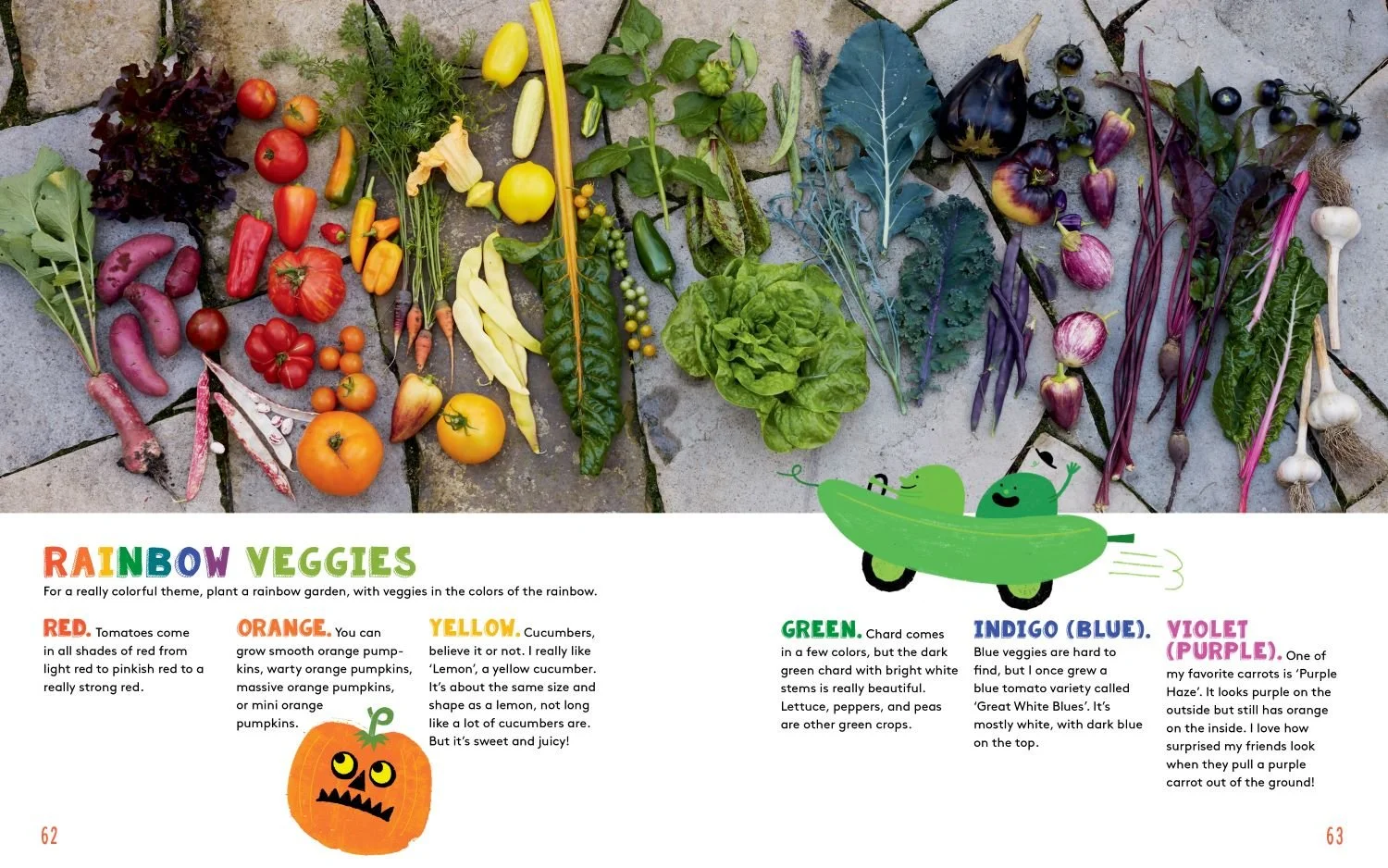
Emma’s rainbow garden combined vegetables in as many colours as she could find—another example of starting with a theme a child finds exciting. From Gardening with Emma.
More Theme Garden Ideas
Pizza garden. Vegetables and herbs used to make a pizza.
Salsa garden. Herbs and veggies to make homemade salsa.
Bug garden. For kids who love bugs, set up an outdoor space where they can have their own scavenger hunts for bugs! Include logs and rocks that kids can lift up to hunt for bugs, and flowers for flying insects.
Hummingbird garden. For children who are interested in birds, select flowers that attract hummingbirds.
Mud kitchen. This is more an outdoor play space than a garden. Give children soil, seeds, flowers—whatever you’re willing to part with—and let them make mud stew. We’ve had a great deal of mud stew prepared in our garden over the years.
Give Children Ownership of the Garden
Gardening can be a fun way of spending time together with kids. But it can be boring if it's too adult-centric.
The point isn’t to produce a perfectly arranged garden. It’s to give children enough ownership to make the garden theirs.
Adults might see a striped zucchini, a prickly tomato, and a crooked gourd. A child might see scales, armour, and a dragon’s tail. That imagination is what might keep a young gardener coming back to see what happens next.
More Kids Gardening Ideas
Looking for more kids gardening ideas?
Click the button below to head over to the children's gardening area for more gardening activities for kids.
Find This Helpful?
Enjoy not being bombarded by annoying ads?
Appreciate the absence of junky affiliate links for products you don’t need?
It’s because we’re reader supported.
If we’ve helped in your food-gardening journey, we’re glad of support. You can high-five us below. Any amount welcome!