
PA Fig Grower Uses Heat Tubes to Overwinter Figs
By Steven Biggs
Banner Fig Harvest
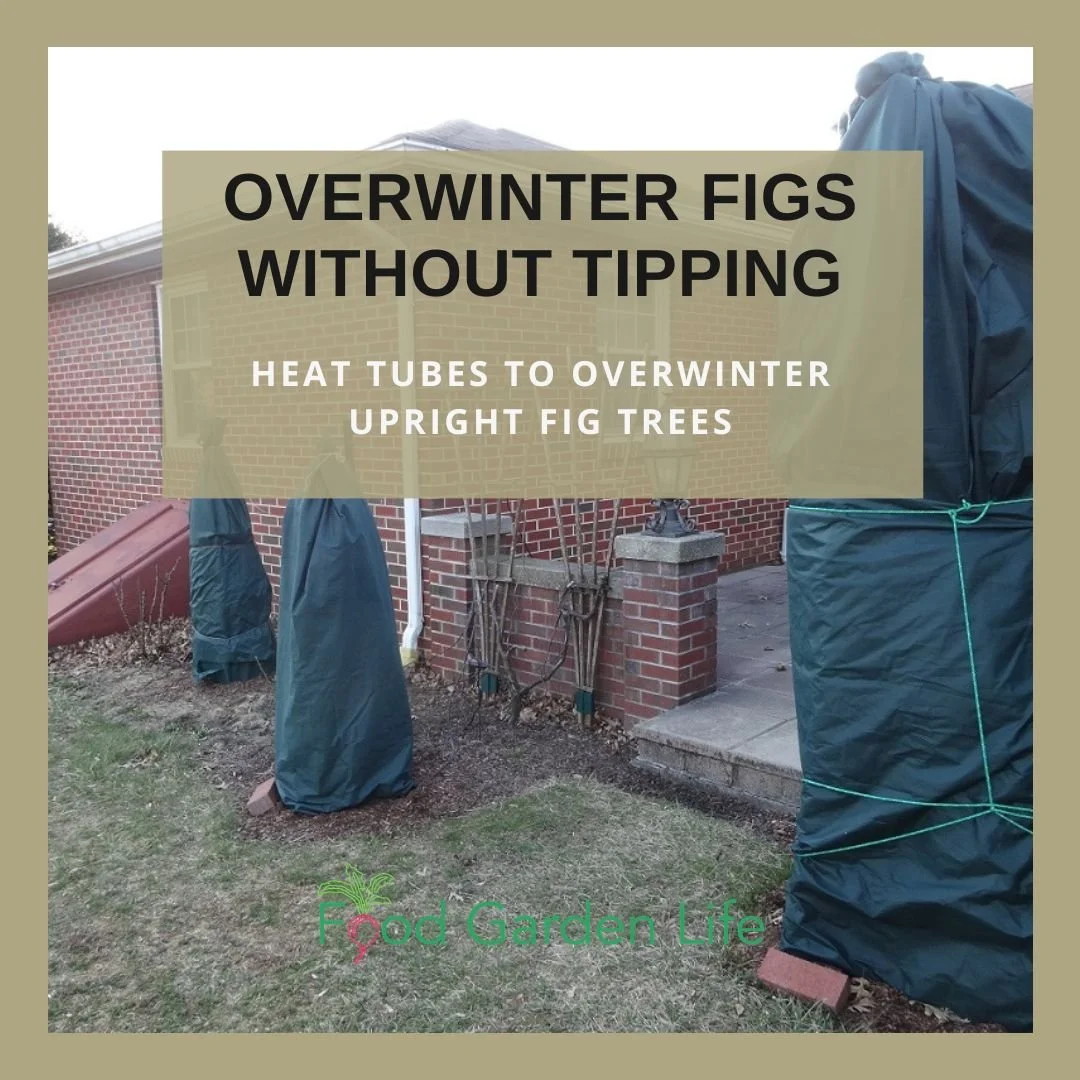
“This year appears to be a banner year, nearly 1,000 figs,” Pananes says as we chat about his creative fig-overwintering technique.
1,000 figs: Not bad for a backyard fig harvest in a zone where figs don’t normally survive the winter. “My growing zone is Pennsylvania 6B,” Pananes notes. (USDA zone 6)
Pananes’ creative heat-tube fig-overwintering method means he has attractive fig trees planted in the landscape around his home—yet he doesn’t need to schlep around potted figs every spring and fall. “I have been using this process successfully for 40 years to ensure my in-ground fig trees don't freeze to the ground, resulting in too short a growing season to ripen figs,” he tells me.
Why Protect an In-Ground Fig Tree?
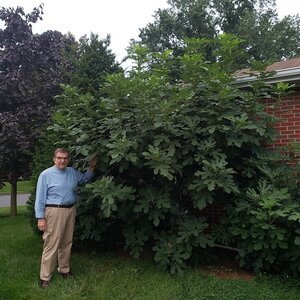
Will Pananes with a 12-foot-high fig tree in his Pennsylvania garden.
A fig tree can survive a cold winter even if the top dies back. The roots often survive and send up new shoots in spring.
But survival and getting a good fig harvest are two different things.
If an in-ground fig dies back to the ground every winter, it has to spend part of the next growing season replacing that lost growth. In a climate with a short growing season, that can leave too little time for figs to form and ripen.
By protecting the branches from winter cold, Pananes starts each spring with a mature framework instead of a plant starting again from ground level. That gives his trees more time to grow and ripen figs.
Fig Heat-Tube Method Explained

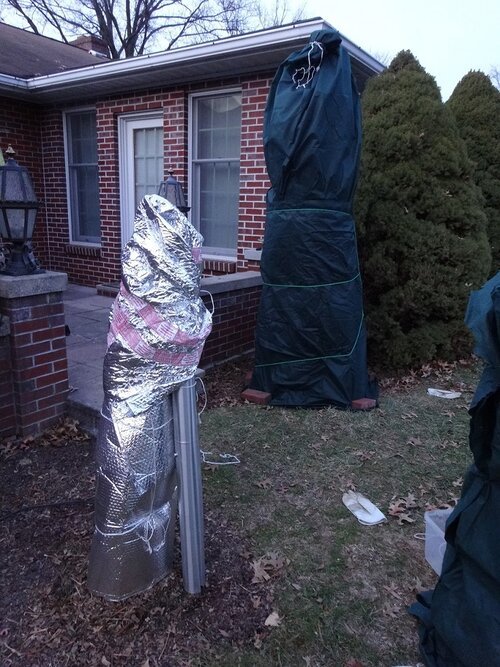
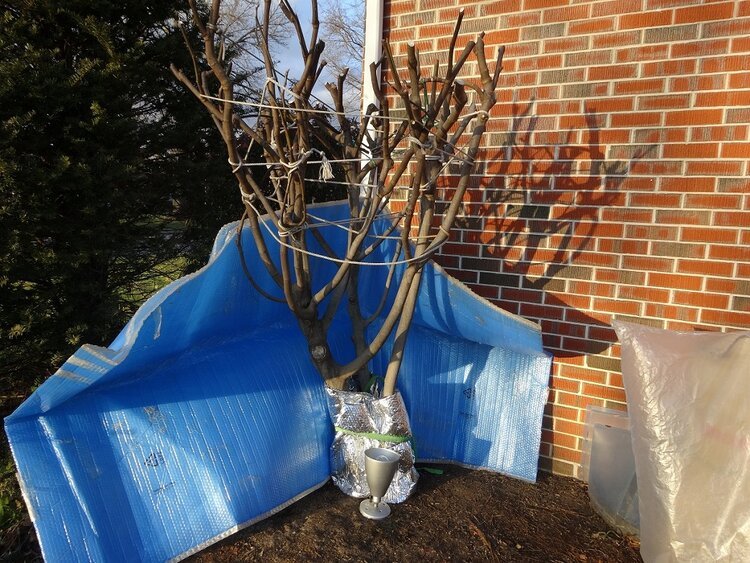
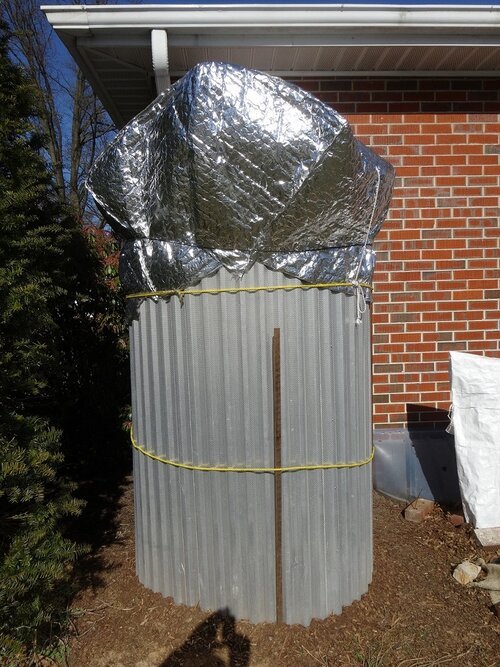
Pananes has in-ground fig trees incorporated in his landscape.
At the heart of Pananes’ fig-overwintering method is using an incandescent light bulb, which emits heat. When I was first in touch with him a few years back, he told me that the first time he used a light bulb, it burnt a hole in the burlap protection around his fig tree.
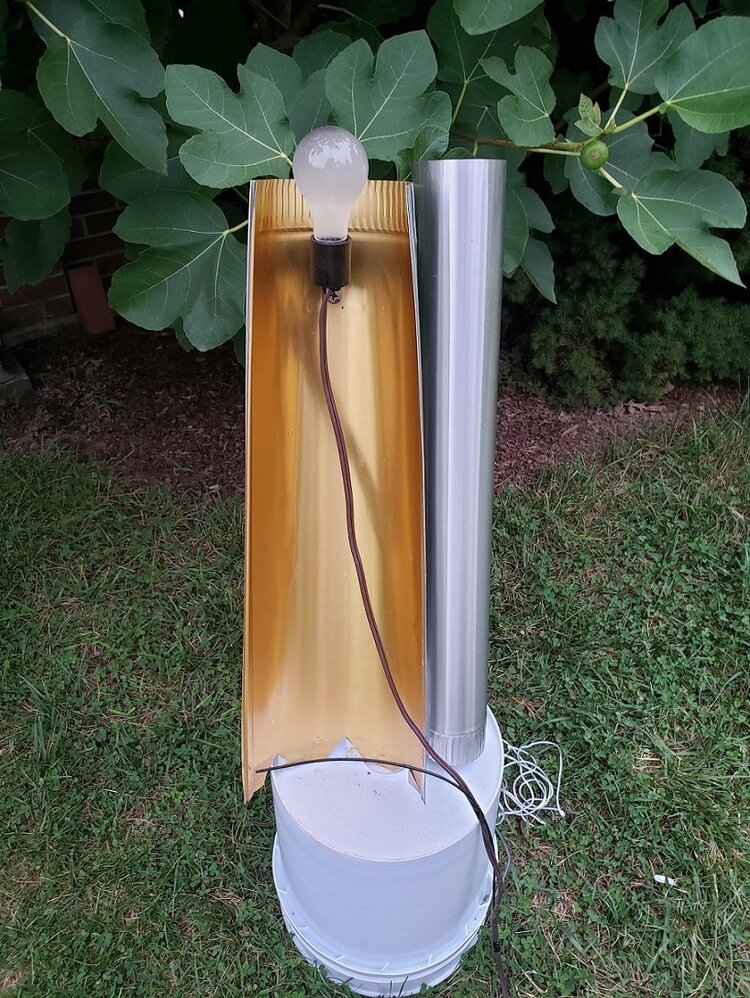
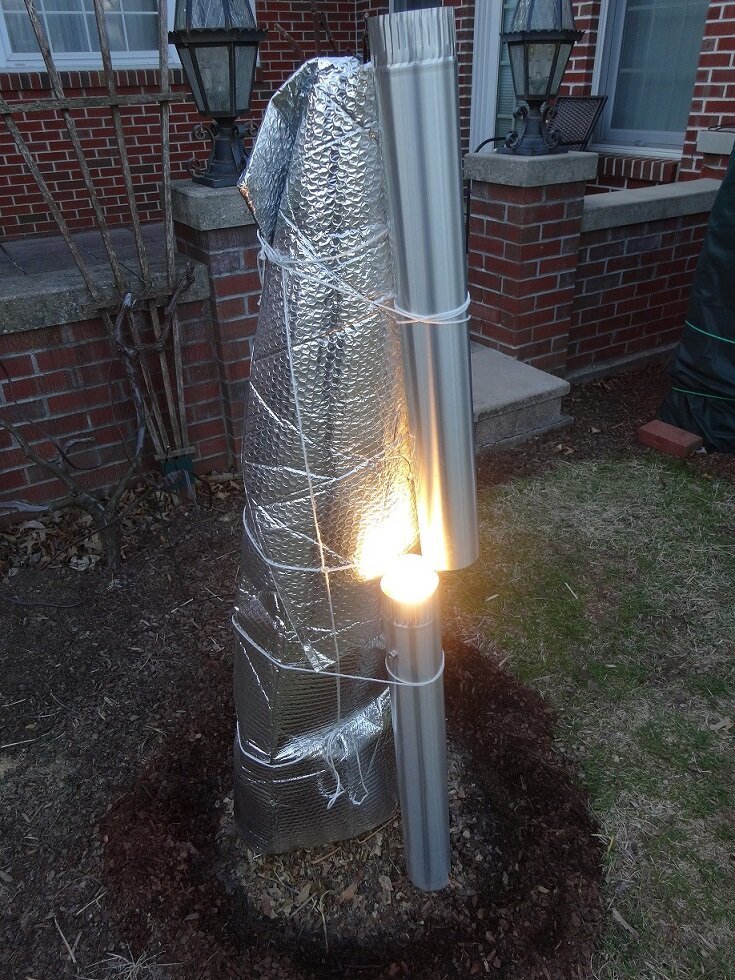
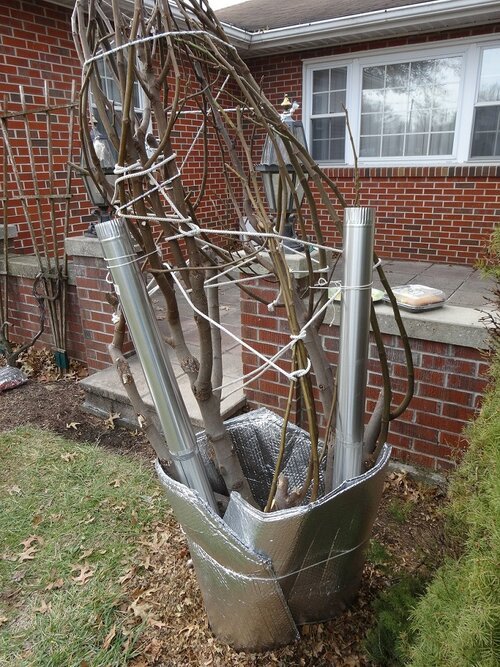
To prevent burning, he started to enclose the light bulb in a metal tube. (See photos below.)
Here is the process, explained in Pananes’ words:
The most important component of my winterizing fig tree process is the heat tube.
I started out with a single exposed light bulb. But when I discovered a burnt hole in the burlap-wrapped tree, I decided that the light bulb needed encased in a metal tube.
This metal tube is two three-inch hot water exhaust pipes, each 24-inches long with a 60-watt incandescent rough-service bulb mounted in the centre for easy access. This makes a four-foot heat tube, which will suffice for most trees.
I plug the heat in when temperatures get down to 15°F (-9°C) and turn off when temps exceed 15°F (-9°C).
A light socket with a metal mounting is attached to the exhaust pipe.
Near the bottom of the tube is a fibre optic cable, which extends outside the tree wrap, and confirms that your light bulb is producing heat.
Another test to ensure your bulb is operating is to do a continuity test across the prongs of the electric plug. An "open" indicates a bad bulb. You don't want to go to all this trouble only to freeze your tree because of no heat.
How Much Cold Can an In-Ground Fig Tree Take?
There isn't one exact temperature at which a fig tree suffers winter damage.
For many established, dormant in-ground fig trees, about -10°C (14°F) is a useful ballpark. But sometimes they tolerate colder temperatures, and sometimes damage occurs when it's warmer.
Variety, the age of the tree, how fully dormant it is, wind exposure, and the duration of the cold all make a difference. A brief dip in temperature is different from deep cold that lasts for hours. A sudden temperature drop can also cause more damage than gradual cooling.
That's why I don't recommend fixating on a single hardiness number. Instead, think about the tree, your site, and the winter conditions.
The Fig-Overwintering Heat Tube
Get Your Fig Trees Through Winter—and Harvest Figs
Growing figs where winters are cold takes a bit of creative thinking.
In Fig Camp and the self-paced Fig Masterclass, I explain how to grow figs in pots or in the ground, extend the growing season, ripen more fruit, and protect your trees through winter.
Overwintering Smaller Fig Trees
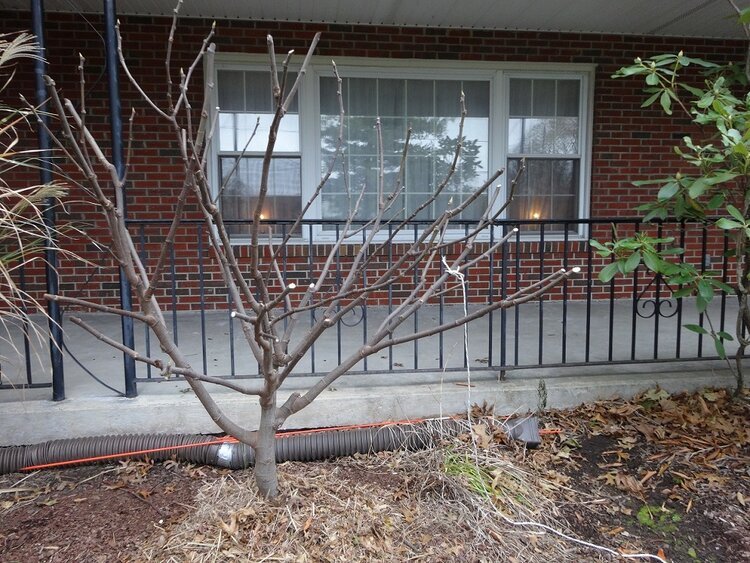
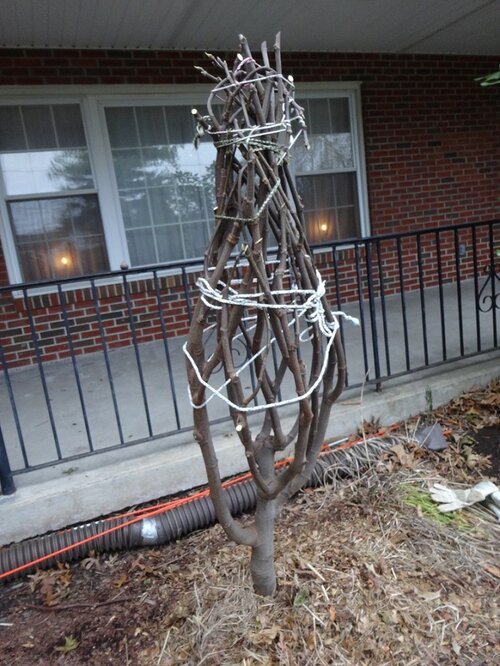
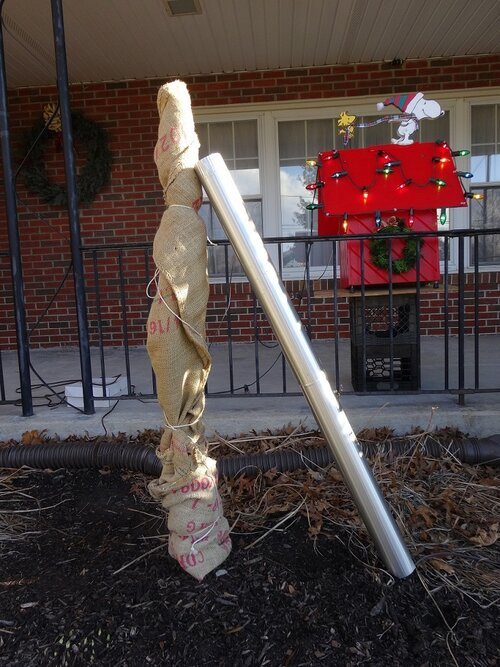
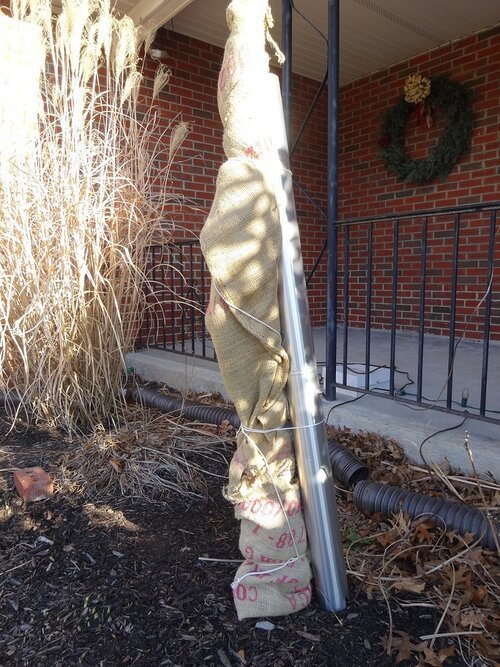
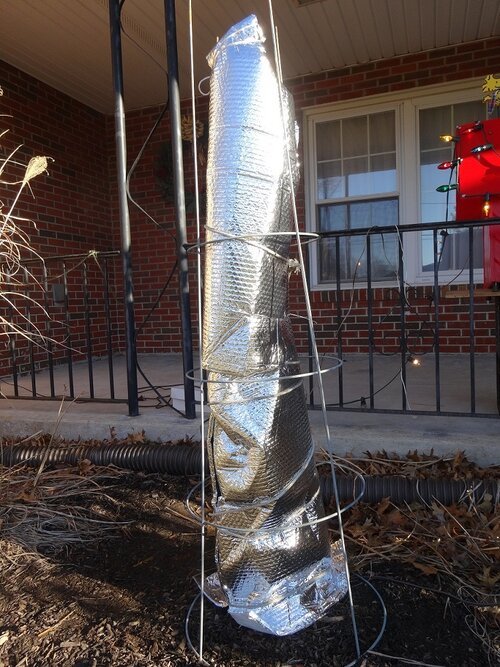
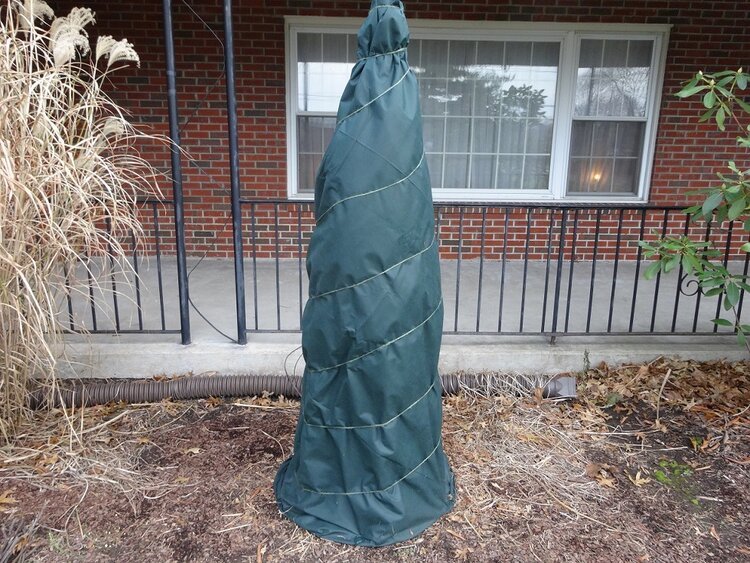
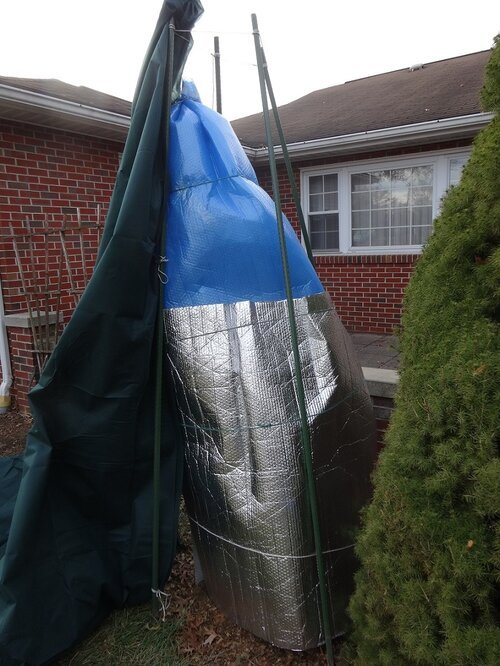
Overwintering Larger Fig Trees
Is the Heat-Tube Method Right for Your Fig Tree?
There's no single best way to overwinter a fig tree. The method that makes sense depends on your winter, your property, and how you want to grow your tree.
Pananes' method is especially interesting for a gardener who wants a permanent, in-ground fig tree but lives where winter cold can kill the branches. His trees are planted near his house, where he has access to electricity and the brick walls help capture and radiate heat.
In another garden, wrapping alone might provide enough protection. In a colder location, bending a tree towards the ground, burying it, or using an insulated structure might make more sense.
Understand what your fig needs, look at what your property provides, and choose a winter-protection method that bridges the gap.
Keep Growing Figs
Looking for more cold-climate fig-growing ideas? Visit the fig home page to browse articles about varieties, pruning, propagation, ripening, winter protection, and more.
Grow Figs Where You Think You Can’t
My revised and expanded fig book is a practical guide to growing figs in pots and cold climates—from choosing varieties and pruning to ripening fruit and conquering winter.
Find This Helpful?
Enjoy not being bombarded by annoying ads? Appreciate the absence of junky affiliate links for products you don’t need?
This site is reader supported. If it has helped you in your food-gardening journey, you can give us a high-five below. Any amount is welcome.