
Sub-Irrigated Planters for Fig Trees: How SIPs Work
By Steven Biggs
Keep Potted Fig Trees Watered with a SIP
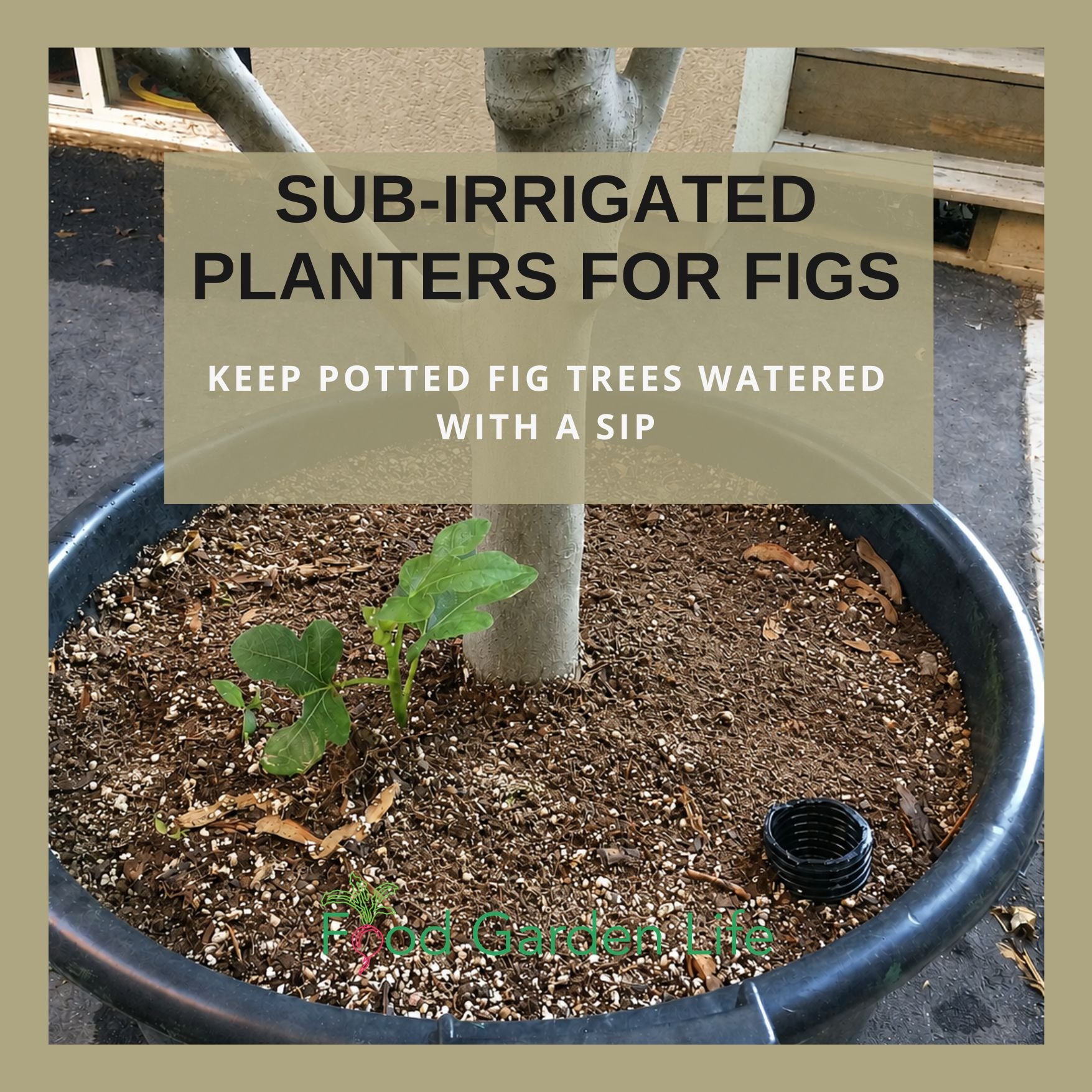
A homemade sub-irrigated planter provides a water reserve for a potted fig tree, helping to reduce moisture stress during hot weather.
Potted fig trees can guzzle a surprising amount of water in hot weather. If the potting mix repeatedly dries out, growth can slow and developing figs may shrivel or drop.
A sub-irrigated planter—or SIP—helps maintain more consistent soil moisture by storing water in a reservoir beneath the potting mix. Instead of relying on water applied from above, the mix draws water upwards as the plant uses it.
A SIP can be especially useful if you:
Grow figs in a hot, sunny location
Can’t water your containers every day
Have large plants that dry out more quickly than you can water them
Want to reduce water stress and premature fruit drop
Other ways to help potted figs stay moist include mulching the soil surface, using a larger container, and sinking the pot a few centimetres into the ground. But where frequent watering is a problem, a SIP provides a larger and more dependable reserve.
The good news is that a SIP for your fig tree is a straightforward do-it-yourself project.
How a Sub-Irrigated Planter Works
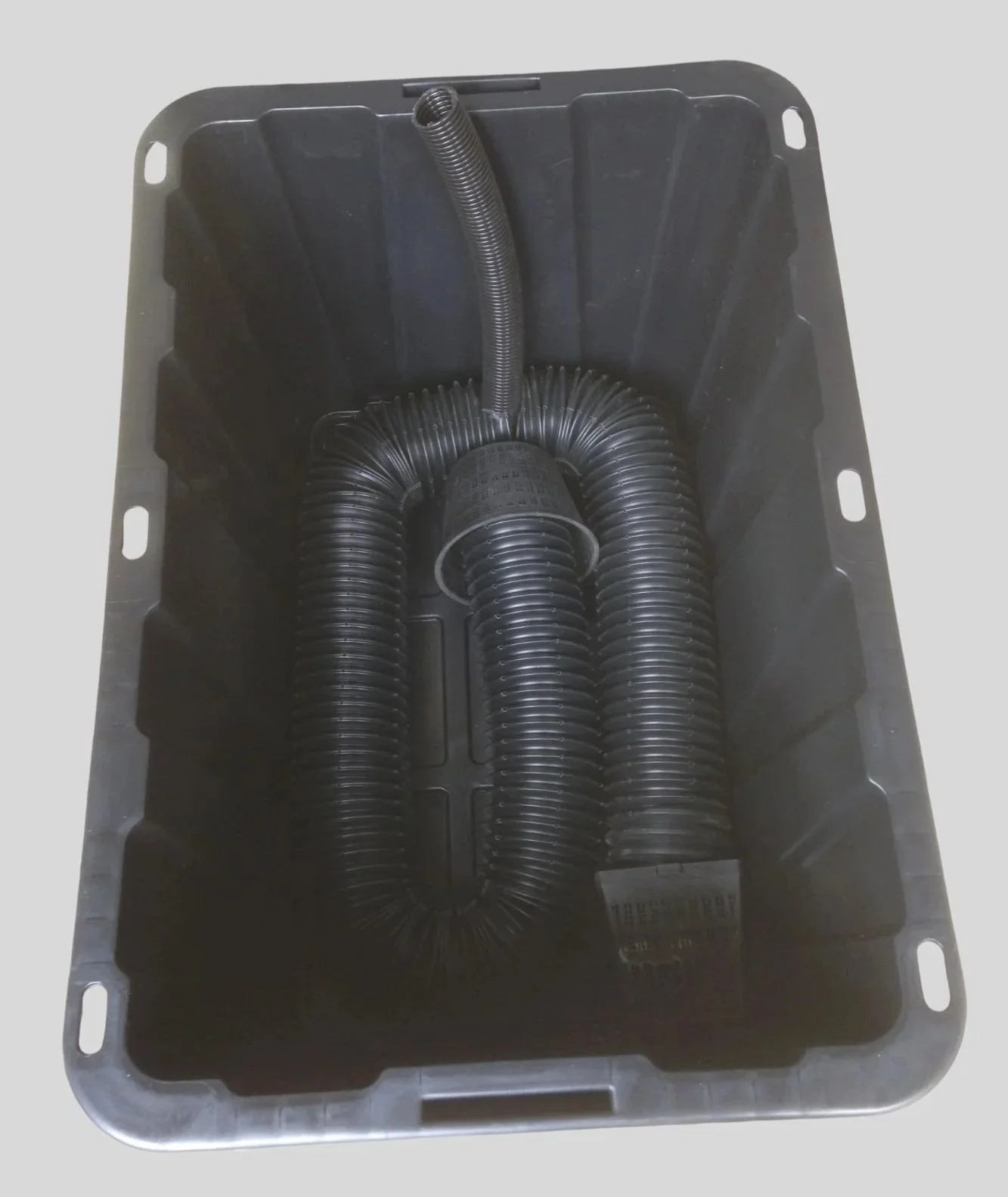
This homemade SIP is made from a storage tote, 10-cm (4-inch) weeping tile, and a dishwasher drain hose. An overflow hole in the side sits level with the top of the reservoir. Before adding soil, I drape landscape fabric over the plumbing so less soil moves into the tile area.
A sub-irrigated planter has a water reservoir beneath the potting mix. Water moves upwards from the reservoir through capillary action—the same way a sponge draws up water.
Three things make the system work:
A reservoir stores water beneath the soil
A wicking area allows part of the potting mix to contact the reservoir and draw up moisture
An overflow hole lets out excess water before the entire root zone becomes a swamp
A fill tube running from the top of the planter into the reservoir makes it easy to add water. Most of the root zone remains in the aerated potting mix above, although some roots eventually grow into the reservoir.
When first planting, water the potting mix thoroughly from above. This settles the mix and starts the wicking process. After that, you can simply refill the reservoir through the fill tube.
Parts of a Sub-Irrigated Planter
You can build a SIP in different ways, but a successful design needs the following components.
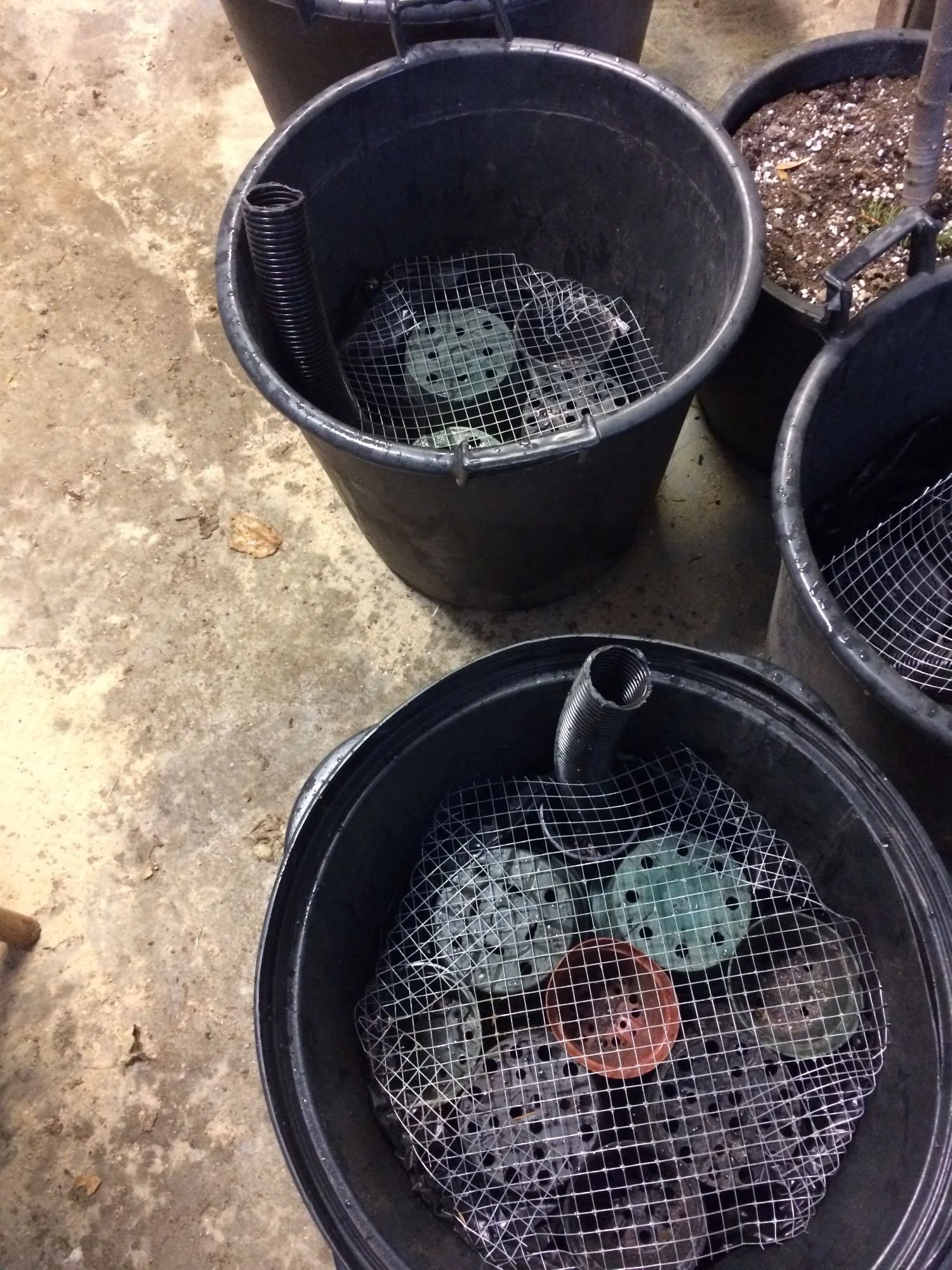
This nursery pot is lined to hold water. Inverted flowerpots support the soil above the reservoir, while mesh topped with landscape fabric will keep the potting mix in place.
Container
Start with a watertight container, or add a durable waterproof liner to a container that already has drainage holes.
Drill an overflow hole through the side of the container at the maximum water level. Position it level with the top of the reservoir. This hole is essential: it allows excess water to escape during heavy rain or if you overfill the reservoir.
Reservoir
The reservoir is the soil-free space at the bottom of the planter. It stores water while holding up the potting mix above.
You can create this space with materials such as:
Perforated drainage pipe
Inverted pots
Sturdy plastic containers
A purpose-made reservoir insert
Choose materials strong enough to support the weight of wet potting mix without collapsing.
Wicking Area
The potting mix needs a way to reach the water. Leave one or more openings where the mix extends down into the reservoir area. These pockets of mix act as wicks, drawing water upwards.
Don’t separate the entire reservoir from the potting mix with an impermeable barrier—the water must have a route upwards.
Note: An alternate approach to this wicking area is to use a fabric wick of some sort. I’ve never done this; it’s not necessary when using a soil mix with good wicking properties.
Fill Tube
Run a tube from the top of the planter into the reservoir. The opening should be wide enough to fill easily with a hose or watering can.
I’ve used dishwasher drain hose, old downspouts, and repurposed plastic tubing. Cut the lower end at an angle or add openings near the bottom so water can flow freely into the reservoir.
Fabric Layer
Place landscape fabric, burlap, or another permeable material over the reservoir supports to keep large amounts of potting mix from falling into the reservoir.
Remember: Leave a spot where the potting mix can dip down into the wicking area.
Potting Mix
Use a light potting mix that holds moisture while still providing air around the roots. A peat- or coir-based mix generally wicks more effectively than a coarse, bark-heavy mix.
Avoid garden soil. In a container, it can compact, drain poorly, and tends not to wick as well.
Learn more about choosing and mixing soil for fig trees in pots
How to Water a Fig Tree in a SIP
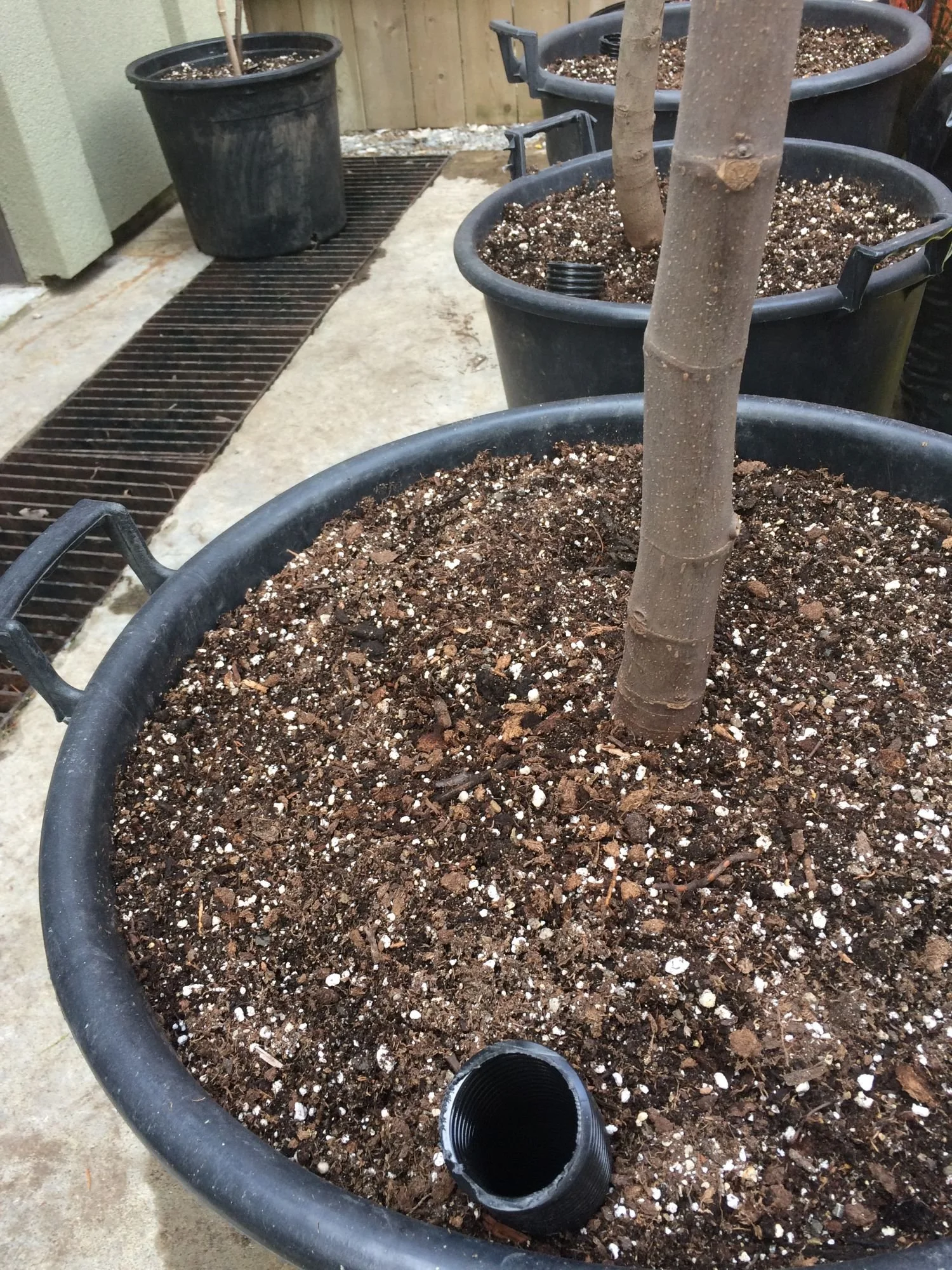
The fill tube carries water directly to the reservoir beneath the potting mix.
When you first plant the fig tree, water thoroughly from above. This settles the potting mix and helps establish the wicking action.
After that:
Add water through the fill tube until it begins to run from the overflow hole.
Allow the reservoir level to drop before filling it again.
Check more often during hot, windy weather and when the tree is carrying a heavy crop.
The weight of the container—not just the appearance of the soil surface—will help you judge the amount of water in the reservoir.
The surface can look dry even when the lower potting mix remains moist. That’s one of the advantages of a SIP: less water evaporates from the surface.
But don’t assume that a SIP makes overwatering impossible. If the overflow hole becomes blocked, the potting mix becomes waterlogged. I’ve had this happen when I created overflow holes that were too small…and they were blocked by large pieces of perlite. So if the soil moisture seems amiss, investigate.
Feeding Fig Trees in an SIP
Because water remains in the system, fertilizer salts can accumulate over time. So occasionally water thoroughly from above and allow the excess to drain through the overflow hole. This flushes accumulated salts from the potting mix.
Before Winter Storage
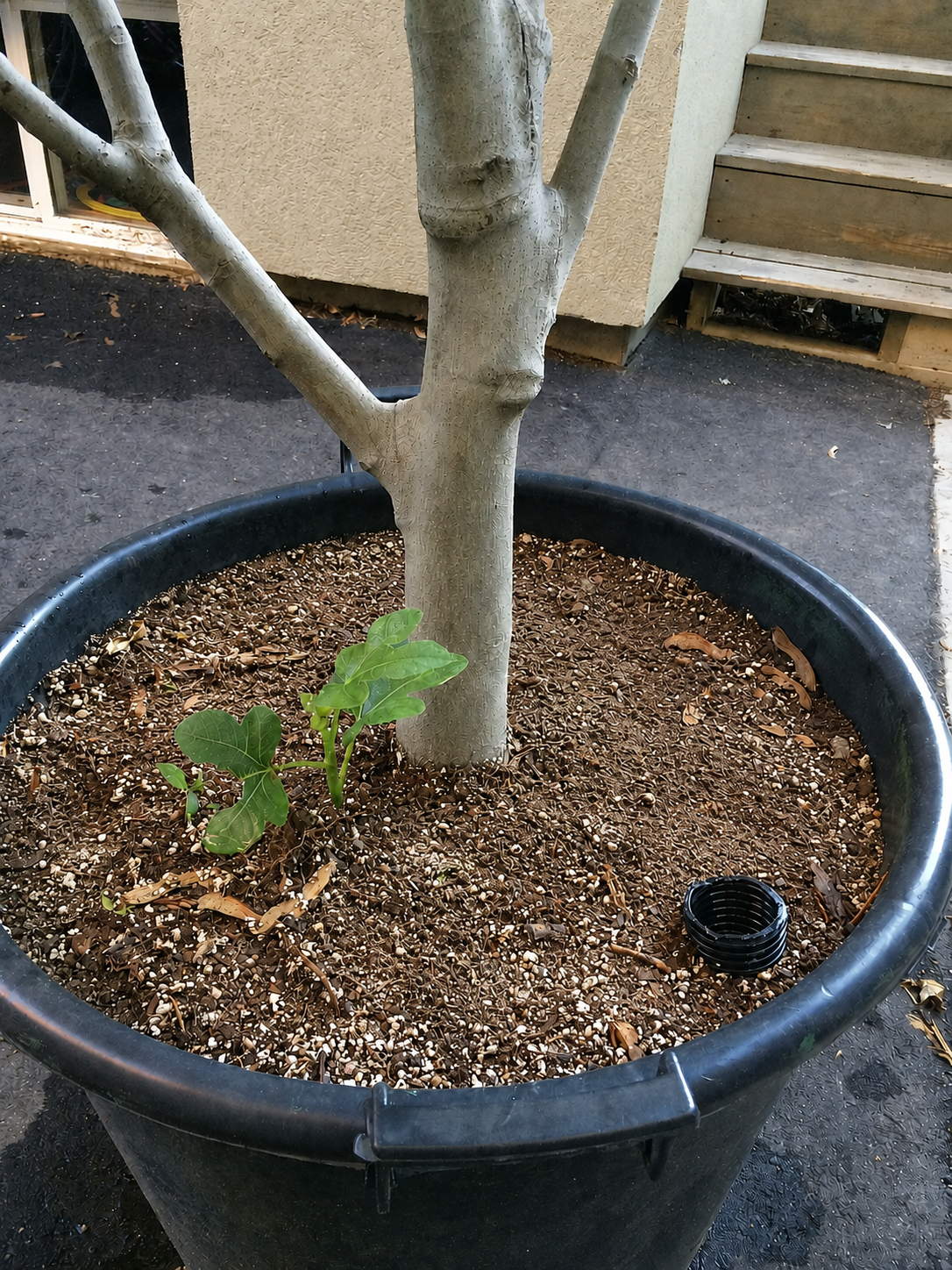
Emptying the reservoir makes a potted fig lighter and easier to move into winter storage.
Before moving a dormant potted fig into winter storage, allow the reservoir to empty. A water-filled reservoir adds considerable weight and isn’t needed while the dormant plant uses very little water.
If there’s still lots of water in the reservoir as you move the pots into winter storage, simply tip them to help more water come out of the overflow hole.
Use SIPs for Other Container Crops
SIPs aren’t just for fig trees. I’ve used them on my garage roof to grow vegetables, where heat and wind make ordinary containers dry out quickly.
The reservoir reduces how often I need to water and helps plants grow without repeatedly cycling between wet and dry conditions. SIPs work especially well for thirsty container crops such as tomatoes, cucumbers, eggplants, and squash.
Find out more about my rooftop SIPs in this article.
FAQ: Sub-Irrigated Planters for Fig Trees
Can fig-tree roots grow into the reservoir?
Yes. Roots grow into the reservoir as the container fills with roots. This isn’t a problem. Just make sure they don’t block the overflow hole.
Should I keep the reservoir full all the time?
You don’t have to. Refill it when needed, but you can allow the water level to drop between fillings. The frequency of refilling depends on the size of the planter, the weather, and the size of your fig tree.
Why is the potting mix dry on top?
A SIP supplies water from below, so the surface can look dry while the lower part of the root zone remains moist. Check the reservoir and the plant before assuming it needs water from above.
Can I convert an ordinary pot into an SIP?
Yes. Add a liner to hold water in the reservoir area. For the supports that hold up the soil, the recycling bin often has items you can use. Find a suitable material for a fill tube. Don’t forget an overflow hole.
Can I use garden soil in an SIP?
Garden soil is usually too heavy for container growing. Use a light potting mix that can wick moisture while retaining enough air for healthy root growth.
Will an SIP prevent fig drop?
It reduces fruit drop caused by drought stress, but figs can drop for other reasons, including cool temperatures, cold wind, or abrupt changes in growing conditions.
Can mosquitoes breed in the reservoir?
A well-built reservoir has little exposed water. Keep the fill-tube opening covered with a removable cap or fine mesh if mosquitoes are a concern.
Do I still need to water from above?
Yes, but only occasionally. Water from above when first planting, and then periodically afterwards to flush accumulated fertilizer salts out through the overflow hole.
Is a SIP Worth Making?
Pin this post!
If your potted fig dries out quickly or you can’t water every day, a SIP makes container growing much easier. It doesn’t mean you won’t have to water. But the reserve provides the steady moisture that vigorous, fruiting fig plants need.
Keep Growing Figs
Looking for more cold-climate fig-growing ideas? Visit the fig home page to browse articles about varieties, pruning, propagation, ripening, winter protection, and more.
Grow Figs Where You Think You Can’t
My revised and expanded fig book is a practical guide to growing figs in pots and cold climates—from choosing varieties and pruning to ripening fruit and conquering winter.
Find This Helpful?
Enjoy not being bombarded by annoying ads? Appreciate the absence of junky affiliate links for products you don’t need?
This site is reader supported. If it has helped you in your food-gardening journey, you can give us a high-five below. Any amount is welcome.