The Garden Is the Point
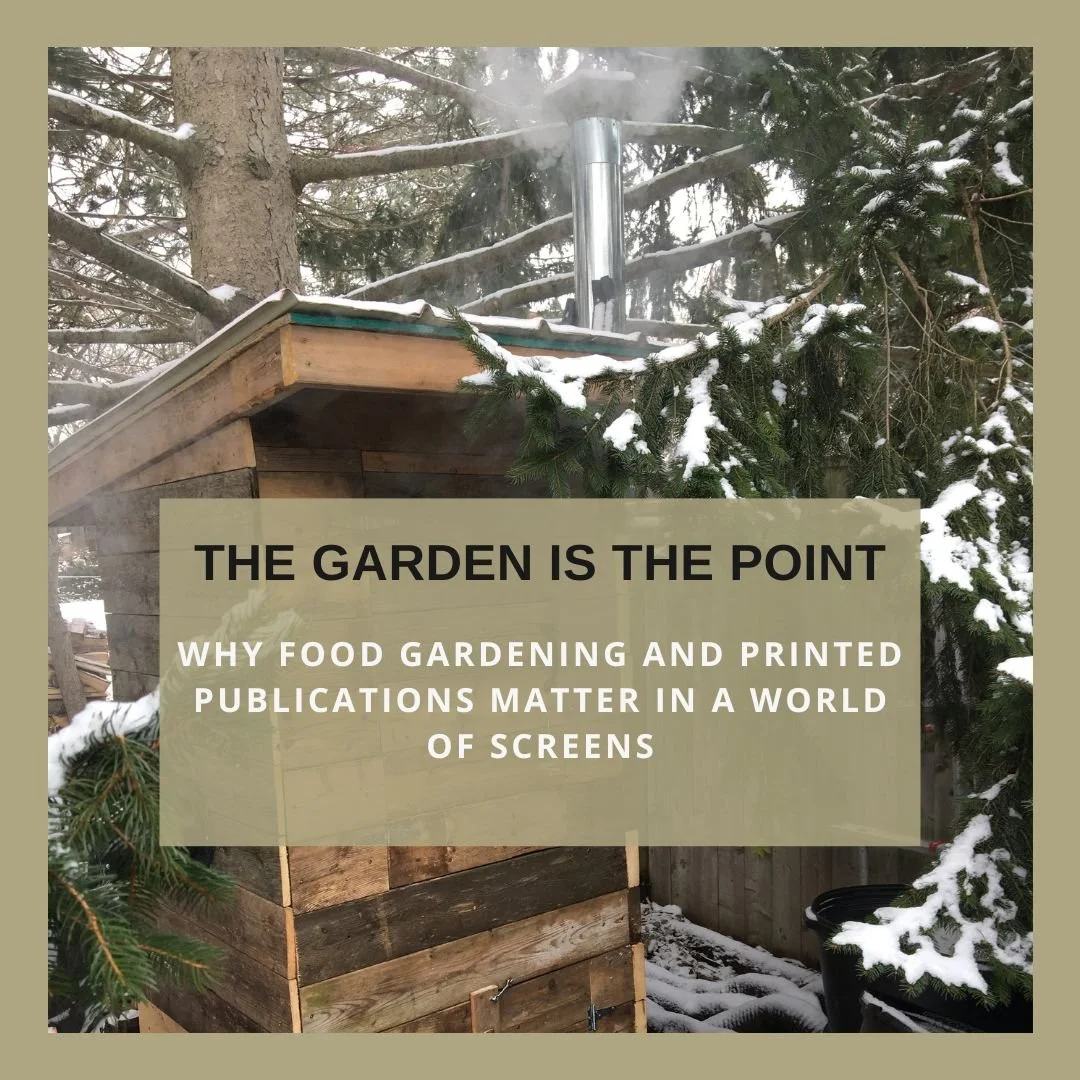
I save branches when I prune my fig trees.
Not all of them. I don’t need too many fig branches cluttering the place. But I save enough to use in my smoker. I make fig-wood-smoked cheddar.
It’s a small thing. An unnecessarily slow way to prepare food. But I like the process: grow the tree, prune the tree, save the wood, make something with it.
It’s real. I smell the smoke. I taste the result. I invite over neighbours to hang out with me as I do it.
The garden isn’t a stand-alone hobby for me. It flows into my kitchen, into our meals, and into time shared with other people. It’s part of how I live, not just something to tend.
And as I think about the garden, the word analogue keeps coming back to me.
I see analogue used to talk about records, film cameras, printed books, and other things that seemed destined to disappear with the arrival of digital replacements.
But I think analogue is a useful way to think about gardening.
It’s hands-on. I put seeds in the soil. I watch for rain. I turn the compost, tie up a tomato plant, and pick beans. Sometimes I stand looking at a plant that’s clearly unhappy, thinking about what’s going on.
I don’t have an app that does these things.
Gardening reminds me that confidence comes from doing something repeatedly: noticing what happens, trying, adjusting, and gradually learning when I can trust my own judgement. It’s like the recipe you make so many times that you can wing it and innovate.
The appeal of analogue
I’ve seen articles lately about a resurgence in analogue products as younger generations take an interest in printed books and magazines, keep handwritten journals, make crafts, and look for ways to spend time away from screens.
There’s a hunger to disconnect from digital devices.
I understand the feeling.
A few years ago, I deleted most of my social-media accounts. This went against the advice of nearly everyone I knew in the world of communications.
I remember a writing colleague asking, “How will you reach people?” as his jaw dropped.
Leaving was probably not a good business decision.
But it was a good personal decision.
I couldn’t process the sheer volume of perfect lives streaming past me. Perfect gardens. Perfect meals. Perfect trips. Perfect families. Contrived perfection.
I realized I was doing the same when, after I’d had a tough year, a friend whom I hadn’t seen in a while said, “Looks like you’ve had a great year.”
Then there was the sniping. Not directed at me personally, but the sort of unkindness that isn’t normal when people are standing together in a garden. I found myself going over it repeatedly in my mind.
It wasn’t healthy for me, so I left.
I still use digital tools. You’re probably reading this on a screen. I send email newsletters, host online classes and make podcasts. These digital tools allow me to connect with gardeners I would otherwise never meet.
And that connection isn’t one-way. Gardeners write to me with their methods, stories, questions, and recipes. We’re sharing. That feels very different from broadcasting a perfect life for people to admire from a distance.
So I don’t think digital ways of doing things are entirely bad—or that the analogue world is entirely wholesome. I read the “newspaper” on my phone. I smoke some food using fire—but I mainly cook in an electric oven with a digital display.
I’m fine with technology. But I want technology to be a doorway for me.
The garden is my destination.
Somewhere I want to spend time
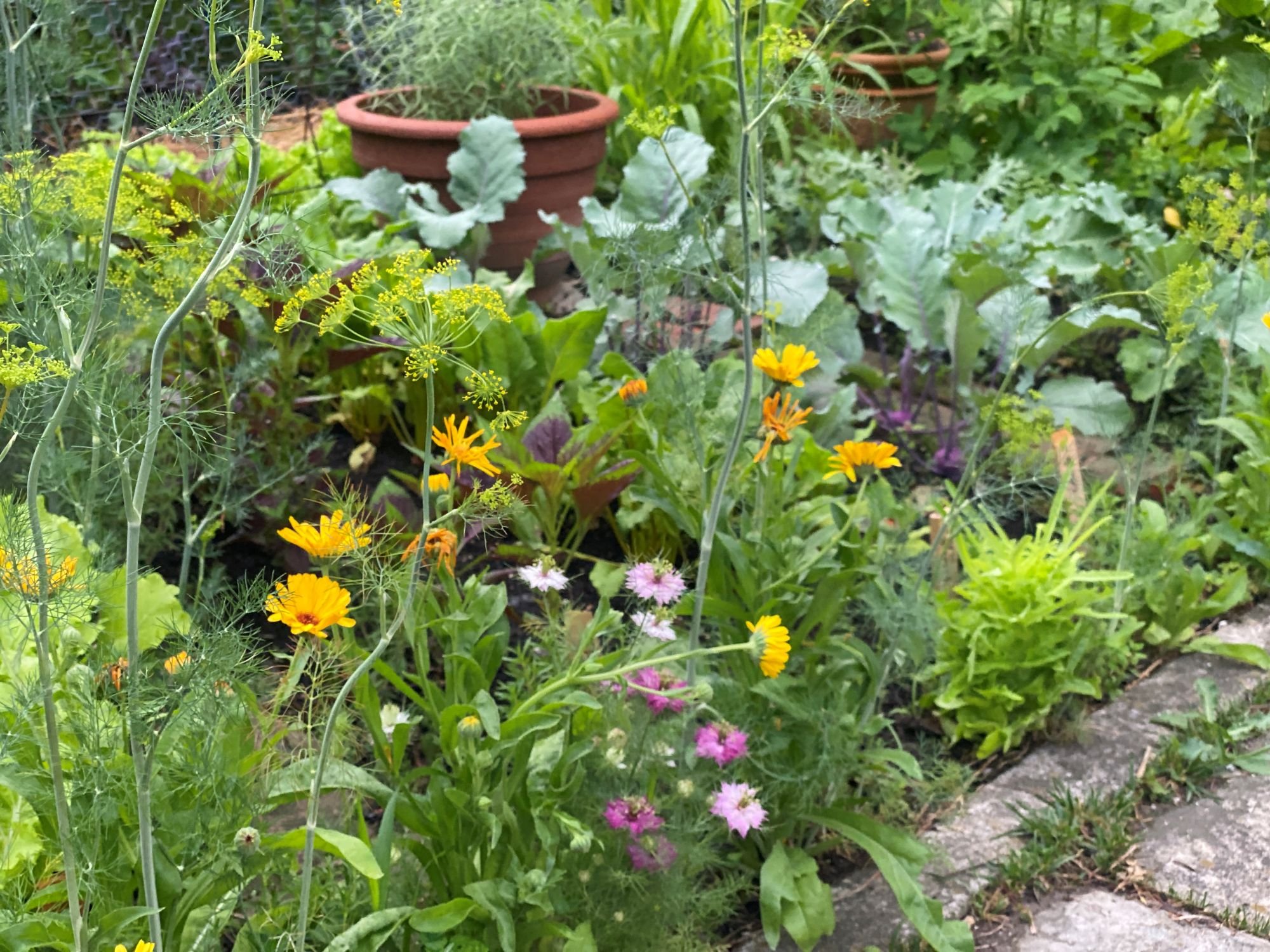
I love spending time in my potager garden.
I’m intrigued when I hear people talk of the garden as a chore, something to check off the list. I’m eager to go to my garden when I’ve worked through my daily list! The garden isn’t merely where I produce food. It’s where I go because I like being there.
Harvest matters in my garden. So does beauty. Food and beauty can go together nicely.
My potager is a kitchen garden where both get equal treatment. In another part of the garden, I grow vegetables in straw bales along the driveway. A driveway is not Class 1 agricultural land. But sometimes there’s no need for more land—just to see ordinary spaces differently.
Gardening can be creative as well as practical.
Creativity is often how I work around the limitations of space and climate.
Sometimes creativity includes sitting in the garden doing nothing “useful” at all. Thinking.
Gardening gives me a place to make decisions that aren’t dictated by an algorithm. By what’s normally recommended. I can grow a tomato that tastes good but doesn’t ship well. I can keep seeds because they came from someone special to me. I can give valuable garden real estate to an olive tree that produces a comically small harvest simply because I like growing it.
What I get from the garden doesn’t need to set records or be perfect. It doesn’t have to be for making “content.”
It only needs to matter to me.
Much of my work is about helping gardeners try things they didn’t think they could do. Grow a fig somewhere cold. Keep a lemon tree in a pot. Turn a paved space into a tomato-filled oasis.
The point isn’t that everyone needs a fig tree or a driveway full of straw bales. It’s that trying, experimenting, and figuring things out is a way of living. The garden is a good place to do it: taking an idea and putting it to work with our hands.
That, to me, is analogue.
Things to hold and keep
That desire to turn ideas into something tangible also shapes how I think about books and publishing.
The renewed interest in analogue life also helps explain the appeal of printed books, small magazines, and zines.
They’re objects, not streams.
A book with dog-eared pages and some grime on the spine has been places with you. A garden journal is perfect for checking what you grew three years ago. A zine is perfect for the Lazy-Boy, but can also be carried into the garden, lent to a friend—and it doesn’t need batteries.
Older gardening books are especially precious for me. I get carried away with them. My bookshelves sag in the middle. Some have advice I don’t follow, but talk about varieties, methods and ways of looking at gardens that might otherwise disappear.
This is part of what interests me about making physical publications through No Guff Press. I like the idea of creating useful things that gardeners can mark up, keep, and return to—not simply more scrollable online posts.
A physical publication also asks something different from readers. It doesn’t have pop-up messages. It doesn’t immediately recommend ten more things. It has an end. It asks you to stay with one thing rather than follow the next recommended thing.
There’s something refreshing about that. An end.
Gardening as a way to connect—and disconnect
I don’t think gardening will sort out my complicated relationship with technology. I don’t plan to trade in my computer for a typewriter. Corrections were more difficult on a typewriter. (But I do still have my grandfather’s Underwood typewriter!)
But I consider gardening my counterweight to digital.
It gives me fresh food I can cook, flowers to pick for my wife, and creates a space shaped by my own decisions. It connects me with weather, seasons, soil, and other gardeners. At the same time, the garden lets me disconnect from the constant flow of information asking for my attention.
This might be why gardening appeals across generations. For someone who has gardened for decades, having a garden can feel familiar and grounding. For someone who has spent an entire life surrounded by screens, it might almost feel radical.
Grow something. Cook it. Save the seed. Write down what happened. Leave phone notifications off.
The garden is the point.