
How to Use Fig Leaves in the Kitchen
Cooking with Fig Leaves: Chef David Salt’s Tips
Fig leaves smell a little like coconut, toasted almond—and something green. But how do you capture that flavour in food?
Toronto chef David Salt joins me to explain how he uses fig leaves in both sweet and savoury dishes. We talk about wrapping food in fig leaves, making infusions, choosing complementary flavours—and why boiling the leaves can give you a less-than-delicious stewed-vegetable taste.
David first cooked with fig leaves while working as a chef in London, England, where he gathered leaves from fig trees in a nearby churchyard. After moving to Toronto, he needed a new source. That’s when this enquiry landed in my inbox:
“I am looking for fig leaves to make dishes with at my restaurant (fig leaf ice cream, jelly, savoury sauces, custards etc.) Is there any possibility of getting some from you, before they fall for the winter?”
There was. David collected bags of leaves from my garden—and later invited me to taste his fig-leaf ice cream, fig-leaf cheese and fig-leaf grappa.
David’s recipes, along with a short profile of him, also appear in my book, Grow Figs Where You Think You Can’t.
In This Episode
What fig leaves taste like
Two ways to use them: wrapping and infusing
Sweet and savoury flavour pairings
Why gentle heat brings out the flavour
When a cold infusion is the better choice
Why you shouldn’t boil fig leaves
David’s favourite fig-leaf creation
How our fig-leaf collaboration began
How to Cook with Fig Leaves
You don’t eat the fig leaf itself. Instead, you use it to flavour food—and then remove it.
David uses two main techniques.
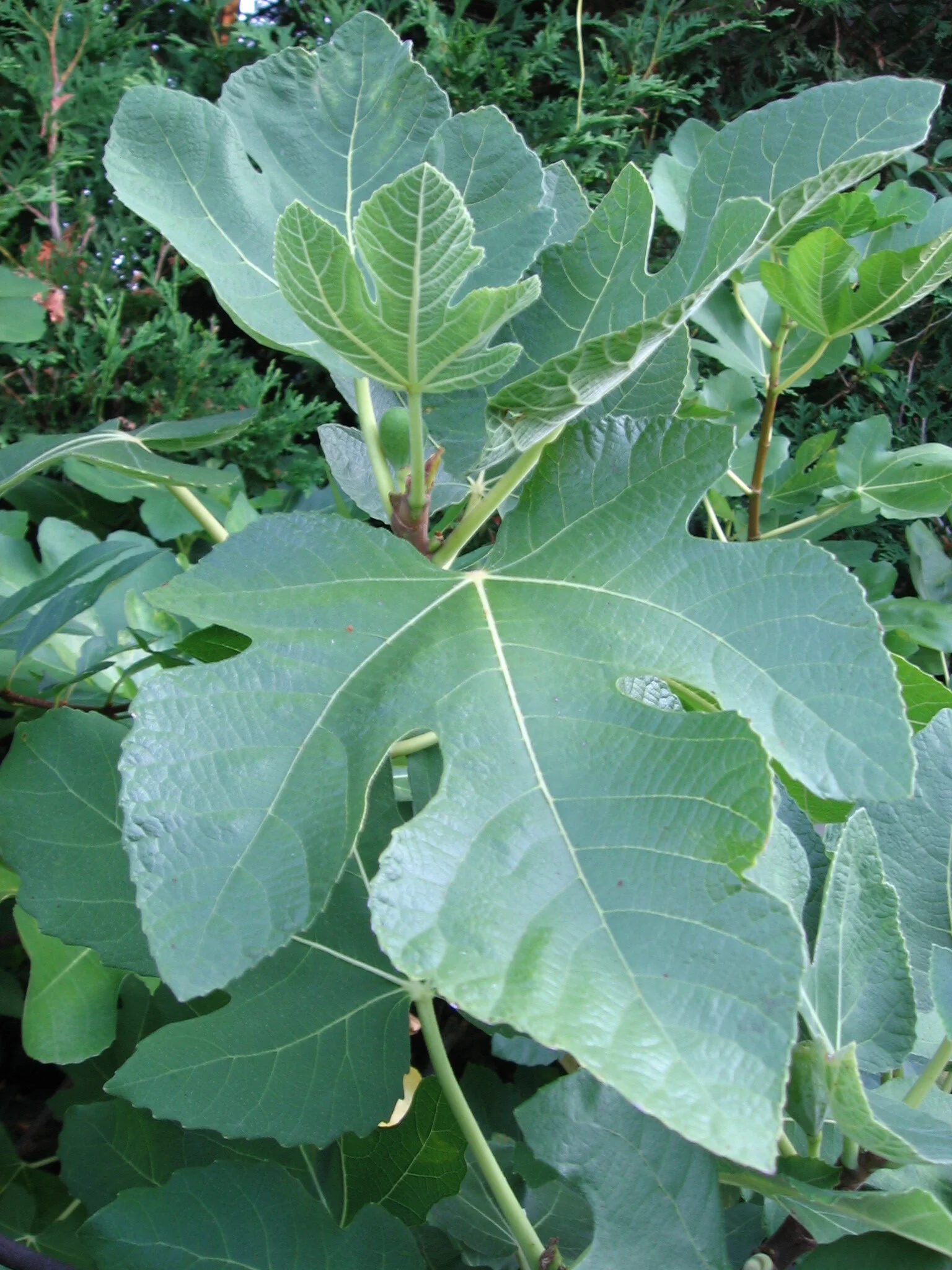
Use fig leaves as a wrap, or infuse them to draw out their flavour.
Wrap Food in Fig Leaves
The classic approach is to use fig leaves much as you’d use banana leaves. Wrap them around fish or meat before cooking.
The leaves help to hold in moisture while gently flavouring the food. Because the flavour is delicate, David finds that fig leaves work especially well with lightly flavoured fish and meat.
Make a Fig-Leaf Infusion
You can also steep fig leaves in a liquid to extract their flavour. David uses infusions in ice cream, custards, sauces and other dishes.
Heat helps to release the flavour—but don’t boil the leaves. Boiling can replace that lovely coconut-and-almond character with something more like stewed vegetables.
When time permits, David prefers a cold infusion. It takes longer, but produces a cleaner, more delicate flavour.
Pairing Fig-Leaf Flavour
David finds that fig leaves pair particularly well with strawberries, blueberries, lightly flavoured meat and fish.
But don’t let that stop you from experimenting. He has even paired fig leaf with hot chocolate—a much stronger flavour—and found that it worked well.
His favourite fig-leaf creation? Ice cream.
Meet Chef David Salt

Chef David Salt, founder of Drifter’s Solace in Toronto.
David Salt is the chef behind Drifter’s Solace, an intimate chef’s-table dining experience in downtown Toronto.
His cooking draws on French technique, his years working in London kitchens and flavours encountered during his travels. At Drifter’s Solace, David prepares and presents the meal himself—creating a much more personal experience than you’d find in a large restaurant.
Visit Drifter’s Solace to learn more about David, the dining experience and upcoming menus.
More Ways to Cook with Fig Leaves
Ready to experiment with leaves from your own fig tree?
Fig Leaves in the Kitchen — the story of my first tasting with David, including fig-leaf ice cream, cheese and grappa
Fig-Leaf Panna Cotta Recipe — an easy dessert with a delicate fig-leaf flavour
Fig-Leaf Syrup Recipe — a simple syrup for desserts, fruit, drinks and savoury dishes
Grow Figs Where You Think You Can’t
Want to grow the leaves—and the figs—to use in your kitchen?
My revised and expanded fig book covers growing figs in pots and cold climates, with practical guidance on varieties, pruning, ripening and winter protection. You’ll also find David’s fig-leaf recipes and a short profile of him in the book.
Keep Listening
The Food Garden Life Show brings you practical ideas and conversations about growing—and using—food at home.
Hear from gardeners, growers, cooks, authors and other people living the food-garden life.