How to Keep Squirrels Away from Fig Trees
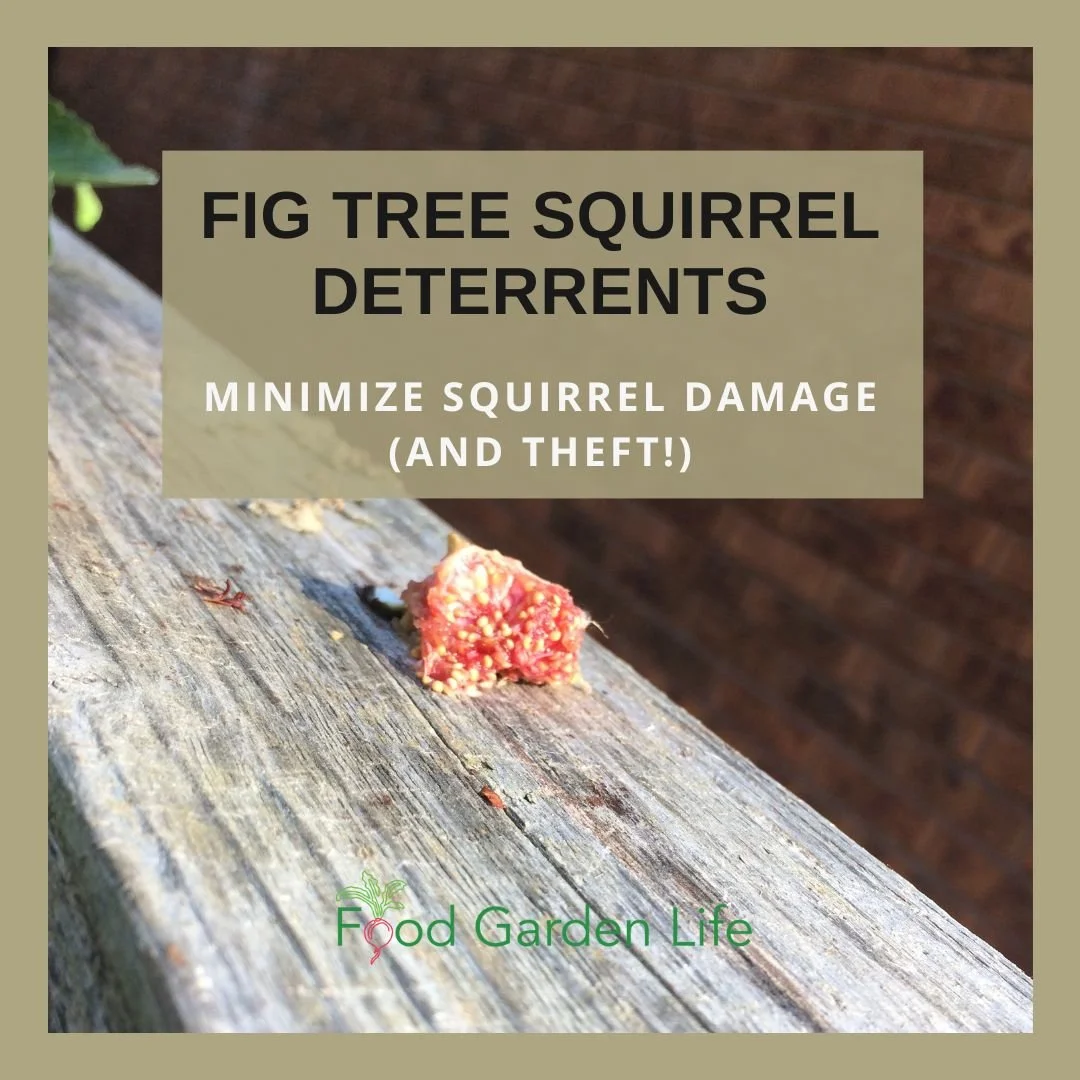
Do squirrels eat figs? They sure do. They also dig in potted fig trees, sometimes uprooting young plants.
The most reliable way to reduce squirrel damage is physical exclusion: chicken wire over newly potted plants, a barrier over the soil in larger pots, netting around a tree, or organza bags to discourage squirrels from sampling individual figs.
Baffles can work in the right setting. Scent deterrents are less dependable.
Below, I’ll show you what I’ve tried, what has worked, and what hasn’t.
Stop Squirrels Digging in Potted Fig Trees
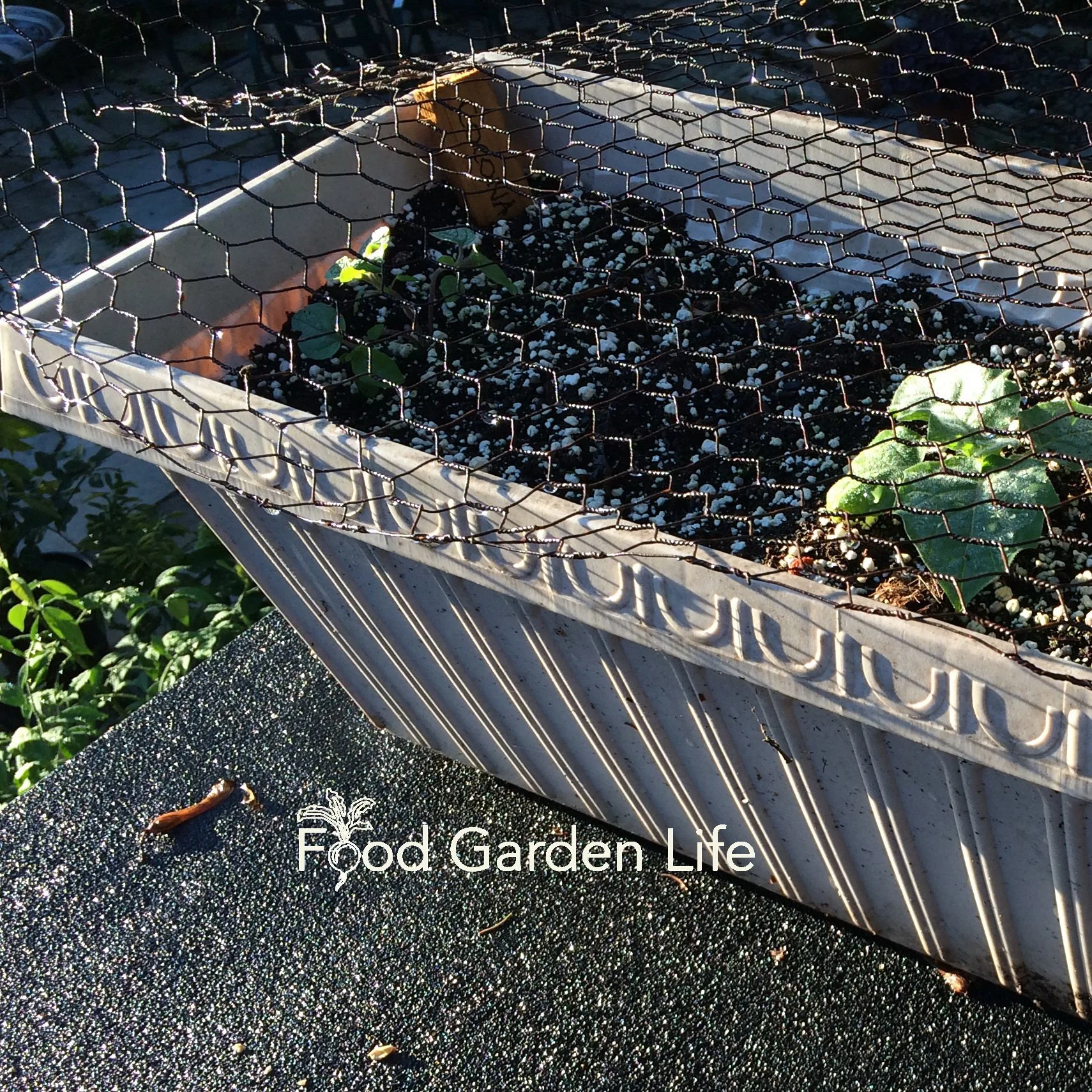
Prevent squirrels from digging up plants by excluding them with chicken wire. (In case you’re wondering, that’s not a fig plant in the photo.)
Protect Young Potted Fig Plants
When it comes to squirrels digging up young potted fig plants, I’ve found the easiest thing to do is to physically exclude the squirrels.
Chicken wire works well to prevent squirrels from uprooting young potted fig trees.
If you’re having a bad year for squirrel damage, this is worth it!
I’ve come home to find an entire tray of young potted fig plants uprooted and strewn on the patio. Positively infuriating!
With newly potted fig trees, snip the wire so that it can be wrapped around the plant, and then folded over the side of the pot. Like a skirt.
Or, make a small cage to cover a full tray of young potted fig plants.
One more idea: I’ve put an upturned laundry basket over top of trays of newly potted plants for a couple of weeks, so they have time to get established.
(Excluding squirrels works well for other plants too. My friend Claus uses it to keep squirrels from digging up his potted pepper plants.)
Protect Mature Potted Fig Trees
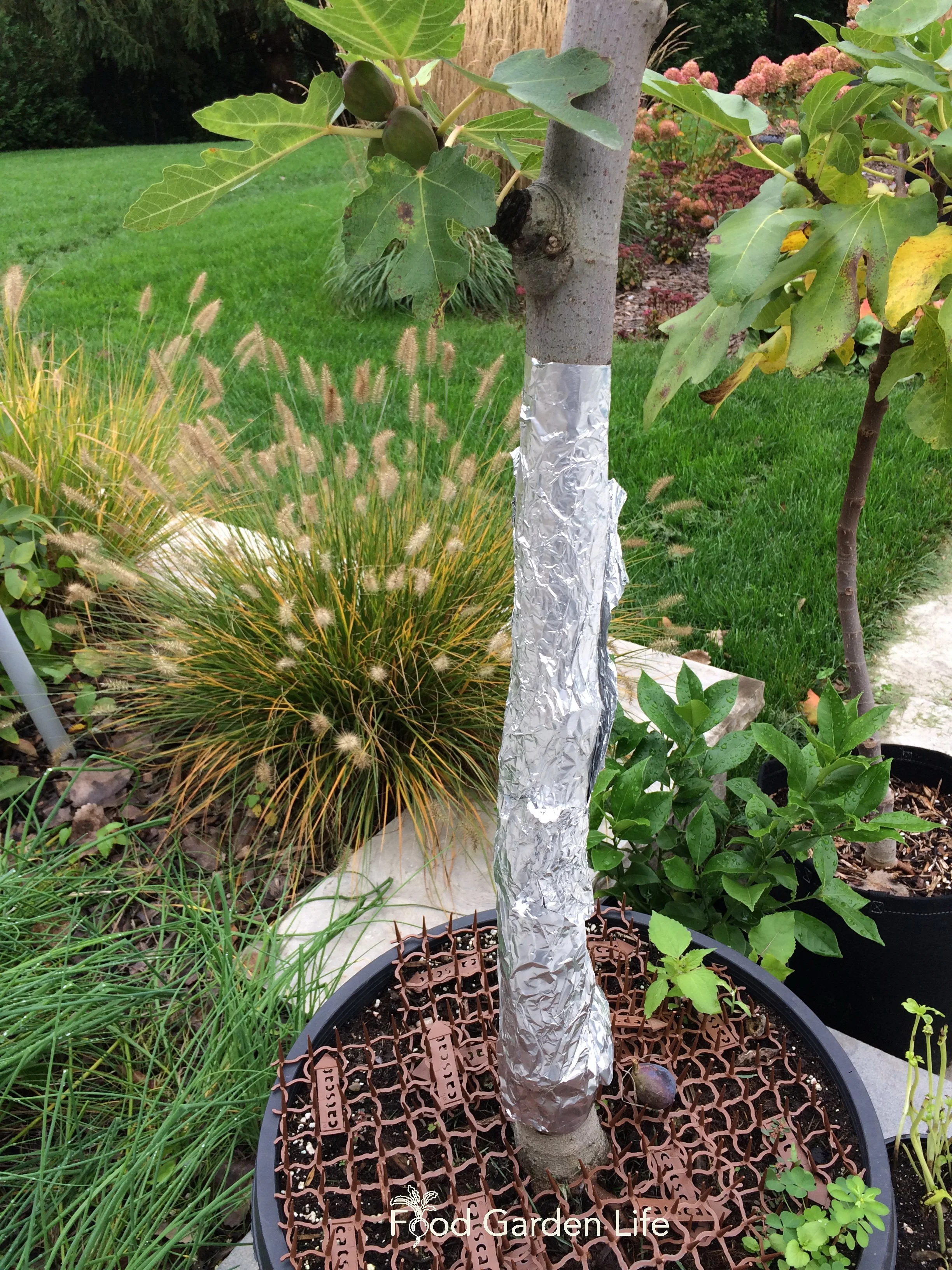
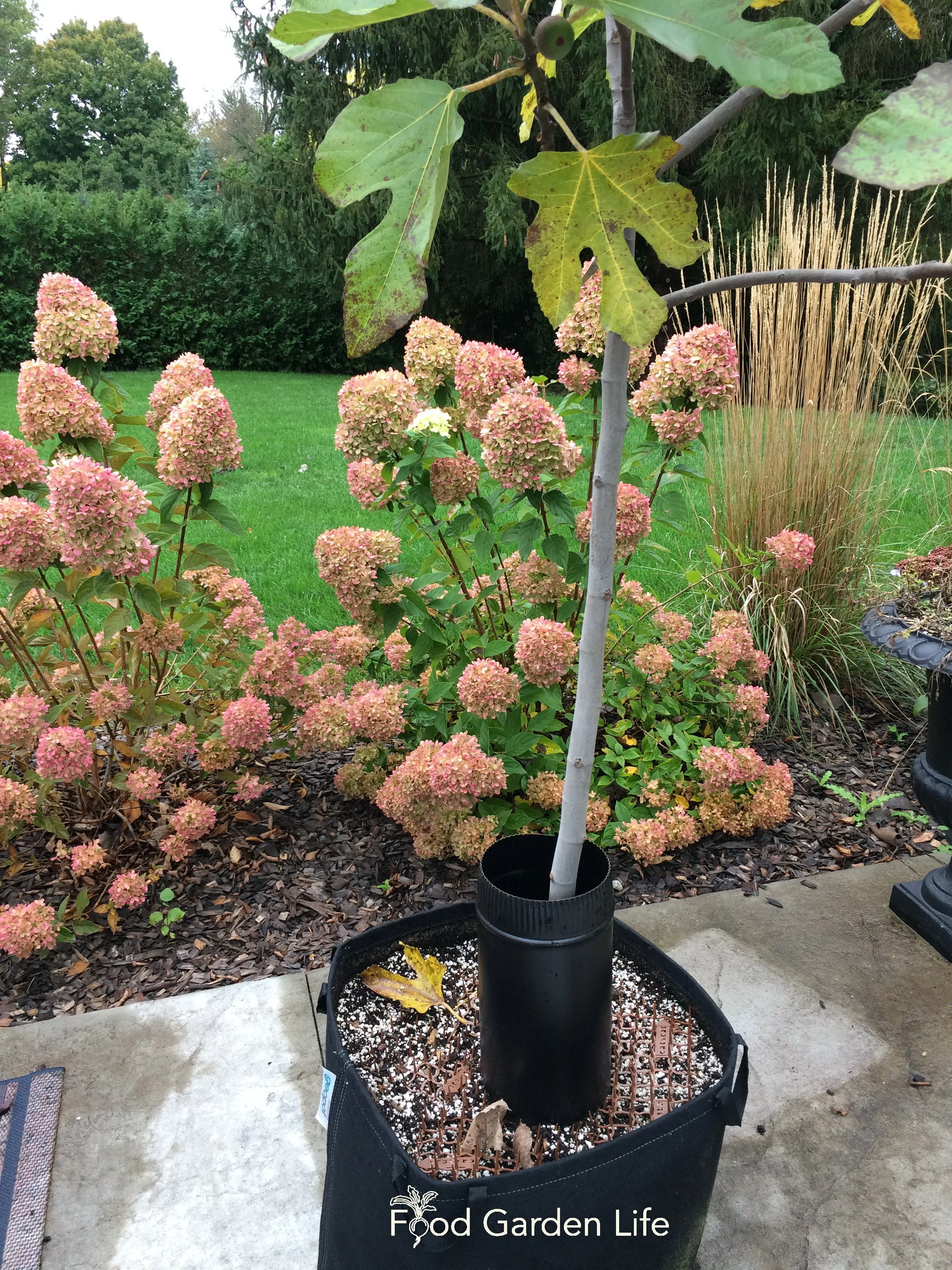
The spiky mat prevented digging. The foil baffle didn’t work.
I often get horse chestnuts poking up next to my potted figs. Every fall the squirrels eagerly bury the nuts in the potted figs…and then forget about them.
If this is a problem, you can physically exclude the squirrels as you would with young fig plants.
Chicken wire works well.
You can see in the picture the spiky bird-deterrent mat that a friend used to prevent squirrels from digging in potted fig trees.
I don’t do this because it’s extra work—and the squirrels digging in larger pots with well-formed roots rarely causes damage to worry about.
Stop Squirrels Eating Figs
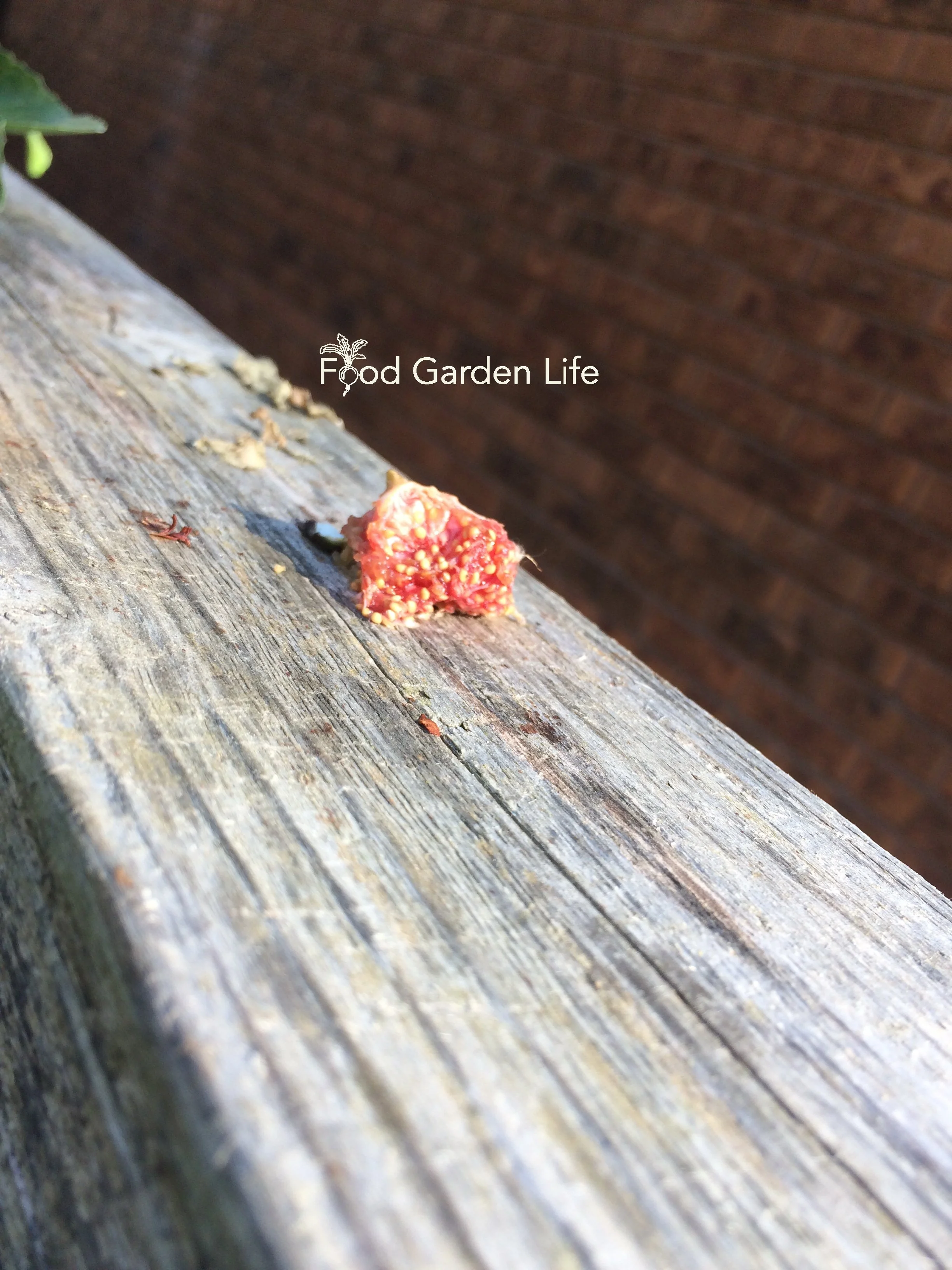
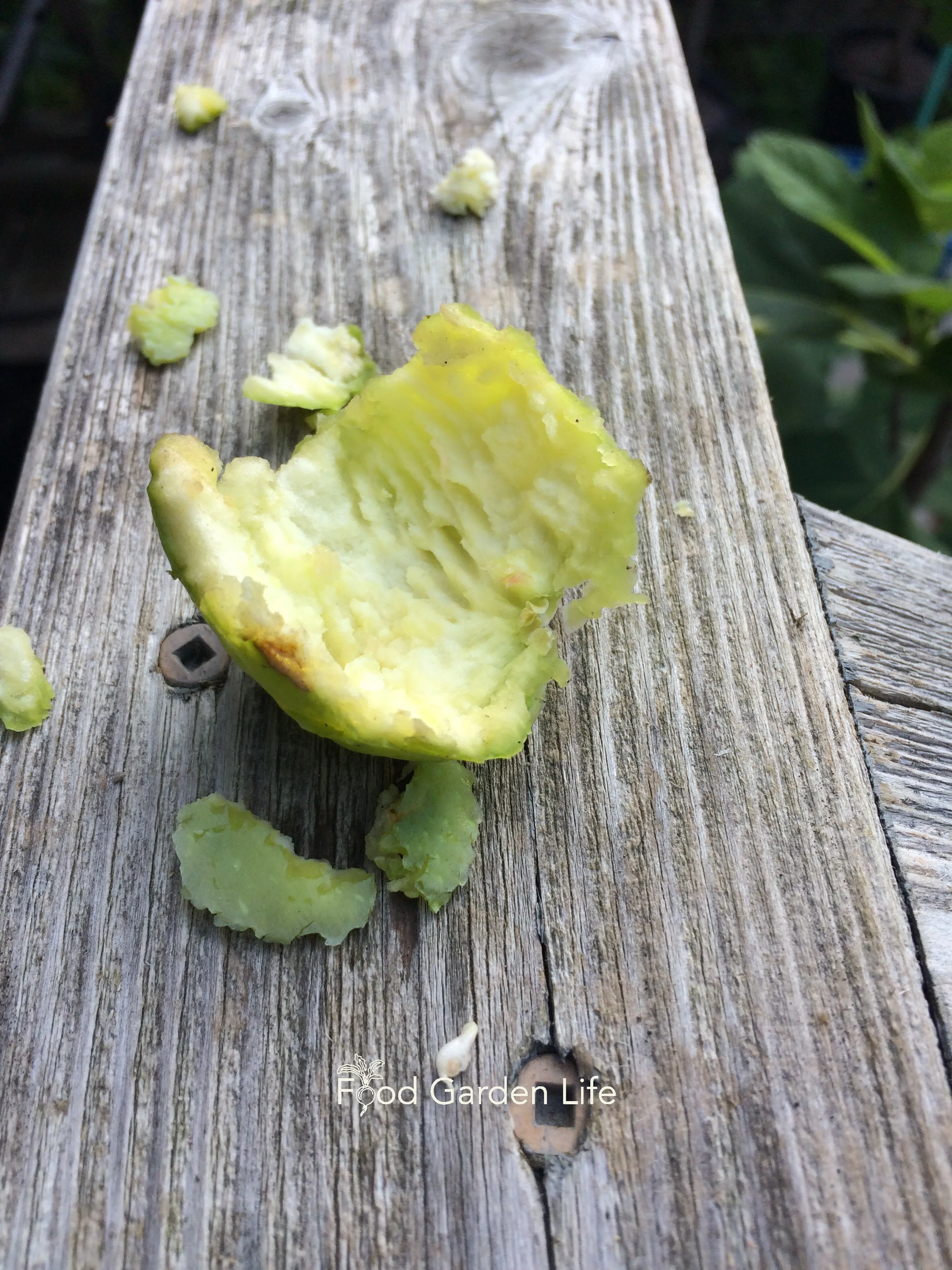
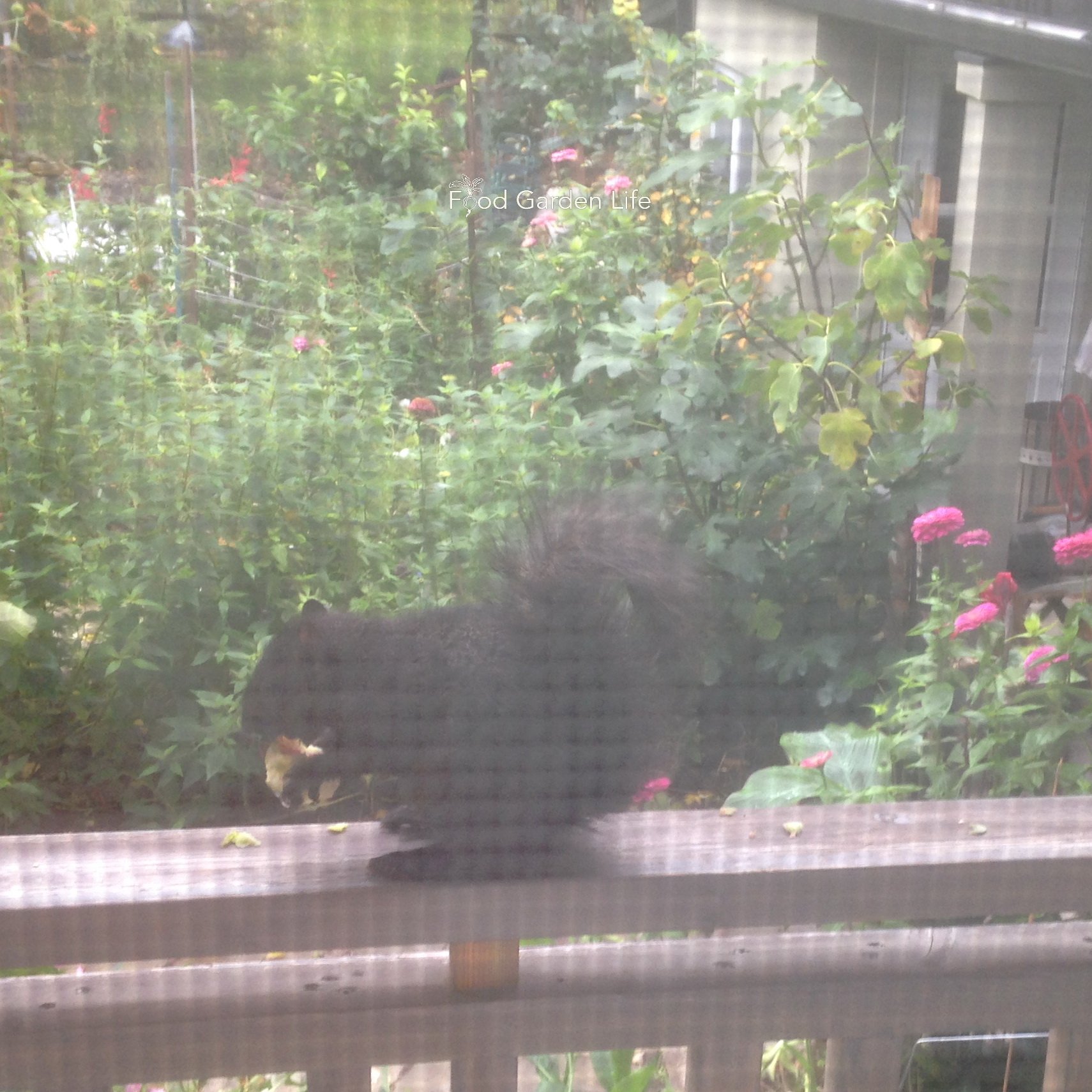
The pictures of squirrel-eaten figs below are worth 1,000 words.
It’s frustrating…because they don’t usually eat the entire fig, so some of it is wasted. And they leave those half-eaten figs right outside my kitchen window, on the deck railing, where it torments me!
Netting Fig Trees
I do not net my fig trees.
It’s a lot of work…both when you install the netting, and when you repeatedly peel it back to harvest figs.
But I’ve heard of people netting fig trees in much the same way that growers net grapes against birds and raccoons.
If you net a tree, use a fine mesh, pull it taut, and secure the edges so squirrels can’t get underneath. Check it regularly to make sure birds or other animals haven’t become tangled. A simple frame can hold the netting away from the leaves and fruit.
Organza Bags
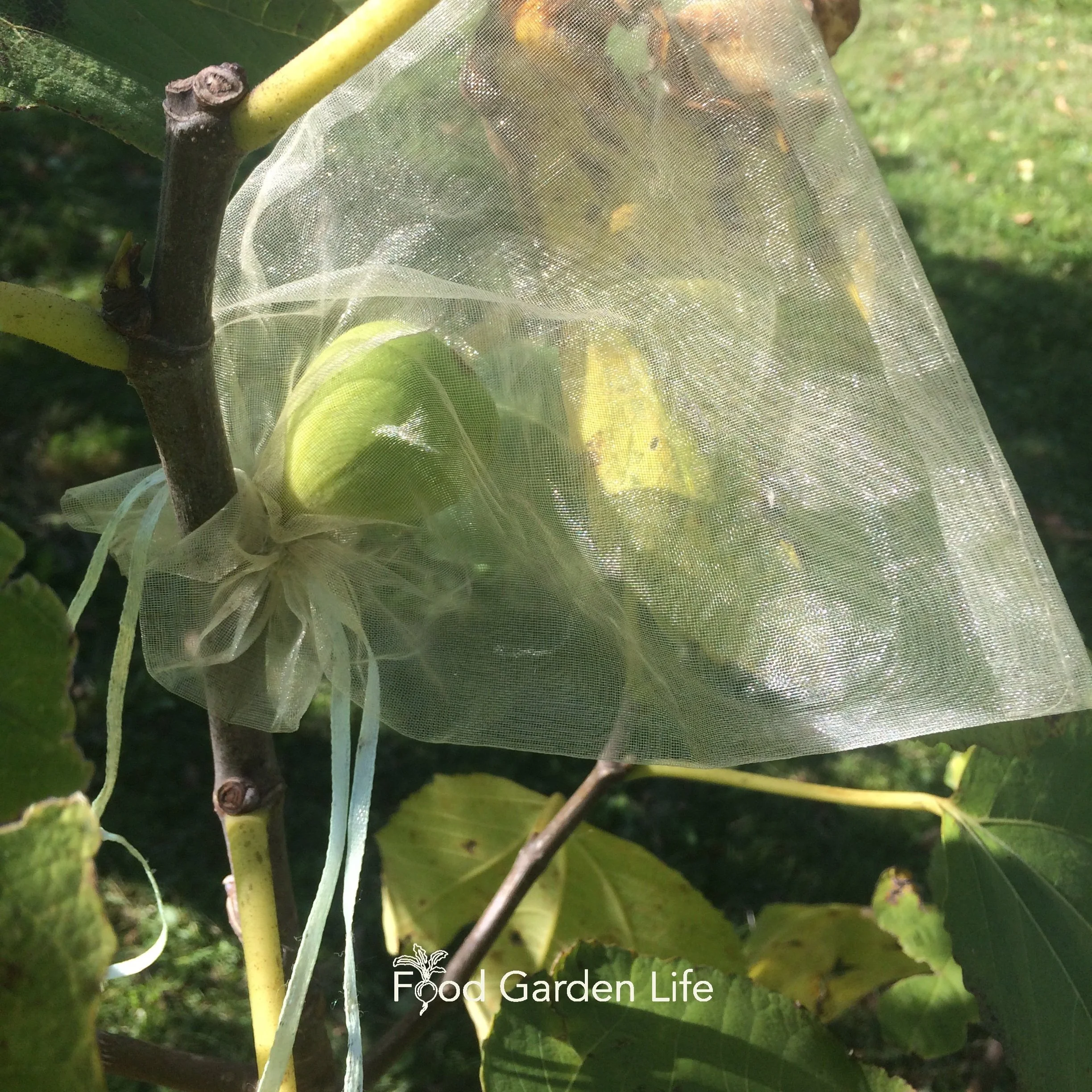
An organza bag as a squirrel deterrent for individual figs.
Small organza bags—the fabric mesh bags often used for wedding favours—can discourage squirrels from sampling individual figs.
A determined squirrel might chew through one, so this isn’t absolute protection. But for a small tree with a few special figs you’re determined to taste, it’s worth trying.
(I don’t do this with figs, but it’s how I manage to harvest pawpaw fruit in my squirrel- and raccoon-infested yard.)
Harvest Promptly
Once fig season begins, check ripening fruit at least once a day. A nearly ripe fig might escape notice, but a fully ripe fig is difficult for a squirrel to overlook.
Don’t pick figs before they’re ripe in hopes that they’ll finish indoors. Unlike tomatoes, figs don’t continue ripening properly after harvest. The trick is to pick them as soon as they’re ready—before the squirrels begin breakfast.
Other Fig Tree Squirrel Deterrents
Natural Predators
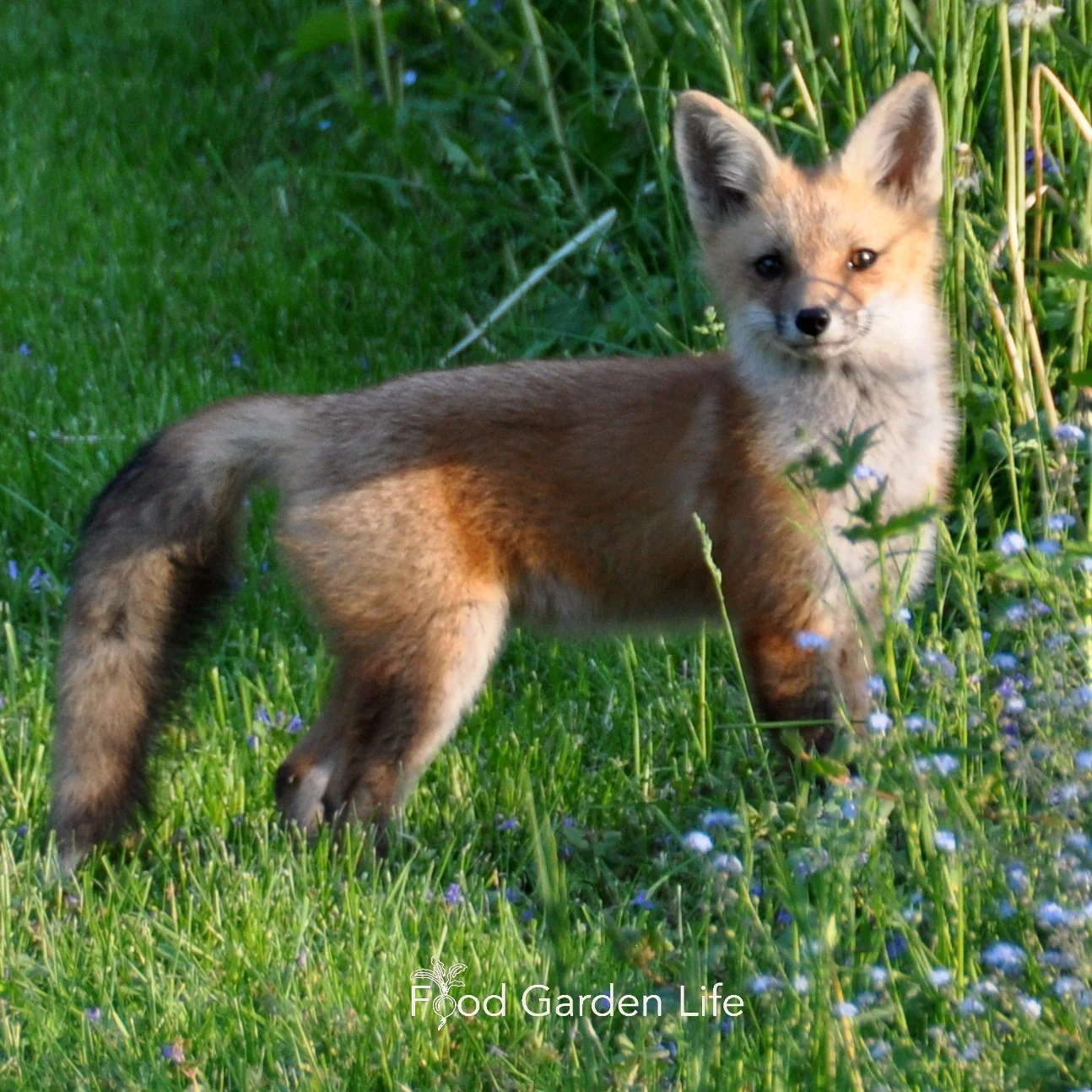
Foxes: an all-natural squirrel deterrent!
I remember asking my fig mentor, Adriano, how he prevented squirrels from eating his figs.
“Get a cat,” he said.
I don’t have a cat, but one year foxes made a den nearby.
Those squirrels that survived a litter of six hungry fox kits stayed high up in the big maple tree. I didn’t have squirrels eating my figs that summer.
That isn’t a squirrel-deterrent strategy most gardeners can arrange—but it was fascinating to see how quickly a nearby predator changed squirrel behaviour.
Fig Colour
I love dark figs.
And so, it seems, do the birds and squirrels.
I haven’t seen research to support this, but in my garden, green figs seem to fly under the radar. They blend in amongst the leaves, while dark figs stand out.
Fig Tree Baffles
This squirrel baffle didn’t help at all! Squirrels jump—so they must be well above the ground and beyond where squirrels can jump from neighbouring objects.
If you’re thinking of trying tree baffles for squirrels, the main thing to remember is that squirrels jump.
They jump quite well.
I don’t use baffles on my fig trees because there are too many nearby launch points from which they could successfully jump into my fig trees.
But if you had a standalone fig tree, with a tall, single-stem trunk to which you could attach a baffle—it could work.
(I do use squirrel baffles on my bird feeder poles in the winter: the key to success is having the baffle high enough off the ground, and having the feeder far enough away from anything a squirrel could jump from.)
A friend tried the baffle pictured here, and the squirrel effortlessly hopped onto the stem above.
Do Scent Deterrents Work?
I haven’t had success with commercial scent deterrents. Powdered coyote urine certainly didn’t discourage the squirrels in the attic of a house I once rented.
(What finally solved the attic problem? Exclusion: installing a one-way exit and making sure there was no way back in.)
Hot-pepper spray can make fruit less appealing, but you must reapply it after rain. Physical exclusion is more dependable.
This year I’m trying something different: organza bags filled with dry, granulated hen-manure fertilizer, hung away from the fruit in a few fig trees. I’m comparing them with untreated trees. It’s an experiment, not yet a recommendation.
Squirrels helping themselves elsewhere in the garden? See my broader guide to keeping squirrels away from vegetables, fruit, seeds, and containers.
Keep Growing Figs
Growing figs where winters are cold takes a bit of creative thinking.
In Fig Camp and the self-paced Fig Masterclass, I explain how to grow figs in pots or in the ground, extend the growing season, ripen more fruit, and protect your trees through winter.
Explore Fig Camp and Fig Masterclass
Looking for more cold-climate fig-growing ideas? Visit the fig home page to browse articles about varieties, pruning, propagation, ripening, winter protection, and more.
My revised and expanded fig book is a practical guide to growing figs in pots and cold climates—from choosing varieties and pruning to ripening fruit and conquering winter.
Find This Helpful?
Enjoy not being bombarded by annoying ads? Appreciate the absence of junky affiliate links for products you don’t need?
This site is reader supported. If it has helped you in your food-gardening journey, you can give us a high-five below. Any amount is welcome.
Guide to Controlling Fungus Gnats on Fig Cuttings
Guide to controlling fungus gnats on fig cuttings.
Fungus Gnats and Fig Cuttings
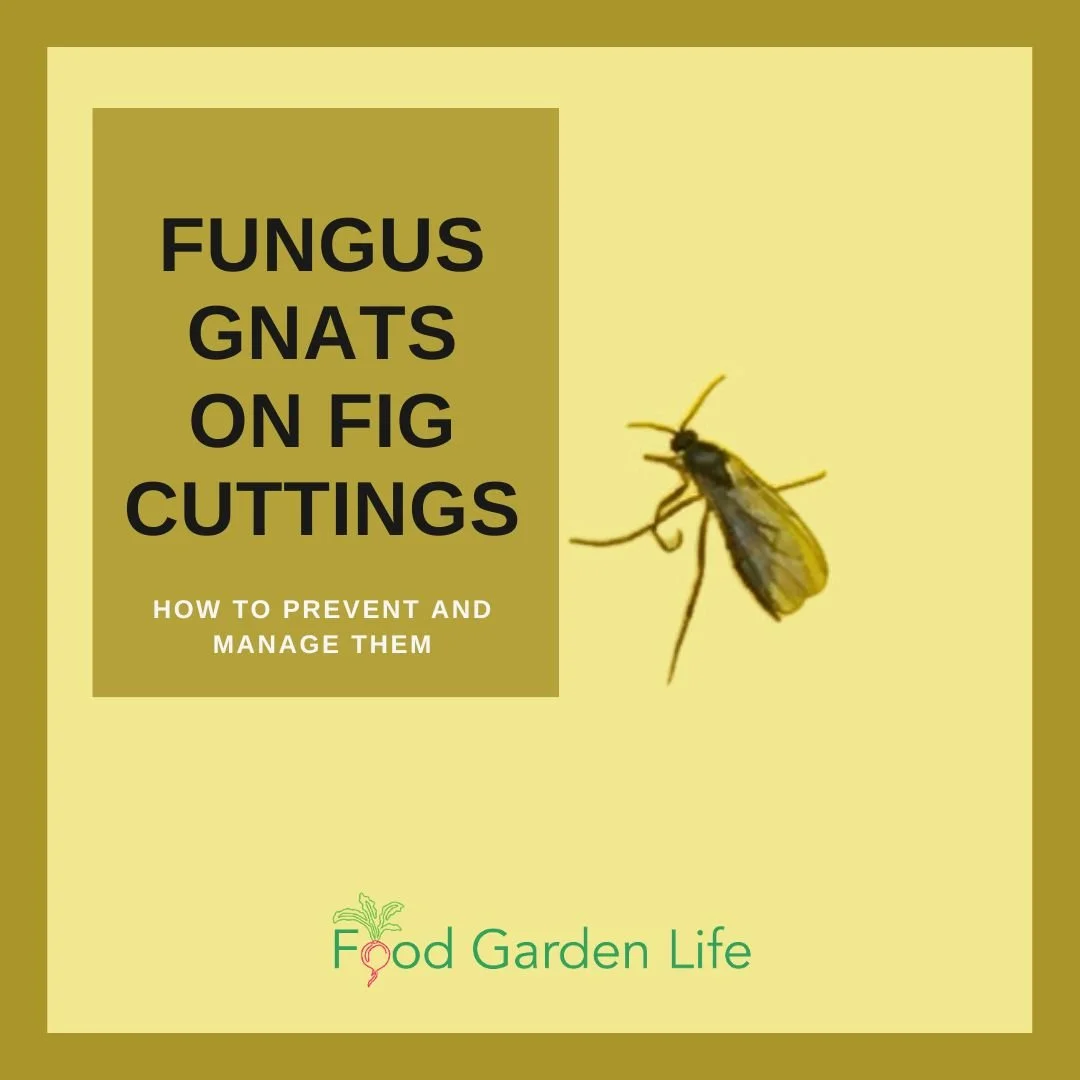
It was during a Zoom meeting.
Right in front of my face.
It was so close I nearly inhaled it.
A fungus gnat. They’re back…and that’s bad news for my fig cuttings.
If you’ve had fig cuttings that looked healthy, but then died, a common cause is fungus gnats.
They’re small flying insects. Harmless for many houseplants…but a problem when propagating fig trees from cuttings.
Luckily, there are ways you can deal with them.
In this post, I’ll tell you what you need to know about fungus gnats and fig cuttings: How to prevent them, the life cycle, and how to control them.
What’s a Fungus Gnat?
It’s easy to mistake an adult fungus gnat for a fruit fly.
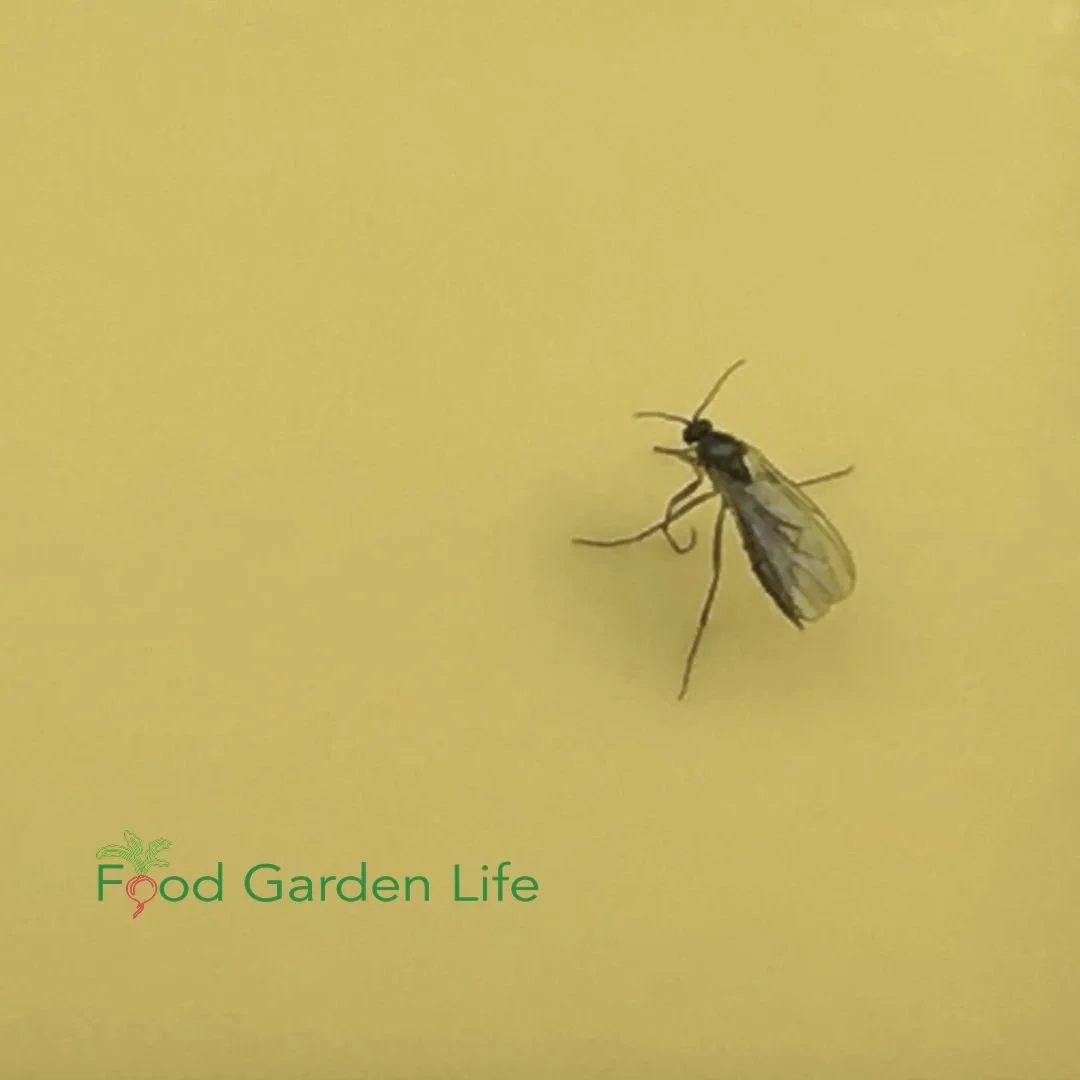
An adult fungus gnat.
The adults are small flies, about 4 mm (1/8th of an inch) long. Their little bodies are jacked up on long skinny legs, making them look top heavy.
Fungus gnats are weak fliers…anything but graceful. Their flight is bumbling at best, like the pigeons of the flying insect world.
If you have fungus gnats, you’re likely to see them flying around your houseplants. Others will be walking around the soil surface.
Fig Cuttings and Fungus Gnats
Here’s where fig cuttings come into this: If you see adult fungus gnats, then there are lots of larvae somewhere.
The larvae are small worms that live in the soil. They’re difficult to see with the naked eye. But if you’ve got adults, there are larvae around.
These larvae—these worms—eat decaying organic matter…AND roots.
Mature plants are not usually bothered by fungus gnats; they can take some root damage.
But fungus gnat larvae can mow down your fig cuttings. (OK, mow up…they’re munching on the newly forming roots.)
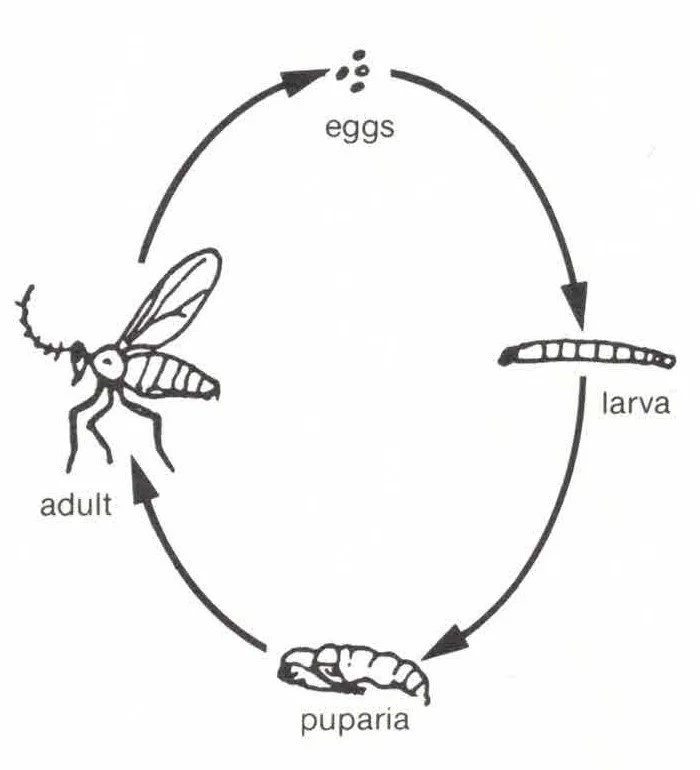
Fungus gnat life cycle
Fungus Gnat Life Cycle
Adult fungus gnats live for about a week. The female gnat lays a lot of eggs in that short time.
Eggs hatch into larvae
Larvae pupate
The cycle repeats
The full life cycle is about 21 days at 24°C (75°F). It takes longer at cooler temperatures.
Understanding this life cycle helps you managing fungus gnats.
You want to break the cycle. To do this, go after the fungus gnats at more than one stage.
Where Fungus Gnats Come From
Fungus gnats can arrive with the soil in new houseplants. They can also arrive with contaminated potting soil. Potting soils aren’t usually sterilized, so it’s possible to have fungus gnat eggs in potting soil.
Control Fungus Gnats on Fig Cuttings
The most common advice for controlling fungus gnats is to water less. That’s because the larvae need moist soil.
This advice works well with houseplants.
But when we’re rooting fig cuttings in potting soil, we want moist conditions so that the cutting does not dry out.
That means we need to use some other tactics to manage fungus gnats with fig cuttings.
Below are a few ways to control fungus gnats on fig cuttings. Use more than one tactic for the best results.
Start Fig Cuttings in Fungus-Gnat-Free Potting Soil
Fungus gnat eggs can come with a batch of potting soil. No big deal for most house plants…but with fig cuttings you don’t want fungus gnats.
So if there’s a chance your you have fungus gnat eggs in your potting soil, sterilize it.
(Commercial potting soil mixes aren’t usually sterilized. That’s fine because, there are often beneficial microbes in them. If you’re confident the soil you’re using is free from fungus gnats, no need to do this.)
On a home scale, you can use heat to sterilize potting soil. A temperature of 180°F (80°C) for half an hour does the trick (as well as destroying weed seeds and disease organisms.)
So you’re probably asking what it smells like if you put soil in your oven! It smells like…soil. And if that’s an issue, just do this on your BBQ.
Pre-Root Your Cuttings

Fig cuttings pre-rooted in a bag. This is a good way to give fig cuttings a head start so that’s there’s a shorter period of time when they’re very susceptible to fungus gnat damage.
It’s as they just begin to root that your fig cuttings are especially susceptible to fungus gnat damage. So one strategy is to pre-root your fig cuttings before you pot them up.
Wrap all but the bottom inch of your fig cuttings in damp paper towel, and then enclose them in a sealed clear plastic bag. (Clear, so that you can watch the progress.)
Then leave the bag at room temperature for root formation to begin.
First you’ll get white splotches forming on the bottom of the cuttings. These eventually turn into roots. And once you have roots formed, you can pot up your rooted cuttings.
(Some people use a similar technique, putting cuttings in a sealed bag with perlite.)
With roots already formed, your cuttings have a good head-start and are likely to outgrow any fungus gnat problems.
Grow Your Fig Cuttings Away from Potted Plants
Knowing that potted plants are often a source of fungus gnats, start your fig cuttings away from potted plants.
Get Your Fig Trees Through Winter—and Harvest Figs
Growing figs where winters are cold takes a bit of creative thinking.
In Fig Camp and the self-paced Fig Masterclass, I explain how to grow figs in pots or in the ground, extend the growing season, ripen more fruit, and protect your trees through winter.
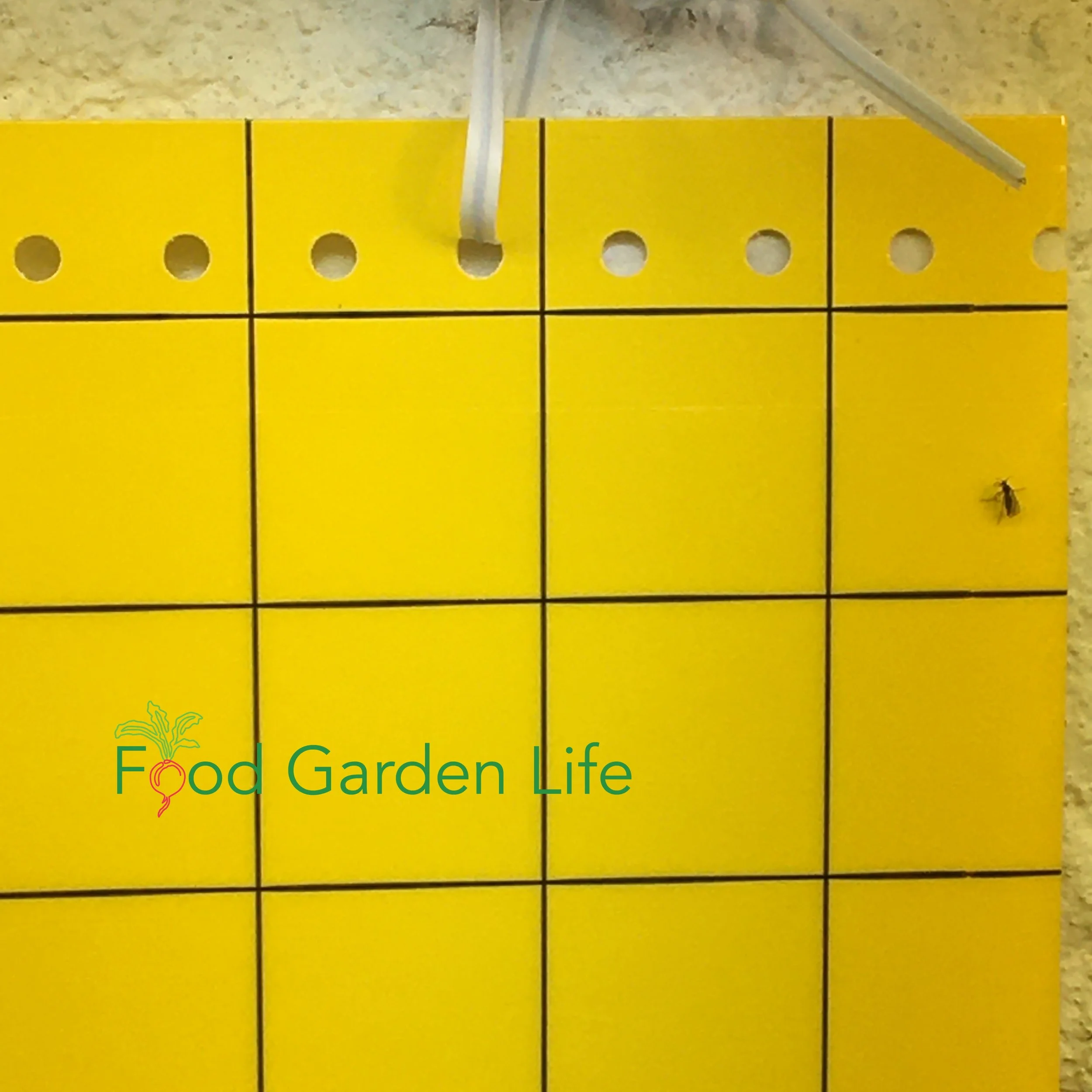
A fungus gnat caught on a yellow sticky trap.
Yellow Sticky Cards for Adult Fungus Gnats
Yellow sticky cards are helpful for monitoring for fungus gnats. They are placed around plants to catch adult fungus gnats.
But sticky traps alone don’t control fungus gnats.
Use sticky traps in conjunction with other fungus-gnat-control strategies.
Nematodes
Nematodes are microscopic worm-like creatures that kill the larval stage of fungus gnats. Buy them from suppliers of biological controls.
Nematodes are applied with water. When you receive them, you’ll mix them with water, and then water them onto the soil.
When using nematodes, keep the potting soil moist as they need a moist environment.
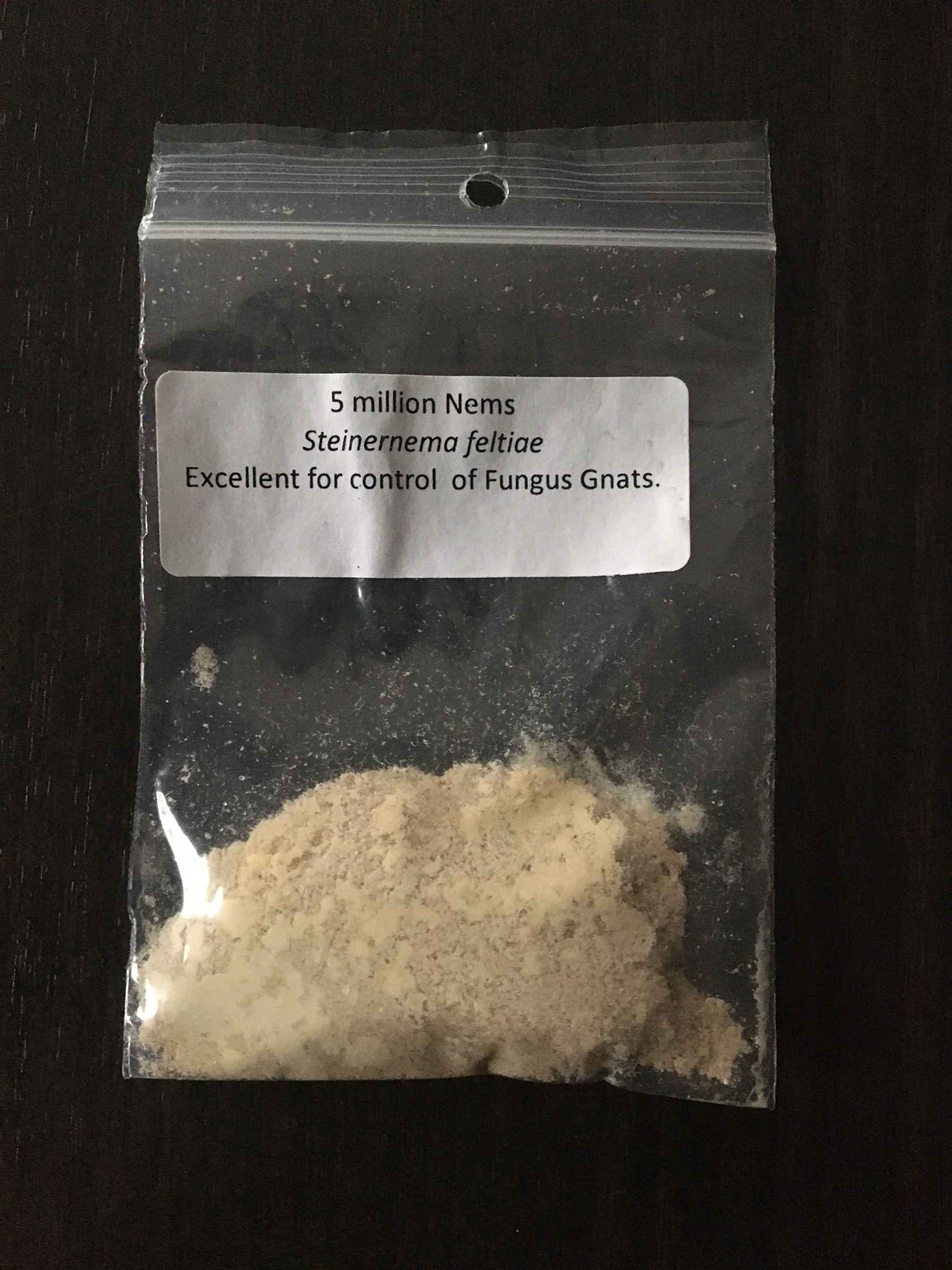
Steinernema feltiae nematodes, used to control fungus gnats.
There are many species of nematode, and some are used for biological control of garden pests such as white grubs.
The nematode for fungus gnat larvae is Steinernema feltiae.
Nematodes have no effect on adult fungus gnats.
More than one application is best. That way you get the larvae in the soil at the time of application, but also larvae that emerge later from eggs.
BT
BT (short for Bacillus thuringensis) is a naturally occurring bacterium.
If you recognize the name, it’s probably because it’s often used for mosquito management—and there is also a type that’s used for controlling caterpillars in the garden.
The BT for fungus gnats is Bti (Bacillus thuringensis israelensis).
Don’t buy Btk (Bacillus thuringensis kurstaki); it’s used for caterpillars.
Depending on the formulation, the BT can mixed with water and watered onto the soil, or incorporated into the potting soil.
The fungus gnat larvae ingest the BT and die.
Repeat weekly, 3 or 4 times so that you get the larvae in the soil at the time of application, but also larvae that emerge later from eggs.
Root Fig Cuttings in a Bag
Plant your fig cuttings in fungus-gnat free soil that’s isolated from fungus gnats in a plastic bag. The damp soil is in the bag, the bottom of the cutting is inserted into the soil, and the top of the cutting sticks out above.
Seal tightly so no fungus gnats can get to the soil.
If you use clear bags, you can see the progress of rooting.
Some people call this the “fig pop” method.
Fungus Gnats and Fig Cuttings: Putting it all Together
Pin this post!
Fungus gnats come with potting soil and house plants. Having them isn’t a sign that you’ve done anything wrong.
And normally they’re not a big deal.
Except they’re a very big problem if you have fig cuttings—because they damage the newly emerging roots.
When you’re managing fungus gnats:
Use more than one control strategy
Repeat treatments so that newly laid eggs or newly hatched larvae are controlled
Remember that one adult gnat flying around can lay lots of eggs…so be diligent.
Keep Growing Figs
Looking for more cold-climate fig-growing ideas? Visit the fig home page to browse articles about varieties, pruning, propagation, ripening, winter protection, and more.
Grow Figs Where You Think You Can’t
My revised and expanded fig book is a practical guide to growing figs in pots and cold climates—from choosing varieties and pruning to ripening fruit and conquering winter.
Find This Helpful?
Enjoy not being bombarded by annoying ads? Appreciate the absence of junky affiliate links for products you don’t need?
This site is reader supported. If it has helped you in your food-gardening journey, you can give us a high-five below. Any amount is welcome.

Hi, We’re Steve and Emma!
We help people grow food on balconies, in backyards, and beyond—whether it’s edible landscaping, a vegetable garden, container gardens, or a home orchard.
Fig Masterclass
This self-paced, virtual Fig Masterclass is hosted by Horticulturist and Cold-Climate Fig Expert Steven Biggs.