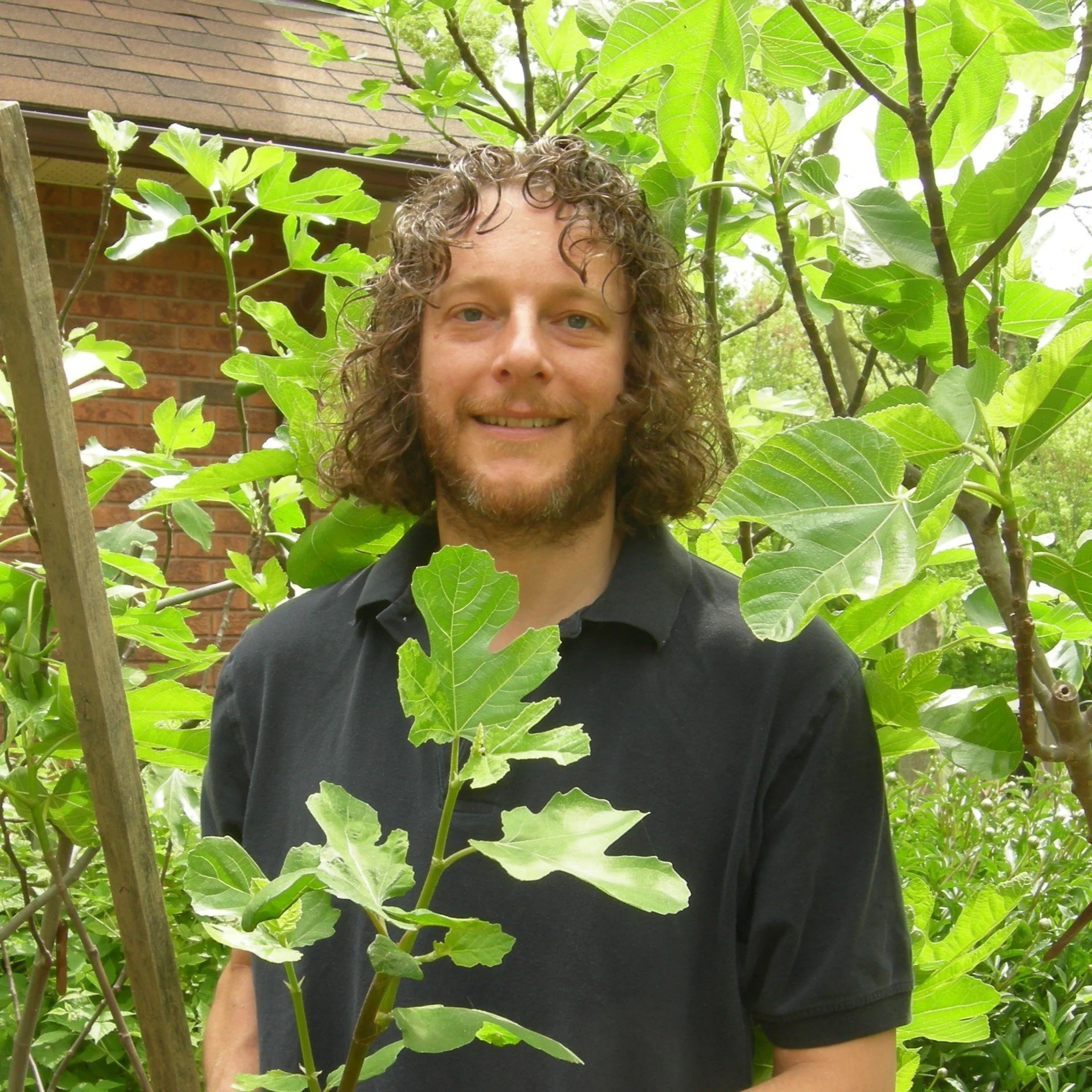
Hardy Fig Varieties Explained: Choosing the Right Figs for Your Climate with Pierre Baud
Cold-Hardy Fig Varieties
This episode is in French. See the English transcript below.
In this episode, I speak with Pierre Baud of Pépinières Baud, one of the leading voices in fig cultivation and cold-climate fig selection.
We explore his decades of work with fig trees, the inspiration behind his book on cold-hardy fig varieties, and why climate-based classification is so important for growers. Pierre shares practical guidance on choosing fig varieties for different hardiness zones—from 7A and 7B through to warmer Mediterranean-like climates.
We also discuss common mistakes growers make when selecting fig varieties, how temperature and heat affect performance, and which cultivars stand out for flavour, reliability, and versatility in the kitchen.
If you’re growing figs where winters are cold or summers are short, this conversation offers rare, experience-based insight into choosing varieties—and explains why cold hardiness is only part of the decision.
Topics covered include:
Why cold hardiness is only one part of choosing a fig variety
Self-fertile figs for regions without the fig wasp
Winter cold, spring frost and ripening time
Choosing between breba-producing and main-crop varieties
Promising varieties for Zones 7A, 7B and 8A
How heat, water and drainage affect fig performance
Varieties for fresh eating, drying and cooking
Pierre Baud’s personal favourites
Planting, feeding and pruning figs in cold climates
See the full conversation following the French notes below.
Figuiers résistants au froid
Dans cet épisode, je jase avec Pierre Baud des Pépinières Baud, un expert en culture du figuier et en sélection de variétés adaptées aux climats froids.
On revient sur ses décennies d’expérience avec les figuiers, l’inspiration pour son livre sur les variétés rustiques, et pourquoi c’est si important de choisir des figuiers en fonction du climat. Pierre partage des conseils concrets pour sélectionner les bonnes variétés selon les zones de rusticité — de 7A et 7B jusqu’aux climats plus chauds de type méditerranéen.
On parle aussi des erreurs fréquentes quand on choisit ses figuiers, de l’effet des températures et de la chaleur sur leur rendement, et des variétés qui se démarquent pour le goût, la fiabilité et leur polyvalence en cuisine.
Que vous cultiviez des figuiers en climat limite ou en climat chaud, cette discussion vous donne des perspectives rares, basées sur l’expérience, pour faire les bons choix — et comprendre pourquoi c’est plus important qu’on pense.
Sujets abordés :
Pourquoi choisir ses variétés de figuiers selon la zone climatique
Les différences clés entre les zones 7A, 7B, 8A et les régions plus chaudes
Les variétés de figuiers rustiques les plus fiables
Les erreurs courantes chez les producteurs de figues
L’impact de la chaleur sur la production
Les meilleures variétés pour manger frais vs cuisiner
Est-ce que planter plusieurs variétés augmente les chances de succès
Les coups de cœur de Pierre Baud
English Translation
This transcript has been translated from French and lightly edited for clarity.
Steven: Welcome to the Fig Culture podcast!
Pierre: Thank you. I’m very happy to take part and share some ideas on how people can grow fig trees where you are.
Steven: Great, thank you—and I’m really happy to have your new book, Figuiers résistants au froid.
Pierre: Thank you very much. This book came about because we have more and more customers trying to grow and fruit fig trees in regions much colder than the typical fig-growing zones. And with climate change, we’re seeing earlier ripening—figs ripening earlier in the summer—and fig trees moving further north in France and across Europe, and even further east in Europe.
Also, the fig wasp is changing. Until recently, we didn’t see it north of Lyon in France—that was roughly the limit, Bordeaux to Lyon. North of that, there was no fig wasp, so only self-fertile varieties could grow.
But the fig wasp was observed near Paris two years ago, and even in southern Germany last year. So this expands the varietal possibilities, including varieties that need pollination and can now be grown in those regions.
Steven: So the options for people in colder regions have changed.
Cold Hardiness, Ripening Time and Spring Frost
Pierre: Yes, the options have changed. The range has expanded. But we still have the same challenges: cold hardiness and ripening time. Because these are really the two constraints with figs.
With fig trees there are really two main constraints.
The first is cold hardiness—the tolerance of the wood to winter cold. That applies to all varieties.
Then there is springtime cold tolerance. In France, we can have cold temperatures until the last spring frost dates—sometimes even negative temperatures as late as May 10. That’s rare, but it can happen. It’s quite common even in April. Three years ago we had -6°C on April 8th.
And because winters are now shorter and generally less cold than where you are, that affects biferous varieties—those that produce two crops.
The first crop, the breba figs, starts very early now. At the moment we already have figs developing that are 2–3 cm in size on some varieties. So if a late spring frost hits, we can lose that crop completely.
So variety choice depends not only on winter cold hardiness, but also on hardiness during late spring frosts.
Steven: Okay, so there are two different things to consider.
Pierre: Exactly, two different factors.
And exposure is also very important. In cold regions, you need to protect fig trees as much as possible—use hedges, walls, anything that creates shelter.
Winter cold hardiness is excellent in some varieties—down to -15 or even -18°C. But it depends on many factors: how the cold arrives, its intensity, and how long it lasts.
Soil type also matters a lot. For example, a variety like ‘Longue d’Août’ can survive down to -18°C in well-drained soil without excess moisture. But in wet soil, it may freeze at -12°C.
So drainage is critical.
Timing of cold is also important. If you get a mild autumn, trees keep growing late, the wood doesn’t properly harden, and they become more vulnerable going into winter.
A frost in November will cause much more damage than the same frost in January or February, because by then the tree is fully dormant and hardened.
So it’s not just the temperature—it’s also when it happens.
Duration matters too. A short cold snap is very different from several days of continuous freezing temperatures. The longer the cold lasts, the more damage you get.
So in reality, cold is complex—many factors interact.
Pierre Baud and His Family Fig Nursery
Steven: Maybe we can talk for a moment about your nursery. You’re in the south of France, and you’ve been growing figs there for a long time—but where did your interest in figs begin?
Pierre: The story is a bit unusual. We’re a very small farm in a region surrounded by vineyards—there are vineyards everywhere around us. We make good wine around here. We’re kind of in the middle of all that, with the smallest operation in the area—about four and a half hectares.
Originally, it was a mixed farm—vegetables, tomatoes, asparagus, a bit of everything. My father planted the first fig trees in 1955.
I was born in 1957, so I’ve always known fig trees around the house.
And the funny part is that my father originally wanted to plant just one variety—Noire de Caromb, which is the local variety that performs very well here.
But he ended up dealing with a not-so-honest nurseryman who sold him about a dozen different varieties instead. So right from the beginning, we had a mix of fig varieties—even though he only wanted one.
That’s really how the story started.
Then in 1956, there was a major cold event—down to -18°C in February. It lasted quite a while, and around here many olive trees were killed, along with a lot of other plants. The fig trees froze too.
But fig trees can regrow from the base, so they came back.
Then again in 1962, another severe freeze hit, and the trees were damaged again—but once more, they regrew.
At that point, my father came up with the idea of propagating fig trees—to start a small nursery as an additional source of income for the farm.
He started propagating fig trees, then gradually added other plants, and little by little the farm transitioned from mixed agriculture into a nursery.
As for me, I studied biology and botany, and I had the opportunity to work on figs at the end of my studies. That put me in contact with researchers working on fig trees.
Then I taught horticulture for about ten years, before taking over the family operation in 1990.
When I took over, I made a strategic decision. We’re in a beautiful region—but very rural, with no foot traffic. It’s not a place where you can rely on retail sales.
So I decided to focus on the commercial market. But working with a wide range of plants would have been difficult, so I chose to specialize almost entirely in figs.
At first, it was about 80% figs, with a bit of pomegranate and jujube—other Mediterranean plants.
Over time, I dropped the jujube, and today it’s still about 80% figs and 20% pomegranates.
From the beginning, I’ve always been interested in collecting and testing varieties—working with botanical collections, research institutes, and exchanging with people all over the world.
My goal was to build the widest possible range of fig varieties—for professional fruit growers, and with this idea that figs can adapt even in colder regions, which has always interested me.
Eventually, I eliminated almost all ornamental plants and focused almost entirely on figs.
I officially retired three years ago, and now my youngest son has taken over and continues the work.
Steven: And roughly how many varieties do you have now?
Pierre: I don’t count them precisely anymore, but we’re somewhere between 250 and 300 varieties. I’ve always been in that range.
Over the years, we’ve probably tested 600 or 700 varieties in total.
But in terms of commercial production, 80–90% of the volume comes from a dozen varieties. Another 10–15% comes from maybe 15 to 20 additional varieties.
At the nursery, we usually offer around 50 to 60 varieties each year—some in very small quantities.
And when we work with botanical collections or conservation projects, there are years when we propagate 300 or even 350 different varieties.
Steven: Maybe we should talk about varieties now. In a cold climate, what’s the most common mistake people make when choosing a fig variety?
How to Choose a Fig Variety for a Cold Climate
Pierre: The first—and most important—thing is to make sure the variety is self-fertile.
Because if pollination is required, you need the fig wasp. And while the fig tree itself can survive down to -18°C, the fig wasp cannot survive below about -14 or -15°C.
So without the wasp, you may get a tree that grows well and produces leaves—but no fruit.
So step one: choose a self-fertile variety.
After that, people often focus too much on cold hardiness of the wood. Yes, some varieties are slightly more fragile than others—like Grise de Saint-Jean, for example—but overall, the differences aren’t huge.
What matters more is the growing conditions: how well the wood matures, how the tree is managed, and the environment you create for it.
There are many small things you can do to help the wood harden properly and improve cold hardiness.
But the next big mistake is choosing varieties that ripen too late.
If you plant a fig tree in a tropical or subtropical climate, it grows continuously. Every leaf axil can potentially produce a fruit. I even have clients in Malaysia whose fig trees never lose their leaves and produce fruit year-round.
But in colder climates, growth stops. And when growth stops, fruit production also stops.
So in short growing seasons, late varieties simply don’t have time to ripen.
That’s the key point: avoid late varieties in cold climates.
Instead, choose early varieties.
Now, there’s another layer to this: spring frost.
If you regularly get late spring frosts, then you’ll likely lose the breba crop—the early figs that develop on last year’s wood.
So in that case, there’s no point choosing a biferous variety (one that produces two crops), because the first crop will be unreliable or lost every year.
In that situation, it’s better to choose a uniferous variety—one that produces a single, early main crop.
But if your site is protected—say against a wall, or in a favourable microclimate—and you can avoid spring frost damage, then you can take advantage of biferous varieties and their early breba crop.
So it really comes down to risk.
If spring frost risk is high, choose early uniferous varieties
If spring frost risk is low, you can consider biferous varieties
Ideally, plant more than one tree.
If possible, plant both:
one biferous (for early figs, with some risk), and
one early uniferous (for more reliable production)
That way, you spread the risk and improve your chances of a good harvest.
For early autumn-producing varieties, some of the best include: Pastilière, Ronde de Bordeaux, Malta, and other early, well-known varieties like that.
and a few others in that group
These are productive and early enough to succeed in cooler climates.
So the key takeaway is this:
Think in terms of risk management—not just variety names.
Steven: So ideally, plant two—or 200—more!
Pierre: Yes, exactly—two or more if you can. But in any case, avoid late varieties. That’s absolutely essential in cold climates.
Fig Varieties for Zones 7A, 7B and 8A
Steven: Let’s talk about zones. In your book, you organize varieties by climate zone. I think you start with Zone 7A—could we look at a few varieties that work well there?
Pierre: Yes. If we start with Zone 7A, and you want to eliminate the risk of losing the breba crop, then I would recommend going with a uniferous variety.
My first choice would be Pastilière.
It’s very cold-hardy—the wood handles cold very well. It’s also a compact tree, with short internodes, so it forms a dense, sturdy structure.
That’s useful because even if cold damages the tips of the branches, it regrows quickly and still produces.
It’s also very early for its main crop in autumn, which is critical in colder climates.
I have clients growing Pastilière successfully in the Alps at over 1,000 metres in elevation, so it’s a very reliable option.
So for a uniferous in Zone 7A: Pastilière.
Now, if you want to try a biferous variety, I would suggest Blanche.
It’s quite common in eastern France, around Strasbourg, which is a relatively cold region.
It produces a good breba crop, and importantly, those breba figs develop a bit later than other varieties—so they have a better chance of avoiding spring frost.
It can produce around 30–35% of its crop as breba figs, which is quite good. Most biferous varieties are closer to 20–25%.
So Blanche is a solid option.
And for a third variety, Verdolino.
It’s an Italian variety with small fruits, but very sweet.
I haven’t personally tested it at extremely low temperatures, but feedback from growers in northern Italy and near the Swiss border—cooler, higher-altitude areas—has been very positive.
So for Zone 7A, three good options would be:
Pastilière
Blanche
Verdolino
Steven: And Verdolino—that’s biferous or uniferous?
Pierre: It’s biferous, but with a relatively small breba crop—around 20%. It’s mainly valued for its early and very sweet main crop.
Steven: What about Zone 7B?
Pierre: In Zone 7B, you have a bit more flexibility, but I would follow the same general approach.
For a uniferous, I would strongly recommend Ronde de Bordeaux.
It’s actually my favorite variety.
The fruits are small, but the flavour is exceptional—really outstanding.
It’s very versatile too: great fresh, excellent for cooking, holds up well when baked, makes very good jam, and can even be dried.
So Ronde de Bordeaux is an excellent all-around variety.
For a biferous, I would suggest Madeleine des Deux Saisons.
It produces large fruits and is very early for its breba crop—one of the earliest.
It’s also early for the main crop, which makes it suitable for cooler climates.
It can have some fruit drop, but generally there’s still plenty left to enjoy.
And as a third option, I would add Negronne.
It’s a classic variety, known in France since the time of Louis XIV at Versailles.
It produces dark figs of good size, with excellent flavour, and it performs well in cooking too.
So for Zone 7B, I would suggest:
Ronde de Bordeaux
Madeleine des Deux Saisons
Negronne
Steven: What about a more temperate climate—say Zone 8A. How does variety choice change there?
Pierre: In Zone 8A, you can start to include slightly later varieties, because the growing season is longer and there’s more heat at the end of summer.
You can still grow all the varieties we mentioned for cooler zones—and they’ll perform very well—but now you have the option to expand your selection.
That said, for me, taste is always very important. There are some varieties that may be a bit more cold-hardy—like Brown Turkey, for example—but I find they don’t have as much flavour as the ones we mentioned earlier.
So if we focus on flavour as well as adaptability, you can start including varieties like Figue de Marseille, which isvery flavourful, and similar to Dottato.
At this point, you can begin experimenting with very late varieties like the Col de Dame types, which are exceptional in terms of flavour.
Steven: Okay—Figue de Marseille, Col de Dame…
Pierre: Yes, and Col de Dame is interesting because it comes in three types: white, black, and grey. All three are excellent.
These are late varieties, but they have a particular advantage: a thick skin.
That can be seen as a downside for fresh eating—sometimes I don’t even eat the skin—but it protects the fruit very well as temperatures drop in autumn.
They can continue ripening late into the season, even under cool conditions.
I’ve even had Col de Dame figs ripen after the leaves had already fallen.
So in Zones 8 and above, you can really broaden your selection and extend your harvest by 15, 20, even 30 extra days.
Steven: Is it possible for conditions to be too hot for certain fig varieties? Can heat cause problems?
Pierre: Not really—heat alone is not a problem.
The real issue is heat without water.
There’s a common belief, especially here in Provence, in southern France, that fig trees don’t need water—that they grow anywhere without care.
That’s not true.
Yes, fig trees can survive in very harsh conditions—but they won’t produce much.
They may even drop all their leaves in August if there’s not enough water, and then start growing again when rain returns in September.
So the tree survives—but production suffers.
In reality, fig trees:
need well-drained soil,
but also rich soil, and
they do need water to produce well
If you have both heat and water, fig trees thrive.
If you have heat without water, the tree will struggle and yields will be poor.
Steven: That makes sense.
Pierre: And this ties back to climate:
In colder climates, your limitation is heat and season length
In warmer climates, your limitation is water
So variety choice always depends on the balance of those factors.
Steven: You’ve already mentioned Ronde de Bordeaux. What other varieties would you say have the best flavour?
The Best Fig Varieties for Flavour and Cooking
Pierre: For me, it really depends on the time of the season—because different varieties shine at different moments.
Early in the season, around July—since figs start ripening here in late June or early July—I really like:
Verdolino
Blanche
Grise de Saint-Jean
Those are some of my favorites for that early window.
Then in August, without hesitation: Ronde de Bordeaux. That’s the standout for me.
After that, in September, you have many more options. Some very good ones include:
Figue de Marseille
Dottato
In general, I tend to prefer white or lighter-coloured figs over dark ones.
In fact, Ronde de Bordeaux is the only dark fig that I consistently rank among my favorites. Most of the others I prefer are white, grey, or lighter types.
There’s also Petite Marseillaise, which is very nice—small fruit, but very good.
Then by late September and into October, I really like:
Col de Dame
Alma
and an Israeli variety called Sbayi
Also Figue Dorée, which is very flavourful.
So it really depends on the timing—but across the season, those are some of the best.
Steven: It sounds like Ronde de Bordeaux really stands out.
Pierre: Yes. If I could plant only one fig tree, personally, it would be Ronde de Bordeaux.
Steven: I’m curious—are some varieties better for fresh eating and others better for cooking?
Pierre: Yes, definitely.
There are also differences when it comes to drying figs. Here, we can dry figs naturally in the sun—though that may be more difficult in your climate.
For drying, good varieties include:
Figue de Marseille
Petite Marseillaise
Ronde de Bordeaux
These are typically earlier varieties, which helps because later in the season you often need artificial drying.
For fresh eating, most varieties can be good—it really depends on personal preference.
But for cooking, not all varieties perform well.
For example, Pastilière is not good for cooking—unless you cook it very quickly. It doesn’t hold up well.
Varieties that do hold up well in cooking include:
Ronde de Bordeaux
Sultane
Col de Dame
Negronne
These tend to be small to medium-sized fruits, often with slightly thicker skin, which helps them maintain structure during cooking.
Another important harvest factor is water management.
Earlier, I said fig trees need water—but you have to be careful not to overdo it.
If you give too much water, you’ll get larger fruits—but they’ll be less sweet and more fragile.
So what we recommend, especially for professional growers, is:
water during spring and early summer (May–June), depending on conditions
then reduce watering by 30–40% as the fruit begins to swell and ripen
If you continue heavy watering at that stage, the fruit becomes too watery and delicate.
Slightly smaller fruits, grown with controlled watering, are actually better for cooking and have better flavour overall.
Steven: That makes sense—so not too much water, especially late in the season.
Pierre’s Practical Advice for Growing Figs
Steven: Maybe we can finish with some practical advice—for people who want to succeed with fig trees.
Pierre: Yes. First, when choosing varieties, think about taste—but also try to spread out your harvest if you’re planting more than one tree.
Also think about how you plan to use the fruit. If you want to cook a lot with figs, choose varieties that hold up well in cooking.
For cold climates specifically, one important tip is when to plant.
In the south of France, we often plant in autumn. But in colder regions, I would recommend planting in spring, once the soil has started to warm up.
Don’t hesitate to plant relatively late—April or even May is fine in cold climates.
In terms of growing conditions:
Fig trees need water, but they also need well-drained soil.
They don’t like sitting in water constantly.
Good drainage improves cold tolerance. Lighter soils are generally better than heavy soils for this reason.
Next: exposure.
Choose the sunniest spot possible, and if you can, create protection:
a wall
a hedge
anything that creates a favourable microclimate
This can make a big difference in colder regions.
For fertilization:
Focus on potassium (potash)
Avoid too much nitrogen
Nitrogen promotes growth, but that growth doesn’t harden properly, which reduces cold hardiness.
Potassium, on the other hand, helps strengthen the plant and improves its ability to handle cold.
For pruning:
If the tree is unprotected outdoors → prune in spring, as growth begins
This improves cold hardiness
If you are protecting the tree (for example, wrapping it with straw or insulation in winter) → you can prune in autumn to make protection easier
So to summarize the key points for success:
Choose the right variety (self-fertile, early, suited to your risk level)
Plant in spring in cold climates
Ensure good drainage and adequate water
Provide sun and shelter
Use low nitrogen, higher potassium fertilization
Prune at the right time depending on your setup
And of course—choose varieties you enjoy eating.
Steven: Thank you so much for all the information, and congratulations on the new book.
Pierre: Thank you very much. I hope it inspires many Canadians to plant fig trees.
Keep Exploring Fig Varieties
Read the Guide to Cold-Climate Fig Varieties for more help choosing varieties suited to short seasons and cold winters.
Looking for a fig tree? Browse the Fig Nursery List.
Learn how to match fig-growing methods to your climate and situation in the Fig Masterclass.