
The Fig Tree Beyond the Fruit
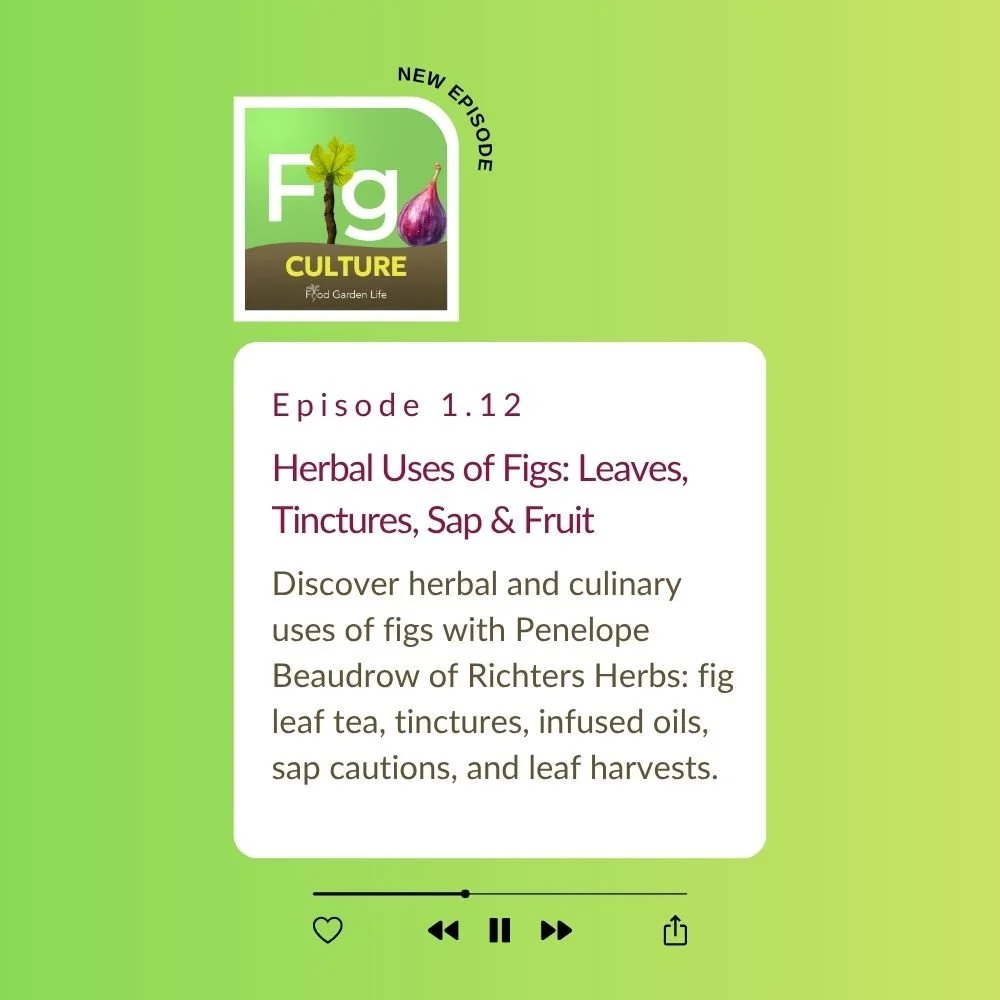
Herbal Uses of Figs
Most fig growers are focused on the fruit. Fair enough.
But in this episode, we look at the rest of the fig tree: the leaves, sap, dried leaves, infused vinegars, tinctures, pantry blends, and even prunings.
Steven talks with Penelope Beaudrow, a registered herbalist at Richters Herbs, about figs from an herbalist’s point of view. They talk about fig leaf tea, the coconut-vanilla-green flavour of fig leaves, traditional uses of fig sap, figs as a fibre-rich food, and ways to dry and preserve fig leaves for later use.
For cold-climate fig growers, there’s also a useful shift in perspective: even if a fig dies back in winter, it can still be valuable as a leaf crop. Not every fig-growing story needs to end with a basket of ripe figs. Sometimes the leaves are the harvest.
In this episode:
Fig leaf tea and what it tastes like
How herbalists think about leaves, tinctures, and vinegars
Using fig leaves in the kitchen
Drying fig leaves for winter
Fig leaf salts, sugars, and spice blends
Traditional uses of fig sap and why caution matters
Fresh and dried figs as food
Thinking of figs as a cold-climate leaf crop
A short visit to the fig benches at Richters Herbs
Fig sap can irritate the skin in some people. And before using figs, fig leaves, or any plant medicinally, it’s always wise to consult a qualified health professional.