
Fig Tree Care in Spring
Spring is a balancing act for cold-climate fig growers. Waking a fig early can give you a head start on the growing season and help fruit ripen sooner, but once a fig starts growing, tender new growth is vulnerable to frost.
The goal isn't simply to wake your fig as early as possible. It's to get an earlier start without creating more plant-moving, frost protection, and general spring schlepping than you want.
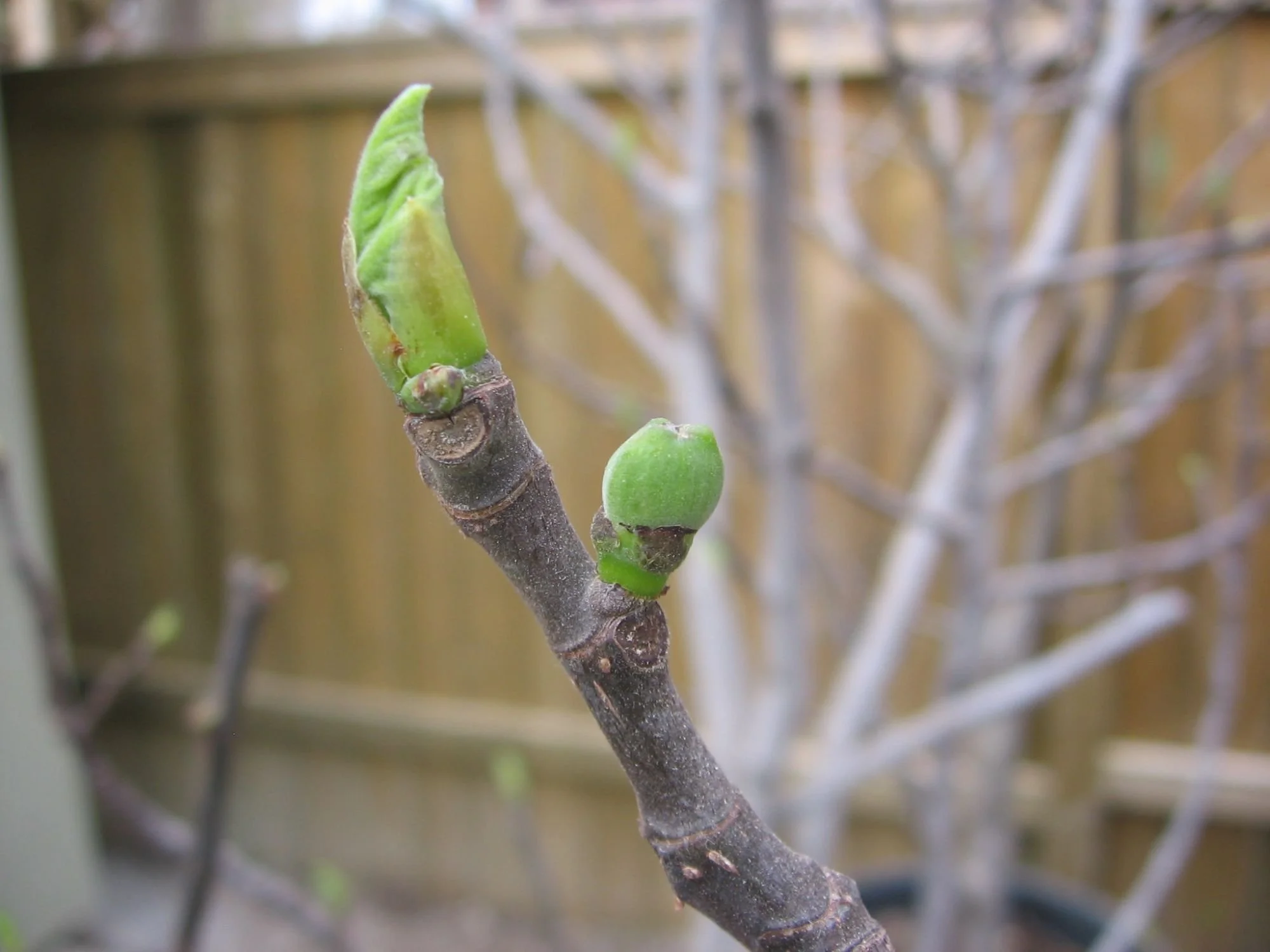
A potted fig waking from winter dormancy. An early start can mean an earlier crop, but new growth needs protection from spring frost.
Should you wake your fig early?
You don't have to wake a dormant fig early. If you have a long enough growing season, the simplest approach is often to let it wake naturally as temperatures warm.
In a short growing season, an earlier start buys valuable ripening time. But there's a trade-off: once buds open and leaves emerge, the plant loses much of its cold tolerance. You'll need to protect it from frost or move it back into shelter when cold weather threatens.
Potted figs: the spring fig shuffle
Potted figs can spend warm spring days outdoors and return to a garage, greenhouse, or other protected place when frost threatens. This gives them sunlight and warmth without gambling tender new growth on the weather.
The downside is obvious if you have a lot of pots: you're moving fig trees. Sometimes repeatedly. Decide how much spring shuffling fits your life before waking a collection early.
Moving fig trees outdoors
A fig that's been growing indoors or under cover needs time to adjust to stronger outdoor sunlight, wind, and changing temperatures. Start in a sheltered spot and gradually increase its exposure.
Watch the forecast, not the calendar. A warm spell doesn't mean frost season is finished.
What about in-ground figs?
In-ground figs generally wake as soil and air temperatures warm, so there's less opportunity to manipulate their spring start. Remove winter protection when severe cold has passed, but don't rush if opening the plant exposes it to damaging temperatures.
Once growth begins, watch for late frost and assess any winter damage before deciding what needs pruning.
Harden off new growth
Leaves that develop indoors can scorch in direct sun and cold wind. Start in shade or a sheltered spot, then gradually increase exposure. Don't rush a leafed-out fig into full spring sun.

Ready to go deeper?
Fig Camp & Fig Masterclass
Learn how to grow figs in pots or in the ground, ripen more fruit, and get your plants through winter.
Grow Figs Where You Think You Can’t
My complete guide to growing figs in cold climates and pots, from choosing varieties to conquering winter.

REVISED SOFTCOVER EDITION COMING FALL 2026
The completely revised edition of Grow Figs Where You Think You Can’t has grown from fewer than 100 pages to 320 full-colour pages. It draws on years of growing figs in Toronto and on ideas shared by inventive cold-climate and container fig growers around the world.
If you think figs are only for Mediterranean hillsides and sun-drenched patios, think again.
In Grow Figs Where You Think You Can’t, horticulturist Steven Biggs shows how home gardeners are harvesting bowls of ripe, honey-sweet figs in places where winter routinely reaches freezing temperatures and colder.
This is a practical guide to growing figs in cold climates and small spaces. Whether you’re gardening in Ontario, Idaho, Pennsylvania, or anywhere with real winters, you’ll learn how to make figs work where they shouldn’t.
Along with the key concepts, you’ll get real-world strategies from growers who are doing this successfully.
The original edition of Grow Figs Where You Think You Can’t won a Silver Award of Achievement from the Garden Writers Association, now GardenComm.