
How to Propagate Fig Trees
Figs root readily, which makes them one of the most satisfying woody plants to propagate. Root dormant or summer cuttings, layer a low branch into soil, or air-layer a branch while it's still attached to the parent plant.
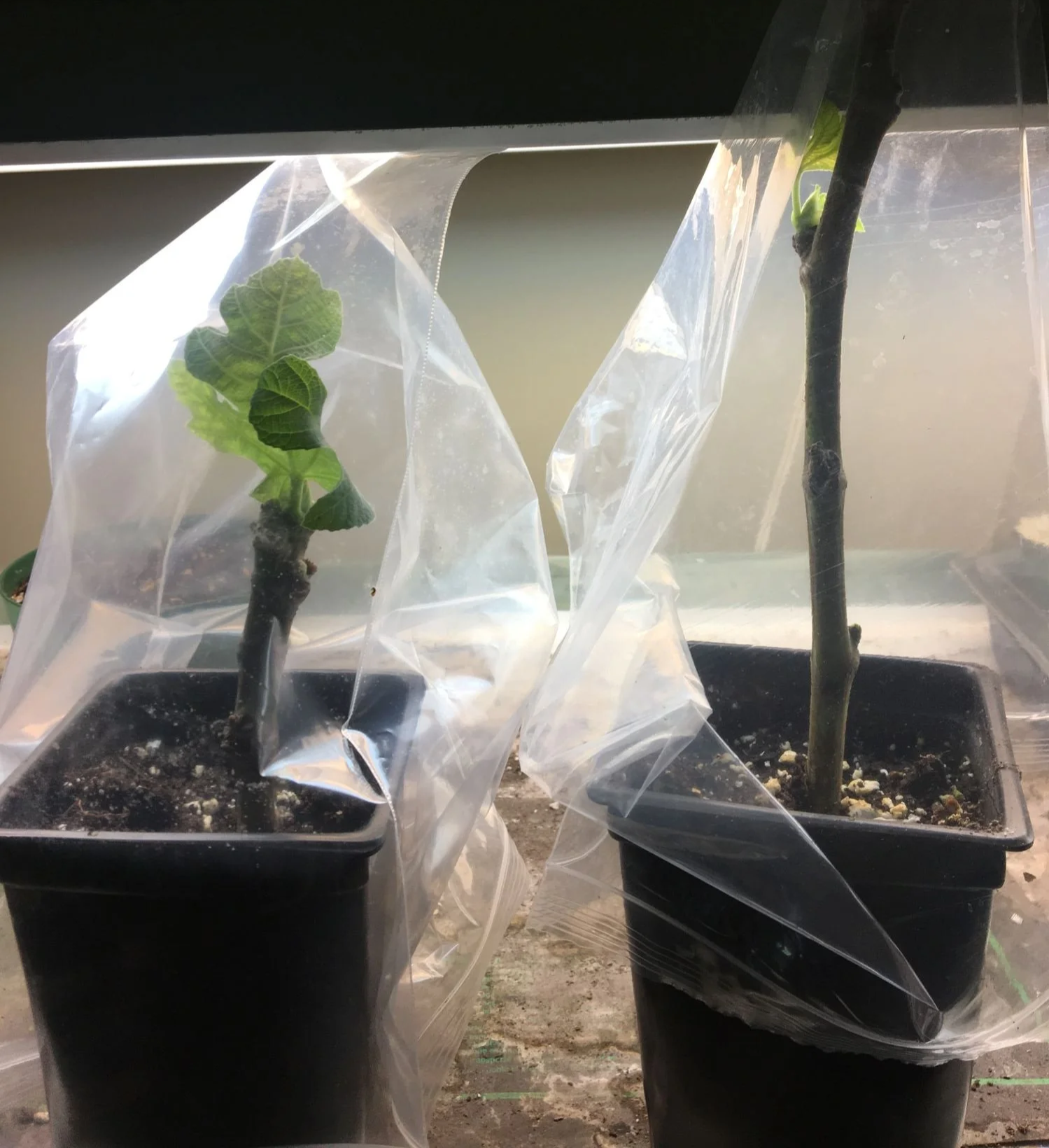
Fig cuttings rooting under lights. Figs are among the easiest woody plants to propagate.
Which propagation method should you use?
| What you want to do | Try this |
|---|---|
| Make several new plants from dormant prunings | Root dormant cuttings |
| Propagate while the plant is actively growing | Root summer cuttings |
| Root a branch before removing it from the parent plant | Air layer it |
| Root a low branch while it is still attached to the plant | Layer it into a pot or the ground |
Fig-cutting basics
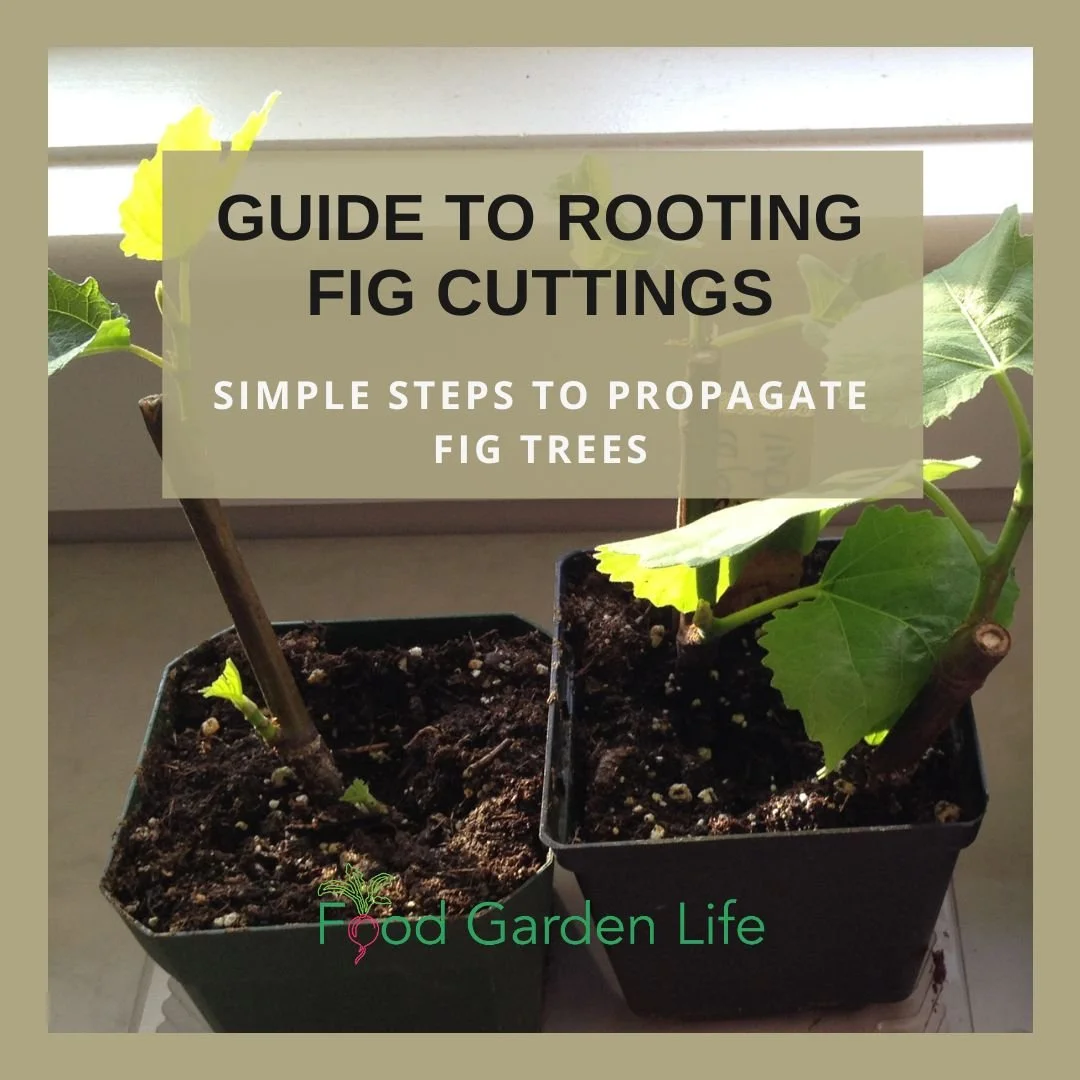
For dormant cuttings, pieces about 15-20 cm (6-8 inches) with a few nodes are a useful starting point, but don't overthink exact size. Use a light rooting medium, keep it slightly moist rather than wet, and skip fertilizer until the cutting has roots. Warmth speeds rooting.
Air layering
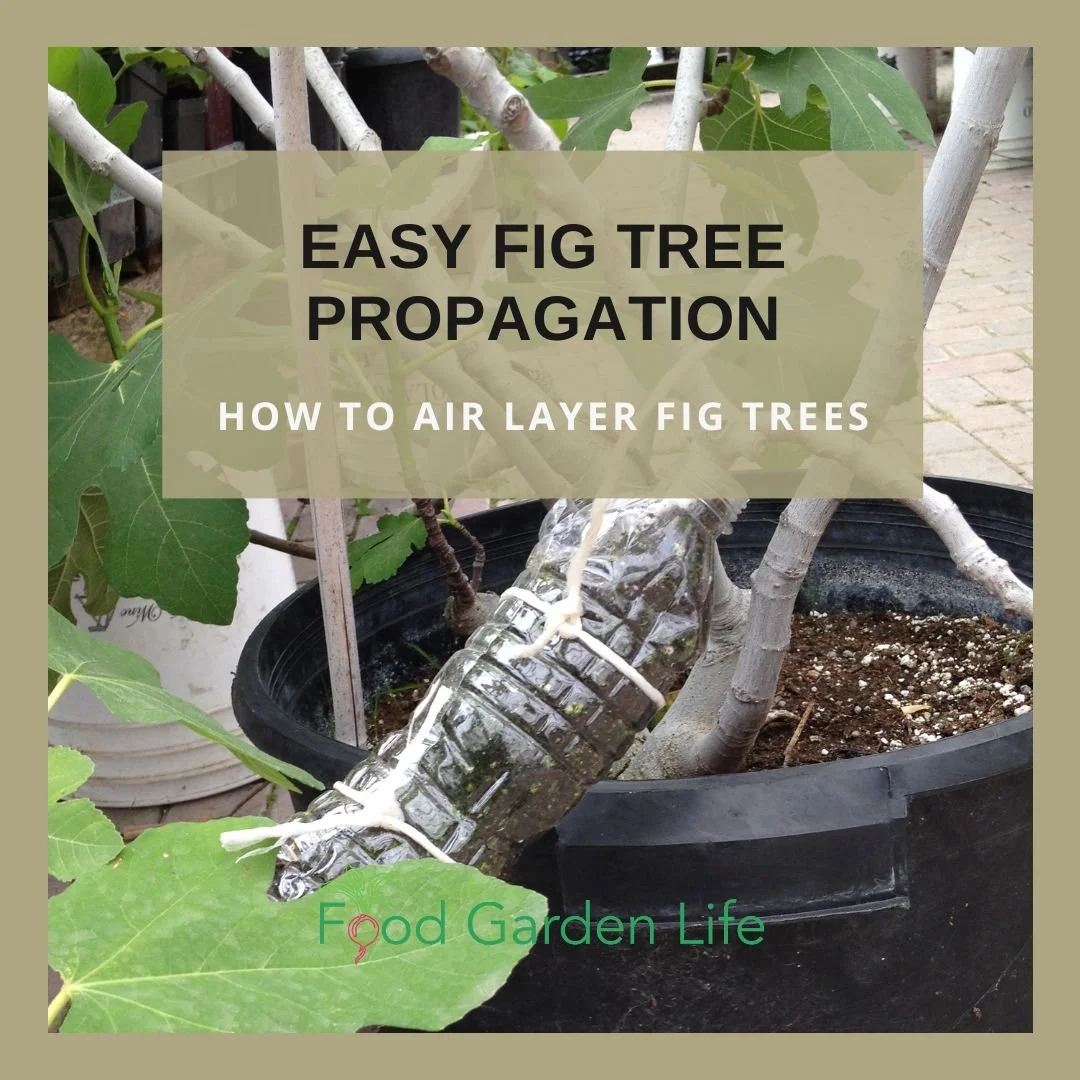
Air layering is especially easy with figs because they root readily. Wrap a section of branch in moist rooting material while it remains attached to the tree. Start in spring or early summer so the new roots have time to develop before you detach and pot the new plant.
Ready to go deeper?
Fig Camp & Fig Masterclass
Learn how to grow figs in pots or in the ground, ripen more fruit, and get your plants through winter.
Grow Figs Where You Think You Can’t
My complete guide to growing figs in cold climates and pots, from choosing varieties to conquering winter.

REVISED SOFTCOVER EDITION COMING FALL 2026
The completely revised edition of Grow Figs Where You Think You Can’t has grown from fewer than 100 pages to 320 full-colour pages. It draws on years of growing figs in Toronto and on ideas shared by inventive cold-climate and container fig growers around the world.
If you think figs are only for Mediterranean hillsides and sun-drenched patios, think again.
In Grow Figs Where You Think You Can’t, horticulturist Steven Biggs shows how home gardeners are harvesting bowls of ripe, honey-sweet figs in places where winter routinely reaches freezing temperatures and colder.
This is a practical guide to growing figs in cold climates and small spaces. Whether you’re gardening in Ontario, Idaho, Pennsylvania, or anywhere with real winters, you’ll learn how to make figs work where they shouldn’t.
Along with the key concepts, you’ll get real-world strategies from growers who are doing this successfully.
The original edition of Grow Figs Where You Think You Can’t won a Silver Award of Achievement from the Garden Writers Association, now GardenComm.